



Rating and value of paintings by Lovis Corinth

Key takeaways
- Works by Lovis Corinth, a 20th-century German painter, sell for between €10 and €1,120,000 at auction, with his oil-on-canvas paintings being particularly sought after.
- His painting "Walschensee, with Rising Moon" (1922) fetched €1,120,000 in 2022, exceeding its initial estimate of €640,000 to €950,000.
- After suffering a stroke in 1911, his style became more spontaneous and expressive, influencing 20th-century German Expressionist painters such as Kirchner and Nolde.
If you own a work by or based on the artist Lovis Corinth and would like to know its value, our state-approved experts and auctioneers will guide you.
Our specialists will carry out a free appraisal of your work, and provide you with an accurate estimate of its value on the current market.
Then, should you wish to sell your work, we will direct you to the best possible arrangement to obtain the optimum price.
Artist's rating and value
On the art market, Lovis Corinth's rating is extremely high. His most prized works are his surrealist canvases, whether portraits or landscapes.
The artist is particularly prized among 20th-century German painters and draughtsmen. Thus, the price at which works by Lovis Corinth sell ranges from €10 to €1,120,000 at auction.
His painting Walschensee, wish rising moon (oil on canvas), dating from 1922, went for €1,120,000, while it was estimated at between €640,000 and €950,000.
Order of value from the most basic to the most prestigious
Technique used | Result |
|---|---|
Estamp - multiple | From €10 to €82,000 |
Drawing - watercolor | From €30 to €520,000 |
Oil on canvas | From €10 to €1,120,000 |
Estimate in less than 24h
Lovis Corinth's style and technique
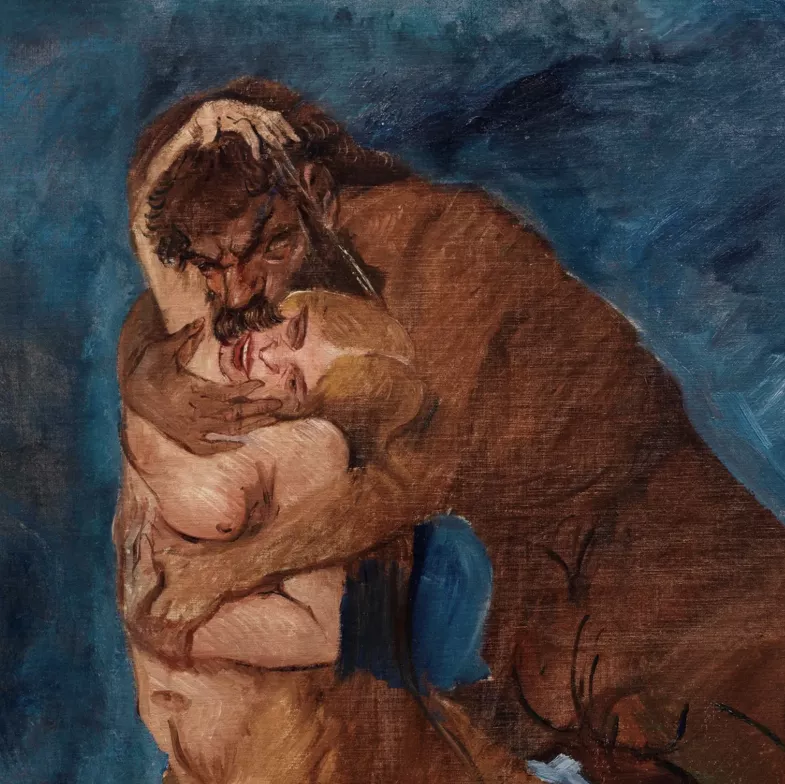
Lovis Corinth's style blends boldness and technical mastery, reflecting a fluid transition between academic naturalism and the expressive impulses of modern art.
Trained in the rigorous tradition of German fine art, Corinth initially adopted a detailed, realistic approach, marked by harmonious compositions and precise treatment of light.
However, his works quickly evolved, incorporating freer, almost impulsive touches that prefigured Expressionism.
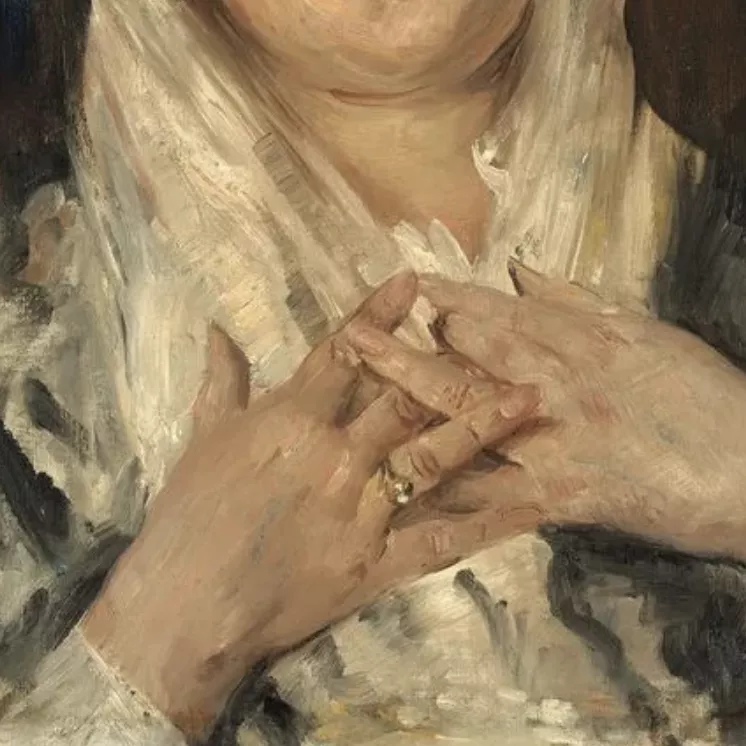
He excelled in the art of portraiture, where he captured not only the physical features but also the psychological depth of his subjects, playing on subtle contrasts and vibrant textures.
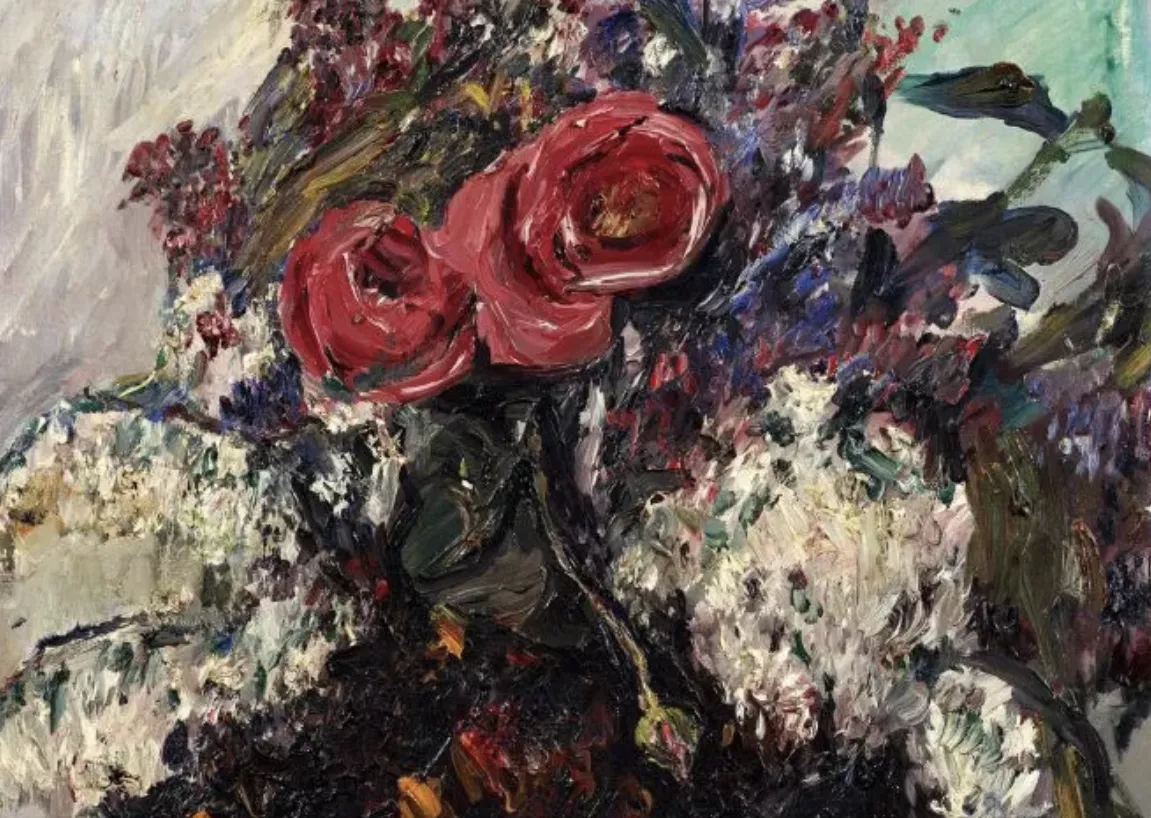
His still lifes and genre scenes, rich in color and movement, testify to a mastery of the brush that combines energy and precision.
Influenced by Impressionism, he explores bold palettes and dynamic brushstrokes, infusing his compositions with an almost tactile vitality.
Corinth's technique relies on successive layers of paint, playing with thickness and transparency to create a striking visual depth.
After a stroke in 1911, his style becomes more spontaneous and intense, conveying an emotional urgency and a more subjective vision.
Through this stylistic evolution, Lovis Corinth defies convention while remaining rooted in a solid pictorial tradition, affirming his role as a bridge between classical currents and modernist experimentation.
The life of Lovis Corinth
Lovis Corinth, born in 1858 in Tapiau, East Prussia, ranks among the most significant German painters of the transition between the XIXᵉ and XXᵉ centuries.
The son of a tanner, he grew up in a modest environment, but showed an early gift for art. He first trained at the Königsberg Academy of Fine Arts, where he acquired a solid academic mastery.
Aspiring to new horizons, he moved to Munich, bastion of the German artistic avant-garde, before continuing his quest in Paris, at the Académie Julian.
There, he discovered Impressionism and the effervescence of French artistic circles, influences that enriched his style without ever totally distracting him from his Germanic roots.
In 1901, Corinth moved to Berlin, where he became a leading figure of the Berlin Secession. Shortly afterwards, he married his pupil Charlotte Berend, who became both his muse and an unfailing supporter.
But a tragic event in 1911 upset his trajectory: a stroke left him partially paralyzed.
Against all odds, he took up his brushes again, transforming this ordeal into a creative force. His works from this period, imbued with great emotional intensity, reveal an artist in search of depth and truth.
Until his death in 1925, Corinth remained faithful to his commitment to art, blending academicism with modern audacity. His career testifies to a resolutely individual path, marked by a unique ability to sublimate life's challenges through painting.
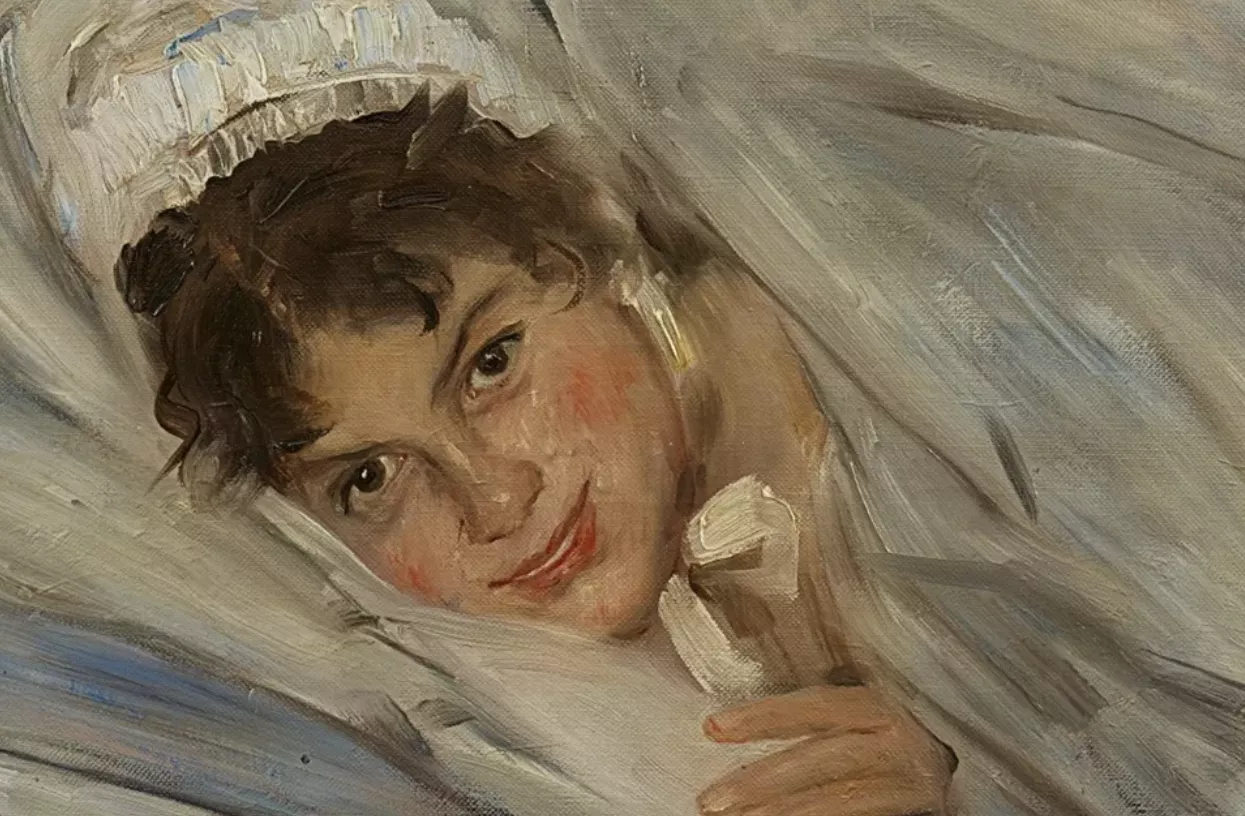
Focus on Le Dormeur, Lovis Corinth, 1911
In Le Dormeur (1911), Lovis Corinth achieves a striking fusion of light and shadow, capturing with rare intensity both the fragile beauty and vulnerability of the human body.
The touch, deliberately brutal and dynamic, not only suggests the texture of sleeping skin, but also accentuates the emotion that emanates from the scene.
The color palette, oscillating between warm and cold tones, harmoniously intertwines calm and agitation, establishing a tension that can be found in every corner of the painting.
This chromatic opposition seems a silent dialogue between the peace of the moment and the inner turbulence that disturbs sleep.
It's impossible not to perceive in this work an echo of Rembrandt's work, particularly in the treatment of light on the model's skin, which seems almost to pierce the canvas, lending the work an intimate, sacred dimension.
However, unlike the Dutch master, whose shadows often carried profound symbolism, Corinth uses them here not to suggest mystical introspection but to emphasize the pure sensuality and fragility of the moment, playing with light to magnify form.
This bold approach breaks free from the conventions of his contemporaries such as Max Liebermann, whose light remains more diffuse and soft, and introduces a rawer, almost dramatic realism that resonates with the turbulence of the times.
In this work, we perceive a prelude to a form of pictorial modernity, in which the facture is intended to be devoid of artifice, imbued with the energy and raw truth of the world.
Lovis Corinth, while drawing on classical traditions, manages to reinterpret these influences in a radical way, infusing a new, more expressive vitality devoid of any restraint.
The composition seems in constant evolution, a subtle movement where the canvas itself seems to vibrate under the tension of contrasts and the power of gesture.
Lovis Corinth's legacy
Lovis Corinth's legacy is part of a pictorial evolution marked by a strong singularity, a quest for pure expression that frees itself from pre-existing aesthetic rules to embrace the raw force of matter and emotion.
His ability to fuse the Romantic impulse, characteristic of his early works, with a nascent modernism, paved the way for new art forms in which the painter's unbridled passion is placed at the service of an uncompromising exploration of human intensity.
His influence is palpable in the work of many German artists of the early 20th century, notably those of the Expressionist movement, who, like Ernst Ludwig Kirchner or Emil Nolde, cultivated a freedom of gesture and a sense of pathos akin to Corinth's, while taking the expression of the inner self a step further.
Where Corinth favored a balance between figuration and the elevation of light, his successors would embrace a total abandonment of form in favor of color and distortion.
The painter also left his mark on his era through his approach to light, which he treated as a dynamic, changing element, influencing not only Expressionist painters, but also some of his Impressionist contemporaries, who saw themselves in his use of light as a means of suggesting rather than defining.
With his ability to transcend genres and techniques while remaining deeply rooted in the expression of human truth, Corinth established himself as an essential point of passage between the last flashes of the nineteenth century and the creative power of the twentieth.
Lovis Corinth's place in 20th-century German painting
Lovis Corinth, in his quest for intense expression and visual power, positioned himself as a bridge between the centuries, sweeping aside the boundaries of his era. He moves away from the academic use of painting while remaining rooted in classical forms.
Influenced by masters such as Rembrandt, he adds a deeply emotional dimension to his compositions, where each brushstroke seems a cry, a burst of inner truth.
His portraits and nudes, which he treats with a boldness all his own, are imbued with that expressive brutality found in artists such as Max Beckmann or Max Oppenheimer, without however yielding to pure abstraction.
Like them, Corinth is inspired by human suffering, but his approach remains rooted in figurative realism, where the vital impulse seems to spring directly from the brush.
It's not a desire for radical innovation that guides his work, but a search for raw, sometimes acerbic truth, which feeds on the tension between the brilliance of Impressionism and the boldness of Expressionism.
The result: visceral work, often bordering on violence, in which light, shadow and color are all tools for deconstructing the facade of everyday life.
It is this in-between, this refusal to submit to fashions, that allows Corinth to stand out, both heir and precursor, between artists more radically turned towards abstraction, and those, like Emil Nolde or Georg Baselitz, who would later engulf themselves in a darker, more politicized vision of society.
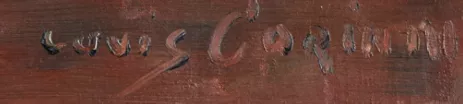
His signature
Although there are variations, here's a first example of his signature:
Expertise your property
If you happen to own a work by or after Lovis Corinth, don't hesitate to request a free valuation by filling in our form on our website.
A member of our team of experts and certified auctioneers will contact you promptly to provide you with an estimate of the value of your work, not forgetting to send you ad hoc information about it.
If you're thinking of selling your work, our specialists will also be on hand to provide you with alternatives for selling it at the best possible price, taking into account the inclinations of the market and its specific features.
Estimate in less than 24h
Discover in the same theme

Rating and value of Jean Després' artworks, jewels, vases an...
Jean Després is a 20th-century French silversmith who produced jewelry, vases, services and other silver works that are highly prized at auction.
Learn more >

Rating and value of furniture, lamps, tables by Pierre Chare...
Pierre Chareau is a twentieth-century architect and designer whose furniture is highly prized at auction. Estimated in 24h.
Learn more >

Rating and value of paintings by Georges Ribemont-Dessaignes
Georges Ribemont-Dessaignes is an artist who has produced many works that are highly valued at auction. 24h estimate.
Learn more >
D'autres tableaux abstraits vendus aux enchères

Estimated 2.000 - 4.000
Serge POLIAKOFF (1900-1969), Composition en rouge et bleu. 1965, Lithograph

Estimated Between €5,000 and €8,000
Jean MIOTTE (1926-2016), acrylic on canvas

Estimated 3.000 - 5.000
Roberto MATTA (1911-2002), Composition, Gouache on canvas

Secure site, anonymity preserved

Auctioneer approved by the State

Free and certified estimates
Frequently asked questions
-
Who is Lovis Corinth, and what is his place in 20th-century German art?Lovis Corinth (1858–1925) was a major German painter during the transition from the 19th to the 20th century. Trained in the rigorous academic tradition, he evolved toward a personal style that fused Impressionism and Expressionism, particularly after a stroke in 1911 that intensified his emotional expression. He established himself as a bridge between the classical heritage and modern painting, influencing many German Expressionist artists through his visceral approach to light and his quest for raw truth.
-
What is the price range for Lovis Corinth's works at auction?Lovis Corinth’s works vary widely in value depending on the medium: prints range from €10 to €82,000, drawings and watercolors from €30 to €520,000, and oil paintings on canvas from €10 to €1,120,000. His most sought-after paintings are his surrealist compositions (portraits and landscapes), with market records exceeding one million euros for his most prestigious works.
-
How can I authenticate a work by Lovis Corinth and get an estimate of its value?To authenticate a work by Lovis Corinth, we recommend that you request a free, no-obligation appraisal from Auctie's. Our team of experts and certified auctioneers will examine your artwork and provide you with an accurate estimate of its current market value, along with all relevant details regarding its authentication and provenance.
-
Is this the right time to sell a work by Lovis Corinth?Yes, now is a good time to sell a work by Lovis Corinth. His market value remains extremely high, particularly for his surrealist paintings, and demand for 20th-century German painters remains strong. Our experts can assess the market conditions specific to your artwork to offer you the best sales strategy.
-
How does the sales process work at Auctie's?The process begins with a free, no-obligation estimate: simply fill out our online form, and an expert will contact you shortly to appraise your artwork. If you decide to proceed, our licensed auctioneers will guide you from the appraisal to the auction, analyzing market trends to secure the best possible price and present you with the best sales options.
