



Rating and value of paintings by Jacques Doucet

Key takeaways
- Jacques Doucet’s works sell for between €30 and €160,000 at auction, with oil-on-canvas paintings sometimes fetching record prices.
- A leading figure in the Cobra movement and lyrical abstraction, Doucet (1924–1994) used thick layers of paint and vivid colors to express pure emotion.
- Estimates can be significantly exceeded: his oil painting “Tauromachie,” estimated at €40,000–60,000, sold for €160,000 in 2011.
If you own a work by or based on the artist Jacques Doucet and would like to know its value, our state-approved experts and auctioneers will guide you.
Our specialists will carry out a free appraisal of your work, and provide you with a precise estimate of its value on the current market.
Then, if you wish to sell your work, we will direct you to the best possible arrangement to obtain the optimum price.
Artist's rating and value
Jacques Doucet's works are quite present and appreciated on today's art market. A major representative of the Cobra movement and close to lyrical abstraction, Jacques Doucet produced works in a variety of media.
Prized by collectors, his works sell for between €30 and €160,000 on the auction market, a considerable range but one that speaks volumes about the value that can be attributed to the artist's works.
In 2011, his oil on canvas Tauromachie ou Toréador, dating from 1953, sold for €160,000, while it was estimated at between €40,000 and €60,000.
Order of value from the most basic to the most prestigious
Technique used | Result |
|---|---|
Estamp - multiple | From €30 to €590 |
Drawing - watercolor | From €30 to €30,000 |
Oil on canvas | From €460 to €160,000 |
Estimate in less than 24h
Artist's style and technique
At an early age, Doucet was interested in poetry and painting. His meeting with the poet Max Jacob in the early 1940s had a profound influence on his artistic beginnings. In 1947, he crossed paths with Corneille, with whom he founded the Cobra movement, which marked a break with the academicism of the time.
By the 1950s, Jacques Doucet was moving towards lyrical abstraction. Influenced by the gestural energy and spontaneity of this movement, he chose large formats and worked mainly with oils on canvas.
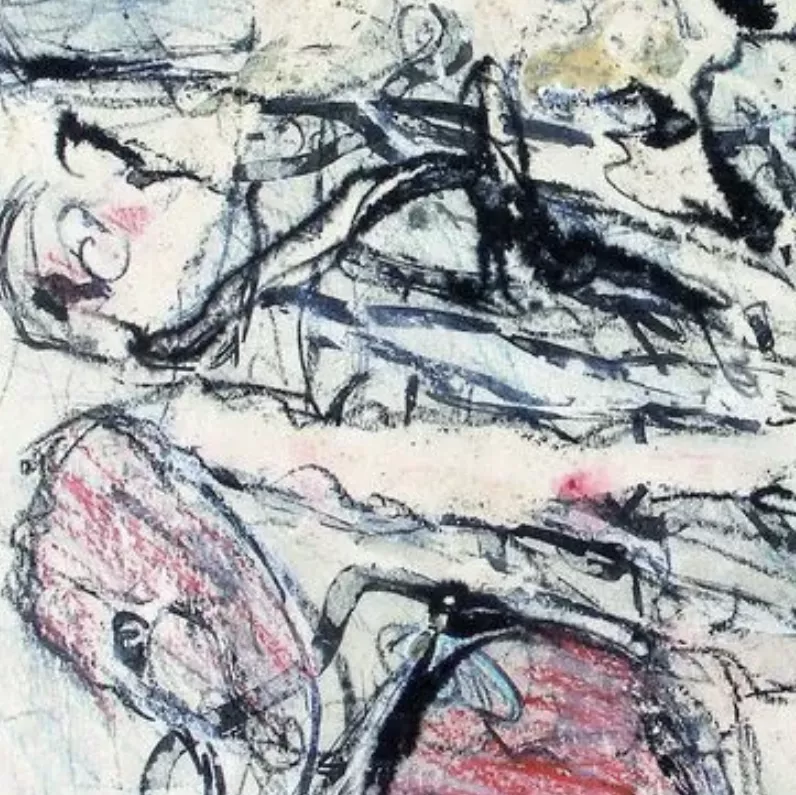
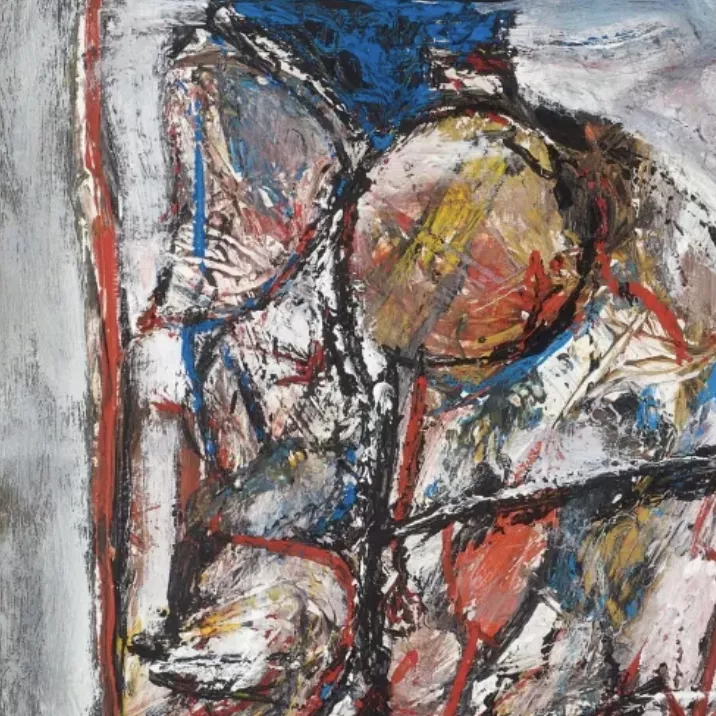
His style is characterized by thick layers of paint, often vigorously applied, creating relief and dense textures. The colors are vivid, contrasting and convey an emotional tension, revealing an intimate and expressive universe.
For Doucet, lyrical abstraction went beyond mere aesthetics: it was a response to the violence of the post-war period. The artists of this movement sought to express pure emotion, without going through figuration.
Doucet, in his canvases, strives to capture an inner energy, freed from formal constraints.
He exhibits regularly in France and abroad, participating in numerous artistic events that reinforce his reputation.
At the end of his career, he remained faithful to the spirit of lyrical abstraction, where every gesture, every touch, becomes a means of translating the essence of human emotions. His works, often preserved in private collections, continue to bear witness to his commitment to free and sincere painting.
The life of Jacques Doucet
Jacques Doucet (1924-1994) was born in Boulogne-Billancourt and died in Paris. From an early age, he was interested in poetry and painting, two passions that were to shape his career.
In the early 1940s, he met the poet and painter Max Jacob, whose criticism and advice would guide his early artistic pursuits.
Doucet began exhibiting his work in 1945, and a few years later, in 1947, he met Guillaume Cornelius van Beverloo, known as Corneille. Together, they co-founded the Cobra movement, which advocated spontaneity and freedom of expression.
In the 1950s, Jacques Doucet turned to lyrical abstraction, a movement that emerged after the Second World War and to which he remained faithful throughout his life.
Other artists won over to this movement, including Georges Mathieu and Olivier Debré.
Influenced by the gestural energy of the artists of this movement, he favors large canvases, working with oils, and experiments with thick layers of paint to give depth and texture to his works.
His palette, often vibrant, alternates between intense colors and more muted tones, expressing a wide range of emotions.
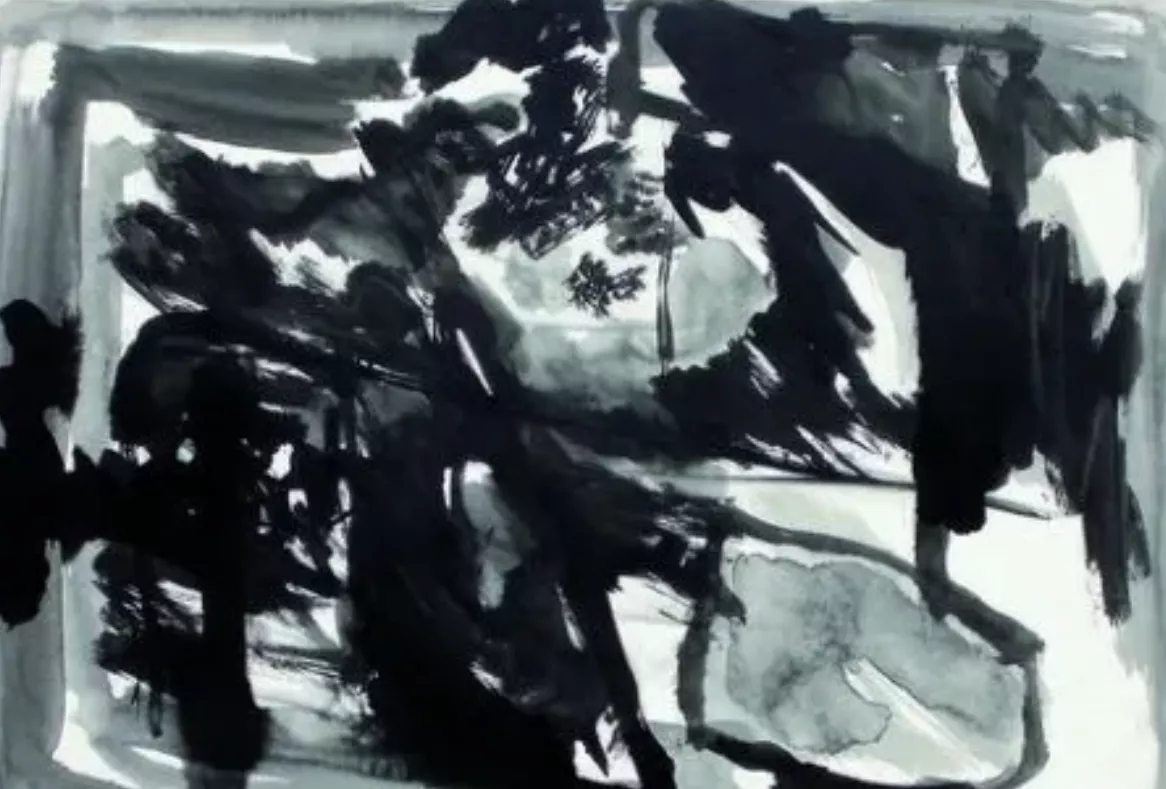
From the 1960s onwards, Doucet continued to develop his style while taking an interest in other techniques. He also produced numerous drawings, in which his gesture remained rapid and intuitive, capturing the emotion of an instant.
He took part in numerous exhibitions, in France and abroad, and his work gained a certain recognition.
Doucet continued to explore new forms of abstraction until the end of his life, remaining true to his desire to translate raw, immediate emotions.
His canvases, mostly preserved in private collections, bear witness to his unceasing quest for artistic freedom and his attachment to lyrical abstraction.
Jacques Doucet's imprint on his period
Jacques Doucet left an indelible mark on his era as an active member of the Cobra movement and pioneer of lyrical abstraction.
Although not always recognized by the general public, his influence is felt through his ability to capture the essence of a world turned upside down by the horrors of war. Through his spontaneous gestures and bold use of color, he helped open up new avenues in abstract art.
His painting, driven by raw energy and freedom of expression, inspired many artists to free themselves from the constraints of form and privilege pure emotion.
His exhibitions, both in France and abroad, have helped lyrical abstraction gain visibility and make its mark. Although his name is not always the one that springs to mind when we talk about this movement, his contribution to the evolution of abstract art is indisputable.
Through his commitment, Doucet participated in a veritable reinvention of painting, restoring a more direct and human dimension to art, and influencing a whole generation of artists who sought to liberate color and form from past conventions.
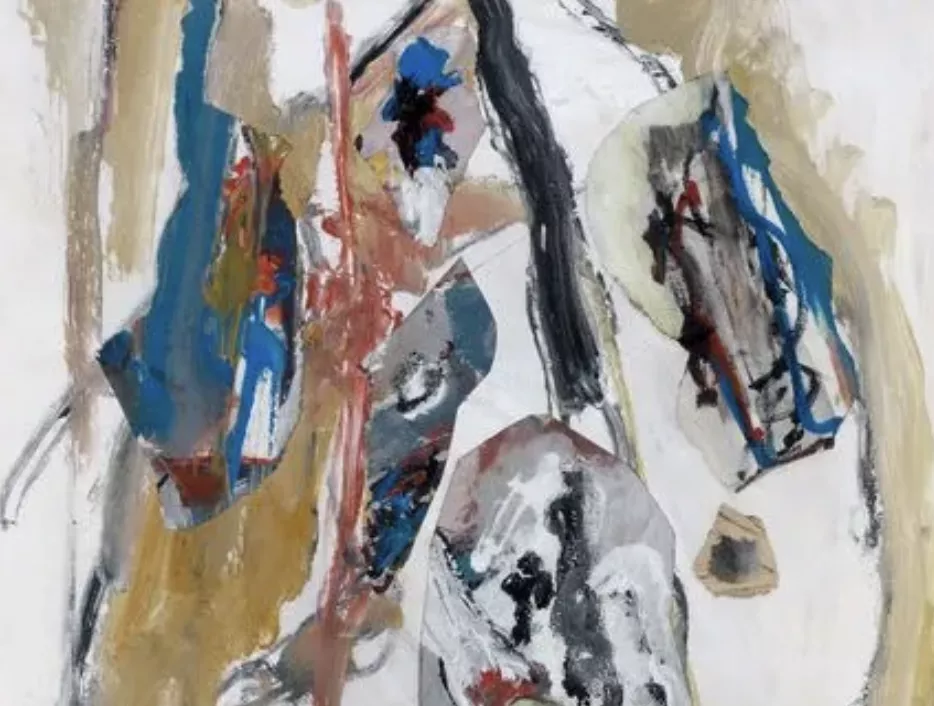
Focus on Composition abstraite, Jacques Doucet, 1950
The work by Jacques Doucet that deserves particular attention is undoubtedly Composition abstraite, produced in the 1950s. This canvas, both raw and poetic, perfectly embodies the spirit of lyrical abstraction.
Through spontaneous gestures and strong gestures, Doucet succeeds in freeing painting from all forms of constraint and intellectualization.
The use of color, mainly dominated by shades of blue, red and yellow, creates a palpable dynamism, almost a breath that seems to spread across the canvas.
At first glance, the work is striking for its lack of figurative representation. There are no legible figures, landscapes or scenes here, but a purely abstract pictorial space. This absence of a direct subject invites the viewer to let himself be guided by emotion and intuition.
The shapes, hastily sketched, seem to emerge under the brushstrokes like a silent cry. Doucet's technique, distinguished by an energetic touch, specifies this sensation of movement.
Brushstrokes are not simply artistic gestures, they are the extension of the artist's thought and emotion, freed from any constraints. Working with the material is also essential in this work.
The paint seems almost palpable, the relief of the canvas, particularly in the red and blue areas, accentuating this sensation of tension and vitality. This texture materializes the act of creation, the very act of gesture, as it unfolds on the canvas.
Tints of blue dominate the composition, but the balance is upset by bursts of red and yellow, which bring a touch of warmth and energy to the painting.
These bright, sometimes vivid colors seem to dialogue with the surface itself, creating strong contrasts that reinforce the visual intensity of the work. Blue, at once calm and deep, evokes a sense of depth, almost an emptiness.
Red and yellow, on the other hand, disrupt this space, like bursts of light or fragments of emotions suddenly released.
This subtle contrast between serenity and agitation, between restraint and explosion, perfectly reflects the mood of the time: a period marked by tensions, but also by a need for reconciliation, for liberation after the traumas of the Second World War.
The composition is not ordered, but rather a tangle of fluid, dynamic forms. Here we perceive the continuity of movement characteristic of lyrical abstraction, which is based on emotion, gesture and color, rather than geometric forms or intellectual constructs.
This painting reflects the intensity of expression and the quest for meaning, beyond form, and underlines the importance of creative "letting go", where the artist gives free rein to his instincts.
In this sense, Abstract Composition perfectly embodies the essence of post-war abstract painting, seeking to express emotions, internal tensions, questioning, without ever seeking to depict external reality.
In this way, Doucet's work is a veritable manifesto of artistic freedom and a tribute to pure intuition. Through this canvas, he invites the viewer to abandon any search for objective meaning and plunge into a universe where only the energy of gesture and the authenticity of emotion count.
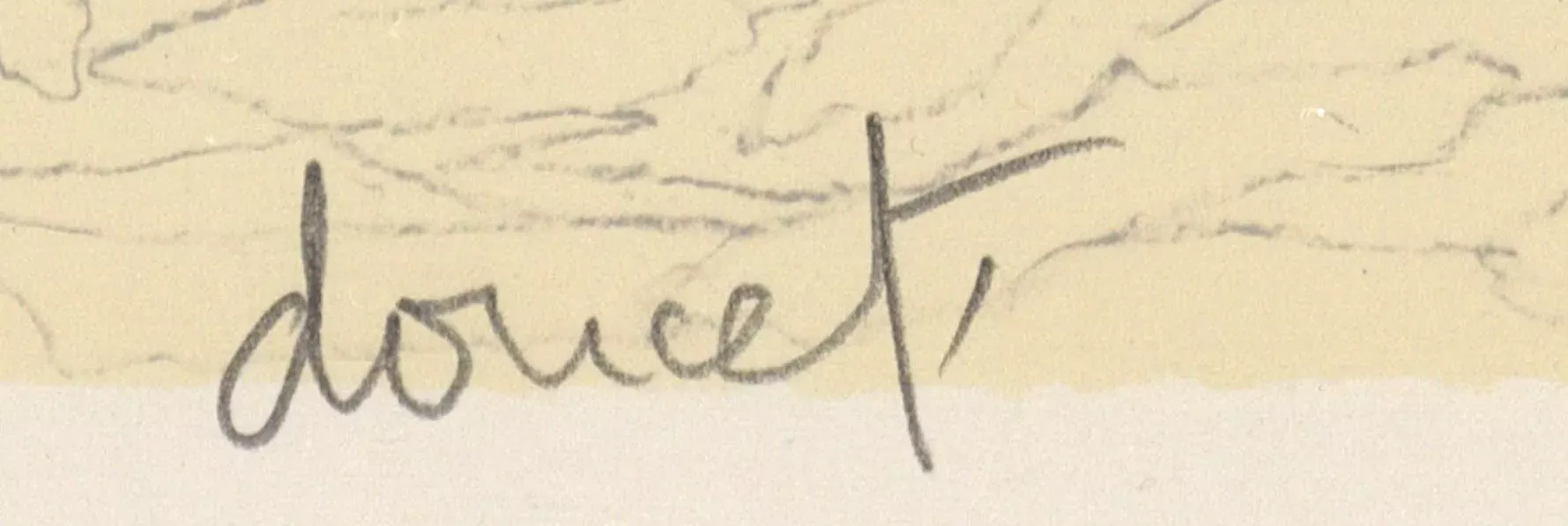
His signature
Not all of Jacques Doucet's works are signed.
Although there are variations, here's a first example of his signature:
Expertise your property
If you happen to own a work by or after Félicien Rops, don't hesitate to request a free appraisal by filling in our form on our website.
A member of our team, made up of experts and certified auctioneers, will contact you promptly to provide you with an estimate of the value of your work, and will ensure that you receive ad hoc information about it.
If you are planning to sell your work, you will also be accompanied by our specialists in order to benefit from alternatives for selling it at the best possible price, taking into account the inclinations of the market and its specificities.
Estimate in less than 24h
Discover in the same theme

Value and quotation of works, ceramics by Théodore Deck
Théodore Deck, a 20th-century ceramist, has produced a unique work whose value is growing on the auction market. Estimated in 24h.
Learn more >

Rating and value of works, paintings, drawings by Georges So...
Georges Souillet is a 20th-century painter who produced landscape paintings and a few drawings. His works are highly regarded.
Learn more >

Market Value and Pricing of Henri Manguin's Paintings, Drawi...
Henri Manguin was a Fauvist painter of the early 20th century, whose paintings are highly valued at auction.
Learn more >
D'autres tableaux abstraits vendus aux enchères

Estimated 2.000 - 4.000
Serge POLIAKOFF (1900-1969), Composition en rouge et bleu. 1965, Lithograph

Estimated Between €5,000 and €8,000
Jean MIOTTE (1926-2016), acrylic on canvas

Estimated 3.000 - 5.000
Roberto MATTA (1911-2002), Composition, Gouache on canvas

Secure site, anonymity preserved

Auctioneer approved by the State

Free and certified estimates
Frequently asked questions
-
Who is Jacques Doucet, and what is his artistic background?Jacques Doucet (1924–1994) was a leading French artist of the Cobra movement and a pioneer of lyrical abstraction. Influenced by the poet Max Jacob in the early 1940s, he co-founded the Cobra movement in 1947 with Corneille. By the 1950s, he had turned to lyrical abstraction—characterized by spontaneous brushstrokes, vivid colors, and thick layers of paint—seeking to express raw emotion without figurative elements, in response to the traumas of World War II.
-
What is the price range for Jacques Doucet's works at auction?Jacques Doucet’s works sell for between €30 and €160,000, depending on the medium and provenance. Prints range from €30 to €590, drawings and watercolors from €30 to €30,000, and oil paintings on canvas from €460 to €160,000. This wide range reflects the importance of factors such as the period, size, condition, and provenance of the work.
-
How can you authenticate a work by Jacques Doucet?To authenticate a work by Jacques Doucet, we recommend requesting a free, no-obligation appraisal from Auctie's by filling out our online form. A state-certified expert or auctioneer will examine your artwork and provide you with their opinion within 48 hours, taking into account the signature, technique, period, and provenance.
-
Is this the right time to sell a work by Jacques Doucet?Yes, now is a good time to sell a work by Jacques Doucet. His works are quite prominent and highly regarded in today’s art market; collectors continue to seek out his lyrical abstract pieces, and the growing recognition of this artistic movement is driving demand for his work.
-
How does the appraisal and sale of a work of art take place at Auctie's?The appraisal is free and non-binding: simply fill out our online form, and an expert will contact you and provide you with an appraisal within 48 hours. If you’d like to sell, our specialists will guide you through the entire process—from appraisal to auction—by offering you the best options to achieve the highest possible price, taking into account market trends and the unique characteristics of your artwork.
