



Rating and value of paintings by Isaak Brodsky

Key takeaways
- Isaak Brodsky (1883–1939), a 20th-century Russian painter, was a central figure in Soviet Socialist Realism and revolutionary iconography.
- Brodsky’s works sell for between €95 and €918,500 at auction, with oil-on-canvas paintings commanding the highest prices on the market.
- Trained at the Imperial Academy of St. Petersburg under the influence of Ilya Repin, Brodsky mastered a rigorous academic technique applied to Soviet political propaganda.
If you own a work by or after the artist Isaak Brodsky, and would like to know its value, our state-approved experts and auctioneers will offer you their appraisal services.
Our specialists will carry out a free appraisal of your work, and provide you with an accurate estimate of its value on the current market.
Then, should you wish to sell your work, we will direct you to the best possible arrangement to obtain the optimum price.
Rating and value of the artist Isaak Brodsky
Isaak Brodsky is a Russian painter of the 20th century. He left behind a unique body of work reflecting his moods and personality. This legacy is made up of paintings, the majority of which are oil on canvas.
Today, prices for his works are reaching unprecedented levels at auction. His paintings and other works are particularly prized, especially by French and Russian buyers, and the price at which they sell on the art market ranges from €95 to €918,500, a considerable delta but one that speaks volumes about the value that can be attributed to Brodsky's works.
In 2009, a predominantly green polychrome composition entitled Nanny with Children, dating from 1912, sold for €918,500 while it was estimated at between €344,500 and €574,000.
Order of value from a simple work to the most prestigious
Technique used | Result |
|---|---|
Estamp - multiple | From €95 to €160 |
Drawing - watercolor | From 640 to 70,000€ |
Oil painting | From 300 to 918,500€ |
Estimate in less than 24h
The social realism of Isaak Brodsky
Isaak Brodsky, an emblematic figure of Soviet realism, is distinguished by a rigorous pictorial technique, inherited from Russian academic traditions, which he transcends with an almost photographic meticulousness.
His work is rooted in a fidelity to historical narrative, where every detail participates in the exaltation of revolutionary ideals.
The precise brushstrokes and meticulous application of paint layers reflect an undeniable mastery of glazing techniques, giving scenes a striking depth and texture.
Brodsky favors rigorously balanced compositions, where linear perspective guides the viewer's gaze to carefully chosen points of interest, often embodied by figures of leaders or symbols of Soviet ideology.
The rich yet restrained chromatic palette is based on a dominance of earthy tones and deep reds, reinforcing the gravity and solemnity of the subjects depicted.
This chromatic treatment, combined with a diffuse, dramatic light, evokes a theatricality that magnifies the heroism of his characters.
By blending detailed naturalism with a propagandistic scope, Brodsky reaffirms the narrative effectiveness of painting as a vehicle for collective ideals.
His style, while retaining the exactitude of the classical masters, is placed at the service of an ideological discourse, making his art a bridge between academic tradition and the modern aspirations of a nation in the throes of transformation.
His works thus establish themselves as visual testimonies of an era, while making a lasting mark on the history of Soviet painting.
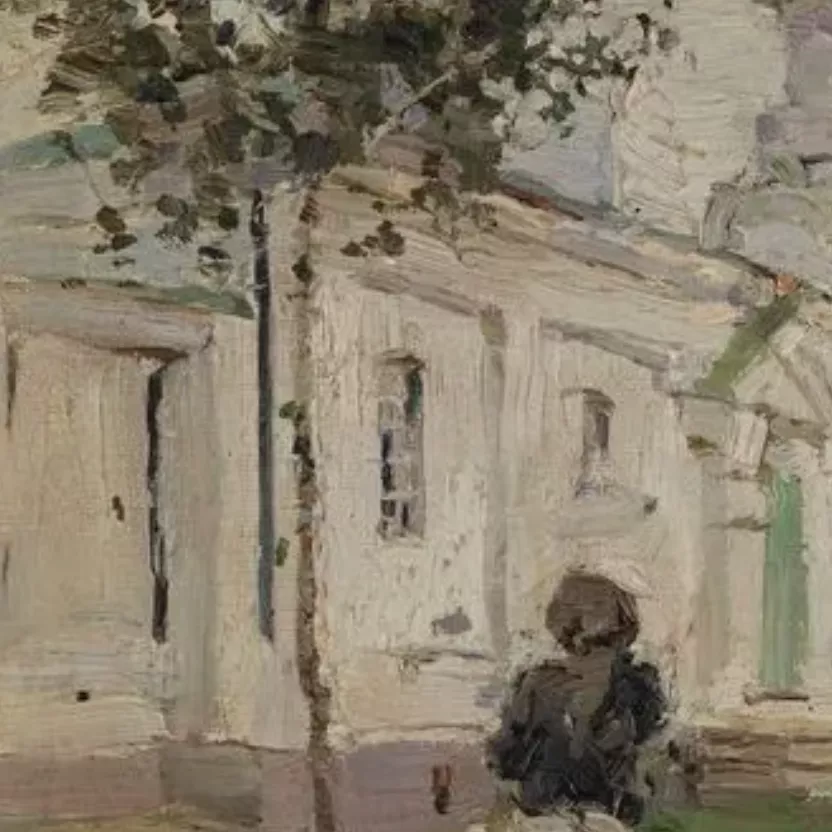
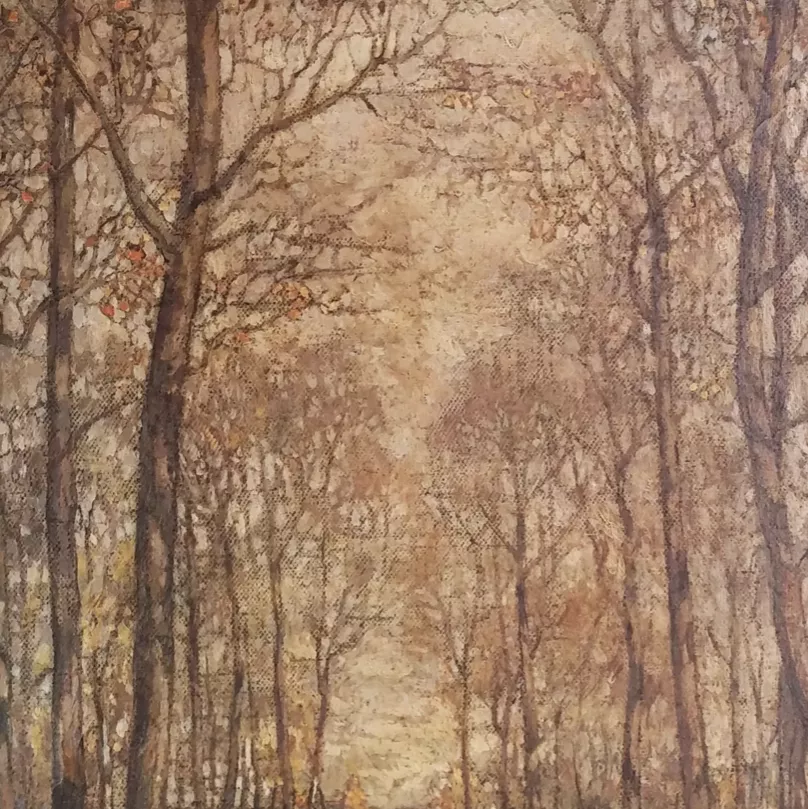
Isaak Brodsky, his life, his work
Isaak Brodsky, born in 1883 in the Ukrainian village of Sofiyivka, was involved from an early age in an artistic trajectory shaped by a changing social context.
Trained at the Imperial Academy of Fine Arts in St. Petersburg, he integrated the rigorous teaching of the great masters of the Russian academic tradition.
Under the influence of pedagogues such as Ilia Répine, he developed a meticulous approach to composition and a remarkable mastery of drawing.
Brodsky traversed Russia's political upheavals with a clear ambition: to put his art at the service of a new national narrative.
By the 1920s, he had become a central figure of socialist realism, responding to the demand for an aesthetic that enhanced revolutionary ideals.
His career was marked by an institutional commitment: he directed the Leningrad Academy of Arts and mentored numerous Soviet artists, while consolidating his role as an official interpreter of contemporary history.
Throughout his life, Brodsky devoted himself to immortalizing key figures and events of the Soviet Union, most notably Lenin, whom he portrayed on numerous occasions. His work, widely supported by the state apparatus, elevated him to the rank of the regime's official painter.
Until his death in 1939, he remained a key figure in the Soviet artistic landscape, symbolizing the alliance between academic tradition and political propaganda, and leaving behind him a legacy that was both artistic and ideological.
Focus on Lenin at Smolny, 1930
Among Isaak Brodsky's iconic works, Lenin at Smolny (1930) stands out for its iconic character and narrative power.
The painting depicts Vladimir Lenin in a moment of apparent calm, seated at his desk in Smolny, headquarters of the Bolshevik revolution.
The composition, rigorous and methodical, reflects a spatial organization characteristic of academism: the figure of Lenin, sober and centered, dominates a space that is both austere and symbolic.
Brodsky's technique underlines his attention to detail: the texture of surfaces, from the folds of Lenin's coat to the scattered documents on the desk, reveals an almost photographic precision.
This meticulousness, born of his academic training, contrasts with the sobriety of the chromatic palette, dominated by dark, earthy tones, which reinforce the atmosphere of gravity.
The light, discreetly directed, illuminates Lenin's face and guides the viewer's gaze, establishing a visual dialogue centered on the figure of the leader.
Beyond the aesthetic, the work embodies a strong ideological dimension. Lenin, presented as a man of work and reflection, becomes the pivot of a historical narrative glorifying the revolution.
Brodsky doesn't just document a moment; he magnifies a myth, offering both a realistic representation and a subtle exaltation of his subject.
In this way, Lenin in Smolny illustrates the role of art in the construction of Soviet identity, blending technical mastery and propaganda with undeniable effectiveness.
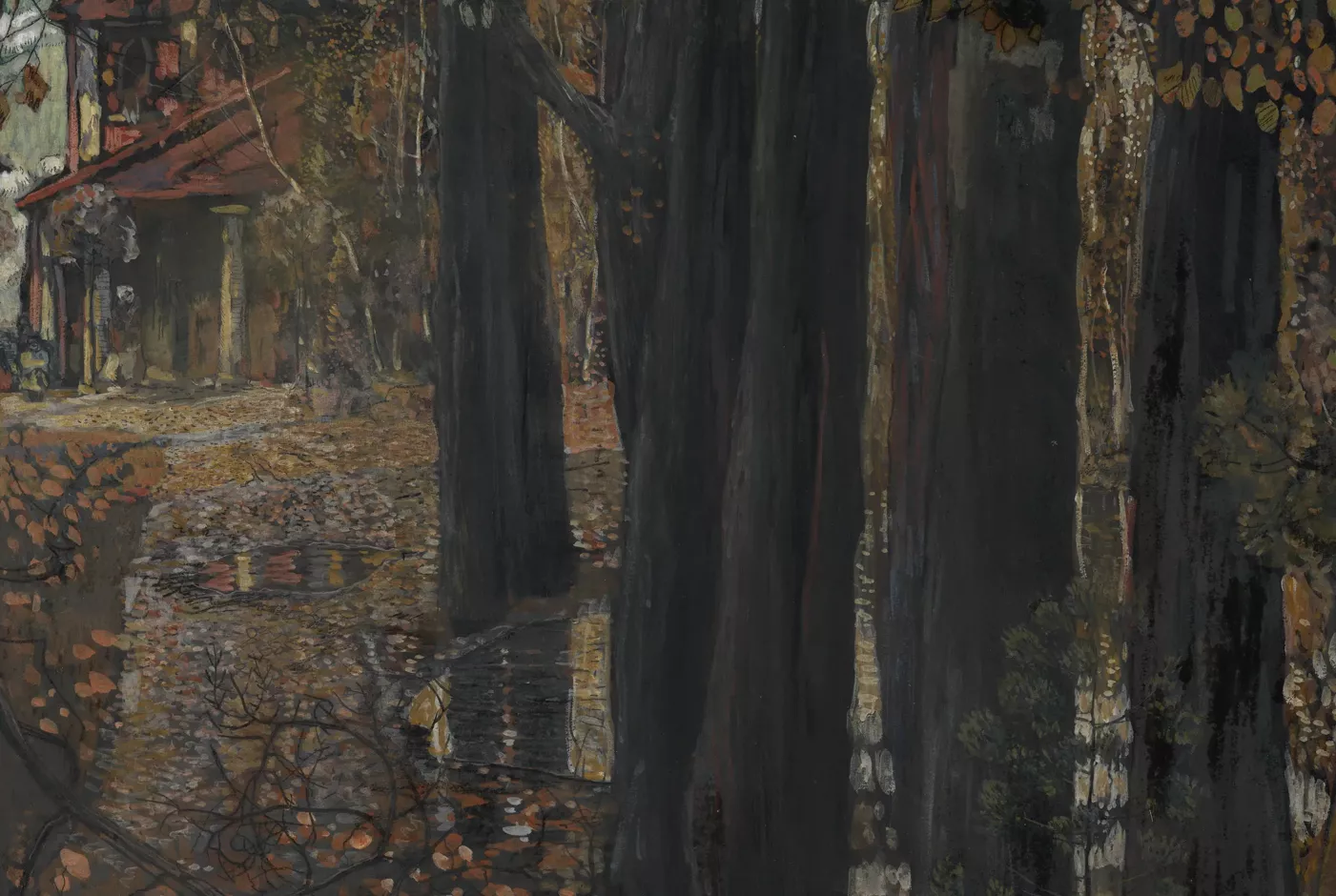
Isaak Brodsky's imprint on his period
Isaak Brodsky's imprint on his period is seen in his central role in the codification of the Socialist Realist aesthetic, which was to become the dominant artistic doctrine of the Soviet Union.
Trained in the academic tradition, Brodsky succeeded in combining rigorous technical know-how with an ideological narrative perfectly suited to the regime's expectations.
His portraits of revolutionary figures, such as Lenin and Stalin, became visual icons, widely distributed and integrated into the Soviet cultural fabric.
Brodsky's influence also extended to his institutional role, notably as director of the Leningrad Academy of Fine Arts.
Under his leadership, the academy became a bastion of realism, rejecting the avant-garde tendencies that had marked the Russian art scene of the 1910s and 1920s.
He trained a generation of artists committed to building an art that served the state, emphasizing subjects that glorified work, history and the heroes of socialism. This imprint, however, is twofold.
While Brodsky is credited with giving artistic stature to socialist realism, he is also criticized for contributing to the eradication of modernist currents, imposing a strict framework where individual creativity had to take a back seat to collective imperatives.
In this respect, his legacy is inseparable from the political and cultural transformations of his era, making him a figure as essential as he is controversial in the history of Soviet art.
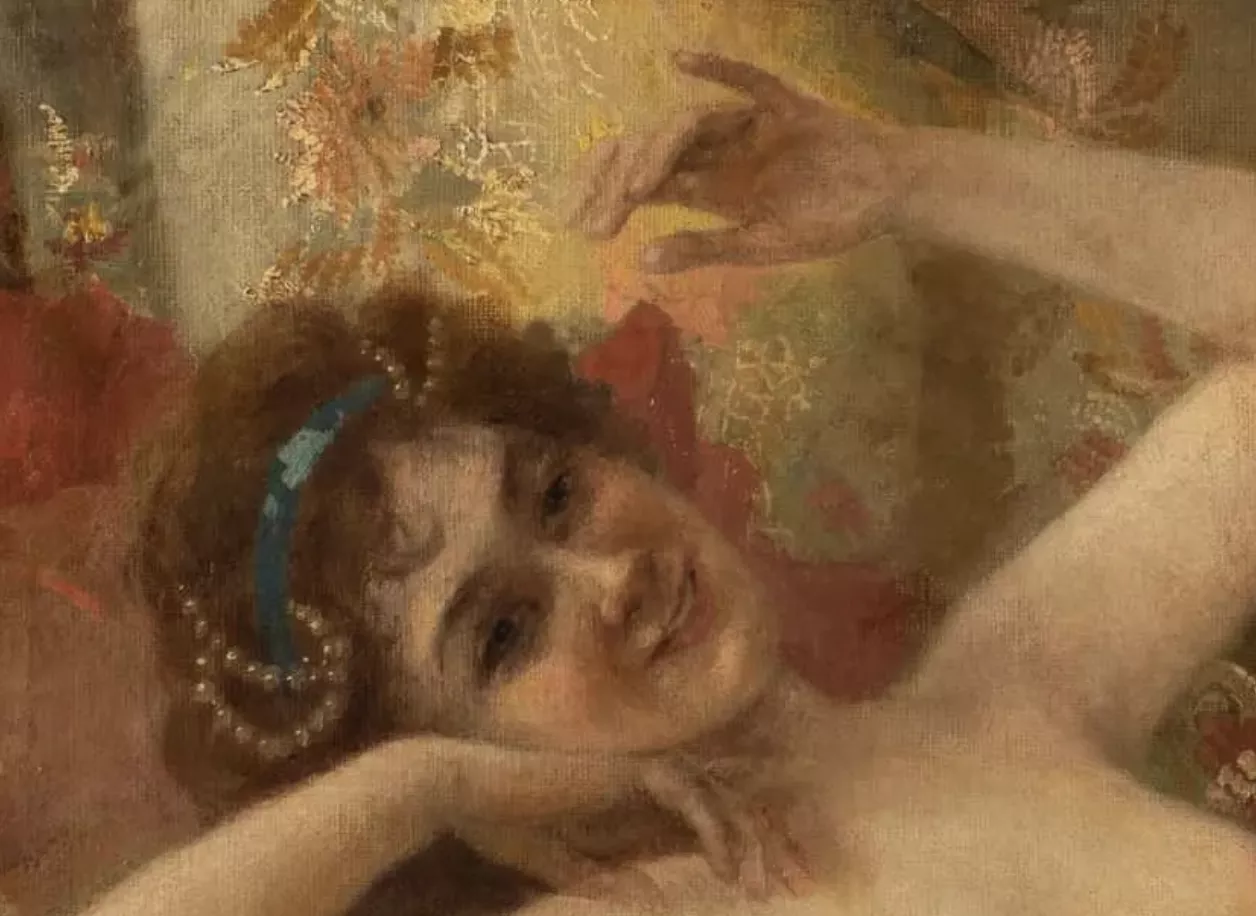
.
The stylistic influences of Isaak Brodsky
The stylistic influences of Isaak Brodsky reflect a synthesis between the European academic tradition and the ideological imperative of nascent socialist realism.
Trained at the Imperial Academy of Fine Arts in St. Petersburg, he inherited the teachings of the classical masters, particularly those of the 19th-century realist schools, such as the pervasive influence of Ilya Répine, whose pupil he was.
The latter transmitted to him a meticulous approach to portraiture and a rigorous attention to the representation of the individual, while valuing a narrative sensibility in the arrangement of compositions.
Brodsky was also influenced by the legacy of the Orientalist painters, perceptible in his subtle use of light and his taste for ornamental detail, visible in some of his early works.
However, his aesthetic choices evolved as the political environment imposed its demands. Under the influence of revolutionary ideals, he adapts his style to meet the needs of a triumphant and accessible iconography.
The historical frescoes and monumental portraits he creates, notably those of Lenin, reflect a balance between academic precision and propagandist monumentality.
As part of this stylistic transition, Brodsky deliberately distanced himself from the avant-gardes, notably the abstractions of Suprematism or the cubo-futurist experiments of his contemporaries such as Malevitch or Guermatcheff.
This choice, rooted in a desire for ideological service, illustrates the tension between tradition and modernity, between academic heritage and political designs, that underlies his work.
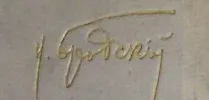
Recognizing Isaak Brodsky's signature >
Often, Isaak Brodsky's works are signed at the bottom of the painting. However, the signature can be forged, which is why expertise remains important.
Knowing the value of a work
If you happen to own a work by or after Isaak Brodsky, don't hesitate to request a free appraisal using our form on our website.
A member of our team of experts and chartered auctioneers will contact you promptly to provide you with an estimate of the market value of your work, as well as ad hoc information about it.
If you are considering selling your work, you will also be accompanied by our specialists in order to benefit from alternatives for selling it at the best possible price, taking into account the inclinations of the market.
.Estimate in less than 24h
Discover in the same theme

Cote and value of works, drawings, paintings by Alfred Manes...
Alfred Manessier is an artist and painter of expressive abstraction who has produced paintings, drawings and other works listed at auction.
Learn more >

Rating and value of works, drawings, paintings by Jean Metzi...
Jean Metzinger is a twentieth-century cubist and fauvist artist who produced drawings and oil paintings sold at auction.
Learn more >

Rating and value of paintings, drawings and engravings by Gi...
Giorgio Morandi is an Italian Futurist painter who has produced works that are listed and valued on the auction market.
Learn more >

Secure site, anonymity preserved

Auctioneer approved by the State

Free and certified estimates
Frequently asked questions
-
Who is Isaak Brodsky, and what is his historical context?Isaak Brodsky (1883–1939) was an iconic Russian painter of Soviet Socialist Realism. Trained at the Imperial Academy of Fine Arts in Saint Petersburg under the influence of Ilya Repin, he became the central figure in the codification of the socialist-realist aesthetic in the Soviet Union. As director of the Leningrad Academy of Arts, he devoted himself to immortalizing revolutionary figures, notably Lenin, and embodied the alliance between academic tradition and political propaganda.
-
What is the price range for Isaak Brodsky's works at auction?The prices of Brodsky’s works vary considerably depending on the medium and size: prints range from €95 to €160, drawings and watercolors from €640 to €70,000, while oil paintings fetch between €300 and €918,500. A notable example: the painting *Nanny with Children* (1912) sold for €918,500 in 2009, exceeding its initial estimate of €344,500 to €574,000.
-
How can you authenticate a work by Isaak Brodsky?To authenticate a work attributed to Brodsky, we recommend that you request a free, no-obligation appraisal from Auctie's. Our team of experts and state-certified auctioneers will examine the work and provide you with an accurate estimate of its market value within 48 hours. This appraisal is particularly important because signatures can be forged.
-
What artistic techniques did Brodsky master, and how would you describe his style?Brodsky primarily worked in oil on canvas, characterized by a rigorous technique rooted in the Russian academic tradition. His style combines almost photographic precision in detail, carefully controlled linear perspective, a palette dominated by earthy tones and deep reds, and dramatic lighting. He blends detailed naturalism with a propagandistic scope in the service of Soviet ideals.
-
How do I sell a work by Isaak Brodsky through Auctie's?If you own a work by Brodsky and would like to sell it, contact Auctie's via our online form for a free appraisal. After appraisal, our team of specialists will guide you through the entire process, from evaluation to auction, offering you the best options for selling your artwork at the optimal price based on current trends in the Soviet art market.
