



Rating and value of paintings by Fritz Schwarz-Waldegg

Key takeaways
- Works by Fritz Schwarz-Waldegg, a 20th-century Austrian painter, sell for between €100 and €10,000 at auction, depending on the technique used.
- His Expressionist paintings, particularly portraits and landscapes, command the highest prices, with a record of €10,000 set in 2012 for *Stadt in der Provence*.
- Paintings range from €600 to €10,000, while prints and watercolors are priced between €100 and €4,000 on the current market.
If you own a work by or based on the work of artist Fritz Scwarz-Waldegg and would like to know its value, our state-approved experts and auctioneers will guide you.
Our specialists will carry out a free appraisal of your work, and provide you with an accurate estimate of its value on the current market.
Then, should you wish to sell your work, we will direct you to the best possible arrangement to obtain the optimum price.
Artist's rating and value
On the art market, Fritz Schwarz-Waldegg's rating is extremely high. His most prized works are his expressionist canvases, whether portraits or landscapes.
The artist is particularly prized among 20th-century Austrian painters and draughtsmen. As a result, Schwarz-Waldeeg's works sell for between €100 and €10,000 at auction.
In 2012, his painting Stadt in der Provence (oil on canvas), dating from 1929, sold for €10,000, whereas it was estimated at between €1,800 and €2,200.
Order of value from the most basic to the most prestigious
Technique used | Result |
|---|---|
Estamp - multiple | From €100 to €200 |
Drawing - watercolor | From €160 to €4,000 |
Painting | From €600 to €10,000 |
Estimate in less than 24h
Style and technique of Fritz Schwarz-Waldegg
Fritz Schwarz-Waldegg, an Austrian artist with a singular aesthetic, developed a technique that reflected the tensions and questionings of his time. Born in Vienna, he was influenced by the artistic climate of the Vienna Secession, but quickly forged his own distinct style.
His works are marked by a palette dominated by contrasting colors: deep greens, intense reds and bright ochres, which imbue his compositions with a vibrant energy.
Schwarz-Waldegg doesn't just depict familiar scenes: he seeks to reveal the hidden souls of his subjects. His portraits, in particular, present figures of a strange intensity, frozen in rigid postures, almost frozen by unusual lighting.
The light accentuates the features of the faces, giving them an aspect that is both poetic and unsettling, as if each line were charged with a hidden meaning. The shapes, often geometric and stylized, evoke a search for balance and symmetry, while at the same time hinting at a certain melancholy.
The contours are precisely defined, each line seemingly weighed, clearly delineating elements in a way that evokes the techniques of graphic design. Schwarz-Waldegg thus explores the tension between realism and abstraction, creating works that seem both familiar and enigmatic.
The colors are not there to flatter the eye: they serve to mark breaks, visual shocks that capture attention and guide the eye to the essential.
The precise, meticulous brushstrokes reflect an attention to detail that contrasts with the emotional intensity of her subjects. Each gesture reveals a technical mastery that makes no attempt to conceal the depth of emotion.
Like Egon Schiele, Schwarz-Waldegg prefers the exploration of complex facets of the human soul to aesthetic idealization. His compositions, often dominated by isolated figures in sober settings, suggest a sense of introspection or isolation, reinforced by uncluttered backgrounds or geometric motifs.
Schwarz-Waldegg's style is marked by a constant search for harmony in dissonance. His works, vibrant with contrast, capture a tension between calm and turmoil, between clarity of form and depth of emotion.
Through a masterful technique, he explores human vulnerability and the contradictions of a changing age. His canvases, imbued with a discreet theatricality, bear witness to a quest for meaning, where the artist becomes witness to and interpreter of the anxieties and aspirations of his time.
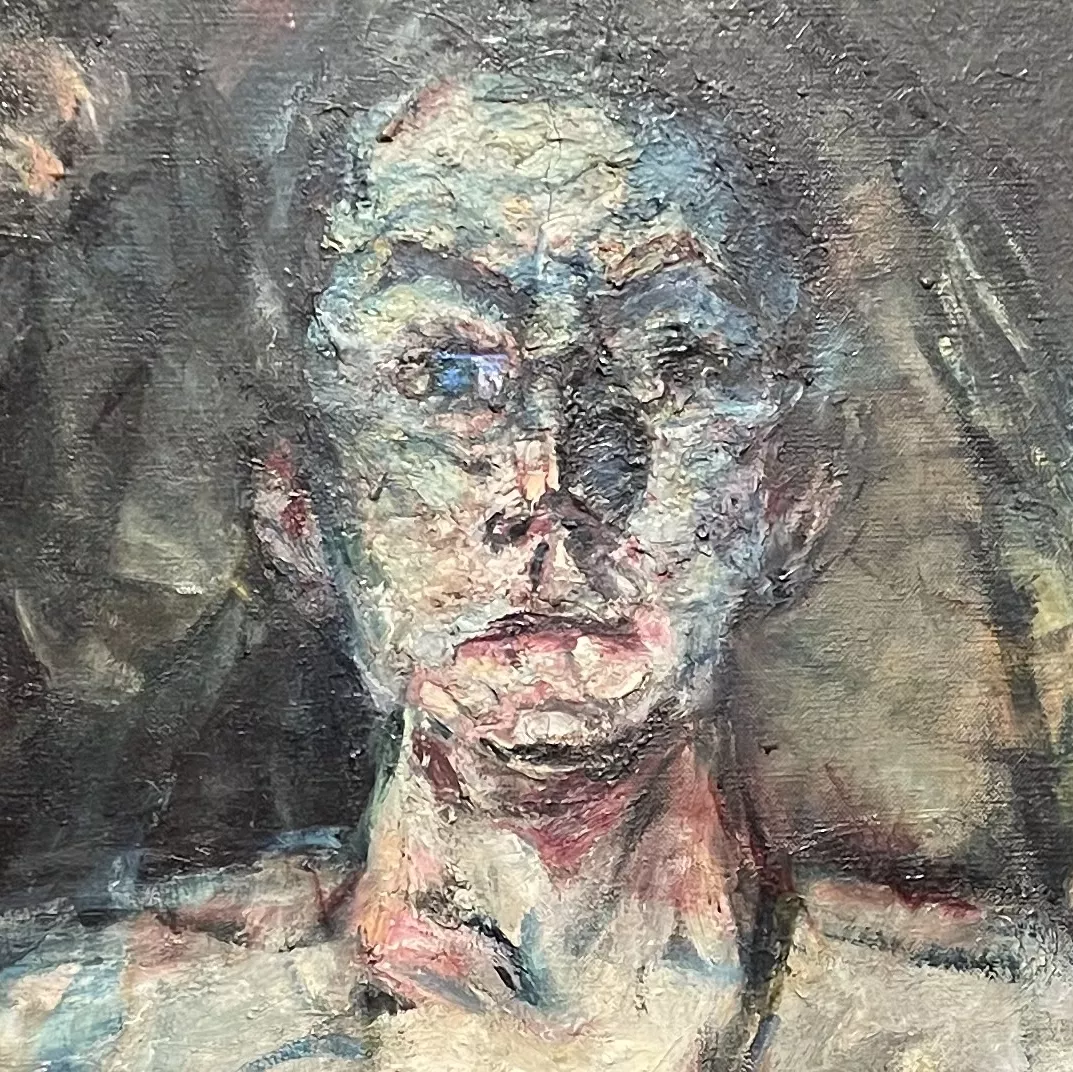
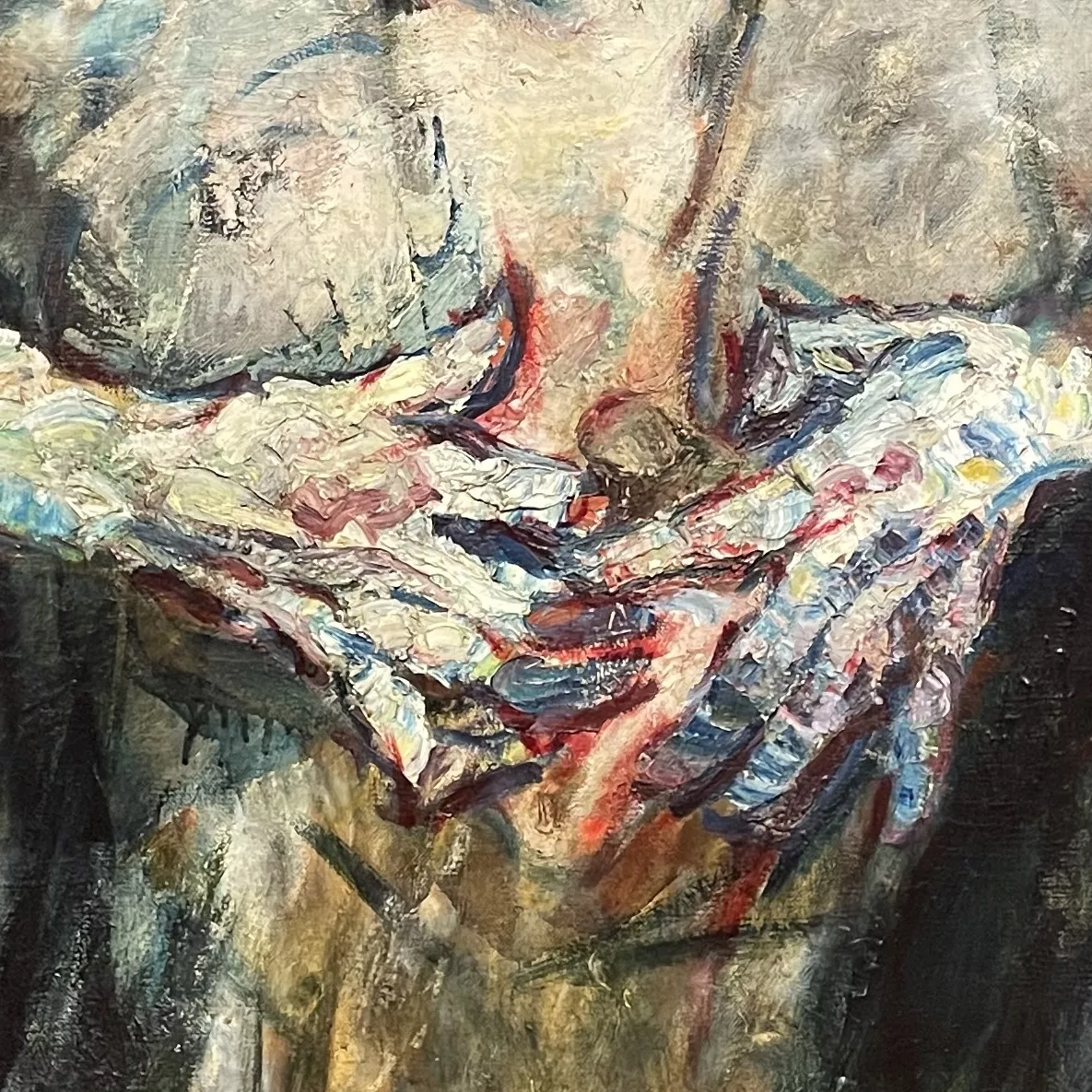
Franz Schwarz-Waldegg, painter of melancholy and introspection
Franz Schwarz-Waldegg (1889-1942) was an Austrian painter of the 20th century, a notable figure on the Viennese scene, whose work is distinguished by a sensitive and poetic exploration of human moods.
Born in Vienna, he began his artistic training at an early age at the Academy of Fine Arts, where he honed a style that combined technical precision with emotional research.
Foundedly influenced by the artistic currents of his time, Schwarz-Waldegg quickly developed a personal pictorial language, marked by meticulous attention to detail and an atmosphere often imbued with mystery.
The artist stands out for his restrained approach, in which light and composition play a central role. Her canvases, often bathed in soft, diffused light, capture moments of silent contemplation.
Schwarz-Waldegg rejects academic conventions to reveal, through her portraits, a complex and vulnerable humanity. His works are characterized by fine strokes and soothing colors, which aim to highlight not the raw reality, but the interiority of his subjects.
His portraits, whether of anonymous figures or Viennese celebrities, are marked by a psychological depth that seems to suspend time.
Schwarz-Waldegg seeks to capture the soul of his models, using discreet hues and subtle brushstrokes to translate delicate emotions. Each canvas becomes an intimate encounter between artist and subject, a plunge into the human soul, tinged with a certain melancholy.
Franz Schwarz-Waldegg is driven by a contemplative vision of the human condition, where introspection, solitude and silence lie at the heart of his recurring themes.
Like some of his contemporaries, he is not content to paint appearances, but aspires to reveal deep, often hidden feelings.
His portraits are not mere representations: they are windows into inner worlds, where soft light and delicate shadows aptly express the fragility and beauty of the human soul.
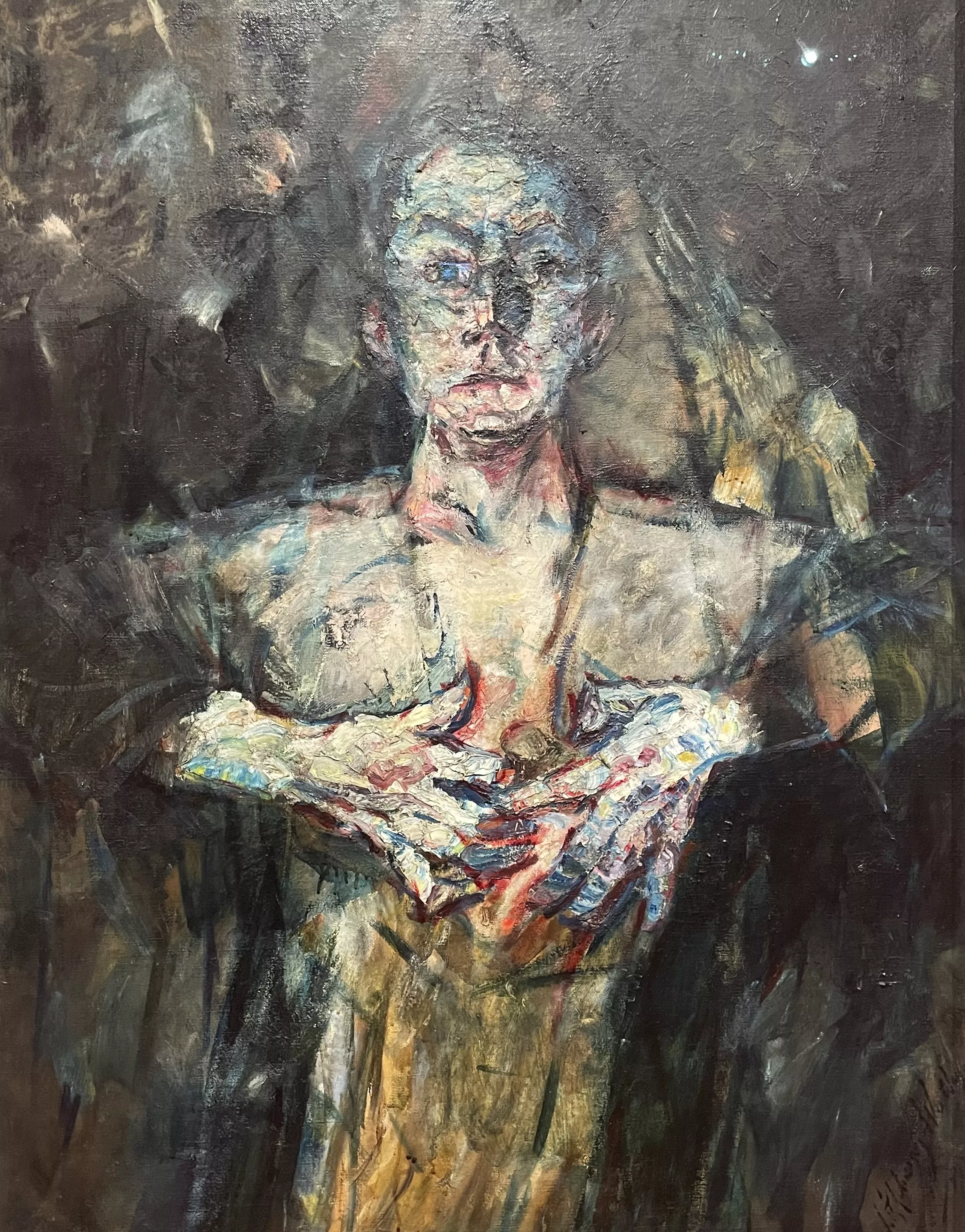
Franz Schwarz-Waldegg's imprint on his time
Franz Schwarz-Waldegg's delicate, introspective work is part of an artistic quest in which sensitivity and contemplation take precedence over spectacular effect.
By bringing a nuanced and poetic vision of the human condition, he joins artists such as Oskar Kokoschka, Max Oppenheimer or Georges Rouault, with whom he shares a fascination for the inner complexity of his models and a quest for authenticity.
His paintings, imbued with a rare serenity, mark a break with the tumult of expressionism, preferring a more subtle, meditative approach. Choosing restraint rather than excess, Schwarz-Waldegg imposes a style that favors interiority and introspection. His painting, a blend of Viennese classicism and impressionist touches, captures the suspended moment, the changing light, and reminds us of the fragile beauty of the present moment. In this way, he invites us to pause and reflect on human nature, where the softness of the colors contrasts with the depth of the gazes, revealing a gentle, yet tenacious melancholy.
.
Focus on Denomination (circa 1920), Fritz Schwarz-Waldegg
The painting Denomination by Fritz Schwarz-Waldegg plunges us into a mysterious, emotionally-charged universe.
At first glance, the work seems bathed in an atmosphere both sacred and intriguing, where the tension between light and shadow plays a central role. The artist succeeds in capturing a scene that goes beyond mere representation: it becomes almost a frozen ritual, imbued with a silent gravity.
The color palette, dominated by shades of brown, deep blue and touches of gold, creates a visual harmony where each hue seems to dialogue with the light.
This light, in fact, filters in subtly and dramatically, highlighting the faces and expressions of the characters, immersed in a kind of contemplation. The play of shadows accentuates the lines of the bodies and lends the whole an almost theatrical aura, as if we were witnessing a moment suspended in time.
The center of the composition irresistibly draws the eye: an outstretched, hesitant hand seems to be pointing at a figure, while the other figures, standing back, observe with palpable gravity.
Schwarz-Waldegg captures here the intensity of a decision or revelation to come, playing on the unspoken and the glances, creating a latent tension that inhabits the entire scene.
The arrangement of the figures, in a tight circle, evokes the notion of community and intimacy, but also hints at the weight of expectations and judgments.
With Dénomination, Fritz Schwarz-Waldegg does not seek to impose a precise interpretation: he opens up a space for questioning and emotion, where every detail, every expression becomes a bearer of meaning. The painting, in its depth and intensity, invites us to plunge into the heart of the human condition, with its choices, its doubts and its mysteries.
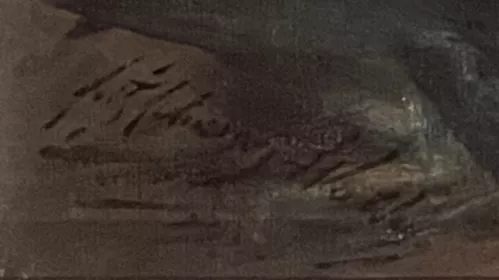
His signature
Although there are variations, here is a first example of his signature:
Expertise your property
If you happen to own a work by or after Fritz Schwarz-Waldegg, don't hesitate to request a free valuation by filling in our form on our website.
A member of our team of experts and certified auctioneers will contact you promptly to provide you with an estimate of the value of your work, as well as ad hoc information about it.
If you are planning to sell your work, you will also be accompanied by our specialists in order to benefit from alternatives for selling it at the best possible price, taking into account market inclinations and its specificities.
Estimate in less than 24h
Discover in the same theme

Rating and value of works, drawings, paintings by Fernand Ve...
Fernand Verhaegen is a twentieth-century Belgian painter who produced drawings and oils on canvas that are highly regarded on the auction market.
Learn more >

Rating and value of paintings by Zinaida Serebryakova
Zinaida Serebryakova is a Russian realist painter of the 19th century, who produced works that are quoted and valued on the art market.
Learn more >

Rating and value of paintings by Marie Aimée Lucas Robiquet
Marie Aimée Lucas Robiquet is an Orientalist artist who produced a large body of work that is highly valued and appreciated.
Learn more >
Works from the same period sold at auction

Estimated 2.000 - 4.000
Serge POLIAKOFF (1900-1969), Composition en rouge et bleu. 1965, Lithograph

Estimated 400 - 800
Joan MIRO (1893-1983), Montroig II (M. 954), Lithograph

Estimated 1.000 - 2.000
Georges Hanna SABBAGH (1887-1951), Portrait of a woman in a red tunic, Oil on cardboard

Estimated 600 - 1.000
Georges Hanna SABBAGH (1887-1951) "Le moulin Coutot à Chozant" Oil on canvas

Estimated 3.000 - 5.000
Roberto MATTA (1911-2002), Composition, Gouache on canvas

Estimated 3.000 - 5.000
Wladimir de TERLIKOWSKI (1873- 1951), Roulotte dans un paysage, oil on canvas

Secure site, anonymity preserved

Auctioneer approved by the State

Free and certified estimates
Frequently asked questions
-
Who was Fritz Schwarz-Waldegg, and what was his artistic style?Fritz Schwarz-Waldegg (1889–1942) was a 20th-century Austrian painter and a prominent figure in the Viennese art scene. His style is characterized by a sensitive exploration of introspection and the human condition, blending technical precision with emotional depth. Influenced by the Vienna Secession, he developed a personal artistic language marked by intense color contrasts, subtle lighting, and portraits of rare psychological depth, seeking to capture the soul of his subjects rather than merely their outward appearance.
-
What is the price range for Fritz Schwarz-Waldegg's works at auction?Fritz Schwarz-Waldegg's market value varies depending on the technique and type of work. Prints and multiples range from €100 to €200, drawings and watercolors from €160 to €4,000, while paintings—his most sought-after works—are estimated at between €600 and €10,000. For example, his painting “Stadt in der Provence” (1929) sold for €10,000 in 2012, exceeding its initial estimate of €1,800 to €2,200.
-
How can you authenticate a work by Fritz Schwarz-Waldegg?To authenticate a work by Fritz Schwarz-Waldegg, we recommend that you request a free appraisal from Auctie's. Our team of experts and state-certified auctioneers will analyze your artwork and provide you with an accurate estimate of its market value, as well as all relevant information regarding its authenticity and condition.
-
Is this a good time to sell a work by Fritz Schwarz-Waldegg?Yes, now is a good time to sell a work by Fritz Schwarz-Waldegg. This 20th-century Austrian artist commands extremely high prices on the art market, particularly for his Expressionist paintings depicting portraits and landscapes. Demand for this type of contemplative and introspective painting remains strong among collectors.
-
How does the appraisal and sale of a work of art take place at Auctie's?The appraisal is completely free and non-binding: simply fill out a form on our website, and an expert from our team will contact you shortly to provide you with an appraisal of your artwork. If you’re interested in selling, our specialists will guide you through the entire process—from appraisal to auction—by offering you the best options to achieve the highest possible price, taking into account the specific conditions of the current market.
