



Rating and value of Claude Lalanne's jewels, brooches and necklaces

Key takeaways
- Claude Lalanne’s brooches, which are particularly sought after, sell for between €250 and €110,000, with a 1970 *Pomme d’or* exceeding estimates to sell for €110,000 in 2022.
- The French artist (born 1925) uses electroforming to cast plant forms directly into metal, creating unique organic jewelry without symmetry or mechanical repetition.
- Her necklaces and earrings fetch up to €55,000, while bracelets and rings range from €1,000 to €35,000 depending on their complexity and prestige.
If you own a work by or after the artist Claude Lalanne, and would like to know its value, our state-approved experts and auctioneers will offer you their appraisal services.
Our specialists will carry out a free appraisal of your work, and provide you with a precise estimate of its value on the current market.
Then, should you wish to sell your work, we will direct you to the best possible arrangement to obtain the optimum price.
Rating and value of artist Claude Lalanne
Claude Lalanne is a well-known artist among jewelry collectors. Now, prices for her creations are rising at auctioneers' gavels.
His brooches are particularly prized, especially by French buyers, and the price at which they sell on the art market ranges from €250 to €110,000, a significant delta but one that speaks volumes about the value that can be attributed to the artist's works.
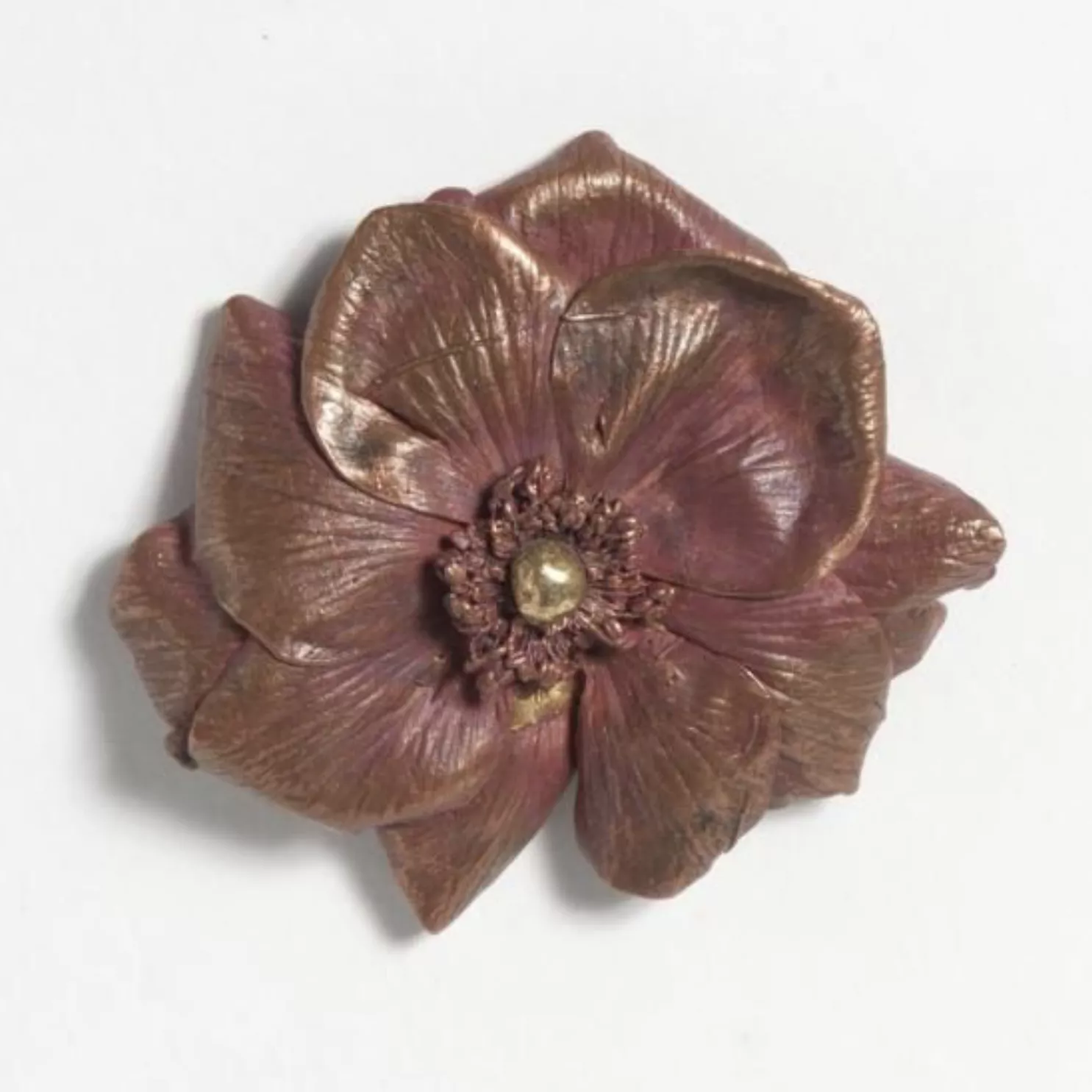
In 2022, A brooch Pomme d'or, dating from 1970 sold for €110,000, while it was estimated at between €40,000 and €60,000. Its value is exploding.
Order of value from a simple work to the most prestigious
Type of jewel | Result |
|---|---|
Ring | From €650 to €15,000 |
Bracelet | From €1,000 to €35,000 |
Earrings | From €700 to €55,000 |
Necklace | From €1,700 to €55,000 |
Brooch | From €250 to €110,000 |
Estimate in less than 24h
Style and technique by artist Claude Lalanne
Claude Lalanne is a French artist who has notably produced jewelry in a variety of materials : bronze, gilded bronze, metal, silver, and more.
She doesn't really have a particular style, her stylistic identity is unique and borrows from various floral inspirations, but also from the animal world, which she doesn't hesitate to modify and transform to sculpt totally unique creatures, her famous Pomme d'or brooch being a perfect example.
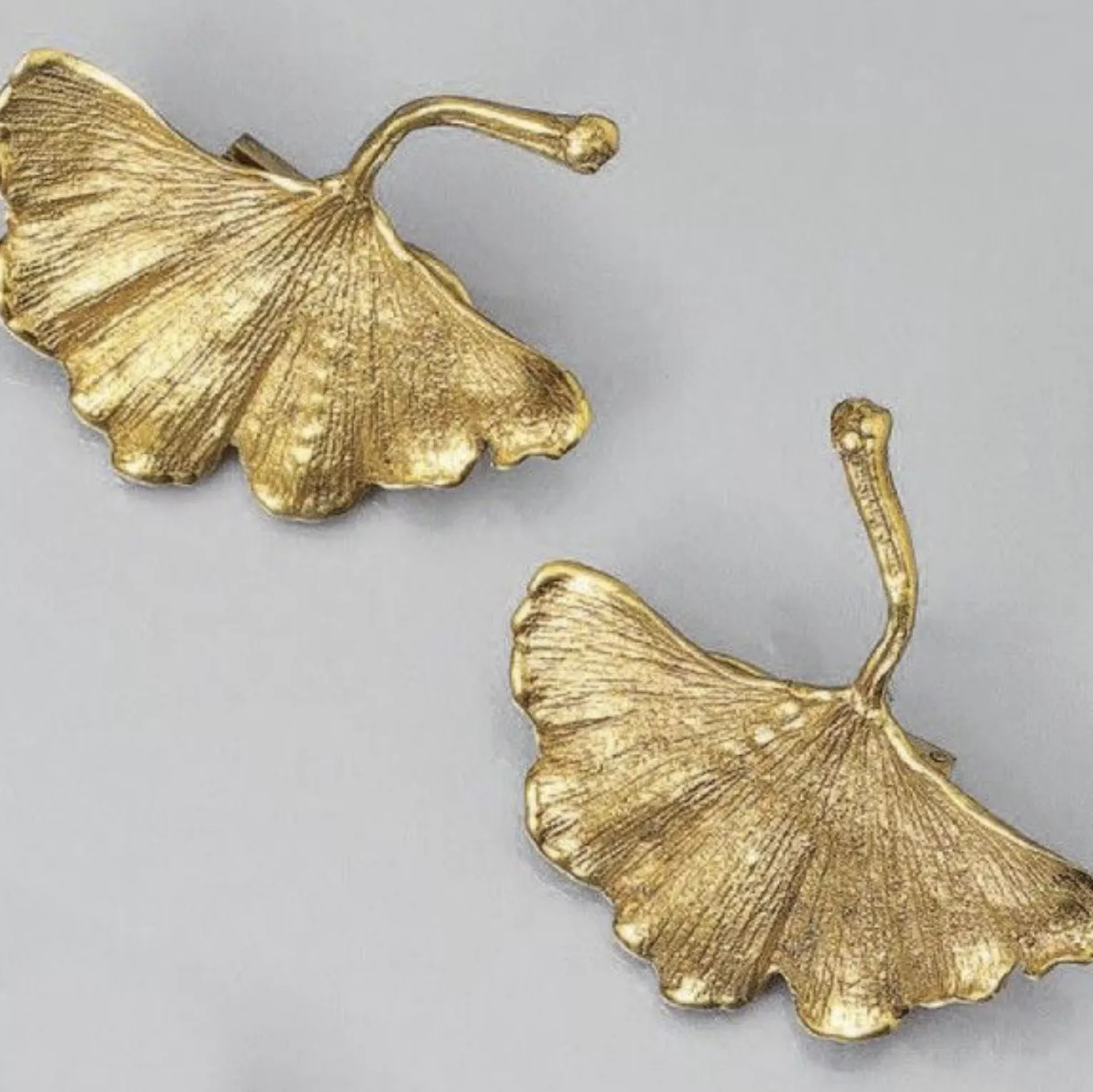
In Claude Lalanne's jewelry, form doesn't seek brilliance, it follows a logic of adaptation. The motif, always organic, is not ornamental: it unfolds according to a precise syntax, where each leaf, each stem, each flower is molded from reality.
The process is based on electroforming, a slow technique that deposits metal on a plant surface. The material is not worked by adding, but by depositing and covering. The plant doesn't disappear, it becomes structure.
The drawing only intervenes upstream or downstream. It's not used to invent a form, but to organize a logic. The jewel doesn't impose itself as an autonomous volume; it embraces the body, following its lines, extending its reliefs.
No symmetrical effects, no mechanical repetition. Each piece is unique in its growth, its balance, its density. Claude Lalanne doesn't stylize, she fixes a state. She doesn't deform, she supports.
Metal keeps the trace of the living without freezing it. In this work, jewelry is neither accessory nor miniature sculpture: it becomes a fragment of space, a silent extension of the body, an image held in matter.
The artist's career and the world of Claude Lalanne
Claude Lalanne is a French artist born in Paris in 1925.
She studied at the Beaus-Arts de Paris and the École des Arts décoratifs, where she trained in sculpture and jewelry design.
Most of her work, and what she is known for internationally, is still sculpture, including jewelry. Her work was noticed by Yves Saint Laurent and Pierre Bergé, with whom she would collaborate.
Claude Lalanne notably created busts of the model Verushka as part of her collaboration with Saint Laurent, but also other pieces : brooches, jewelry... Part of it was part of her collaboration with Loulou de la Falaise, a model who also created jewelry.
His sculpture L'Homme à la tête de chou would be a source of inspiration for Serge Gaisbourg, who released an ablum bearing this name in 1976.
In 1952, she met her second husband at a gallery, François-Xavier Lalanne, also a sculptor. The couple became known and publicized for their work together, and were nicknamed " Les Lalanne ".
Her husband was more interested in animals, she in flowers. Their best-known realisations date from the series of commissions for YSL and Pierre Bergé.
She made more jewelry than her husband; almost 400 pieces have already been auctioned in this category, which gives an idea of the consequence of her production.
Awards for the artist's works often exceed the million euro mark, with Baroque inspiration a recurring theme among today's collectors.
Focus on Collier Ginkgo, Claude Lalanne
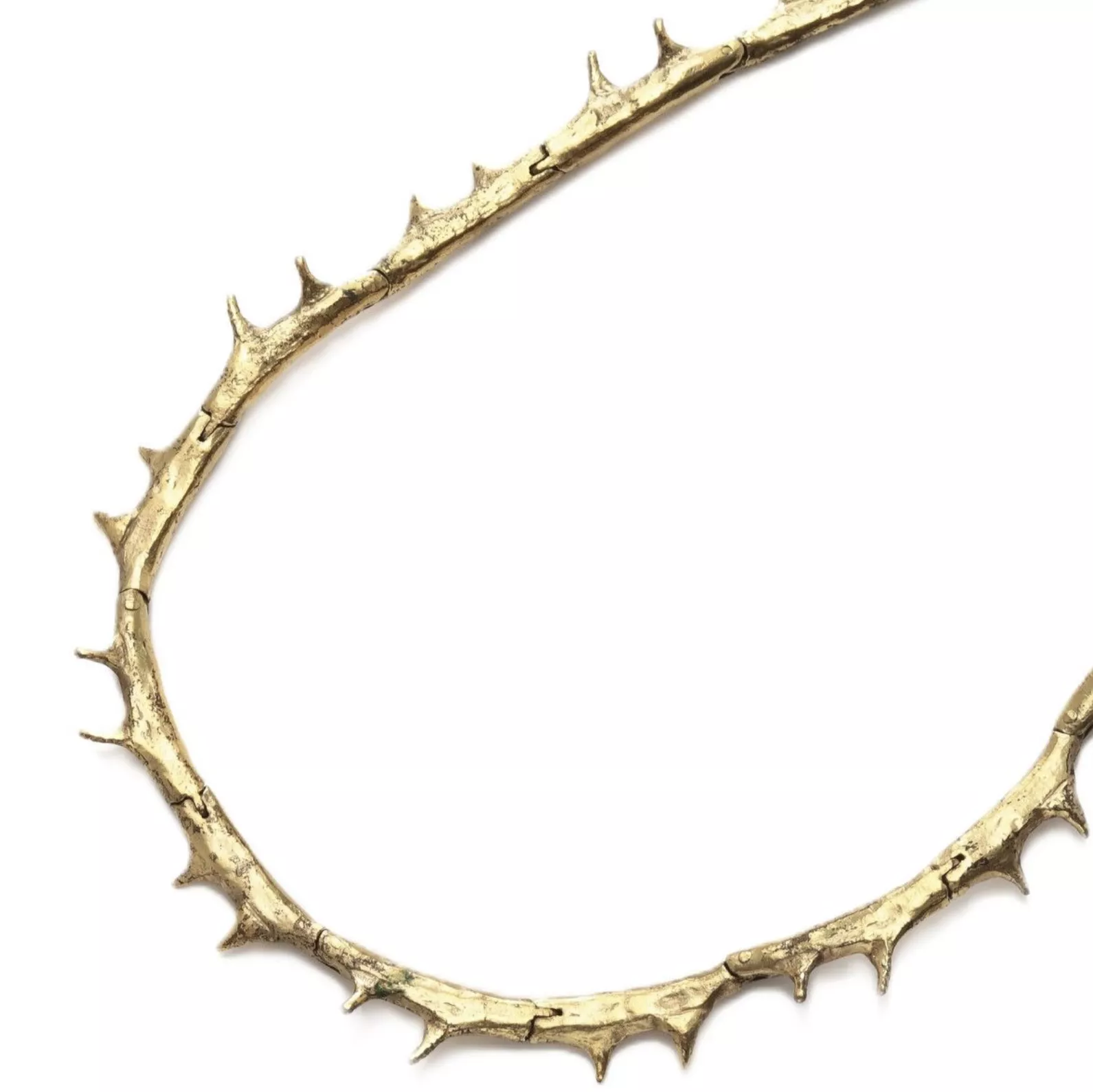
In Collier Ginkgo, form follows a logic of silent growth. The leaves, molded directly onto the plant, are neither stylized nor reduced to a decorative motif. They retain their veins, irregularities and folds.
The metal doesn't correct, it records. Each element attaches to the other without visible articulation, in a supple rhythm, without symmetry. The chain disappears. The jewel does not rest on a hidden structure: it organizes itself from within, through contact, continuity, interlocking.
The material, often gilded bronze, does not seek brilliance. It absorbs light, retaining its sparkle. The surface is matt, sometimes oxidized, sometimes polished in places, but without strong contrast.
The jewel doesn't show itself, it sits. It doesn't impose itself, it follows. The neck becomes a support for line, leaf and organic structure. Jewelry acts less as an adornment than as a graft. It doesn't add, it extends.
At Claude Lalanne, the Collier Ginkgo is given not as a precious object but as a stabilized fragment of the living, transferred into metal without loss of form, without effect, without rupture.
Claude Lalanne's imprint on her period
Claude Lalanne has made a significant contribution to art and culture, although not widely known to the general public, she is well known and appreciated by enthusiasts and collectors.
Her own works reflect the influence of the artistic movements of her time, making her an important figure in twentieth-century art, impacting a whole generation of sculptors and jewelry designers.
Her works are extremely highly rated on today's art market, the value they achieve at auction is constantly on the rise.
Her jewelry is particularly sought-after by collectors, this is partly due to its price tag but also to its original and timeless character.
In Claude Lalanne's jewelry, the imprint is made not by rupture but by displacement. It doesn't redefine the codes of jewelry, it hijacks them.
At a time marked by formal experimentation, by geometric abstraction, by the rise of conceptual jewelry, it introduces another logic: that of the living transposed, the molded plant, the natural form fixed in metal.
The jewelry doesn't become a sign, it remains a fragment. It doesn't seek demonstration, it focuses on detail. It doesn't represent, it preserves. It does not compose, it organizes.
The plant is taken in its state, without correction, without addition. It becomes structure. Metal embraces, records, extends. The surface keeps the trace of reality, in its veins, its edges, its variations.
The body is not adorned, it is extended. The jewel follows a line, a hollow, a curve. It doesn't intervene from the outside, it matches. This way of working transforms the relationship between sculpture, adornment and object. It erases distinctions.
Scale becomes secondary. Necklaces, rings and bracelets are not miniatures; they are full forms, conceived in a continuity of gesture. With Claude Lalanne, jewelry ceases to be an add-on, becoming a structure in its own right, just like his sculptures and his furniture.
It is in this discreet but constant shift that his imprint is played out. Not imposed, but transmitted. Not imposing, but persistent.
A way of doing that inscribes the living into the material without freezing it, without illustrating it, and that durably modifies the perception of jewelry as an autonomous form.
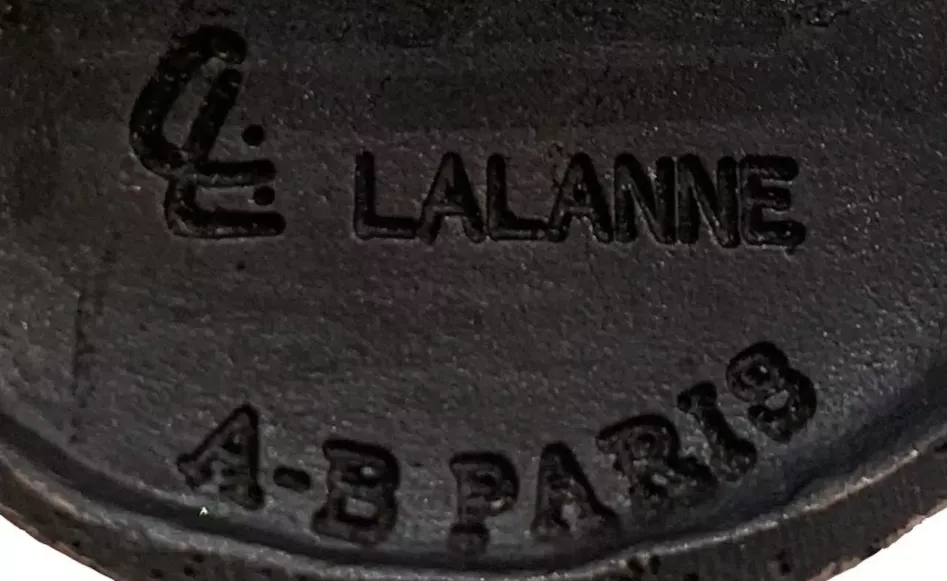
Recognizing the artist's signature
Claude Lalanne doesn't necessarily sign his works. Copies may exist, which is why expertise remains important.
Knowing the value of a work
If you happen to own a work by or after Claude Lalanne, don't hesitate to request a free appraisal using our form on our website.
A member of our team of experts and licensed auctioneers will contact you promptly to provide you with an estimate of the market value of your work, not forgetting to send you ad hoc information about it.
If you are considering selling your work, you will also be accompanied by our specialists in order to benefit from alternatives for selling it at the best possible price, taking into account market inclinations.
Estimate in less than 24h
Discover in the same theme

Rating and value of Amalric Walter paperweights, vides-poche...
Amalric Walter is a twentieth-century glassmaker who collaborated with Daum, producing works that are highly regarded and valued.
Learn more >

Lucien Lévy Dhurmer's vases rating and value
Lucien Lévy Dhurmer is a twentieth-century painter and ceramist who produced vases that are highly prized at auction.
Learn more >

Rating and value of paintings by Lynne Drexler
Lynne Drexler is an American Expressionist artist who has produced numerous paintings that are highly rated and valued at auction.
Learn more >
Other jewels sold at auction

Estimated 6.000 - 8.000 €
VAN CLEEF ARPELS - "Alhambra" - Long necklace in yellow gold adorned with twenty motifs set with tiger's eye quartz.

Estimated 10.000 - 20.000 €
Alexander CALDER (1898-1976) Silver ring with double spiral motif

Estimated 20.000 - 40.000 €
Alexander CALDER (1898-1976) Silver tiara with wave motifs holding pendants

Estimated 300 - 500€
CHANEL silver-plated metal and black enamel cuff

Estimated 3.000 - 5.000
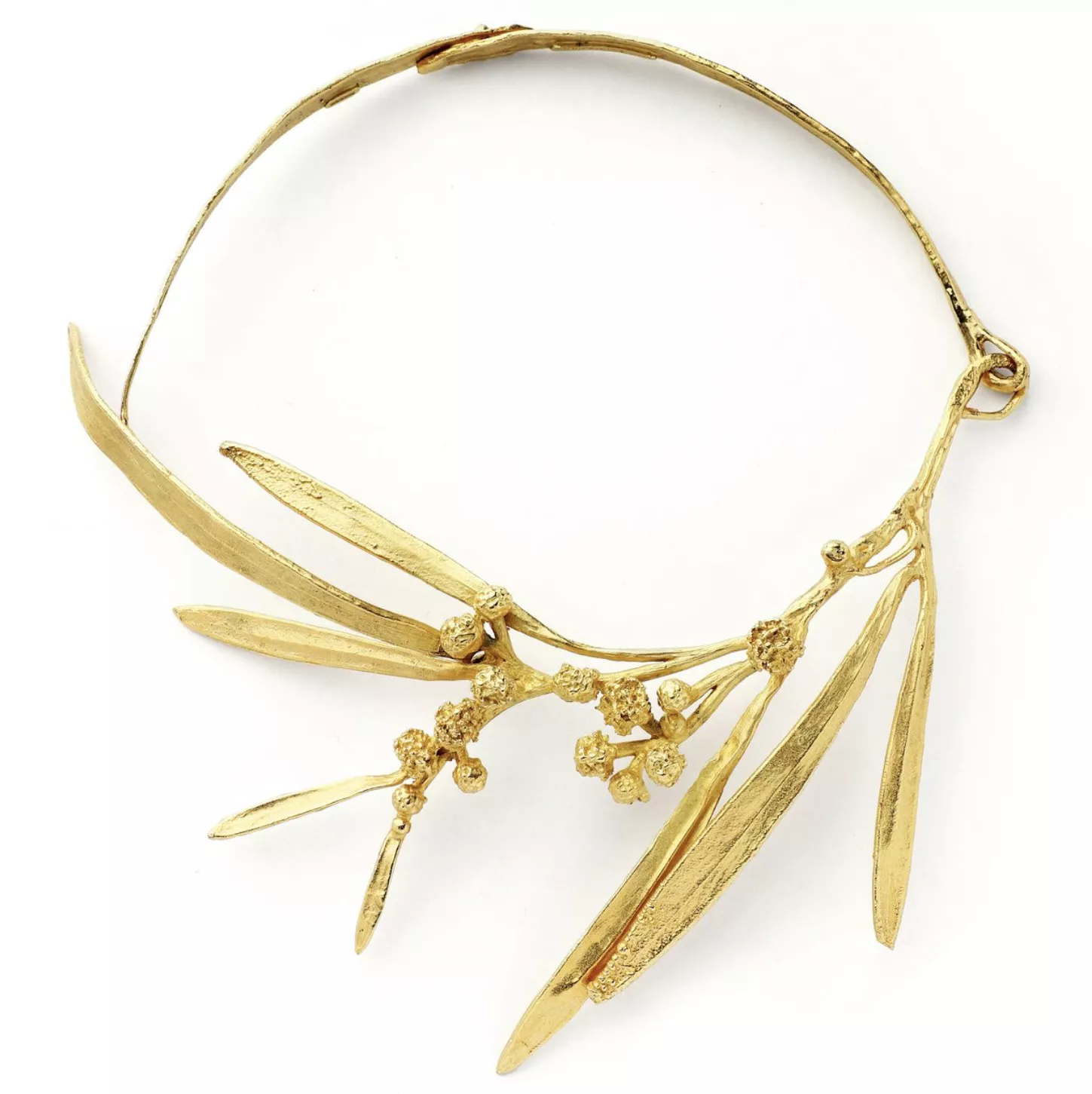
Claude LALANNE (1925-2019) Mimosa necklace

Estimated 15.000 - 20.000
François-Xavier LALANNE (1927-2008) Tortue, 1973 brass patina edition no. 75/100 (traces of oxidation and minor patina damage)

Secure site, anonymity preserved

Auctioneer approved by the State

Free and certified estimates
Frequently asked questions
-
Who is Claude Lalanne, and what is his artistic style?Claude Lalanne is a French artist born in Paris in 1925, who studied at the Beaux-Arts and the École des Arts décoratifs. She is famous for her jewelry and sculptures characterized by electroforming, a technique that casts metal directly onto plant material, creating unique organic pieces inspired by flora and fauna. Her works are distinguished by their lack of symmetry and their faithful representation of natural forms, without stylization. She collaborated with Yves Saint Laurent and Pierre Bergé, and her creations remain highly sought after by international collectors.
-
What is the price range for Claude Lalanne's jewelry?The prices of Claude Lalanne’s jewelry vary considerably depending on the type and the piece: rings sell for between €650 and €15,000, bracelets between €1,000 and €35,000, earrings between €700 and €55,000, necklaces between €1,700 and €55,000, and brooches between €250 and €110,000. For example, the famous “Pomme d’Or” brooch from 1970 exceeded its initial estimate, fetching €110,000 in 2022. Its value continues to rise on the art market.
-
How can you authenticate a work by Claude Lalanne?Claude Lalanne does not always sign his works, and there are copies on the market. To authenticate a piece, we recommend that you request a free, no-obligation appraisal from Auctie's using the form on our website. A state-certified expert or auctioneer will contact you shortly to examine the work and provide you with an accurate estimate of its market value within 48 hours.
-
Is this the right time to sell a work by Claude Lalanne?Yes, now is an excellent time to sell a work by Claude Lalanne. Her market value has skyrocketed in recent years, her jewelry is particularly sought after by collectors, and her major pieces regularly fetch over one million euros at auction. Her Baroque-inspired designs and organic forms are in high demand in today’s art market.
-
How does the appraisal and sale of a work of art take place at Auctie's?The process is simple and free: submit your artwork via our online form, and an expert or certified auctioneer will contact you within 48 hours for a no-obligation estimate. If you decide to sell, our specialists will guide you from start to finish, offering you the best options to achieve the highest possible price based on current market trends.
