Pierre-Antoine Martenet
Pierre-Antoine Martenet has been appraising old paintings for many years. For Auctie's, he is responsible for appraising and valuing them in our sales at Hôtel Drouot.






Key takeaways
If you own one or more paintings, from any period, and would like to know their value, our state-approved experts and auctioneers will offer you their appraisal services.
Our specialists will carry out a free appraisal of your work, and will provide you with a precise estimate of its value on the current market.
Then, if you wish to sell your work, we will direct you to the best possible arrangement to obtain the optimum price.
Pierre-Antoine Martenet has been appraising old paintings for many years. For Auctie's, he is responsible for appraising and valuing them in our sales at Hôtel Drouot.
Paintings are currently sought-after collectors' items for many old and contemporary artists. If you own one or more, they may be worth more than you think. On the art market, the prices of these objects can be very high under the auctioneer's hammer.
Their appraisal is also sometimes very complicated and subject to many rules. The value of your painting can vary according to many factors, and it needs, for all the reasons listed below, to be referred to a specialist if it has a minimum value or if it falls within a precise field of specialization.
Buying paintings at auction, whether old or contemporary, has many advantages for collectors and art lovers. On the one hand, auctions offer the opportunity to acquire unique works, often steeped in history, which may come from different eras and artistic movements. These works, sometimes otherwise inaccessible, are brought to light by experts who guarantee their authenticity and value. What's more, auctions enable buyers to discover rare pieces and constitute a diverse collection at prices potentially lower than those on the traditional market. What's more, the competitive auction process adds an exciting dimension to the acquisition, making each purchase all the more rewarding.
Many paintings are presented for sale every week at Drouot, all over France, Europe and the world, enabling buyers to go to exhibitions to look at the potential of the works, and choose which one will be their next purchase.
Buyers may bid for paintings for a variety of reasons: love at first sight, collecting, decorative needs, investment, etc. All of these factors ensure that your painting will sell quickly once its appraisal has been completed.
.The first thing we often take into account in order to estimate and appraise a painting is the artist who made it.
In many cases, it is possible thanks to the degree of knowledge of auctioneers and experts to find the artist very quickly, and without any particular doubt. However, sometimes it's too risky to put an artist's name on a painting.
We'll therefore proceed to an attribution by school or workshop. Sometimes we'll see a mention " attributed to " or " in the taste of ". This means that there is a possibility that the painting was produced by the artist in question, but that the documentary resources available did not allow the painting to be attributed with any certainty.
As for the expression " dans le goût de ", it is aimed more at copying, or the pupil who would have produced a painting begun by his master. Various contexts may justify the use of this expression.
In some cases, the painting simply cannot be attributed to any artist. In such cases, one very important factor remains to describe the painting: time. Indeed, it's not uncommon to read mentions of " école du XIXème ", etc.
The period of creation is very important in appraising the painting, and more precisely the current. For example, the terms " Renaissance " and Baroque " correspond to a period, while Impressionism corresponds to a current.
More broadly, we need to take into account the historical and artistic context in which the work was created, which can be important for understanding the subject represented.
For example, representing post-revolutionary elements in a Romantic context is coherent, whereas representing a scene from the Assumption in this context is less common and less coherent.
Moreover, a painting can be the result of crossing influences, we can't pigeonhole every painting into a predefined box, era and current. Some artists traverse their time and their work is the result of plural influences and multiple experiments.
Then, it's essential to consider the artistic and cultural importance of the work : its contribution to art history, the influence of the artist and the work on other artists and movements, and the work's recognition in artistic and museum circles.
All these factors are characteristics that will make the painting shine on the art market and give it a history, a past and a more thorough and important meaning.
Finally, we analyze the aesthetics and composition of the work : balance, proportions, perspective. All this obviously depends on the preceding elements and remains subjective vis-à-vis the public.
Someone will be able to find a painting by Olivier Debré or by Pierre Soulages balanced and perfectly proportioned while someone else would judge it totally unbalanced and untidy.
In this context, the use of color, light and shadows will also be very important in order to explain the painter's artistic approach : understanding what he wanted to represent and how he wanted to represent it.
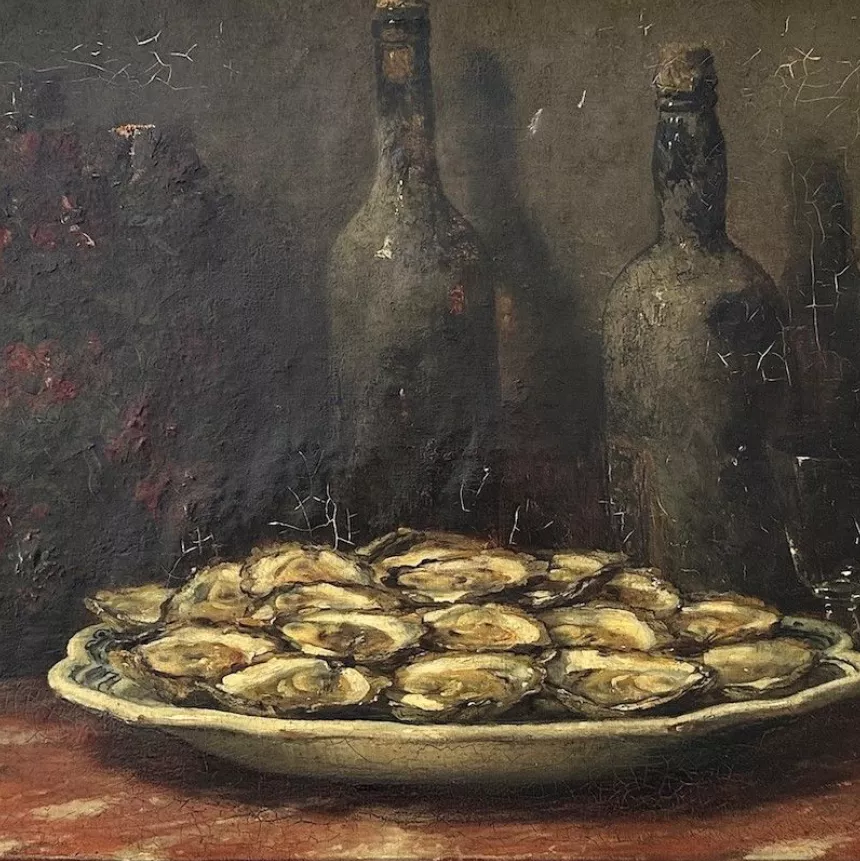
Naturally, technique is an aspect that experts will focus on in order to describe and value your painting.
First, it's a matter of finding the medium used in the making of the work : watercolor, oil, acrylic, charcoal, brushbrush, combined with the support used : canvas, wood, paper. We end up with descriptions such as " oil on cardboard ", " paper mounted on canvas ", etc.
Specific techniques can sometimes be used : impasto, sfumato, pointillism, stencil ... the technique can exert an influence on the durability and conservation of the work. The most telling example at present is Le radeau de la Méduse by Géricault, whose tar paint is blackening the entire canvas.
The framing of the painting is also to be taken into account. It's a skill in its own right, and one that adds value to the painting if it's done well. Contemporary frames on old paintings tend to de-center the work from its context.
Many materials can be used to make the frame, to which some buyers pay particular attention, as this has an impact on the painting's preservation and presentation, and more broadly on its value.
Finally, sometimes conservation affects the value of your painting. The expert therefore takes into account restorations, alterations and wear, in order to assess the overall condition of the painting. This can be linked to storage conditions: humidity often affects works of art.
Light that is too strong can also burn the surface of the canvas, destroying the pigments and permanently changing their coloration. Poorly done conservation interventions can be dangerous for the painting.
A poorly done restoration or an over-varnished painting can lose its creative context, its essence and naturally its value. It's important to take care to preserve the work of artists, which doesn't necessarily mean for all works to preserve them in their original state of creation.

The auctioneer or specialist carrying out the appraisal of your painting must also take theoretical aspects into account.
Authenticity and provenance are very important factors. For many twentieth-century artists, it's essential to work with committees that have a monopoly on saying whether the painting is authentic or not. This is the case for Calder or Tapies.
The work's traceability and history of ownership and sale is also a crucial element. A painting whose provenance cannot be established loses its value. On the contrary, if the painting has a royal provenance or belonged to an important personality, this will increase its value.
Sales recently held to disperse the collections of personalities such as Hubert de Givenchy are reaching record amounts. Others include the Depardieu collection or the collection of'Alain Delon, which fetched over eight million euros.
The signature is also very important, and can in some cases double the value of a painting. Naturally, it must be authentic, as some artists' signatures are easy to falsify.
There may be other markings or labels; there is, for example, specific embossing on Yves Klein's works. With the committee's approval, the experts thus have no difficulty in establishing the authenticity of the signature in these cases.

Rating and value of classical and Stradivarius violins
Violins are a common sight in auction rooms, with prices varying from one model to another. Stradivarius violins are particularly valuable.
Learn more >

Rating and value of Sèvres porcelain vases
Sèvres porcelain vases are particularly popular and sought-after items on the auction market. Their value is high.
Learn more >

Rating and value of services, housewives, candelabras of the...
The Cardeilhac silversmith's firm produced services, household sets and candelabras that are highly valued at auction.
Learn more >
Estimated 10.000 - 15.000 €
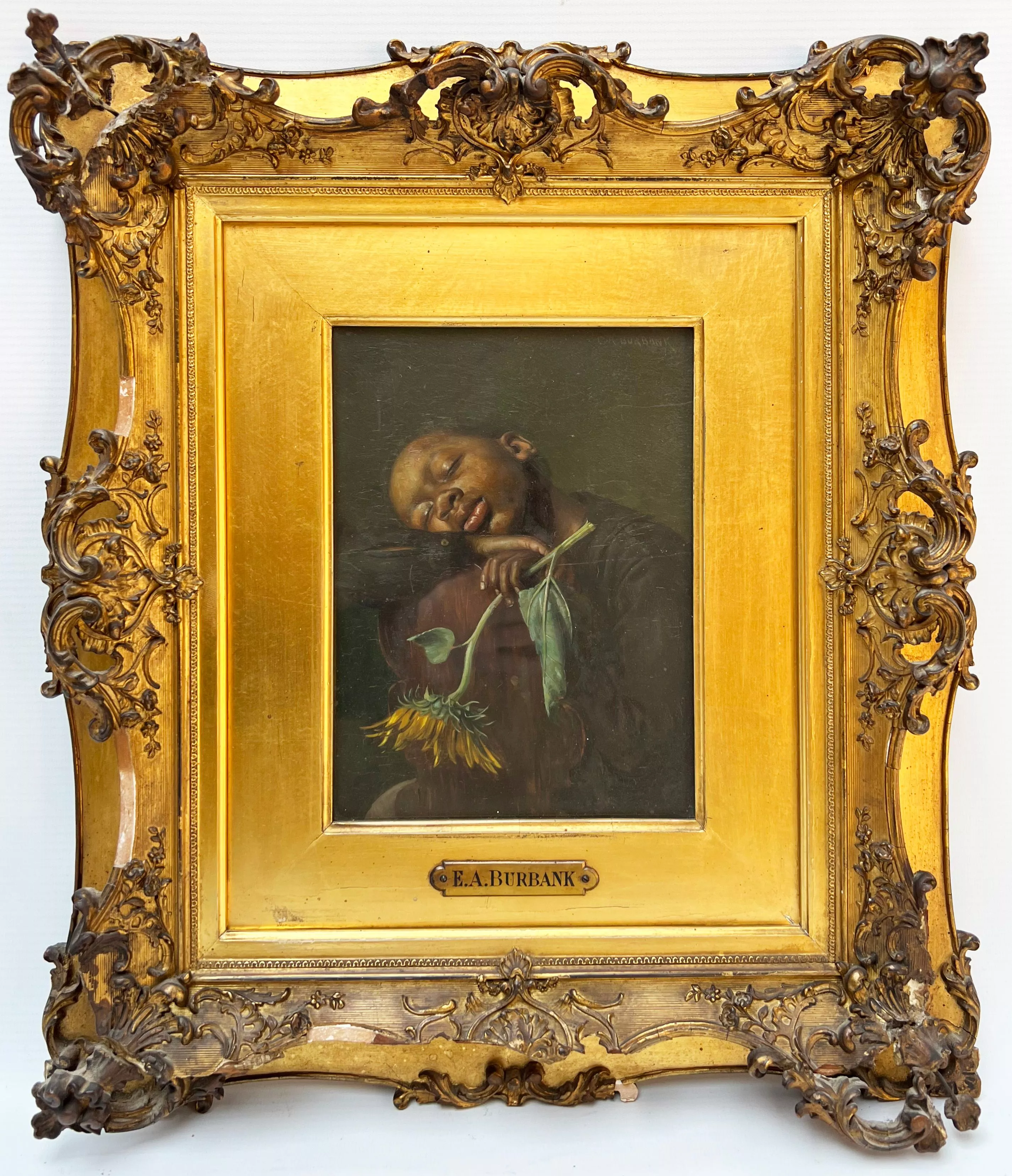
Ebridge Ayer BURBANK(1858-1949), Young African-American boy, Oil on panel.
Estimated 8.000 - 12.000
Guillaume FOUACE (1837 - 1895), Still life with lobster, oil on canvas
Estimated 40.000 - 80.000
Alexandre ROUBTZOFF (1884-1949), Portrait of Arbia, oil on canvas
Estimated 20.000 - 30.000
Alexandre ROUBTZOFF (1884-1949), Portrait of Marie-Madeleine Leroy, oil on canvas
Estimated 20.000 - 30.000
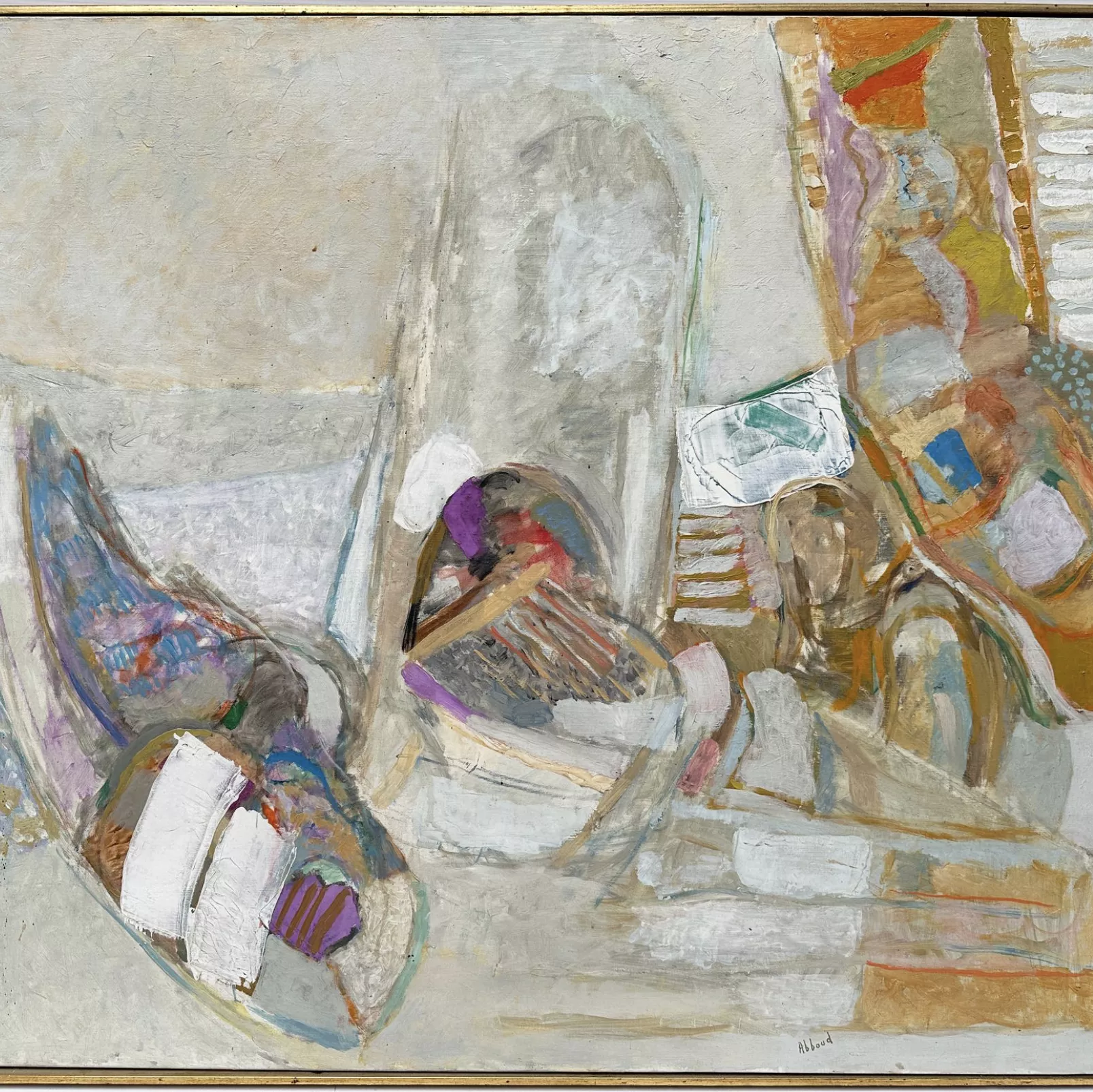
Chaffic ABBOUD (1926-2004) "La visite", Oil on canvas
Estimated 15.000 - 20.000
ZAO WOU-KI (1921-2013) Composition, 1972, Brush and Indian ink on Asian paper.

Secure site, anonymity preserved

Auctioneer approved by the State

Free and certified estimates


