



Ratings and values of paintings by Cecilia Beaux

Key takeaways
- Cecilia Beaux (1855–1942), an American Impressionist portrait painter, sees her oil-on-canvas works fetch prices ranging from 550 to 326,250€ on the current market.
- Her painting “Ethel Page as Undine” sold for €326,250 in 2019, far exceeding its initial estimate of €53,000 to €70,000.
- A pioneer in the appointment of female faculty at the Pennsylvania Academy of the Fine Arts in 1895, she remains a major figure in American art and in psychological portraiture without idealization.
If you own a work by or after the artist Cecilia Beaux, and would like to know its value, our state-approved experts and auctioneers will offer you their appraisal services.
Our specialists will work to carry out a free appraisal of your work, and will provide you with an accurate estimate of its value on the current market.
Then, if you wish to sell your work, we'll direct you to the best possible arrangement to obtain the optimum price.
Rating and value of artist Cecilia Beaux
Cecilia Beaux is an artist known to lovers of Impressionist canvases. Now, prices for her works are rising at the auctioneers' gavel.
Her oils on canvas are particularly prized, especially by American buyers, and the price at which they sell on the art market ranges from €90 to €326,250, a large delta but one that speaks volumes about the value that can be attributed to the artist's works.
In 2019, his oil on canvas Ethel Page as Undine, was sold for €326,250, while it was estimated at between €53,000 and €70,000. Her quotation is stable.
Order of value from a simple work to the most prestigious
Technique used | Result |
|---|---|
Drawing | From 90 to 32 000€ |
Oil on canvas | From 550 to 326 250€ |
Estimate in less than 24h
The style and technique of Cecilia Beaux
Cecilia Beaux (1855 - 1942) was an American Impressionist portrait painter who developed a style combining the American tradition of realism with European, particularly French, painterly elegance.
She is often compared to John Singer Sargent, and differs from them in a more poised, analytical and intimate approach to the model. The artist uses oil paint with great mastery, light impasto, glaze and gentle transitions between tones.
The artist often works with successive layers and a rigorous basic drawing that she inherited from her academic training at the Pennsylvania Academy of the Fine Arts, constantly seeking total unity and balance between colored mass and drawing.
Light is diffused, soft and often lateral, allowing her to sculpt faces with delicacy, without ever hardening the features. She also works with the chiaroscuro inherited from the Old Masters, but lightened by a clear, luminous palette and often dominated by cool whites, beiges and blues.
Her work shows a particular interest in the effects of fabric, texture and matter, which give her paintings an almost tangible, tactile quality. She does not seek resemblance alone, since her portraits exude an inner dimension and a strong psychological presence.
Facial expressions are measured, attitudes natural, often in a domestic and intellectual setting, which often allows the model's social or intellectual status to be respected.
Although the artist's work is rooted in a classical tradition, she introduces a modern sensibility into her painting, capturing the individual in his or her truth, without emphasis or idealism. She breaks with strict academicism, favoring observation, restrained expression and the truth of the ordinary gesture.

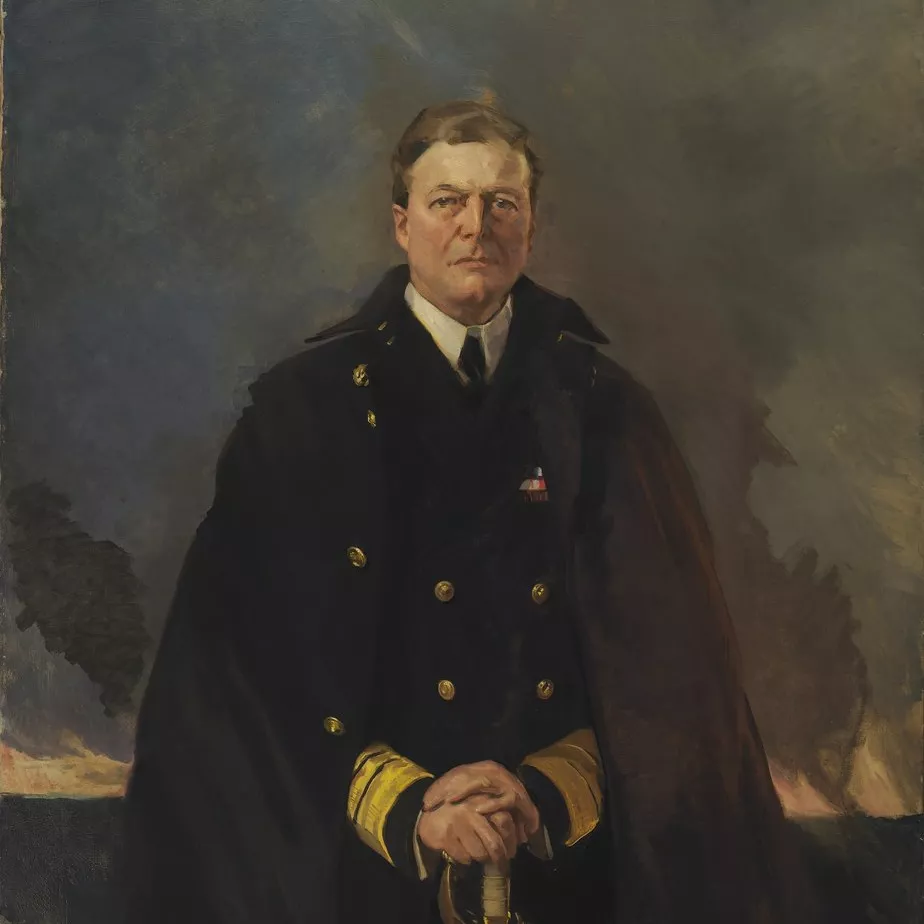
The life of Cecilia Beaux
Cecilia Beaux was born in Philadelphia in 1855, into a family of French origin. She lost her mother shortly after birth, and was raised by her grandparents in a cultured environment that encouraged her to learn art.
She took drawing classes at the Pennsylvania Academy of the Fine Arts, then continued her training as a self-taught artist, while teaching drawing for a living. She also studied briefly in France in 1888 at the Académie Julian, where she discovered the European masters and refined her style.
She began exhibiting in the 1880s, and was soon favorably received by American critics. Cecilia Beaux painted portraits of high society personalities, intellectuals, scientists and artists, while maintaining a very personal approach.
Cecilia Beaux refused marriage to devote herself to her art, which enabled her to pursue a free career, focused on technical excellence and observation. She became one of the first women to teach at the Pennsylvania Academy of the Fine Arts, training several generations of artists.
Considered during her lifetime to be the greatest American portrait painter, she is often compared to Sargent, Whistler and Mary Casatt. She traveled regularly in Europe (France, Italy, England) to study the old and contemporary masters.
Stays in Paris reinforced her taste for refined composition, nuanced light and psychological portraiture, in the tradition of French painters. She continued to paint well into old age, despite health problems.
The artist published her memoirs, Backgroung with Figures, in 1930, in which she looks back on her life as a woman artist in a male-dominated world. She died in 1942, aged 87.
She is recognized today as one of the great figures of American art, and a pioneer in the institutional recognition of women artists.
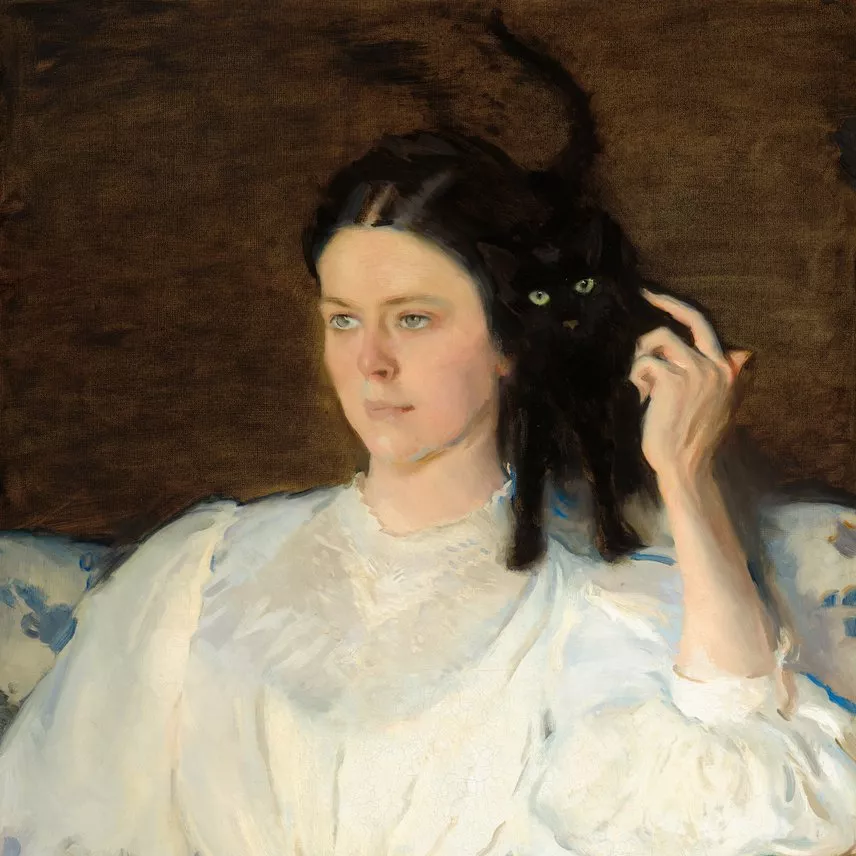
Focus on Sita and Sarita (Young Girl with Cat), Cecilia Beaux
In this painting (oil on canvas - approx. 127 x 101 cm), produced between 1893 and 1894, Cecilia Beaux depicts a young girl (her cousin) holding a small black cat in her arms. The two gazes, that of the girl and the cat, look at the viewer.
She structures the portrait in a bust, slightly off-center, framed at mid-body in a calm, frontal posture. The background is reduced to a light, almost neutral background, accentuating the dark silhouette and the intensity of the glances.
Masses are present and highly contrasting (bright whites, deep blacks) that structure the painting graphically. Both the girl and the cat look straight out of the frame, creating an unsettling duality between human and animal.
The cat seems to reflect the young woman's emotions, reinforcing the portrait's mystery and density. The model's expression, restrained and distant, contributes to the atmosphere of calm tension.
The palette is reduced but extremely refined with black, ivory, touches of ochre and pale pink in the face. The light comes from the front, smoothing surfaces without flattening them, and modeling the face with great subtlety. The contrast between the black dress and the light background creates an almost sculptural effect.
The strokes are precise and fused, with an absence of visible textures, giving the painting great visual clarity. The drawing is rigorous in the structure of the face, but free in the textile materials and shadows, which soften the whole.
This work shows a delicate relationship between academic mastery and the poetics of expectation and silence. The painting has a double reading, since it is both a simple social portrait and can also be interpreted as an allegory of the feminine, of solitude and interiority.
Beaux offers here a portrait without idealization or anecdote, taut in psychological realism and emotional restraint. The modernity is discreet, a woman looking, rather than being looked at, with a cat as her double.
Cecilia Beaux's imprint on her period
Cecilia Beaux established herself as the first renowned female portraitist in the United States, in a field then largely dominated by men particularly in ceremonial portraiture.
Her work was hailed by critics as equal to, if not superior to, her male counterparts, notably John Sargen or William Merritt Chase.
She was the first woman to teach full-time at the Pennsylvania Academy of the Fine Arts (1895), becoming a role model for generations of American artists.
At a time when American art was torn between academism, impressionism and decorative art. Beaux maintains a subtle balance between tradition and modernity. She defends a psychological portrait, without emphasis, that favors inner truth over worldly virtuosity.
Her measured, elegant style thus becomes a reference point for those seeking an alternative to the glitz and glam of social prestige. Cecilia Beaux traveled regularly to Europe, exhibited in Paris, London and Venice and acted as an ambassador of cultivated American taste.
She embodied the intellectual openness of an American elite turned towards France, at a time when tensions existed between conservatism and modernity in the art world.
She is a pioneer of the professional status of women artists, rejecting social conventions that limit women to the domestic sphere; she is single, independent, a teacher and leads a free career.
Her example inspires other female artists to live their art without pillar to assigned roles (including Violet Oakley, Elizabeth Shippen Green, Yvonne Canu and Berthe Morisot)
In her memoirs, she expresses herself on her condition in her memoirs published in 1930, which have become an important text in the social history of art. Her work went through a period of relative oblivion in the middle of the 20th century.
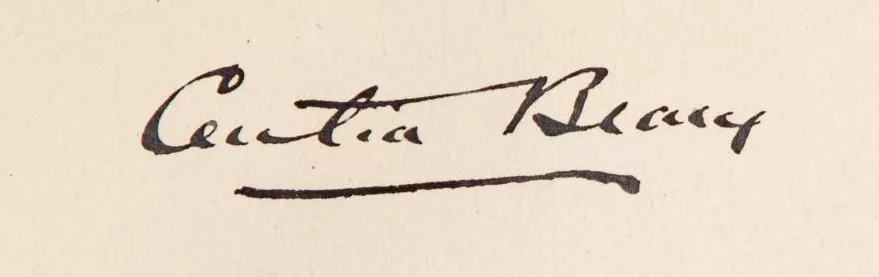
Recognizing the artist's signature
Cecilia Beaux doesn't necessarily sign her works. Copies may exist, which is why expertise remains important.
Knowing the value of a work
If you happen to own a work by or after Cecilia Beaux, don't hesitate to request a free appraisal using our form on our website.
A member of our team of experts and certified auctioneers will contact you promptly to provide you with an estimate of the market value of your work, as well as ad hoc information about it.
If you are considering selling your work, you will also be accompanied by our specialists in order to benefit from alternatives for selling it at the best possible price, taking into account market inclinations.
Estimate in less than 24h
Discover in the same theme

Rating and value of works, paintings, drawings by Eugène Bou...
Eugène Boudin was a 19th-century marine painter who produced a number of drawings and paintings. They are highly valued at auction.
Learn more >

Rating and value of works, drawings, paintings by Étienne Bo...
Étienne Bohot was a 19th-century painter influenced by Romanticism, who produced drawings and oils on canvas that are highly prized at auction.
Learn more >

Rating and value of paintings and drawings by Charles Théodo...
Charles Théodore Frère is an Orientalist painter whose paintings are highly regarded and valued on the auction market.
Learn more >
D'autres tableaux impressionnistes vendus aux enchères

Estimated 6.000 - 8.000
Mikhail Markianovich GUERMACHEFF (1867 - 1930) House under the snow, oil on canvas

Estimated 2.000 - 4.000
Jean DUFY (1888-1964) Vase of anemones, Watercolor

Estimated 600 € - 800 €
Henri ZUBER (1844-1909), Bridge at Artemare. Oil on canvas.

Secure site, anonymity preserved

Auctioneer approved by the State

Free and certified estimates
Frequently asked questions
-
Who is Cecilia Beaux, and what is her artistic background?Cecilia Beaux (1855–1942) was an internationally renowned American Impressionist portrait painter, often compared to John Singer Sargent. A pioneer in advancing the professional status of women artists, she was the first woman to teach at the Pennsylvania Academy of the Fine Arts and is considered the greatest American portrait painter of her time. Her style combines the academic tradition with a modern sensibility, emphasizing psychological realism and intimate observation of her subjects.
-
What is the price range for works by Cecilia Beaux?The prices of Cecilia Beaux’s works vary considerably depending on the medium and quality. Drawings sell for between €90 and €32,000, while her oil paintings on canvas—which are particularly sought after by American buyers—range from €550 to €326,250. In 2019, her oil on canvas “Ethel Page as Undine” sold for €326,250, far exceeding its initial estimate of €53,000 to €70,000.
-
How can you authenticate a work by Cecilia Beaux?Since Cecilia Beaux did not consistently sign her works and copies may exist, a professional appraisal is essential. Auctie's offers a free, no-obligation appraisal by its state-certified experts and auctioneers, who will provide you with a response within 48 hours. This appraisal will allow you to confirm the authenticity and market value of your artwork.
-
Is this the right time to sell a work by Cecilia Beaux?Yes, the current market is favorable for works by Cecilia Beaux. Her market value is stable, and her prices are rising steadily at auction, particularly for oil-on-canvas works. The growing recognition of her pioneering role in American art history and feminism in the arts is sparking renewed interest among collectors, presenting a good opportunity to sell.
-
How does the appraisal and sale process work at Auctie's?The process is simple and non-binding: you request a free estimate using the form on the website, and an Auctie's expert will contact you within 48 hours to appraise your artwork and provide you with its market value. If you decide to sell, our specialists will guide you through the entire process—from the appraisal to the auction—offering you the best options to achieve the highest possible price based on current market conditions.
