



Rating and value of Victor Ségoffin's sculptures, bronzes and marbles

Key takeaways
- Victor Ségoffin (1867–1925), a 19th-century academic sculptor from Toulouse, is a leading figure in animal sculpture, and his market value is rising significantly.
- Prices for his works range from €100 to €52,000, with medium-sized signed bronzes (50–60 cm) selling for between €15,000 and €30,000.
- Primary materials: bronze and marble; factors influencing value include a legible signature, the foundry’s mark, the condition of the patina, and documented provenance.
If you own a work by or after the artist Victor Ségoffin, and would like to know its value, our state-approved experts and auctioneers will offer you their appraisal services.
Our specialists will carry out a free appraisal of your work, and provide you with an accurate estimate of its value on the current market.
Then, should you wish to sell your work, we will direct you to the best possible arrangement to obtain the optimum price.
Rating and value of the artist Victor Ségoffin
Victor Ségoffin is one of the leading exponents of animal sculpture in the 19th century. At present, the prices of his works are exploding under the auctioneers' gavel.
His sculptures are particularly prized above all by French buyers, and the price at which they sell on the art market ranges from €100 to €52,000, a considerable delta but one that speaks volumes about the value that can be attributed to Ségoffin's works.
A bronze statue, Mauvais génie, sold for €52,000 while it was estimated at €7,000 to €9,200. The artist's quotation is high and varies according to the quantity of works present on the auction market.
Order of value ranging from a single work to the most prestigious
Technique used | Result |
|---|---|
Marble | From €100 to €21,500 |
Bronze | From €150 to €52,000 |
Estimate in less than 24h
Style and technique by artist Victor Ségoffin
Victor Ségoffin is a sculptor who adopts academic figuration while gradually moving away from pure academicism. His works are characterized by a rather nervous style.
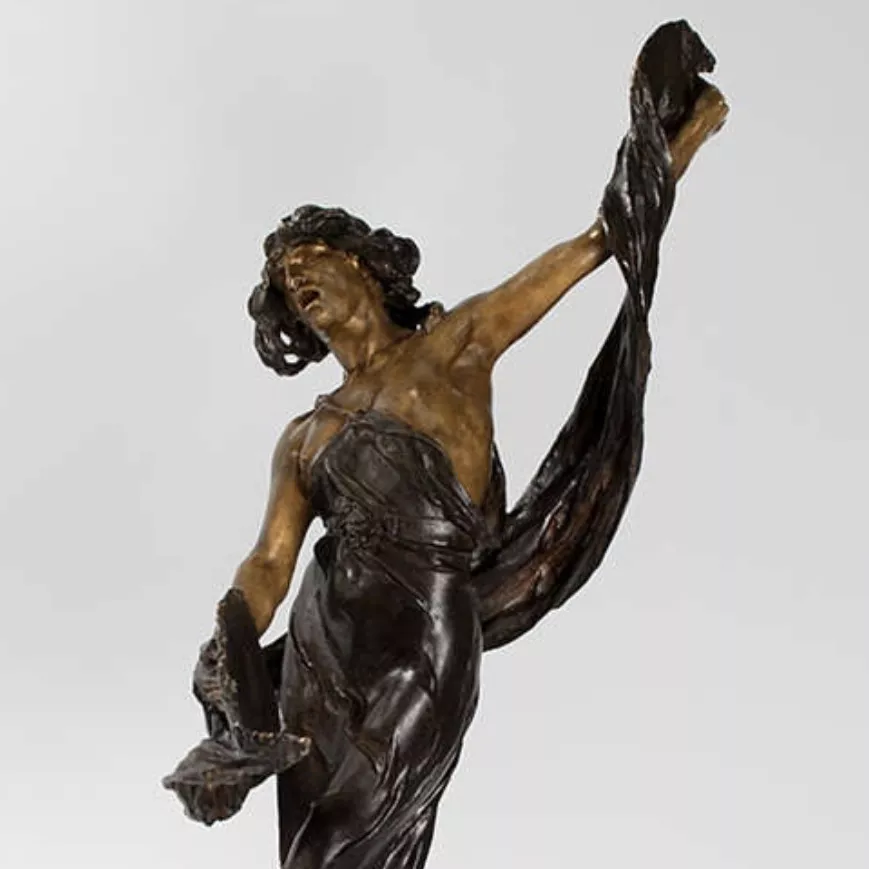
He explores mainly allegorical, mystical or symbolist subjects such as La Suppliante, 1900, but also expressive portraits of public figures. In sculptures such as Danse sacrée (1903 - 1905), he combines an almost excessive treatment of composition (diagonal alignment, swirling drapery) with strong expressivity.
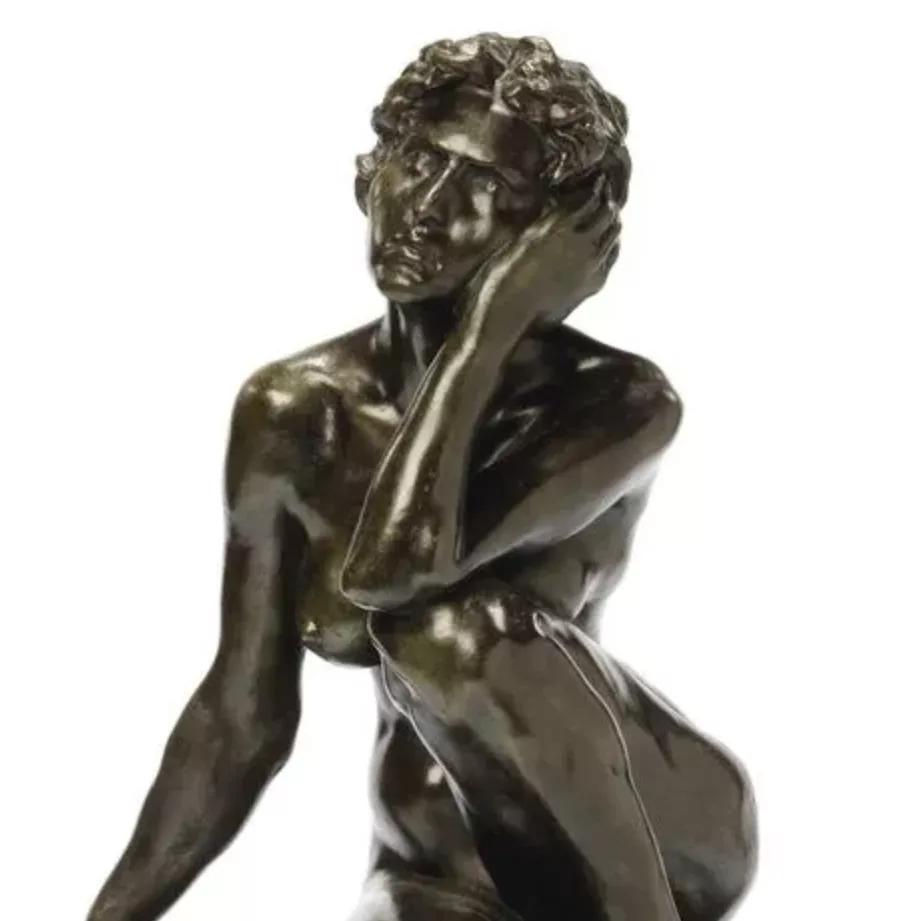
The human figure is often marked by an internal tension, working on corpulence, movement, expressive facial expressions and also shows a great concern for volume and sculptural architecture.
The influence of his academic training (studies at the École nationale supérieure des beaux-arts, Prix de Rome in 1897) can be seen, combined with modern concerns for movement and expression.
The dominant materials in his work are bronze and marble. For example, Homme criant, 1905, is in bronze on a marble pedestal. He often made models in plaster or marble and then went on to cast bronze, with a patinated finish, a concern for rendering surfaces, textures and drapery.
The composition is sculptural, with a use of pronounced diagonals, sculpted volumes with relief and depth, draperies in motion and body twists. In his sculpture Danse sacrée, for example, the marble seems nervously carved.
The sculpture does not seek simple immobility but a sensation of movement and tension, as if the statue belonged to a dramatic moment.
The life of Victor Ségoffin
Victor Joseph Jean Ambroise Ségoffin (1867 - 1925) was an artist born in Toulouse. He completed his secondary education at Lycée Pierre-de-Fermat, then went on to study at the Ecole des Beaux-Arts in Toulouse, and later at the École Nationale Supérieure des Beaux-Arts in Paris.
He was a pupil of Pierre-Jules Cavelier and Louis-Ernest Barrias. He was awarded the Grand Prix de Rome for sculpture in 1897, and medals at the Salon des artistes français and the 1900 Universal Exhibition. He was also named Officer of the Legion of Honor in 1911.
He was a resident at the Villa Médicis (Rome) from 1897 to around 1901. He then taught at the École nationale des beaux-arts (women's sculpture workshop) from 1920.
He specialized in monumental sculpture, busts, allegorical and mythological themes, as well as public commission lots (Danse sacrée, 1905).
Ségoffin follows the academic tradition of the 19th century, while incorporating more modern sensibilities (expression, movement), his career traversing the pivotal period of late 19th and early 20th century art (Clovis Edmond Masson, Charles Valton, Antoine-Louis Barye).
His Prix de Rome and state commissions testify to strong institutional recognition during his lifetime. His work was aimed at both the private circle (busts of political and cultural figures) and the public domain. However, despite this recognition, his name is today less visible than some of his contemporaries in the avant-garde, which affects his notoriety in the art market.
.
Market segmentation and artist's rating
Sculptures in bronze dominate the artist's market, but marble sculptures, busts, scale models and plaster studies can also be found. Small formats or reduced studies constitute the entry segment.
Medium formats (signed bronzes from 50 to 70 cm or moderately sized marble) constitute the main segment. Monumental formats or large marbles constitute the high-end segment, and are few in number.
The market is mainly French, but also active in the UK and USA for significant lots. Typical buyers are collectors of late 19th/early 20th century academic sculpture, modern art museums and enthusiasts of old-quality cast iron.
Valuation factors include the material (bronze or marble), legible signature, founder's stamp, good patina, provenance, date, format and rarity of the model.
For entry levels and access segments, we find study works or small formats for a few thousand euros, medium-sized or signed works for a few tens of thousands of euros and large, rare sculptures can still reach higher levels.
.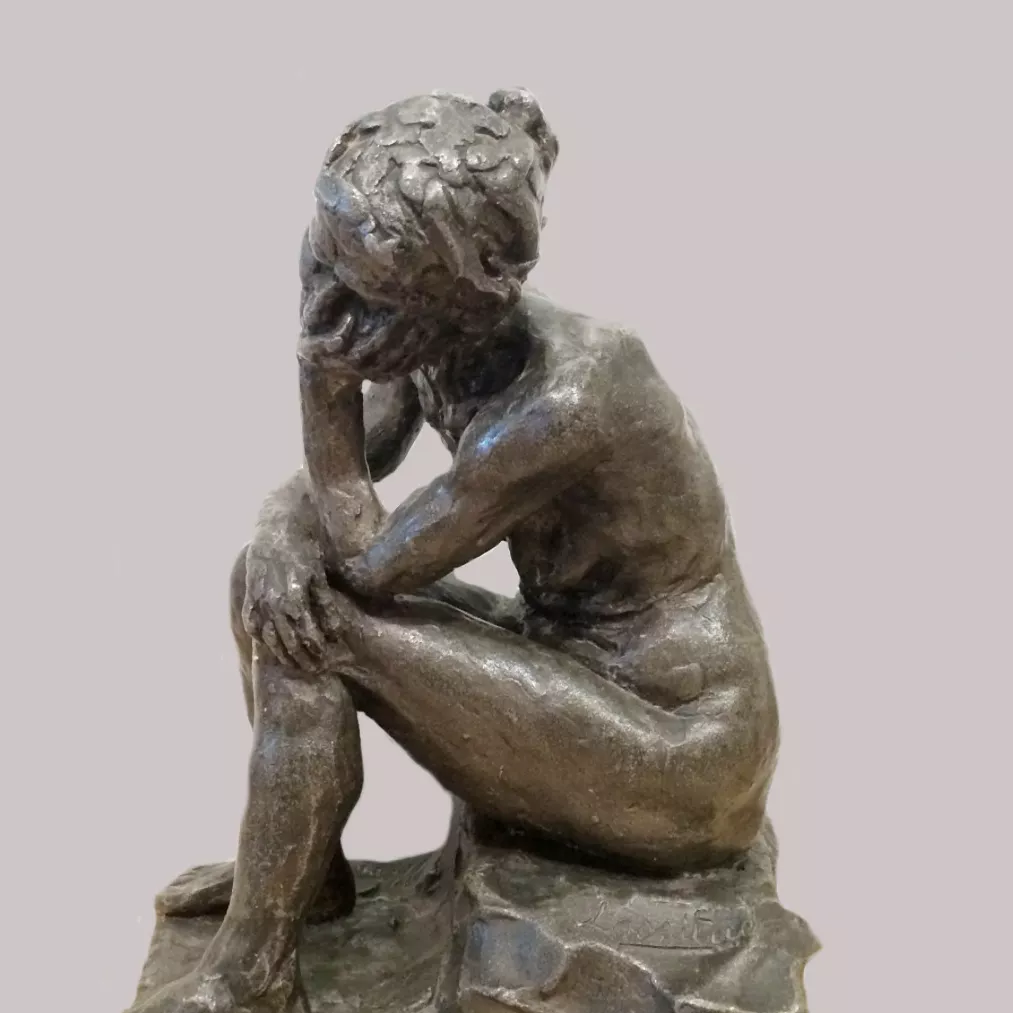
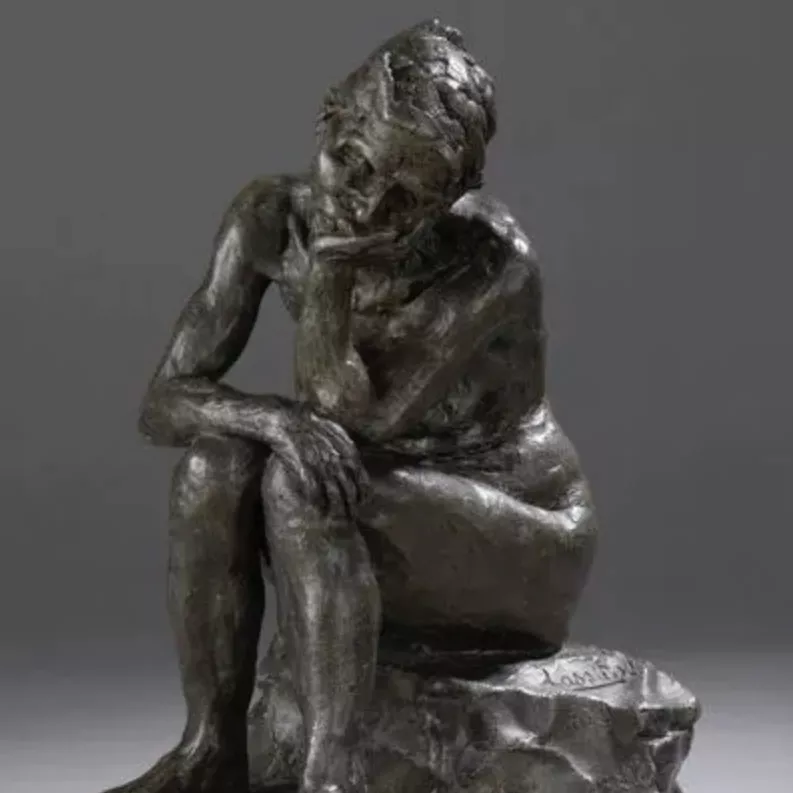
Study bronzes and small formats sold for between €800 and €3,000, depending on condition and format, while signed, medium-sized bronzes (50 - 60 cm) sold for €15,000 to €30,000 or more, depending on provenance and modeling. For example, the bronze Rêverie, signed and dated 1913, was estimated at €25,000 to €30,000.
Marble or large sculptures are estimated at €3,000 to €35,000 or more depending on format and quality.
Ségoffin's quotation presents a moderate to high valuation range in the French academic sculpture market, but does not yet reach the most selective categories of the international market.
The wide range of prices (from a few hundred to several tens of thousands of euros) indicates a strong dispersion according to format, material, condition and provenance. Small-format or unsigned and poorly documented works remain more accessible, but with a more limited potential for value.
The market seems stable but conditioned by the artist's visibility, the state of conservation and the work's documentation.
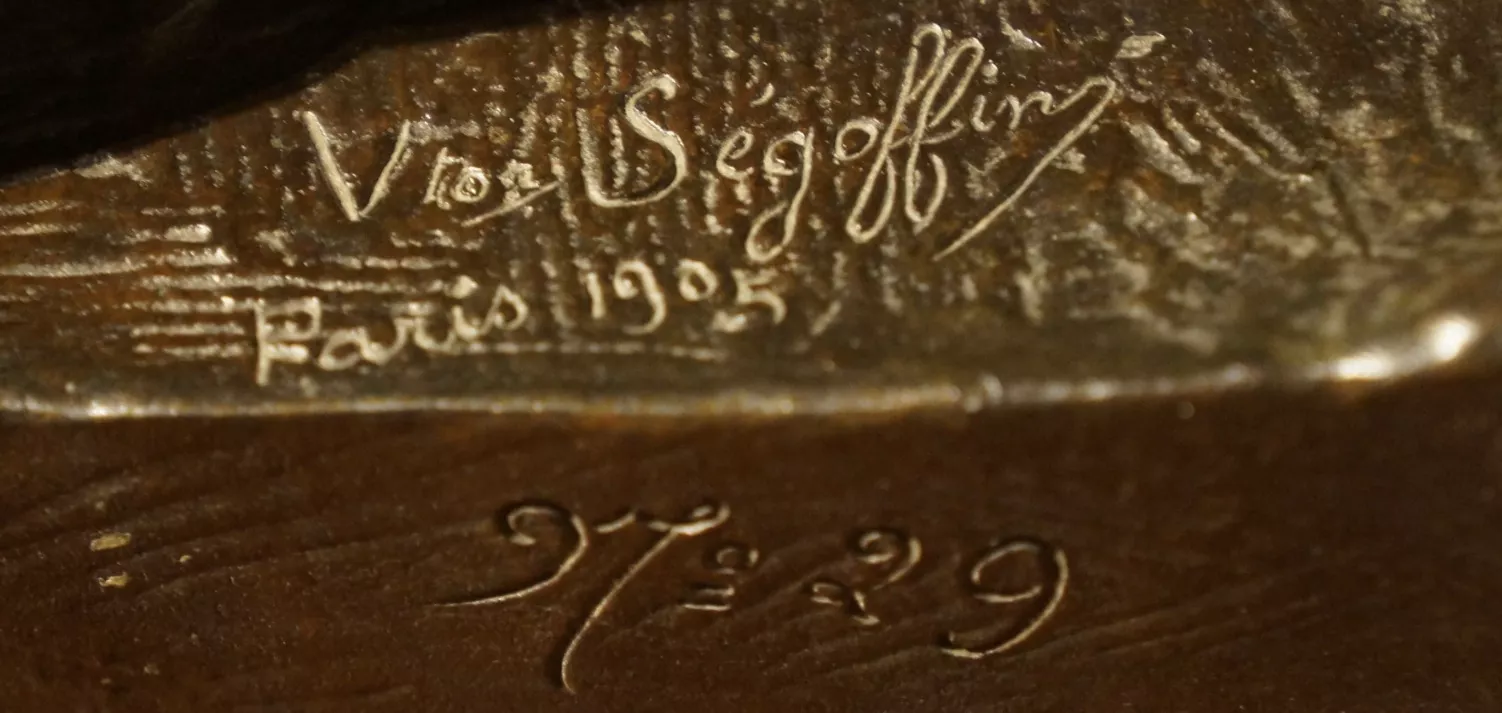
Recognizing Victor Ségoffin's signature
Victor Ségoffin signs his works most of the time. If you think you own one, it's best to have it appraised. Some sculptures bear the signature " V. Ségoffin Paris " with the number cast. There are also copies, which is why expert appraisal is important.
Knowing the value of a work
If you happen to own a work by or after Victor Ségoffin, don't hesitate to request a free appraisal using our form on our website.
A member of our team of experts and certified auctioneers will contact you promptly to provide you with an estimate of the market value of your work, as well as ad hoc information about it.
If you are considering selling your work, you will also be accompanied by our specialists in order to benefit from alternatives for selling it at the best possible price, taking into account market inclinations.
Estimate in less than 24h
Discover in the same theme

The value of Jacob Petit porcelain
Jacob Petit, a 19th-century porcelain artist, left a considerable and varied output that is highly valued. Estimate in less than 24h.
Learn more >

Rating and value of works, drawings and paintings by Henri E...
Henri Edmond Cross was a 19th-century pointillist painter who produced valuable drawings and oils on canvas.
Learn more >

Rating and value of works, drawings, paintings by Jules Émil...
Jules Émile Saintin is a realized painter of the 19th century who produced drawings and oils on canvas that are valued at auction.
Learn more >
D'autres bronzes anciens vendus aux enchères

Estimated Between €5,000 and €8,000
Agathon LEONARD (1841-1923), Dancer with scarf, bronze lamp, ed. Susse frères

Estimated 3.000 - 5.000
Raoul LARCHE (1860-1912) The fisherman, Bronze with green patina

Estimated 600 - 800
Hercules Farnese, bronze, reproduction after Glycon of Athens

Estimated 1.500 - 3.000
Jules FRANCESCHI (1825-1893) Hébé et l'aigle de Jupiter, gilded bronze

Estimated 800 - 1.500
Henry Étienne DUMAIGE (1830-1888), bronze print

Estimated 1.500 - 3.000
Antoine Louis BARYE (1796-1875) Eagle and heron, bronze print with shaded brown-green patina

Secure site, anonymity preserved

Auctioneer approved by the State

Free and certified estimates
Frequently asked questions
-
Who was Victor Ségoffin, and what is his artistic style?Victor Ségoffin (1867–1925) was a French sculptor born in Toulouse and a leading figure in 19th-century animal and allegorical sculpture. Trained at the École nationale supérieure des beaux-arts in Paris and winner of the Grand Prix de Rome in 1897, he combined academic tradition with a modern sensibility characterized by expression, movement, and a dynamic treatment of form. His works in bronze and marble explore allegorical, mythological, and symbolist themes with a remarkable attention to volume, composition, and expressiveness.
-
What is the price range for Victor Ségoffin's sculptures?Victor Ségoffin’s works range in price from €100 to €52,000. Study bronzes and small-scale works sell for between €800 and €3,000, signed medium-sized bronzes (50–60 cm) between €15,000 and €30,000, and marble sculptures or large-scale works between €3,000 and €35,000, depending on size, quality, and provenance. This wide range reflects the importance of size, material, condition, and documentation.
-
How can you authenticate a sculpture by Victor Ségoffin?To authenticate a work by Victor Ségoffin, we recommend that you request a free appraisal from Auctie's by filling out a form on our website. A certified expert or auctioneer will contact you promptly and provide you with an accurate estimate of your artwork’s market value. This step is particularly important because there are copies and counterfeits of his sculptures.
-
Is this the right time to sell a sculpture by Victor Ségoffin?Yes, now is a good time to sell a sculpture by Victor Ségoffin. The market for this artist is stable, and prices for his works are currently skyrocketing at auction, particularly among French collectors and specialized museums. The growing recognition of his historical significance in academic sculpture of the late 19th and early 20th centuries is driving demand and increasing valuations.
-
How does the appraisal and sale of a work of art take place at Auctie's?The appraisal is free and non-binding: simply fill out an online form, and an expert will contact you within 48 hours to provide you with an accurate valuation of your artwork. If you decide to sell, our specialists will guide you through the process from the appraisal to the auction, advising you on the best options for selling your item at the best price based on current market trends.
