



Rating and value of sculptures and bronzes by Alexandre Léonard

Key takeaways
- Works by Alexandre Léonard, a French sculptor (1821–1877), sell for between €80 and €5,000 depending on the technique and rarity, with the most prestigious chryselephantines commanding the highest prices.
- Edition bronzes constitute the main market, with small- to medium-sized (20–50 cm) female figures and academic allegories being particularly sought after.
- Liquidity is good for well-patinated, signed bronzes produced by renowned foundries, primarily in France and, to a lesser extent, in Belgium and the United Kingdom.
If you own a work by or after Alexandre Léonard, and would like to know its value, our state-approved experts and auctioneers will offer you their appraisal services.
Our specialists will carry out a free appraisal of your work, and provide you with a precise estimate of its value on the current market.
Then, if you wish to sell your work, we will direct you to the best possible arrangement to obtain the optimum price.
Rating and value of the artist Alexandre Léonard
The artist Alexandre Léonard leaves in his wake a very singular body of work, drawn from the animal repertoire. A talented sculptor, he produces many works that are particularly prized at auction.
The prices of his works are now skyrocketing under auctioneers' hammers. They are particularly prized by French and European buyers. The price at which they sell on the art market ranges from €80 to €5,000, a considerable delta but one that speaks volumes about the value that can be attributed to Leonardo's works.
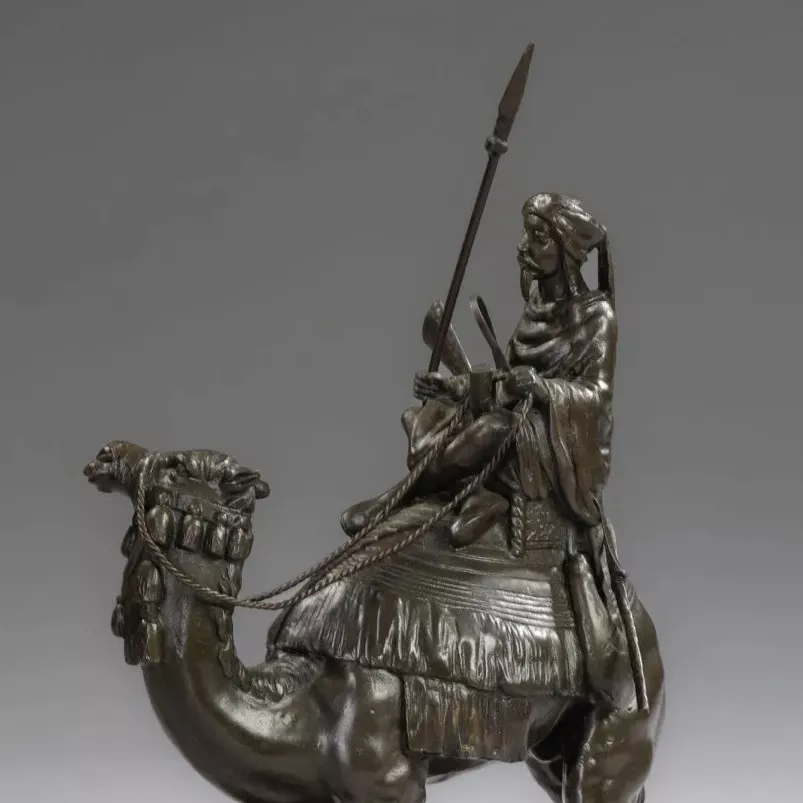
In 2012, a chryselephantine sculpture depicting a meharist and dating from the 1860s sold for €5,000 while it was estimated at €3,500 to €4,500.
Order of value from a simple work to the most prestigious
Technique used | Result |
|---|---|
Golden bronze | From 80 to 2 500€ |
Bronze | From €80 to €3,500 |
Chryselephantine | From €1,800 to €5,000 |
Estimate in less than 24h
Style and technique by the artist Alexandre Léonard
Lambert Alexandre Léonard (1821-1877), a French sculptor, was part of the figuratism of the late 19th century, with a naturalistic vocabulary and a marked decorative sense. He is close to the productions of the Belle Époque and the late neoclassical style.
His body of work is characterized by harmonious figures, academic elegance and an absence of excessive dramatization. His work is often associated with decorative sculpture, edition bronzes, animal subjects and female figures.
He shows a preference for human figures, especially young women, allegories, graceful subjects and slender silhouettes. His animal works (particularly horses, deer, hunting animals) are executed with a tempered naturalism.
Gestural grace is important, with outstretched arms, a tilted torso, and supple poses. The composition is often vertical, centered, structured according to academic conventions.
The modeling is smooth, regular, sometimes softened and away from expressive roughness, close to an academic finish. Volumes are finely rounded, with smooth transitions between planes and polished surfaces. He pays particular attention to anatomical definition, but with idealization and without excessive muscular realism.
He works meticulously with drapery, folds, textile textures and ornamentation. Alexandre Léonard works with clay or wax modeling before casting, in keeping with the tradition of Parisian workshops.
His castings are made in lost-wax or sand bronze, depending on the edition; his art bronzes are edited by the common founders of the Belle Époque. The patinas are classic, with dark brown, nuanced brown-green and rare polychrome patinas.
The chasing is precise, preserving the fine details of the modeling. The rendering is naturalistic but stylized, with a respect for proportions, and a real but softened observation. He is heir to the academic figurative sculptors (Moreau, Carrier-Belleuse, Falguière).
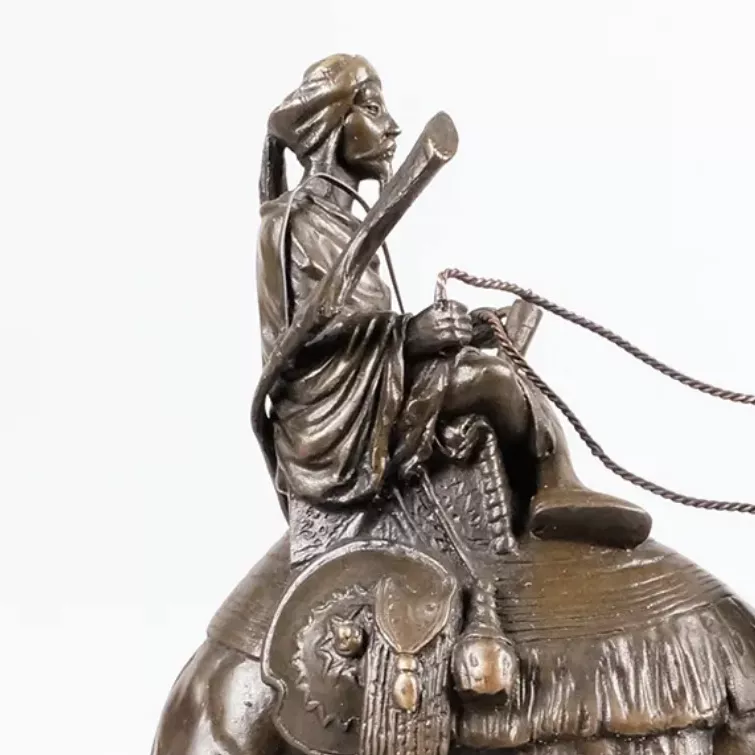
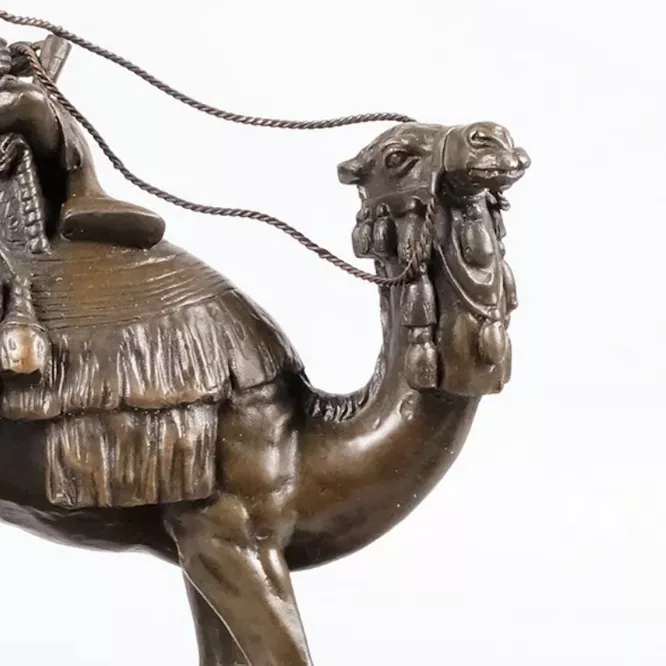
Alexandre Léonard, his life, his work
The artist was born in France in 1821, at a time when academic sculpture and architectural ornamentation were central to public commissions. He was probably trained in a Parisian workshop linked to the academic tradition (modeling, plaster, clay, bronze).
He studied at a time when schools were succeeding the influence of David d'Angers, Pradier and late Romantic sculptors, and develops solid technical skills in figurative and decorative sculpture.
He began his career in the artistic climate of the Second Empire, marked by a strong demand for decorative sculpture for architecture, parks, public places and private salons. He exhibited at the Salon under his own name, where he mainly presented figures, busts and allegorical or decorative subjects.
His sculpture is essentially figurative, with female figures, young children and graceful or sentimental subjects typical of mid-19th-century creation.
His activity is associated with the creation of edition bronzes, often produced by Parisian foundries, with a common tendency among sculptors of this period to disseminate their works in bourgeois interiors.
He probably belongs to the circle of so-called " decorative " sculptors of the Second Empire, specialized in salon works. His style is academic, influenced by the neoclassical idealism still dominant in the 1840s - 1860s.
He has a preference for harmonious figures, with gentle gestures and elegant attitudes. His work follows in the footsteps of decorative sculptors such as Pradier, Duret or Simart, but with a more intimate, domestic dimension.
He worked with several art founders, which explains the notable diffusion of his models in the interiors of the second half of the 19th century. His sculpture circulated mainly in bronze prints, ensuring a lasting presence on the market.
He continued to produce until the end of his life, in a context where decorative sculpture was evolving towards more sentimental forms, in harmony with the aesthetics of the Second Empire. Today, he is recognized for the quality of his modeling and the finesse typical of 19th-century salon sculpture.
Market segmentation and artist's rating
Edition bronzes constitute the main segment of the market, with female figures, allegories and graceful subjects typical of the 19th century. Studio plaster casts are rare, mainly of historical or documentary interest.
Decorative statuettes are works intended for Second Empire bourgeois interiors, often of small or medium size. Busts and portraits are part of a smaller market, highly dependent on rarity and provenance.
Ornamental figures are sometimes integrated into mantelpieces, clocks or decorative elements. Small formats (20 - 30 cm) represent an entry-level market with good liquidity. Medium formats (30 - 50 cm) are part of the central segment, the most sought-after for salon bronzes.
Large formats over 50 cm are rarer prints that are part of the most highly valued segment, but less frequent at public sales. Female figures are the dominant theme, highly sought after for their academic elegance and decorative character.
Allegories (music, dance, seasons, innocence, youth) show high appeal on the international market. Neoclassical subjects have a stable appeal. France is the main geographic market. In Belgium and the UK, the market is secondary but active.
Liquidity is good for medium-sized bronzes and decorative female figures, variable for less typical busts and subjects, and high for signed, well-patinated bronzes made by recognized foundries.
.
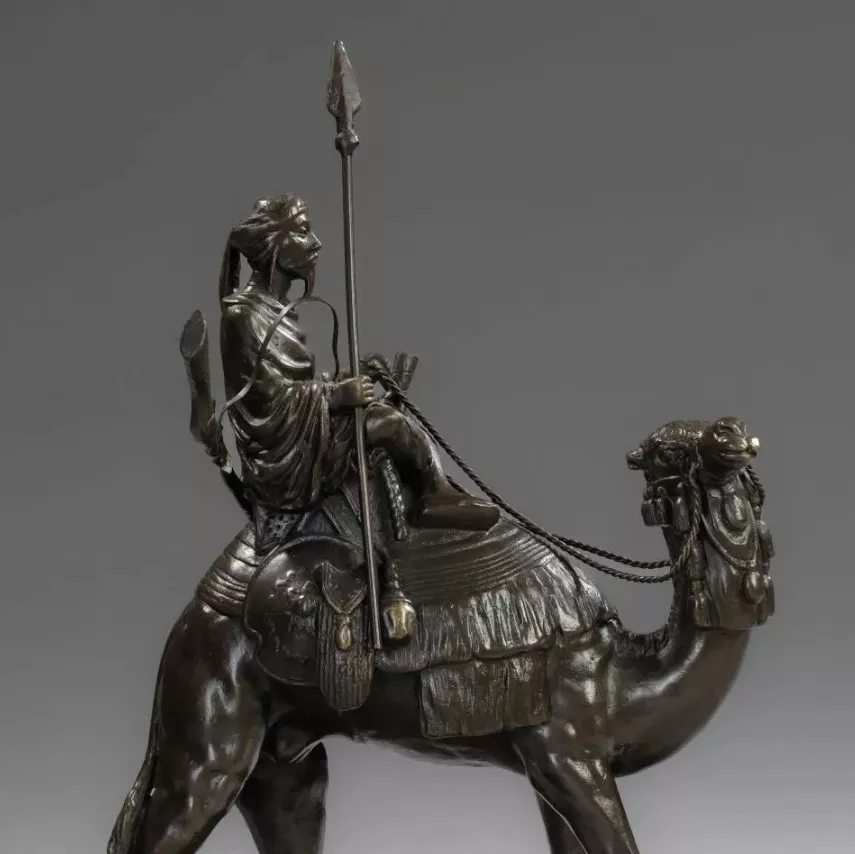
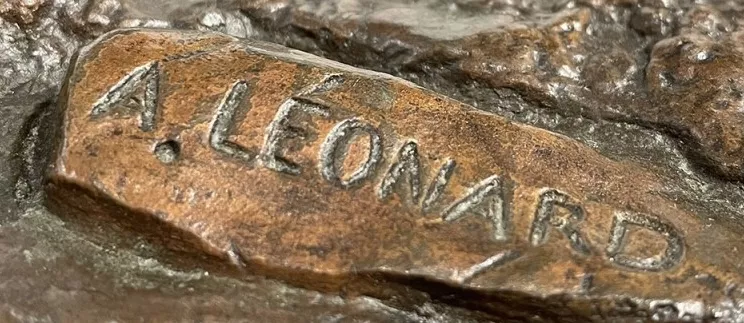
Recognizing the artist's signature
Not all works by Alexandre Léonard are signed, and different variants exist. This is why, if you think you own a work by or after the artist, it is essential to have it appraised by an expert who will be able to authenticate it.
Knowing the value of a work
If you happen to own a work by or after Alexandre Léonard, don't hesitate to request a free appraisal using our form on our website.
A member of our team of experts and certified auctioneers will contact you promptly to provide you with an estimate of the market value of your work, as well as any relevant information about it.
If you wish to sell your work, you will also be accompanied by our specialists in order to benefit from alternatives for selling it at the best possible price, taking into account market inclinations.
Estimate in less than 24h
Discover in the same theme

Rating and value of paintings, drawings and engravings by Je...
Jean-François Millet is a twentieth-century naturalist painter quoted on the art market, who has produced works of great value.
Learn more >

Rating and value of paintings by Vasily Surikov
Vasily Sourikov is a Russian realist painter who belongs to the itinerants. His works are highly valued.
Learn more >

Rating and value of Charles Greber's vases and ceramics
Charles Greber is a French ceramist who has produced works that can be highly valued at auction. 24h estimate.
Learn more >
D'autres bronzes anciens vendus aux enchères

Estimated Between €5,000 and €8,000
Agathon LEONARD (1841-1923), Dancer with scarf, bronze lamp, ed. Susse frères

Estimated 3.000 - 5.000
Raoul LARCHE (1860-1912) The fisherman, Bronze with green patina

Estimated 600 - 800
Hercules Farnese, bronze, reproduction after Glycon of Athens

Estimated 1.500 - 3.000
Jules FRANCESCHI (1825-1893) Hébé et l'aigle de Jupiter, gilded bronze

Estimated 800 - 1.500
Henry Étienne DUMAIGE (1830-1888), bronze print

Estimated 1.500 - 3.000
Antoine Louis BARYE (1796-1875) Eagle and heron, bronze print with shaded brown-green patina

Secure site, anonymity preserved

Auctioneer approved by the State

Free and certified estimates
Frequently asked questions
-
Who is Alexandre Léonard, and what is his artistic style?Lambert Alexandre Léonard (1821–1877) was a 19th-century French figurative sculptor associated with the Belle Époque and late Neoclassicism. Specializing in limited-edition bronzes and decorative sculpture, he was known for his harmonious figures, academic elegance, and a predilection for animal subjects and graceful female figures, characterized by smooth modeling and gentle transitions.
-
What is the market value of Alexandre Léonard's sculptures and bronzes?Market prices for Alexandre Léonard’s works range from €80 to €5,000, depending on the technique and format. Gilded bronze works range from €80 to €2,500, classic bronze works from €80 to €3,500, and chryselephantine sculptures from €1,800 to €5,000. Medium-sized works (30–50 cm) featuring female figures and a fine patina are the most sought-after.
-
How can you authenticate a work by Alexandre Léonard?Since not all of Leonardo’s works are signed, we recommend having your sculpture appraised by an expert to verify its authenticity. Auctie's offers a free, no-obligation appraisal request: a certified expert or auctioneer will contact you to examine the piece and provide you with a reliable valuation within approximately 48 hours.
-
Is this the right time to sell a work by Alexandre Léonard?Yes, this is a favorable period. Alexandre Léonard’s edition bronze sculptures are in high demand on the market, particularly the female figures and medium-sized pieces sought after by French and European buyers. Demand remains stable, and prices are trending upward at auctions.
-
How does the sale of a work of art work at Auctie's?Auctie's supports you every step of the way: after a free, no-obligation appraisal by an expert, our licensed auctioneers will guide you toward the best sales strategy to get the highest price. We manage the entire process through to the auction, taking into account market trends and buyers’ expectations.
