



Rating and value of drawings and paintings by Édouard Manet

Key takeaways
- Manet's works sell for between €10 and €46.3 million, with his painting "Le Printemps" selling for €46.3 million in 2024.
- Paintings make up the premium segment (€10 to €46 million), while drawings and watercolors sell for between €600 and €2 million.
- Works from his mature period (the 1860s–1870s), which capture the spirit of modern Paris, command prices 1.5 to 2 times higher than his later compositions.
Paintings and drawings by Édouard Manet trade up to €46,330,400 on the auction market. An appraisal enables us to accurately determine the price of your work by Édouard Manet on the current market and to optimize, if necessary, the sale of a work.
If you own a work by Édouard Manet and would like to know its value, our state-approved auctioneers will carry out a free appraisal based on authenticity, quotation and recent market results.
Rating and value of the artist
An Impressionist and Modernist painter, Édouard Manet quickly acquired a reputation and a place in the world art market. Today, his works remain highly prized, making their creator a sure bet in auction rooms.
As a result, the prices at which the artist's works sell range from €10 to €46,330,400, a considerable delta but one that speaks volumes about the value that can be attributed to the artist's works.
His oil on canvas Le Printemps was sold for €46,330,400, whereas it was estimated at between €19,970,000 and €27,958,000.
Order of value from the most basic to the most prestigious
Technique used | Result |
|---|---|
Estamp - multiple | From €10 to €171,800 |
Drawing - watercolor | From €600 to €2,058,000 |
Painting | From €230 to €46,330,400 |
Estimate in less than 24h
Situate the artist
Period
Édouard Manet was a painter of the 19th century (1832 - 1883), evolving at the heart of the political, social and urban mutations of Haussmann's Paris. The majority of his career spanned the Second Empire (1852 - 1870), an institutional and cultural framework that dominated the first part of his career, marked by the weight of the official Salon.
He also lived through the beginning of the Third Republic, a period of gradual affirmation of a modern artistic sensibility and a questioning of academic hierarchies. This was a decisive moment of transition between academic history painting and the emergence of modern art.
Currents
Manet maintains a close relationship with realism through his choice of contemporary, ordinary subjects, his refusal of idealization and his attention to modern life, while moving away from the social and political aims of strict realism. Close to pictorial modernity, he also asserts the autonomy of the painting.
He is a precursor of Impressionism in his treatment of light, chromatic freedom and painting of urban life, without institutional or theoretical adherence. He broke with academicism.
The life of Édouard Manet
Cultural context
Manet was born in Paris in 1832, in a France marked by profound political, social and cultural transformations, linked to industrialization and the affirmation of urban modernity.
He received classical academic training in the studio of Thomas Couture, quickly demonstrating a critical distance from the hierarchy of genres and official aesthetic canons. His work fits in with the Salon system, through the choice of contemporary subjects and a pictorial material that breaks with illusionism.
Entourage
Manet maintains a close relationship with Claude Monet, Edgar Degas and Auguste Renoir, distinguishing himself from Impressionism by his attachment to the Salon and the human figure. He also frequented Berthe Morisot, with whom he maintained close personal and artistic ties.
On the intellectual front, he enjoyed the active support of Émile Zola, whose writings helped legitimize his work in the face of criticism and scandal.

Techniques of Édouard Manet
Artist's style
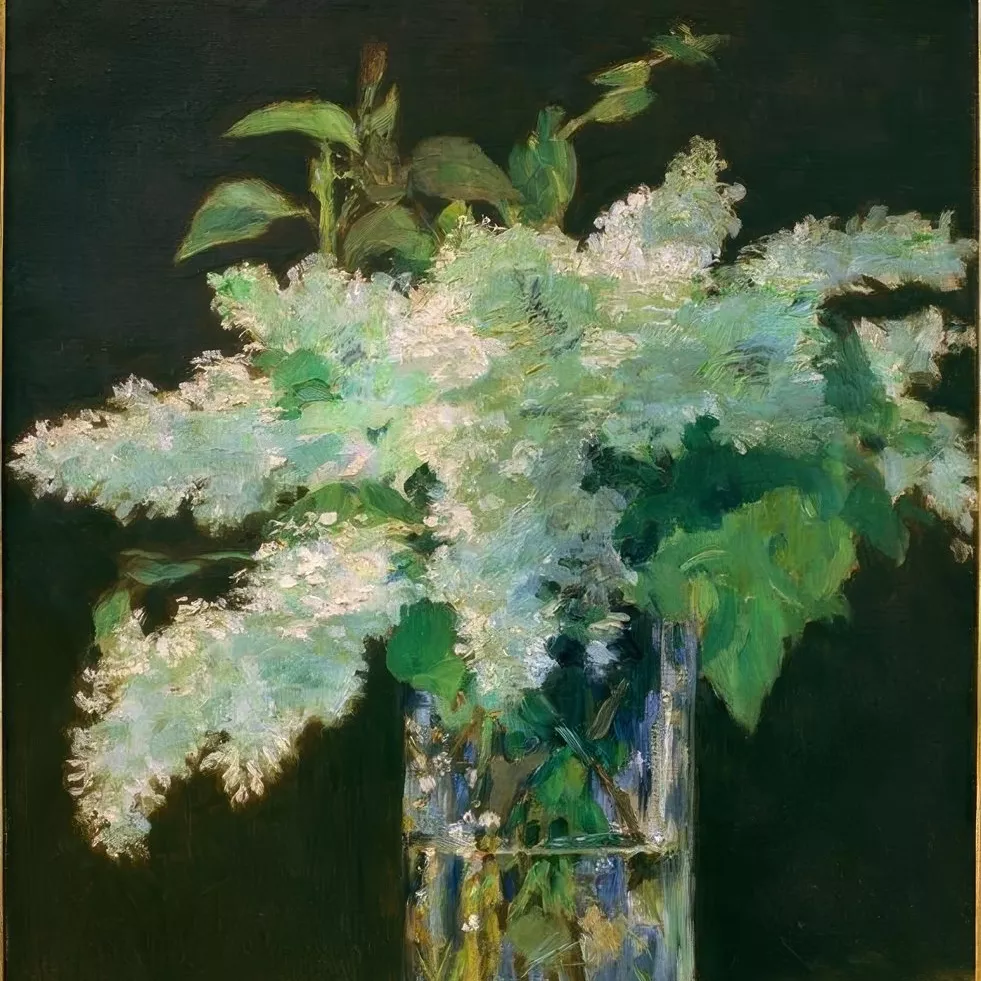
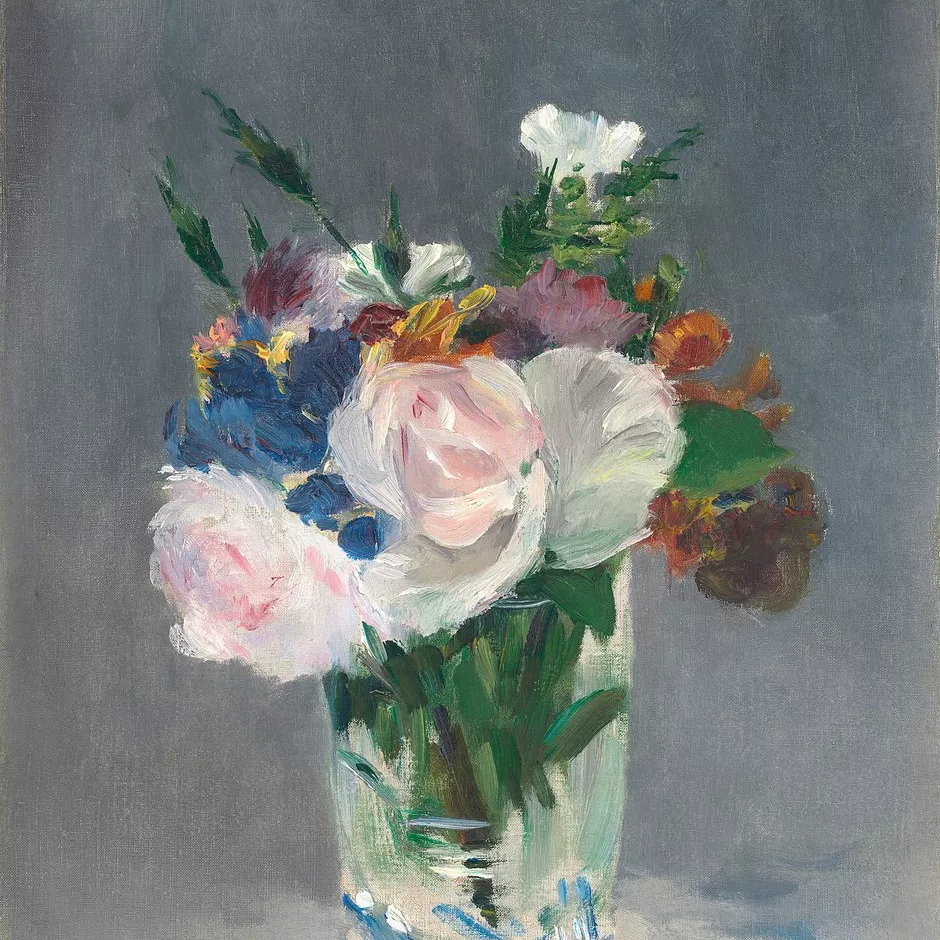
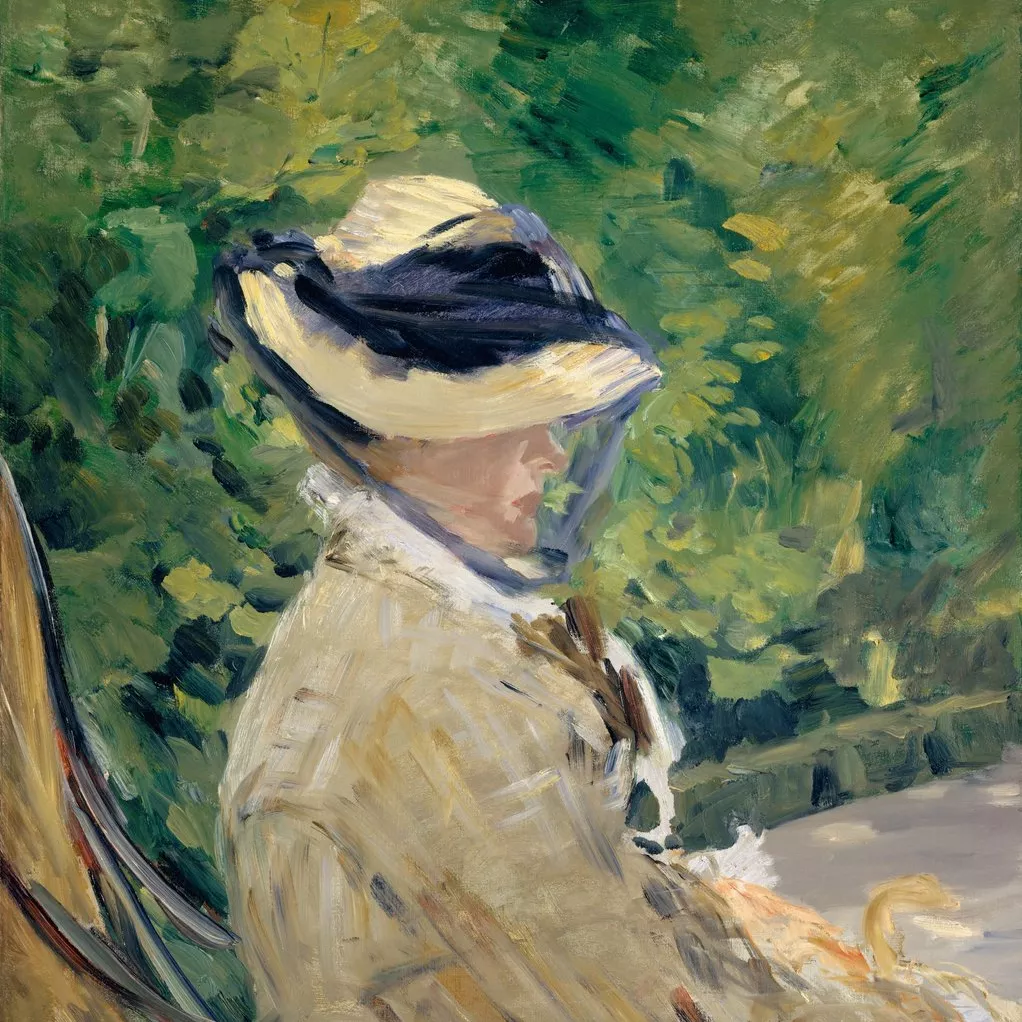
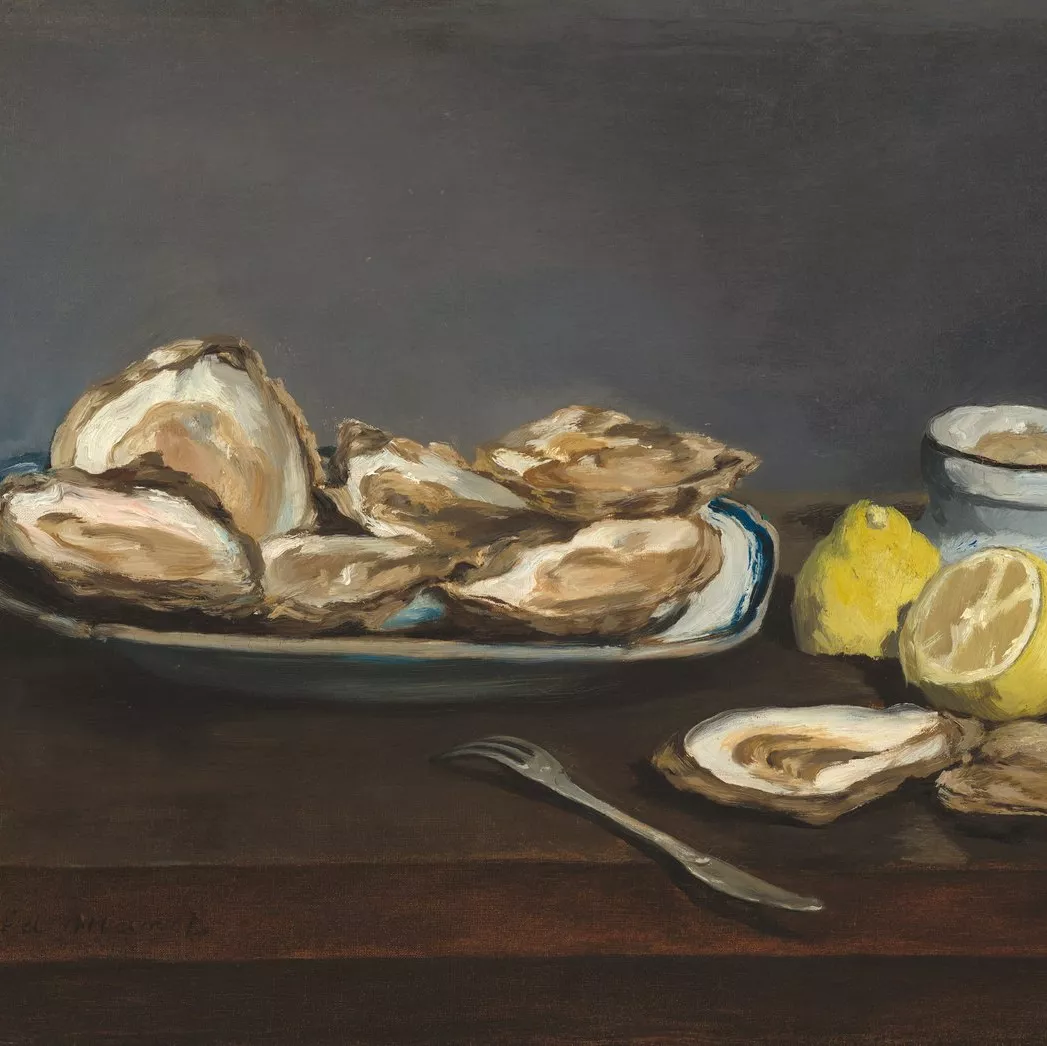
Manet's work is a constant break with the academic idealism inherited from the neoclassical tradition, in favor of a frontal, non-idealized representation of reality. He deliberately simplifies forms and rejects illusionist modeling, favoring flat tints of color and sharp contrasts.
His pictorial treatment is visible, sometimes judged " unfinished ", asserting the materiality of painting. He makes bold use of black as a color in its own right.
Focus on a key work
Olympia, 1863
This painting is characterized by a frontal composition and tight framing, abolishing the symbolic distance between the viewer and the subject represented. The treatment is devoid of idealization, with a cold complexion, sharp contours and an absence of soft transition between light and shadow.
The chromatic opposition is structuring between the whiteness of the body, the dark background and the strongly contrasting accessories. Manet makes an explicit reference to Titian's Venus of Urbino, but diverted by the contemporaneity of the model and the social signs.
FAQ - How to estimate a work by Manet ?
1) What is the first step in estimating a work by Édouard Manet ?
The estimate begins by identifying the technique (painting, pastel, drawing or study), taking into account the support, dimensions, dating, signature and degree of completion of the work.
2) What stylistic criteria specific to Manet are decisive ?
The analysis focuses on the creative period, distinguishing between early works, the great compositions of the 1860s and late works, marked by freer brushstrokes and a lighter palette.
3) What role does provenance play?
Provenance is essential, especially as Manet's works were exhibited at numerous salons. As such, it can be used to link works to historical collections, major exhibitions or reference publications.
Market segmentation and artist's rating
Price of works
Manet occupies a blue chip segment, comparable to that of the great Impressionist masters. His market is international, institutional and highly competitive.
Paintings are part of a rare segment, with auctions generally between 10 and 40 million euros. Works on paper (drawings, watercolors, pastels) are at the heart of the accessible market, with prices adjusted between €300,000 and €3 million, depending on quality and subject.
Prints are part of a secondary but active segment, with auctions ranging from around €20,000 to €200,000 for sought-after prints.
Valuation factors
There is a marked premium for mature works (1860s - 1870s) and for subjects emblematic of Parisian modernity (café scenes, portraits, nudes). These works can be worth 1.5 to 2 times more than later or anecdotal compositions.
Fully completed works in excellent condition are worth more than studies or sketches, often capped at under €500,000. The factors behind the solidity of the quotation remain Manet's historical centrality, international museum demand and founding role in the genealogy of Impressionism.
His signature
Not all of Manet's works are signed.
Although there are variations, here is a first example of his signature:
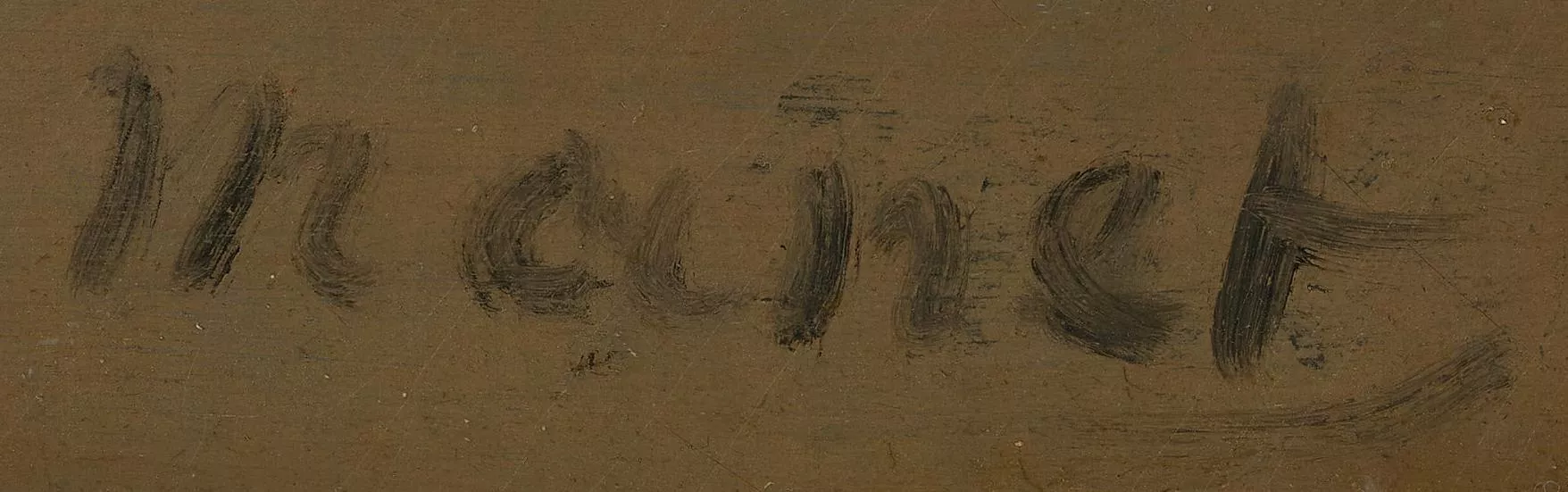
Get an estimate for your work by Édouard Manet or d'après
If you own a work by Édouard Manet or d'après, an estimate enables you to assess its value on the current market.
Using our online form, our experts and certified auctioneers will carry out a free appraisal and provide you with a reliable estimate of your work's market value.
If you're considering selling it, we'll work with you to ensure it fetches the best possible value.
Estimate in less than 24h
Nos records d'enchères à l'hôtel Drouot

Estimated 10.000 - 15.000 €
Ebridge Ayer BURBANK(1858-1949), Young African-American boy, Oil on panel.

Estimated 20.000 - 30.000
EXCEPTIONAL LARGE OVAL DISH IN VINCENNES SOFT PASTE PORCELAIN FROM THE "BLEU CÉLESTE" SERVICE OF KING LOUIS XV AT THE CHÂTEAU DE VERSAILLES

Estimated 20.000 - 30.000
MANUFACTURE ROYALE DE SÈVRES, 18th century "L'Empereur de la Chine" - Portrait of the Emperor Qianlong, Hard porcelain bisque, 1775

Estimated 1.500 - 3.000
HERMÈS, "Kelly" 32 saddle bag in black box calf

Estimated Between €5,000 and €8,000
KRACHKOWSKY (1854-1914), Before the storm, oil on canvas

Estimated 40.000 - 80.000
Alexandre ROUBTZOFF (1884-1949), Portrait of Arbia, oil on canvas
Discover in the same theme

Rating and value of paintings by Richard Parkes Bonington
Richard Parkes Bonington was a 19th-century marine painter. His works are quoted on the auction market, and their value is high.
Learn more >

Rating and value of paintings by Giuseppe de Nittis
Giuseppe de Nittis is an Italian artist of 19th-century modernity who lives in Paris. His works are highly valued.
Learn more >

Rating and value of drawings and paintings by Paul Guigou
Paul Guigou is a landscape painter associated with the Barbizon School whose paintings command high prices and are highly valued.
Learn more >

Secure site, anonymity preserved

Auctioneer approved by the State

Free and certified estimates
Frequently asked questions
-
Who was Édouard Manet, and what is his role in art history?Édouard Manet (1832–1883) was a 19th-century French painter and a major figure in the transition from academic art to modern art. A pioneer of Impressionism, he broke with academic hierarchies by favoring contemporary subjects, a non-idealized representation of reality, and a bold pictorial style. His work influenced the great Impressionists such as Monet, Degas, and Renoir, and remains a sure bet on the international art market.
-
What is the price range for Manet's paintings and drawings on the auction market?Manet’s works sell for between €10 and €46,330,400, depending on the medium and quality. Paintings (premium segment) generally range from €10 million to €40 million. Works on paper (drawings, watercolors) range from €300,000 to €3 million, while prints range from €20,000 to €200,000 for sought-after editions.
-
How do you authenticate and appraise a work by Manet?To authenticate and appraise a work by Manet, simply request a free appraisal from Auctie's, which works with state-certified auctioneers and experts. The analysis covers technique, dimensions, dating, signature, provenance, period of creation, and condition. You will receive a reliable estimate of the market value within 48 hours, with no obligation.
-
What are the main criteria for determining the value of a work by Manet?His mature works (from the 1860s–1870s) and iconic subjects of Parisian modernity (café scenes, portraits, nudes) are increasingly valued, commanding prices 1.5 to 2 times higher than his later compositions. Fully finished works in excellent condition command significantly higher prices than studies or sketches. Documented provenance and the work’s historical significance also play a decisive role.
-
How do I sell a Manet painting through Auctie's?Auctie's, an auction house, guides you every step of the way—from a free appraisal to the final bid. After our experts have appraised the value of your artwork, you’ll receive comprehensive support to ensure the best possible valuation and the organization of the auction. We handle the authentication, promotion, and marketing of your item to an international and institutional clientele.
