



Estimation and expertise of Carré Hermès

Key takeaways
- Prices for Hermès Carrés vary considerably, ranging from €70 to €9,600, depending on the year, the artist, the designs, and the rarity of the piece.
- A Carré featuring a mosaic-style hunting scene sold for €9,600 in 2016, 960 times its initial estimate of €80–100.
- Created in 1927 by Robert Dumas, the 90x90 cm Hermès Carré is made in France using up to 45 colors applied by hand using screen printing.
- A free appraisal by certified auctioneers determines authenticity, date of creation, and market value prior to an auction.
If you own a Carré d'Hermès, and would like to know its value, our state-approved experts and auctioneers will offer you their appraisal services.
Our specialists will work to carry out a free appraisal of your Carré, and will provide you with an accurate estimate of its value on the current market.
Then, if you wish to sell your scarf, we will direct you to the best possible device to obtain the optimum price.
The price of a Carré Hermès can vary depending on the year, the artist behind the silk printing, the edition (limited or not), the motifs, the scene depicted and its rarity.
Rating and value of a Carré Hermès
The Carré is an emblematic piece from the House of Hermès, and amust-have of the women's wardrobe its success is unquestionable.
The price at which it sells on the art and auction markets ranges between €70 and €9,600, a considerable delta but one that speaks volumes about the value that can be attributed to your Carrés.
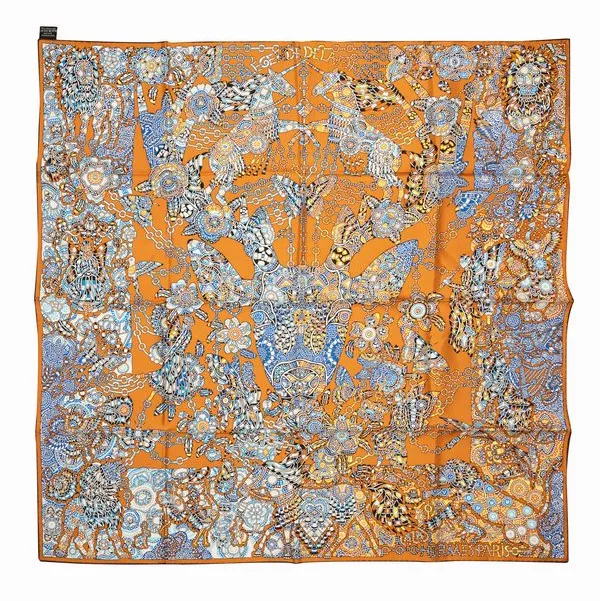
In 2016, a predominantly crystal blue and steel blue Carré depicting a mosaic hunting scene sold for €9,600, while it was estimated at between €80 and €100, or 960 times its high estimate.
Range of values from a classic Carré to the rarest and most sought-after
Type of Square | Result |
|---|---|
Square depicting an equestrian scene | From €70 to €2,600 |
Patterned squares reproducing central symmetry or rosette | From €130 to €2,700 |
Squares depicting hunting scenes or mosaics | From €200 to €9600 |
Estimate in less than 24h
Reasons to sell a Carré Hermès at auction
The Carré Hermès is a timeless piece that meets with great success on the auction market. Often featured in auction rooms, these silk scarves never tire of collectors looking for ever rarer Carrés.
Every year, the Hermès house renews its catalog and offers customers new colors in its leathers : the year 2023 saw sunshine yellow, minimum orange or pop pink leathers.
The same goes for Carrés : new artists are creating new models for silk prints, in themes and graphics that vary greatly from one piece to the next.
Some scarves thus stand out from the crowd for their success and rarity, and are much sought-after by bidders.
Personal collections often comprising Carrés from different eras are also highly sought-after, as they offer an overview of the stylistic evolution and history of the House of Hermès.
Learn more about the history of Carré
Auctions are therefore a solution to consider when selling your Carré in order to gain time, visibility, potential buyers and, above all, high-ranking expertise.
Your scarf is thus in the hands of certified auctioneers and experienced experts, who are committed to bringing out the best in your Carré, in our sales specially dedicated to fashion.
Able to explain market trends and advise you on the right time to put your bag up for sale, they will advise and guide you so that you get the best price for it.
The history of the most famous scarf
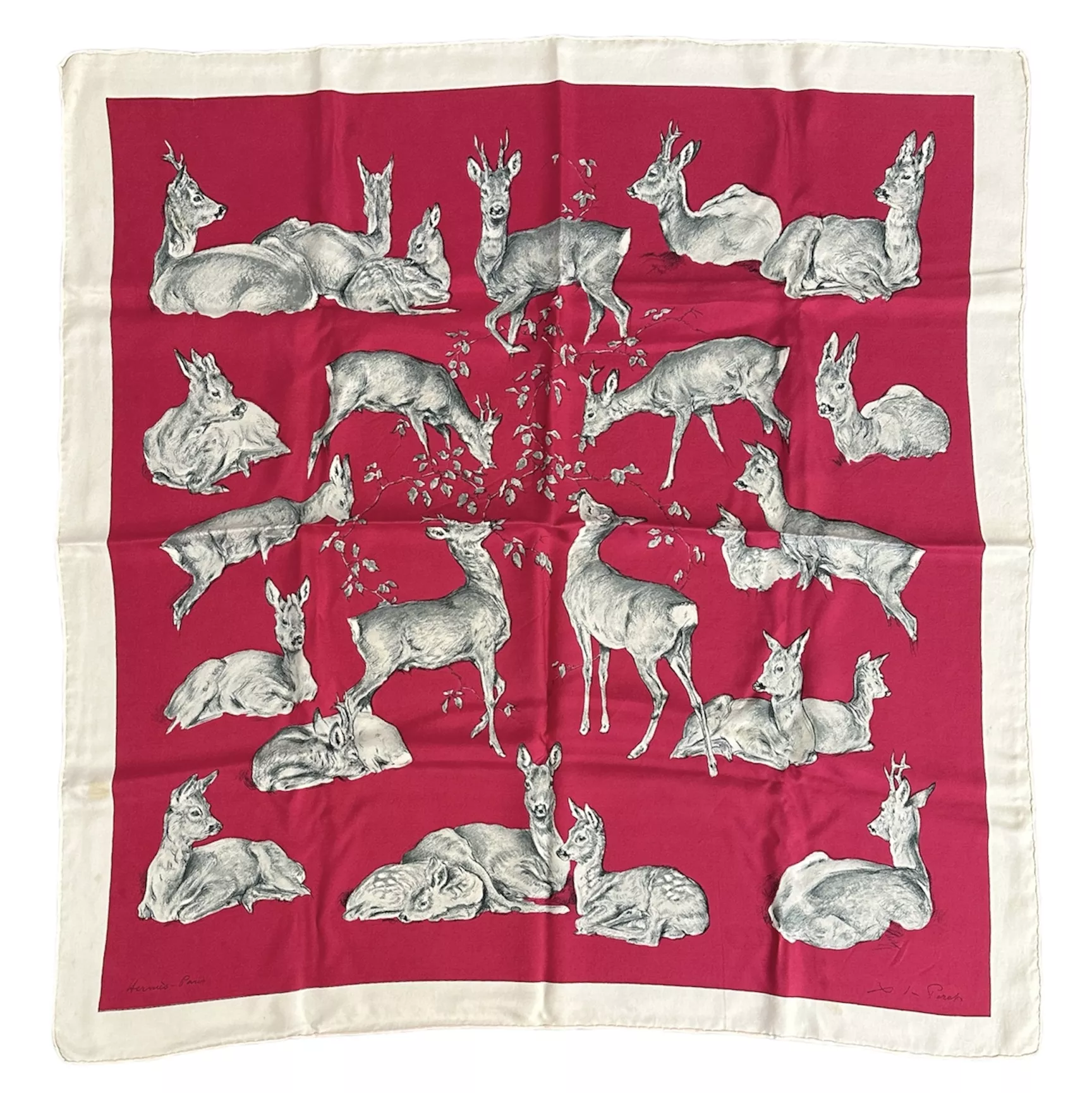
Le Carré Hermès was born in 1927 from an idea by Robert Dumas, who greatly expanded the saddlery house. He was the father of Jean-Louis Dumas, originator of the mythical Birkin, and the husband of Émile-Maurice Hermès's daughter.
With Lola Prusac, at the time a stylist, they developed the idea, drawing inspiration from the handkerchiefs of Grande Armée soldiers as well as those of the Great War. The first model, Jeu d'Ominibus et de Dames blanches, refers to the new transport line linking Madeleine and Bastille at the time.
Little by little, the Carré Hermès became an emblem of Parisian luxury and an indispensable, timeless accessory for the modern woman. Hundreds of models have been produced over almost a century, and the craze continues to grow.
The format is simple 90 cm by 90 cm, a print on silk and a roulotté à la française for the stitching, made entirely in France, in the silk workshops of Lyon.
Often plagiarized, never equaled, although the copy can be seen as an homage, the Carré de soie Hermès embodies iconic elegance à la Française.
The icon of the French wardrobe
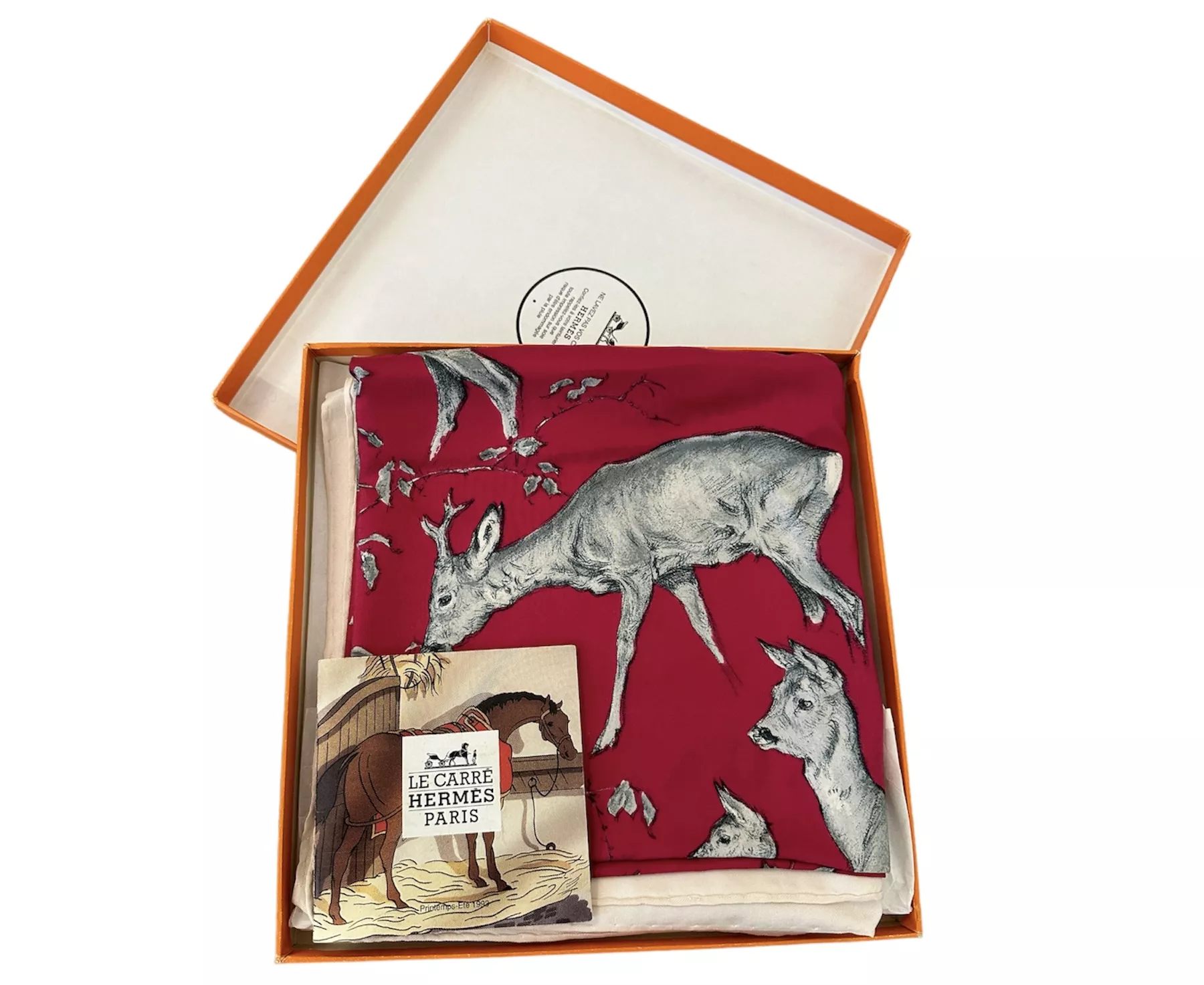
Worn as a scarf to soothe Grace Kelly's fracture, or on Brigitte Bardot's head to hide from the paparazzi, the Carré has dressed the stars, princesses and fashion icons of the 20th century.
Today, it continues to sublimate French women, but is also available in cooler colors for men's wardrobes. Le Carré dares color, wakes up a black outfit, or pairs with a colorful top.
Suitable for any occasion, it can be collected again and again. Talented artists such as Hugo Grykar, Vladimir Rybaltchenko, Xavier de Poret and Charles Pittner have left their mark on the history of this exceptional accessory.
Adorned with equestrian motifs, celebrating French History, notably the Empire, or the saga of the House of Hermès, it is now a tribute to fashion that has been passed down from generation to generation.

A unique manufacturing process
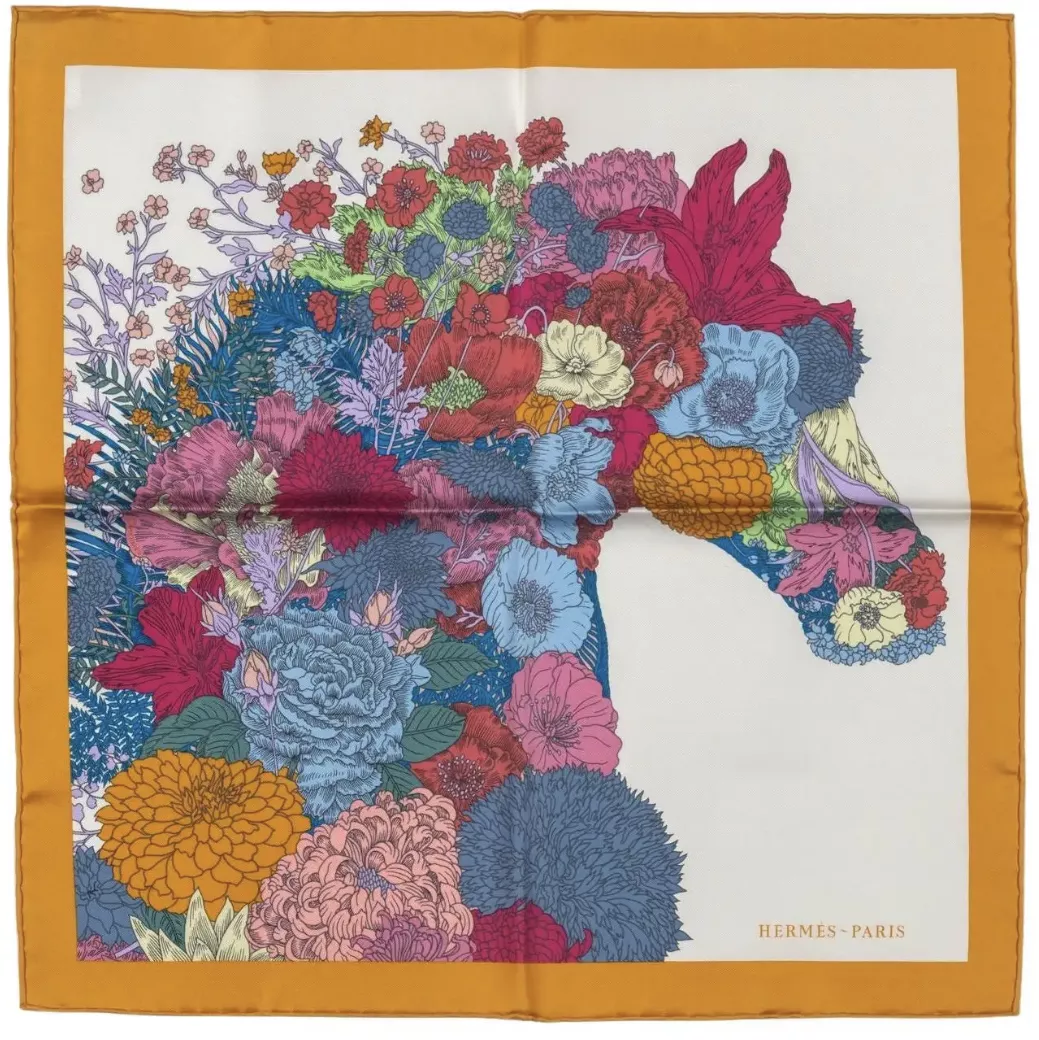
Making a Hermès carré is a meticulous process that combines artisan tradition and technical innovation. Each carré begins with a carefully hand-drawn design by an artist, which can take up to 18 months to finalize.
Then the design is separated into different colors, sometimes as many as 45, each requiring individual silkscreening. The fabric, usually a high-quality silk produced from silkworms bred by Hermès, is then stretched and attached to frames.
The colored inks are applied one by one through silk stencils, a delicate process that requires extreme precision to ensure that each color is perfectly aligned.
After printing, the squares are washed to fix the colors, then dried. Finally, each square is rolled and sewn by hand, a signature Hermès detail that adds a touch of elegance and finish to each piece.
This process, which can take several weeks, ensures that each Hermès square is a true work of art, unique and of the highest quality.
This lengthy process, though a different kind of work, is as standardized and demanding as the manufacture of handbags (Birkin, Kelly ...) who also follow a rigorous and particular approach.
Recognizing an original Carré Hermès
The counterfeit market is increasingly strong in making all kinds of dupes, including silk scarves. On online platforms, the resale of these items is steadily increasing, and many customers are being tricked.
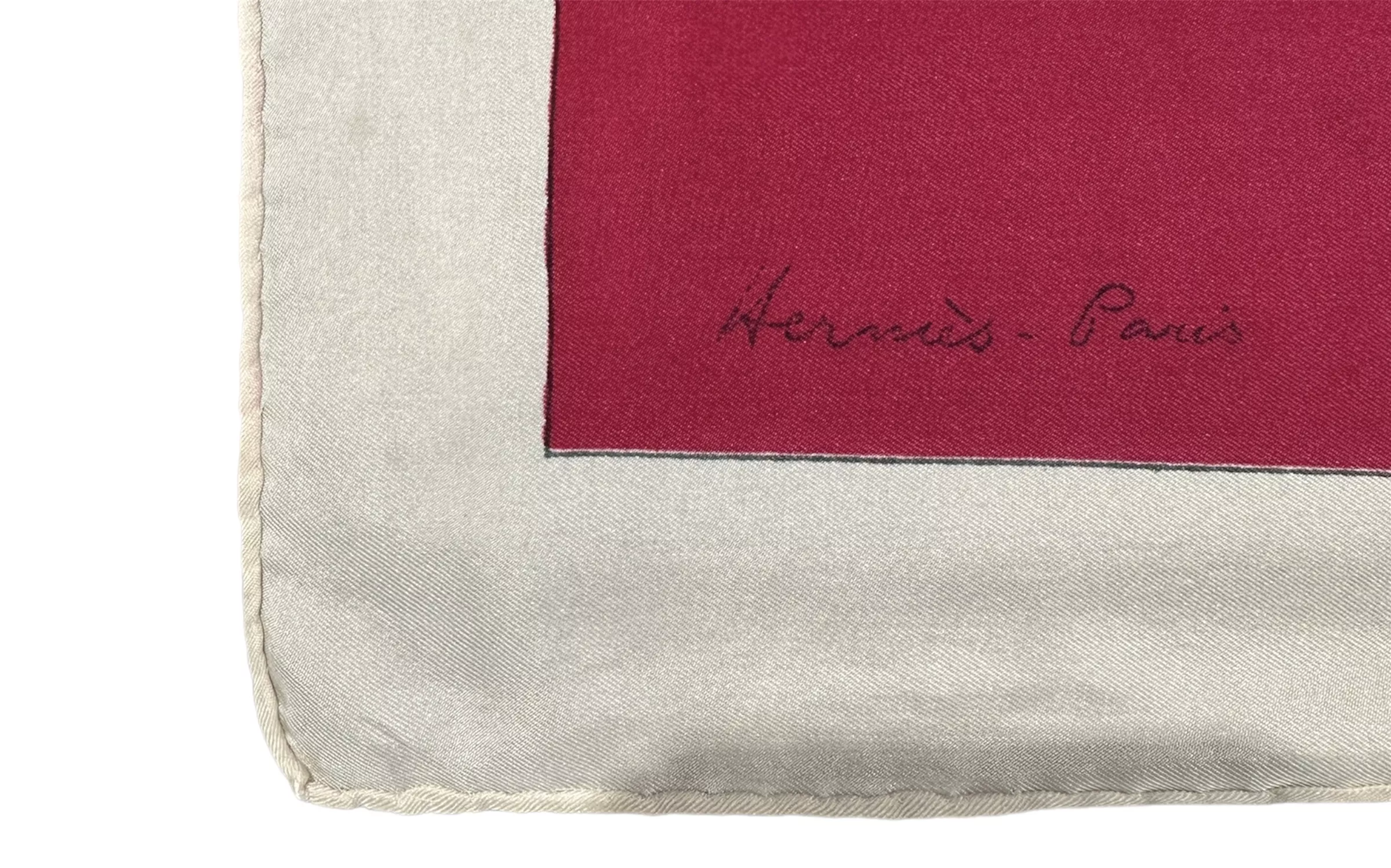
This is why, even if techniques exist to recognize a genuine Carré Hermès, such as looking at the seams, or the signature present at the bottom of the scarf, it is essential if you think you own a Carré to have it appraised in order to date it and be sure of its value.
Know the certain value of your Carré
If you happen to own a Carré Hermès or think you might, don't hesitate to request a free appraisal using our form on our website.
A member of our team of experts and licensed auctioneers will contact you promptly to provide you with an estimate of the market value of your scarf, not forgetting to send you ad hoc information about it.
If you wish to sell your work, you will also be accompanied by our specialists in order to benefit from alternatives to sell it at the best possible price, taking into account market inclinations.
Estimate in less than 24h
Discover in the same theme

Estimation and expertise of Elsa Schiaparelli's fashion draw...
Elsa Schiaparelli is a fashion designer who produced designs that are sought-after at auction and very rare on the market. Their value is on the rise.
Learn more >

Estimation and expertise of Birkin, Kelly, Constance, Evelyn...
Hermès bags are collectors' items with a very high auction value. They are highly prized and sell for a lot of money.
Learn more >

Estimation and expertise of Dior, Vuitton or Chanel bags.
Your luxury handbags are very valuable and can be highly prized on the market. Have them appraised by state-approved experts.
Learn more >
Pieces from the House of Hermès sold at auction

Estimated 1.500 - 3.000 €
HERMES, Constance Handbag in camel box leather.

Estimated 4000 - 6000 €
HERMES - Paris Birkin 35 handbag in black grained leather.

Estimated 5000 - 10000 €
HERMES - Paris Birkin 35 handbag in Togo Gold leather.

Estimated 15000 - 20000 €
HERMES - Paris Birkin 30 handbag in black matte niloticus crocodile.

Estimated 6000 - 8000 €
HERMES - Paris Birkin 40 handbag in Togo chestnut leather.

Estimated Between €5,000 and €7,000
HERMES - Kelly in brown ostrich leather

Estimated 1.500 - 3.000
HERMÈS, "Kelly" 32 saddle bag in black box calf

Secure site, anonymity preserved

Auctioneer approved by the State

Free and certified estimates
Frequently asked questions
-
What is a Hermès Carré, and what is its history?The Carré Hermès is a 90 x 90 cm silk scarf created in 1927 by Robert Dumas and fashion designer Lola Prusac. Inspired by the handkerchiefs worn by soldiers of the Grande Armée, it has become an iconic symbol of Parisian luxury and a must-have in any woman’s wardrobe, worn by icons such as Grace Kelly and Brigitte Bardot. Each carré is a true work of art, entirely made in France in the silk workshops of Lyon using a meticulous artisanal process.
-
How much does a Hermès Carré sell for at auction?The value of a Hermès Carré varies considerably depending on its year of production, the artist who designed it, the edition, the motifs, and its rarity. Prices generally range from €70 to €9,600. Scarves featuring equestrian scenes sell for between €70 and €2,600, those with geometric patterns for between €130 and €2,700, and those depicting hunting scenes or featuring mosaic patterns can fetch up to €9,600.
-
How can I have my Hermès Carré authenticated and appraised?Auctie's offers a free, no-obligation appraisal of your Hermès Carré. Simply fill out a form on our website, and a certified expert or auctioneer will contact you shortly to provide an estimate of your scarf’s market value. This appraisal guarantees reliable authentication and precise dating of your piece.
-
Is this the right time to sell a Hermès Carré at auction?Yes, this is an excellent time to sell. The Hermès Carré enjoys enduring success on the auction market, as collectors are constantly on the lookout for rare and timeless pieces. Every year, Hermès refreshes its collections with new artists and designs, making certain older models even more sought-after and valued by bidders.
-
How does the sale of a Hermès Carré work at Auctie's?Auctie's supports sellers from the appraisal stage through to the auction. Following a free appraisal, our specialists will advise you on the optimal time to put your item up for sale and guide you toward the best solutions for achieving the highest price. Your scarf will be featured in our auctions dedicated specifically to fashion, handled by certified auctioneers and seasoned experts.
