



Rating and value of Spanish military orders and decorations

Key takeaways
- Spanish military orders sell for between €50 and €11,870, depending on the order, its condition, and the owner's background.
- The Order of Saint Ferdinand commands the highest prices (€60 to €11,870), particularly if it belonged to members of the nobility.
- Condition, rarity, documented provenance, and original ribbons significantly determine the market value of these decorations.
If you own a Spanish military or knightly order, and would like to know its value, as well as, if you don't know, the period and model of the decoration, our state-approved experts and auctioneers will offer you their appraisal services.
Our specialists will work to carry out a free appraisal of your work, and provide you with an accurate estimate of its value on the current market.
Then, should you wish to sell your work, we will direct you to the best possible arrangement to obtain the optimum price.
Rating and value of Spanish military orders and orders of chivalry
Military orders and orders of chivalry are sought-after items for collectors, and Spanish orders in particular. However, price differences can be considerable, depending on the order, the state of preservation, the person to whom it belonged, and other criteria.
Now, prices for these objects can rise dramatically at the auctioneers' gavel. Buyers from all over the world are interested in sales of certain rare pieces.
The price at which they sell on the art market ranges from €50 to €11,870, at the moment, a consequent discrepancy but one that says a lot about the value that can be attributed to these decorations.
In 2017, a silver and enamel Royal Order of Saint Ferdinand and Merit that belonged to Principe Philippe de Bourbon sold for €11,870, whereas it was estimated at between €400 and €800.
Order of value ranging from a simple order to the most prestigious
Technique used | Result |
|---|---|
Order of Military Merit | From 100 to 1 200€ |
Ordre d'Isabelle la Catholique | From 50 to 6 500€ |
Ordre de Saint Ferdinand | From €60 to €11,870 |
Estimate in less than 24h
History of the Spanish military orders
The Spanish military orders were born in the harsh light of the Reconquista, at a time when war and faith merged into a single quest. They arose in the tumult of battle, in the dust raised by horses, in the clash of blades and shields.
Each order, in its singularity, unfolds as a fragment of this shifting history, where chivalry stands as a bulwark and an ideal.
The Order of Calatrava, the first among them, was forged in the necessity, in the urgency of a defense to be consolidated. It is anchored in the eponymous fortress, in the stone beaten by the winds of La Mancha, in the iron of the swords wielded by these monk-soldiers who, between prayer and combat, stand at the shifting frontier of power.
The space they occupy becomes a territory of light and shadow, a place where faith is measured by the test of bloodshed.
Other orders emerge, each carrying with them a fragment of this great recomposition of the world. The Order of Santiago, protector of the pilgrims of Compostela, doesn't limit itself to guarding the roads: it transforms the spiritual march into an earthly conquest, where light and violence intertwine.
The order of Alcántara, in the west of the peninsula, stands as a stronghold on harsh lands, where rock and earth mingle in a continuous struggle between heaven and war.
The Order of Montesa, meanwhile, rises from the ashes of the Knights Templar, taking up the flame of a dissolved power, re-articulating its structures in a silent continuity.
These orders are not mere honorary distinctions; they are living matter, fragments of a past that still pulsates in coats of arms, in medals struck in gold and enamel.
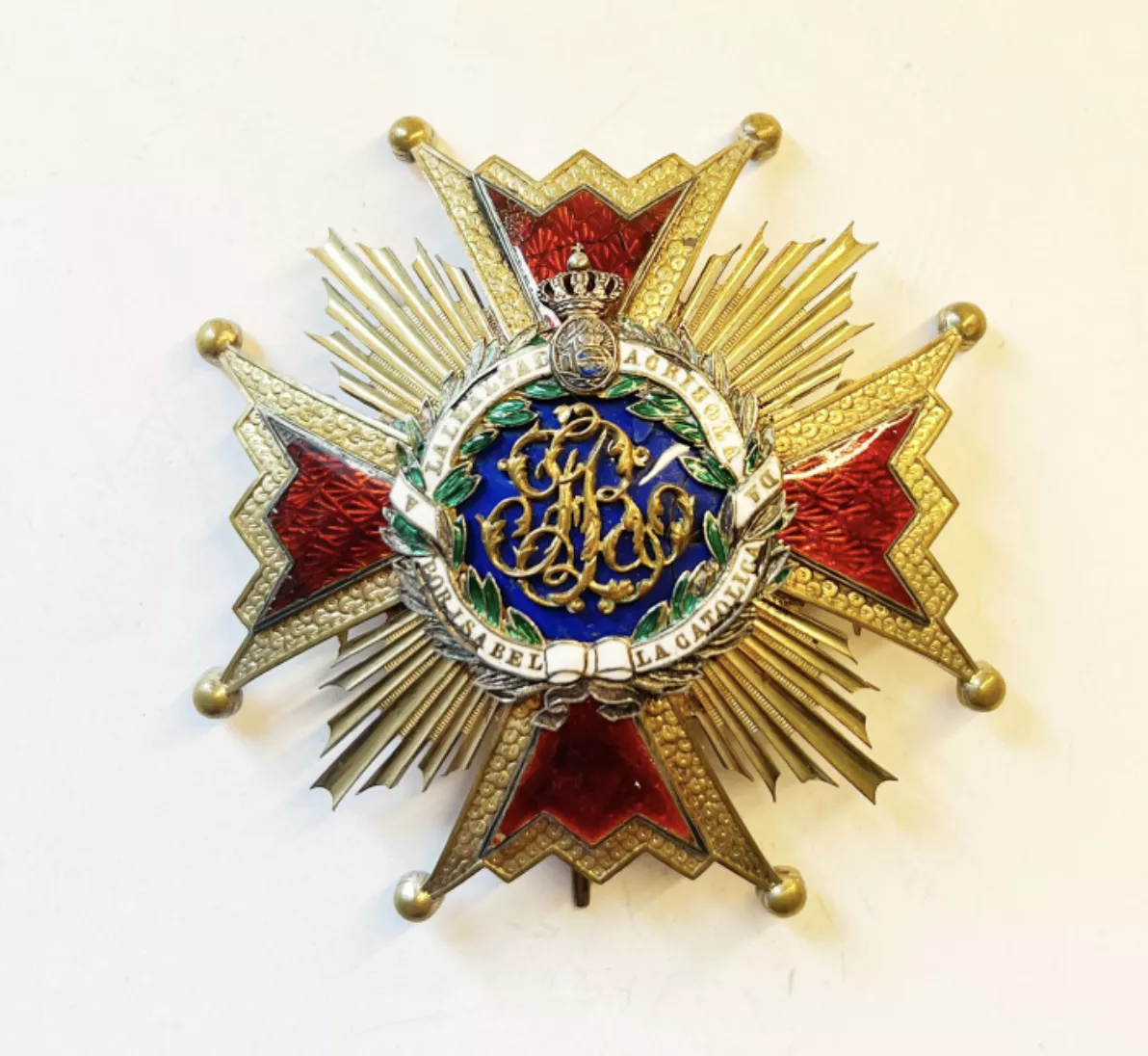
Appearance of the Orders of Merit
They recompose themselves over the centuries, changing roles, adapting to the mutations of a changing kingdom. Some fade away, absorbed by modernity which dissolves their necessity, others persist, reinvested with new meaning.
The Order of Isabella the Catholic, founded in the XIXᵉ century, no longer celebrates war, but expansion and merit. Its insignia, a radiance of gold and purple, shines like a vestige of an empire that is redefining itself, oscillating between past glory and present mutations.
It no longer protects a tangible frontier, but consecrates a symbolic space, that of a power that is no longer fixed in the stone of castles, but in the shifting horizon of diplomatic and cultural conquests.
The Order of Saint Ferdinand, born in the midst of the War of Independence, captures another light, that of a time of rupture. It is anchored in the moment of combat, in the brilliance of heroic charges, in the shattering of regimes and certainties.
His cross, his star, become traces of bravery, but also witnesses to a time when chivalry was fading before a new conception of merit.
These orders, through their evolution, are so many reflective surfaces where history is projected. They still vibrate in collections, at auctions where each medal seems to contain the echo of the hand that wore it.
They are not mere artifacts: they are the dense matter of a time that dilutes and recomposes itself, a space where history continues to emerge, between memory and oblivion.
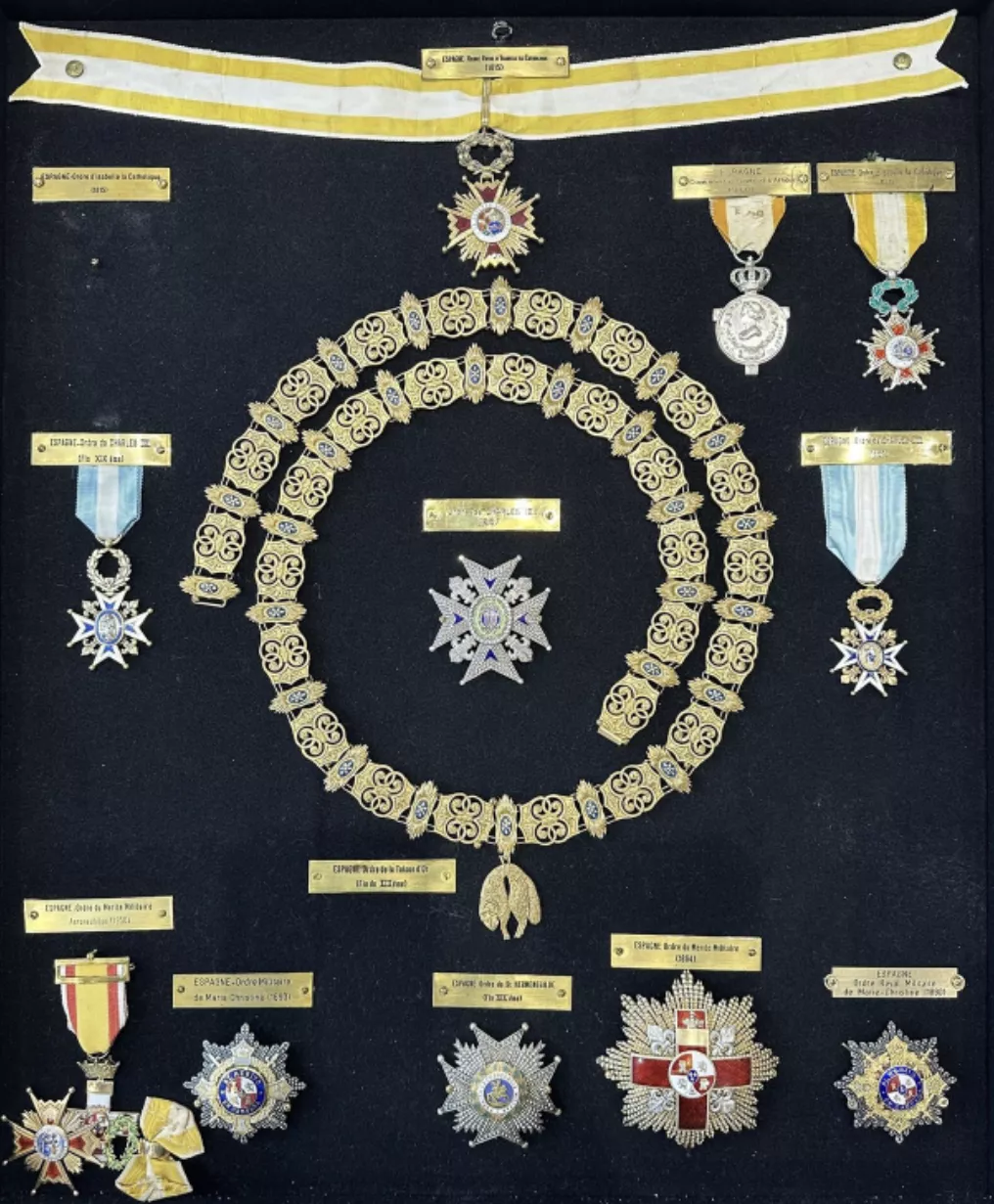
The place of Spanish military orders in Europe
Military orders are not just a Spanish affair. Everywhere in Europe, these distinctions shape elites, mark the men who have made history.
The Order of the Garter in England, the Golden Fleece in Burgundy, Saint Andrew in Russia: so many symbols that don't just adorn a chest, but inscribe their bearer in a lineage, a continuity where the individual becomes a link in a collective memory.
Today, these orders, their insignia and medals, can be found on the collectors' market. To own a military order is to hold in one's hands a piece of history, an object that has spanned the centuries, worn by men who shaped their era.
Some rare decorations fetch in excess of millions of euros at auction. Here, the value lies not just in the precious metal or finely worked enamel, but in what it represents: a sense of belonging, a commitment, a moment frozen in time when a man has earned the right to wear an emblem that transcends him.
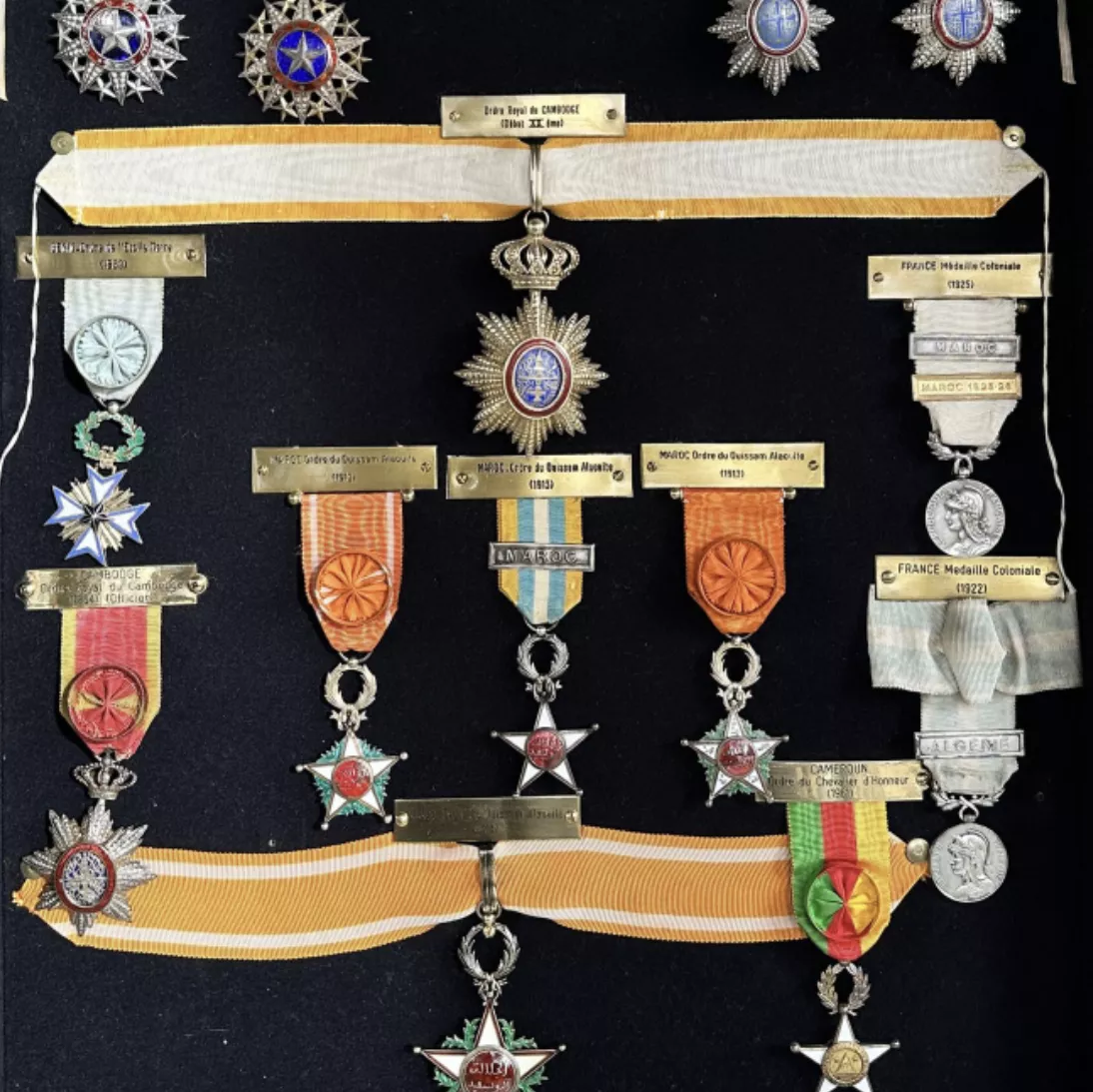
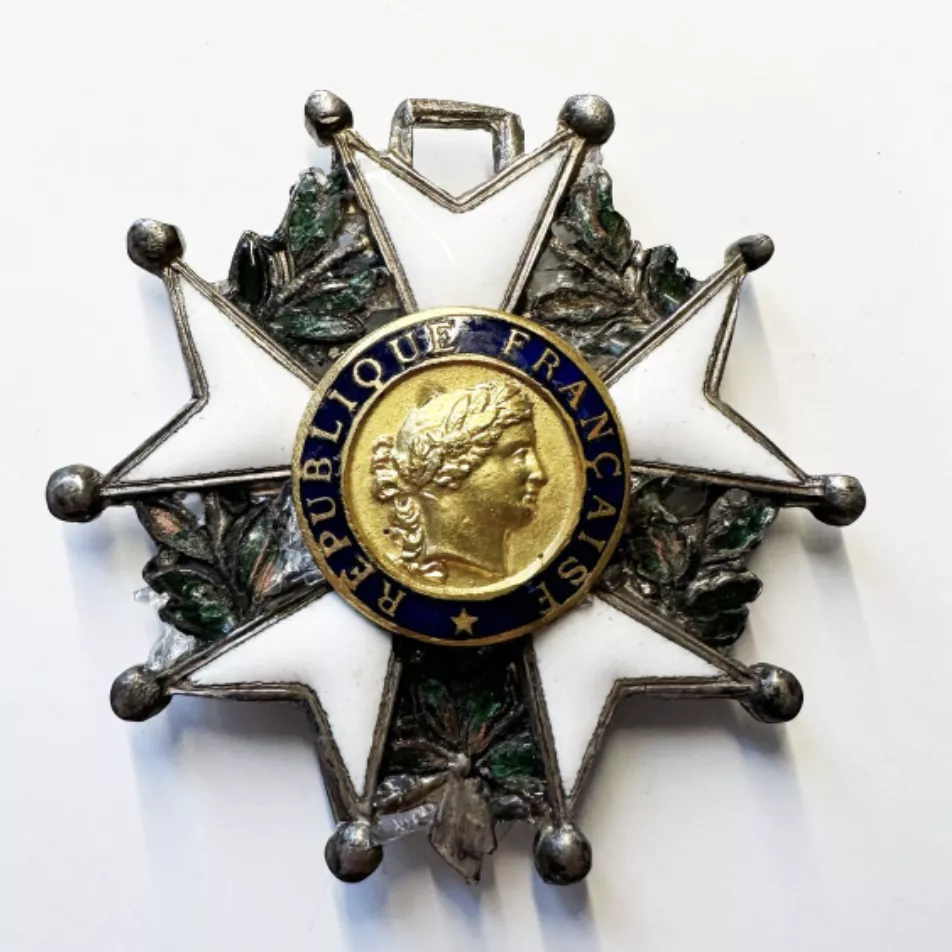
The success of military decorations at auction
The success of Spanish military decorations and medals at auction is measured not just by their age. It lies in what they carry with them: shards of battle, fragments of history that still seem to vibrate under the light.
A 13th-century Calatrava cross is not just a rare object, it carries with it the shadows of the knights who wore it, the sound of lances clashing under a burning sky.
A star of the Order of Saint-Ferdinand, awarded at the height of the Napoleonic War, retains the mark of a frozen moment: the solemnity of a medal presentation on a battlefield, the hand that clutches it, the gaze of an officer whose glow of glory has not yet faded.
Each medal is a trace, a silent testimony that resurfaces at the whim of sales, taking with it a piece of history frozen in metal.
But what makes a medal valuable is first and foremost its condition. A preserved enamel, intact gilding, a ribbon that has stood the test of time without faltering, and a simple badge becomes a shard of the past that has remained intact.
In contrast, a medal with a patina, marked by use, tells a different story: that of an object that has known the test of the field, that has been worn, handled and passed on. Provenance, too, transforms a simple artifact into a coveted treasure.
An anonymous badge catches the eye, but a medal accompanied by its original patent, a signature, period correspondence, brings a destiny back to life.
A name inscribed on a document puts a face back on history, anchoring the object in a reality that goes beyond its mere materiality.
And then there is rarity, the tension that arises as soon as an almost unobtainable order resurfaces. The Spanish Order of the Golden Fleece, one of the most exclusive in Europe, embodies this fascinating inaccessibility, this prestige that only a chosen few have been able to wear.
Its presence in auction rooms triggers feverish anticipation, a silent duel between collectors ready to do anything to make it their masterpiece. But the key is in the staging.
A medal presented in its original case, accompanied by documents tracing its history, is no longer a simple object: it becomes a suspended moment, a fragment of the past that, under the spotlight of an auction room, regains its former brilliance.
In auction rooms, they're all as prized as ordres militaires français, the Russian military orders or antique flintlock pistols.
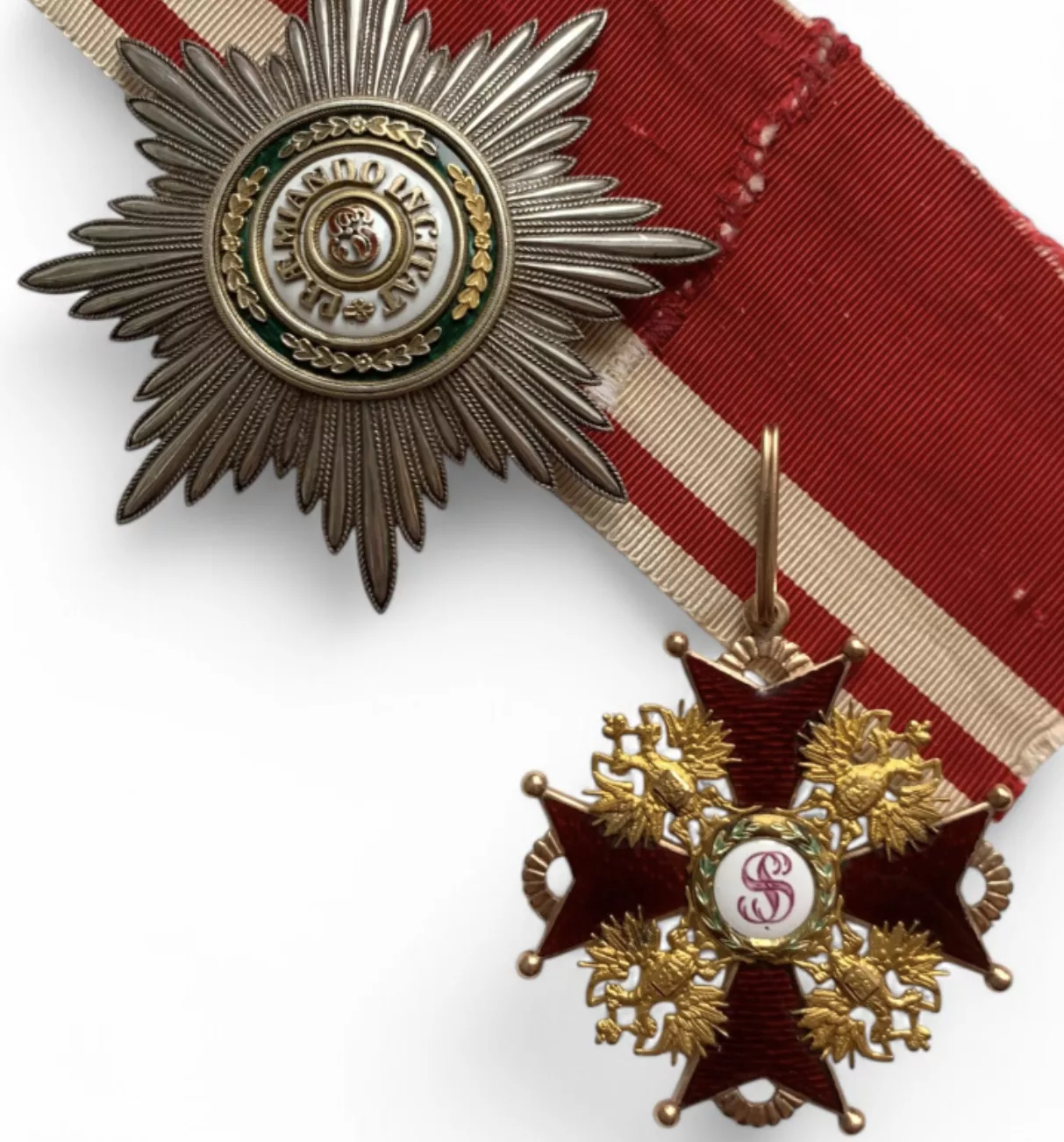
Knowing the value of a military order or knighthood
If you happen to own a military order or knighthood, and would like to know its value, don't hesitate to request a free appraisal using our form on our website.
A member of our team of experts and licensed auctioneers will contact you promptly to provide you with an estimate of the market value of your piece, not forgetting to send you ad hoc information about it.
If you wish to sell your property, you will also be accompanied by our specialists in order to benefit from alternatives for selling it at the best possible price, taking into account market inclinations.
Estimate in less than 24h
Discover in the same theme

Rating and value of 16th century European armor
European armors are sought-after historical collectibles. Their value can be high, estimated in less than 24 hours.
Learn more >

Rating and value of German military helmets
German military helmets are sought-after collectibles at auction. Their market value can be very high.
Learn more >

Rating and value of Ottoman bladed weapons, daggers and sabr...
Ottoman swords and daggers are highly prized collector's items at auction. They can fetch unprecedented sums. Estimated in 24h.
Learn more >
Works from the same period sold at auction

Estimated 1.500 - 2.000 €
Gold Cross of the Order of Saint Stanislas, 2nd class.

Estimated 600 - 800 €
SERBIA, Grand Cross of the Order of the White Eagle, silver and polychrome enamel.

Estimated 600 - 800€
IRAN, Order of the Lion and the Sun

Estimated 180 - 250
SERBIA, Order of the White Eagle

Estimated 800 - 1.200
SPAIN, Commander's plaque of the Order of Isabella the Catholic in gold

Estimated 1.000 - 2.000
SPAIN Display case with 13 Spanish civil and military decorations

Secure site, anonymity preserved

Auctioneer approved by the State

Free and certified estimates
Frequently asked questions
-
What are the main Spanish military orders, and what are their historical origins?The most prestigious Spanish military orders are the Order of Calatrava (12th century), the Order of Santiago, the Order of Alcántara, and the Order of Montesa, all of which were founded during the Reconquista. Later, in the 19th century, the Order of Isabella the Catholic and the Order of Saint Ferdinand were established. Each has its own distinct history: the former were military orders of chivalry linked to the defense of territories, while the orders of merit celebrate military expansion and achievements.
-
What is the rating range for Spanish military orders?The prices of Spanish military orders vary considerably depending on the type and condition. The Order of Military Merit ranges from €100 to €1,200, the Order of Isabella the Catholic from €50 to €6,500, and the Order of Saint Ferdinand from €60 to €11,870. In exceptional cases—such as a rare piece that belonged to a historical figure and is in excellent condition—prices can significantly exceed these ranges.
-
What factors influence the value of a Spanish military decoration?The value of a Spanish military order depends on several factors: its condition (enamel, gilding, ribbon), provenance and ownership history, the rarity of the order, and accompanying documents (original certificate, period correspondence). A complete medal with its historical documentation that was worn by a notable figure will be worth far more than an anonymous insignia in poor condition.
-
How can I authenticate and appraise my Spanish military medal?To authenticate and appraise your Spanish military medal, we recommend that you request a free appraisal from Auctie's. A certified expert or auctioneer will examine your item, verify its authenticity, and determine its current market value, with no obligation on your part. You will receive a comprehensive response within 48 hours with detailed information about your item.
-
How can I sell my Spanish military uniform for the best price?Auctie's supports sellers of military items from the initial appraisal through to the auction sale. After a free appraisal, our specialists will present you with the best sales strategies, taking into account current market trends for Spanish decorations. We highlight the provenance and history of your item to attract international collectors and maximize the final price.
