



Rating and value of drawings and paintings by Iwasa Matabei

Key takeaways
- Iwasa Matabei’s drawings sell for between €45 and €6,100, while his paintings fetch prices ranging from €150,000 to €259,400, depending on their size.
- A proto-ukiyo-e artist of the 16th–17th centuries, Matabei blended the aristocratic traditions of Tosa with scenes of urban and everyday life, foreshadowing the emergence of ukiyo-e.
- Attribution remains a critical issue due to the rarity of works bearing the artist’s signature; scientific analysis and documented provenance are essential for authentication and valuation.
Iwasa Matabei’s drawings fetch up to €259,400 at auction. An appraisal allows us to accurately determine the current market value of your Iwasa Matabei artwork and, if applicable, optimize the sale of the piece.
If you own a work by Iwasa Matabei and would like to know its value, our state-certified auctioneers will provide a free appraisal based on authenticity, market rating, and recent market results.
Market Value and Reputation of Artist Iwasa Matabei
Iwasa Matabei leaves behind a body of work in its own right as a specialist in ukiyo-e. Today, prices for his works are reaching unprecedented levels at auction.
His works are particularly sought after, especially by Japanese buyers. The prices at which they sell on the art market range from €45 to €259,400—a considerable spread that speaks volumes about the value that can be attributed to Iwasa Matabei’s works.
An oil on paper titled *Thirty-six Immortal Poets and Their Poems* sold for €259,400 in New York, while it had been estimated at between €120,000 and €160,000.
A range of values from a simple work to the most prestigious
Technique used | Result |
|---|---|
Drawing | From €45 to €6,100 |
Painting | From 150,000 to 259,400 |
Estimate in less than 24h
Placing the Artist in Context
Period
Iwasa Matabei (1578–1650) was an artist active from the late 15th century through the first half of the 17th century, at the juncture between the Azuchi-Momoyama period and the early Edo period.
He worked against the backdrop of Japan’s political stabilization under the Tokugawa shogunate and the development of an emerging urban culture, during a transitional period between the major decorative schools of the late 16th century and the earliest forms of Edo’s popular visual culture.
Artistic Trends
He distinguished himself in narrative genre painting, depicting scenes of daily life, literary tales, and historical episodes, characterized by a wealth of detail.
He was part of the Tosa School, with a discernible influence in his taste for detailed storytelling, precision of drawing, and the legacy of classical Japanese pictorial traditions, at the time of ukiyo-e’s emergence.
He is often considered a proto-ukiyo-e figure due to his interest in scenes of everyday life and figures drawn from urban life. His aesthetic is decorative and linear, emphasizing outline, a flat organization of space, and the ornamental richness of his compositions.
He synthesized aristocratic traditions (the Tosa school) with more popular sensibilities, foreshadowing the later developments of ukiyo-e.
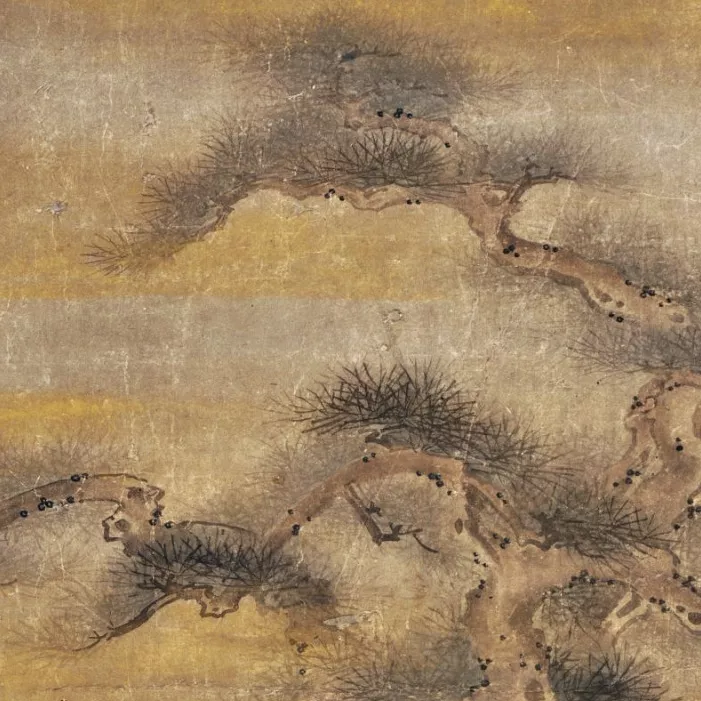

The Life of Iwasa Matabei
Cultural Context
Iwasa Matabei was active at the turn of the Momoyama and Edo periods, a time of political stabilization and the development of an urban visual culture in Japan.
His work emerged during a transitional period between the major aristocratic schools of decorative arts and the emergence of more narrative and accessible pictorial forms.
He is traditionally associated with the origins of ukiyo-e, although this attribution is the subject of historiographical debate due to his interest in genre scenes and figures drawn from everyday life.
His work is characterized by rich storytelling, precise drawing, and meticulous attention to details of clothing and facial expressions, reflecting a keen observation of the society of his time.
Artistic and Intellectual Circle
He is sometimes presented as the heir to pictorial traditions stemming from the Tosa and Kano schools, certain principles of which he reinterprets from a more narrative and expressive perspective.
His work is part of a changing artistic landscape, where the visual forms that would lead to the rise of ukiyo-e in the 17th century were gradually developing.
Although his personal network is less well documented than that of later artists, his influence is evident in subsequent generations of Japanese artists engaged in depicting urban and popular life.
His works are today just as sought after as those of modern artists such as Yayoi Kusama, Takaseda Matsutani, and Kazuo Shiraga.
The Artist's Techniques
Artist’s Style
Iwasa Matabei is a heir to the Yamato-e painting tradition, characterized by continuous visual storytelling and a focus on scenes from everyday life. He combines precise, expressive lines with rich coloring, incorporating pigments and decorative highlights.
He displays a preference for densely populated compositions, where multiple figures interact within a structured yet lively space. He stylizes faces and bodies while retaining a certain individuality in their postures and gestures.
He frequently uses gilded or decorative backgrounds, contributing to the works’ precious and ornamental quality. He places great importance on storytelling and the depiction of social customs, foreshadowing certain later developments in ukiyo-e.
Focus on a Key Work
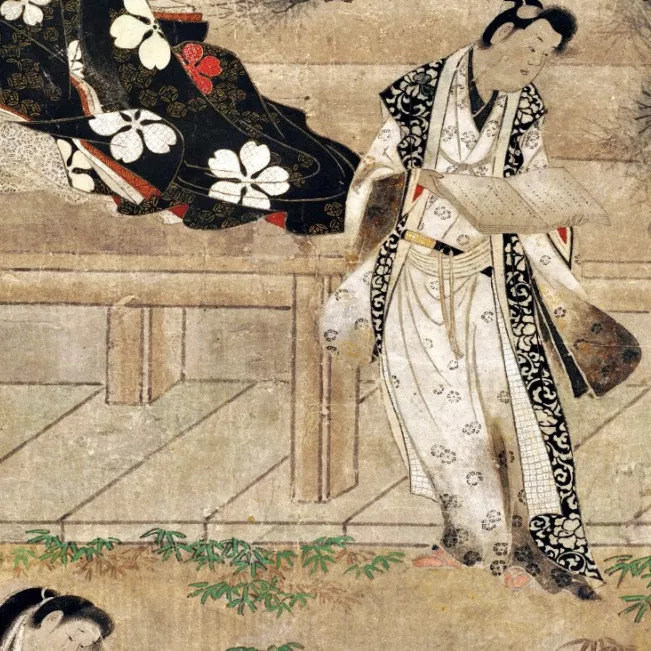
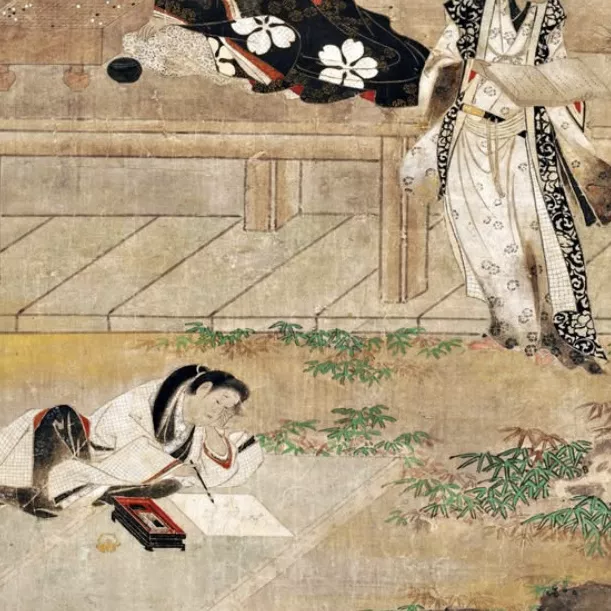
Scenes of Urban Life (folding screen, early 17th century)
The composition spans a folding screen, allowing for a continuous narrative across a multitude of scenes. He provides a detailed depiction of daily activities, offering a rich and lively view of urban society.
He employs a multitude of figures, each characterized by specific postures and gestures. The spatial organization combines oblique perspective with overlapping planes, typical of the Japanese tradition.
His color palette is varied, with decorative elements that enhance the visual richness of the work as a whole. This work exemplifies Matabei’s role in the evolution toward a genre painting style attuned to social realities and visual storytelling.
FAQ – How do you appraise a work by Iwasa Matabei?
1) What stylistic criteria specific to Iwasa Matabei are key?
The analysis here focuses on the finesse of the line, narrative precision, and the richness of genre scenes—particularly depictions of urban life, elegant figures, or compositions inspired by classical tales—all characteristic of a pictorial language at the crossroads of the Yamato-e tradition and the early stages of ukiyo-e.
2) How important is the question of attribution?
Given the rarity of autograph works and the existence of numerous productions from workshops or affiliated schools, particular attention is paid to the quality of execution, stylistic consistency, and comparative analyses with recognized works.
3) What role do scientific examinations and provenance play?
The study of materials, pigments, and the support, combined with an established and documented provenance (historical collections, scholarly publications, archives), is a determining factor in validating the attribution and assessing the work’s value.
Recognizing the Artist’s Signature
Iwasa Matabei’s works are unsigned. For this reason, if you believe you own a work by the artist or based on his style, it is essential to have it appraised by an expert who can authenticate it.
Have Your Iwasa Matabei Work Appraised
If you own a work by Iwasa Matabei, an appraisal will help you assess its current market value.
Using our online form, our experts and certified auctioneers will conduct a free appraisal and provide you with a reliable estimate of your artwork’s market value.
If you’re considering selling it, we’ll guide you through the process to ensure you get the best possible price.
Estimate in less than 24h
Discover in the same theme

Rating and value of works, paintings by Thuong Lan Nguyen
Thuong Lan, a little-known Vietnamese artist, is nevertheless appreciated at auction. His works are very valuable. Estimated in less than 24h.
Learn more >

Rating and value of Vietnamese lacquer panels
Vietnamese lacquer panels are highly prized by collectors, and their value is rising on the auction market.
Learn more >

Rating and value of Chinese porcelain vases
Chinese porcelain vases are highly sought-after items at auction. They are prized by collectors.
Learn more >
Nos records d'enchères à l'hôtel Drouot

Estimated 10.000 - 15.000 €
Ebridge Ayer BURBANK(1858-1949), Young African-American boy, Oil on panel.

Estimated 20.000 - 30.000
EXCEPTIONAL LARGE OVAL DISH IN VINCENNES SOFT PASTE PORCELAIN FROM THE "BLEU CÉLESTE" SERVICE OF KING LOUIS XV AT THE CHÂTEAU DE VERSAILLES

Estimated 20.000 - 30.000
MANUFACTURE ROYALE DE SÈVRES, 18th century "L'Empereur de la Chine" - Portrait of the Emperor Qianlong, Hard porcelain bisque, 1775

Estimated 1.500 - 3.000
HERMÈS, "Kelly" 32 saddle bag in black box calf

Estimated Between €5,000 and €8,000
KRACHKOWSKY (1854-1914), Before the storm, oil on canvas

Estimated 40.000 - 80.000
Alexandre ROUBTZOFF (1884-1949), Portrait of Arbia, oil on canvas

Secure site, anonymity preserved

Auctioneer approved by the State

Free and certified estimates
Frequently asked questions
-
Who is Iwasa Matabei, and what is his historical context?Iwasa Matabei (1578–1650) was a Japanese artist active at the transition between the Azuchi-Momoyama and Edo periods. He is considered a proto-ukiyo-e figure, synthesizing the aristocratic traditions of the Tosa school with emerging popular sensibilities, against a backdrop of political stabilization in Japan and the development of a nascent urban culture.
-
What are the prices and valuations of Iwasa Matabei's works?Iwasa Matabei's drawings sell for between €45 and €6,100, while his paintings fetch much higher prices, ranging from €150,000 to €259,400. A record price was set for an oil on paper that sold for €259,400 in New York, reflecting strong demand, particularly from Japanese buyers.
-
How can you authenticate a work by Iwasa Matabei?Since Iwasa Matabei’s works are unsigned, it is essential to have your piece appraised by an expert. Auctie's offers a free, no-obligation appraisal by certified auctioneers, who analyze the quality of execution, stylistic consistency, materials, and provenance to confirm the attribution.
-
What role do provenance and scientific analysis play in the evaluation of a work of art?The study of materials, pigments, and the support, combined with documented provenance (historical collections, scholarly publications, archives), is a key factor in validating the attribution and assessing the work’s value. These examinations are essential given the existence of numerous works produced by workshops and affiliated schools.
-
How do I sell a work by Iwasa Matabei at Auctie's?Auctie's guides you from the appraisal to the auction. Request a free appraisal using our online form: our experts will provide a reliable assessment of your artwork’s market value and advise you on how to maximize its value at auction.
