



Ratings and values of paintings by Claire Tabouret

Key takeaways
- Prices for Claire Tabouret’s works range from €90 to €580,500, with strong demand from American and French collectors for her oil-on-canvas paintings.
- In 2021, her acrylic painting “The Last Day” (2016) sold for €580,500, far exceeding its initial estimate of €175,000 to €230,000, confirming her rising market value.
- The artist stands out for his contemporary figurative style, which combines technical mastery, a vibrant palette, and figures suspended between presence and obscurity, engaging in a dialogue with reinvented artistic traditions.
If you own a work by artist Claire Tabouret or based on her work and would like to know its value, our state-approved experts and auctioneers will guide you.
Our specialists will carry out a free appraisal of your work, and provide you with an accurate estimate of its value on the current market.
Then, should you wish to sell your work, we will direct you to the best possible arrangement to obtain the optimum price.
Rating and value of artist Claire Tabouret
Claire Tabouret is an artist well known to contemporary art lovers and collectors. Now, prices for her works are rising at the auctioneers' gavel.
Her oils on canvas are particularly prized, especially by American and French buyers, and the price at which they sell on the art market ranges from €90 to €580,500, a significant delta but one that speaks volumes about the value that can be attributed to the artist's works.
In 2021, his acrylic on canvas The last day dating from 2016 sold for €580,500, while it was estimated at between €175,000 and €230,000. Its value has risen sharply.
Order of value from the most basic to the most prestigious
Technique used | Result |
|---|---|
Estamp - multiple | From €90 to €21,000 |
Drawing - watercolor | From €9,400 to €21,200 |
Oil on canvas | From €10,500 to €580,500 |
Estimate in less than 24h
The artist's works and style
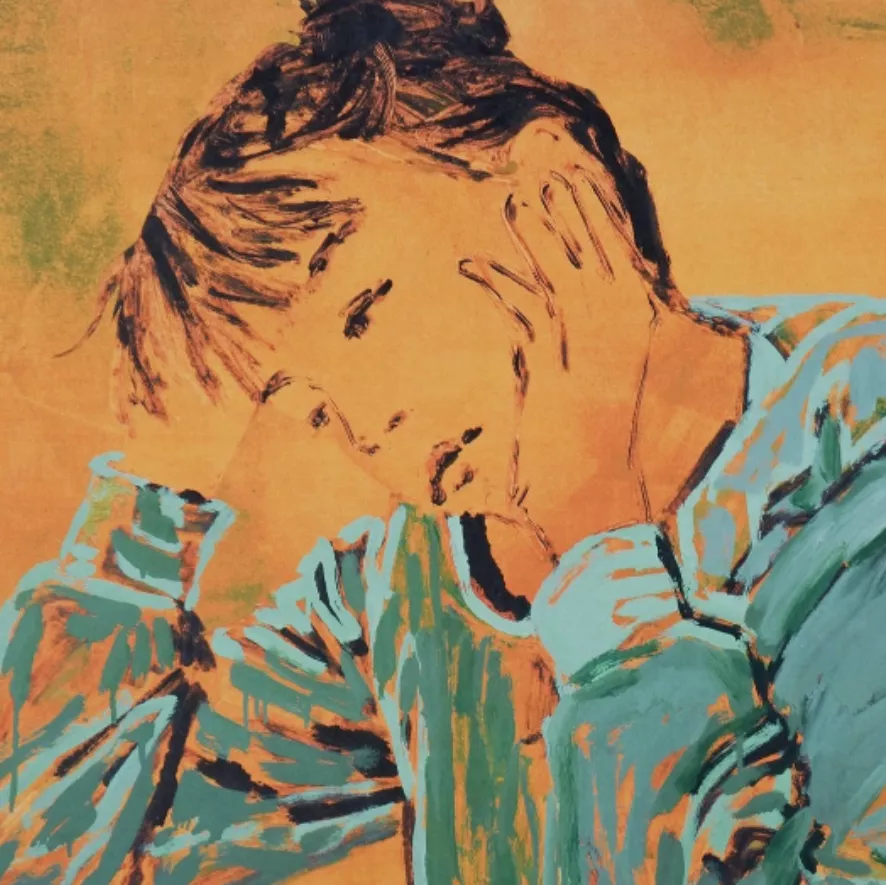
Claire Tabouret's style is distinguished by a subtle tension between introspection and universality, materialized by a technical mastery that transcends convention.
Her works, often large-scale, explore figuration imbued with a saturated palette where vibrant nuances and incisive contrasts build an atmosphere both dreamlike and unsettling.
Faces and bodies, treated with fluid yet assertive line, oscillate between assertive presence and effacement, as if suspended in an ambiguous space-time.
Tabouret sets out to reveal the silences, the hesitations of being, using dense washes and impasto to enrich the materiality of her canvases, while infusing her subjects with a poignant gravity.
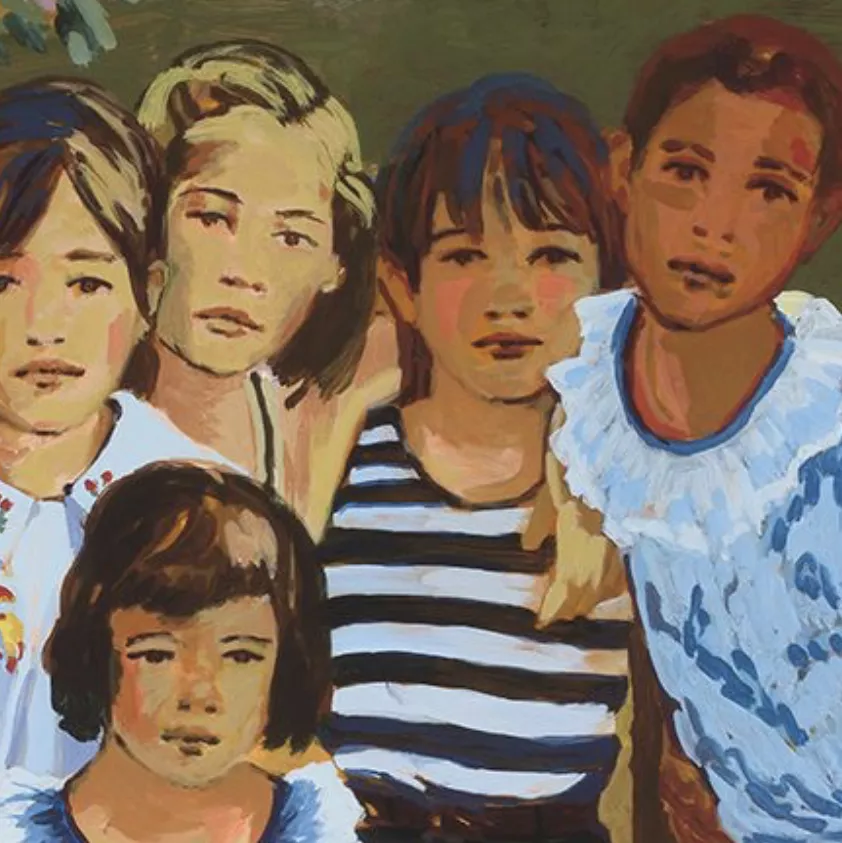
This pictorial language, in which light and shadow intertwine to construct unspoken visual narratives, lends each painting a singular emotional intensity. The compositions, often populated by grouped figures, evoke rituals or moments frozen in a collective memory, instilling a sense of timelessness.
In parallel, the artist plays with uneven textures, integrating irregularities that densify the symbolic charge of the works. Tabouret's technique is not limited to a simple play of shapes or colors: it becomes an introspective act, a quest to materialize latent emotions.
Thus, his work, while dialoguing with classical traditions, asserts itself as a singular voice in contemporary figurative art, carrying within it the echoes of a universe both fragile and monumental.
The life of Claire Tabouret
Claire Tabouret's work is rooted in contemporary figurative art, where the energy of gesture meets remarkable technical mastery.
Her style is characterized by a constant tension between rendering the body and immersing it in vibrantly colored worlds.
Her figures, often suspended between presence and effacement, borrow from a palette rich in muted, contrasting nuances, where glazing plays a fundamental role. This process, which she pushes to the extreme, enables her to obtain almost liquid surfaces, charged with a palpable emotional density.
In her series, the frontality of the subject doesn't just engage the viewer: it captivates him, drawing him into a silent meditation on time and identity.
While her portraits sometimes recall the gravity of the Flemish Primitives, they break with the idea of idealization by being rooted in a raw and often unsettling humanity.
Far from academic realism, she builds her works on a complex layering of matter and light, where every detail - a look, a hand, a garment - becomes a narrative in itself.
Tabouret claims an almost choral approach to her art: her characters intertwine, confront or distance themselves, but always in a striking visual dialogue.
This collective dynamic, which she opposes to frozen individualism, is echoed in her precise use of textures and transparencies, reminiscent of the boldness of a Francis Bacon or the tragic poetry of an Edvard Munch.
Between revisited classicism and contemporary experimentation, Tabouret imposes a unique vision, both intimate and universal, of the human condition.
Focus on Les Déplacés, Claire Tabouret
Let's take Claire Tabouret's Les Déplacés, an imposing canvas where humanity and abstraction mingle.
At first glance, the viewer is drawn into a silent procession of figures, a group of men, women and children moving forward, as if caught in an inexorable motion.
Their frontal, almost hieratic alignment evokes press photography as much as religious painting. This duality between the sacred and the profane lends the whole a symbolic depth that goes beyond the anecdotal.
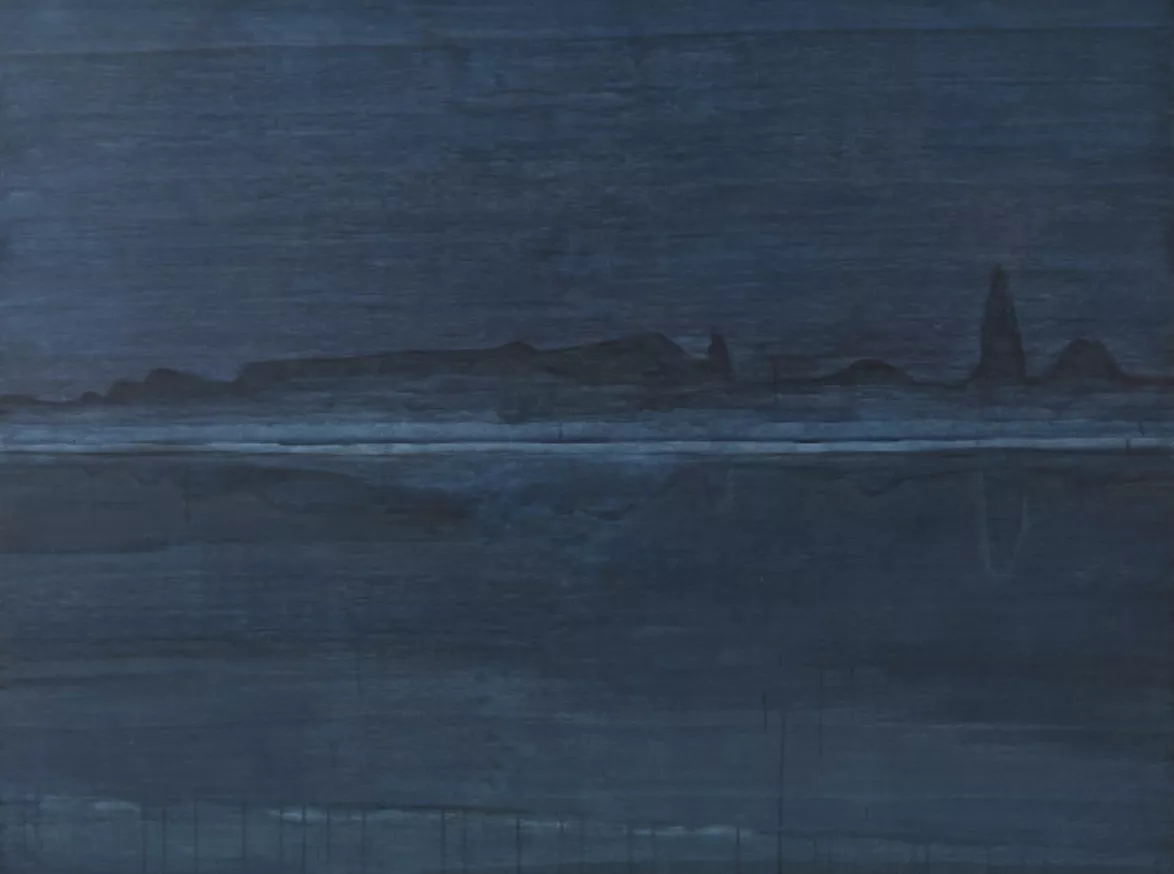
Tabouret's pictorial treatment deserves particular attention. The background is drowned in dark, almost monochromatic tones, dominated by shades of gray and brown, accentuated by bursts of diffused light.
This skilfully orchestrated contrast is reminiscent of the dramatic atmospheres of Baroque masters such as Caravaggio, where each silhouette seems to emerge from the shadows to better capture our gaze.
Yet, in Tabouret's work, light doesn't exalt, it weighs. It acts as a reminiscence, a vestige of a forgotten elsewhere.
The figures themselves, with their frozen postures and loose clothing, seem both concrete and ghostly.
This paradox, between anchoring in reality and dissolving into a dreamlike atmosphere, places the work at the crossroads of influences: on the one hand, the almost photographic frontality of a Gerhard Richter ;
on the other, the vibrant melancholy of an Edvard Munch. Tabouret's quick but precise touch doesn't seek to detail. It suggests, evokes, leaving the viewer to fill in the silences.
Finally, the key element of Les Déplacés lies in the absence of distinctive facial features. This choice, far from being a simple neutrality, elevates each individual to the status of a universal figure. Everyone can project their fears, hopes and inner exiles.
In this way, the work transcends its mere condition as a painting to become a timeless allegory of human wandering. Through this work, Tabouret delivers a poignant reflection on the human condition, inscribed in an artistic tradition yet resolutely contemporary in its sensitivity and narrative urgency.
Claire Tabouret's imprint on her period
Claire Tabouret embodies a singular figure in contemporary art, whose imprint is distinguished by a subtle balance between personal introspection and universal significance.
Her works, often marked by a figurative style tinged with onirism and symbolism, engage in a dialogue with the major issues of her time: identity, collective memory, and the relationship with the other.
Tabouret is not content to simply follow in the footsteps of contemporary narrative painting, represented in particular by figures such as Chantal Joffe and Marlene Dumas; she redefines its codes.
Like these artists, her line blends precision and expressivity, but is enriched by an emotional density of its own, carried by a vibrant palette that transcends realism.
The static faces and often grouped bodies she paints, immersed in suspended atmospheres, are not unlike the austerity and meditative strength of Balthus's figures, while resonating with the intimacy claimed by Elizabeth Peyton.
However, where Peyton celebrates luminous individualities, Tabouret constructs narratives in which the individual almost fades into the background in favor of collective reflection.
In an approach comparable to that of the Cubist engravers who, in the 1910s, reformulated the classical line by systematizing it, Claire Tabouret draws on artistic traditions to extract a renewed grammar.
Stylistic influences
She takes up, for example, classical pictorial codes such as frontal staging and rigorous compositions, but charges them with a narrative tension specific to our times.
This relationship with tradition is not mere appropriation: with her it becomes a platform for questioning our present.
In this respect, her groups of figures, frozen in a kind of silent communion, evoke a contemporaneity in which human bonds seem fragile, almost ritualistic, but still essential.
Hence, her work is part of an era marked by a return to essential pictorial reflections, in the same way as other major figures such as Peter Doig or Cecily Brown, but with a rigor that recalls the methodical construction of classical engravers.
The way Tabouret anchors his figures in a marked physicality, while investing them with an emotional and narrative charge, is not unlike the portraits and scenes of Courbet, embued with realism and depth.
Tabouret's group scenes also sometimes recall the frozen, almost theatrical compositions of Vallotton. Both artists share a tendency to capture the underlying tension in human relationships.
This filiation with art history, which she explores while emancipating herself from it, lends her painting a particular depth.
While she shares with her contemporaries a fascination for ambiguity and fragmented narrative, she distinguishes herself from them through a formal language imbued with rigor, in which every touch of color, every contour participates in an almost architectural balance.
Claire Tabouret's imprint on her era lies in this ability to combine the timeless and the current, to create a bridge between aesthetic heritages and the uncertainties of a changing world.
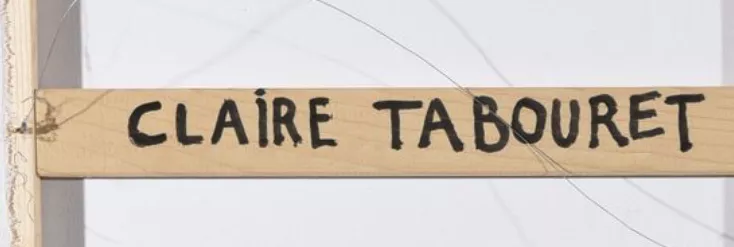
Her signature
Not all of Claire Tabouret's works are signed.
Although there are variations, here is a first example of her signature:
Expertise your property
If you own a work by Claire Tabouret, don't hesitate to request a free appraisal by filling in our online form.
A member of our team of experts and certified auctioneers will contact you to provide an estimate of the market value of your work.
If you are considering selling your work, our specialists will also guide you through the various alternatives available to obtain the best possible price, taking into account market trends and the specific features of each work.
Estimate in less than 24h
Discover in the same theme

Rating and value of Silvia Bächli's drawings
Silvia Bächli is a contemporary artist who has developed drawing as an autonomous discipline. Listed on the market, her works are valued
Learn more >

Rating and value of sculptures, bronzes and elephants by Fra...
François Vandenberghe is a contemporary sculptor who has mainly produced bronzes of elephants, which are highly prized and valued.
Learn more >

Rating and value of sculptures and bronzes by Moustapha Ali
Moustapha Ali is a contemporary Syrian sculptor who has produced numerous works in a variety of highly rated media.
Learn more >
D'autres tableaux abstraits vendus aux enchères

Estimated 2.000 - 4.000
Serge POLIAKOFF (1900-1969), Composition en rouge et bleu. 1965, Lithograph

Estimated Between €5,000 and €8,000
Jean MIOTTE (1926-2016), acrylic on canvas

Estimated 3.000 - 5.000
Roberto MATTA (1911-2002), Composition, Gouache on canvas

Secure site, anonymity preserved

Auctioneer approved by the State

Free and certified estimates
Frequently asked questions
-
Who is Claire Tabouret, and what is her artistic style?Claire Tabouret is a contemporary artist known for her distinctive figurative style, which blends introspection and universality. Her style is characterized by large-scale figures, often in groups, rendered with a saturated palette of vibrant hues, sharp contrasts, and an emotional intensity built through washes and impasto. Her work engages with classical traditions while asserting itself as a unique voice in contemporary figurative art, exploring themes of identity, collective memory, and the human condition.
-
What is the price range for Claire Tabouret's works?The prices of Claire Tabouret’s works vary considerably depending on the medium and size. Multiple prints range from €90 to €21,000, watercolor drawings from €9,400 to €21,200, while oil paintings on canvas—which are particularly sought after—range from €10,500 to €580,500. The artist’s market value has been rising sharply for several years, with record prices far exceeding initial estimates.
-
How can you authenticate a work by Claire Tabouret and determine its value?To authenticate a work by Claire Tabouret and obtain an accurate estimate of its current market value, we recommend that you request a free appraisal from Auctie's. Our state-certified experts and auctioneers will evaluate your artwork with no obligation and provide you with a detailed estimate within 48 hours, taking into account market trends and the specific characteristics of your piece.
-
Is this the right time to sell a work by Claire Tabouret?Yes, now is a good time to sell a work by Claire Tabouret. The artist’s market value is rising sharply, particularly among French and American collectors. Her oil-on-canvas paintings, in particular, are in growing demand and regularly fetch prices higher than their initial estimates, reflecting sustained interest in her work.
-
How does the sale of a work of art work at Auctie's?Auctie's supports you every step of the way, from the appraisal to the sale of your artwork. After a free, no-obligation appraisal conducted by our auctioneers and experts, we’ll guide you toward the best sales strategy to achieve the highest possible price. We take into account market trends, provenance, and the unique characteristics of your item to maximize your return.
