



Rating and value of paintings by Suzanne Valadon

Key takeaways
- Suzanne Valadon (1865–1938), the first woman admitted to the École des Beaux-Arts in Paris, blends Impressionism and Expressionism in her distinctive style.
- Prices for her oil-on-canvas works range from €240 to €331,900, with her market value on the rise since the sale of *Nu à la draperie* for €331,900 in 2023.
- Her works are characterized by vivid colors, bold blocks of color, defined contours, and an original mastery of space and psychological intimacy.
Known for being the first woman to be admitted to the École des Beaux Arts in Paris, Suzanne Valadon (1865-1938) developed her own style, blending Impressionist and Expressionist painting.
In addition to being a talented artist, Suzanne Valadon was one of the most prized models among Parisian artists due to her singular physique and distinctive features that left no one indifferent.
If you own a work by or based on the artist Suzanne Valadon and would like to know its value, our state-approved experts and auctioneers will guide you.
Our specialists will carry out a free appraisal of your work, and provide you with a precise estimate of its value on the current market. Thereafter, if you wish to sell your work, we will direct you to the best possible arrangement to obtain the optimum price.
Rating and value of the artist Suzanne Valadon
Suzanne Valadon is a well-known artist among contemporary art lovers. Now, prices for her works are rising under auctioneers' gavels.
Her oils on canvas are particularly prized, especially by French buyers, and the price at which they sell on the art market ranges from €30 to €331,900, a significant delta but one that speaks volumes about the value that can be attributed to the artist's works.
In 2023, his oil on canvas Nu à la draperie dating from 1921 sold for €331,900, while it was estimated at between €43,670 and €61,140. Its price has risen sharply.
Order of value from the most basic to the most prestigious
Technique used | Result |
|---|---|
Estamp - multiple | From €30 to €11,280 |
Drawing - watercolor | From €260 to €68,260 |
Oil on canvas | From €240 to €331,900 |
Estimate in less than 24h
The artist's works and style
Suzanne Valadon's creations are distinguished by a bold palette of vivid colors and assertive flat tints, testifying to her roots in the modern avant-garde. Imbued with the influence of the Impressionists, her works glow with luminosity and exude a vibrant vitality.
Her artistic style, both courageous and expressive, captures moments of intimacy with rare originality, combining psychological finesse and modernity.
Over the years, her artistic evolution will lead her to produce works of increasing intensity, where expressionism takes an increasingly prominent place.
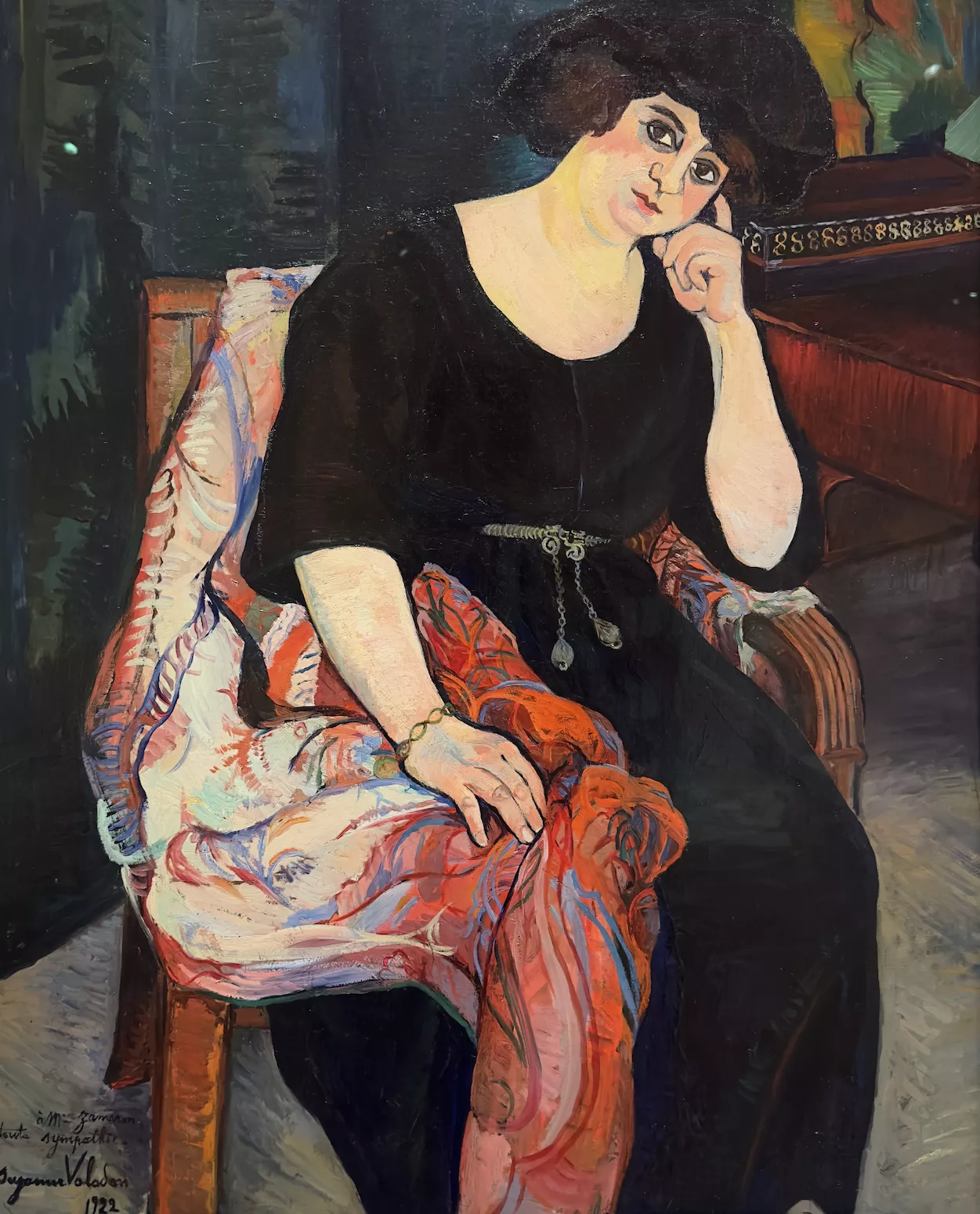
The life of Suzanne Valadon
Marie-Clémentine Valade, known as Suzanne Valadon, was born in Paris in 1865. As a child, she lived with her mother, a laundress in Montmartre.
Suzanne Valadon took her first steps in art as a model. She posed for painters such as Toulouse-Lautrec and Chavanne.
It wasn't until the early 1880s that the young model decided to cross over to the other side of the canvas and began painting. Impressed by her talent, Edgar Degas took her under his wing and taught her the basics of painting as well as engraving.
In 1894, Suzanne Valadon became admitted to the Société Nationale des Beaux-Arts de Paris. She distinguished herself by her modern approach, being one of the first to depict nude men in monumental works.
The artist led an affluent life and a first exhibition was dedicated to her in 1911. This was the start of a series of exhibitions dedicated to her work. The post-war period proved extremely productive for the artist, who created numerous portraits, nudes and still lifes.
She was initially influenced by Impressionism in a mimetic way, her master having been Degas, but her later works follow the evolution of the twentieth century, we see in particular the deformation of bodies and the use of bright colors structuring the second part of her career.
Inspired by her entourage, Suzanne Valadon painted numerous portraits, notably of her son, her mother, but above all André Utter, her lover and principal model.
She died at the age of 73, surrounded by her friends Picasso, Derain and Braque.
Her way of working
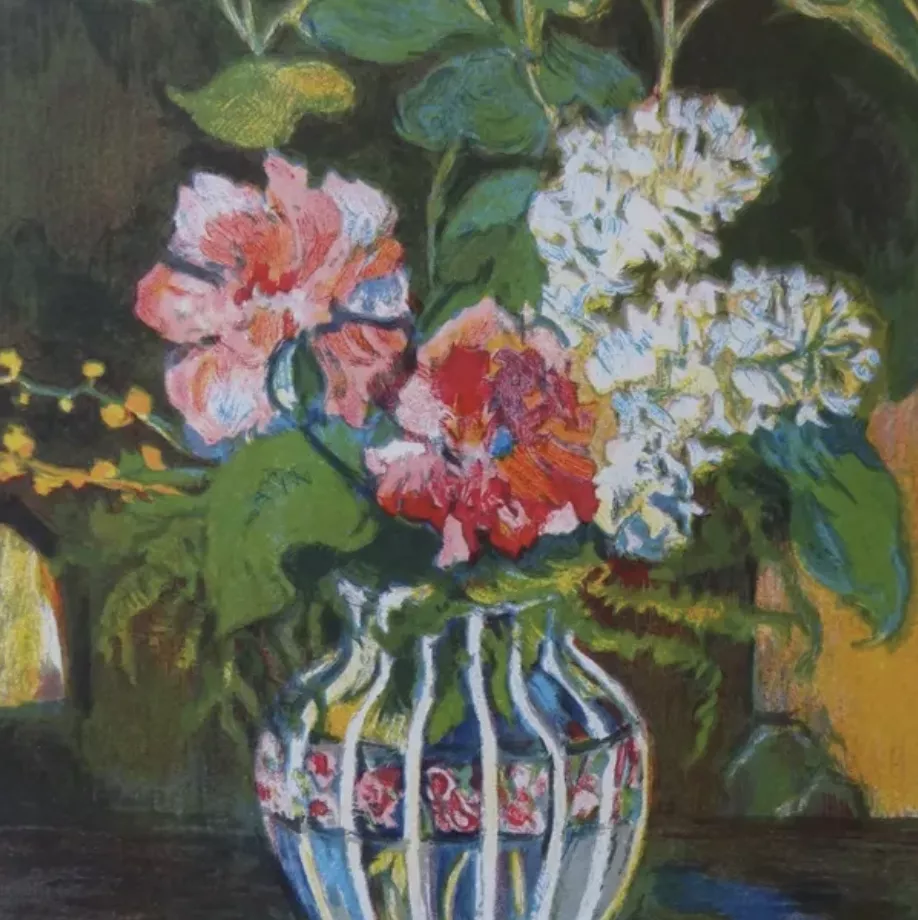
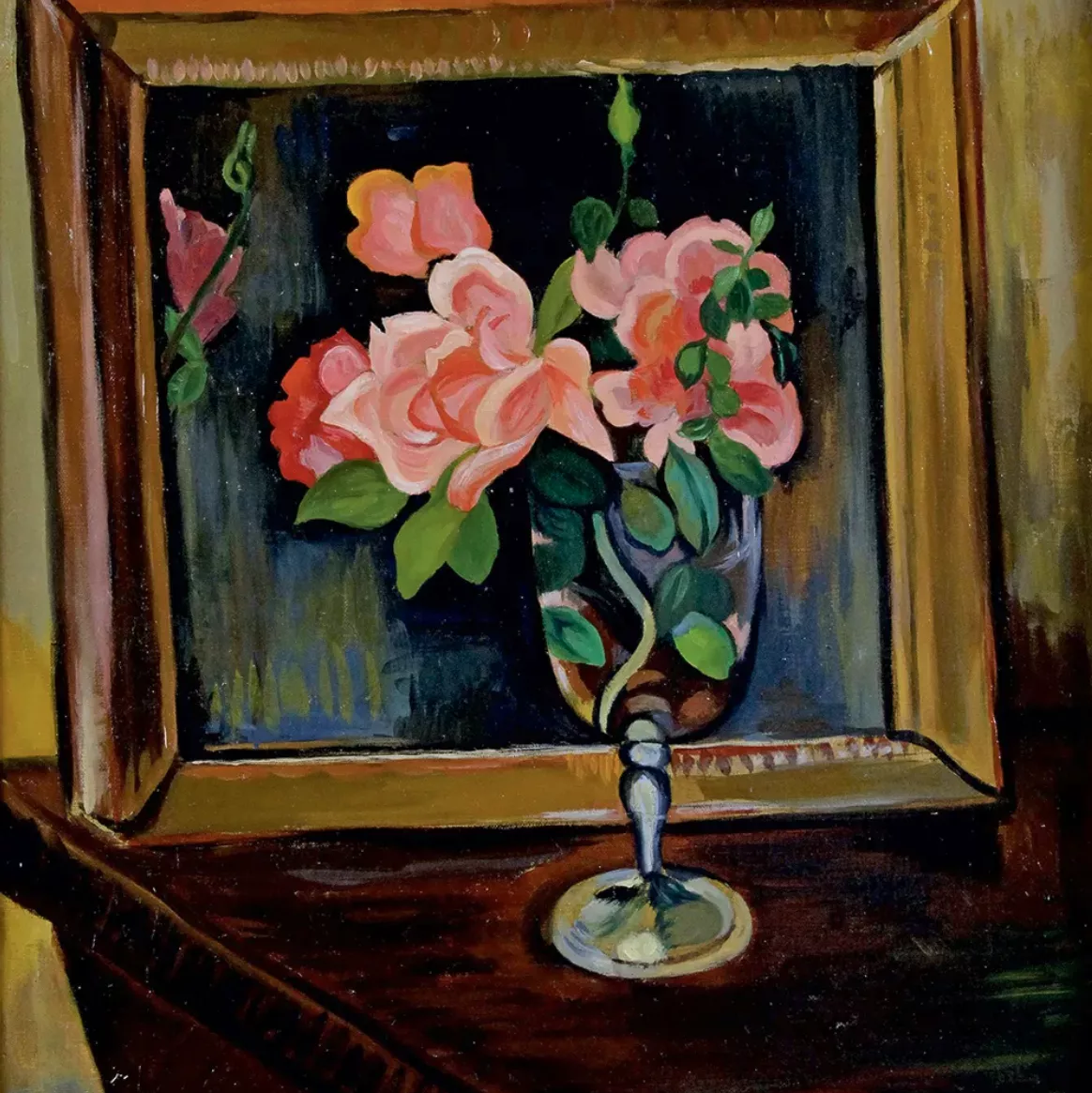
Suzanne Valadon's works are distinguished by the use of bright colors and bold solids, anchoring her work in the modern avant-garde.
Inspired by the Impressionists, she infuses her paintings with a luminosity that immediately captures attention. Her style, both expressive and original, allows her to capture intimate moments with a touch of modernity that disconnects her from her contemporaries.
In her compositions, Valadon shows a great mastery of space. She prefers a free, dynamic organization, often placing her subjects in the foreground to create a closeness that gives her figures an almost tangible presence.
This approach strengthens the connection between the viewer and the work, while emphasizing the intensity of the emotions she captures.
Valadon doesn't hesitate to use bold, contrasting colors, reinforcing the visual impact of her works. Her flat tints of color, deployed without transitions, add an eye-catching strength and simplicity.
In parallel, her firm, marked lines delineate shapes with precision, giving her subjects a clarity and intensity that make them unforgettable. She also liked to incorporate repetitive motifs and decorative elements into her canvases, bringing a subtle rhythm that enriches the composition.
Beyond technique, Valadon explored a diversity of subjects with great sensitivity. Her portraits, often of women, reveal a rare psychological depth, while her scenes of everyday life sincerely capture the reality of her time.
In her still lifes, she managed to infuse an unexpected vitality, transforming simple objects into emotionally charged elements.
Today, Suzanne Valadon's works are particularly prized on the art market, frequently fetching tens of thousands of euros.
They reflect a unique artistic vision, where color and space are at the service of a bold modernity. With his innovative approach, Valadon broke with the conventions of his time, leaving a lasting imprint that continues to inspire and fascinate.
Suzanne Valadon and the Musée de Montmartre
Understanding Post-Impressionism in Valadon
Post-Impressionism is a term for a fascinating period in art history, from 1880 to 1910. During these three decades, art was transformed with the emergence of movements such as Pointillism, Synthétisme, Symbolism and the Nabis, each proposing a new way of seeing and representing the world.
In 1886, art critic Félix Fénéon published "Les impressionnistes", an essay that heralded the end of Impressionism as it was known in the 19th century. According to him, this exhibition marked the end of an era and the beginning of new artistic explorations.
Later, in 1906, critic Roger Fry popularized the term "postimpressionism" after an exhibition at London's Crafton Galleries. This appellation gave a boost to the art market, particularly in the United States, by signaling that Impressionism was now a thing of the past.
Postimpressionism is not a single style, but rather a label to describe a transitional period between Impressionism and the subsequent avant-gardes. It was a time of experimentation, when artists sought to go beyond classic Impressionist techniques.
Artists like Vincent van Gogh, with his bright sunflowers and lively landscapes, or Paul Cézanne, with his geometric shapes and deconstructed landscapes, are emblematic of this period.
Georges Seurat, with his famous "Un dimanche après-midi à l'île de la Grande Jatte" in pointillism, and Émile Bernard, with his bold colors and the creation of synthetism also illustrate the innovative spirit of postimpressionism.
It's important to note that the term "postimpressionism" does not define a particular style but a phase of varied artistic research. Suzanne Valadon, for example, explored different approaches to the composition of her paintings and the use of color.
Although her works bear traces of Impressionism, such as the fine lines and natural colors of her portraits, they evolve towards a more Expressionist approach with sharper contours and greater emotional depth.
Over time, the work of Valadon and other artists of this period prefigures future developments in art. Innovations in the treatment of space and form, such as the works of Cézanne and van Gogh, heralded the beginnings of Cubism and other avant-garde movements.
In short, post-impressionism was an era rich in artistic change, marked by artists who went beyond the limits of Impressionism to explore new forms of expression.
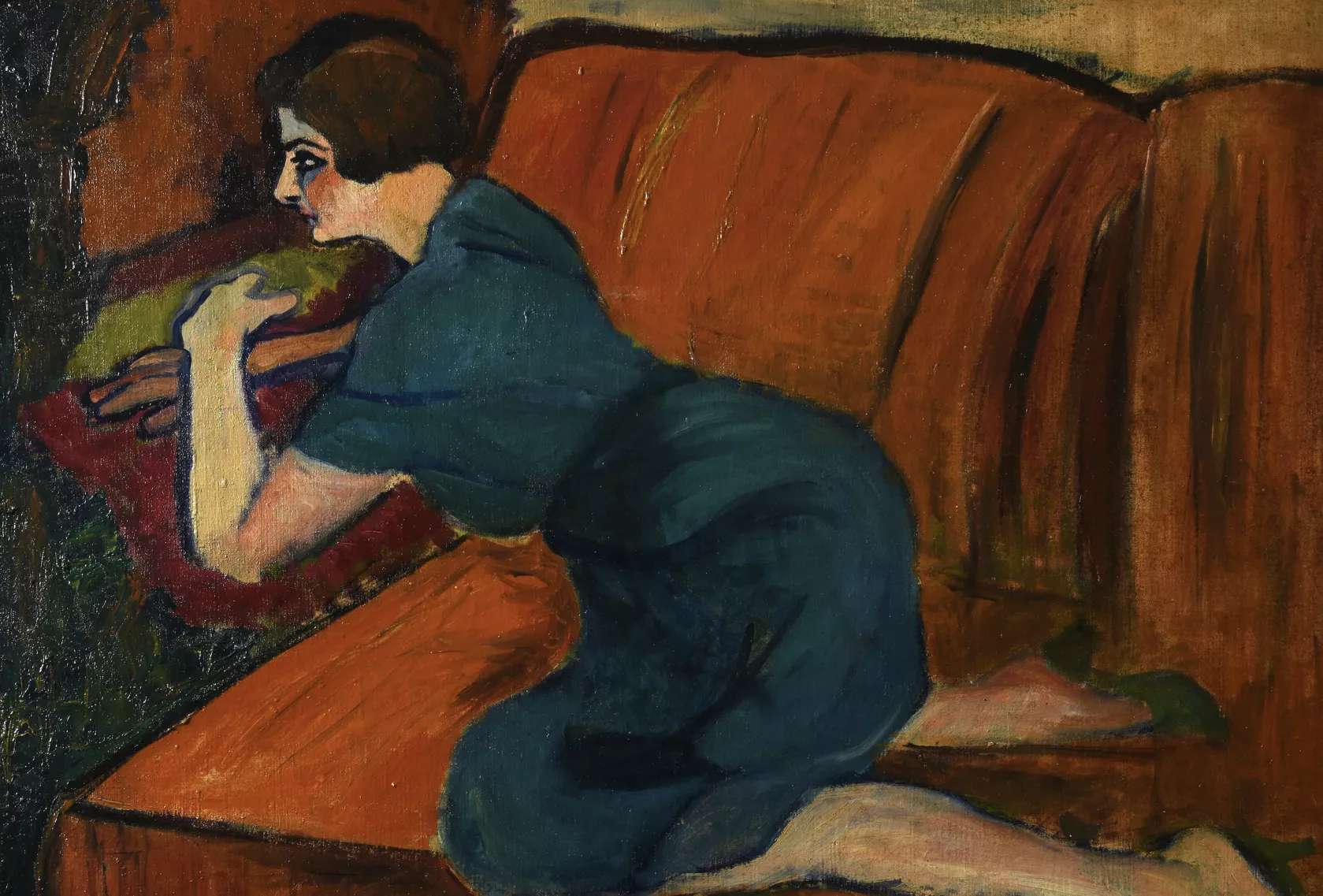
Focus on La chambre bleue, 1923
La Chambre Bleue, painted in 1923 by Suzanne Valadon, is a work that captures the spirit of its time, on the border between Impressionism and Modernism. In this painting, a nude woman rests in a room painted entirely in blue, creating an atmosphere that is both calm and enveloping.
Valadon, having moved from model to painter, moves away from Impressionist approaches, offering a more direct and personal vision. Instead of capturing a fleeting moment, she focuses on structured composition and a bold use of color.
The woman is painted with sharp shapes and marked contours, giving her a strong, real presence. The forms are not idealized but rendered with raw sincerity, which stands out from more traditional representations of the nude.
Color plays a key role in the work. Blue envelops the room and creates an intimate atmosphere, while the warmer tones of the woman's body add an interesting contrast. The soft light that bathes the scene reinforces this impression of everydayness and realism.
The way Valadon organizes the space is also significant. The elements of the room are placed in such a way as to create an internal harmony, with each part contributing to the overall balance of the painting. This approach to space heralds future explorations in art.
In sum, La Chambre Bleue shows how Valadon, with his mastery of form and color, explores new artistic avenues. The work offers a personal, modern vision that marks an important step between Impressionism and the innovations of the 20th century.
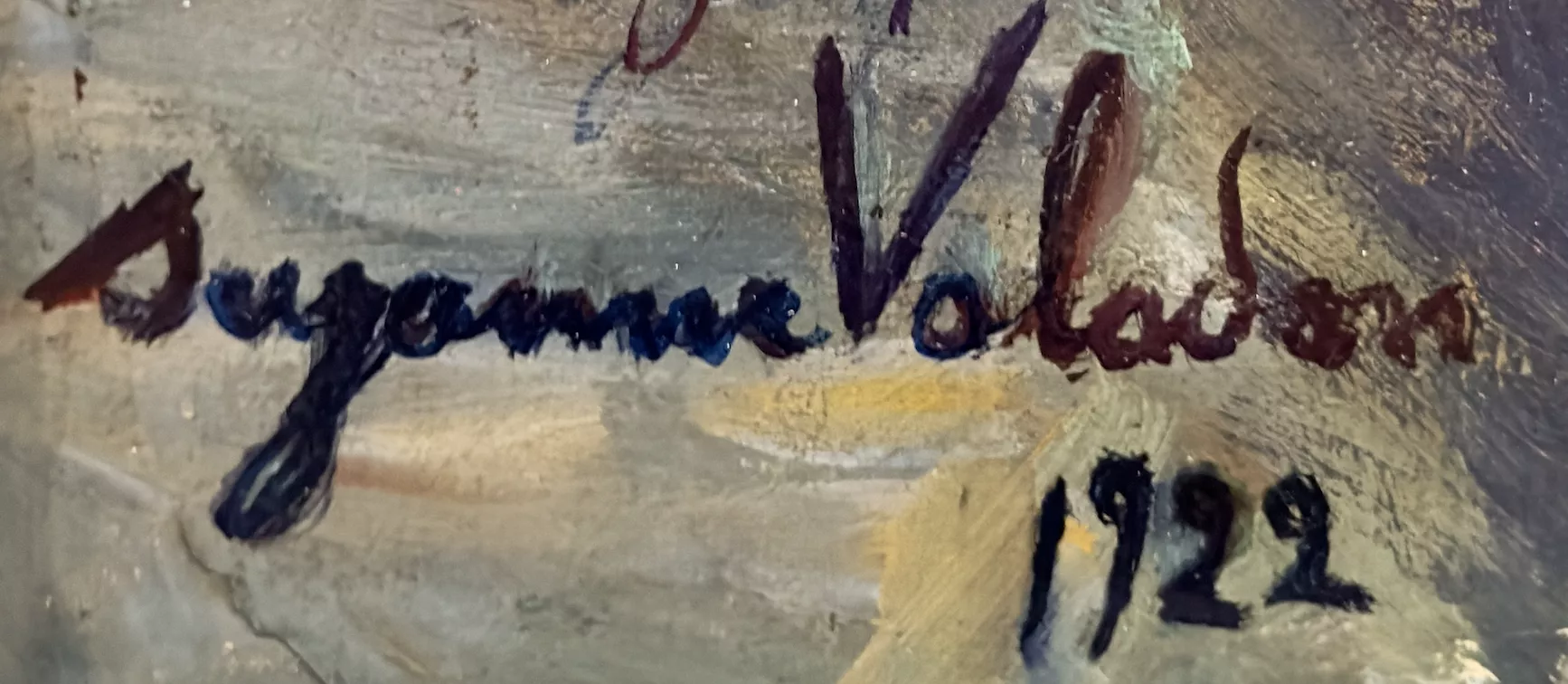
His signature
Not all of Suzanne Valadon's works are signed.
Although there are variations, here is a first example of her signature:
Expertise your property
If you own a Suzanne Valadon work, don't hesitate to request a free appraisal by filling in our online form. A member of our team of experts and licensed auctioneers will contact you to provide an estimate of the market value of your Suzanne Valadon work.
If you are considering selling your work, our specialists will also guide you through the various alternatives available to obtain the best possible price, taking into account market trends and the specific features of each work.
Estimate in less than 24h
Discover in the same theme

Rating and value of paintings by Vladimir Velickovic
Vladimir Velickovic is a painter of narrative figuration who has produced works that are highly rated and valued on the art market.
Learn more >

Rating and value of paintings by Vera Molnar
Vera Molnar is a pioneering artist who developed digital art, and is highly regarded and valued at auction.
Learn more >

Ratings and values of paintings by Willem de Kooning
Willem DE KOONING is an artist who has produced many works that are highly valued at auction. 24h estimate.
Learn more >
Works from the same period sold at auction


Secure site, anonymity preserved

Auctioneer approved by the State

Free and certified estimates
Frequently asked questions
-
Who is Suzanne Valadon, and what is her significance in art history?Suzanne Valadon (1865–1938) was a pioneering artist and the first woman admitted to the École des Beaux-Arts in Paris. Having transitioned from modeling for Toulouse-Lautrec and Degas to becoming a recognized painter, she developed a personal style that fused Impressionism and Expressionism, characterized by vivid colors, bold blocks of color, and a rare psychological depth. Her work, particularly her monumental nudes and portraits, left a lasting mark on 20th-century modern art.
-
What is the price range for Suzanne Valadon's paintings?Prices for Suzanne Valadon’s works vary considerably depending on the medium: prints and multiples range from €30 to €11,280, drawings and watercolors from €260 to €68,260, and oil paintings on canvas from €240 to €331,900. The artist’s market value is rising sharply, particularly for her oil paintings on canvas, which are especially sought after by French buyers and collectors.
-
How can you authenticate and appraise a work by Suzanne Valadon?To authenticate and appraise a work by Suzanne Valadon, Auctie's offers a free, no-obligation appraisal via an online form. A state-certified expert or auctioneer will analyze your work and provide you with an accurate estimate of its current market value within 48 hours.
-
Is this the right time to sell a work by Suzanne Valadon?Yes, now is an excellent time to sell a work by Suzanne Valadon. Her market value has been rising sharply for several years, with auction records far exceeding initial estimates, as evidenced by the sale of “Nu à la draperie” (1921) for €331,900 in 2023. The market for her oil-on-canvas paintings, in particular, is showing growing demand.
-
How does the sale of a work of art work at Auctie's?Auctie's supports you every step of the way: after a free appraisal by an expert, our specialists will guide you toward the best sales option, taking into account market trends and the unique characteristics of your artwork, to ensure you achieve the best possible price at auction.
