



Rating and value of paintings by Helene Funke

Key takeaways
- Helene Funke’s oil-on-canvas paintings sell for between €150 and €61,000, with a marked upward trend since 2023.
- The Austrian artist, born in 1938, explores light and texture through successive layers of paint, creating transparency and depth.
- Her prints and watercolor drawings range in price from €160 to €6,600, offering a more affordable option for collectors.
If you own a work by or based on the artist Helene Funke and would like to know its value, our state-approved experts and auctioneers will guide you.
Our specialists will carry out a free appraisal of your work, and provide you with an accurate estimate of its value on the current market.
Then, if you wish to sell your work, we'll direct you to the best possible device for obtaining an optimal price.
Rating and value of the artist Helene Funke
Helene Funke is an Autruchian artist known to modern art lovers. Now, prices for her works are rising at the auctioneers' gavel.
Her oils on canvas are particularly prized, especially by French buyers, and the price at which they sell on the art market ranges from €150 to €61,000, a significant delta but one that speaks volumes about the value that can be attributed to the artist's works.
In 2023, his oil on canvas Kiefern am Meer, dating from 1908/10 sold for €61,000, while it was estimated at between €12,000 and €15,000. Its value has risen sharply.
Order of value from the most basic to the most prestigious
Technique used | Result |
|---|---|
Estamp - multiple | From 160 to 900€ |
Drawing - watercolor | From €150 to €6,600 |
Painting | From €70 to €61,000 |
Estimate in less than 24h
The artist's work and style
Hélène Funke's work, deeply rooted in a reflection on light and matter, questions the relationship between space and color. Her approach to painting, all finesse and subtlety, is rooted in a rigorous exploration of transparency and texture.
Through superimposed layers of paint, often diluted, she succeeds in creating atmospheres both luminous and mysterious, where every brush movement seems both frozen and in perpetual evolution.
Her style is akin to fluid, almost calligraphic writing, where the artistic gesture becomes both imprint and trace.
The light tones she chooses, from off-white to shades of gray or pale blue, lend her works an ethereal softness, while allowing shadows to subtly intrude, like a discreet yet intense presence.
Her meticulously crafted texture work recalls the artists' attachment to the tactile manipulation of surfaces, seeking to inscribe in matter the very breath of creation. Through this technique, Funke seems to suspend time, giving each canvas an almost timeless character.
In this sense, she joins certain contemporary painters who, while using traditional materials, never cease to experiment with form and light, like the artists of lyrical abstraction.
However, Funke's intention remains far removed from any quest for illusion; each work is a pure exploration of the visible and the invisible, inviting the viewer to plunge into a world where painting becomes a field of sensory experience.
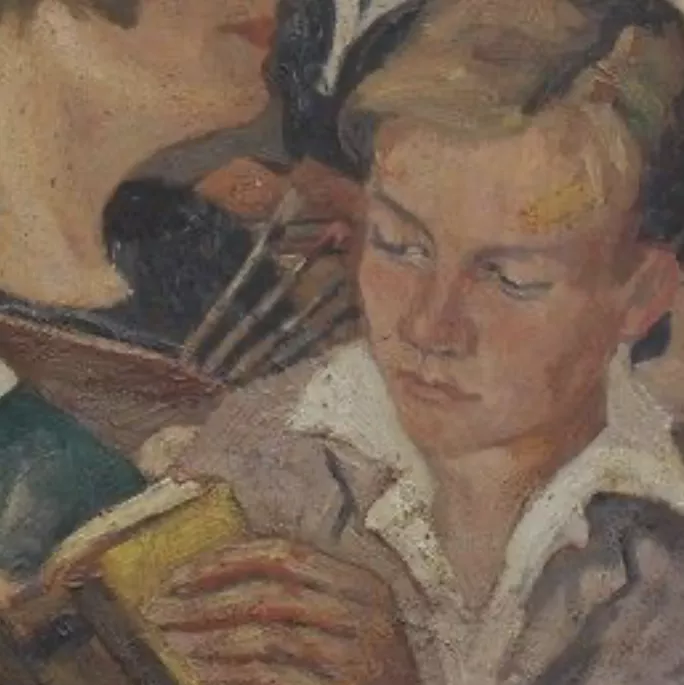
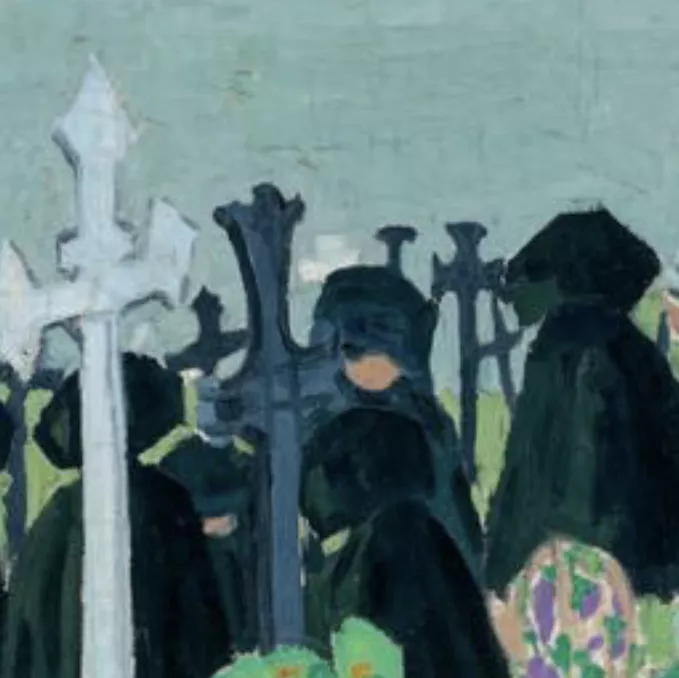
The life of Helene Funke
Born in 1938 in Berlin, Helene Funke was part of an era marked by the social and political upheavals of the post-war years, a time when art became, for many, a means of escaping the horrors of the past while questioning its collective memory.
After studying at the Berlin Academy of Fine Arts, she turned to a painterly practice of great rigor, where the search for light and matter became a central motif in her work.
Installed in Paris, she became close to French artistic circles, while retaining an independence from the movements in vogue at the time.
Her early works are influenced by geometric abstraction, but her work soon evolves towards a more introspective exploration of painting, where color and texture take center stage.
The artist then developed a unique technique, based on the use of successive layers of paint, which gives his works a singular transparency and intimate depth.
This process, always at the service of a meticulous search for light, feeds on the spirit of abstract expressionism while distancing itself from it by its refusal of visual violence and overly marked gestuality.
Hélène Funke finds her rhythm in solitary work, far removed from the currents dominating contemporary art, but influenced by the quest for formal purity of artists such as Pierre Soulages or the meditative silence of Lovis Corinth.
Far from being a simple reflection of his time, his work acts as a response to the tumult of the outside world, preferring to plunge the viewer into a soothing, luminous, almost secret contemplation.
His career, punctuated by exhibitions across Europe, bears witness to this highly exacting approach, where painting becomes a means of introspection, a path to the invisible.
Focus on Silence in Blue, 1973
Hélène Funke's Silence in Blue (1973) reveals a profound reflection on color and light, treated with singular mastery.
Using a blue spread over several layers, the artist succeeds in creating an atmosphere that is both dense and fluid, where color seems to unfold endlessly, evoking vast marine or celestial horizons.
This blue, of great purity, operates a subtle transformation of the gaze: far from the characteristic flatness of certain monochrome works, it becomes a surface that breathes, changing tonality according to the light and the angle of view.
Through this approach, Funke inscribes her approach in a tradition of abstract painting where color unfolds in a quest for emotional intensity, without ever sinking into raw self-affirmation.
She manipulates color as a living entity, where each nuance refers to the unspeakable, to a depth that is expressed not in clarity, but in the blur of a discreet presence.
This work, while remaining faithful to the quest for abstraction of artists such as Yves Klein, is distinguished by a search for silence and subtlety. Blue here is not a vibrant explosion but an invitation to contemplation.
The chosen pigment thus succeeds in creating an ambient serenity and a sense of soothing in the viewer. Unlike Klein, whose blue could be a form of metaphysical research, Funke succeeds in capturing a more personal, more intimate dimension, where the viewer, faced with the work, is called upon to engage in a form of introspection.
This blue thus becomes a mirror not only of the outside world, but also of our own interiority, offering us a visual experience based on the emotion of the moment and silent contemplation.
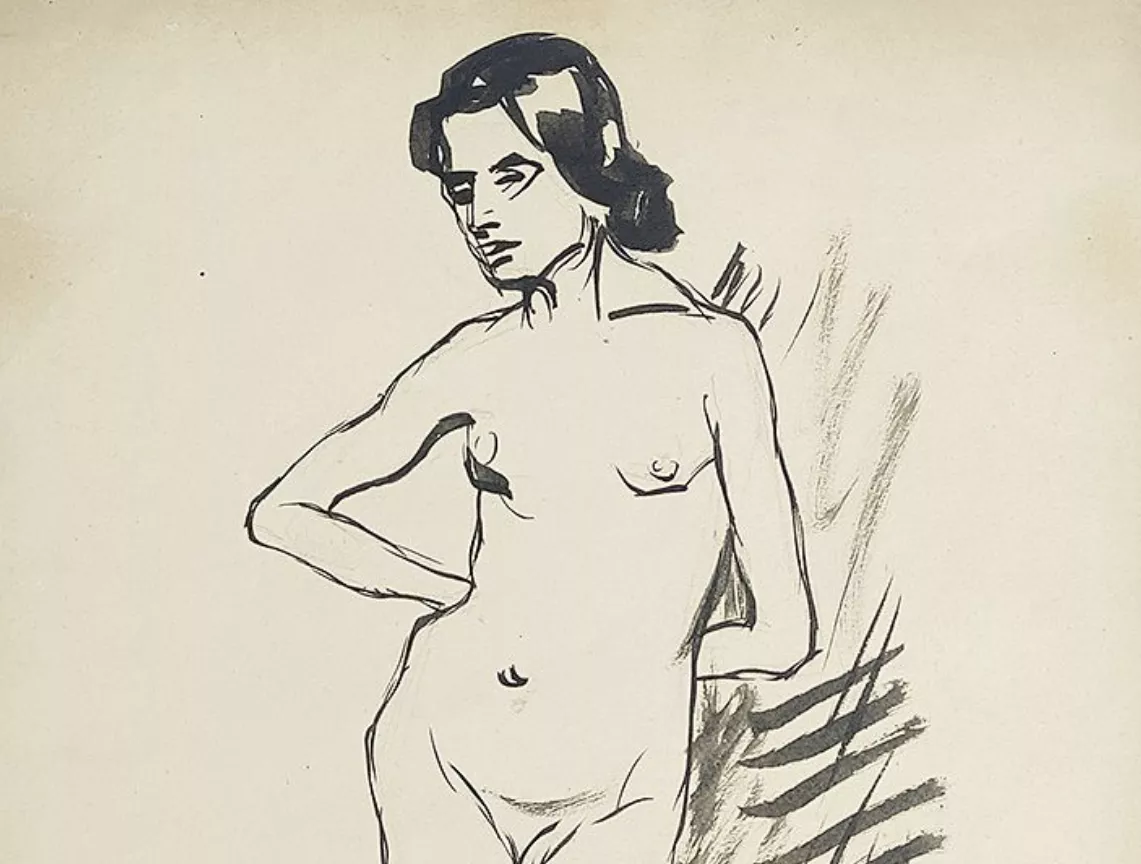
The imprint of Helene Funke
Hélène Funke's imprint on her time lies in her ability to capture the very essence of abstraction while exploring sensual, introspective horizons.
By hijacking the language of color, she not only follows the tradition of abstract art, but reinvents a deeply personal reading of it, linked to the sensibility of her time.
Her work on blue, in particular, highlights a more intimate perception of color, far removed from the excesses or visual violence sometimes associated with abstraction.
Through this research, she moves away from the legacy of the great figures of the twentieth century to infuse a contemplative dimension that responds to the atmosphere of the 1970s, marked by a quest for solace and a return to introspection.
In a context where artists have often turned to more radical or political forms, Funke distinguishes himself by cultivating a form of silent intimacy, a personal exploration that resonates deeply with contemporary concerns around individuality and human fragility.
Her influence on the art of her time is not measured in a stylistic revolution, but in her ability to reconnect with the roots of abstract painting while responding to a need for soothing and inner reflection. In this, she embodies a form of discreet resistance to the art of the urgent and the spectacular.
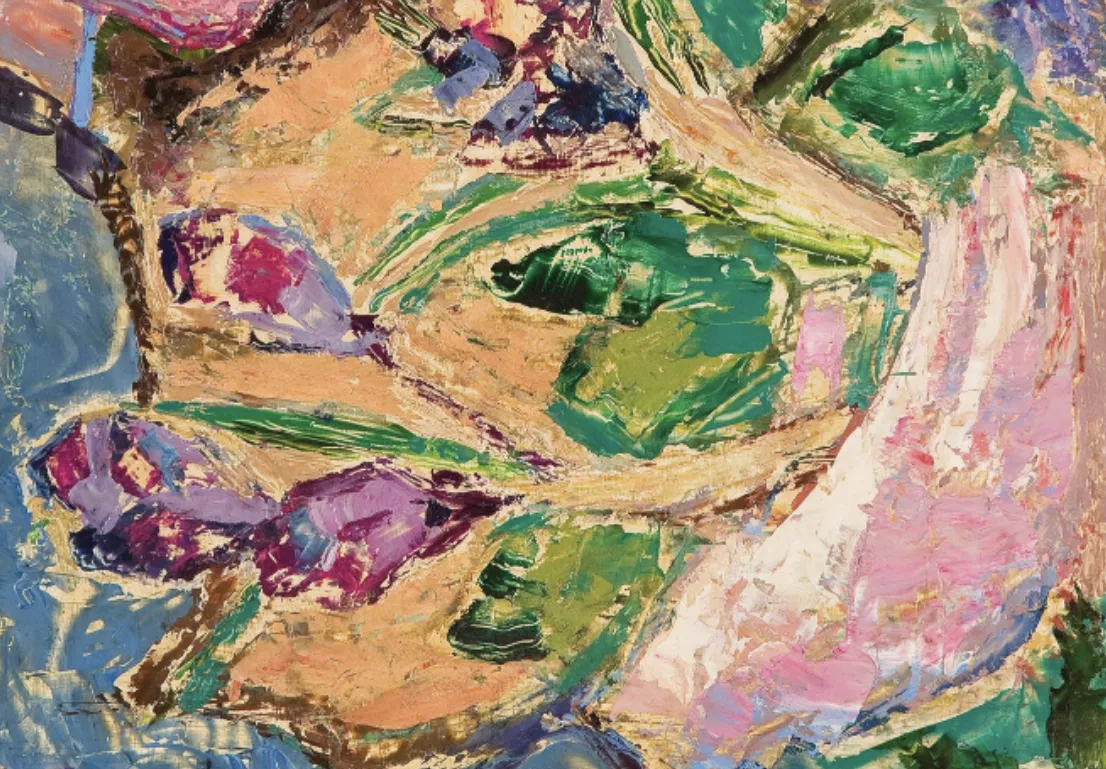
Hélène Funke's stylistic influences
Hélène Funke's stylistic influences are revealed in an approach where color and form are organized around a subtle poetics, where the rigor of abstraction blends with more fluid breaths.
Inspired by the great masters of geometric abstraction, she is part of a tradition that, while marked by figures such as Malevich or Kandinsky, is distinguished by a more sensual, interior approach.
Funke's palette seems, in many ways, nurtured by the lyricism of Abstract Expressionism, but with a restraint that gives way to a quieter contemplation, drawing closer to artists like Marie-Louise von Motesiczky.
Similarly, her choices of geometric forms and line play can evoke the formalism of certain minimalist artists, without ever adopting their cold rigorism.
However, unlike artists of the first generation of abstraction, she does not seek to bring color into dialogue with an architectural or spatial dimension, but rather to integrate it into a tactile relationship.
The fluidity of the colors, their balance, and the way they blossom on the canvas also seem inspired by elements of nature and landscapes, a sensibility she shares with the École de Paris or certain informal painters.
This fusion of lines and colors ultimately seems to go beyond direct influences to achieve a voice of her own, all nuances and silences.
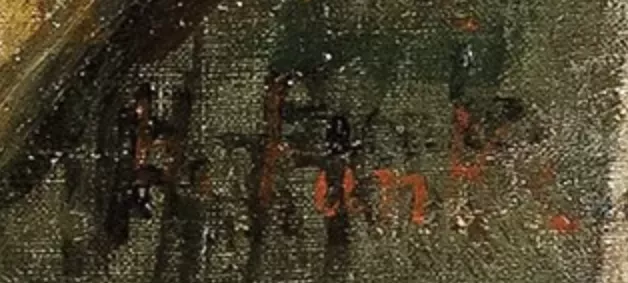
Her signature
Not all Helene Funke's works are signed.
Although there are variations, here is a first example of her signature:
Estimate in less than 24h
Discover in the same theme

Rating and value of works, drawings, paintings by Bernard Bu...
Bernard Buffet is a 20th-century painter whose drawings and paintings are highly prized and sought-after on the auction market.
Learn more >

Rating and value of paintings, drawings and sculptures by Fr...
François Morellet is a geometric abstraction artist who produces works that are quoted and valued at auction.
Learn more >

Rating of value of drawing and paintings by Auguste Chabaud
Auguste Chabaud is a Fauvist and Expressionist artist who has produced numerous paintings that command high prices at auction.
Learn more >
D'autres tableaux expressionnistes vendus aux enchères


Secure site, anonymity preserved

Auctioneer approved by the State

Free and certified estimates
Frequently asked questions
-
Who is Helene Funke, and what is her artistic background?Helene Funke is an Austrian artist born in 1938 in Berlin, who studied at the Berlin Academy of Fine Arts. Based in Paris, she has developed a painterly practice centered on the exploration of light and matter, rooted in the tradition of lyrical abstraction while cultivating a contemplative and intimate approach, far removed from the excesses of the spectacular.
-
What is the price range for Helene Funke's paintings?The prices of Helene Funke’s works vary considerably depending on the technique and format: multiple prints range from 160 to 900€, drawings and watercolors between €150 and €6,600, while paintings (oil-on-canvas works being particularly sought after) range from €70 to €61,000. Her market value has been rising sharply in recent years.
-
How can you authenticate a work by Helene Funke?To authenticate a work by Helene Funke, we recommend that you consult our state-certified auctioneers and experts at Auctie's. We offer a free, no-obligation appraisal that will provide you with an accurate estimate of your work’s value in today’s market.
-
Is this a good time to sell a work by Helene Funke?Yes, now is a good time to sell a work by Helene Funke. Her market value is rising sharply, as evidenced by the 2023 sale of “Kiefern am Meer” (1908/10) for €61,000, well above its initial estimate. Her oil-on-canvas paintings are particularly sought after by collectors, especially in France.
-
How does a free appraisal work at Auctie's?Appraisals at Auctie's are free and non-binding. Our expert auctioneers will examine your artwork and provide you with an accurate estimate of its market value within 48 hours. If you decide to sell afterward, we’ll guide you toward the best option for getting the highest possible price.
