



Rating and value of paintings by Félix Varla

Key takeaways
- Félix Varla, a 20th-century Georgian painter (1924–1987), sees his works fetch tens of thousands of euros at auction, with prices remaining stable.
- Signed paintings range from €110 to €32,500 depending on the technique, while drawings and prints sell for between €80 and €500.
- His oil on canvas “View of Paris” exceeded its initial estimate of €18,000–20,000, selling for €32,500 in 2021.
If you own a work by or based on the artist Félix Varla and would like to know its value, our state-approved experts and auctioneers will guide you.
Our specialists will carry out a free appraisal of your work, and provide you with an accurate estimate of its value on the current market.
Then, should you wish to sell your work, we will direct you to the best possible arrangement to obtain the optimum price.
Artist's rating and value
A Georgian painter blending a variety of influences, Felix Varla established himself as a major artist of his time. He produced works inspired by several twentieth-century currents and his native country, mixing media.
On the art market, his works sell for very good prices and keep a stable quotation. Thus, a work signed by the artist's hand can fetch tens of thousands of euros at auction, as evidenced by his oil on canvas Vue de Paris, adjudged €32,500 in 2021, whereas it was estimated at between €18,000 and €20,000.
Order of value from the most basic to the most prestigious
Technique used | Result |
|---|---|
Estamp - multiple | From 150 to 500€ |
Drawing - watercolor | From €80 to €8,000 |
Painting | From €110 to €32,500 |
Estimate in less than 24h
The artist's works and style
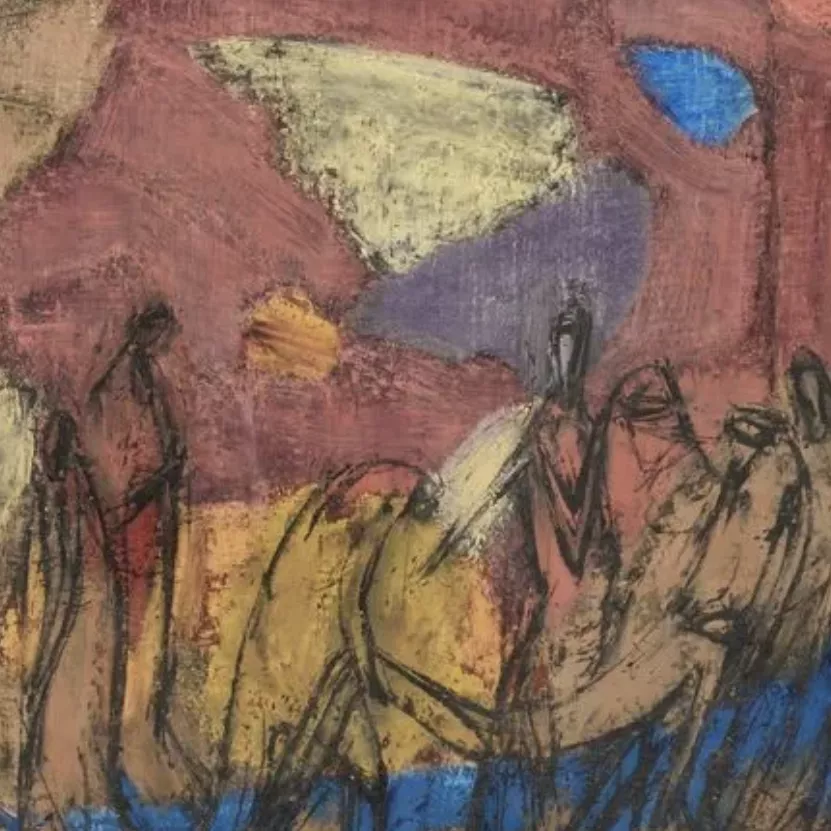
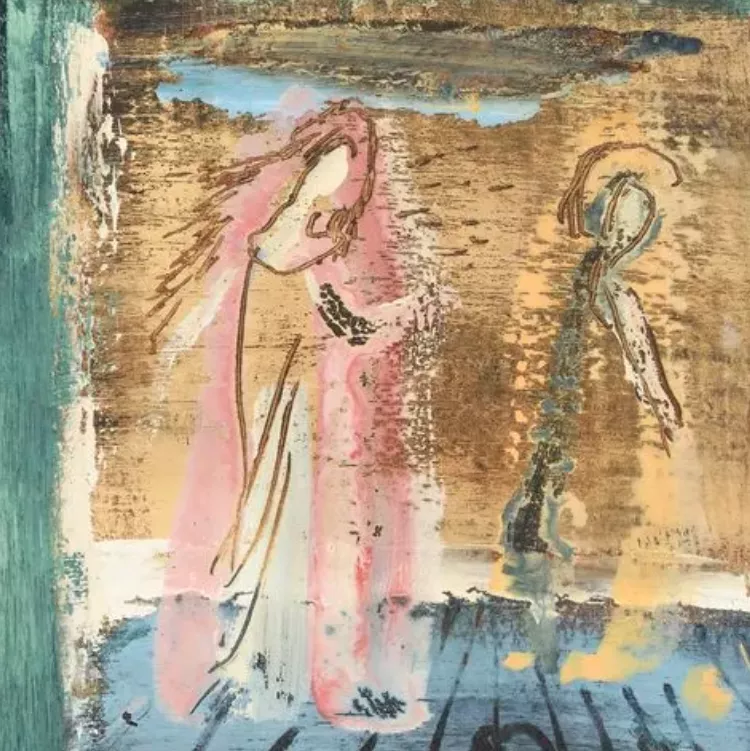
Félix Varla, an artist at the forefront of modernity, developed a style in which matter and light become the protagonists of an unprecedented formal quest.
His canvases, often abstract, reveal a technique in which layers of paint accumulate, overlap and sometimes crack, suggesting a constant dialogue between construction and destruction.
Varla favors sweeping, spontaneous gestures, where the energy of the brushstroke is combined with a meticulous mastery of texture, creating surfaces that vibrate under the effect of variations in tone and density.
His deliberately restrained palette explores subtle shades of gray, ochre and blue, reinforcing an aesthetic that oscillates between introspection and an almost cosmic resonance. This economy of color is counterbalanced by a tactile richness: the reliefs, achieved through the use of spatulas and improvised tools, become sculptural elements at the service of the painting.
With Varla, pictorial space is never a mere frame but a field of investigation, a place where forms are born and disappear in organic continuity, suggesting mental landscapes or buried memories.
Through his work, Varla pushes the boundaries between abstraction and figuration, inviting the viewer to immerse himself in a purely sensory experience.
Painting, freed from all immediate representation, becomes a terrain for dialogue where every detail, every minute variation in texture or light, contributes to a global vision that transcends the visible.
Félix Varla's influences
Félix Varla is distinguished by a stylistic approach that brings him closer to artists who have explored the interactions between matter, time and transformation.
His works evoke the work of Alberto Burri, a master of pictorial materialism, whose combustioni and experiments with burnt textiles explore an aesthetic of decay and rebirth.
Similarly, the textured reliefs of Jean Dubuffet, pioneer of art brut, find an echo in Varla's creations, particularly in their celebration of imperfection and rejection of traditional aesthetic conventions.
The use of recycled and industrial materials also brings Varla closer to the approaches of Arman and César, figures of New Realism, who, through their accumulations and compressions, reinterpret everyday objects, revealing their symbolic power.
Added to this is an affinity with Joseph Beuys, whose creations question collective and individual memory, while exploiting organic materials to convey an emotional and conceptual charge.
Finally, Varla's meditative approach to the ephemeral recalls the works of Richard Serra and Giuseppe Penone. Both explore dialogues between weight, texture and the traces left by the passage of time on matter, in a similar quest for balance between raw power and the subtlety of form.
These affinities make Varla an artist with multiple correspondences, rooted in a tradition of reinventing matter and reflecting on the imprint left by man on his environment.
.
The life of Felix Varla
Felix Varla, born in 1924, has established himself as a singular figure of the 20th century, cultivating an artistic practice that is both discreet and profoundly innovative.
His youth, marked by observation of a world in reconstruction after the devastation of the First World War, nurtured a fascination for modest materials and ephemeral forms.
From his earliest works, he turned away from academic codes to explore a raw aesthetic, based on accumulation, decay and the traces left by the passage of time.
As his career progressed, Varla rejected the well-trodden paths of institutional art, preferring an introspective, experimental approach. Influenced by his travels in the East, where he discovered Zen philosophies, he integrates a spiritual and contemplative dimension into his work, anchored in a respect for materials and textures.
His studio, conceived as a laboratory, becomes the scene of ceaseless research into the possibilities offered by materials as diverse as rusted metal, driftwood or aged paper.
Félix Varla died in 1987, leaving behind him a body of work that questions the relationship between art and temporality, and whose echoes still resonate in contemporary practices.
Focus on Fragilité des ruines, Félix Varla, 1978
Félix Varla, in Fragilité des ruines (1978), offers a work in which the erosion of forms becomes a metaphor for the erasure of time. This composition, combining fragments of burnt wood and thin, oxidized metal plates, evokes both a disintegrating structure and an intrinsic resilience.
The seemingly chaotic whole is skilfully orchestrated to suggest a precarious equilibrium, where each element seems to oscillate between fall and stability. Varla explores the idea that decay is not an end, but a transformation, a passage from one state to another.
The choice of materials, marked by a natural patina, testifies to the artist's fascination with organic processes and the work of time on matter. The wood, cracked and blackened, seems to evoke a buried memory, that of fires and disasters, but also of rebirths.
As a counterpoint, the metal plates, eaten away by rust, embody an idea of inevitable entropy, where matter slowly gives way to impermanence. Here, Varla plays on the contrasts between smooth and rough surfaces, between subdued reflections and opaque zones, to orchestrate a captivating visual tension.
The arrangement of elements in space recalls the fragile constructions seen in forgotten ruins, where each stone seems to cling desperately to a past logic.
However, it's not a faithful reconstruction that Varla proposes, but a poetic interpretation where the unfinished and the discontinuous dominate.
This discontinuity is accentuated by the absence of clear guidelines: the viewer's gaze is invited to wander, to explore every detail, to decipher the interactions between textures and forms.
By adopting a palette of dark, earthy tones, the artist reinforces an atmosphere that is both meditative and melancholy.
Shades of rust, brown and black interact with the surrounding light, giving the work a moving dimension, as if it were still alive, breathing in the rhythm of the time that has shaped it.
This chromatic choice, far from being anecdotal, reinforces Varla's point: to show that beauty lies as much in decay as in apparent perfection.
The work is part of a broader reflection on the interaction between man and his environment, notably on the way in which our constructions, however imposing, always end up returning to a state of equilibrium with nature.
Varla seems to remind us that nothing is eternal, but that this very impermanence carries with it a form of sacredness. This cycle of construction and destruction, omnipresent in the work, invites us to a silent, respectful contemplation, where the human is placed in its rightful place in the great order of things.
In the end, Fragility of Ruins masterfully illustrates Felix Varla's approach: an art where matter becomes language, where forms dialogue with the invisible, and where the viewer is invited to an intimate, almost spiritual experience.
Through this work, Varla transcends classical notions of creation and decay to offer a vision where every fragment tells a story, where every crack contains a truth about our own fragility.
Félix Varla's legacy
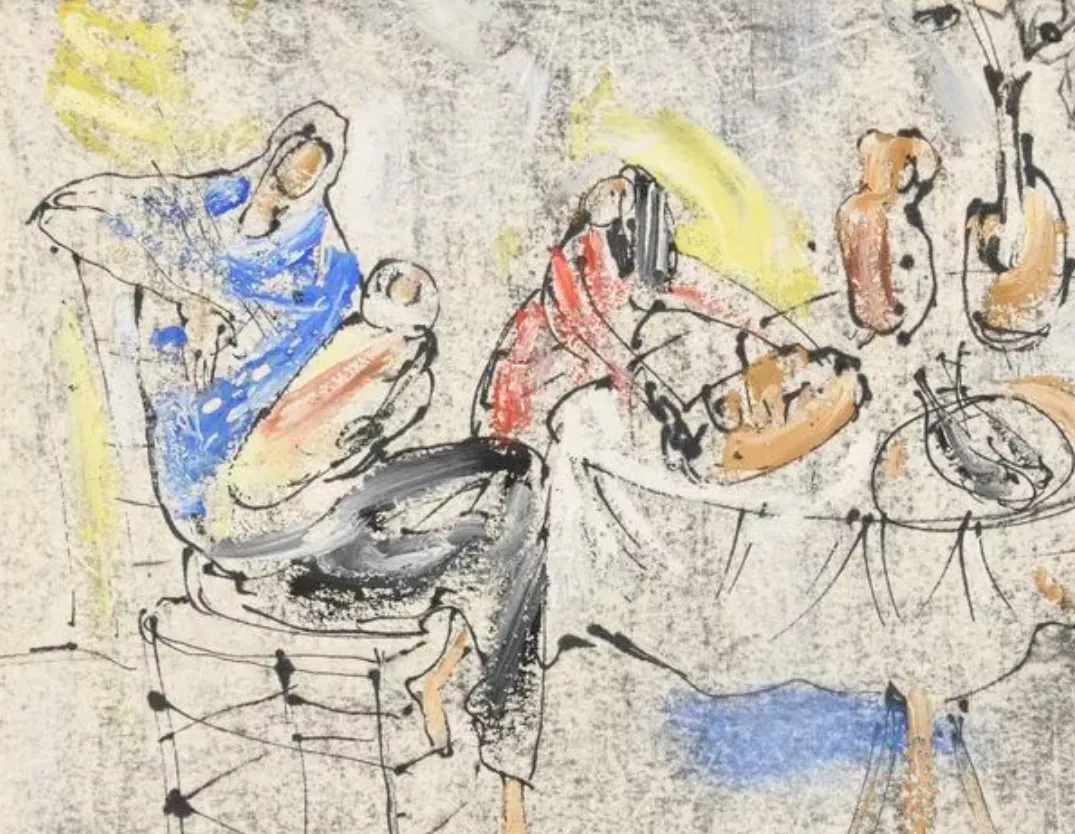
Félix Varla's legacy is distinguished by a unique approach where matter and time meet to create a deeply introspective aesthetic.
Artist of transformation, Varla explored the cycles of creation and destruction with a rare sensitivity, making each work a reflection on impermanence and memory.
His work, blending natural and industrial materials, has marked a generation of artists with its ability to transcend traditional notions of form and composition.
Far from stopping at purely plastic research, he infused his creations with a philosophical dimension, questioning the relationship between man, nature and the traces they leave in the world.
His works, often composed of salvaged and transformed materials, have influenced many contemporary creators, notably in movements linked to art brut and environmental art.
By pushing the boundaries of sculpture and valuing the marks of time on matter, Varla paved the way for artistic practices that celebrate alteration and process rather than the finished product.
Today, his influence can be seen in the way artists explore the interactions between past and present, between nature and artifice.
Varla leaves behind a legacy rich in questioning, where each work becomes an invitation to meditate on the ephemeral and the beauty that can arise from decay, offering a timeless lesson in the expressive power of matter.
His signature
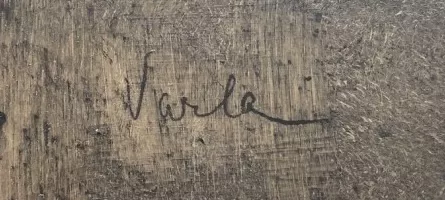
Félix Varla's works are not all signed.
Although there are variations, here is a first example of his signature:
Expertise your property
If you own a work by Félix Varla, don't hesitate to request a free appraisal by filling out our online form.
A member of our team of experts and certified auctioneers will contact you to provide an estimate of the market value of your work.
If you are considering selling your work, our specialists will also guide you through the various alternatives available to obtain the best possible price, taking into account market trends and the specific features of each work.
Estimate in less than 24h
Discover in the same theme

Rating and value of works, drawings and photographs by Chris...
Christo and Jeanne Claude are two contemporary artists who have collaborated to produce works in situ. The preparatory drawings are listed.
Learn more >

Market Value and Pricing of Tyeb Mehta's Paintings, Drawings...
Tyeb Mehta is an Indian painter of the PAG movement whose value is constantly rising on the auction market. Estimate in 24h
Learn more >

Rating and value of sculptures and bronzes by Arno Breker
Arno Breker is a twentieth-century neoclassical sculptor whose sculptures and bronzes are highly valued at auction.
Learn more >
D'autres tableaux abstraits vendus aux enchères

Estimated 2.000 - 4.000
Serge POLIAKOFF (1900-1969), Composition en rouge et bleu. 1965, Lithograph

Estimated Between €5,000 and €8,000
Jean MIOTTE (1926-2016), acrylic on canvas

Estimated 3.000 - 5.000
Roberto MATTA (1911-2002), Composition, Gouache on canvas

Secure site, anonymity preserved

Auctioneer approved by the State

Free and certified estimates
Frequently asked questions
-
Who is Félix Varla, and what is his artistic background?Félix Varla (1924–1987) was a major Georgian painter of the 20th century, known for his avant-garde approach that blended abstraction and pictorial materialism. His style is characterized by the accumulation of layers of paint, the exploration of raw textures, and the use of humble materials (wood, rusted metal, aged paper), influenced by movements such as Art Brut and New Realism, as well as by his travels to the East and Zen philosophies.
-
What is the price range for Félix Varla's works at auction?The prices of Félix Varla’s works vary depending on the medium: prints range from €150 to €500, drawings and watercolors from €80 to €8,000, and paintings from €110 to €32,500, depending on their size and provenance. For example, his oil on canvas “View of Paris” sold for €32,500 in 2021, exceeding its initial estimate of €18,000–20,000.
-
How can you authenticate a work by Félix Varla and determine its exact value?To authenticate and appraise a work by Félix Varla, we offer a free, no-obligation appraisal by our state-certified auctioneers and experts. Simply fill out our online form: a member of our team will contact you within 48 hours to provide you with an accurate estimate of your item’s market value.
-
Is this the right time to sell a work by Félix Varla?Yes, now is a good time to sell a work by Félix Varla. His market value remains stable, and his works are selling for very good prices on the art market. There is a resurgence of interest in artists who explore materials, decay, and spirituality, and Varla’s growing influence on contemporary artistic practices is driving demand for his works.
-
How does the process of selling a work of art at Auctie's work?Auctie's supports you every step of the way: following a free appraisal by a certified auctioneer, our specialists will guide you toward the best sales strategy, taking into account market trends and the unique characteristics of your artwork, to ensure you receive the best possible price through the auction.
