



Rating and value of furniture, armchairs, tables by Eileen Gray

Key takeaways
- Eileen Gray’s Dragon armchair, estimated at between 2 and 3 million euros, sold for 19.5 million euros at auction in 2009.
- Prices for her designs vary considerably: from 80 euros for a basic side table to 3.5 million for a prestigious bookcase.
- Her minimalist 20th-century designer furniture, which is particularly rare and unsigned, is seeing growing demand among specialized collectors.
If you own a piece created by designer Eileen Gray or based on her work and would like to know its value, our state-approved experts and auctioneers will guide you.
Our specialists will carry out a free appraisal of your work, and provide you with a precise estimate of its value on the current market. Thereafter, if you wish to sell your work, we will direct you to the best possible arrangement to obtain the optimum price.
Artist's rating and value
Thanks to her bold, modern creations, Eileen Gray is today one of the most sought-after designers on the international market. Over the past ten years, her market value has exploded and continued to rise, with some of her works even reaching auction records, as evidenced by her dragon armchair, dating from 1917, fetched €19,500,000 in 2009 while it was estimated at between €2,000,000 and €3,000,000.
Order of value from the most basic to the most prestigious
Type of furniture / work | Result |
|---|---|
Drawing - watercolor | From €250 to €24,000 |
Tabourets | From €480 to €145 500€ |
Sofa | From 340 to 150,000€ |
Side table | From 80 to 957 300€ |
Console table | From 150 to 2 625 000€ |
Bookcase | From 78 600 to 3 500 000€ |
Armchair - armchair | From €350 to €19,500,000 |
Estimate in less than 24h
Details and specifics on Eileen Gray's most iconic furniture
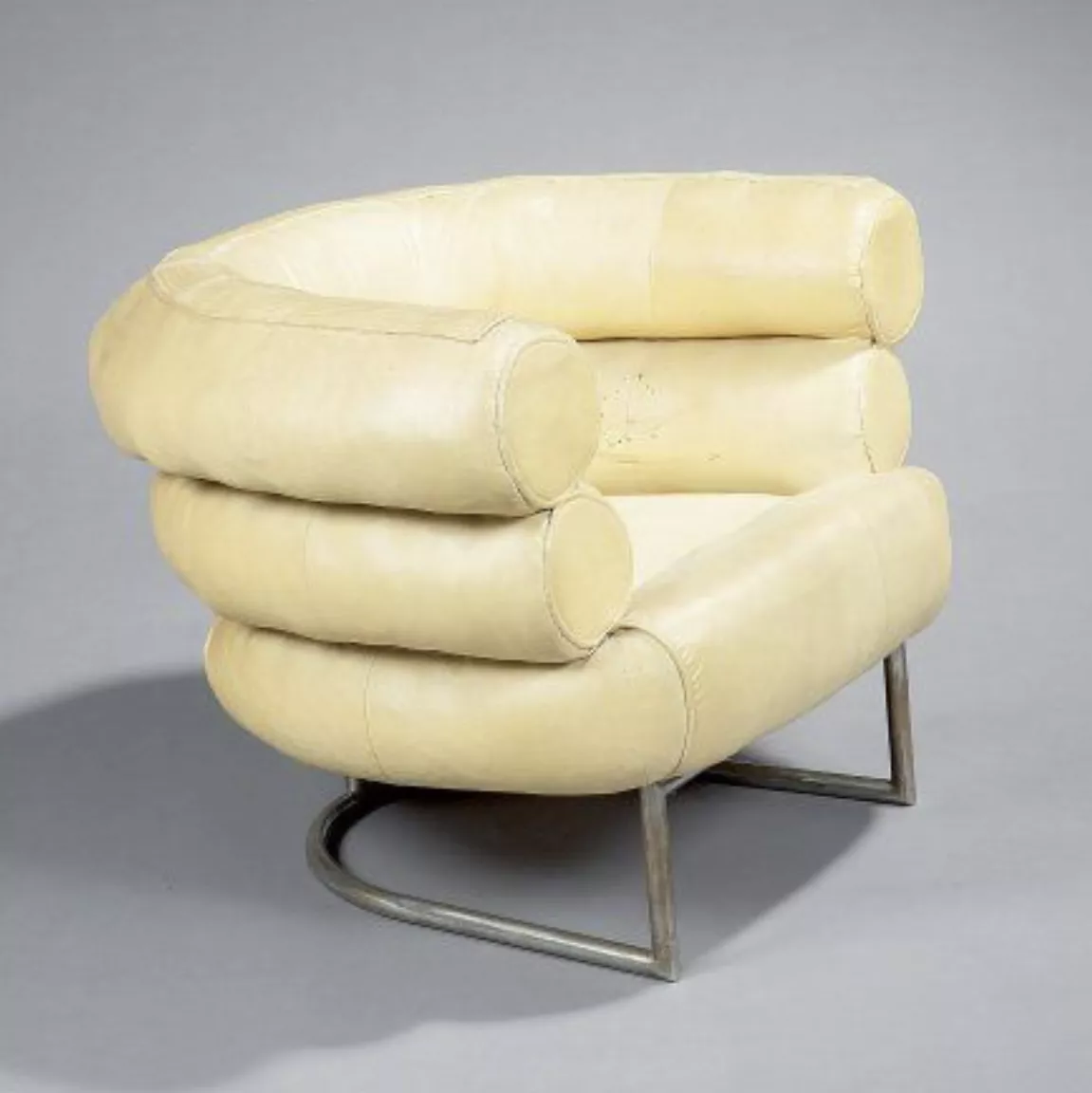
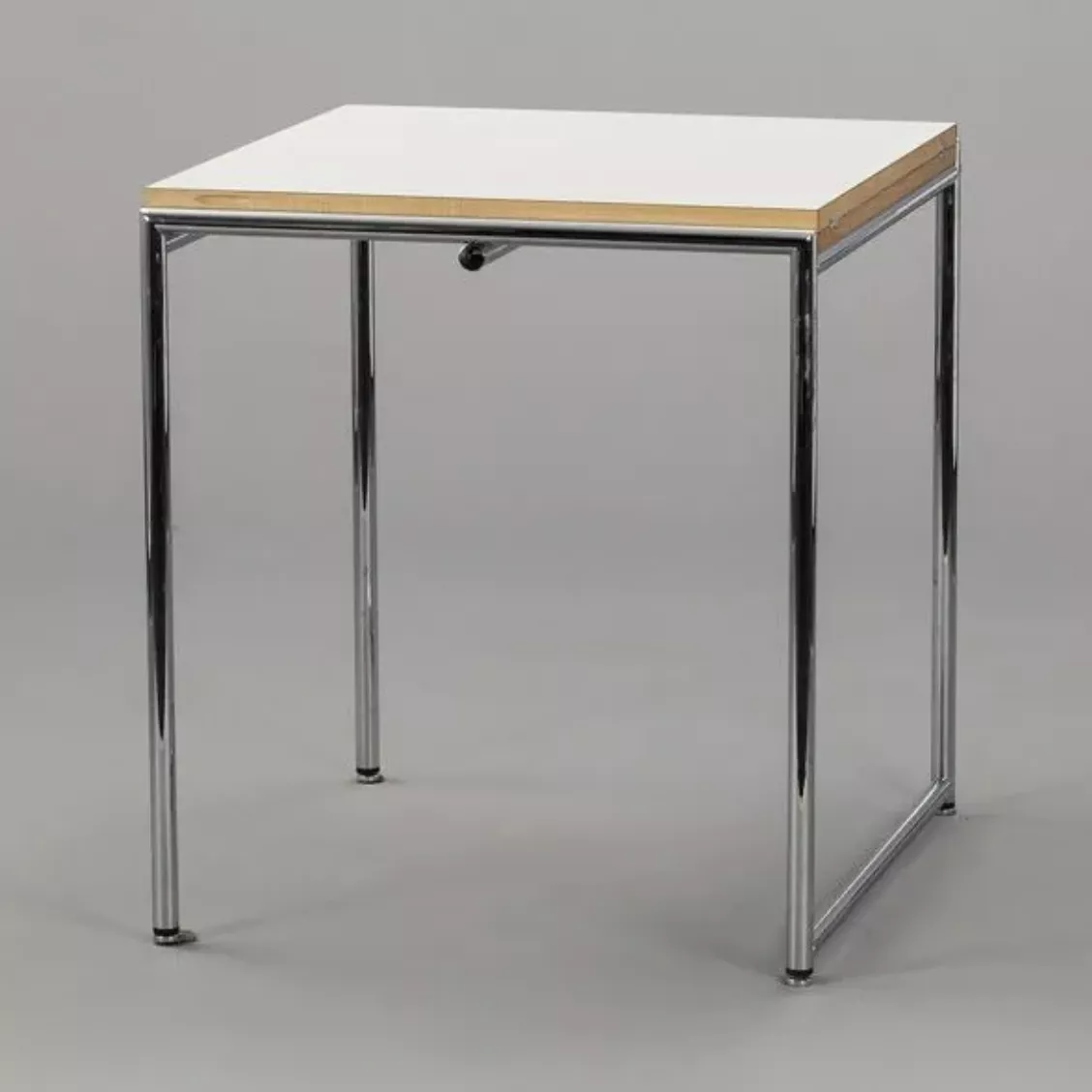
Eileen Gray created mostly design furniture, part of the purist current of architecture during the 20th century. She is a member of the Union des artistes modernes, and although originally famous for inlaying lacquered decorations into Art Deco furniture, these are not her most highly-rated pieces. The armchair Bibendum, the tubular steel side table and her bookshelves with their sleek design are the works most frequently found on the auction market.
The life of Eileen Gray
Eileen Gray, born Kathleen Eileen Moray Smith (she took the name Gray after a title of nobility received by her mother) was originally from south-east Ireland, a territory that was then part of the United Kingdom.
She trained as a painter at University College, London, and then took classes with friends at the Académie Julian and the Académie Colarossi.
In 1907, she settled permanently on rue Bonaparte, then learned lacquer techniques, before learning those of weaving. She exhibited for the first time in 1913, and appealed to couturier Jacques Doucet, who placed several commissions with her.
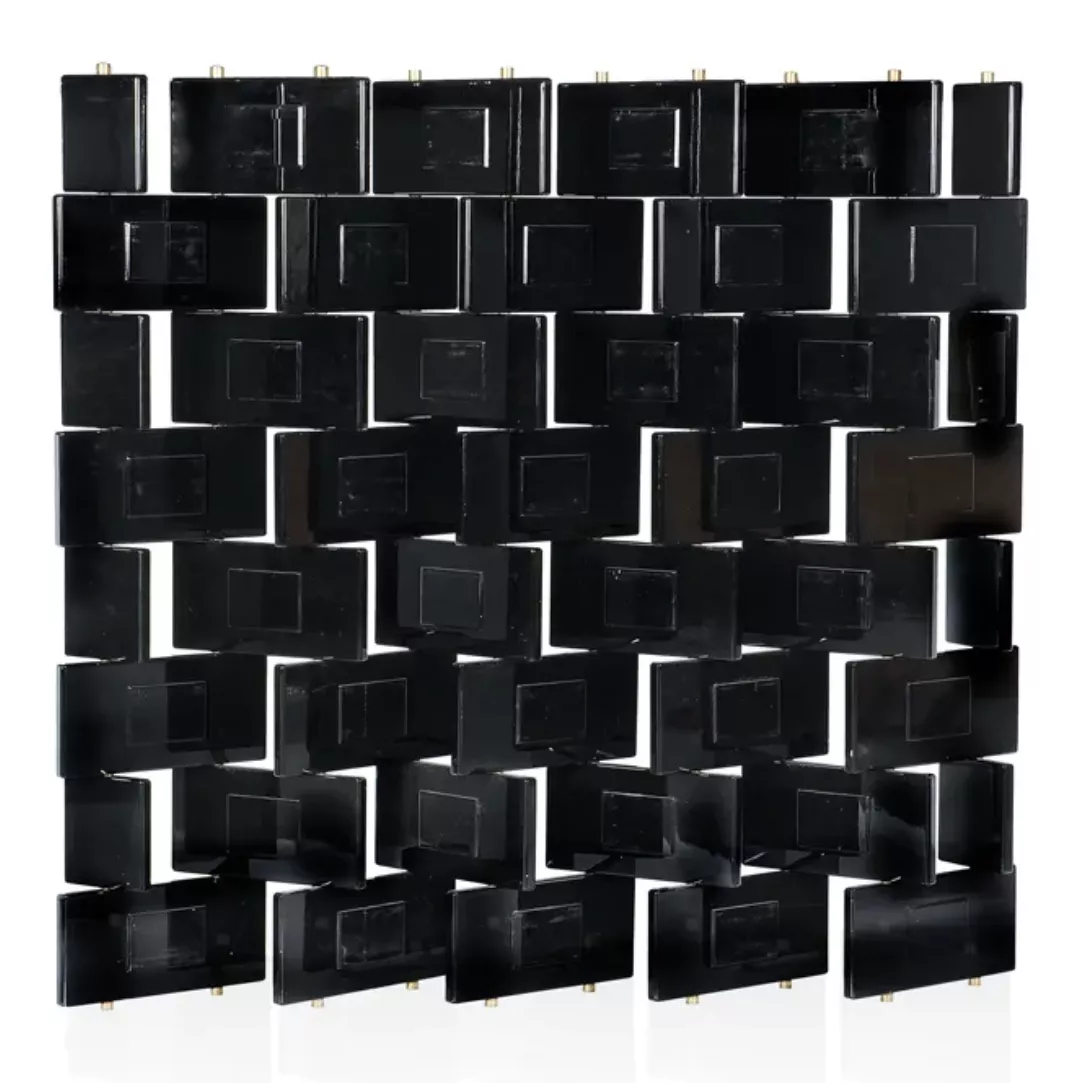
She obtained commissions to decorate apartments, and designed new furniture for this purpose, such as the Dragon armchair and certain screens.
In 1920, she opened the Jean Désert gallery in the 1st arrondissement, in collaboration with the architect Jean Badovici, which attracted quite influential customers including Elsa Schiaparelli ; without, however, bringing in much money. Sybold van Reveteyn, an artist who was part of the De Stijl movement, noticed her.
He exerted an important influence on her as she abandoned the Art Deco movement to concentrate on simpler, sleeker designs, then on architectural projects, a craft she learned on the job with Badovici's help. The two architects built Villa E. 1027 on the Côte d'Azur, which would become their home. While there, they met Le Corbusier, who painted murals in their villa.
In the 1930s, she became interested in the issue of social housing, just as artists like Jean Prouvé or Charlotte Perriand, taking into account and reinterpreting the five points of modern architecture enunciated by le Corbusier.
During and after the Second World War, she was forgotten by critics and the public but continued to work on architectural projects. Joseph Rykwert, however, wrote an article about her in Domus magazine in 1968, and critics rediscovered her.
She died in Paris in 1976, aged 98.
Eileen Gray's imprint on her period
Eileen Gray left her mark on twentieth-century design architecture and furniture, even if she was forgotten for a time. She created timeless, simple-to-use pieces aimed at simplifying the design of housing before and after the Second World War. The majority of her works are now in private collections.
Why is she so highly rated at auction today?
Eileen Gray is an artist little known to the general public. Yet collectors of designer furniture are willing to pay a lot of money for her works. Highly qualitative, like the furniture of Verner Panton, whose style is otherwise close, her furniture pieces are all the rage on the art market.
There are several factors behind this craze. Gray's furniture is rare: production is not very large. Unlike artists known for their theories and work, Gray's work is prized for the discretion of its renown.
Recognizing the artist's signature
Eileen Gray's furniture is unsigned. Only an appraisal can authenticate a piece of furniture by the artist.
Expertise your property
If you own a work by Eileen Gray, please feel free to request a free appraisal by filling out our online form. A member of our team of experts and licensed auctioneers will contact you to provide an estimate of the market value of your work.
If you are considering selling your work, our specialists will also guide you through the various alternatives available to obtain the best possible price, taking into account market trends and the specific features of each object.
Estimate in less than 24h
Discover in the same theme

Kurt Schwitters, analysis and rating of his value on the art...
Kurt Schwitters, visionary artist of the Dada movement, appraise a work by Kurt Schwitters, estimate and market values.
Learn more >

Value and estimate of Pierre Chapo's furniture
20th-century designer Pierre Chapo has left his artistic mark on 20th-century furniture. Estimated in less than 24h.
Learn more >

Rating and value of paintings by Jean-Louis Paguenaud
Jean-Louis Pagunaud is a French marine painter who has produced a number of paintings that are highly valued at auction.
Learn more >
Works from the same period sold at auction

Estimated 1 500 € - 2 000 €
Attributed to Jacques ADNET (1900-1984) Chest of drawers with wood structure and base sheathed in black saddle-stitched leather and imitation leather.

Estimated 3 000 - 5 000
Gaston SUISSE (1896-1988), Engraved polychrome lacquer panel on tortoiseshell lacquer background.

Estimated 10.000 - 15.000 €
Marcel COARD (1889-1974) - Pair of black patinated wrought-iron curule armchairs with oval backs.

Estimated 15.000 - 20.000 €
Charlotte PERRIAND (1903-1999) - Suite of 6 "berger" stools.

Estimated 1500 - 3000€
René Coutelle (1927-2012), console, dove model

Secure site, anonymity preserved

Auctioneer approved by the State

Free and certified estimates
Frequently asked questions
-
Who is Eileen Gray, and why is her furniture so highly prized?Eileen Gray was a 20th-century Irish designer and a pioneer of minimalist design and modern architecture. After a period of obscurity, she was rediscovered in the 1960s, and her popularity has skyrocketed over the past decade. Her pieces are rare, of very high quality, and highly sought after by collectors of international design furniture, which explains the record prices achieved at auction.
-
What are the price ranges for Eileen Gray furniture by type?Prices vary considerably depending on the type of item: drawings and watercolors range from €250 to €24,000, stools from €480 to €145,500, side tables from €80 to €957,300, and armchairs from €350 to €19,500,000. Bookcases and console tables are also among the most prestigious and expensive pieces on the market.
-
How do you authenticate a piece by Eileen Gray?Eileen Gray's furniture is not signed; only a professional appraisal can authenticate a piece. We recommend that you request a free appraisal from Auctie's: our experts and certified auctioneers will examine your piece and provide you with an authentication and an accurate estimate within 48 hours, with no obligation.
-
Is this the right time to sell a piece by Eileen Gray?Yes, now is an excellent time to sell. Eileen Gray’s market value has been rising steadily for the past ten years, and her pieces are all the rage on the international art market. Collectors of designer furniture are willing to pay top dollar to acquire her creations, particularly her iconic armchairs and bookcases.
-
How does the appraisal and sale process work at Auctie's?The appraisal is free and non-binding: fill out our online form, and an expert will contact you to appraise your piece. If you decide to sell, our specialists will guide you toward the best solution to get the best possible price, taking into account market trends and the specific characteristics of your piece of furniture.
