



Rating and value of drawings and paintings by Senkichiro Nasaka

Key takeaways
- Senkichiro Nasaka’s works sell for between €300 and €11,400 at auction, with a record set in 2014 for the drawing “Work 192.”
- A Japanese artist (1923–2014) and founder of the Gutai movement, known for his abstract compositions based on the repetition of circular motifs and geometric structures.
- Watercolor drawings fetch higher prices (up to €11,400) than paintings (up to €9,435); works from the 1960s are particularly sought after.
Senkichiro Nasaka’s paintings and drawings sell for up to €11,400 at auction. An appraisal allows us to accurately determine the current market value of your Senkichiro Nasaka artwork and, if applicable, optimize the sale of the piece.
If you own a work by Senkichiro Nasaka and would like to know its value, our state-certified auctioneers will provide a free appraisal based on authenticity, market rating, and recent auction results.
Artist’s Market Value and
Reputation
Practicing what is known as “performative painting,” Senkichiro Nasaka is a Japanese artist known for his participation in the avant-garde Gutai art movement.
He creates paintings, watercolor drawings, prints, and a few sculptures, of which we have only a limited number of examples. The prices at which his works are sold range from €300 to €11,400.
In 2014, an abstract drawing titled “Work 192,” dating from 1962, sold for €11,400, despite an estimate of between €4,700 and €6,600.
Ranking of value from a simple work to the most prestigious
Technique used | Result |
|---|---|
Painting | From €300 to €9,435 |
Drawing - watercolor | From €420 to €11,400 |
Estimate in less than 24h
Placing the Artist in Context
Period
Senkichiro Nasaka (1923–2014) was a Japanese artist active within the post-World War II Japanese avant-garde movement. His artistic career was particularly significant beginning in the 1950s, a period of radical renewal in artistic practices in Japan.
He was part of a phase of internationalization of Japanese art and dialogue with Western avant-garde movements.
Artistic Movements
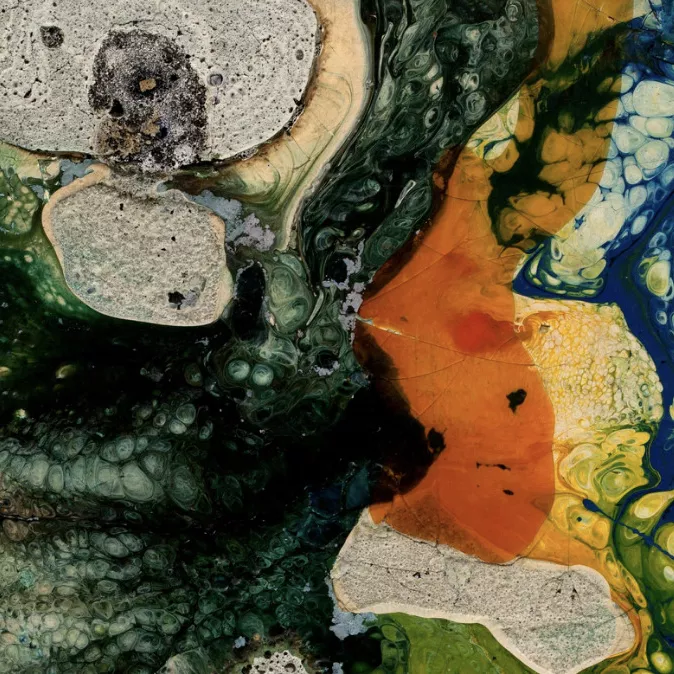
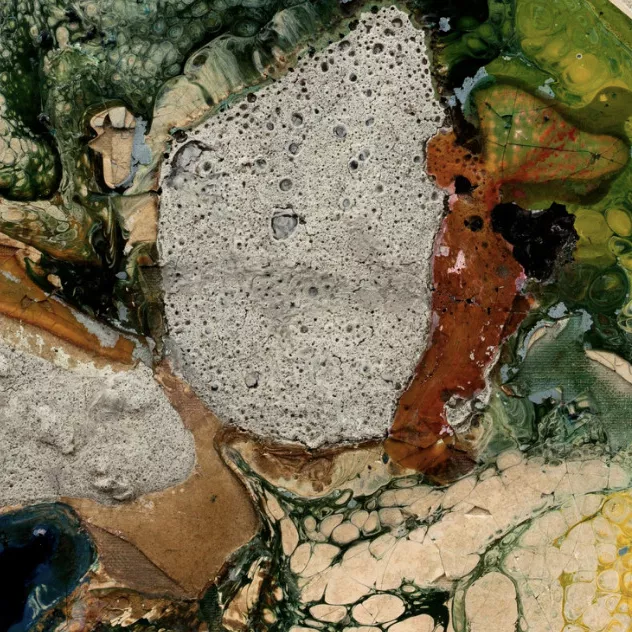
The artist was an active member of the Gutai movement, which explored the materiality of painting and creative processes. His work falls within the realm of geometric abstraction, featuring a recurring use of concentric forms and repetitive structures that organize the pictorial surface according to rigorous principles.
His work shares formal affinities with Op Art, featuring visual effects derived from the repetition and vibration of circular motifs that produce optical phenomena, alongside an interest in the methods of execution and the relationship between gesture, tool, and visual outcome.
Nasaka engages in a dialogue between Western abstraction and the Japanese avant-garde, occupying a middle ground between international artistic trends (geometric abstraction, emerging minimalism) and the experimentation specific to the postwar Japanese context.
The Life of Senkichiro Nasaka
Cultural Context
Senkichiro Nasaka developed his body of work within the context of the post-World War II Japanese avant-garde, a period marked by a radical reevaluation of traditional artistic practices.
He was associated with the Gutai movement, which emphasized material experimentation, physical engagement, and direct interaction with the medium. His practice was characterized by explorations of repetition, rhythm, and structure, often through the use of circular motifs and mechanical processes.
He explores the potential of repeated gestures and traces, producing abstract compositions in which the materiality of the paint and the process of execution take center stage. His work is part of a reflection on the relationship between control and chance, between human intervention and automatism—issues at the heart of contemporary art.
Artistic and Intellectual Circle
Nasaka joined the Gutai group at the instigation of Jiro Yosjihara, whose philosophy encouraged innovation and experimental freedom. He developed his practice alongside artists such as Kazuo Shiraga and Sadamasa Montonaga, sharing a process-oriented and material-based approach to creation.
His work also engages in a dialogue with international avant-garde movements, particularly abstract and conceptual practices, while retaining a distinctiveness rooted in the Japanese context.

The Artist's Techniques
The Style of Senkichiro Nasaka
Nasaka is a member of the Gutai movement, which is committed to an experimental redefinition of pictorial means. His practice is based on the repetition of simple gestures, producing serial visual structures.
He makes characteristic use of repeated circular motifs, applied mechanically or semi-automatically. He reduces the expressive gesture in favor of a controlled, almost industrial process, thereby questioning the notion of authorship.
In his body of work, the process and the system of image production take on greater importance than the figurative result. His color palette is often limited, highlighting the repetitive and rhythmic structure of the surface. His approach lies at the intersection of abstraction, conceptual art, and material experimentation.
Focus on a Key Work
*Work (Circles)*, 1960s
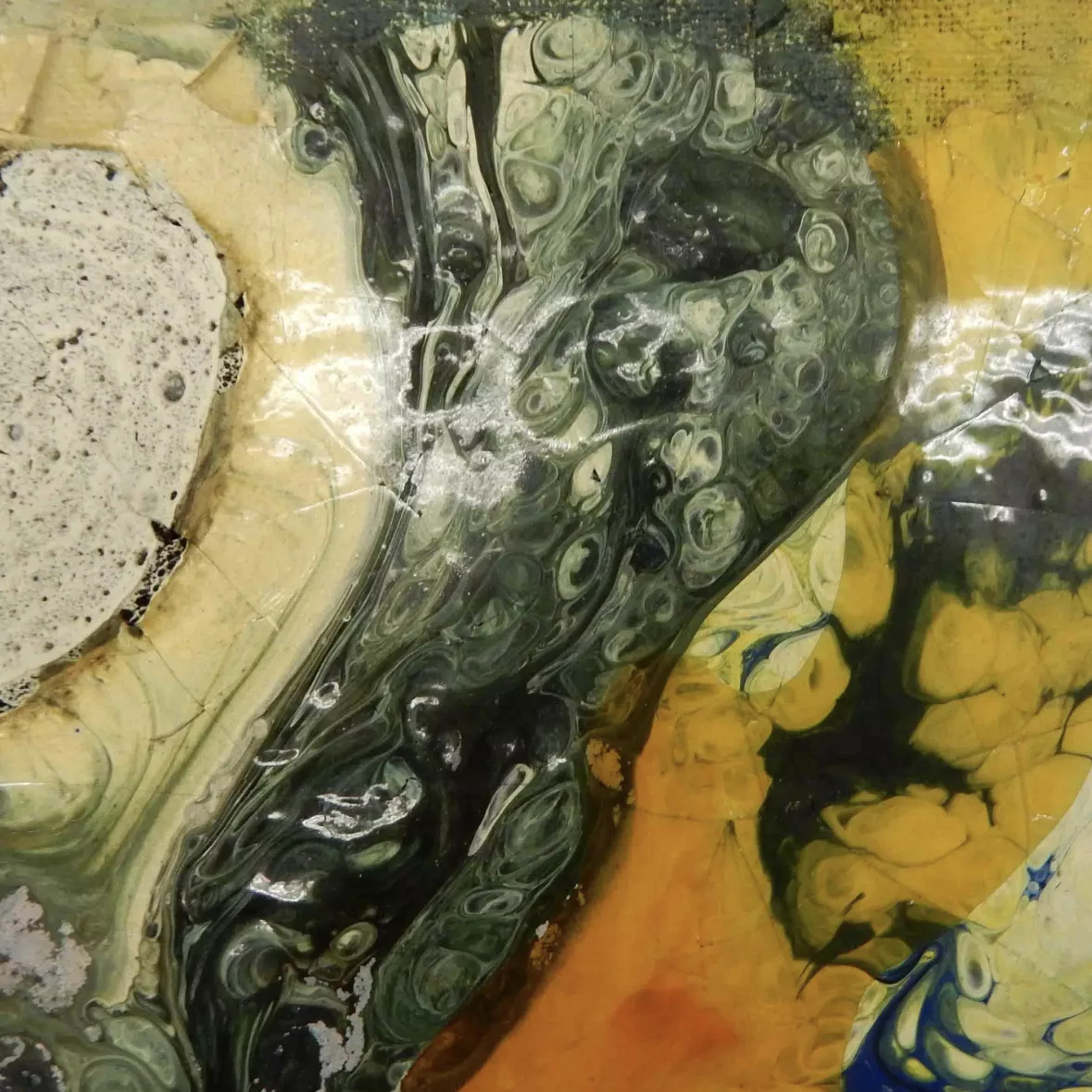
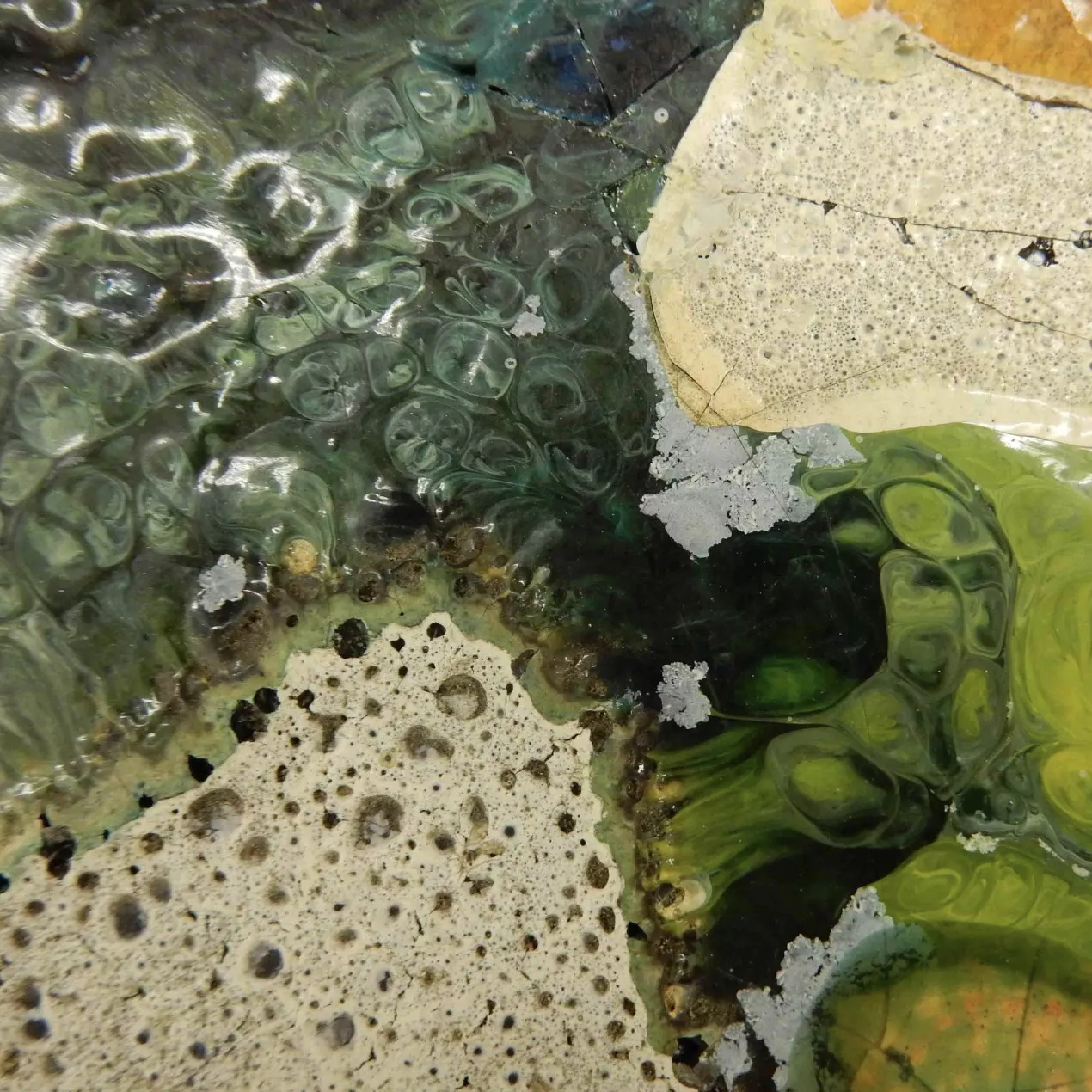
This work consists of a surface entirely covered with repeated circles, organized according to a serial and systematic logic. We witness the erasure of the individual gesture in favor of a repetitive process akin to a visual mechanism.
An optical effect is produced by the accumulation of forms, creating a rhythmic vibration across the surface. There is no illusion of depth, as the canvas is conceived as an autonomous plane. He reduces artistic means to the extreme, focusing them on a single, varied motif.
This work is emblematic of the late Gutai movement’s explorations, in which painting becomes a field of experimentation with repetition, systems, and materiality.
FAQ – How do you appraise a work by Senkichiro Nasaka?
1) What stylistic criteria specific to Senkichiro Nasaka are key?
For this artist, the analysis focuses on geometric precision, the modular repetition of forms, and the systematic structuring of the pictorial surface—characteristics of his visual language within the Gutai movement.
2) How important is the Gutai period in determining value?
Works created during the 1960s—a period of collective experimentation within the Gutai group—are particularly sought after due to their significance in the history of international abstraction.
3) How does the condition of the work influence its valuation?
The condition of the painting’s surface (damage, repainting, wear) is a key factor. Works preserved in their original condition are preferred.
His Signature
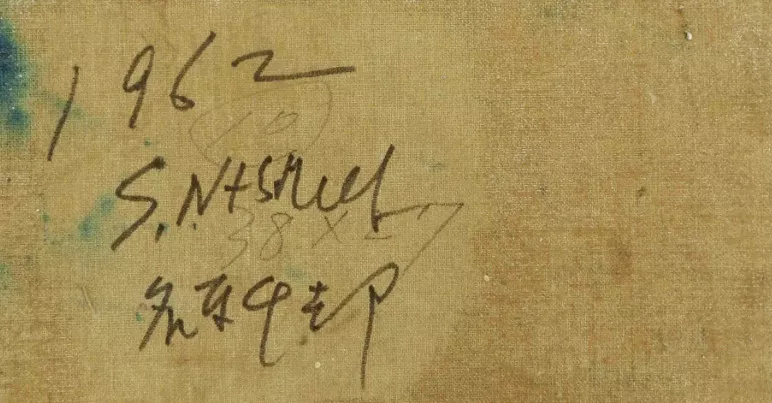
Not all of Senkichiro Nasaka’s works are signed. It is also possible that the work is a copy or that the signature has faded over time, which is why expert appraisal is essential.
Get Your Senkichiro Nasaka Artwork Appraised
If you own a work by Senkichiro Nasaka, an appraisal will help you determine its current market value.
Using our online form, our experts and certified auctioneers will conduct a free appraisal and provide you with a reliable estimate of your artwork’s market value.
If you’re considering selling it, we’ll guide you through the process to ensure you get the best possible price.
Estimate in less than 24h
Discover in the same theme

Value and quotation of works, paintings by Jules René Hervé
Jules René Hervé, a 20th-century painter of genre scenes, produced many canvases in demand on the auction market. Estimated in 24h.
Learn more >

Rating and value of First World War paintings
Paintings from the First World War are sought-after by collectors and are quite popular on the auction market.
Learn more >

Rating and value of works, fashion drawings by René Gruau
René Gruau is a twentieth-century artist and draughtsman who worked for Dior, among others, and whose work is highly valued and quoted.
Learn more >
D'autres tableaux abstraits vendus aux enchères

Estimated 2.000 - 4.000
Serge POLIAKOFF (1900-1969), Composition en rouge et bleu. 1965, Lithograph

Estimated Between €5,000 and €8,000
Jean MIOTTE (1926-2016), acrylic on canvas

Estimated 3.000 - 5.000
Roberto MATTA (1911-2002), Composition, Gouache on canvas

Secure site, anonymity preserved

Auctioneer approved by the State

Free and certified estimates
Frequently asked questions
-
Who is Senkichiro Nasaka, and what is his artistic background?Senkichiro Nasaka (1923–2014) was a leading Japanese artist of the Gutai movement, active in the post-World War II Japanese avant-garde. He practiced a performative style of painting based on systematic repetition, circular motifs, and an exploration of materiality, engaging in a dialogue with Western geometric abstraction and Op Art while retaining a distinctiveness rooted in the postwar Japanese context.
-
What are the prices and values of Senkichiro Nasaka's works?Senkichiro Nasaka's paintings and drawings sell for between €300 and €11,400, depending on the technique and quality. Paintings range from €300 to €9,435, while watercolor drawings fetch between €420 and €11,400. Prices depend in particular on the period (works from the 1960s, associated with the Gutai movement, are particularly sought after), authenticity, and condition.
-
How can you authenticate a work by Senkichiro Nasaka?To authenticate a work by Senkichiro Nasaka, we recommend requesting a free appraisal from Auctie's. Our auctioneers and certified experts assess authenticity by examining the signature (which is often missing), the artist’s distinctive stylistic characteristics, the period of creation, and the condition of the work, and will provide you with a reliable appraisal within 48 hours.
-
Is this a good time to sell a work by Senkichiro Nasaka?Yes, now is a good time to sell a work by Senkichiro Nasaka. The market for Japanese avant-garde art and the Gutai movement is seeing growing interest from international collectors, particularly for works from the 1960s, which remain the most sought-after and highly valued.
-
How does the appraisal and sale process work at Auctie's?The appraisal is free and non-binding: simply fill out an online form with photos of your artwork, and our experts will provide you with a reliable appraisal within 48 hours. If you’d like to sell, Auctie’s, an auction house, will guide you through the process from the appraisal to the auction to ensure you get the best possible price for your artwork.
