



Rating and value of Bruno Catalano's sculptures, bronzes and statuettes

Key takeaways
- Bruno Catalano's bronze sculptures sell for between €6,800 and €70,000, with pieces from the *Voyageurs* series fetching between €12,000 and €70,000 at auction.
- Born in Morocco in 1960, Catalano developed his artistic signature style around fragmented figures with voids at their centers, symbolizing travel and exile.
- The iconic “Voyageurs” series, exhibited at the Vieux-Port in Marseille in 2013, established the artist as a major contemporary sculptor highly sought after by collectors.
If you own a work by or after Bruno Catalano, and would like to know its value, our state-approved experts and auctioneers will offer you their appraisal services.
Our specialists will carry out a free appraisal of your work, and provide you with a precise estimate of its value on the current market.
Then, if you wish to sell your work, we will direct you to the best possible arrangement to obtain the optimum price.
Rating and value of Bruno Catalano's works
Bruno Catalano has produced some unique sculptures. Now, prices for these creations can rise considerably under the auctioneer's hammer. His sculptures are particularly prized, by buyers from all over the world.
The price at which they sell on the art market ranges between €6,800 and €70,000, at the moment, a substantial gap but one that says a lot about the value that can be attributed to Catalano's works.
In 2016, his bronze sculpture Le voyageur sold for €70,000, originally estimated at between €50,000 and €60,000.
Order of value from a simple work to the most prestigious
Technique used - series | Result |
|---|---|
Bronze - other series | From €6,800 to €16,000 |
Bronze - le Voyageur series | From €12,000 to €70,000 |
Estimate in less than 24h
Style and technique of artist Bruno Catalano
Bruno Catalano is a contemporary sculptor who works mainly with bronze. The sculptures that sell on the auction market do not exceed one meter, he has however created a few monumental works for public commissions.
The career of Bruno Catalano
Bruno Catalano, born in 1960 in Morocco to a family of Sicilian origin, is a contemporary sculptor whose work is part of a unique artistic approach deeply marked by his life's journey.
In 1970, he left Morocco with his family to settle in France, a move which, unbeknownst to him at the time, prefigured the central theme of his work: travel and migration. Upon his arrival, he joined the Société Nationale Corse-Méditerranée, where he worked for four years.
Although this period was marked by his daily life as a sailor, it was at this time that he began to nurture a growing interest in sculpture, a passion that would continue to grow.
It was in Marseille, a city open to the sea and the world, that he found his first artistic inspiration. He took classes with Françoise Hamel, a renowned artist, and was introduced to the fundamental techniques of sculpture.
Two years after beginning his apprenticeship, Catalano opened his own studio, a decisive turning point in his career. In this creative space, he installed a kiln where he produced his first works in clay. At that time, bronze, the material that would make him famous, was not yet at the heart of his practice.
It was only later that he adopted bronze, a material that would become the media par excellence for expressing his artistic vision. This transition to bronze sculpture was not without a few technical mishaps.
In fact, it was during one of his first attempts that an unexpected flaw appeared in one of his works. Far from dismissing this incident, Catalano sees it as a creative opportunity. This flaw, this absence in the material, was to become his artistic signature.
He then decided to reproduce and refine this technique, giving rise to fragmented characters, as if torn apart by the ordeal of travel or exile.
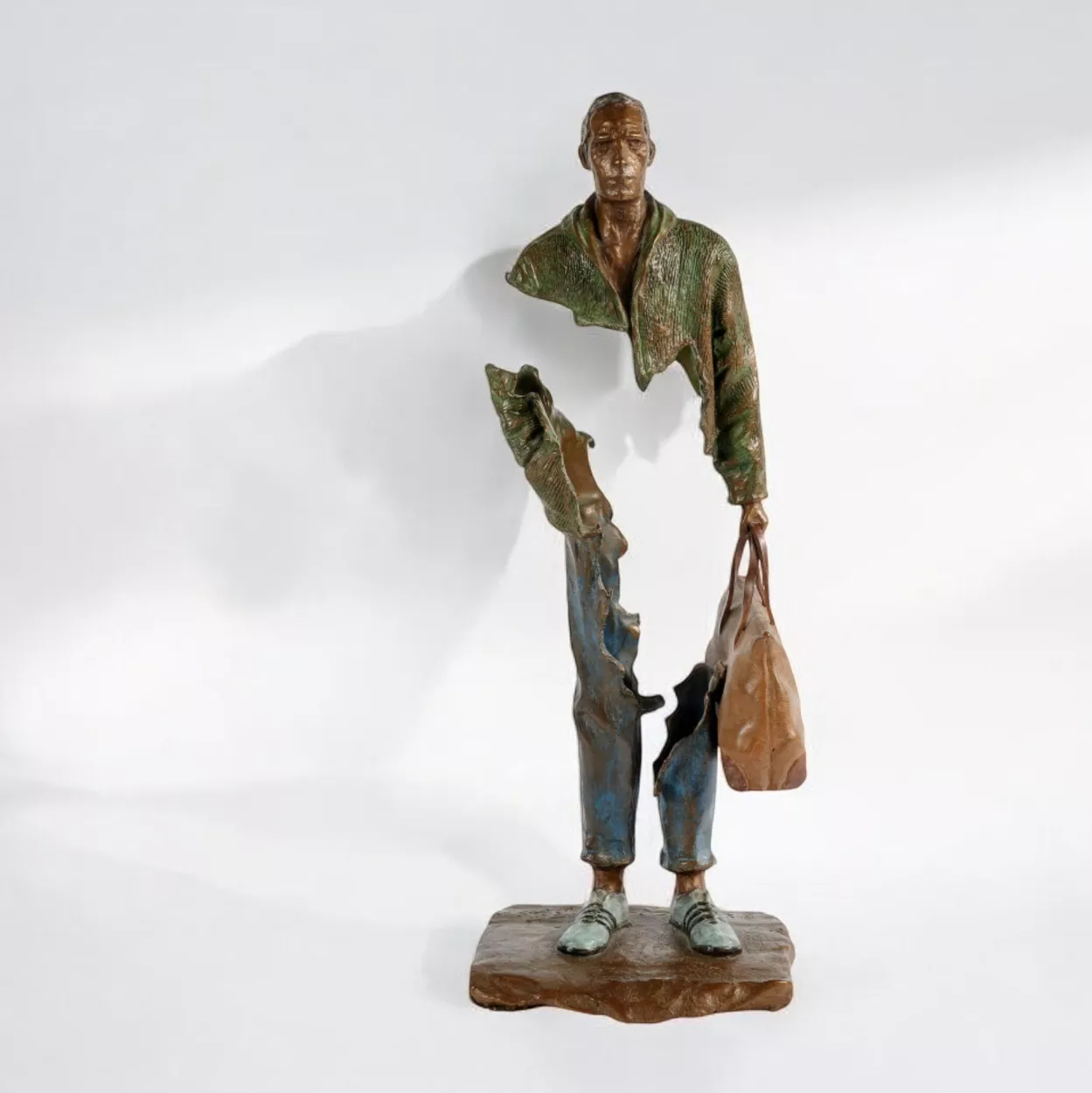
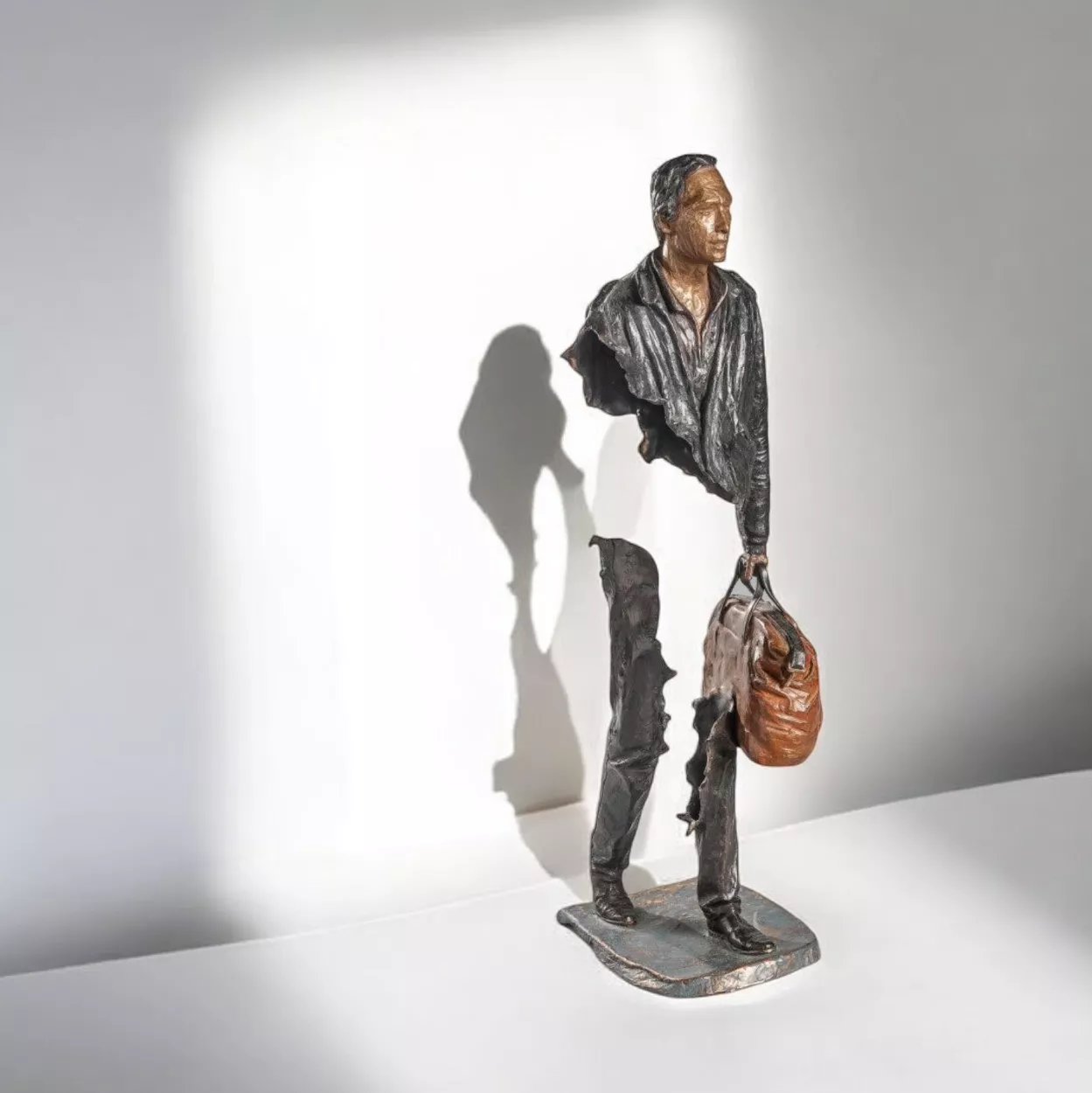
The Voyageurs series is certainly the most famous culmination of this approach. These sculptures, with their partially empty bodies, evoke absence, loss and the quest for identity.
In 2013, Marseille, his adopted city, hosted a landmark exhibition: on the Vieux-Port, ten of his Voyageurs were installed.
This event causes a sensation, and the public is captivated by these enigmatic silhouettes that seem to float between two worlds, wonderfully symbolizing the spirit of travel, passage, and memory.
Backstage at Catalano's workshop
Focus on the Voyageur series, Bruno Catalano
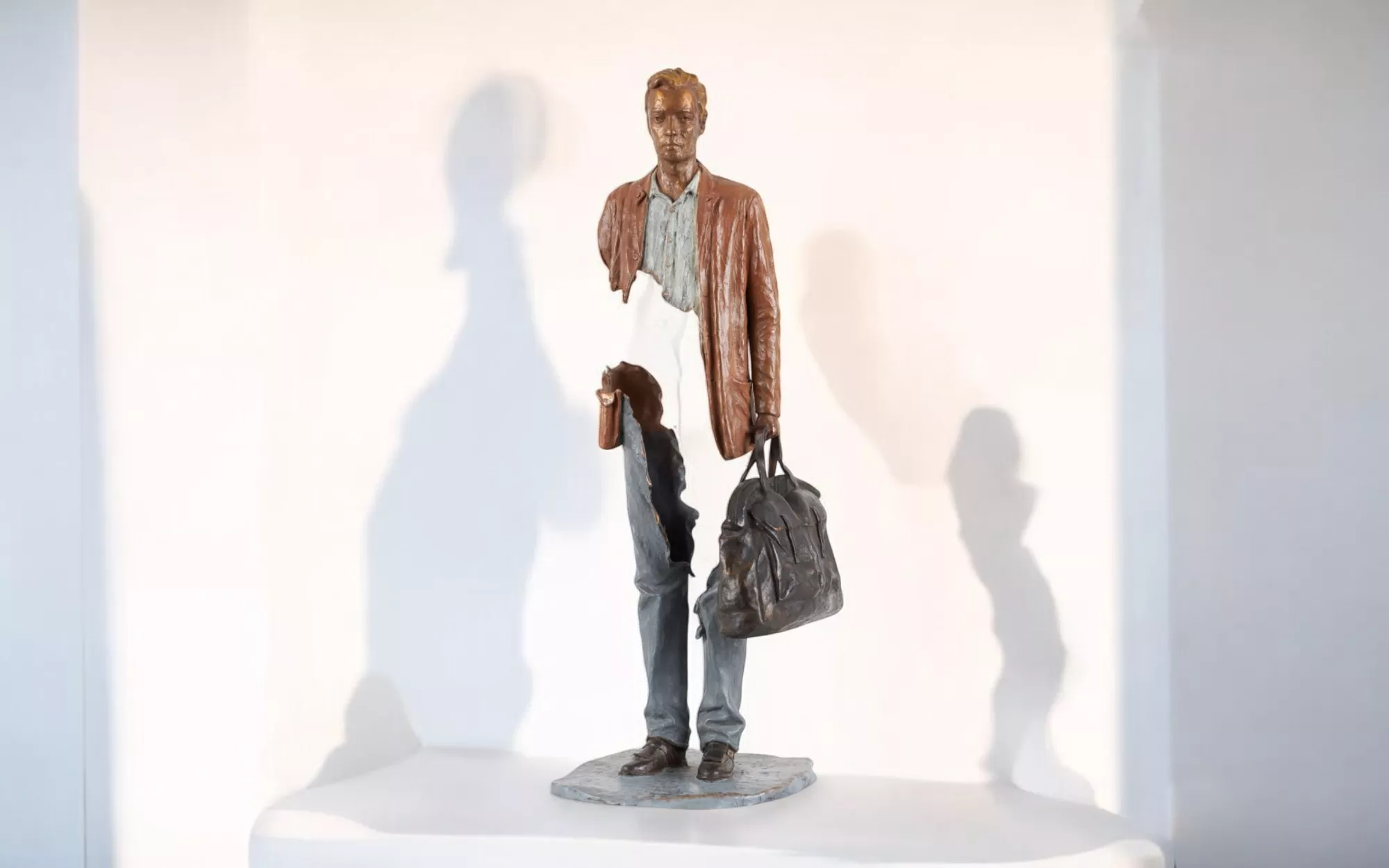
Bruno Catalano, with this intriguing sculpture, takes us on a very special journey. This bronze man, partially obliterated at his center, seems to have stepped straight out of a dream or a hazy memory.
He holds his travel bag in one hand, looking a little lost, as if he's getting ready to leave, but without really knowing where he's going. This emptiness in the middle of his body immediately catches the eye and seems to tell us something profound about absence, distance, or perhaps the quest for oneself.
Catalano plays here with the idea of the traveler, a central theme in his work, where we guess that what is missing is just as important as what is present.
Catalano's work is part of a long tradition of sculptors using bronze, a noble and solid material. One thinks of artists such as César Baldaccini, who also upset expectations around bronze, notably with his famous "Compressions".
Where César compacted cars and metal objects to reduce them to their essentials, Catalano does something different: he removes part of the human body, creating a void that prompts reflection. This contrast between the solidity of bronze and the physical absence at the center of the figure is striking.
Other twentieth-century sculptors also explored themes close to this absence. Take Giacometti, for example, with his elongated, fragile figures.
Although his style is very different, there is in the works of Giacometti a similar quest to understand the essence of the human being, to reduce it to what is essential.
Catalano, on the other hand, does not seek to elongate or deform the figure, but to fragment it, to render it incomplete, as if part of the traveler's story had been lost along the way.
The realism in the figure's details - his crumpled clothes, his worn shoes - makes the sculpture's central emptiness even more striking.
We can clearly see that this man is someone real, and yet he is incomplete. It's as if the artist wanted to remind us that every journey changes us, that it takes us and leaves us with fragments of ourselves.
This play between presence and absence also recalls the work of Auguste Rodin, who also liked to work with incomplete figures to express strong emotions. With Rodin, the unfinished was a way of leaving room for the imaginary; with Catalano, it's a way of speaking of emptiness, of what's missing.
In place of geometric shapes, he plays with emptiness. What's absent in his figures is just as important as what's there, and this creates a balance that calls out.
In short, this sculpture by Bruno Catalano is much more than a simple representation of a traveler. It's a work that speaks of lack, quest and identity, themes that resonate deeply with each and every one of us.
Through this bronze, the artist invites us to reflect on what we leave behind at each stage of our lives, and what we always take with us, even in absence.
The success of Bruno Catalano's sculptures
The success of Bruno Catalano's sculptures has been growing ever since he unveiled his iconic Voyageurs series. Each of his pieces, characterized by these fragmented bodies and incomplete silhouettes, fascinates an ever-growing audience.
Over the course of his career, Catalano has evolved his sculptures in both form and motif, constantly refining his technique while retaining that unique signature: figures marked by absence and exile. These torn figures, seemingly suspended between two worlds, captivate with their innovative aesthetics and the message they convey.
Today, Bruno Catalano is a recognized and highly regarded artist, his works fetching substantial sums on the art market.
Yet they rarely make it to the auction room, such is their demand. Each sculpture, whether a small piece or a monumental work, arouses keen interest among collectors and contemporary art lovers.
Therefore, the best way to sell a Bruno Catalano sculpture is to present it on the auction market : this way, buyers are put in competition so that you get a top price.
His distinctive style and the depth of his work ensure Catalano an enduring place in the international artistic landscape, making him one of the most sought-after contemporary sculptors of his generation.
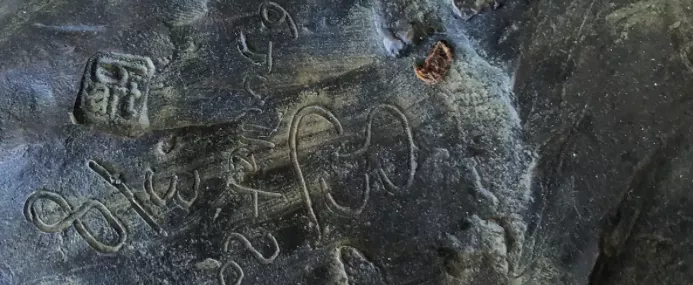
Recognizing Bruno Catalano's signature
Catalano doesn't always sign his works. If you think you own one, it's best to have it appraised.
Knowing the value of a work
If you happen to own a Bruno Catalano creation, or think you might, don't hesitate to request a free appraisal using our form on our website.
A member of our team of experts and licensed auctioneers will contact you promptly to provide you with an estimate of the market value of your piece, not forgetting to send you ad hoc information about it.
If you wish to sell your property, you will also be accompanied by our specialists in order to benefit from alternatives to sell it at the best possible price, taking into account market inclinations.
Estimate in less than 24h
Discover in the same theme

Rating and value of works, paintings, sculptures by Arman
Arman is a twentieth-century painter and sculptor whose figurative works are highly prized at auction.
Learn more >

Rating and value of paintings by Lucio Fontana
Lucio Fontana is a twentieth-century spatialist artist whose works are highly prized at auction.
Learn more >

Rating and value of Georges Jouve vases
Georges Jouve is a contemporary ceramist who has produced vases that are highly valued at auction. Estimate in 24h.
Learn more >
Works from the same period sold at auction

Estimated 20.000 - 40.000 €
Alexander CALDER (1898-1976) Silver tiara with wave motifs holding pendants

Estimated 1500 - 3000€
René Coutelle (1927-2012), console, dove model

Estimated Between €15,000 and €20,000
César BALDACCINI dit CESAR (1921-1998), yellow gold pendant, jewelry compression

Estimated Between €1,500 and €3,000
César BALDACCINI dit CESAR (1921-1998), Poule Cartier, bronze print

Estimated 800 - 1.500
Line VAUTRIN (1913-1997), gilded bronze "Wolf and Fox" compact

Secure site, anonymity preserved

Auctioneer approved by the State

Free and certified estimates
Frequently asked questions
-
Who is Bruno Catalano, and what is his artistic style?Bruno Catalano is a contemporary sculptor born in 1960 in Morocco, who has become famous for his bronze sculptures characterized by fragmented and partially hollowed-out bodies. His unique style draws inspiration from his personal journey, marked by travel and migration—central themes that are reflected in his iconic series “Les Voyageurs,” where absence and emptiness become just as important as the material present.
-
What is the price range for Bruno Catalano's sculptures?Bruno Catalano's sculptures sell for between €6,800 and €70,000, depending on the series and the piece. Prices for the “Le Voyageur” series range from €12,000 to €70,000, while his other bronze sculptures range from €6,800 to €16,000. These price differences reflect the quality, provenance, and market reputation of each work in today’s art market.
-
How can you authenticate a sculpture by Bruno Catalano?To authenticate a sculpture by Bruno Catalano, we recommend that you request a free appraisal from Auctie's. Our team of experts and licensed auctioneers will analyze your piece and provide you with an accurate estimate, along with detailed information on its authenticity and provenance—with no obligation on your part.
-
Is this a good time to sell a sculpture by Bruno Catalano?Yes, now is a good time to sell. Bruno Catalano’s sculptures are in growing demand and rarely appear at auction, as they are highly sought after by contemporary art collectors. Submitting your work to auction allows you to benefit from competition among buyers to secure the best possible price.
-
How does the appraisal and sale of a work of art take place at Auctie's?The appraisal is free and non-binding: simply fill out a form on our website, and an expert will contact you shortly to appraise your item and provide you with its market value within 48 hours. If you decide to sell, our specialists will guide you every step of the way—from the appraisal to the auction—offering you the best options for selling your item at the best possible price.
