



Estimate and auction your Camille Fauré vases and other Limoges enamels

Key takeaways
- The works of Camille Fauré, a French artist specializing in Limoges enamel, sell for between €70 and €2,200 on average, with exceptional pieces reaching €20,900.
- His cloisonné enamel vases from the 1920s and 1930s, which are particularly sought after, employ a revolutionary technique that captures light through vibrant, relief floral motifs.
- A free appraisal remains essential for authenticating pieces, as many copies exist and not all objects are systematically signed by the artist.
If you own an object by or after Camille Fauré, and would like to know its value, our state-approved experts and auctioneers will offer you their appraisal services.
Our specialists will carry out a free appraisal of your work, and provide you with a precise estimate of its value on the current market.
Then, if you'd like to sell your work, we'll direct you to the best possible arrangement to get the best price for it.
Rating and value of works by Camille Fauré
Camille Fauré is a French artist quite well known to collectors of Limoges ceramics and enamels.
If you own one of his works, its value may be higher than you think. On the art market, prices for Fauré's works can be very high at the auctioneer's hammer.
His ceramic works are particularly prized by French and European buyers, and the price at which they sell on the art market ranges from €70 to €2,200, a fairly substantial range,but one that says a lot about the value that can be attributed to Fauré's works.
In 2012, two art deco enamel vases sold for €20,900 while they were estimated at between €2,000 and €3,000.
Order of value from a simple work to the most prestigious
Technique used | Result |
|---|---|
Painting on ceramic | From 40 to €6,300 |
Lighting | From €200 to €14 800€ |
Vase | From 10 to 20 900€ |
Estimate in less than 24h
Style and technique by artist Camille Fauré
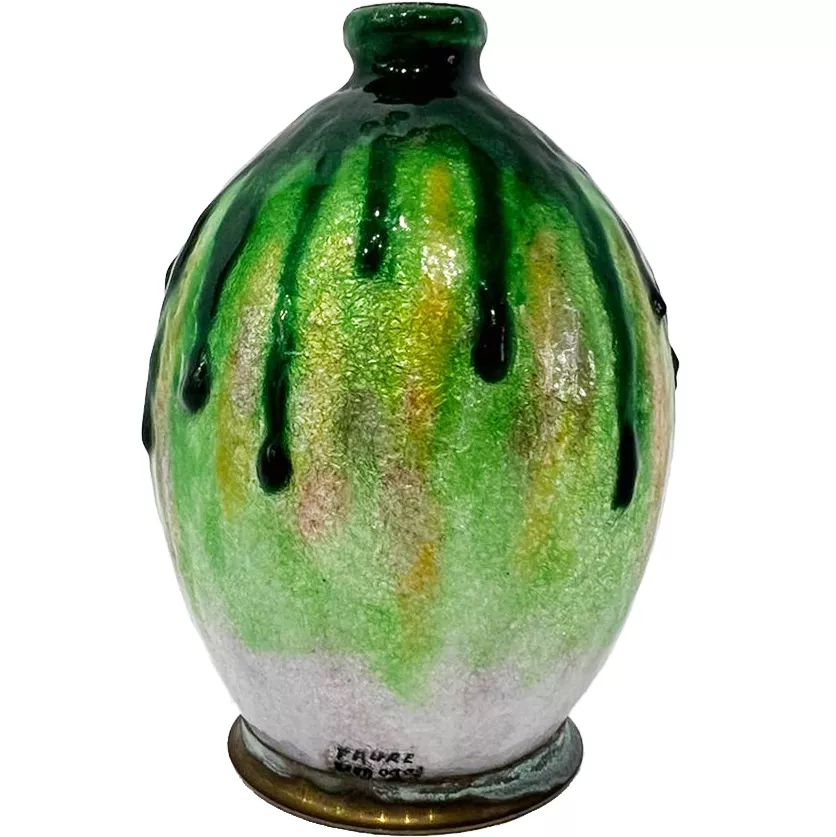
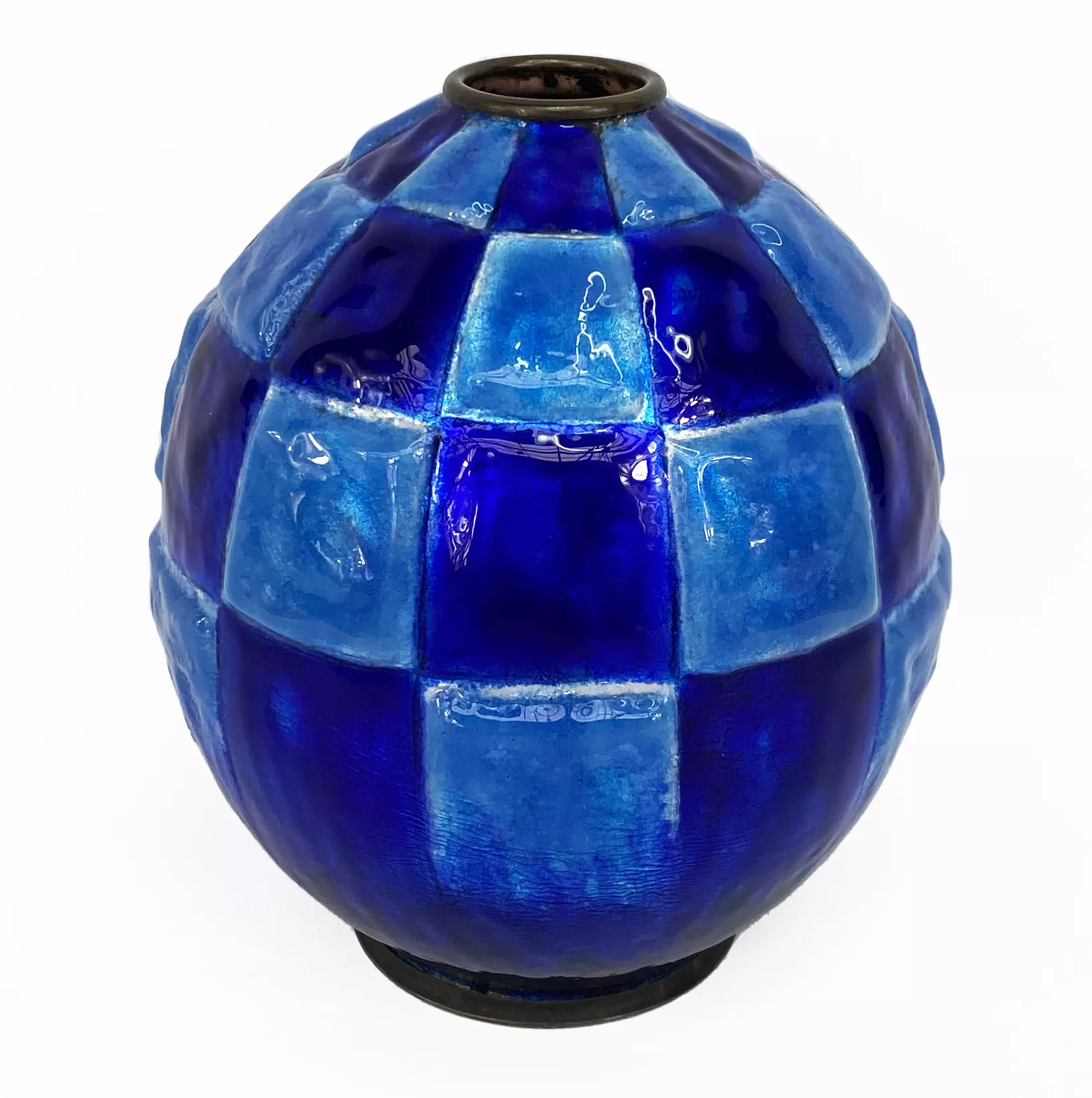
The question of style, with Camille Fauré, seems to be posed in terms of light and depth. We know of the artist's attachment to cloisonné enameling, a technique that transcends the surface to reveal an architecture of patterns and colors in relief.
"It wasn't simply a matter of decorating the object, but of animating it with a luminous vibration," it was said in the Limoges workshops.
In the 1920s, his revolutionary approach turned enamel from a simple coating into a living material, capable of capturing light and diffracting it into infinite nuances.
The rigor of classical forms gives way to an ornamental richness where curves and floral motifs unfold in fluid movements, as if in weightlessness.
As one critic puts it, Fauré succeeds in "crystallizing in the enamel a dialogue between light and matter, where each hue seems to intertwine with an almost organic intensity".
This fusion of design and texture, while remaining faithful to the Art Deco aesthetic, frees itself from purely decorative constraints to give each piece a sculptural dimension.
In place of the polished, uniform surface of traditional objects is a play of light and shadow, a dazzling materiality that redefines enameling as an art in its own right. What we might call the metamorphosis of enamel into a visual and tactile symphony.
The career of Camille Fauré
The question of career, with Camille Fauré, seems to be posed in terms of singularity and audacity. We know of his attachment to the art of enameling, an age-old tradition that he transformed into an unprecedented field of experimentation.
Born at the end of the 19th century and trained in the workshops of Limoges, he established himself in the 1920s as one of the pioneers of the revival of this craft.
"It was a question of going beyond conventions to inscribe enamel in a dazzling modernity", his contemporaries report.
Under his direction, the Fauré workshops became a laboratory where shapes and colors came together in unprecedented compositions, carried by the Art Deco aesthetic. The discreet craftsman was succeeded by an audacious creator, whose pieces, often produced in limited editions, seduced an international clientele in search of refinement and rarity.
As one historian notes, Fauré succeeded in "imposing enamel as an autonomous artistic language, where each vase, bowl or box becomes a work in itself".
This recognition, while ensuring his enduring success, remains true to his vision: that of a craftsman turned artist, whose name today ranks among the great figures of enamel decoration. What could be called the consecration of a career built on innovation and elegance.
The love affair between Limoges enamels and Camille Fauré
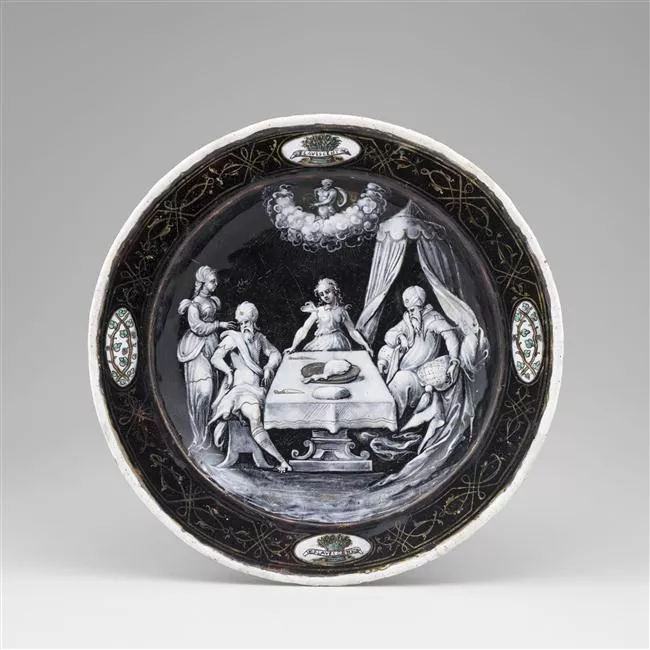
The history of Limoges enamels began long before Camille Fauré even existed. In the Middle Ages, liturgical pieces were produced to decorate churches and places of worship: hunts, eucharistic doves and processional crosses were used.
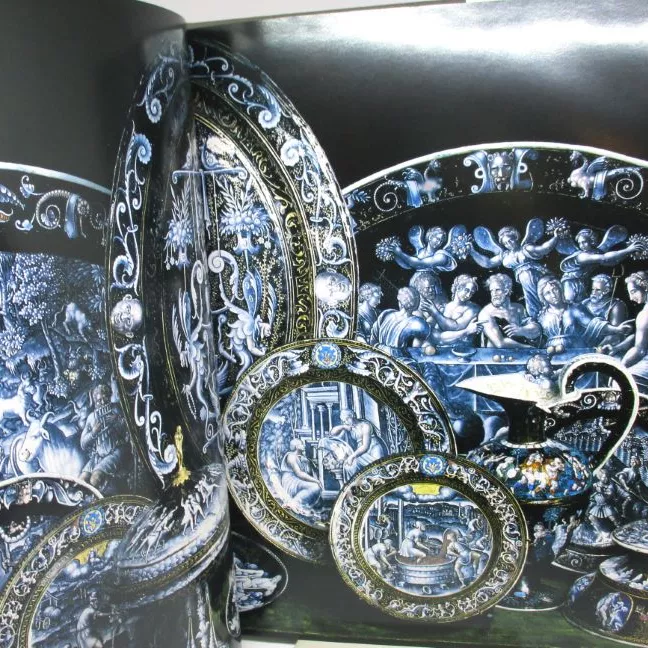
The revolution in Limousin enamel began in the Renaissance, however, with the production of painted enamels, initially religious, then secular.
The Limosin, Nouailher, Reymond, Pénicaud and Courteys families skilfully tried their hand at this new style, producing masterpieces that are preserved in the greatest collections.
At this time, Limoges art began to radiate throughout Europe and European sovereigns liked to commission portraits and mythological scenes from these highly talented craftsmen.
It's not just Camille Fauré's creations that are sought after at auction. Renaissance Limoges goblets, vases, ceremonial dishes, ewers and caskets are very rare and highly sought-after at auction.
These painted enamels can be sold today for several tens of thousands of euros. Keep an eye out and don't hesitate to submit to our experts any objects that might spark your interest.
The most fashionable pieces
In the 1920s to 1930s, exceptional pieces emerged from the workshops a production marked by relief enamels with decor inspired by Cubist painting, Russian ballets and the Art Deco decorative repertoire in bright, iridescent colors.
Following this golden age, Camille Fauré's production declined in quality and moved towards a more figurative style, with a floral motif, less sought after by collectors.
Focus on Boule aux glycines, Camille Fauré
The construction of the vase, in Camille Fauré, seems to be posed in terms of volume and light, but also of dialogue with its time. Take the vase Boule aux glycines, a masterpiece from the 1920s, in which the art of cloisonné enamel reaches an unequalled maturity.
We know Fauré's attachment to this technique, which not only sublimates the surface but makes it an integral dimension of the work.
Here, bunches of wisteria, in relief, stretch and tangle, their vibrant shades of blue and violet seeming to capture the light to better render it.
"It wasn't just a matter of decorating an object, but of metamorphosing it into a visual poem," say the master enameller's contemporaries.
This vase finds a particular resonance in the creations of René Lalique, who at the same time was exploring a naturalistic aesthetic sublimated by glass.
At Lalique, nature becomes fluid, translucent, almost unreal, while Fauré favors the density and materiality of enamel. As one critic notes, "Lalique transforms light into movement, where Fauré freezes it in vibrant opulence."
This opposition reveals two complementary visions: one ethereal, almost immaterial, the other anchored in a tactile, sculptural texture.
Fauré's work on this vase is also part of a dialogue with the decorative compositions of Jean Dunand. The latter, a master of lacquer, shares with Fauré an extreme attention to surface, where texture and pattern become inseparable.
However, where Dunand favors flat tints with metallic reflections to create often abstract compositions, Fauré uses nature as the starting point for a formal transfiguration.
The wisterias, though figurative, flirt with abstraction in their rhythmic repetition, each petal becoming a chromatic unit that serves an overall composition.
This vase can also be put into perspective with the works of Clément Massier, whose iridescent ceramics explore, like Fauré, a poetics of light.
But where Massier seeks a moving, almost elusive iridescence, Fauré imposes a rigorous mastery, capturing light in the cloisonné reliefs of the glaze.
This rigor, halfway between craft and art, lends his pieces a rare monumentality, even in the most modest formats.
Finally, the Boule aux glycines illustrates Camille Fauré's own ambition: to inscribe nature in a subtle geometry, where each detail is integrated into an overall harmony.
The raw naturalness of the wisteria gives way to a stylized nature, reinvented, but never disconnected from its origins.
This could be called, at Fauré, a perfect synthesis between tradition and modernity, where each vase becomes not only an object, but a manifesto of its time.
Recognizing Camille Fauré's signature
Not all objects produced by Camille Fauté are signed, or may be signed differently depending on the period. In addition, there are many copies, which is why it's important to appraise your work.
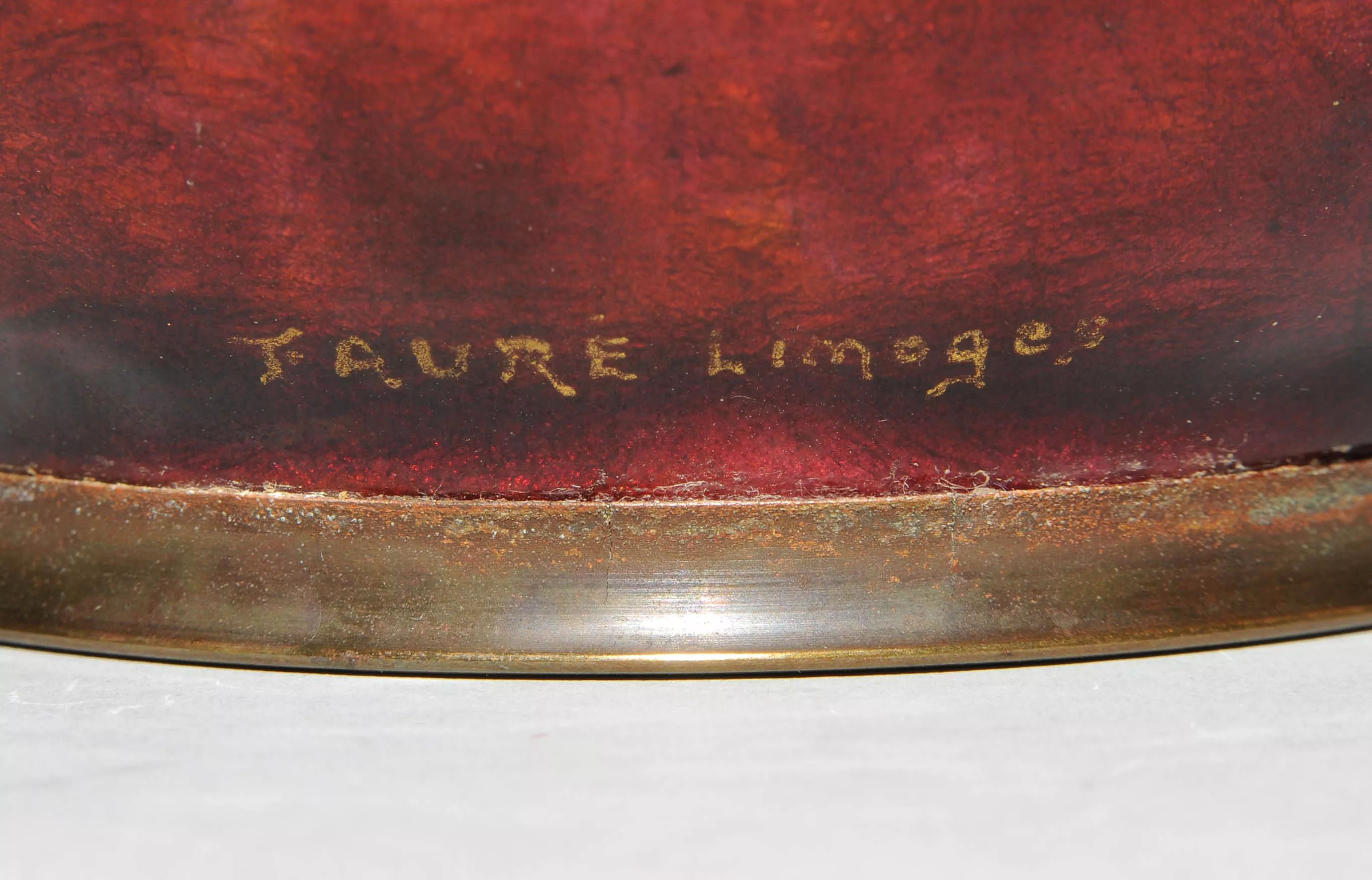
How to obtain an estimate for a Camille Fauré vase or bowl
If you own a Camille Fauré vase or any other piece of art by the artist, please feel free to request a free estimate by filling out our online form.
A member of our team of state-approved experts and auctioneers will contact you to provide an objective estimate of the market value of your work signed by Camille Fauré.
If you're considering selling your Camille Fauré vase or bowl, our specialists will also guide you through the various solutions available to obtain the best possible price, taking into account market trends, the specific features of each object and your needs.
Estimate in less than 24h
Examples of Camille Fauré pieces sold at auction

Estimated 3.000 - 5.000€
Camille Fauré (1874-1956), Enamelled vase

Estimated 2000 € - 3000 €
Camille Fauré (1874-1956), Exceptional ovoid vase

Estimated 600 € - 800 €
Émaux d'Art Camille FAURÉ à Limoges "Bouquet de fleurs" (Bouquet of flowers)

Estimated Between €3,000 and €5,000
Camille Fauré, enamelled vase with geometric decoration

Estimated Between €3,000 and €5,000
Camille Fauré, enamelled vase with "Cascade" geometric design
Discover in the same theme

Rating and value of paintings by Pavel Chmaroff
Pavel Chmaroff is a twentieth-century Russian painter who produced works that are highly rated and sought-after on the auction market. Estimated in 24...
Learn more >

Rating and value of paintings by Mary Cassatt
Mary Cassatt is an American Impressionist artist of the 20th century, whose works are highly valued at auction.
Learn more >

Rating and value of drawings and paintings by Frédéric Benra...
Frédéric Benrath is a painter associated with the French lyrical abstraction movement (nuagisme) whose paintings command high prices and are highly va...
Learn more >

Secure site, anonymity preserved

Auctioneer approved by the State

Free and certified estimates
Frequently asked questions
-
Who is Camille Fauré, and what is her artistic background?Camille Fauré was a French artist of the late 19th and 20th centuries who trained in the workshops of Limoges. As early as the 1920s, he established himself as one of the pioneers of the revival of cloisonné enamelwork, transforming this traditional technique into an independent artistic language rooted in the Art Deco aesthetic. His creations, characterized by the play of light and subtle reliefs, make each piece a work of art in its own right.
-
What are the prices and price range for Camille Fauré's vases?Camille Fauré's vases sell for between €10 and €20,900, depending on the quality, technique, and rarity of the piece. Prices can vary considerably: a painting on ceramic ranges from €40 to €6,300, while a light fixture ranges from €200 to €14,800. In 2012, two Art Deco enamel vases estimated at between €2,000 and €3,000 sold for €20,900, demonstrating the potential for these pieces to appreciate in value.
-
How can you authenticate and appraise a vase or other object by Camille Fauré?At Auctie's, you can get a free, no-obligation estimate by filling out our online form. A state-certified expert or auctioneer will contact you to provide an objective and accurate appraisal within 48 hours. This appraisal is essential because there are many copies in circulation, and the pieces are not always signed.
-
Is this the right time to sell a Camille Fauré vase?Yes, now is a good time to sell. Camille Fauré’s works, particularly those produced between 1920 and 1930, are highly sought after by French and European collectors. The Limoges enamel market remains vibrant, and high-quality pieces—especially vases with floral motifs and Art Deco-inspired designs—are in steady demand at auctions.
-
How does Auctie's go about selling a work by Camille Fauré?Auctie's guides you from the appraisal to the auction. After obtaining a free appraisal of your item, our specialists will help you choose the best sales approach, taking into account market trends, the specific characteristics of your item, and your needs. You’ll benefit from the services of state-certified auctioneers to maximize the sale price.
