



Value of Modern Indian Painting (20th Century): Appraisal and Expertise

Progressive Artists Group and international records: The value of modern Indian painting varies greatly depending on the artist and the period.
Below you’ll find all our valuation guides dedicated to modern Indian painting—modern Indian masters, from Bengal to Mumbai. Each guide details the price ranges observed at auction and the factors that determine a work’s value before it is entrusted to our state-certified auctioneers.
Guides on this art movement
See all guides >
Rating and value of paintings and drawings by To Ngoc Van
To Ngoc Van is a Vietnamese modernist painter who has produced numerous works that command high prices at auction.
Learn more >

Rating and value of paintings and laquers by Tran Huu Chat
Tran Huu Chat is a modern Vietnamese painter who has produced panel lacquers and paintings of encouraging value.
Learn more >

Rating and value of drawings and paintings by Bui Xuan Phai
Bui Xuan Phai is a painter of Vietnamese modernity who has produced many views of Hanoi that are highly valued at auction.
Learn more >

Ratings and values of paintings by Luong Xuan Nhi
Luong Xuân Nhi is a Vietnamese painter trained in Hanoi, who has produced numerous works of high value. Estimated 24h.
Learn more >

Market Value and Pricing of Tyeb Mehta's Paintings, Drawings...
Tyeb Mehta is an Indian painter of the PAG movement whose value is constantly rising on the auction market. Estimate in 24h
Learn more >

Rating and value of paintings by Jamini Roy
Jamini Roy is a modern Indian painter of the 20th century who has produced works that are highly rated and valued at auction.
Learn more >

Rating and value of paintings by Lin Fengmian
Lin Fengmian is an avant-garde Chinese artist who has produced works that are highly rated and valued at auction.
Learn more >

Rating and value of paintings by Vasudeo Gaitonde
Vasudeo Gaintonde is a twentieth-century Indian abstract painter whose works are highly valued at auction.
Learn more >

Ratings and values of paintings by Maqbool Fida Husain
Maqbool Fida Husain is a twentieth-century Indian painter who has produced highly successful works at auction.
Learn more >

Rating and value of paintings by Amrita Sher-Gil
Amrita Sher-Gil is a Hungarian-Indian artist of the 20th century who has produced works that are highly prized at auction. Estimated in 24 hours.
Learn more >

Rating and value of paintings by Francis Newton Souza
Francis Newton Souza is a contemporary Indian artist of the 20th century who has produced drawings and oils on canvas that are highly rated and sought...
Learn more >

Rating and value of paintings by Sayed Haider Raza
Sayed Haider Raza is a twentieth-century Indian abstract painter who has produced works whose value is exploding on the auction market.
Learn more >
Understanding the Value of Modern Indian Painting
What Is the Market Value of a Modern Indian Painting?
The market value of a 20th-century modern Indian painting refers to the benchmark value assigned to it by the international market at a given moment, based on the artist’s identity, the artistic movement to which they belong, the period of creation within their career, the technique used, and the strength of the supporting documentation.
This market, which began to take shape internationally in the 2000s, driven by a new generation of wealthy Indian collectors alongside traditional Western art lovers, has experienced spectacular growth, made visible on a global scale by the auction records set by artists such as Maqbool Fida Husain, S. H. Raza, and Tyeb Mehta.
Modern Indian painting of the 20th century constitutes a body of work of remarkable richness and originality, whose distinctiveness stems from the particularly fruitful synthesis it achieves between a visual and spiritual heritage dating back thousands of years, classical Indian pictorial traditions, Mughal painting, regional folk arts, and the influences of Western modernity assimilated during the colonial period and following independence in 1947.
This distinctive synthesis, unique to India’s historical trajectory in the 20th century, endows these works with an irreducible identity, the singularity of which the most discerning collectors know how to recognize and appreciate.
Why Modern Indian Painting Is Captivating the Art Market
Modern Indian painting captivates with the diversity of its approaches and the richness of the syntheses it offers between distinct visual traditions.
The Progressive Artists’ Group, founded in Bombay in 1947—the very year of independence—brought together artists such as Francis Newton Souza, M. F. Husain, S. H. Raza, and Tyeb Mehta, whose works combine Cubist, Expressionist, and Abstract influences with themes and forms rooted in the visual and spiritual reality of the Indian subcontinent.
The rise in these artists’ market values over the past two decades reflects both their historical significance and the growing strength of Indian demand, driven by a class of collectors whose commitment to preserving and promoting this national artistic heritage is reflected in increasingly substantial financial bids at both international and Indian auctions.
This trend is expected to continue as India establishes itself as one of the world’s major economic powers of the 21st century.
Period | Period | Leading Artists | Market demand level |
Bombay School and Progressive Group | 1947–1970 | M. F. Husain, S. H. Raza, F. N. Souza, Tyeb Mehta | Exceptional, record auction prices |
Bengali Modernism and Pioneers | 1880–1940 | Raja Ravi Varma, Jamini Roy, Amrita Sher-Gil | Very strong demand, significant historical value |
Indian Abstraction | 1950–1980 | V. S. Gaitonde, Ram Kumar | Very active, growing international market |
Indian contemporary art (post-1980) | 1980–2010 | Numerous artists from different regions | Active, market still developing |
Estimate in less than 24h
The Criteria That Determine the Value of an Indian Painting
The market value of a modern Indian painting depends first and foremost on the artist’s identity and their place in the history of 20th-century Indian art; the difference between a work by M. F. Husain from his peak period and an anonymous modern Indian painting of comparable quality can span several orders of magnitude.
The creative period within the artist’s career is also a determining factor: for M. F. Husain, the large-scale compositions from the 1970s and 1980s depicting his iconic themes—Mother India, horses, and the gods of the Hindu pantheon—are the most sought-after.
For S. H. Raza, the mature works centered on the bindu—the primordial point of Hindu cosmology—are the most admired and highly valued pieces.
The price ranges observed on the secondary market illustrate this breadth. A modern Indian painting of average quality by a little-known artist can range from 500 to 8,000 euros. A painting by a recognized second-tier artist ranges from 5,000 to 80,000 euros.
Works by leading figures of the Progressive Group regularly exceed several hundred thousand euros, and records set by Husain, Raza, Mehta, and Souza have reached several million dollars at auctions organized by major international auction houses in London, New York, and Mumbai.
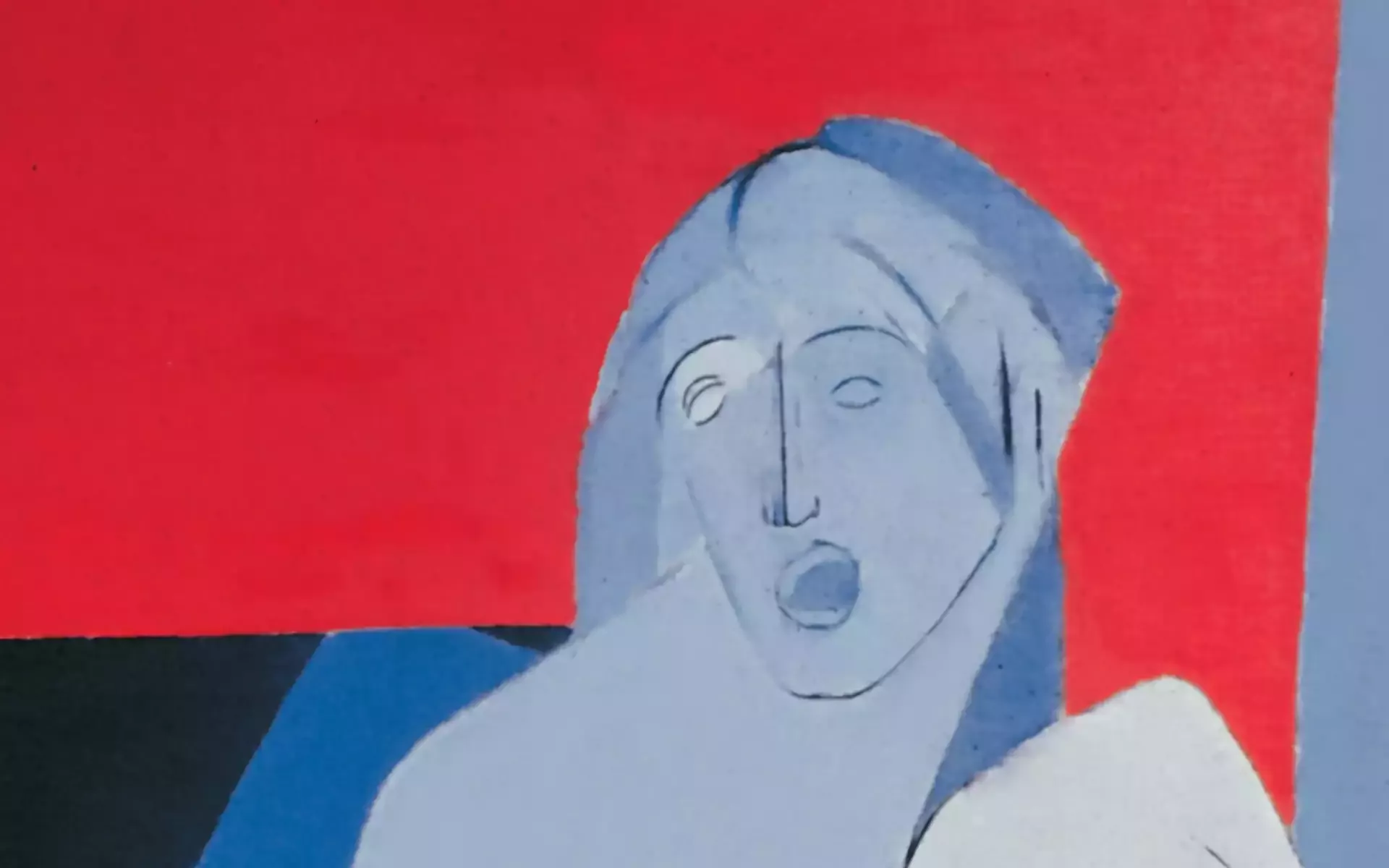
The Great Modern Indian Painters of the 20th Century
Maqbool Fida Husain (M. F. Husain), S. H. Raza, and Tyeb Mehta
Maqbool Fida Husain (1915–2011), nicknamed the “Indian Picasso,” is the most iconic and famous figure in all of modern Indian painting, his monumental body of work spanning decades of intense creativity on themes ranging from Hindu mythology to the Indus Valley Civilization, from Bollywood cinema to the stylized horses that are his most instantly recognizable motifs.
The controversy that marked the final decades of his life, leading to his self-imposed exile, paradoxically reinforced the international renown of his work and bolstered its value.
S. H. Raza (1922–2016), whose career in France since the 1950s brought him into contact with the most avant-garde currents of Parisian lyrical abstraction beforehe developed a deeply personal pictorial language based on the bindu as a cosmological principle organizing the pictorial surface, enjoys institutional recognition in France and India that translates directly into high auction prices for his mature paintings.
Tyeb Mehta (1925–2009), whose large, dark, and powerful canvases express a tragic vision of the human condition through torn or fallen figures, occupies a comparable position in the market hierarchy.
Francis Newton Souza, Sakti Burman, and Jamini Roy
Francis Newton Souza (1924–2002), the first member of the Progressive Group to gain international recognition after moving to London and then New York, produced figurative work of such expressive intensity and candor that it stood in stark contrast to the mysticism of his contemporaries on the subcontinentsubcontinent; his portraits and nudes, with their deliberately crude and unsettling features, quickly caught the attention of the most discerning Western collectors as early as the 1950s.
Sakti Burman (born in 1935), who, like Raza, settled in France, developed a dreamlike pictorial universe of remarkable luminous delicacy, straddling the boundary between Surrealism and Indian miniature traditions.
Jamini Roy (1887–1972), a distinctive figure whose work was deliberately built on a rejection of Western academic painting in order to return to the popular and artisanal forms of traditional Bengali art, Patua and Kalighat, occupies a unique place in the history of Indian modern painting; her stylized compositions, with their thick outlines and natural colors, form an immediately recognizable body of work that enjoys strong market demand.
Artist | Period | Style | Price Range | Market Demand |
M. F. Husain (large-scale composition) | 1950–2000 | Figurative Modernism, Indian mythology | €100,000 — several million € | Exceptional |
S. H. Raza (late-period bindu painting) | 1970–2010 | Cosmological Abstraction | €200,000 — several million € | Exceptional |
Tyeb Mehta (large canvas) | 1960–2000 | Dark figurative expressionism | €150,000 — several million € | Very strong |
F. N. Souza (painting or drawing) | 1950–1990 | Expressive figurative art, portraits | €20,000 — €500,000 | Very active |
Jamini Roy (composition) | 1930–1960 | Stylized Bengali folk art | €10,000 — €150,000 | Active |
V. S. Gaitonde (abstraction) | 1960–1990 | Meditative Abstraction | €100,000 — several million € | Very strong |
Amrita Sher-Gil, Raja Ravi Varma, and V. S. Gaitonde: The Pioneers
Amrita Sher-Gil (1913–1941), a seminal and profoundly unique figure whose short life did not prevent her from creating a body of work of striking beauty and originality; she successfully combined a top-tier academic education in Paris with a deep sensitivity to the forms and colors of classical Indian art, producing portraits and scenes of village life imbued with a luminous melancholy that make her one of the most cherished figures in all of 20th-century Indian painting.
The rarity of his works on the open market and their exceptional historical value account for the very high hammer prices when they appear at public auction.
Raja Ravi Varma (1848–1906), a pioneer whose academic work played an essential role in making Hindu mythological imagery accessible to the general public, and V. S. Gaitonde (1924–2001), whose meditative abstract paintings, marked by remarkable depth and sensitivity, have seen a spectacular revaluation in recent years, round out this overview of the pioneers of Indian modern painting.
Estimate in less than 24h
Get a Free Appraisal of a Modern Indian Painting
A certified appraisal by a licensed auctioneer in less than 24 hours
Valuing a modern Indian painting requires a thorough understanding of 20th-century Indian art history and its various movements, as well as constant monitoring of auction results from public sales held in Mumbai, New Delhi, London, and New York, where a large portion of the benchmarks for this rapidly expanding international market are established.
Auctie’s auctioneer possesses this expertise and access to these information resources, which they make available to you free of charge to provide a response within 24 hours.
Whether you have inherited an Indian painting, wish to know the current value of a work acquired during a trip to the subcontinent, or are considering putting a piece up for sale, Auctie’s offers you an accurate, well-reasoned, and confidential appraisal.
What You Need to Provide for an Online Appraisal
Clear photographs of the front and back of the artwork, a close-up of the signature and any inscriptions, the exact dimensions, and the technique used are the basic elements required for an appraisal request.
Any information regarding provenance, certificates, references in specialized publications, or previous auction results will significantly enhance the appraisal.
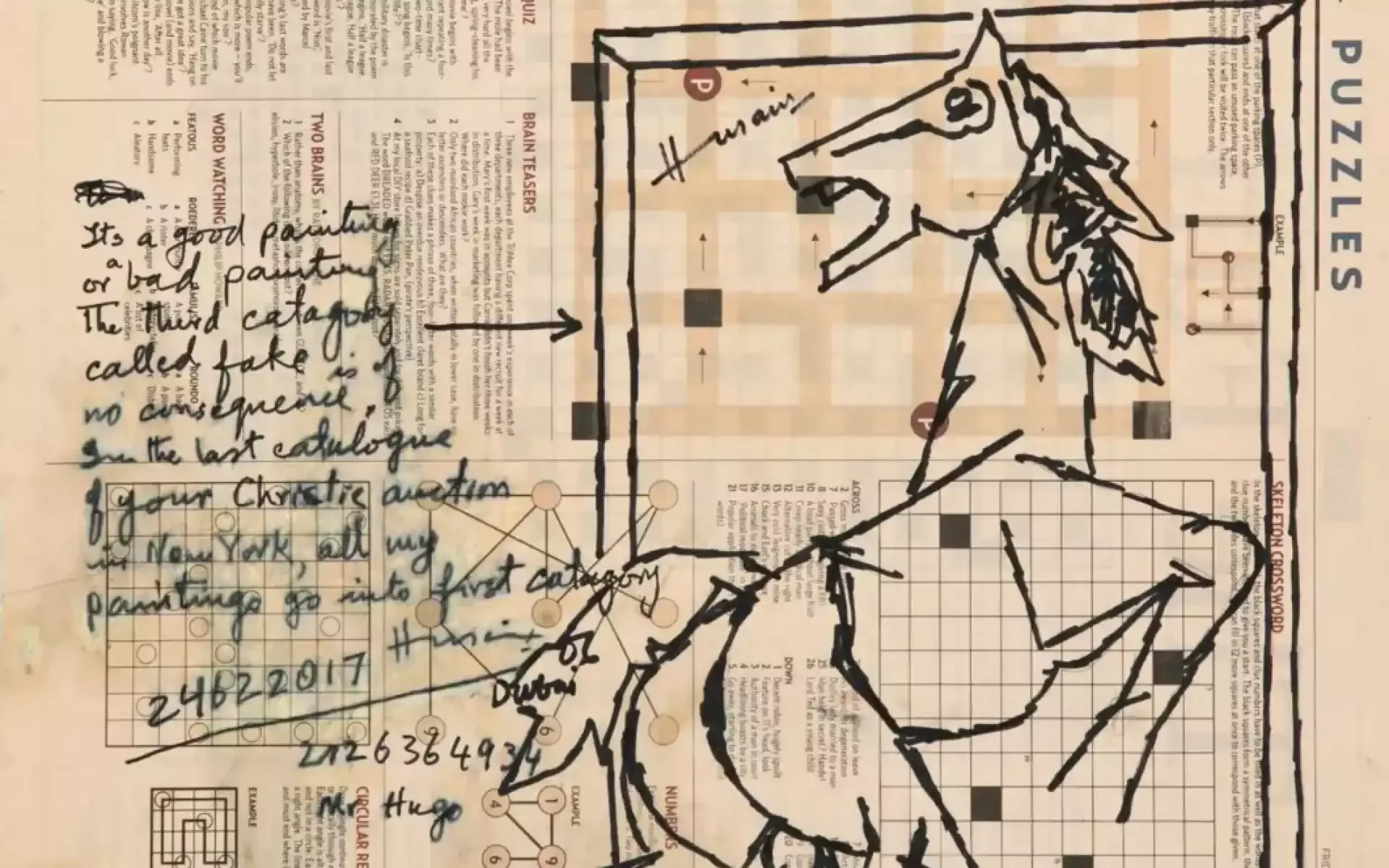
Signature, Provenance, and Authenticity: The Pillars of Valuation
Signature, Attribution, and Authentication: Their Impact on Value
The authentication of a modern Indian painting relies on systematically comparing the signature with the artist’s documented signatures from various periods, and on consulting catalogs raisonné where they exist.
For the most important artists of the Progressive Group, foundations and specialized galleries serve as authorities in the market: the Husain Foundation, scholarly works on Raza, and the archives of historic gallery owners such as Chemould in Mumbai constitute essential references.
Analysis of materials—canvases and pigments—may also be necessary to authenticate the most significant works.
Level of Documentation | Impact on value |
Work listed in a publication or reference catalog on the artist | Maximum assurance; very significant premium on value |
Certificate of authenticity from a recognized gallery or a specialized expert | Essential guarantee; substantially increases value |
Documented provenance from a historic Indian gallery or collection | Significant increase in value; reassuring direct traceability |
Written appraisal by a recognized specialist in modern Indian art | Good guarantee; facilitates the sale |
Stylistically coherent piece without additional documentation | Conservative estimate; based solely on stylistic analysis |
Piece with no documentation or identifiable signature | Increased uncertainty; thorough verification recommended |
Provenance and Condition: Their Impact on Value
The provenance of a modern Indian painting is a key factor in establishing trust. A work whose direct acquisition from the artist or their gallery can be traced, or whose passage through a major Indian or international collection is documented, enjoys a legitimacy that buyers directly factor into their bids.
Condition warrants particular attention in this market, as some paintings were produced under sometimes difficult physical conditions and exhibit specific vulnerabilities related to the materials used.
Sell Your Modern Indian Paintings at Auction with Auctie's
From the reserve price to the final bid: how the price is determined
An auction is the most effective way to sell a high-quality modern Indian painting, as it exposes the piece to competition among Indian and international collectors, whose converging demand for this segment can lead to remarkable final bids.
The reserve price must be set based on recent results from comparable sales, taking into account the growth dynamics of the Indian market.
Hôtel Drouot and Online Auctions: Reaching the Right Bidders
Auctie’s holds its auctions at Hôtel Drouot, which regularly hosts sales of Asian and Indian art, and streams its auctions online in real time, allowing collectors based in Mumbai, New Delhi, or Singapore to participate just as easily as a buyer in Paris.
For modern Indian painting, for which the most active demand is now geographically very dispersed, this international dimension is consistently invaluable.
Estate Planning, Inheritance: Valuing a Modern Indian Painting Inherited
Inventory and Distribution of an Estate
Modern Indian paintings may be included in estates, inherited from collectors who have lived on the subcontinent or who have built specialized collections.
Auctie’s works alongside notaries to compile thorough inventories, with each piece appraised individually based on precise knowledge of the current market.
Confidentiality and Anonymity
Auctie's handles every case with absolute discretion. The owner’s identity is never disclosed to third parties without their explicit consent, and items can be offered for sale under complete anonymity.
Estimate in less than 24h
Glossary of Valuations and the Modern Indian Art Market
Term | Definition |
Valuation | The estimated market value of a work, determined based on auction results and demand. |
Modern Indian Art | A painting movement that emerged at the turn of the 20th century, blending Indian traditions with Western influences. |
Progressive Group | An artists’ collective founded in Bombay in 1947 (Husain, Raza, Souza, Mehta), focused on international art. |
Auction | The awarding of a lot to the highest bidder at the conclusion of an auction, thereby setting the final sale price. |
Reserve Price | The starting price set for the commencement of bidding on a lot. |
Provenance | The history of ownership of a work of art, which is a key factor in determining its authenticity and value. |
Have your modern Indian painting appraised by Auctie's
20th-century modern Indian painting is one of the most fascinating and promising categories in today’s international art market. A unique synthesis of millennia-old visual traditions and universal modernity, it offers a wealth of formal and thematic diversity that the most discerning collectors have come to appreciate and value with increasing enthusiasm.
Knowing the true value of your painting empowers you to make the best decision for your collection.
The appraisal is free, with no obligation, and you’ll receive a response in less than 24 hours.
Discover in the same theme
Rating and value of paintings by Jamini Roy
Jamini Roy is a modern Indian painter of the 20th century who has produced works that are highly rated and valued at auction.
Learn more >
Ratings and values of paintings by Maqbool Fida Husain
Maqbool Fida Husain is a twentieth-century Indian painter who has produced highly successful works at auction.
Learn more >

Rating and value of paintings, drawings, sculptures by Akbar...
Akbar Padamsee is a 20th-century Indian contemporary artist who has produced works that are highly rated and sought-after on the auction market.
Learn more >
Estimate in less than 24h
Frequently asked questions
-
Quelles sont les fourchettes de prix pour une peinture indienne moderne du 20e siècle ?Les prix varient considérablement selon l'artiste et la période. Une peinture de qualité courante d'un artiste peu connu se situe entre 500 et 8 000 euros, tandis qu'une œuvre d'un artiste reconnu oscille entre 5 000 et 80 000 euros. Les grandes figures du Groupe Progressiste (Husain, Raza, Mehta) dépassent régulièrement plusieurs centaines de milliers d'euros, avec des records atteignant plusieurs millions de dollars aux enchères internationales.
-
Comment authentifier une peinture indienne moderne et vérifier son attibution ?L'authentification repose sur la confrontation de la signature avec les signatures documentées de l'artiste, la consultation des catalogues raisonnés et des archives de référence comme la Husain Foundation ou les galeries historiques. Pour les pièces importantes, une analyse des matériaux peut être nécessaire. Auctie's propose une demande d'estimation gratuite qui inclut cette expertise menée par des commissaires-priseurs agréés.
-
Est-ce le bon moment pour vendre une peinture indienne moderne ?Oui, le marché de la peinture indienne moderne connaît une dynamique positive depuis deux décennies, portée par une classe de collectionneurs indiens croissante et une reconnaissance internationale accrue. Cette progression devrait se poursuivre à mesure que l'Inde s'affirme comme grande puissance économique, soutenant ainsi la demande pour ces œuvres de référence.
-
Comment se déroule l'estimation gratuite d'une peinture indienne chez Auctie's ?L'estimation est gratuite, sans engagement et réalisée par un commissaire-priseur agréé avec réponse en moins de 24 heures. Vous devez fournir des photographies nettes du recto et verso, un détail de la signature, les dimensions précises et la technique. Toute information de provenance, certificat ou référence en publication enrichit l'expertise.
-
Comment vendre une peinture indienne moderne avec Auctie's ?Auctie's, maison de ventes aux enchères, vous accompagne de l'estimation initiale jusqu'à l'adjudication. Après expertise gratuite et sans engagement, nous vous proposons une stratégie de vente adaptée à votre œuvre, en vous mettant en relation avec le marché international de la peinture indienne moderne.
