



Arte Povera: Appraisal and Auction

Key takeaways
- Pistoletto, Kounellis, and Merz dominate the market, with their major historical works fetching prices in the range of several million euros.
- Value depends on the artist, the nature of the work (mirror painting, installation, drawing), and its exhibition history, with price ranges from 5,000 to tens of millions of euros.
- Certificates of authenticity and a documented history are essential for appraisal, particularly for installations featuring organic materials that require specialized conservation.
Raw materials, energy, and radicalism: the value of Arte Povera varies significantly depending on the artist, the period, and the exhibition history.
Below you’ll find all our valuation guides dedicated to Arte Povera—historical works, installations, drawings, and prints. Each guide details the price ranges observed at auction and the factors that determine a work’s value before it is entrusted to our state-certified auctioneers.
Guides on this art movement
See all guides >
Rating and value of paintings by Félix Varla
Félix Varla is a painter close to the Nouveau Réalisme movement. He has produced many works that are highly valued at auction.
Learn more >

Cote and value of paintings by Jacques Villeglé
Jacques Villeglé is a Nouveau Réalisme painter who has produced works, drawings and collages that are highly valued at auction.
Learn more >

Rating and value of paintings, drawings and sculptures by Mi...
Michelangelo Pistoletto is an Italian artist of the Arte Povera movement who has produced numerous works that are highly valued at auction.
Learn more >

Rating and value of Caesar's sculptures, jewelry and expansi...
César is a French sculptor of the Nouveau Réalisme movement who has produced works that are highly valued on the auction market.
Learn more >

Rating and value of paintings, drawings and sculptures by An...
Antoni Tapies is an abstract artist of the Arte Povera movement. He has produced works in a variety of media, which are highly prized and valued.
Learn more >

Rating and value of works, drawings, paintings by Antoni Tap...
Antoni Tapies is an Arte Povera painter who produced collages, drawings and oil on canvas, all of which are listed at auction. Estimated in 24h.
Learn more >
Understanding the Value of an Arte Povera Work
What Is Market Value in the Contemporary Art Market?
The market value of an Arte Povera work refers to the benchmark value assigned to it by the secondary market at a given moment, based on the artist’s identity, the nature of the materials used, the exhibition history, the strength of the documentation, and the current state of international demand.
Arte Povera, a movement theorized in 1967 by art critic Germano Celant on the occasion of an exhibition in Genoa, is one of the most influential Italian avant-garde movements of the second half of the 20th century, having emerged simultaneously in several Italian cities—Turin, Genoa, Rome, and Milan, centered around a group of artists who shared a common desire to radically renew the language of contemporary art.
This movement, whose name literally means “poor art,” does not refer to economic poverty but to an aesthetic and conceptual choice: that of using simple, natural, or industrial materials—earth, wood, metal, glass, and fabric—rather than the “noble” materials traditionally associated with high art, such as marble, bronze, and oil paint on primed canvas.
This approach, which engages in a constant dialogue with American minimalism and conceptual art while retaining a sensory and poetic dimension unique to Italian culture, has produced a body of work of great formal diversity, ranging from sculpture to installation, including documented performance art and Land art.

Arte Povera: When Humble Materials Create Value
The value of an Arte Povera work rests on a paradox embraced by the movement itself: transforming humble materials—devoid of intrinsic value or prior cultural prestige—into works of art whose market value can reach considerable heights in the contemporary art market.
This tension between the movement’s professed material modesty and the market value it has achieved is one of the most widely discussed characteristics of this movement, whose initial conceptual radicalism has in no way prevented it from gaining exceptional institutional and commercial recognition over the decades.
Michelangelo Pistoletto, whose famous mirror paintings combine a painted or photographed figure with a reflective surface that literally draws the viewer into the work, occupies a leading position in the hierarchy of this market.
Jannis Kounellis, a Greek artist based in Italy whose installations combine materials as diverse as coal, fire, or live animals during certain historic performances, have left a lasting mark on the history of contemporary art; and Mario Merz, whose igloo-shaped structures made from disparate materials constitute one of the movement’s most iconic images, round out this founding pantheon.
Period | Characteristics | Artists and Works | Market Demand Level |
Theorization and Emergence (1967) | Germano Celant’s Manifesto, seminal exhibition in Genoa | The entire historical group | Well-established, strong historical significance |
Historical Arte Povera (1967–1972) | Poor materials, installation, documented performance | Pistoletto, Kounellis, Merz, Paolini, Fabro, Pascali | Exceptional, very high auction prices |
Maturity and international reach | 1972–1990 | Boetti, Anselmo, Zorio, Marisa Merz | Very strong, international |
Late institutional recognition | 1990–present | Major museum retrospectives, active secondary market | Very active, fully mature market |
Influence on recent contemporary art | 2000–present | Generation of artists influenced by the movement | Active, related market |
Estimate in less than 24h
The criteria that determine the value of an Arte Povera work
The market value of an Arte Povera work is determined first and foremost by the artist’s identity, which has a significant impact: Pistoletto, Kounellis, and Merz occupy the top of this hierarchy, followed by Paolini, Fabro, and Pascali, whose respective market values have risen significantly over the past few decades as institutional recognition of the movement has solidified.
The exact nature of the work—whether a sculpture, installation, multiple, or photograph documenting an ephemeral action—is also a determining factor, as these different categories follow distinct valuation logic even within the body of work by a single artist.
The price ranges observed on the secondary market illustrate this breadth. A drawing or a documented multiple by a second-tier artist within the movement can range from 5,000 to 50,000 euros.
A medium-sized sculpture or installation by a recognized artist such as Paolini or Fabro ranges from 100,000 to 1 million euros, depending on the period and the piece’s significance within the artist’s body of work.
Pistoletto’s major mirror paintings, Kounellis’s historic installations, and Mario Merz’s iconic structures frequently exceed several million euros, with some exceptional pieces having reached considerable heights at international public auctions.
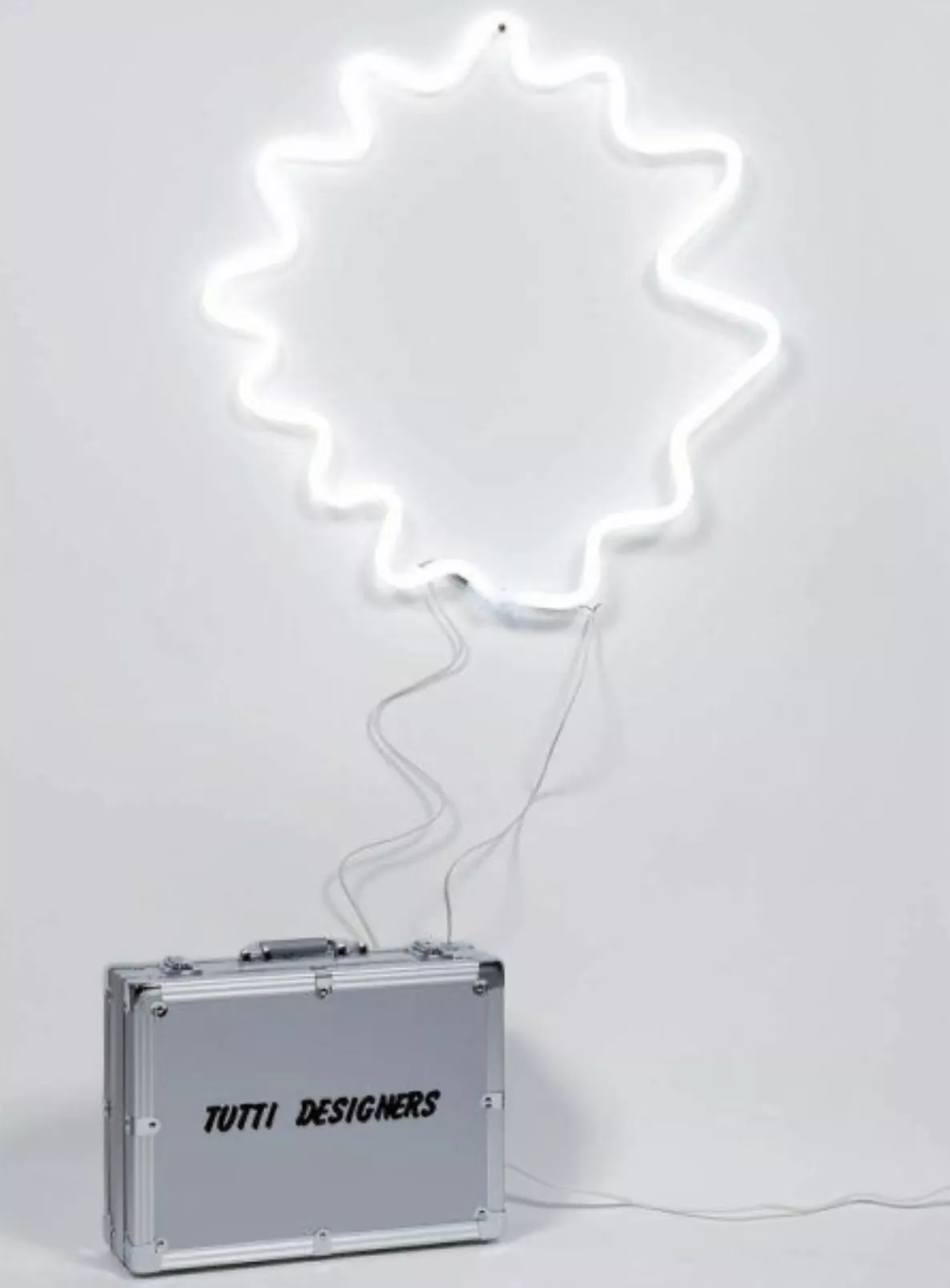
Sculptures, installations, mirrors: Arte Povera works appraised
The hierarchy of Arte Povera works and its impact on market value
Within the Arte Povera movement, Pistoletto’s mirror paintings occupy a unique place; their conceptual principle—the literal integration of the viewer and their changing environment into the artwork—has produced a body of work in which each piece retains its own value while forming part of a conceptually coherent series.
Kounellis’s installations—particularly those that incorporated organic or living materials during their original creation—raise specific questions regarding conservation and reconstruction that directly influence their appraisal and valuation when they are offered on the secondary market.
Mario Merz’s igloo-shaped structures, which combine materials as diverse as metal, glass, earth, and fabric fragments to evoke a universal primitive dwelling, are among the movement’s most sought-after and instantly recognizable works.
Multiples and editions, which are more affordable, allow for a wider dissemination of the movement’s aesthetic principles and serve as a popular entry point for collectors into this demanding segment of Italian contemporary art.
Category | Characteristics | Estimated Price Range | Market Demand |
Major mirror painting (Pistoletto, historical period) | Painted or photographed figure, reflective surface | €500,000 — several million € | Institutional, exceptional |
Historical installation (Kounellis, organic materials) | Pioneering work, requiring specialized conservation | €300,000 — several million € | Highly supported, international |
Igloo-like structure (Mario Merz) | Mixed media, iconic image of the movement | €1 million — tens of millions | Exceptional, institutional |
Sculpture or installation (Paolini, Fabro, Anselmo) | Strong conceptual quality, solid documentation | €100,000 — €1 million | Very active, specialized collectors |
Photograph documenting an action or performance | Trace of a historic event, testimonial value | €20,000 — €300,000 | Strong demand, knowledgeable collectors |
Multiple, edition, or drawing | Wider distribution, relative accessibility | €5,000 — €80,000 | Active, broad buying public |
Pistoletto, Kounellis, Merz, Paolini: the artists driving the market
Michelangelo Pistoletto, whose career spans more than six decades and whose work has constantly reinvented the original concept of the mirror painting while grounding it in increasingly prominent social and collective issues, enjoys exceptional institutional recognition that places his historic works among the most sought-after in the movement.
Jannis Kounellis, whose radical use of materials and the performative dimension of many of his installations have profoundly shaped the history of European contemporary art, occupies a comparable position; his passing in 2017 has further heightened the rarity and value of his historical body of work.
Mario Merz, whose igloo-like structures and numerical sequences drawn from the Fibonacci sequence illustrate a constant reflection on growth, energy, and habitat, enjoys a particularly strong market standing, as his widow, Marisa Merz—herself a recognized artist within the movement—has contributed to the preservation and rigorous documentation of his work.
Giulio Paolini, whose more conceptual approach systematically questions the status of the image and representation, rounds out this pantheon of figures whose institutional recognition has been considerably strengthened through numerous international museum retrospectives.
Estimate in less than 24h
Get a Free Appraisal of an Arte Povera Artwork
A certified appraisal by a licensed auctioneer in less than 24 hours
Appraising an Arte Povera artwork requires a precise understanding of the materials and techniques specific to each artist, as well as particular attention to conservation issues, as this movement often used organic, natural, or perishable materials whose long-term stability must be carefully assessed, and for which any necessary restorations over time must be transparently documented.
The certified auctioneer has the necessary training to conduct this appraisal with the rigor it requires.
Auctie’s offers this appraisal free of charge, with a certified response within 24 hours.
Whether you have inherited a sculpture or an Arte Povera installation, wish to have a drawing or a multiple from this period appraised, or are considering compiling an estate inventory, the process is the same: submit your piece to a trained expert capable of accurately assessing its value.
What you need to provide for an online appraisal
For a sculpture or installation, photographs of the entire piece and significant details are essential, along with the exact materials used and precise dimensions.
For pieces composed of multiple or modular elements, a detailed inventory of the components must be provided. Any certificate of authenticity issued by the artist, their gallery, or their foundation at the time of acquisition must be retained and provided, as this document is a key factor in the appraisal process for this segment of the contemporary art market.
The work’s exhibition history—including mentions in exhibition catalogs, loans to institutions, and publications in art criticism—must be documented with the utmost care, as it often constitutes a highly significant factor in determining value within this market segment. In case of doubt regarding attribution or condition, a thorough physical examination will be offered before any steps are taken to put the work up for sale.
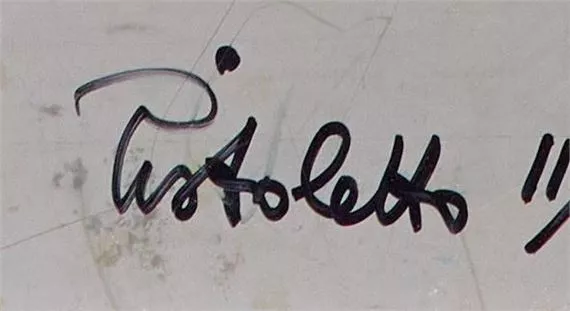
Signature, certificate, and provenance: the pillars of valuation
The certificate of authenticity and the artist’s or their foundation’s attestation
The certificate of authenticity plays a decisive role in the appraisal of Arte Povera, particularly for installations and works composed of perishable or reconstitutable materials, for which validation by the artist or their foundation is often the only reliable guarantee that a work conforms to the original protocol.
For deceased artists—Kounellis and Mario Merz in particular—the foundations and heirs who manage their legacies are the authoritative sources in the market and are systematically consulted by the auctioneer during any serious appraisal.
For the movement’s major artists, catalogs raisonné or archives maintained by the historic galleries that represented them—particularly those in Turin and Rome, which supported the movement’s emergence beginning in the late 1960s—serve as invaluable tools for attribution.
A work listed in one of these collections benefits from the highest level of scholarly credibility, which is directly reflected in its market value.
Level of Documentation | Impact on Market Value |
Certificate of authenticity from the artist or their foundation | Maximum assurance; often an essential condition for sale |
Work listed in the catalogue raisonné or validated by the rights holders | Maximum guarantee; significantly increases value |
Documented exhibition history (major institution, retrospective) | Significant impact; substantially increases value |
Work accompanied by a written appraisal from a recognized expert on the artist’s body of work | Good guarantee; facilitates the sale and reduces risk |
Work with documented provenance from the original gallery | Solid foundation; direct traceability to the artist or their circle |
Work without documentation or certificate | Increased uncertainty; conservative estimate, verification recommended |
Provenance and Exhibition History: Their Impact on Valuation
The provenance of an Arte Povera work is inseparable from its exhibition history, which in this segment is a factor in determining value that is at least as important as the chain of ownership itself.
A work whose presence can be verified in a seminal exhibition of the movement—particularly the historic shows held in Turin, Genoa, or Rome between 1967 and 1970, or whose history includes time in a leading institutional or private collection, enjoys considerable legitimacy in this market, where critical and historical recognition carries significant weight.
The condition of the work requires a specific approach depending on the nature of the piece. For installations incorporating natural or organic materials—such as earth, plants, or charcoal—the degree of freshness or controlled deterioration must be assessed in light of the artist’s original intention, as some works fully integrate material aging as an integral part of their meaning.
For sculptures made of industrial materials—such as metal or glass—the surface condition and structural integrity must be carefully verified.
Sell an Arte Povera artwork at auction with Auctie's
From the reserve price to the hammer price: how the price is determined
Auctions are a suitable method of sale for well-documented Arte Povera works, in a market where the rarity and historical significance of certain pieces—particularly those by the movement’s most renowned artists—can generate fierce competition among institutions and major international collectors.
The reserve price, set in consultation with the seller, must be determined with particular attention to the exact nature of the work being sold—whether it is a sculpture, installation, or multiple—as the applicable valuation methodology depends very directly on this.
For major, well-documented works, the dynamics of the auction can lead to final prices far exceeding initial estimates, as several institutions and collectors are likely to engage in intense competition to acquire an important historical piece from this movement, which is now fully institutionalized.
The auctioneer plays a vital role in facilitating this process by engaging networks of collectors specializing in postwar Italian art who are active in this segment.
Hôtel Drouot and online auctions: reaching the right bidders
Auctie’s holds its auctions at the Hôtel Drouot, the leading auction venue in continental Europe, founded in 1852 and frequented by a network of collectors and specialists in contemporary Italian art.
For an Arte Povera work, Drouot offers visibility among European enthusiasts of this movement, complemented by online promotion that significantly expands the reach of each auction on an international scale.
An Italian collector committed to preserving the legacy of this national avant-garde, an American museum seeking an iconic work by Pistoletto or Kounellis, or an Asian art lover drawn to the material poetry of this movement can bid in real time from their home countries.
For Arte Povera, which now enjoys global institutional recognition, this international dimension is almost always decisive in securing the highest hammer price.
Estimate in less than 24h
Estate Planning, Inheritance: Valuing an Inherited Arte Povera Artwork
Inventory and Distribution of an Estate
Arte Povera works are appearing with increasing frequency in the estates of collectors who acquired these pieces in the decades following their creation, at a time when these artists—though already recognized in connoisseur circles—were still accessible to collectors with substantial but not exceptional means.
A work acquired in the 1970s or 1980s may today be worth considerably more than the heirs realize, particularly if they do not immediately recognize the value of pieces made from seemingly modest materials.
Auctie’s regularly collaborates with notaries to compile comprehensive estate inventories that include Italian contemporary artworks.
Each piece is appraised individually, with particular attention paid to issues of attribution and authenticity, which are, in this segment, absolutely decisive factors in determining value. The resulting report is an official document that is legally enforceable and can be included in the estate file without reservation.
Confidentiality of the process and preservation of anonymity
The circumstances leading to the appraisal of an inherited Arte Povera work are often personal and sensitive: discovery as part of an inheritance, reorganization of a family collection, or a decision to sell after a long period of ownership.
Auctie’s handles each case with absolute discretion. The owner’s identity is never disclosed to third parties without their explicit consent, and the works may be offered for sale under complete anonymity if the owner so desires.
This confidentiality is a core commitment of Auctie’s, valid at every stage of the relationship, from the initial contact through to the receipt of the proceeds from the sale.
Entrust the appraisal of your Arte Povera artwork to Auctie’s
An Arte Povera work deserves an appraisal that reflects the poetic and material richness of this major movement in postwar Italian art.
The diversity of materials used, the conservation challenges specific to organic and perishable materials, and the crucial importance of the certificate of authenticity and exhibition documentation: all reasons to entrust the appraisal of your piece to a state-certified auctioneer well-versed in the specifics of this demanding segment.
Auctie’s guides you from the initial appraisal through to the final auction, with the rigor of an expert trained in these matters and the discretion your financial decisions deserve. The appraisal is free, confidential, and non-binding, and you’ll receive a response in less than 24 hours.
Discover in the same theme
Rating and value of paintings by Félix Varla
Félix Varla is a painter close to the Nouveau Réalisme movement. He has produced many works that are highly valued at auction.
Learn more >
Rating and value of paintings, drawings and sculptures by Mi...
Michelangelo Pistoletto is an Italian artist of the Arte Povera movement who has produced numerous works that are highly valued at auction.
Learn more >
Rating and value of works, drawings, paintings by Antoni Tap...
Antoni Tapies is an Arte Povera painter who produced collages, drawings and oil on canvas, all of which are listed at auction. Estimated in 24h.
Learn more >
Estimate in less than 24h
Frequently asked questions
-
What are the price ranges for an Arte Povera artwork?Prices vary considerably depending on the artist and the type of work. A drawing or multiple by a second-tier artist ranges from 5,000 to 50,000 euros. A sculpture or installation by a renowned artist such as Paolini or Fabro ranges from 100,000 to 1 million euros. Pistoletto’s major mirror paintings, Kounellis’s installations, and Mario Merz’s igloo structures regularly exceed several million euros.
-
How do I have an Arte Povera artwork authenticated?Authenticating an Arte Povera work requires the expertise of a qualified specialist, particularly for pieces made of perishable or reconstitutable materials. Auctie's offers a free, no-obligation appraisal conducted by a state-certified auctioneer, with a certified response within 24 hours. A thorough physical examination will be offered if there is any doubt regarding the attribution or condition of the piece.
-
What documents do I need to provide to have an Arte Povera artwork appraised?Provide detailed photographs of the entire work and significant details, along with the exact materials and precise dimensions. For modular pieces, compile an inventory of the components. Keep any certificate of authenticity issued by the artist or their foundation. The exhibition history is crucial: exhibition catalogs, institutional loans, and critical publications are key factors in determining value.
-
Is now a good time to sell a work of Arte Povera?Yes, the Arte Povera market is currently enjoying exceptional institutional recognition, reinforced by numerous international museum retrospectives. International demand remains very strong, particularly for key artists such as Pistoletto, Kounellis, and Merz. The growing scarcity of certain key works is driving up prices.
-
How does the sale of an Arte Povera artwork work at Auctie's?As an auction house, Auctie's guides you from the appraisal to the final bid. Following a free, no-obligation appraisal by a certified auctioneer, we guide you through every step: comprehensive documentation, sale preparation, promotion to international collectors, and the public auction. This process ensures transparency and the best possible valuation of your artwork.
