



African Art Valuation: Appraisal and Auctions

Key takeaways
- The value of an African art object ranges from 500 euros to several million, depending on the ethnic group, age, patina, and documented provenance of the piece.
- West African masks, particularly Yoruba masks, and Dogon-Bambara ancestor statues sell for between 5,000 and 200,000 euros, with very strong international demand.
- Authenticity is based on three criteria: precise ethnic attribution, patina resulting from actual ritual use, and distinction from tourist items produced since the 20th century.
Masks, sculptures, and antique patinas: the value of African art varies greatly depending on the ethnic group, age, and provenance of the piece.
Below you’ll find all our valuation guides dedicated to African art—masks, sculptures, ritual objects, and primitive art. Each guide details the price ranges observed at auction and the factors that determine a work’s value before it is entrusted to our state-certified auctioneers.
Guides on this art movement
See all guides >
Rating and value of paintings by Lois Mailou Jones
Lois Mailou Jones is an African-American artist who has produced many works that are highly rated and valued at auction.
Learn more >

Rating and value of paintings by Henri Robert Brazil
Henri Robert Brésil is a Haitian painter known for his naive paintings. He is the author of a small body of work whose value is on the rise.
Learn more >

Rating and value of Baya Mahieddine's paintings and drawings
Baya Mahieddine is an Algerian artist who influenced Picasso and Matisse. She has produced a number of highly-prized works.
Learn more >

Rating and value of paintings and drawings by Gérard Sekoto
Gérard Sekoto is a South African painter of the Paris School who has produced works that are highly rated and valued at auction.
Learn more >

Rating and value of paintings, drawings and sculptures by Je...
Jean Lambert-Rucki is a twentieth-century Cubist artist who produced paintings and sculptures with a high market value.
Learn more >

Rating and value of paintings by Ablade Glover
Ablade Glover, a twentieth- and twenty-first-century Ghanaian painter, has produced many successful oil-on-canvas paintings.
Learn more >
Understanding the Value of African Art
What Is Market Value in the African Art Market?
The market value of an African art object refers to the reference value assigned to it by the secondary market at a given time, based on its cultural region of origin, the category of the object (mask, statue, or statuette, the quality of the patina and woodwork, the strength of the documentation, and the current state of international demand.
The so-called “primitive arts” of Africa—long referred to as “Negro art” and then “tribal art” before these terms were gradually abandoned in favor of terminology more respectful of the cultures of origin—now occupy a fully recognized place in the history of world art, with their influence on modern Western art—Picasso and Cubism in particular—now an established historical fact.
This market took shape as early as the first decades of the 20th century, when European collectors and artists began to take an interest in these objects for their own artistic power, independent of their original ritual or religious function.
This dual perspective—aesthetic and anthropological—continues to shape contemporary expertise, as the auctioneer must assess both the formal quality of the sculpture and its authenticity as an object actually used within its original cultural context, rather than one produced solely for the curiosity market.
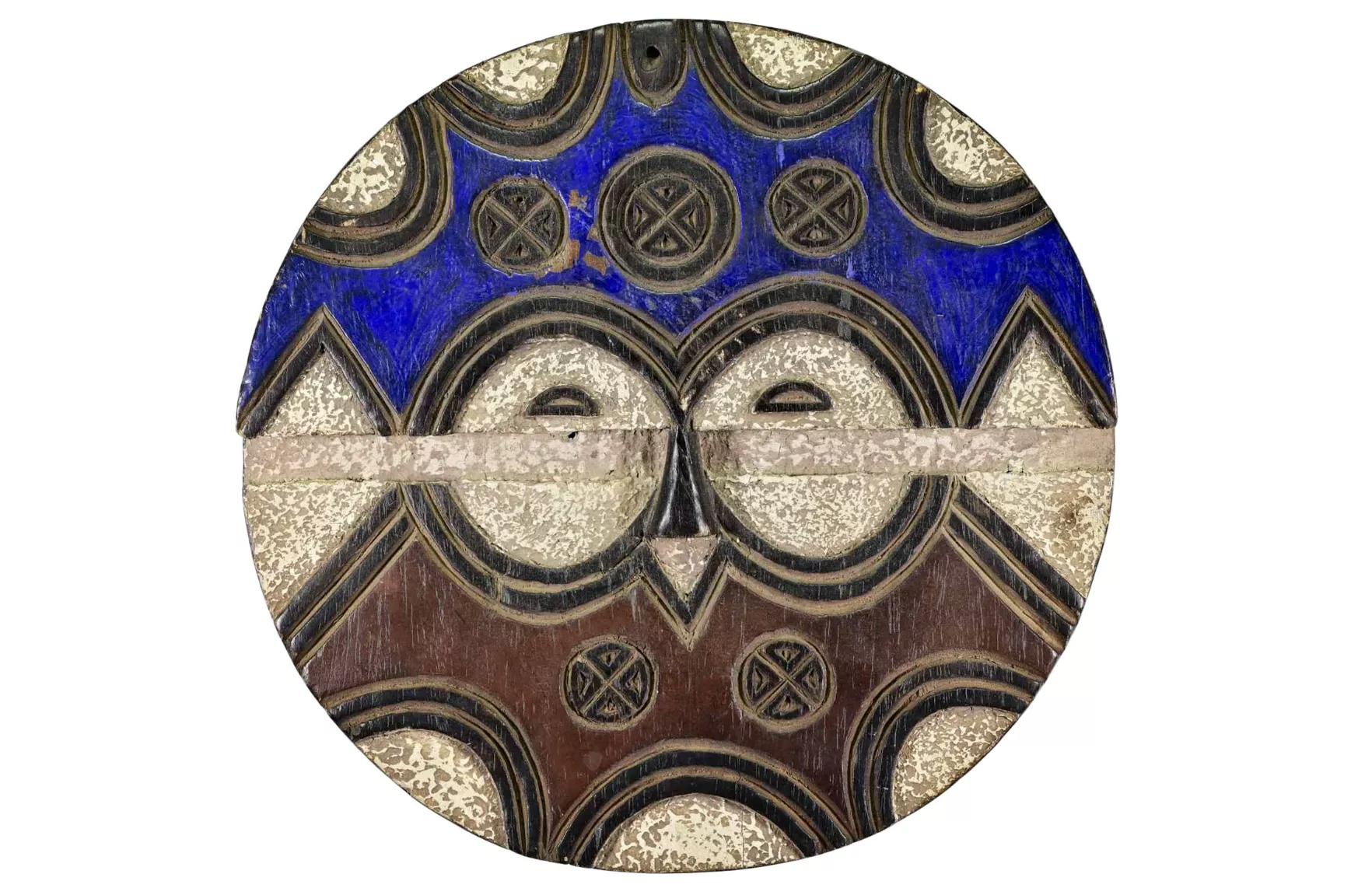
Why African Primitive Art Captivates the Market
African tribal art captivates the market with the considerable stylistic diversity encompassed by this generic term, as each cultural region and ethnic group has developed its own formal vocabulary—ranging from the stylized, elongated faces of certain West African masks to the more massive, frontal figures of certain Central African traditions.
This diversity, combined with the often striking expressive power of these sculptures—designed for intense ritual uses such as masked dances, initiation ceremonies, and ancestor worship—explains the enduring fascination these objects have held for Western collectors for over a century.
Nigeria—particularly the Yoruba traditions, whose sculptural output is among the most abundant and codified on the continent—along with several other West African regions, including the Dogon, Bambara, and Senufo areas, constitutes one of the historical centers of gravity for this market.
The growing scarcity of authentic antique pieces—those that were actually used in their original ritual contexts before entering the art market— is fueling active demand from collectors and institutions eager to acquire pieces whose age and authenticity are firmly established.
Cultural Area | Type of Object | Material | Market Demand Level |
West Africa (Nigeria, Yoruba region) | Masks, ancestor statues, ibeji | Carved wood, sometimes polychrome | Very high, international |
Dogon and Bambara regions (Mali) | Ancestor statues, dance masks | Wood with a crusty patina, metal | Very active, specialized collectors |
Senufo and Baoulé regions (Ivory Coast) | Masks, statuettes, ritual figures | Wood, sometimes polychrome | Active, sustained demand |
Central Africa (Congo, Gabon, Kota and Fang traditions) | Reliquaries, masks, protective figures | Wood, copper, plant fibers | Exceptional, very high auction prices |
Eastern and Southern Africa | Various ritual and prestige objects | Wood, ivory, beads | Moderate, niche market |
Estimate in less than 24h
The Criteria That Determine the Value of an African Art Object
The market value of an African art object results from a hierarchy of criteria that the auctioneer weighs with particular care.
Precise ethnic attribution—a prerequisite for any serious appraisal—directly influences the stylistic interpretation of the object and its comparison with the documented body of work from the relevant tradition.
The quality of the patina—which results from the object’s actual ritual use, repeated handling, anointing, ceremonial smoke, and exposure to the elements for certain outdoor pieces, constitutes a major criterion of authenticity that forgers seek to imitate, though they do not always succeed in achieving the same material depth.
The price ranges observed on the secondary market illustrate this considerable variation.
A statuette or small ritual object of average quality, without documented provenance, can range from 500 to 5,000 euros. A high-quality mask or statue, with a convincing patina and a confirmed ethnic attribution, ranges from 5,000 to 80,000 euros depending on its rarity and sculptural quality.
Exceptional pieces, whose provenance can be traced back to a historic reference collection established in the early 20th century, can exceed 100,000 or even several hundred thousand euros, with some museum-quality pieces having fetched several million at international public auctions.
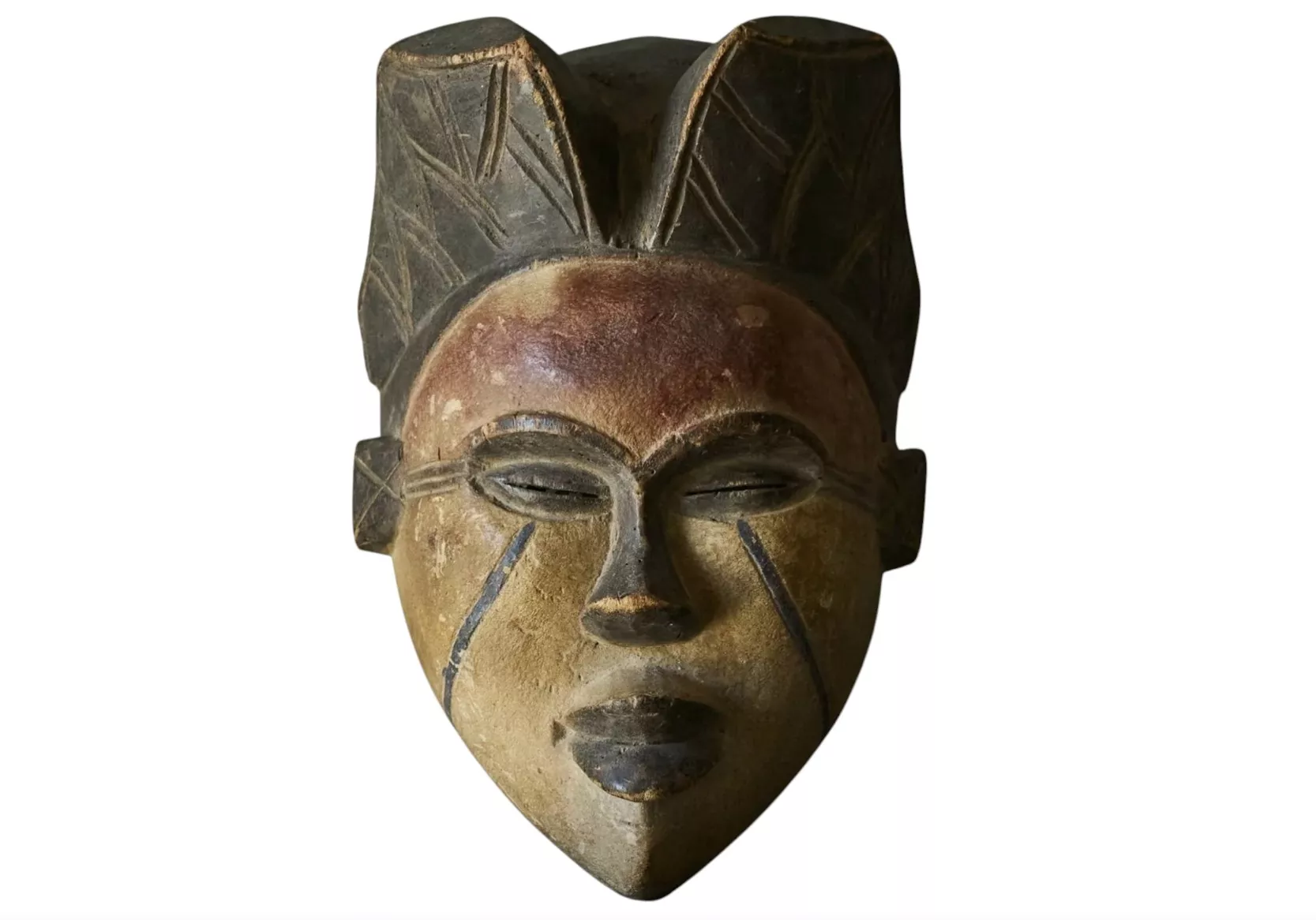
African Masks, Statues, and Figurines
African Masks and Their Value
Masks are one of the most iconic and sought-after categories of African art; their ritual function—worn during ceremonial dances, initiation rites, or agrarian cults—explains their considerable formal diversity depending on the ethnic groups and customs involved.
Facial masks, designed to be worn directly on the face, and helmet masks—which are more voluminous and cover the entire head—follow distinct valuation criteria, with the latter generally being rarer and therefore more sought-after when well-documented.
The quality of the carving, the balance of the forms, the finesse of the incisions or engraved motifs, and the integrity of the applied elements—such as plant fibers, cowrie shells, and pigments, when original—are essential criteria for evaluation.
A mask that has retained its original polychromy, traces of ritual use, and all of its attributes is considerably more sought-after than a stripped-down or overly restored specimen.
Wooden Statues and Carved Figures
Statues—whether depicting ancestral figures, deities, or figures of prestige—rank among the most ambitious works of traditional African sculpture; their larger scale compared to masks allows sculptors to develop a more complex formal language.
Ancestor statues from the Dogon and Bambara traditions—whose commemorative and protective functions are often accompanied by a highly stylized treatment of anatomical forms—are particularly sought after by collectors specializing in ancient African art.
Maternity statues, depicting a female figure carrying a child, and prestige statues associated with local political or religious power, are also among the most sought-after categories; their strong symbolic significance, in addition to their artistic merit, adds an anthropological interest appreciated by discerning collectors.
Category | Characteristics | Approximate Price Range | Market Demand |
Facial mask (identified ethnic group, antique patina) | Well-balanced sculpture, documented ritual use | 5,000 — 80,000 € | Very strong demand, specialized collectors |
Helmet mask | Substantial size, relatively rare | €8,000 — €150,000 | Very active, international |
Ancestor statue (Dogon, Bambara) | Highly stylized, commemorative function | €10,000 — €200,000 | Exceptional, highly sought-after |
Maternity statue or figure of prestige | Strong symbolic significance, high quality of craftsmanship | €8,000 — €150,000 | Steady demand, international interest |
Statuette or fetish (small ritual object) | For domestic or personal use, small in size | €500 — €15,000 | Active market, broad buyer base |
Object with no documentation or confirmed ethnic attribution | Variable quality, uncertain origin | €200–3,000 | Moderate, accessible |
Statuettes, fetishes, and ritual objects
Statuettes—generally smaller in size than large ancestor statues—and fetishes, objects imbued with a specific magical or protective function often manifested through the addition of composite elements, nails, cords, and various substances affixed to the surface of the wood, constitute a particularly rich and diverse category within the African art market.
Ibeji—twin statuettes from the Yoruba tradition carved in memory of a deceased twin child and preserved by the mother according to specific rituals—are among the most characteristic and most collected objects in this category.
The authenticity of these ritual objects, particularly the nature and age of the added elements—which may have been added or replaced over the course of ceremonial use—requires careful expertise capable of distinguishing an object that has actually fulfilled its ritual function from a more recent production intended from the outset for the art market, whose craftsmanship, though sometimes technically skillful, does not bear the same traces of authentic use.
Estimate in less than 24h
Get a Free Appraisal of Your African Art
A certified appraisal by a licensed auctioneer in less than 24 hours
Appraising a piece of African art requires in-depth knowledge of the various ethnic traditions and their distinct stylistic vocabularies, as well as particular vigilance in a market that, since the mid-20th century, has seen a significant production of pieces intended from the outset for the tourist or novelty market—distinguishing these from authentic ritual objects requires a trained eye.
A licensed auctioneer possesses this specialized expertise, which is essential for a reliable appraisal.
Auctie’s offers this expertise free of charge, with a certified response within 24 hours.
Whether you’ve inherited an African mask or statue, wish to have a statuette or ritual object appraised, or are considering compiling an inventory of your cultural heritage, the process is the same: submit your item to a trained expert capable of accurately assessing its value.
What you need to provide for an online appraisal
For an African art object, please provide clear photographs of the entire piece, from the front and in profile, as well as close-up details of the patina, any scarifications or engraved motifs, and the base or pedestal if the object has an original one.
The exact dimensions must be provided, along with any known provenance information: an old purchase receipt—particularly if the piece was acquired directly on the African continent or from a recognized specialist dealer—a collection label, or a reference in an auction catalog or specialized publication.
Any previous appraisal report prepared by a recognized specialist in African art must be provided, as this document is a valuable resource for confirming or reassessing the piece’s ethnic attribution and dating.
In case of doubt regarding authenticity or age, a thorough physical examination will be offered before any steps are taken to list the item for sale.
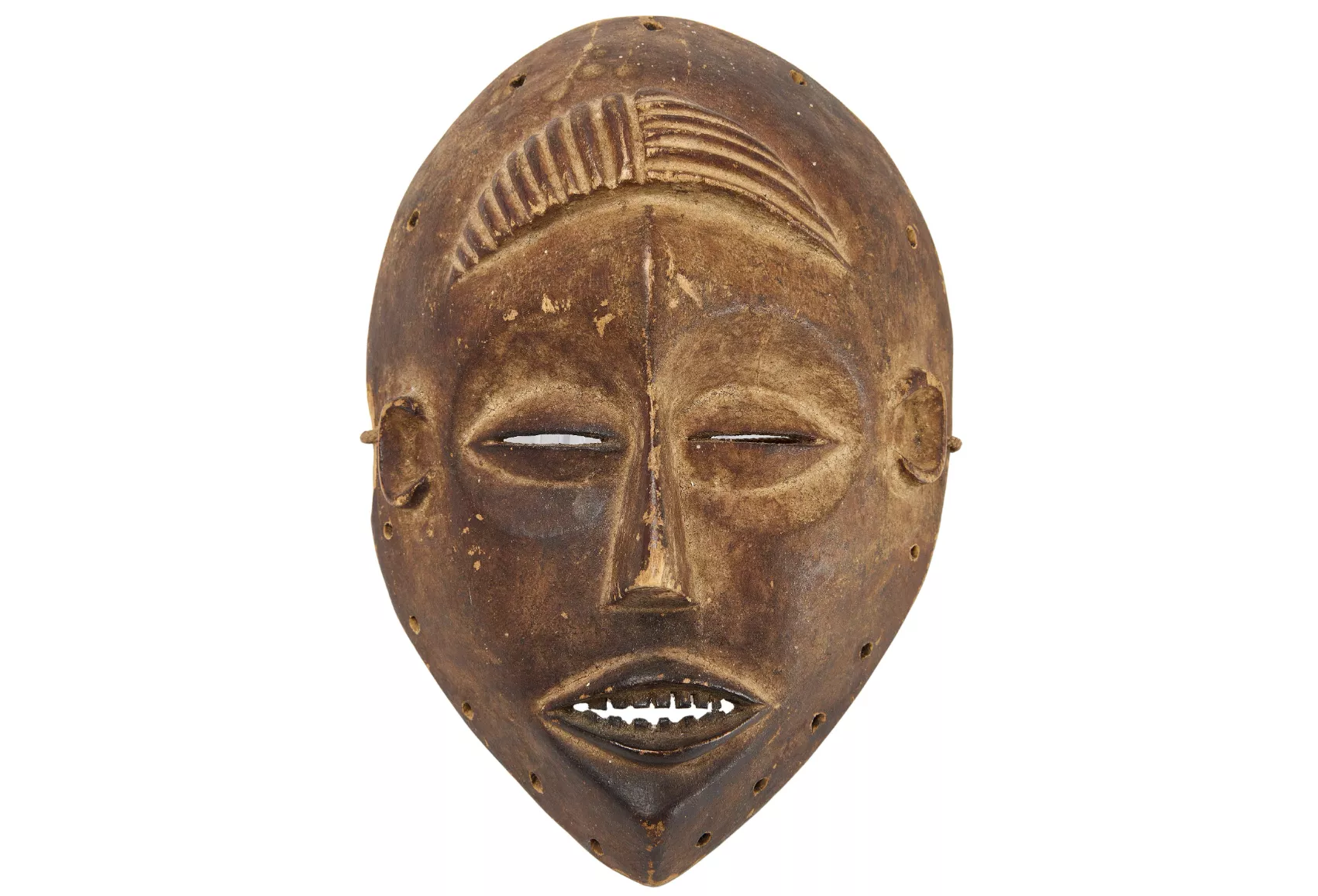
Patina, wood, and provenance: the pillars of valuation
Authentication and Dating of an African Art Object
The authentication of an African art object relies on a combined examination of the sculptural style—which allows for an initial ethnic attribution through comparison with the documented body of work from each tradition—and of the material itself: the type of wood, the quality and depth of the patina, and the possible presence of traces of wood-boring insects consistent with prolonged exposure to a tropical environment.
This dual approach—stylistic and material—makes it possible to distinguish, with reasonable reliability, an ancient object that was actually used in its ritual context from a more recent production, which is sometimes skillfully artificially aged to deceive an uninformed buyer.
Consulting the major reference collections assembled during the 20th century by pioneering dealers and collectors of African art, as well as exhibition catalogs from major specialized institutions, is a valuable step in the appraisal process, as some pieces may have been documented and published as soon as they entered the European market, which considerably facilitates their subsequent authentication.
Level of Documentation | Impact on Value |
Piece listed in a documented historical collection (prior to 1950) | Maximum assurance; very significant premium on value |
Coin published in an exhibition catalog or scholarly publication | Strong scholarly backing; significant increase in value |
Appraisal report by a recognized specialist in African art | Good guarantee; provides assurance to the buyer and facilitates the sale |
Piece with documented provenance dating back to an early acquisition in the field | High value; rare and sought-after traceability |
Stylistically coherent piece with no additional documentation | Conservative estimate; based on sculptural quality and patina |
Piece suspected of being a recent production intended for the tourist market | Significant depreciation; thorough verification essential |
Patina, age, and condition
Patina is one of the most decisive criteria for authenticating African art; its formation results from a long and irregular process of handling, ritual anointing, and sometimes exposure to hearth smoke for objects kept in homes, which gives the wood’s surface a depth and irregularity that artificial patinas—achieved through dyeing or accelerated smoking—rarely reproduce with the same accuracy.
Examination under raking light often reveals these differences in texture that are not apparent upon superficial inspection.
The state of preservation must also be carefully assessed: damage from wood-boring insects, which is common in wood that has been stored in a humid tropical environment, must be distinguished between a past infestation that has stabilized—which does not necessarily significantly affect the value— and an active infestation that threatens the object’s future integrity and requires conservation treatment before it can be offered for sale.
Popular Cultural Hubs in West Africa
Nigeria and Major Creative Hubs in West Africa
Nigeria, the heartland of the Yoruba tradition—whose artistic output ranks among the richest and most extensively studied on the African continent—is one of the major hubs of the market for ancient African art.
Yoruba sculptures—whether associated with the cult of twins (ibeji), mask societies, or traditional royal courts—are the subject of an extensive body of scholarly literature that facilitates their precise attribution and dating by specialized experts.
Other regions of West Africa—the Dogon and Bambara areas in Mali, and the Senufo and Baoulé regions in Côte d’Ivoire—round out this landscape of remarkable stylistic richness, with each tradition having developed a formal vocabulary recognizable to specialists.
From Ritual Objects to Museum Collections
During the 20th century, many major works of ancient African art found their way into the collections of major Western museums specializing in primitive art, a development that contributed both to the institutional recognition of this body of work and to the increasing scarcity of very high-quality pieces still available on the private market.
This trend toward scarcity sustainably fuels demand for pieces of comparable quality that remain in private hands, particularly when they boast a provenance comparable to that of the objects currently on display in these leading institutions.
Selling African Art at Auction with Auctie's
From the reserve price to the final bid: how the price is determined
Auctions are the most advantageous method of sale for high-quality African art objects, in a market where the combination of a well-documented piece and a specialized collector can generate fierce competition, particularly for objects whose ethnic attribution and provenance are firmly established.
The reserve price, set in consultation with the seller, must be carefully calibrated according to the cultural region and the specific category of the object, as a significant portion of its value in this highly specialized market depends on these factors.
For major, well-documented pieces, the dynamics of the auction can lead to final prices far exceeding initial estimates, as several specialized collectors and institutions may engage in intense competition to acquire a rare and well-attributed piece.
The auctioneer plays a vital role in facilitating this process by engaging networks of primitive art enthusiasts active in this segment.
Hôtel Drouot and live auctions: reaching the right bidders
Auctie’s holds its auctions at Hôtel Drouot, the leading auction house in continental Europe, founded in 1852, which regularly hosts specialized sales of African and Primitive Art, attracting an audience of collectors and dealers who are particularly knowledgeable about this demanding segment.
For an African art object, Drouot offers optimal visibility among French and European enthusiasts in this market, complemented by a live auction system that allows for real-time remote participation.
An American collector passionate about Yoruba art, a European museum seeking a piece to complement its collection of primitive art, or an Asian art lover drawn to the visual power of African sculpture can bid live from their home countries.
For African art, whose most active collectors are spread across every continent, this international dimension is often decisive in securing the best price.
Estimate in less than 24h
Estate Planning, Inheritance: Valuing Inherited African Art
Inventory and Distribution of an Estate
African art objects frequently appear in the estates of families with ties to Africa, descendants of colonial officials, diplomats, missionaries, or simply travelers and collectors who built their collections during trips or through purchases from specialized dealers throughout the 20th century.
These pieces, sometimes kept without their current owners knowing their precise value or exact ethnic origin, can represent a significant asset in an estate, and a thorough appraisal helps prevent any disputes over the division of the estate.
Auctie’s regularly works alongside notaries to compile comprehensive estate inventories that include African art objects.
Each piece is appraised individually: ethnic attribution where possible, a description of the patina and condition, and an estimate of the market value as of the reference date. The resulting report is an official, legally binding document that can be included in the estate file without reservation.
Confidentiality and Anonymity Preserved
The circumstances leading to the appraisal of inherited African art are often personal: discovery within a family inheritance linked to colonial or diplomatic history, reorganization of a collection, or a decision to sell after a long period of ownership.
Auctie’s handles each case with absolute discretion. The owner’s identity is never disclosed to third parties without their explicit consent, and the items may be offered for sale under complete anonymity if the consignor so desires.
This confidentiality is a core commitment of Auctie’s, valid at every stage of the relationship, from the initial contact through to the receipt of the proceeds from the sale.
Entrust the appraisal of your African art to Auctie’s
A piece of African art deserves an appraisal that reflects the richness and diversity of the continent’s sculptural traditions.
The precision required for ethnic attribution, the decisive importance of patina and material analysis, and the vigilance needed in the face of the circulation of recent works intended for the tourist market: these are all factors that only a licensed auctioneer, well-versed in the specifics of this field, can assess with the rigor they require.
Auctie’s guides you from the initial appraisal through to the final auction, offering the expertise of a state-certified appraiser and the discretion your financial decisions deserve. The appraisal is free, confidential, and non-binding, and you’ll receive a response within 24 hours.
Discover in the same theme
Rating and value of paintings by Lois Mailou Jones
Lois Mailou Jones is an African-American artist who has produced many works that are highly rated and valued at auction.
Learn more >
Rating and value of paintings and drawings by Gérard Sekoto
Gérard Sekoto is a South African painter of the Paris School who has produced works that are highly rated and valued at auction.
Learn more >
Rating and value of paintings, drawings and sculptures by Je...
Jean Lambert-Rucki is a twentieth-century Cubist artist who produced paintings and sculptures with a high market value.
Learn more >
Estimate in less than 24h
Frequently asked questions
-
What are the price ranges for African masks and statues?Price ranges vary considerably depending on authenticity, ethnic attribution, and quality. A statuette without documented provenance sells for between 500 and 5,000 euros. A high-quality mask or statue with an antique patina ranges from 5,000 to 80,000 euros. Exceptional pieces from historic collections can exceed 100,000 euros, with some museum-quality pieces fetching several million at international auctions.
-
How do you have a piece of African art authenticated?Authenticating an African art object requires specialized expertise due to the many imitations produced for the tourist market. Auctie's offers a free, certified appraisal by a licensed auctioneer, with a response within 24 hours. Simply submit clear photographs of the object, its exact dimensions, and any available provenance information (invoices, collection labels, auction catalogs).
-
What criteria determine the value of an African art object?Value depends on the precise ethnic attribution, the quality of the patina (traces of authentic ritual use), the sculptural quality, the integrity of the original elements (plant fibers, pigments, cowrie shells), and the reliability of the documented provenance. Pieces that have retained their original polychromy and bear the marks of actual ceremonial use are considerably more sought after than those that have been restored or lack documentation.
-
Is this the right time to sell a piece of African art?Yes, the African art market remains active and robust, particularly for authentic, well-documented pieces. The growing scarcity of ancient objects that were actually used in their original ritual contexts sustains strong demand from specialized collectors and institutions. West African traditions (Yoruba, Dogon, Bambara) and Central African traditions (Kota, Fang) are experiencing exceptionally high international demand.
-
How does the appraisal and sale process work at Auctie's?The appraisal is free and non-binding: you submit photos and information about your item, and a certified auctioneer will respond within 24 hours with a certified appraisal. If you decide to sell, Auctie's will guide you through the process from appraisal to auction as an auction house, handling every aspect of putting your item up for sale.
