



Lalique: Appraisal and Auction of Your Crystal Items

Key takeaways
- Pieces signed “R. Lalique” produced before 1945 command much higher prices than later works due to their rarity and the designer’s prestige.
- Art Nouveau and Art Deco vases made of opalescent glass are the most sought-after category, with prices ranging from 1,500 to 80,000 euros depending on rarity.
- Authentication is based on an examination of the signature (“R. Lalique” or “Lalique France”), the style, the frosted finish technique, and the overall quality of craftsmanship.
Blown and molded glass, Art Nouveau jewelry, and a visionary approach to form: the value of Lalique pieces varies greatly depending on the period, series, and condition.
Below you’ll find all our valuation guides dedicated to Lalique—Lalique vases, bottles, and sculptures in glass and crystal. Each guide details the price ranges observed at auction and the factors that determine a piece’s value before it is entrusted to our state-certified auctioneers.
Guides on this brand
See all guides >
Rating and value of François-Xavier Lalanne luminaires, lamp...
François-Xavier Lalanne is a 20th-century sculptor and painter whose lamps are highly prized and sought-after at auction.
Learn more >

Rating and value of Claude Lalanne's jewels, brooches and ne...
Claude Lalanne is a twentieth-century artist and jewelry designer who has produced works that are highly prized and sought-after on the art market.
Learn more >

Rating and value of René Lalique works, vases, lighting fixt...
René Lalique, a talented and versatile 20th-century artist, produced many works for his home and others outside it. Estimated in 24h.
Learn more >

Value and quotation of vases, pâte de verre creations by Emi...
Gallé, a 20th-century glassmaker and ceramist, produced a number of series in pâte de verre. They are valuable, sought-after and quoted.
Learn more >
Lalique, a pioneering French house specializing in art glass and crystal
1888: René Lalique, initially an Art Nouveau jeweler, before turning to glass
Born in 1860, René Lalique first made a name for himself in the world of jewelry, where his spectacular creations—combining goldsmithing, enamels, and unusual materials such as horn and ivory—earned him international recognition as early as the late 19th century.
Building on this foundation of fame as a jeweler, Lalique gradually turned his creative curiosity toward glass, a material in which he saw artistic possibilities that goldsmithing could not offer.
1900, the World’s Fair: The Emergence of a Master Glassmaker
The 1900 World’s Fair in Paris served as a pivotal showcase for René Lalique, where he presented his first works in art glass to an international audience fascinated by the novelty of his techniques and the richness of his decorative repertoire.
This public debut marked the definitive turning point in his career toward glass, which would henceforth occupy most of his time and creative energy.
1921, Wingen-sur-Moder: the birth of the Alsace glassworks, the beating heart of the house
In 1921, René Lalique founded his own glassworks in Wingen-sur-Moder, Alsace, which remains the company’s main production site to this day. This choice of location, driven by practical, economic, and personal considerations, firmly established the factory in a region where glassmaking expertise is rooted in a long-standing industrial tradition.
Date | Key Event |
1860 | Birth of René Lalique |
1888 | Opening of the first jewelry workshop |
1900 | Rise to prominence as a master glassmaker at the World’s Fair |
1921 | Founding of the Wingen-sur-Moder glassworks |
1945 | Death of René Lalique; Marc Lalique takes over the company |
2014 | "Living Heritage Company" designation |
Today | An internationally renowned art glass manufacturer |
Estimate in less than 24h
The Lalique Style: From Art Nouveau to Art Deco, a Distinctive Signature
The contrast between clear and frosted glass, René Lalique’s signature technique
The technique of combining areas of clear glass with areas of frosted glass within a single piece is one of René Lalique’s most recognizable stylistic hallmarks.
This contrast, achieved through selective chemical treatment of the glass surface, creates particularly expressive effects of depth and relief, allowing the artist to render with great finesse the natural textures of the plant and animal motifs he favored.
Naturalistic motifs, female figures, and stylized animals: the house’s signature themes
René Lalique’s iconographic repertoire is organized around several major families of motifs: Art Nouveau flowers and plants, nude or veiled female figures, and a stylized bestiary comprising birds, snakes, dragonflies, and fish.
These recurring themes serve as key criteria for attribution, allowing experts to identify a piece as the work of the founder rather than that of his successors.
From Marc to Marie-Claude Lalique: The Evolution of Style Across Generations
Upon René Lalique’s death in 1945, his son Marc and then his granddaughter Marie-Claude successively took over the artistic direction of the house, steering the production toward a stylistic evolution characterized by more abstract forms and an increasing use of crystal at the expense of more traditional glass.
This generational evolution of style is an essential criterion for chronological attribution by experts.
Period | Stylistic Characteristics | Techniques Used |
1905–1945 (René Lalique) | Art Nouveau, then Art Deco; naturalistic motifs | Molded, frosted, and opalescent glass |
1945–1977 (Marc Lalique) | Art Deco evolving toward abstraction | Introduction of crystal |
Since 1977 (Marie-Claude) | Contemporary art, collaborations | Contemporary crystal |
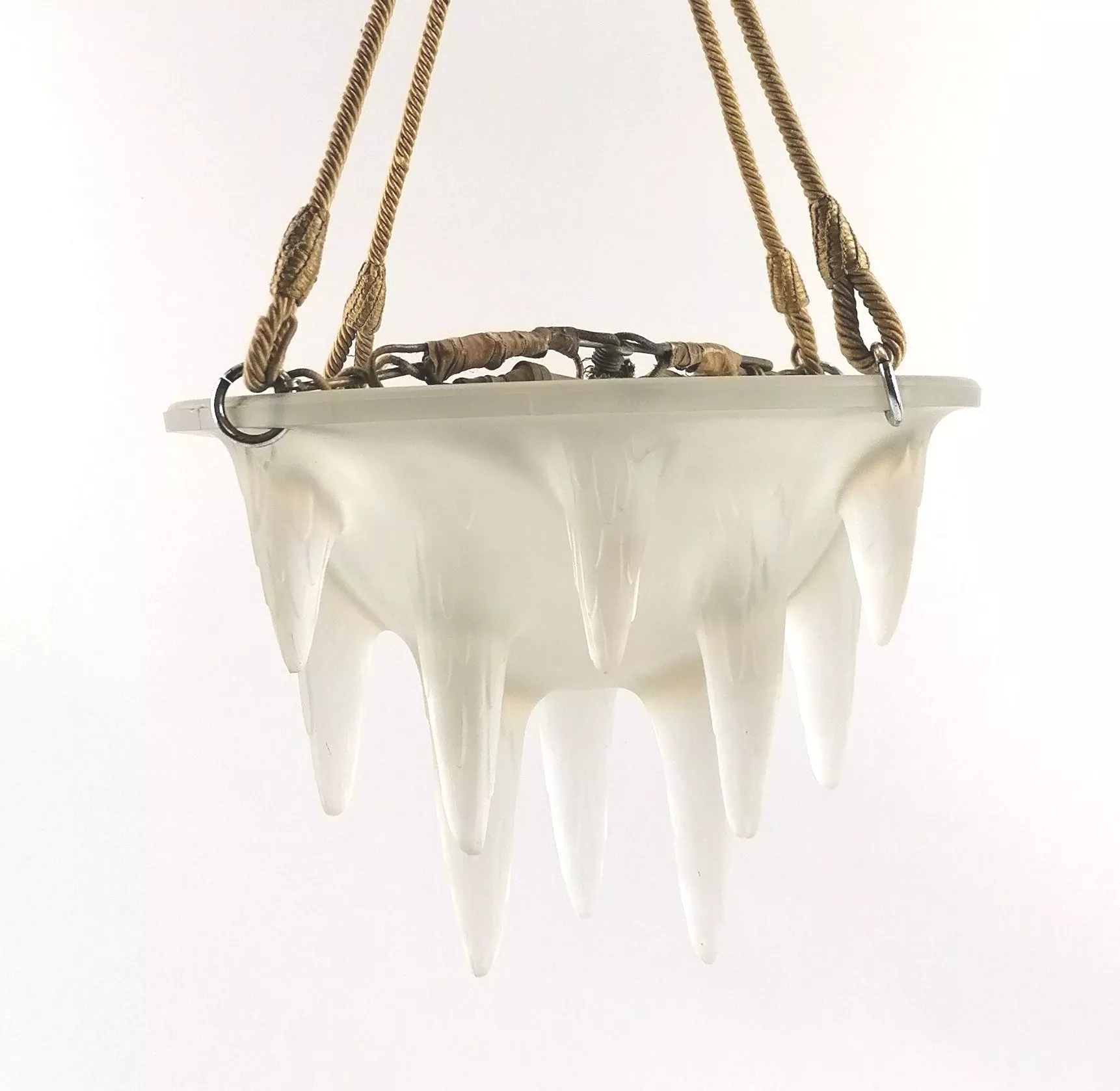
Vases, sculptures, and bottles: the creations that made Lalique famous
Crystal and pâte de verre vases, the masterpieces of the collection
Vases are the iconic category of Lalique’s production, available in hundreds of different models since the company’s early years. The vases from the René Lalique era, particularly the opalescent glass models adorned with naturalistic motifs or female figures, are among the most sought-after and highly valued pieces on the market.
Perfume bottles: a blend of the art of perfumery and glassmaking mastery
The production of perfume bottles, created in collaboration with the leading French perfume houses, represents one of René Lalique’s most remarkable commercial and artistic achievements.
These bottles, produced in large quantities for Coty and other perfumers, helped popularize the Lalique style among an audience far broader than just art collectors. Vintage pieces, complete with their original caps and residual perfume, command significant prices on the market.
Animal sculptures, lighting fixtures, and luxury decorative objects
Beyond vases and perfume bottles, the Lalique house produced a considerable range of animal sculptures, lighting fixtures, and luxury decorative objects, some of which were created for architectural purposes for ocean liners, train cars, or prestigious residences.
These are large commissions—often one-of-a-kind pieces or produced in very limited editions—that constitute the rarest and most highly valued items on the Lalique market.
Creation | Approximate Year | Distinctive Features |
Bacchantes Vase | 1927 | Female figures in relief, opalescent glass |
Coty Bottles | Since 1908 | Mass-produced perfume bottles |
Owl | Various variations | Crystal animal sculptures |
How to Identify and Authenticate a Lalique Piece
Engraved, molded, or acid-etched signatures: the different markings across different eras
The signature on Lalique pieces has evolved significantly over the decades, shifting from the drypoint-engraved signature of the earliest creations to the molded or acid-etched signature of later productions.
A careful examination of this mark—whose design allows for an approximate dating of the piece—is the first step an expert takes during any authentication process.
Serial Number, Label, and Original Documentation: Proof of Provenance
For pieces produced from the mid-20th century onward, a serial number or model number may be engraved on the piece, allowing the expert to precisely link it to a model listed in the manufacturer’s catalogs. Original labels and purchase documents serve as additional evidence of provenance and are particularly highly valued.
Distinguishing an antique René Lalique piece from a contemporary creation by the house
The distinction between a piece by René Lalique and a later production by the house is based on an analysis of style, technique, and signature. Pieces by the founder generally bear the signature “R. Lalique” or “R. Lalique France,” while pieces produced after 1945 simply bear “Lalique France” or “Lalique.”
Authentication Criteria | Where to find it | What it indicates |
R. Lalique signature | Engraved or molded onto the piece | Produced during the founder’s lifetime (before 1945) |
"Lalique France" signature | Engraved or cast | Produced after 1945 |
Model number | Engraved on the base | Association with a cataloged model |
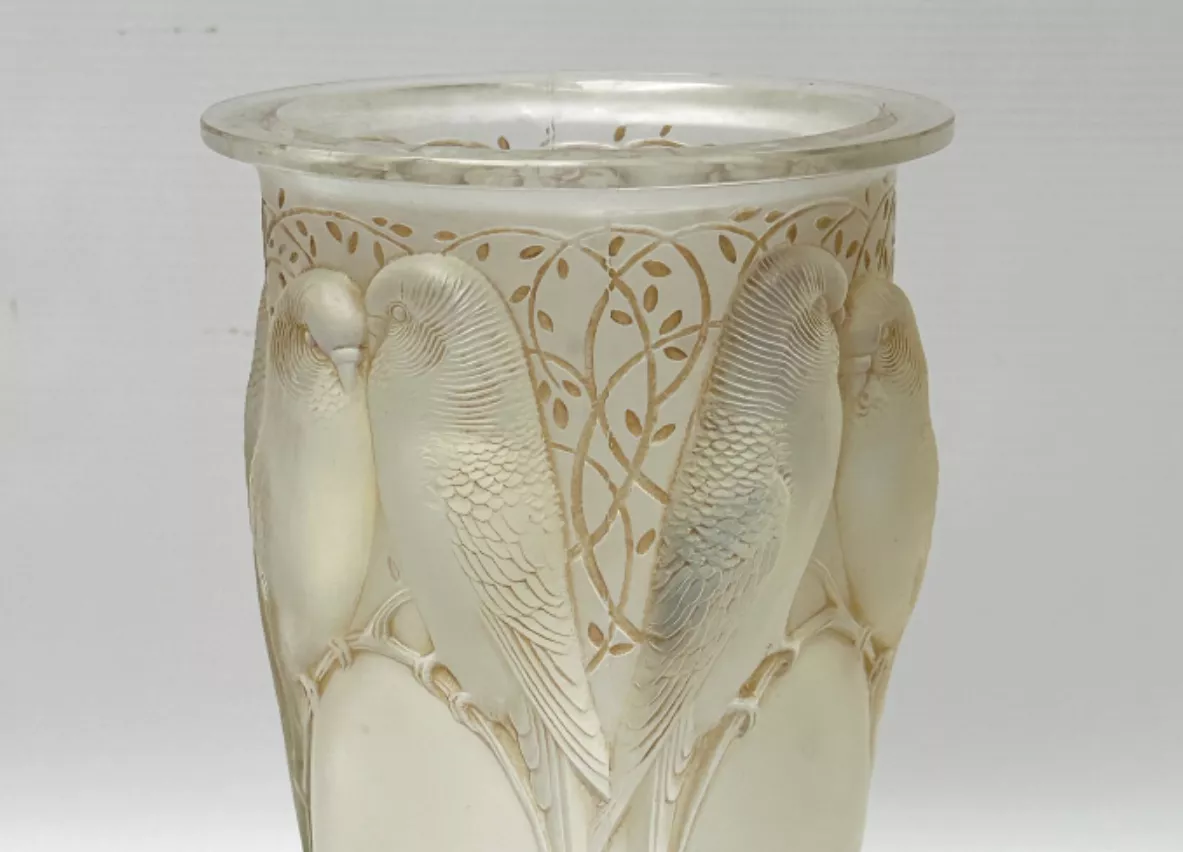
What Determines the Value of a Lalique Crystal Piece
Age of the piece and period of production: René Lalique signature or more recent production
Age is the primary factor determining value: Pieces signed “R. Lalique,” produced during the founder’s lifetime before 1945, generally command much higher values than later productions, due to their rarity, historical significance, and the prestige associated with the original designer’s name.
Rarity of the model, limited editions, and pieces no longer in the catalog
The rarity of a model—determined by the number of pieces produced and whether or not it is still in the current catalog—is a major factor in its value. Models that have been discontinued and are available only on the secondary market generally command a significant rarity premium.
Condition, glass coloration, and quality of craftsmanship
Condition, particularly the integrity of the frosted areas and the vibrancy of the color for opalescent or colored glass pieces, as well as the overall quality of craftsmanship, round out the expert’s technical assessment.
Category | Approximate price range |
Signed René Lalique vase, common model | 1,000 to 8,000 euros |
Rare or large-format René Lalique vase | 5,000 to 80,000 euros |
Antique perfume bottle | 300 to 5,000 euros |
Contemporary Lalique pieces | 100 to 2,000 euros |
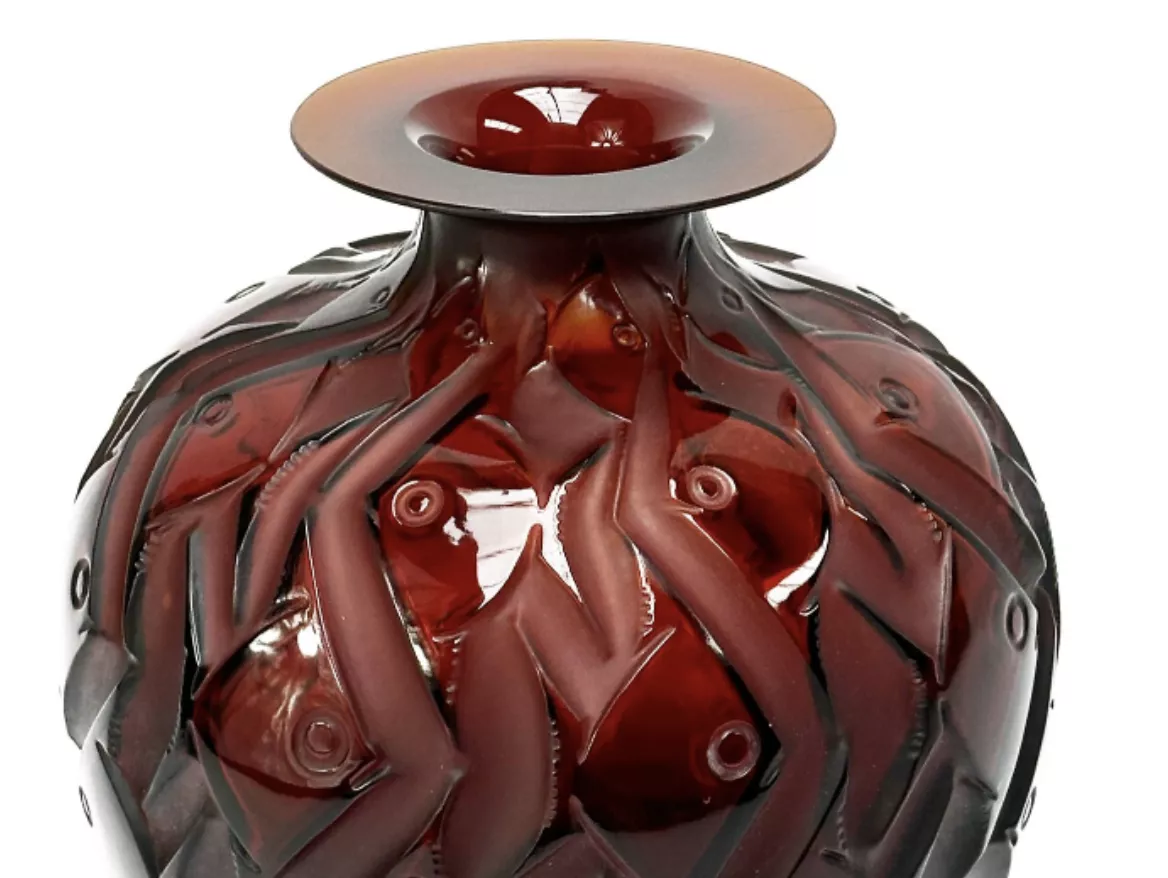
Vases, sculptures, bottles, lamps: What is the value based on the type of object?
Crystal and pâte de verre vases: the pieces most sought after by collectors
Art Nouveau and Art Deco vases signed by René Lalique represent the most dynamic category on the market, with sustained demand both at specialized auctions and on the private market.
Perfume bottles and display pieces: value varies by series
The value of antique perfume bottles depends largely on the specific model, its condition, whether it has its original cap, and the name of the perfumer who commissioned it. Coty bottles, due to their age and historical prestige, are among the most sought-after.
Light fixtures and sculptures: a market driven by luxury interior design
Lalique lighting fixtures and sculptures—whether historic pieces or contemporary creations—enjoy sustained demand driven by interior designers and collectors who appreciate the architectural and lighting qualities of these pieces.
Category | Characteristics | Price Range | Market Demand |
Art Nouveau vase signed R. Lalique | Opalescent glass, naturalistic motif | 1,500 to 80,000 euros | Very high |
Antique perfume bottle | Coty model or from another brand | 300 to 5,000 euros | Steady |
Light fixture or sculpture | Crystal or frosted glass | 500 to 15,000 euros | Well-supported |
Get a Free Appraisal of Your Lalique Items
Auctie's offers all owners of Lalique items a free appraisal service, conducted by a state-certified auctioneer, within twenty-four hours.
A free, certified appraisal by a licensed auctioneer within 24 hours
This appraisal is based on a review of detailed photographs of the piece, including the signature and the overall condition of the crystal or glass.
Free appraisal in less than 24 hours Entrust the appraisal of your Lalique items to Auctie's: a certified response within 24 hours, with no obligation and complete confidentiality. |
Photos and information needed for a reliable online appraisal
To enable the expert to provide an accurate appraisal, we recommend submitting the following:
Clear photographs of the piece from multiple angles
A close-up photo of the signature
The dimensions and approximate weight of the piece
Any available documentation of provenance
Remote Appraisal or In-Person Appointment: How the Process Works
The appraisal can be conducted entirely remotely or in person, depending on the complexity of the item.
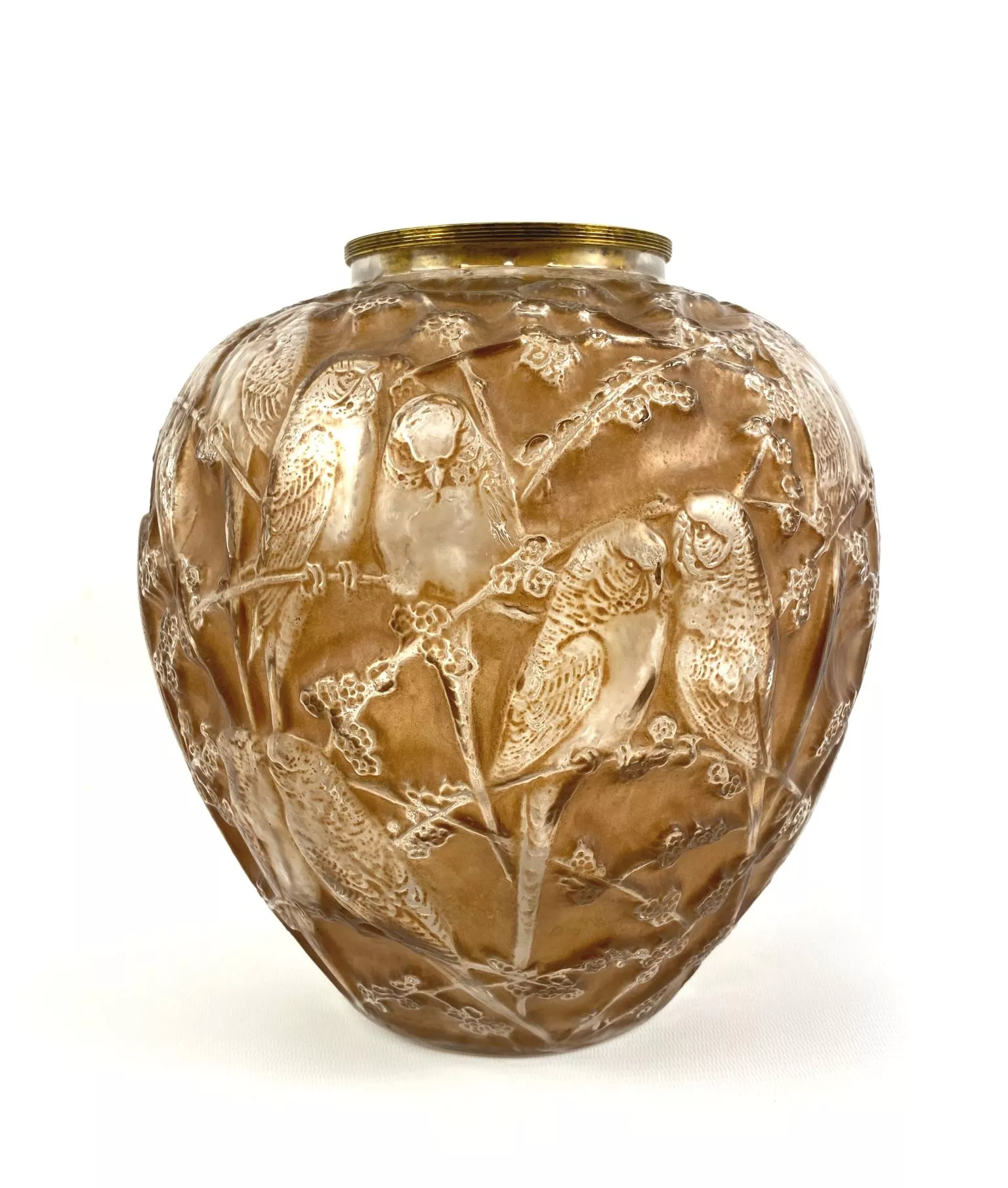
Selling a Lalique House Item at Auction
From the reserve price to the final bid: how the best price is determined
The auction begins with the setting of a reserve price consistent with the initial estimate. Bidders then participate until the item is sold, at which point the final price is determined.
Hôtel Drouot and online auctions: reaching the most qualified bidders
The reputation of Hôtel Drouot, combined with the growth of online auctions, allows us to reach an international audience of collectors with a particular appreciation for René Lalique’s works.
“Auctie’s appraised and then sold an Art Deco Lalique vase made of opalescent glass, with great precision in identifying the model and dating it.”
Testimonial from a client, sale conducted by Auctie’s.
Inheritance, moving, or gifting: What to do with inherited or collected Lalique pieces?
Inventory and Distribution of a Crystal Collection
In the context of an estate, taking inventory of an inherited Lalique collection is an essential preliminary step before dividing the collection among the heirs.
Sell, keep, or pass on: options following an estate settlement or move
Once the inventory is complete, several options are available to the heirs. Auctie’s guides this decision-making process without ever pressuring anyone into a hasty decision.
Confidentiality of the process and seller anonymity are preserved
Auctie’s guarantees every owner absolute confidentiality, with anonymity preserved until the decision to put the items up for sale is made.
Glossary of Lalique Art and Home Crystal
Term | Definition |
Glass paste | Crushed glass melted in a mold; an opaque material |
Lost-wax casting | A casting technique using a wax model |
Frosted glass | Glass chemically treated to achieve a matte, milky appearance |
Auction | Final award of the item to the highest bidder |
Provenance | Documented history of a piece’s successive owners |
Lot number | Reference market value assigned to a coin |
Patina | The natural surface appearance a coin has acquired over time |
Limited edition | Produced in limited quantities and often numbered |
Estimate in less than 24h
Let Auctie's appraise your Lalique items
Free appraisal in less than 24 hours Auctie's, a licensed auctioneer, will appraise your Lalique items for free in less than 24 hours, with complete confidentiality. |
Discover in the same theme
Rating and value of François-Xavier Lalanne luminaires, lamp...
François-Xavier Lalanne is a 20th-century sculptor and painter whose lamps are highly prized and sought-after at auction.
Learn more >
Rating and value of Claude Lalanne's jewels, brooches and ne...
Claude Lalanne is a twentieth-century artist and jewelry designer who has produced works that are highly prized and sought-after on the art market.
Learn more >
Rating and value of René Lalique works, vases, lighting fixt...
René Lalique, a talented and versatile 20th-century artist, produced many works for his home and others outside it. Estimated in 24h.
Learn more >

Secure site, anonymity preserved

Auctioneer approved by the State

Free and certified estimates
Frequently asked questions
-
What is the price range for a Lalique vase signed by René Lalique?René Lalique vases vary widely in value depending on their rarity and size. A common model ranges from 1,000 to 8,000 euros, while a rare or large vase can fetch between 5,000 and 80,000 euros. Age, technique (opalescent or frosted glass), naturalistic motifs, and condition are the main factors affecting value.
-
How can you authenticate a Lalique piece and verify its authenticity?Authentication is based primarily on an examination of the signature: “R. Lalique” or “R. Lalique France” indicates that the piece was produced during René Lalique’s lifetime (before 1945), while “Lalique France” alone indicates that it was produced after that time. Auctie's offers a free appraisal conducted by a certified auctioneer who analyzes the signature, model number, technique, and overall condition to certify the authenticity of your piece.
-
Is this the right time to sell a Lalique piece?Yes, the Lalique market remains dynamic and robust, particularly for pieces by René Lalique (1905–1945) and vintage perfume bottles. Demand is especially strong for opalescent glass vases, rare designs, and pieces in excellent condition. Collectors and interior designers are actively seeking out these works of art.
-
How does the free appraisal of a Lalique item work at Auctie's?Auctie's offers a completely free, no-obligation appraisal, conducted by a state-certified auctioneer within 24 hours. All you need to do is provide clear photographs taken from multiple angles, a close-up of the signature, the dimensions and approximate weight, as well as any available documentation of provenance. The appraisal is certified and confidential.
-
How do I sell a Lalique item at auction through Auctie's?Auctie's, a specialized auction house, guides you from the initial appraisal through to the sale of your Lalique piece. After the free appraisal, our experts catalog the item, list it in a sale catalog, and promote it to collectors and institutions. You benefit from the expertise of a licensed auctioneer to ensure your piece is valued to the fullest.
