



Rating Cartier : estimation by an auctioneer - Auctie's

Key takeaways
- Founded in 1847 in Paris, Cartier has become a global leader in fine jewelry by mastering both jewelry and watchmaking.
- Iconic jewelry pieces (Trinity 1924, Love 1969, Panthère since 1914) and watches (Tank, Santos, Ballon Bleu) command stable and sustained prices on the secondary market.
- Auctie’s expertise, provided by a certified auctioneer, authenticates each piece through hallmarks, finishes, and serial numbers, and verifies materials, condition, and original documentation, increasing its value by 10 to 30%.
Cartier, an iconic house of fine jewelry and watchmaking
Expertise spanning fine jewelry and watchmaking
Founded in Paris in 1847 by Louis-François Cartier, the eponymous house established itself in less than a century as one of the world’s leading names in jewelry.
This status is no accident: it is the result of a constant commitment to technical excellence, an ability to anticipate the tastes of each era, and a privileged relationship with royal courts and the world’s wealthiest families.
Cartier was the official jeweler to King Edward VII of England, who commissioned twenty-seven tiaras from the house for his 1902 coronation alone. This royal endorsement firmly established the house within the very exclusive circle of international high jewelry.
What sets Cartier apart from its contemporaries is its mastery of two demanding disciplines simultaneously: jewelry and watchmaking. While other houses have chosen one or the other, Cartier has built a watchmaking manufactory capable of producing in-house calibers of remarkable precision, all while maintaining jewelry workshops in Paris whose excellence is universally recognized.
Period | Key Event |
1847 | Founding of the house by Louis-François Cartier in Paris |
1902 | Cartier becomes the official supplier to King Edward VII of England |
1917 | Creation of the Tank watch, inspired by World War I tanks |
1924 | The Trinity ring is introduced, the result of a collaboration with Jean Cocteau |
1969 | Launch of the Love bracelet by Aldo Cipullo in New York |
1983 | Creation of the Cartier Foundation for Contemporary Art |
2018 | Redesign of the Santos, reigniting interest in this model on the secondary market |
Cartier Creations: Rings, Necklaces, Bracelets, and Luxury Watches
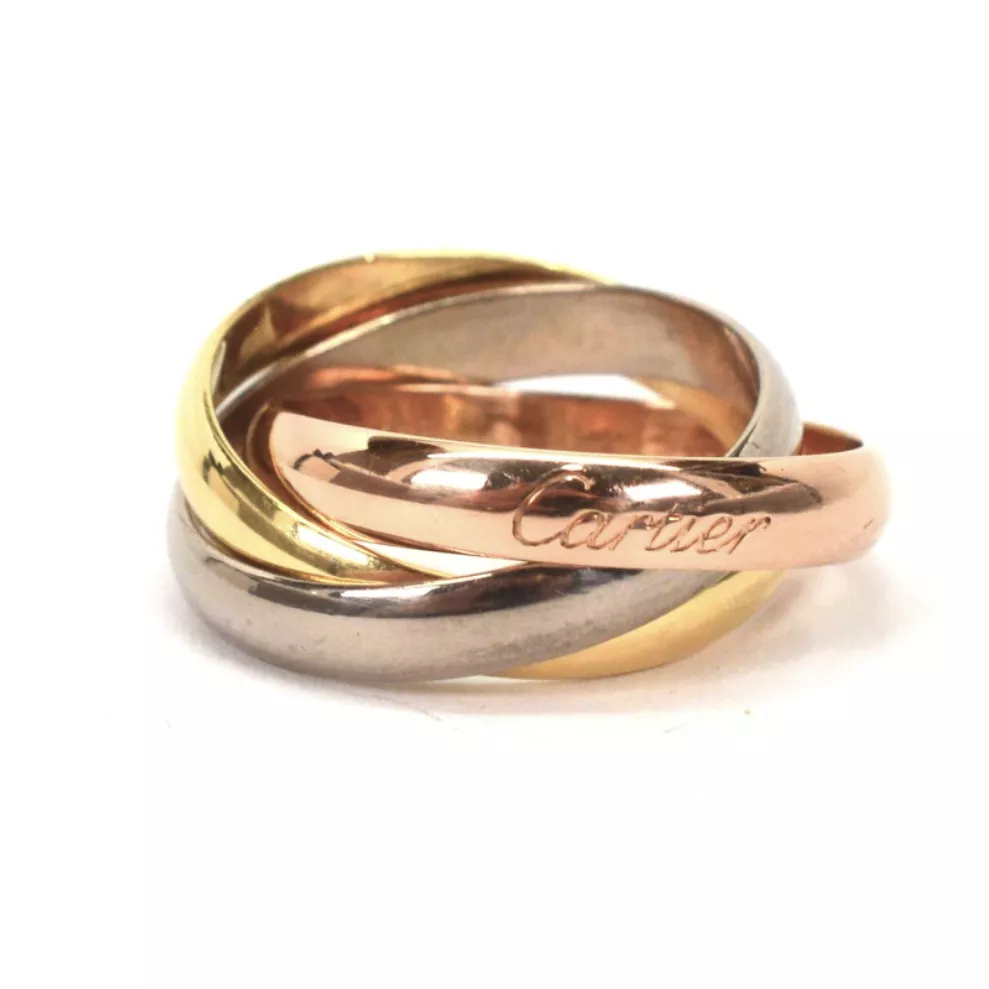
Cartier’s catalog is vast, but certain creations have achieved the status of absolute icons—recognizable at first glance and valued accordingly on the art market. The Trinity ring, introduced in 1924, is one of the brand’s best-selling and most sought-after pieces: three intertwined bands in yellow, white, and rose gold, whose apparent simplicity belies a remarkable level of technical skill in their assembly.
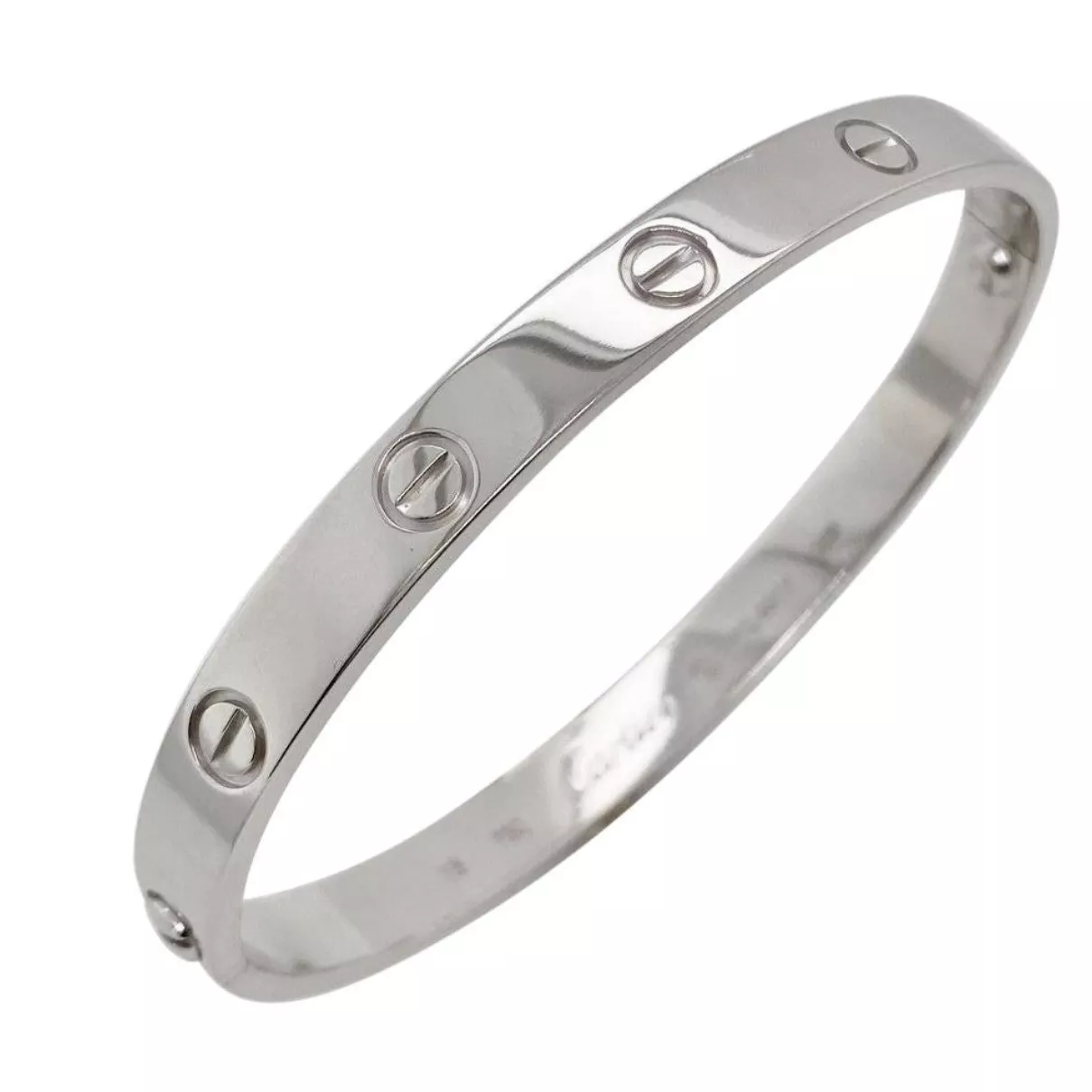
The Love bracelet, launched in 1969 by Aldo Cipullo, has become—in just a few decades—a cultural symbol that extends far beyond the world of jewelry alone. The Panther, a recurring motif since 1914, embodies the sculptural dimension of Cartier’s work: an animal figure reimagined in brooches, rings, and watches with a stylistic consistency that spans generations.
Iconic Design | Year | Features |
Trinity Ring | 1924 | Three bands in yellow gold, white gold, and rose gold; the brand’s best-selling piece |
Love Bracelet | 1969 | Screw-lock gold bracelet, a global cultural icon; highly sought-after on the secondary market |
Panther motif | 1914 | Sculptural animal motif featured in jewelry and watches |
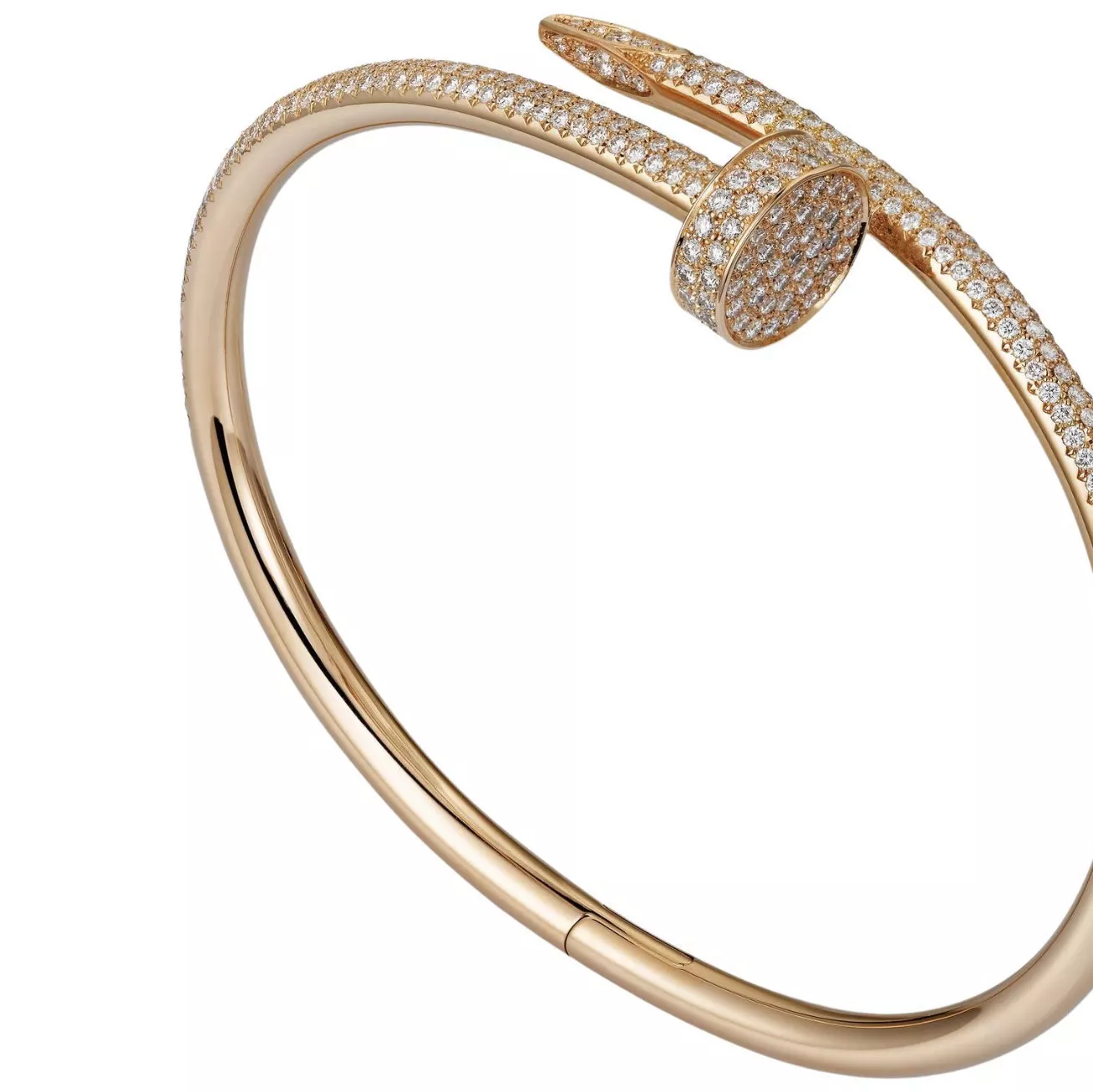
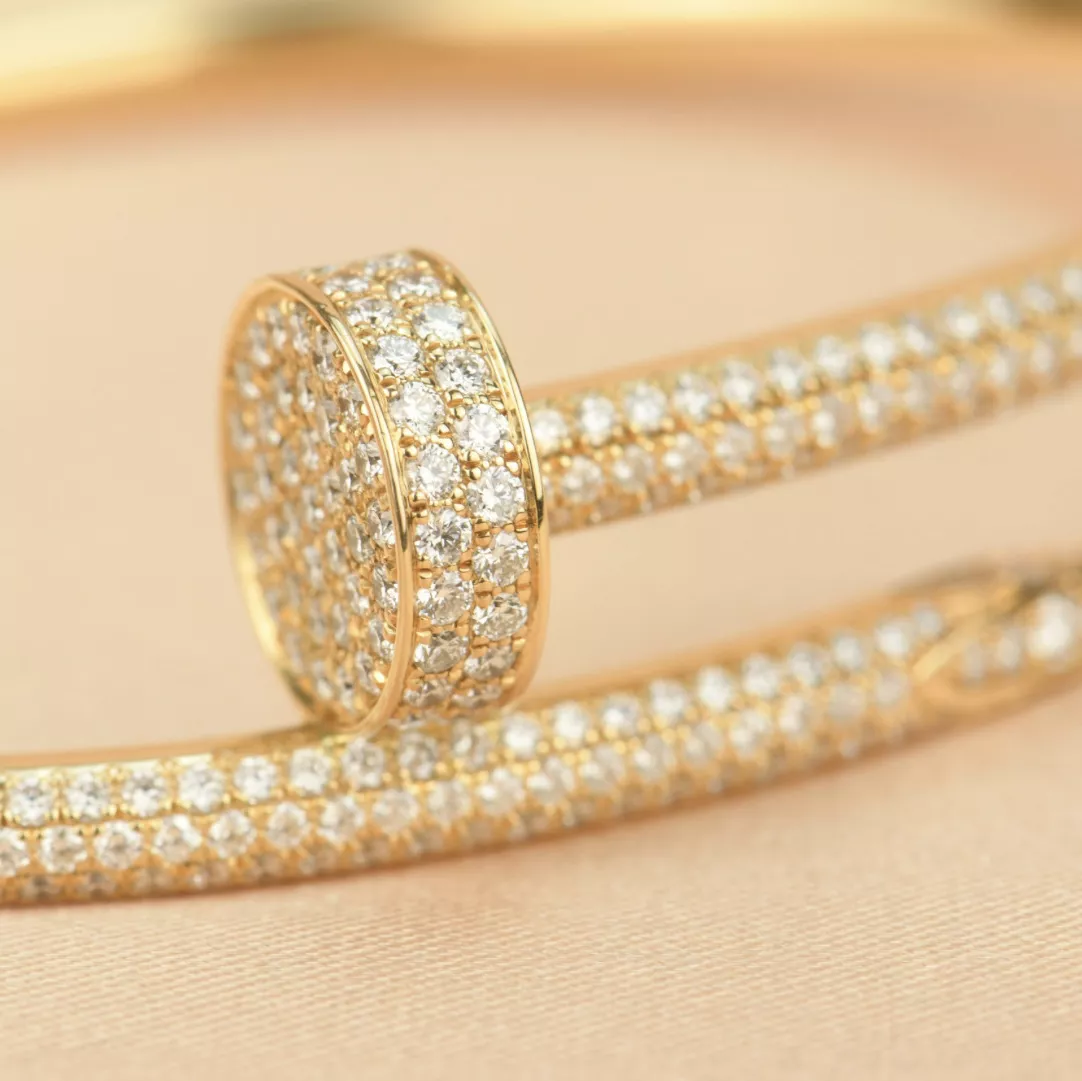
Juste un Clou bracelet | 1971 | Gold or platinum stud; consistently high and stable value |
Panther Necklace | 1980s | Rare pieces, highly sought-after at auction |
High-jewelry tiaras | Various eras | One-of-a-kind pieces or small production runs; sometimes exceptional auction results |
Estimate in less than 24h
Get a Free Appraisal of a Cartier Jewelry Piece or Watch
Cartier rings, necklaces, bracelets, earrings, and tiaras appraised
Appraising a Cartier piece involves more than simply consulting a published price list or an auction catalog. It requires a physical examination of the piece, detailed knowledge of the history of the collection to which it belongs, and continuous monitoring of international auction results.
This is what Auctie’s offers: an appraisal conducted by a licensed auctioneer who understands the intricacies of the Cartier market and knows how to accurately position each piece.
Trinity and Love rings, Panther necklaces, Juste un Clou bracelets, Trinity or Clash earrings, and high-jewelry tiaras: each piece is appraised individually, with respect for its uniqueness.
The condition of the piece, the presence of the original box and documentation, and the possible inclusion of a gemological certificate for pieces set with colored gemstones or significant diamonds: all these factors are systematically taken into account when determining the valuation.
Element Examined | Why it’s crucial |
Hallmarks and serial number | Enable the piece to be authenticated and accurately dated |
Condition | Scratches, oxidation, or alterations significantly reduce the value |
Original box and documents | Their presence can increase the value by 10 to 30 percent, depending on the model |
Gemmological certificate | Essential for pieces set with diamonds or large colored gemstones |
History of the piece | Documented provenance or a custom order enhances the piece’s value |
Cartier Watches: A Free Appraisal in Less Than 24 Hours, with No Obligation
The market for pre-owned Cartier watches is one of the most active and liquid in the luxury watch sector. The Tank, in its many variations, trades at widely varying price points depending on the year of manufacture, the metal, the case size, and the type of movement.
The Santos has seen a marked resurgence in interest since its redesign in 2018. The more recent Ballon Bleu has quickly established itself in the secondary market with stable and sustained prices.
Model | Key Strengths in the Secondary Market |
Tank Louis Cartier | The gold standard; vintage yellow gold and platinum versions are highly sought after |
Tank Américaine | Distinctive elongated case; strong demand for models with complications |
Santos | Renewed interest since 2018; the steel and gold versions from the 1980s are highly prized |
Ballon Bleu | Stable value; the 36 mm and 42 mm gold models are the most liquid |
Panthère de Cartier | Iconic model relaunched in 2017; vintage versions are highly sought-after on the market |
Clé de Cartier | Production discontinued; increasing rarity supports prices on the secondary market |
Auctie’s expertise covers Cartier watches in their entirety: case, dial, movement, strap, clasp, and accompanying documents. You’ll receive a response within 24 hours, with no obligation on your part.
Get your free estimate: response within 24 hours
Authenticating and Appraising a Cartier Piece
Yellow gold, rose gold, platinum, and diamonds: material expertise
Any serious appraisal of a Cartier piece begins with a rigorous analysis of its materials.
Over the decades, the House has developed its own unique palette of precious materials: the yellow gold of its earliest creations, the rose gold popularized by the Trinity collection in the 1920s, the platinum ubiquitous in high jewelry of the 1930s and 1940s, and the brilliant-cut or cushion-cut diamonds that adorn its prestige pieces.
The examination of materials is not limited to their identification: it encompasses the metal’s fineness, verified using official hallmarks, and the quality of the stones, assessed according to international gemmological criteria—cut, color, clarity, and carat weight.
For the most significant pieces, this analysis may be supplemented by a gemmological report issued by a certified laboratory—such as GIA or HRD—which provides additional assurance when the piece is put up for sale.
Material | Availability at Cartier | Impact on Value |
18-karat yellow gold | Ubiquitous since the brand’s inception | Solid material value; additional premium for vintage pieces |
18-karat rose gold | Popularized by the Trinity ring as early as 1924 | Highly sought after; significant premium on certain models |
950 platinum | High-end jewelry and luxury watches | Rare metal, high density; highly prized in fine jewelry |
Diamond | Luxury pieces and pavé settings | Significant impact; GIA or HRD certification strongly recommended |
Colored gemstones | Emeralds, rubies, and sapphires in fine jewelry collections | Rarity and origin (Kashmir, Burma, Colombia) greatly increase the value |
Estimate in less than 24h
Authentication by a State-Certified Expert
The Cartier secondary market, like any thriving art market, is vulnerable to the circulation of counterfeits and copies. Some reproductions are crude and immediately identifiable; others are so sophisticated that they require thorough examination to be detected.
Detecting Cartier forgeries involves several levels of analysis: examining hallmarks and their compliance with the brand’s standards for each era, assessing the quality of the finishes, verifying the serial number when present, and analyzing the assembly mechanisms specific to authentic pieces.
As a state-certified expert, Auctie’s auctioneer possesses the training, experience, and tools necessary to conduct this authentication.
His professional commitment and personal responsibility are at stake in every appraisal he signs. It is this guarantee—which cannot be obtained from a private individual or an unauthorized dealer—that gives Auctie’s appraisal its legal and commercial value.
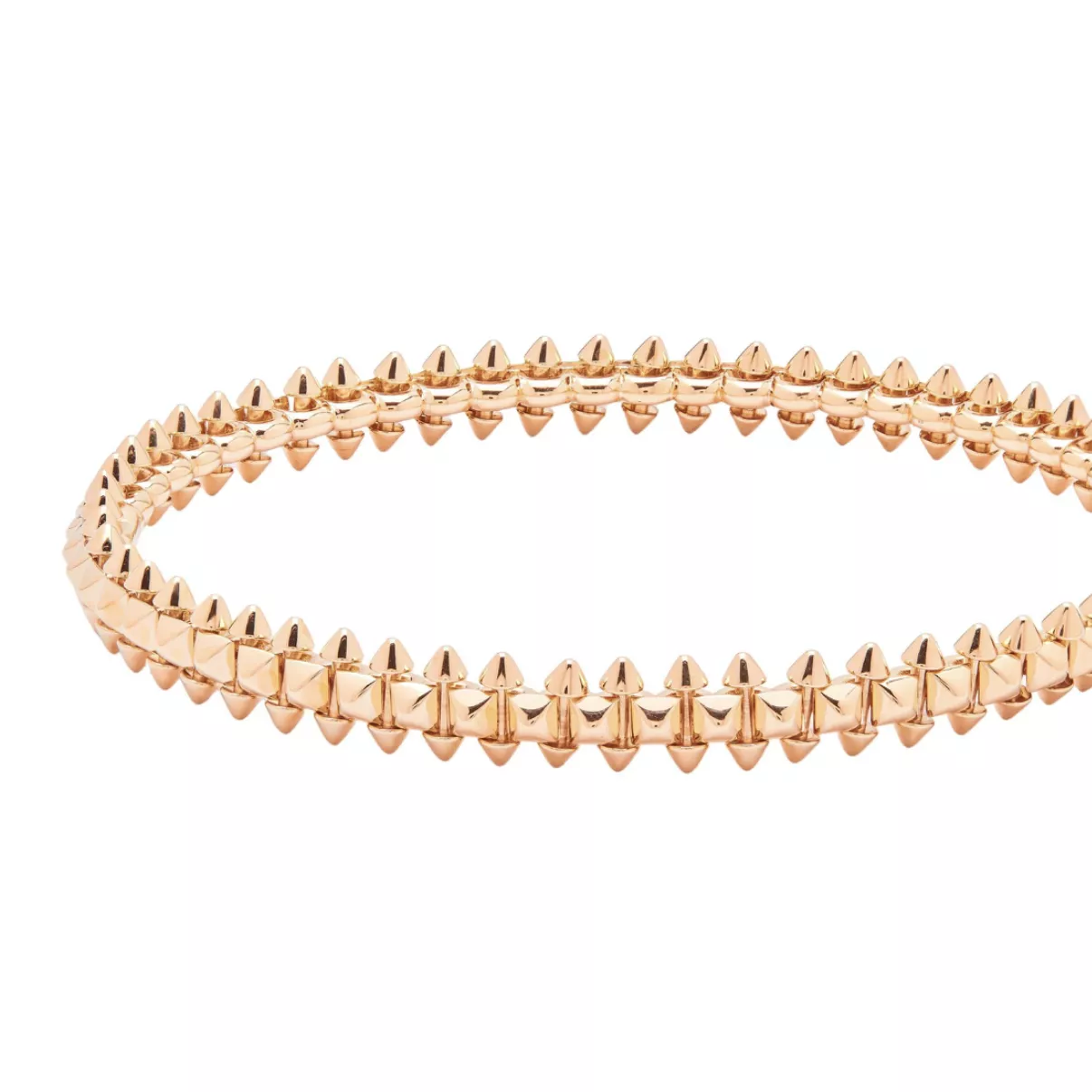
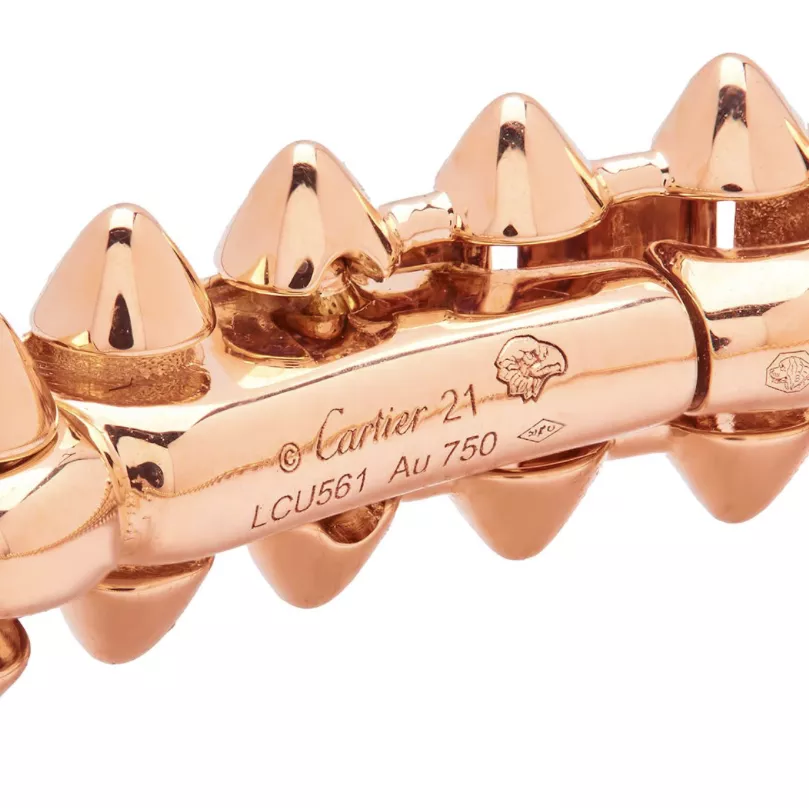
Sell a Cartier piece at auction with Auctie's
Cartier's Market Value and Starting Price in the Art Market
Cartier’s value on the secondary market is one of the strongest in the international jewelry industry.
Auction results regularly show remarkable sales for the brand’s pieces, whether they are high-end jewelry pieces fetching several hundred thousand euros or classic Tank watches sold for amounts far exceeding their retail prices.
This strength stems from several structural factors: the brand’s global recognition, the stylistic continuity that makes vintage pieces immediately identifiable, and a policy of scarcity that keeps pressure on the available supply.
For sellers, this means that an authentic Cartier piece in good condition has every chance of finding a buyer quickly, provided it is listed for sale in the right setting and at the right time.
Sales Method | Advantages | Points to Watch For |
Auction at Drouot | Maximum visibility, competition among buyers, price potentially higher than the estimate | Time required to list the item |
Online Sale | International reach, buyers from around the world in real time | Requires high-quality photographic documentation |
Consignment | Intermediate solution, no time pressure | Commission applies; sale not guaranteed |
Direct purchase | Immediate payment, quick process | Price below market potential |
Sales at the Hôtel Drouot and online
Auctie's holds its auctions at the Hôtel Drouot, an institution founded in 1852 and the leading auction house in continental Europe. Selling at Drouot means showcasing your item to a network of professional buyers and collectors who are among the most active in the French and international markets.
The auctions are also accessible online, which significantly expands the pool of potential buyers beyond national borders.
A collector based in Tokyo, New York, or Geneva can bid in real time on an item being auctioned in Paris. For Cartier pieces, which are renowned worldwide, this international reach is a decisive factor in securing the best possible hammer price.
Estates, Inheritance, and Gifts: Entrust Your Cartier Pieces to Auctie's
Inventory and Distribution of an Estate
Cartier pieces are among the most common assets found in jewelry estates.
Their value—often underestimated by heirs who haven’t kept up with the secondary market—can represent a significant portion of the estate’s assets. An inaccurate appraisal exposes heirs to tax complications and disputes over the division of the estate that could have been avoided.
Auctie’s conducts comprehensive jewelry inventories in the context of estates, working directly with the notaries responsible for the estate settlement.
Each identified Cartier piece is appraised individually: precise identification, description of materials and gemstones, condition, and estimated market value as of the reference date. The resulting report is admissible as evidence and can be included in the estate file without reservation.
Background | Auctie’s Role |
Estate and Inheritance | Comprehensive jewelry inventory, market value appraisal, official report for the notary |
Gift | Appraisal of transferred items for accurate tax reporting |
Divorce and Settlement | Second opinion if necessary; may serve as a court-appointed expert |
Asset Reorganization | Comprehensive jewelry appraisal, advice on options for retention or sale |
Confidentiality and anonymity guaranteed
Ownership of Cartier pieces falls within a sphere of personal wealth that owners have every reason to wish to keep private. Auctie's handles every case with absolute confidentiality, whether the matter involves an estate, a divorce, an asset reorganization, or a simple decision to sell.
The owner’s identity is never disclosed to third parties, and the pieces can be offered for sale under complete anonymity if the owner so desires.
This discretion is not an optional service: it is fundamental to the relationship of trust that Auctie’s maintains with its clients, and it is guaranteed at every stage of the process, from the initial contact through to the receipt of the proceeds from the sale.
Entrust your Cartier pieces to Auctie’s
A Cartier piece, whether modest or exceptional, deserves to be appraised by someone who precisely understands its market value.
Auctie’s provides you with this expertise: that of a state-certified auctioneer, well-versed in the specifics of the Cartier market, capable of authenticating, appraising, and—if you wish—selling your piece under the best possible conditions.
The appraisal is free, confidential, and non-binding, and you’ll receive a response in less than 24 hours.
Get your free appraisal: response in less than 24 hours
Estimate in less than 24h
Discover in the same theme

Free valuation of ceramics and earthenware
Earthenware and ceramics are objects of art and craftsmanship. Having them appraised by an approved auctioneer can uncover treasures.
Learn more >

Rating and value of marine paintings
Marine paintings are relatively unknown to the general public, yet are highly prized at auction. Many collectors seek them out.
Learn more >

Leather goods rating: bag value - Auctie's
Discover the market value of luxury bags and leather goods, and get a free estimate for yours in less than 24 hours with Auctie's.
Learn more >
D'autres pièces de haute joaillerie vendues aux enchères

Estimated 10.000 - 15.000 €
BOUCHERON - "Ava" - White gold necklace set with a brilliant-cut diamond (1.56 cts)

Estimated 2.000 - 4.000
CARTIER, 18K (750 e) gold opening bangle bracelet

Estimated 1.500 - 3.000
CARTIER PARIS, Trinity, 2-tone 18k (750e) gold clip brooch

Estimated 3.000 - 5.000
CARTIER, Love, Wedding band in 18k white gold (750e)

Estimated 2.000 - 4.000
CARTIER Love model Pendant necklace in 18K (750e) white gold

Estimated 1.500 - 2.000
CHAUMET, Ring in platinum (850th), set with an oval faceted ruby

Secure site, anonymity preserved

Auctioneer approved by the State

Free and certified estimates
Frequently asked questions
-
Who is Cartier, and why is the company renowned in the jewelry industry?Cartier is an iconic fine jewelry house founded in Paris in 1847 by Louis-François Cartier. It has established itself as a global leader thanks to its mastery of both jewelry and watchmaking, as well as its close ties to royal courts. Notably, Cartier served as the official jeweler to King Edward VII of England and created iconic pieces such as the Trinity ring (1924), the Love bracelet (1969), and the Tank watch (1917).
-
How can you authenticate a Cartier piece and verify its authenticity?Authenticating a Cartier piece involves examining the hallmarks, serial number, quality of the finishes, and assembly mechanisms. For a reliable appraisal, it is recommended to consult a state-certified auctioneer, such as those at Auctie’s, who have the training, experience, and tools necessary to conduct this authentication. This free, no-obligation service provides legal and commercial guarantees that cannot be obtained from a private individual.
-
What factors influence the value of a Cartier piece?The value of a Cartier piece depends on several factors: its condition (scratches, tarnish), the presence of the original box and documentation (which can increase the value by 10 to 30 percent), the materials (yellow gold, rose gold, platinum, diamonds), the quality of the stones as certified by a laboratory, and the piece’s history. For watches, the year of manufacture, the metal, the case size, and the type of movement are also key factors.
-
Is this the right time to sell a Cartier piece?Yes, now is a good time to sell an authentic Cartier piece in good condition. The Cartier secondary market is one of the strongest in the international jewelry industry, thanks to the brand’s global recognition, stylistic consistency, and a policy of creating scarcity that keeps pressure on supply. Regularly reported auction results confirm the market’s liquidity and sustained demand from collectors.
-
How does a free appraisal at Auctie's work, and what is the timeline?Appraisals at Auctie's are free and non-binding. A certified auctioneer will physically examine your Cartier timepiece (case, dial, movement, bracelet, and documentation) and provide you with a response within 24 to 48 hours. This examination takes into account all elements of authentication and valuation to establish an accurate and reliable appraisal, for which the expert assumes personal responsibility.
