



Rating and value of sculptures and busts from the First Empire

Key takeaways
- Sculptures and busts from the First Empire sell for between €20 and €780,000 at auction, with prices rising sharply in recent years.
- Jean-Baptiste Carpeaux commands the highest estimates (up to €780,000), while James Pradier and Antoine Louis Barye also command significant prices.
- The artist’s identity, the condition of the piece, and the subject depicted (particularly busts of Napoleon I) are the main factors influencing value.
If you own a First Empire sculpture, and would like to know its value, our state-approved experts and auctioneers will offer you their appraisal services. Our specialists will carry out a free appraisal of your object, and provide you with a precise estimate of its value on today's market. Then, if you wish to sell your work, we'll guide you towards the best possible means of obtaining the optimum price. The price of the work can vary greatly depending on the artist's identification, its state of conservation, its school or even the subject represented.
Rating and value of First Empire sculptures
First Empire sculptures and busts are pieces that are often presented at auction. The price at which they sell on the art and auction market ranges from €20 to €780,000, a considerable delta but one that says a lot about the value that can be attributed to your sculptures. Their value has risen sharply in recent years, with the most sought-after works being busts of the Emperor Napoleon I. In 2022, a marble bust of Napoleon Bonaparte (made when he was still a general after the Italian campaign) sold for €220,000, while it was estimated at between €138,000 and €208,000.
Order of value ranging from the simplest, unidentified sculpture to the most prestigious
Sculptor | Result |
|---|---|
Eugène Guillaume | From €150 to €30,000 |
Martin Biennais | From €600 to €33,500 |
James Pradier | From 20 to 127 280€ |
Louis Simon Boizot | From 50 to 272,000€ |
Albert Ernest Carrier Belleuse | From 40 to 484 040€ |
Antoine Louis Barye | From €20 to €630,000 |
Jean Baptiste Carpeaux | From €80 to €780,000 |
Estimate in less than 24h
Reasons to have a First Empire sculpture appraised
If you own a bust or sculpture from this period, you may be unaware of its value. Indeed, even if the work is not signed, it is possible in some cases to identify the artist. If the artist is listed on the auction market, the price can rise very quickly. It is also possible that the artist is not identifiable and that only the school of the sculpture can be known.
Sculptural and stylistic characteristics under the First Empire
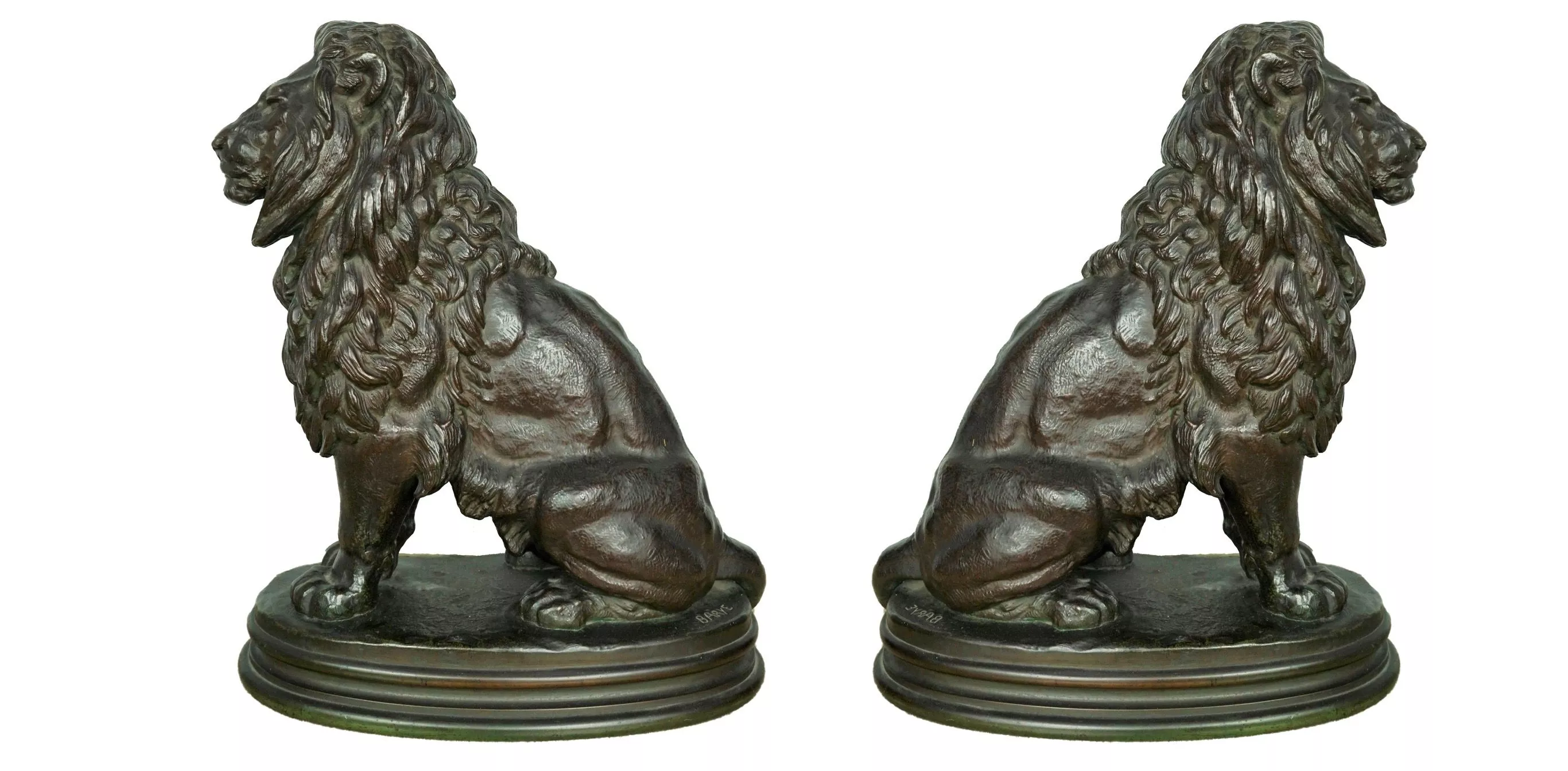
Under the First Empire, sculpture is a major technique that we sometimes tend to forget, with painting taking up much of the art history of the period. Yet it was a major turning point, as Neoclassicism died out at around the same time as the First Empire. Representation of the body à l'Antique, mythological subjects, series of busts in effigy of the Emperor : sculpture excelled under the First Empire and revived academic canons one last time. Marble was the preferred material during this period, particularly for making busts, but bronze was also widely used by artists such as Barye or Carrier-Belleuse.
Last survival of classicism
Sculpture played a major role in artistic production in the early 19th century. Intrinsically linked to the imperial regime established by Consul Bonaparte, sculpture was to evolve with it. He advocated a return to Antiquity in his way of governing, first by having himself crowned, and then by using the antique symbols of the greatest Emperors. As early as the Egyptian campaign, he was portrayed as a thaumaturge sovereign, later wearing the laurel wreath formerly worn by Caligula and Hadrian. The iconographic elements were ready-made, and so were the subjects of the works.
Legends from Greek and Roman mythology were to make up a large part of the sculptural production of the period. Antoine Louis Barye would take up Theseus and the Minotaur, while James Pradier would sculpt Les Trois Grâces. The beginnings of Romanticism are more visible in sculpture, the artists' antique inspirations being more expressive and above all always preserved, unlike painters who reinvent a current. We need only refer to the Laocoon group, which depicts faces frozen in fear and pain.
Sculpture at the service of imperial propaganda
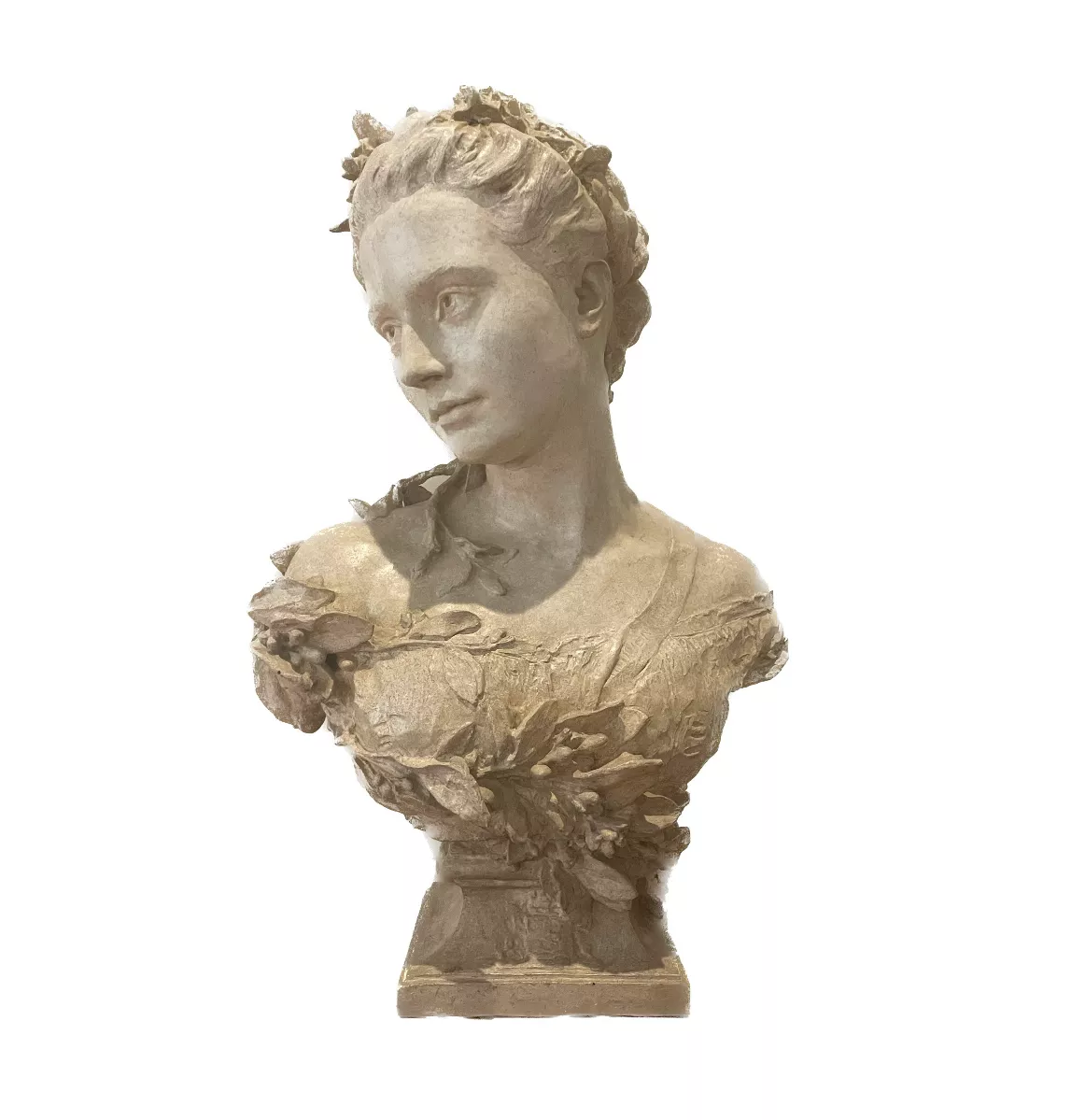
If so many busts from this period are presented at auction today, it's because control of the arts, as well as extensive propaganda, was instituted as early as the Consulate. This phenomenon obviously took place not only in painting, but also - a return to Antiquity obliges - in sculpture. Artists such as Eugène Guillaume, Jean-Baptiste Carpeaux, Martin Biennais or Louis-Simon Boizet would devote part of their careers to producing busts of the Emperor or those close to him, whom he placed at the head of various countries in Europe. Joseph Chinard notably produced busts of the Empress Eugénie, while a few also depict L'Aiglon, Napoleon Bonaparte's son and King of Rome, helping to promote the imperial oligarchy.
The majority of busts produced up to 1814 logically featured the Emperor, according to carefully chosen stylistic characteristics. He is depicted beardless, with his attributes of power, relatively thick hair and prominent features ;: he takes his model from Alexander, who had himself given these directives to his official portraitist, Lysippe ; and had thus upset the canons of ancient sculpture as far as busts are concerned. Today, this artistic production is in great demand at auction, and the results these works achieve are constantly increasing.
Know the certain value of your sculpture
If you happen to own a bust or sculpture from the First Empire, or think you might, don't hesitate to request a free appraisal using our form on our website. A member of our team of experts and chartered auctioneers will contact you promptly to provide you with an estimate of the market value of your work, as well as any relevant information about it. If you wish to sell your product, you will also be accompanied by our specialists in order to benefit from alternatives to sell it at the best possible price, taking into account the inclinations of the market.
Estimate in less than 24h
Discover in the same theme

Get a free appraisal of your Tribal and Primitive Art object...
Often used in ceremonies or rites to represent spirits or divinities, Art Premier masks should be viewed by an expert.
Learn more >

Impressionism rating: value of the works
Impressionist works are among the most highly valued on the market. Several key factors influence their value.
Learn more >

Baroque valuation: how to determine the value of your artwor...
Paintings, sculptures, altarpieces… Auctie's, a licensed auctioneer, will appraise your Baroque artworks for free in less than 24 hours, with complete...
Learn more >
Works and objects from the same period sold at auction

Estimated 3000 € - 5000 €
Flintlock general's or admiral's pistol, Vendémiaire an XII model

Estimated 800 € - 1 200 €
MANUFACTURE NATIONALE DE SEVRES Rare porcelain cookie obelisk.

Estimated 1.000 - 2.000 €
Napoléon Bonaparte (1769-1821), Manuscript in pen and ink on paper.

Estimated 800 - 1.500€
Barye, seated lion

Secure site, anonymity preserved

Auctioneer approved by the State

Free and certified estimates
Frequently asked questions
-
Who are the leading sculptors of the First Empire, and what is their market value?The leading sculptors of the First Empire include Jean-Baptiste Carpeaux (whose works fetch up to 780,000€), Antoine-Louis Barye (up to 630,000€), Albert-Ernest Carrier-Belleuse (up to €484,040), and Louis-Simon Boizot (up to €272,000). Their works are among the most sought-after on the market, particularly the busts of Napoleon I and works depicting mythological subjects.
-
What is the price range for sculptures and busts from the First Empire?Prices for First Empire sculptures range from €20 to €780,000, depending on the artist, the signature, the condition, and the subject depicted. Most identified works sell for between a few hundred and several tens of thousands of euros. Their market value has been rising sharply for several years.
-
How do I have a sculpture or bust from the First Empire authenticated and appraised?We offer a free, no-obligation appraisal by our state-certified experts and auctioneers. Simply submit your request via our online form, and a specialist will contact you to evaluate your artwork and provide you with an estimate of its market value within 48 hours.
-
Is this the right time to sell a sculpture from the First Empire?Yes, the market for First Empire sculptures is currently very active, with prices rising sharply in recent years. Busts of Napoleon I and works by renowned masters are particularly sought after at auctions, offering excellent opportunities to sell at competitive prices.
-
How does the sale of a First Empire sculpture work at Auctie's?After providing a free appraisal of your artwork, our experts will guide you through the entire sales process, from cataloging to the auction. We’ll advise you on the best marketing strategies to achieve the highest possible price, taking into account current market trends and demand for your type of artwork.
