



Market value and appraisal of antique fans

Key takeaways
- Antique fans sell for between €50 for 19th-century paper fans and €200,000 for pieces with documented royal provenance.
- 17th- and 18th-century fans with carved ivory frames featuring lacework are the most highly valued category, worth ten to twenty times more than an ordinary frame.
- Documented provenance, the artistic quality of the painting, and the condition of the fan are the primary criteria for valuation, with the National Library of France frequently exercising its right of first refusal.
Get a Free Appraisal of Your Antique Fans: Market Value and Appraisal
If you own one or more antique fans and would like to know their value, our experts and state-certified auctioneers offer their appraisal services. Our specialists will conduct a free appraisal of your item and provide you with an accurate estimate of its current market value.
If you then decide to sell your fan, we will guide you toward the best possible approach to get the highest price.
Appraisal and Value of Antique Fans
Antique fans are among the most unique collectibles on the decorative arts market. A hybrid of a utilitarian object, a fashion accessory, and a miniature work of art, they condense into a small format a wealth of materials, techniques, and decorations that make them particularly sought after by specialized collectors, museums, and cultural heritage institutions in France and abroad.
On the auction market, prices for antique fans can vary widely, depending on the period, the materials used, the quality of the decoration, and the provenance of the piece.
This range reflects the extraordinary diversity of production, which spans from the modest 19th-century printed paper fan to masterpieces crafted from ivory, tortoiseshell, mother-of-pearl, and needlepoint lace produced for the royal courts of Europe in the 17th and 18th centuries.
Ranking from the most basic to the most prestigious
Type of fan | Approximate price range |
19th-century printed paper fan | €50 to €500 |
Fashion fan with a bone or horn frame | €200 to €2,000 |
Ivory or tortoiseshell folding fan | €500 to €5,000 |
Hand-painted fan made of vellum or silk | €800 to €15,000 |
Early modern fan (17th–18th century) made of lace | €3,000 to €80,000 |
Fan of documented royal or aristocratic provenance | €10,000 to €200,000 |
Estimate in less than 24h
What Is an Antique Fan? Types and Periods
Fan production spans several centuries and is organized around a few major formal and technical categories, knowledge of which is essential to any serious expertise. The folding fan, consisting of a fan leaf (the “pays”) attached to a hinged frame of ribs and tufts (the “bâtons”), is the most common and most studied form.
The “brisé” fan, on the other hand, consists solely of articulated ribs without an attached panel, which requires specific technical skill in working with delicate materials such as carved ivory, engraved mother-of-pearl, or varnished tortoiseshell.
European fan production can be chronologically organized into several major periods, each characterized by its own distinct styles and techniques: the Baroque fans of the 17th and 18th centuries, often painted on vellum with frames made of carved ivory or tortoiseshell; the Rococo fans of the mid-18th century, featuring motifs of courtly festivities and pastoral scenes; the Neoclassical fans of the late 18th century; the fans of the Romantic era and the Second Empire of the 19th century; and finally, the Art Nouveau fans of the turn of the 20th century, some of which are works by renowned designers.
Frame Materials
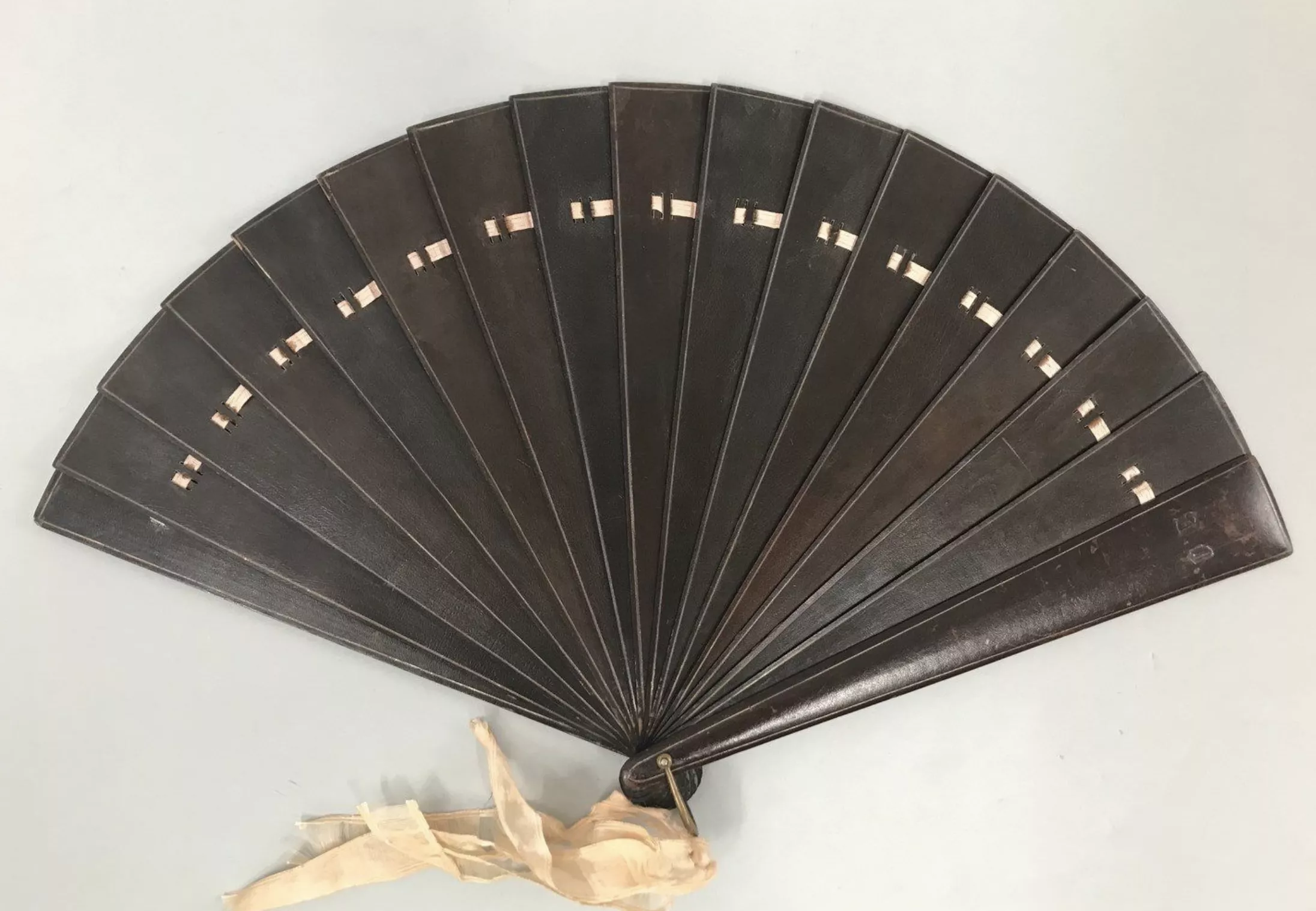
A fan’s frame is often the primary criterion for identification and valuation. Ivory, the finest of traditional materials, can be carved, sculpted in relief, or openworked into lace-like patterns in the most valuable pieces.
Mother-of-pearl, with its characteristic iridescent sheen, is engraved or gilded with fine gold. Tortoiseshell, now subject to international trade restrictions under the CITES Convention, requires special attention during appraisal and sale. Bone, lacquered wood, and metal (silver, vermeil, or gold) round out the range of commonly used materials.
The Country or the Leaf
The leaf—whether made of vellum (prepared animal skin), silk, paper, or lace—constitutes the main decorative surface of the folding fan. Gouache or watercolor paintings on vellum or silk, often executed by renowned artists or specialists from the “fan-producing region,” can achieve a quality comparable to that of period miniatures.
Lace—whether bobbin lace, shuttle lace, or needle lace made using the most exquisite techniques (Brussels stitch, Venetian stitch, Caen lace)—is one of the most sought-after features on the market.
Antique Fans and the National Library of France: A Major Institutional Recognition
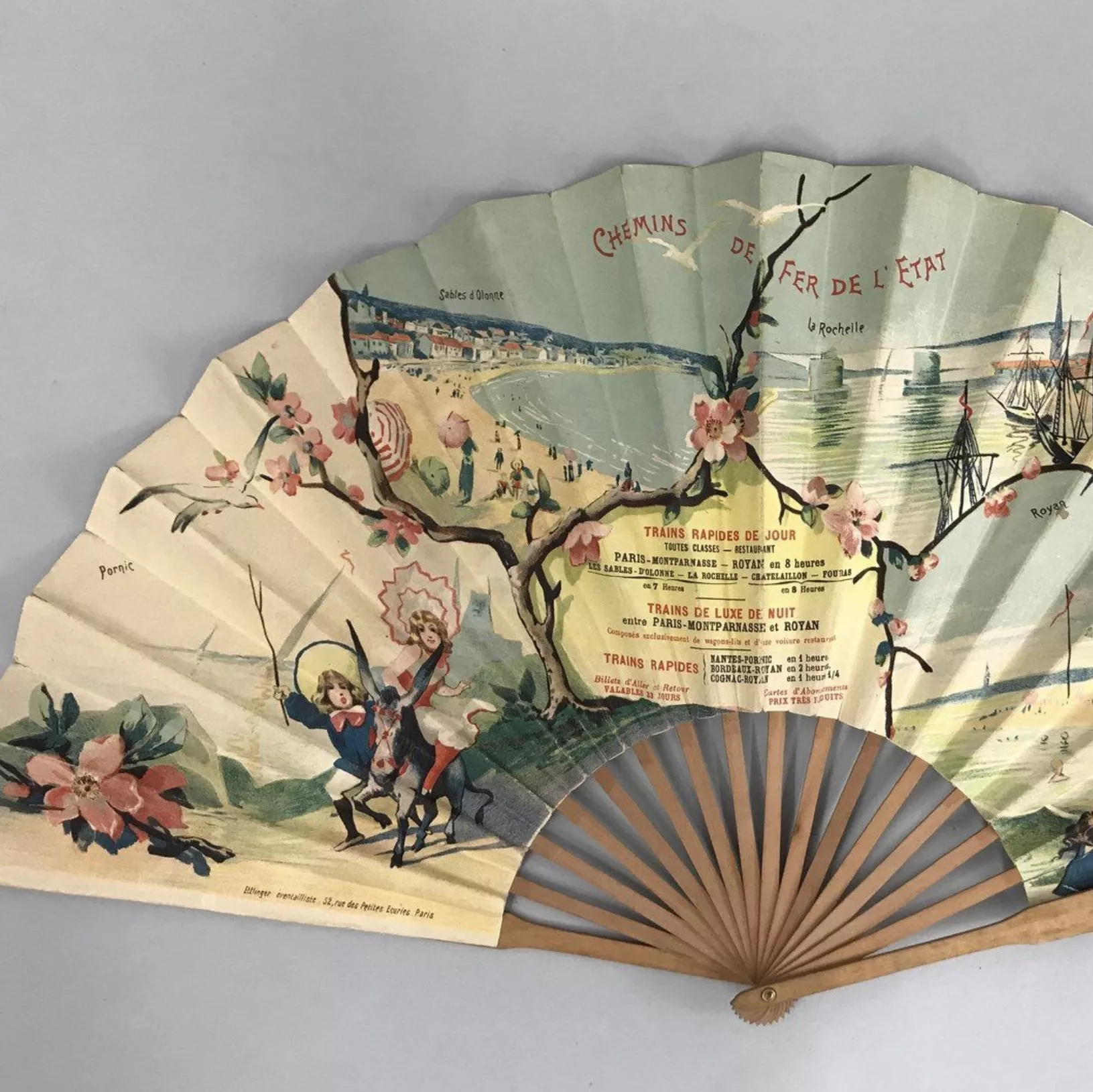
One of the most telling indicators of the cultural heritage value attributed to antique fans is the National Library of France’s regular exercise of its right of first refusal during auctions organized by the Rossini Group, of which Auctie’s is a member.
The government’s right of first refusal on public auctions allows certain national institutions (libraries, museums, and archives) to step in for the final buyer and acquire an item at the hammer price, provided they deem the object to be of sufficient cultural significance to warrant its inclusion in national collections.
The exercise of this right constitutes, in and of itself, a form of certification of the importance and authenticity of the item in question.
The National Library of France, which houses one of the world’s largest collections of fans in its Department of Prints and Photography, has on several occasions exercised its right of first refusal to acquire antique fans at auctions organized by the Rossini Group.
These preemptive purchases, which involve items of a quality or provenance deemed sufficiently exceptional to enrich the national collections, reflect two concurrent realities: on the one hand, the quality of the selection made by the group’s experts when compiling their catalogs; on the other hand, the trust that national institutions place in the expertise and preliminary authentication carried out by the firm.
For a seller who entrusts a lot to Auctie’s, this institutional recognition is a valuable indicator: items of sufficient quality to attract the interest of the BNF are, by definition, items of proven heritage value, with significant market value, and whose auctioning can generate competition between private and institutional buyers—competition that directly benefits the final price achieved.
Why are antique fans so valuable?
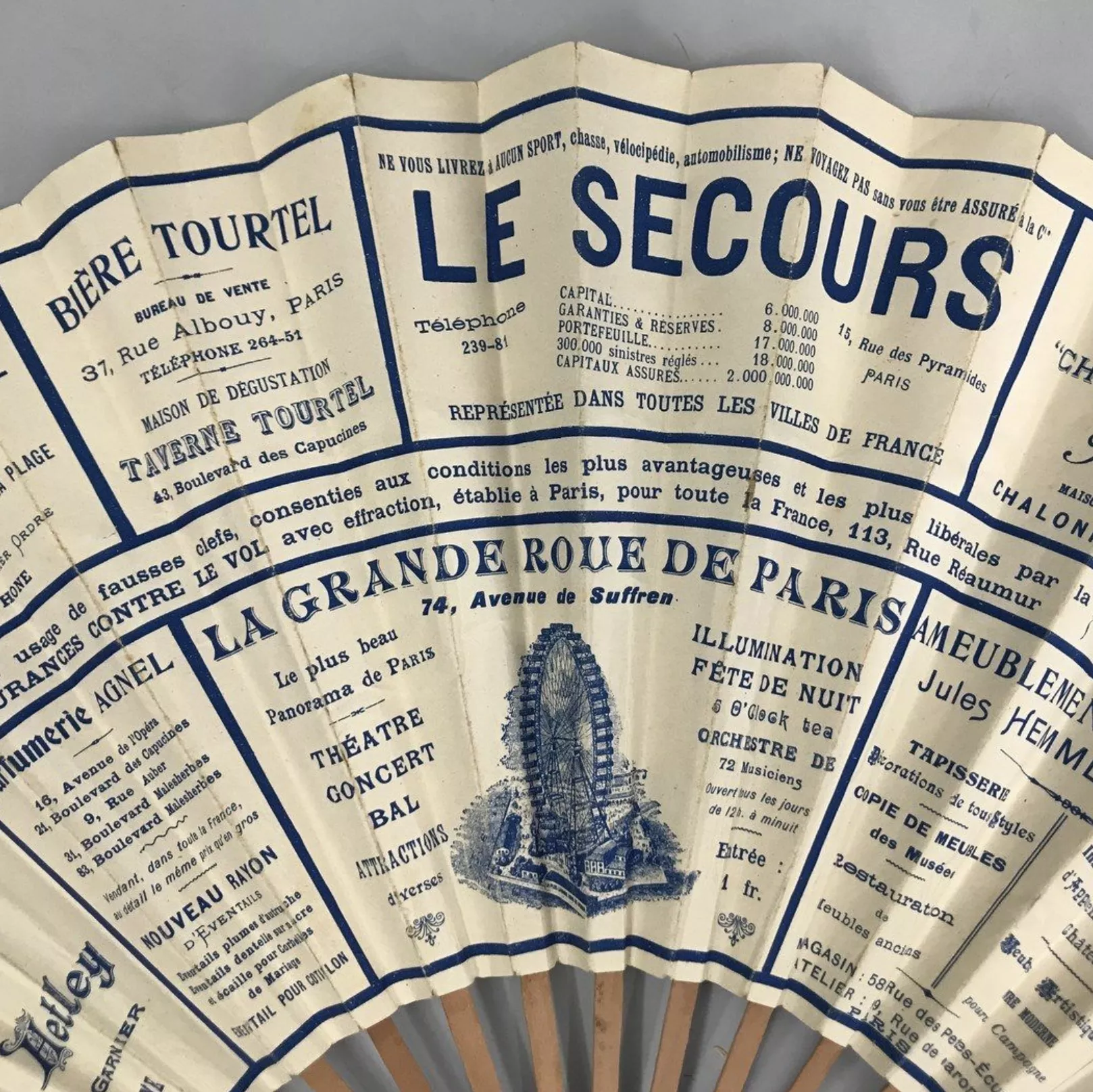
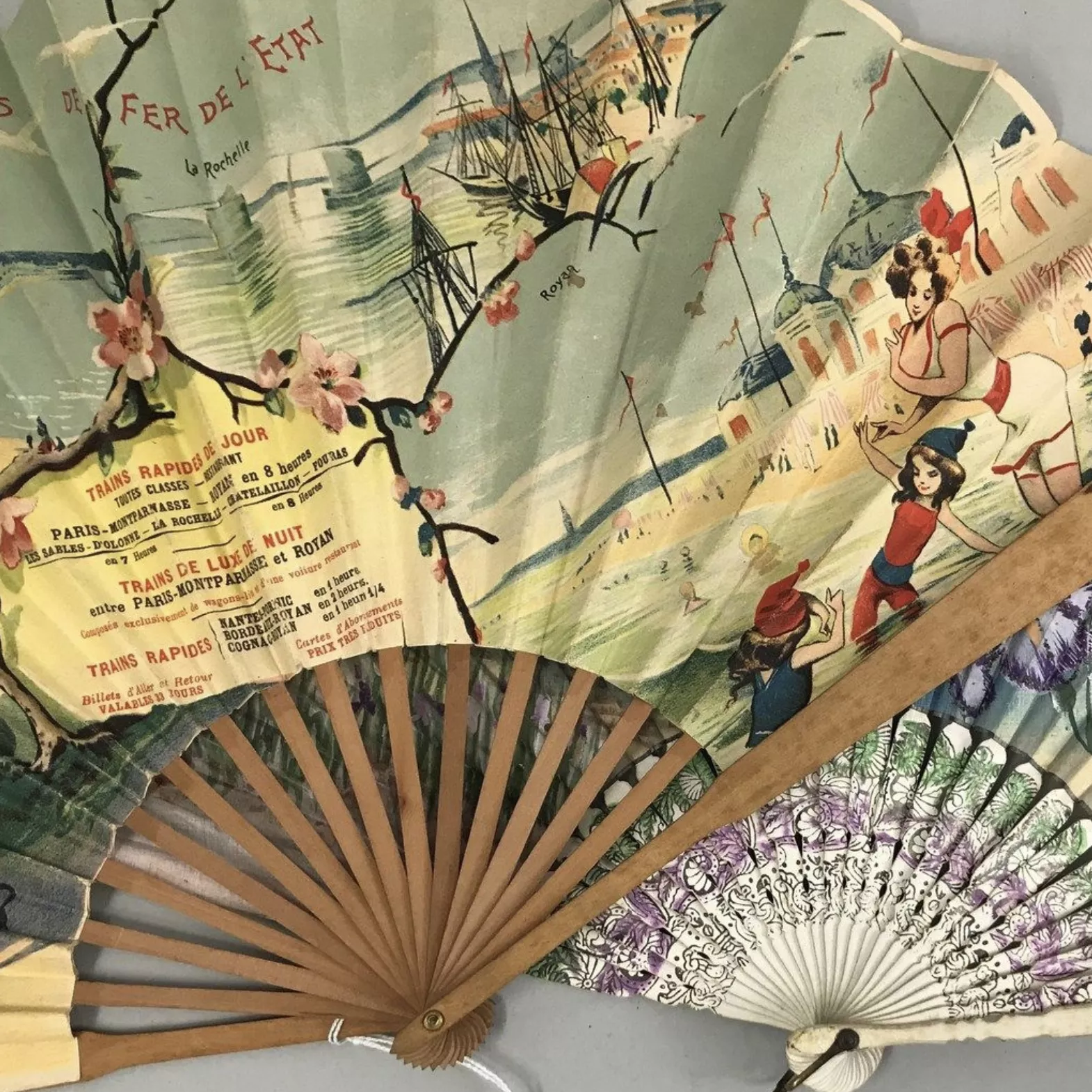
The value of antique fans stems from several factors that come together in a unique way in this category of objects. First, the intrinsic fragility of the materials used—ivory, lace, painted silk, and vellum—means that examples that have survived in good condition are naturally rare, which automatically drives up their value.
Second, fans bring together a multitude of distinct artisanal skills in a single pocket-sized object: ivory or mother-of-pearl carving, miniature painting, needle lace, engraving, gilding, and sometimes enamel work or gemstone setting. Each of these crafts required specialized artisans whose work is now irreplaceable, which gives the most accomplished pieces the status of true masterpieces of craftsmanship in their own right.
Third, fans serve as records of fashion and society of exceptional documentary value. The designs painted on the fan leaves (mythological scenes, courtly festivities, landscapes, genre scenes) serve as windows into the artistic and social life of the eras they represent, giving them dual significance: heritage and iconographic.
Perhaps the most famous example of this documentary value is the fan given by Marie Antoinette to a lady-in-waiting, several copies of which have fetched record prices at specialized auctions, as their association with the queen is a decisive factor in their value, regardless of their intrinsic quality.
The criteria that determine a fan's rating
Period and Style
Fans from the 17th and 18th centuries, produced at the height of European fan-making, are the most highly valued category.
Among these, pieces from the Rococo period—featuring scenes of courtly festivities painted in gouache by artists trained at the Royal Academy of Painting—consistently command the highest prices. Fans from the Napoleon III era and the Second Empire have recently seen their value rise, driven by collectors’ renewed interest in the decorative arts of that period.
Frame Materials
The hierarchy of materials is clear on the market: ivory carved into fine lace ranks first, followed by engraved and gilded mother-of-pearl, carved tortoiseshell, and high-quality lacquered wood. An 18th-century fan with a frame of finely carved ivory in a lace pattern can be worth ten to twenty times more than a contemporary fan with an ordinary bone frame, even if the fan’s surface on the latter was painted by a renowned artist.
The quality of the frame’s craftsmanship is therefore at least as important a criterion for valuation as the decorative quality of the fan leaf.
The Quality and Subject of the Painting
For painted fans, the artistic quality of the decoration is obviously decisive. A fan painted by an identifiable and well-documented artist (the masters of the genre in the 18th century were often renowned genre painters working specifically for fan production) can increase a piece’s value five- or tenfold compared to a fan of comparable quality whose painter is anonymous.
The subject matter itself also influences the value: mythological or allegorical scenes based on well-known compositions are generally valued more highly than ordinary genre scenes.
The provenance and history of the piece
Provenance is one of the most powerful factors affecting value in the market for antique fans. A fan that once belonged to a historical figure (a member of the royal family, a prominent lady of the court, or a political or artistic figure) sees its value increase considerably once this ownership can be documented.
Fans from prestigious collections (sales from a major museum’s collection, the estate of a ducal or princely house) also command a significant provenance premium.
Condition
The condition of antique fans is a criterion of paramount importance, given the fragility of the materials used.
The main defects that affect the value are tears or visible repairs to the fan leaf, yellowing or stains on the silk or vellum, broken or missing ribs in the frame, and deterioration of the gilding. A fan in perfect condition will be valued significantly higher than an equivalent piece with defects, even if those defects have been partially restored.
Criterion | Impact on Value |
18th century, ivory carved in a lace pattern | Very high |
Documented royal provenance | Very high |
Painting attributed to a known artist | High |
Needle lace (Brussels stitch, Venetian stitch) | High |
In perfect condition | High |
19th century, standard bone frame | Moderate |
Visible defects or restorations | None |
Estimate in less than 24h
The Technical Aspects of Appraising a Fan
Appraising an antique fan requires multidisciplinary skills that are rarely found in a single specialist. It requires knowledge of the history of costume and fashion, expertise in 17th- to 19th-century decorative arts, skills in miniature painting and lace-making techniques, and familiarity with animal materials subject to international trade regulations (ivory, tortoiseshell).
Identifying the materials used in the frame requires specific observational techniques: the difference between real ivory and its substitutes (bone, celluloid, galalith) can be seen, in particular, in the pattern of the material’s growth lines. Genuine tortoiseshell can be distinguished from plastic by its optical characteristics under ultraviolet light. Dating the lace relies on recognizing the stitches and patterns specific to each technique and production period.
Local paintings are examined under a binocular magnifying glass to identify the technique (gouache, watercolor, tempera), the support (vellum, silk, paper), and any traces of an identifiable artist’s hand. Eighteenth-century fans often feature designs related to known engravings, which allows them to be dated and sometimes attributed to a specific workshop.
Finally, provenance research involves examining any ex-libris, coats of arms, or monograms embroidered on the fan leaf, as well as inscriptions and labels affixed to the frame or original case—valuable insights into the piece’s history that can transform an ordinary appraisal into a major discovery.
The Most Sought-After Fans on the Market
On the international auction market, certain categories of fans are in particularly high demand. Eighteenth-century fans with finely carved ivory frames, particularly those of French or Spanish origin, are regularly sought after by European, American, and Asian collectors.
Fans decorated with high-quality needle-lace, particularly those in Brussels stitch or Venetian stitch, are another major attraction, often linked to collections of vintage fashion or antique lace.
Fans painted by identifiable artists—particularly those whose landscape paintings can be linked to a known composition by an 18th-century master—command prices that bring them close to the market for miniatures and cabinet paintings, categories with which they sometimes share the same buyers.
Specialized museums (the Musée du Costume et de la Mode in Paris, the Victoria and Albert Museum in London, and the Musée de l’Éventail) as well as national institutions such as the Bibliothèque nationale de France remain active buyers, particularly through the mechanism of the right of first refusal.
Get a free appraisal of your fans with Auctie’s
Auctie’s has experts specializing in the decorative arts and antique furniture, whose expertise covers the identification, dating, and valuation of antique fans from all periods. This expertise is based on an in-depth knowledge of the international market, enriched by the results of auctions organized by the Rossini Group, which are regularly monitored by France’s leading cultural heritage institutions.
The appraisal process is simple and completely free: simply submit high-quality digital photographs of the fan in both the open and closed positions, the front and back of the frame, and any specific details (signature, coat of arms, original case). The experts will provide their response within twenty-four hours, in the form of an indicative estimate range, accompanied, if necessary, by recommendations for additional checks to refine the valuation.
If the decision to sell is made, Auctie’s handles the entire process: drafting the catalog entry by a specialist, professional photography, a preview exhibition at the Hôtel Drouot, conducting the auction, and collecting the proceeds within the legally prescribed time frame. The auction house ensures that each fan is included in the sale best suited to its nature and value, in order to maximize competition among buyers and achieve the best possible result.
Estimate in less than 24h
Discover in the same theme

Have your Asian art appraised free of charge: paintings, bro...
Asian art is a fascinating field, with a wide variety of objects bearing witness to the history and culture of Asian civilizations.
Learn more >

Leather goods rating: bag value - Auctie's
Discover the market value of luxury bags and leather goods, and get a free estimate for yours in less than 24 hours with Auctie's.
Learn more >

Rating high jewelry - Expertise auctioneer - Auctie's
Find out the value of your jewelry with Auctie's, a licensed auctioneer. Free appraisal within 24 hours, auction at the Hôtel Drouot. 💎
Learn more >
Nos records d'enchères à l'hôtel Drouot

Estimated 10.000 - 15.000 €
Ebridge Ayer BURBANK(1858-1949), Young African-American boy, Oil on panel.

Estimated 20.000 - 30.000
EXCEPTIONAL LARGE OVAL DISH IN VINCENNES SOFT PASTE PORCELAIN FROM THE "BLEU CÉLESTE" SERVICE OF KING LOUIS XV AT THE CHÂTEAU DE VERSAILLES

Estimated 20.000 - 30.000
MANUFACTURE ROYALE DE SÈVRES, 18th century "L'Empereur de la Chine" - Portrait of the Emperor Qianlong, Hard porcelain bisque, 1775

Estimated 1.500 - 3.000
HERMÈS, "Kelly" 32 saddle bag in black box calf

Estimated Between €5,000 and €8,000
KRACHKOWSKY (1854-1914), Before the storm, oil on canvas

Estimated 40.000 - 80.000
Alexandre ROUBTZOFF (1884-1949), Portrait of Arbia, oil on canvas

Secure site, anonymity preserved

Auctioneer approved by the State

Free and certified estimates
Frequently asked questions
-
Quels sont les principaux facteurs qui déterminent la valeur d'un éventail ancien ?La valeur d'un éventail ancien dépend de plusieurs critères combinés : la période et le style (les XVIIe-XVIIIe siècles sont les plus valorisés), la matière de la monture (l'ivoire sculpté en dentelle fine est le plus recherché), la qualité et l'attribution de la peinture, la provenance documentée (notamment royale ou aristocratique) et l'état de conservation. Un éventail en parfait état du XVIIIe siècle en ivoire avec une provenance royale peut valoir bien plus qu'une pièce contemporaine en os, même de bonne qualité.
-
Comment faire expertiser gratuitement un éventail ancien pour connaître sa valeur ?Auctie's propose une expertise gratuite et sans engagement réalisée par des commissaires-priseurs et experts agréés par l'État. Il suffit de nous soumettre votre éventail : nos spécialistes vous transmettront une estimation précise de sa valeur marchande actuelle sous 48 heures. Cette expertise pluridisciplinaire mobilise des compétences en histoire du costume, arts décoratifs, authentification des matières et examen des techniques de fabrication.
-
Quelle est la fourchette de prix des éventails anciens selon leur type ?Les prix varient considérablement selon le type : les éventails de papier imprimé du XIXe siècle se situent entre 50 et 500 €, tandis que les éventails peints à la main sur vélin atteignent 800 à 15 000 €. Les pièces de haute époque (XVIIe-XVIIIe siècle) en dentelle se vendent entre 3 000 et 80 000 €, et les éventails de provenance royale ou aristocratique documentée peuvent dépasser 200 000 €.
-
Est-ce le bon moment pour vendre un éventail ancien ?Oui, le marché des éventails anciens reste dynamique, particulièrement pour les pièces de qualité. Les institutions patrimoniales, notamment la Bibliothèque nationale de France, exercent régulièrement leur droit de préemption lors des ventes aux enchères, ce qui génère une compétition entre acheteurs privés et institutionnels favorable au prix final. Les collectionneurs spécialisés recherchent activement des pièces authentifiées et bien provenance.
-
Comment se déroule la vente d'un éventail ancien chez Auctie's ?Auctie's vous accompagne de l'estimation gratuite initiale jusqu'à l'adjudication. Après expertise, nous vous orientons vers le meilleur dispositif de vente possible pour optimiser le prix de réalisation. En tant que maison de ventes aux enchères, nous mettons votre éventail aux enchères publiques devant une clientèle de collectionneurs, musées et amateurs avertis, en France et à l'international.
