



Rating and value of paintings by Theodore Robinson

Key takeaways
- Theodore Robinson (1852–1896), an American Impressionist painter, has works valued between €210 and €1.6 million, depending on the technique.
- His landscapes of southern France, which are particularly sought after, can fetch tens of thousands of euros on the current market.
- Trained in Giverny under Claude Monet, Robinson blends French Impressionism with American rural landscapes through his use of vibrant light.
If you own a work by or based on the work of artist Theodore Robison and would like to know its value, our state-approved experts and auctioneers will guide you.
Our specialists will carry out a free appraisal of your work, and provide you with an accurate estimate of its value on the current market.
Then, should you wish to sell your work, we'll direct you to the best possible arrangement to obtain the optimum price.
Rating and value of the artist
An artist of the early American Impressionist movement, Theodore Robinson enjoyed artistic renown during his lifetime, especially on a regional scale.
Today, the artist's works are rare but rated on the market. Landscape scenes from the south of France are particularly sought-after by collectors.
A work by Theodore Robinson can fetch thousands of euros, as shown by his oil on canvas Boats at a landing, which fetched €1,623,200, whereas it was estimated at between €341,720 and €512,600.
Order of value from the most basic to the most prestigious
Technique used | Result |
|---|---|
Drawing - watercolor | From €210 to €84,000 |
Painting | From €350 to €1,623,200 |
Estimate in less than 24h
The works and style of Theodore Robinson
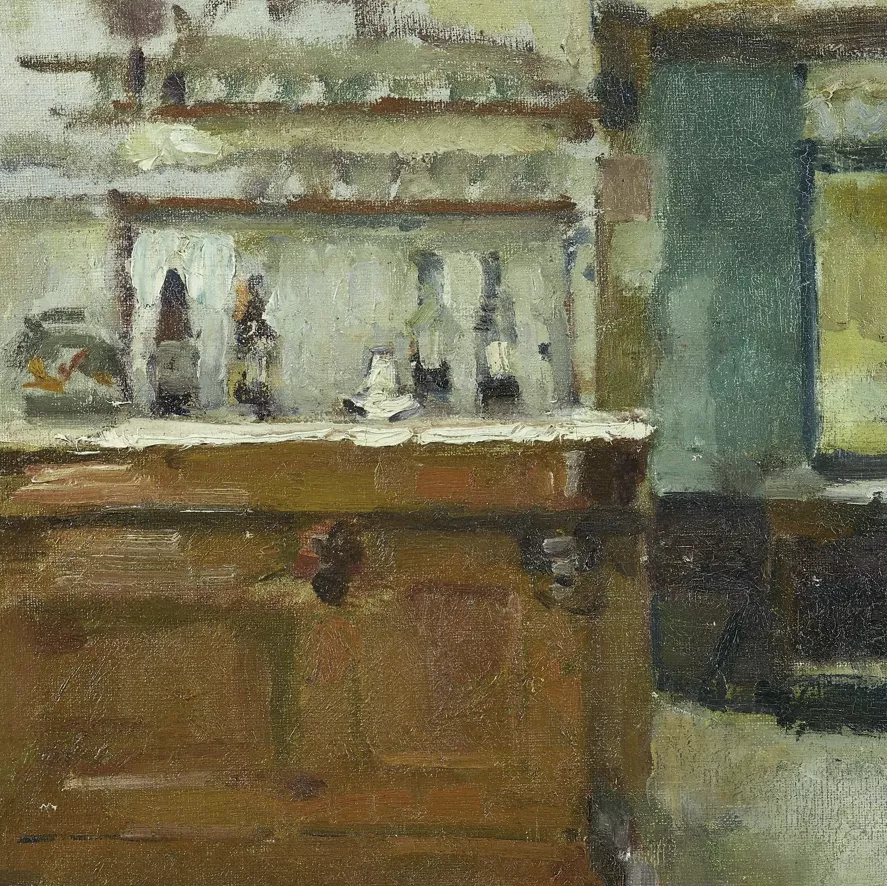
Theodore Robinson (1852-1896), an American painter associated with Impressionism, combined European influences with his own vision of landscape. His style is characterized by a sensitive approach to light and meticulous attention to variations in atmosphere.
Robinson's technique relies on a subtle interplay of color and rapid, almost ephemeral strokes to capture the essence of the moment.
As a great admirer of the French Impressionist masters, he adopts the often discreet but richly vibrant brushstroke technique that lends his works a particular vivacity.
His compositions, dominated by light, luminous tones, oscillate between precise definition of form and a fluidity that blossoms in the light. He uses color to structure his paintings without freezing reality, as evidenced by his outdoor scenes and rural landscapes.
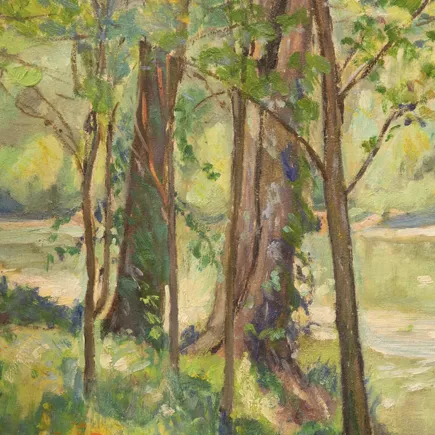
Robinson, in his approach to light, succeeds in capturing the subtleties of a changing sky or the softness of nature, through a palette that gives pride of place to pastel tones, soft morning or evening light, and water reflections.
Although he has never sought to imitate the great Impressionist figures, his work shows a deep affinity with that of Claude Monet, particularly in the use of atmospheres and the play of light.
However, he distinguishes himself from them with a more personal touch, influenced more by his attachment to American nature.
.
The life of Theodore Robinson
Theodore Robinson (1852 - 1896) was an American Impressionist artist. Born in Irasburg, Vermont, he grew up in the state of Winsconcin and began his early training at the Art Institute of Chicago.
In 1874, he joined the American Academy of Design and the Art students league, this time in New York, where he was still finding his way alongside other young American artists. An admirer of the French Impressionists, he chose to move to Paris.
He then began training at the Beaux-Arts de Paris under Carolus-Duran and Jean-Léon Gérôme. This enabled him to acquire a certain technique, but he was not yet convinced that he had found his calling.
He left for Venice and Bologna, returning to the United States in 1879.
In the USA, he experimented during this period with a more realistic style, which was to weary him. Feeling that he had not reached the end of his artistic quest, he decided to return to France and became close to Claude Monet and his circle.
He had the opportunity to stay in Giverny, where Claude Monet advised him. Critics consider that the painter produced his best paintings in Giverny. The paintings he produced in Capri are also famous, being among the most accomplished in his output.
Despite finding himself and, above all, a public in France receptive to his work, as well as working with the greatest, he chose to return to America in 1892, having secured a teaching position at the Brooklyn Art School.
Theodore Robinson had planned to return to France, in particular to visit Claude Monet, but his state of health did not allow him to do so, as he died in New York, aged 43.
.Focus on The Old Mill, Theodore Robinson
Theodore Robinson's The Old Mill (1892) is a perfect embodiment of Impressionism as seen in American landscapes. This painting, which depicts an old mill in the American countryside, is distinguished by its tranquil, luminous atmosphere.
The mill, at the center of the composition, seems almost to merge with the surrounding landscape, a fusion that testifies to the way the artist manages to render the harmony between man and nature.
The texture of the ground, evoked by a succession of rapid, vibrant strokes, suggests a surface animated by light and shadow, while the vegetation bordering the scene deploys a more natural palette of greens and browns, contrasting with the luminous whiteness of the sky.
Robinson doesn't hesitate to use reflections in the water, creating subtle mirror effects that bring a poetic dimension to the work.
Far from any search for minute detail, the artist favors a more impressionistic approach, where we perceive less the contours than the atmosphere of the moment, that characteristic light, which bathes the landscape in a serene, peaceful glow.
With this work, Robinson not only immortalizes a moment in time, but invites us to share his intimate perception of nature, both fluid and changing.
Theodore Robinson's imprint on his period
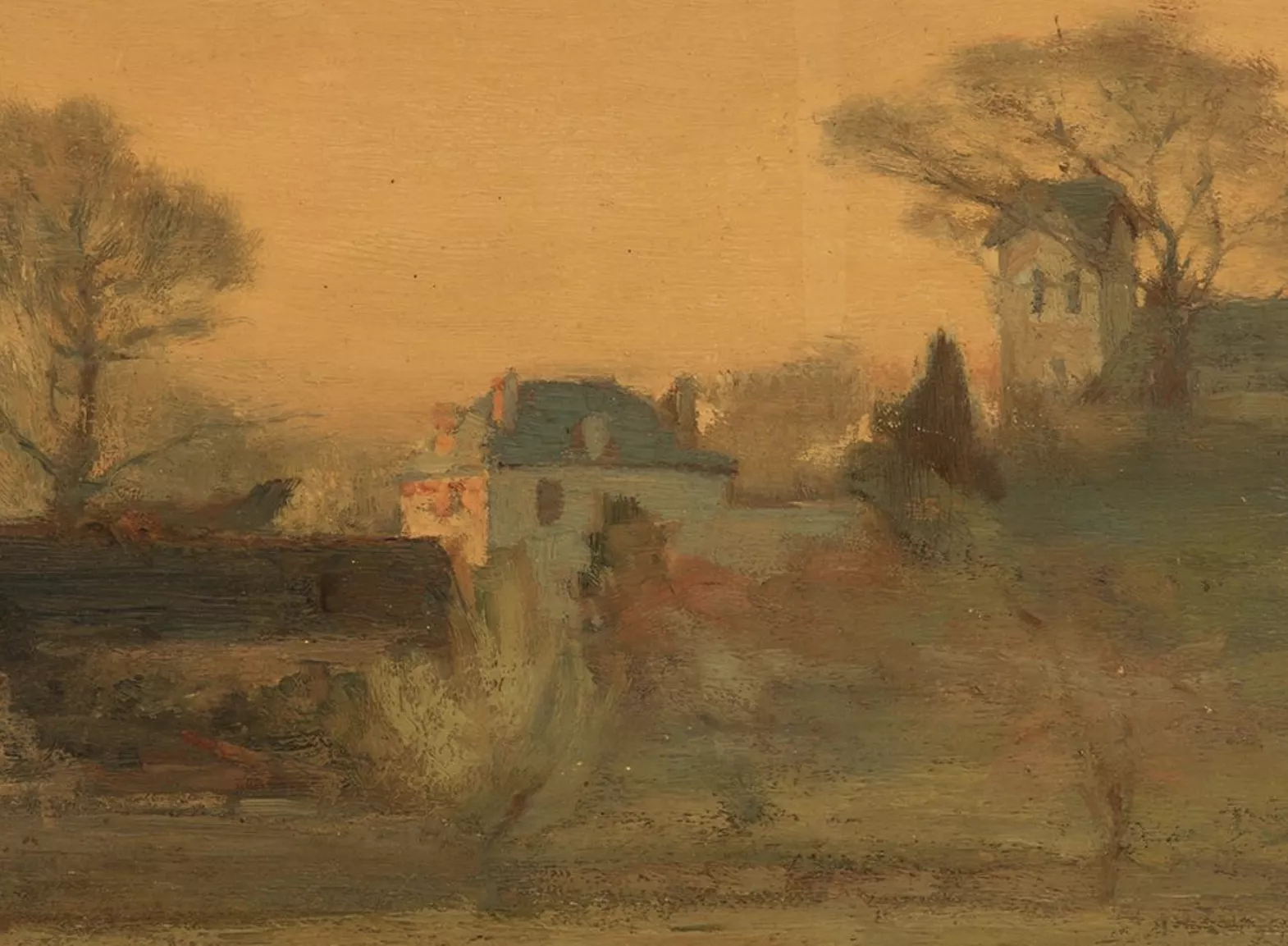
Theodore Robinson's imprint on the Impressionist period is undeniable and marked by his ability to transpose the European artist's vision into an American context.
Through his work, he fully participates in the integration of light and color as essential principles in the construction of landscape, which establishes him as a precursor of the American landscape at the turn of the 19th and 20th centuries.
His stay in France, notably with Claude Monet in Giverny, leads him to adopt a vibrant palette and a free facture that move away from the rigid forms of academic painting.
However, it is in his approach to light, in his ability to render air, water and the elements with an almost musical lightness, that he marks the transition from Impressionism to an American specificity.
Far from contenting himself with reproducing the world he sees, Robinson reinterprets it, offering vast, open landscapes, rural and agricultural scenes where atmosphere takes precedence over structure.
His influence was felt not only by his contemporaries, but also by subsequent generations, who saw him as a key figure in the adaptation of Impressionism to a wider, more diverse environment.
His work paved the way for a new vision of the American landscape, rich in its particularisms while remaining faithful to the principles of Impressionist painting.
Theodore Robinson's stylistic influences
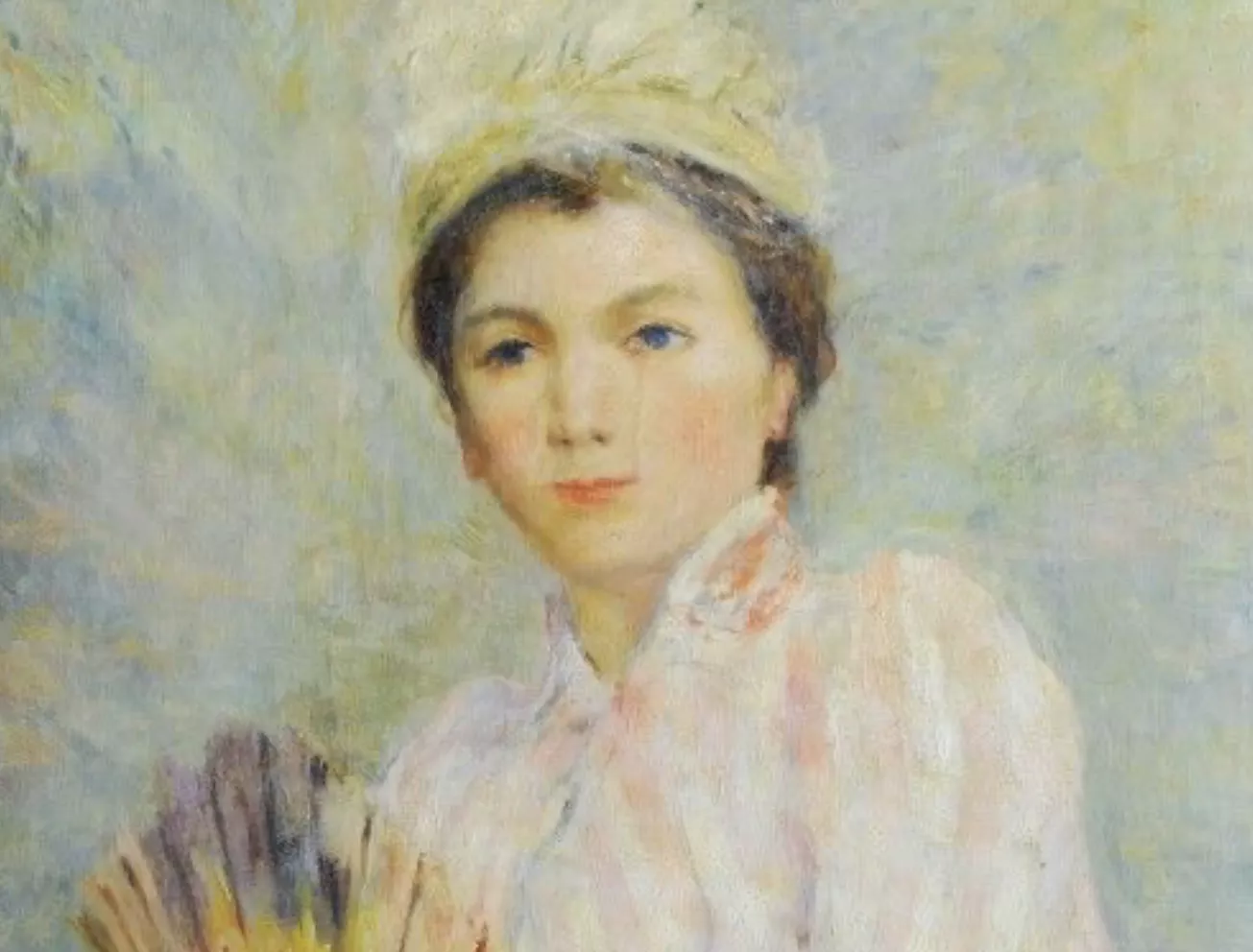
Theodore Robinson follows in the footsteps of the Impressionist painters, but his style is the fruit of multiple influences that give it a singular identity.
Trained at the Beaux-Arts in Chicago and New York, he began under the influence of academicism before opening up to modern research through contact with French painting.
His move to Giverny in the 1880s marked a decisive turning point: here he met Claude Monet, whose fundamental principles he assimilated.
He then adopted a freer touch, luminous colors and subtle work on atmospheric effects, favoring outdoor scenes and compositions bathed in light.
However, Robinson doesn't simply imitate Monet; he retains a more defined structure, inherited from the realist tradition and American landscape painting, following the example of George Inness.
His attachment to human figures in the landscape also recalls the work of Jean-François Millet and Camille Corot, whom he admires for their sense of the everyday and their intimate approach to nature.
On his return to the United States, he transposed this European sensibility to American rural scenes, in turn influencing a new generation of painters eager to integrate Impressionism into their own visual culture.
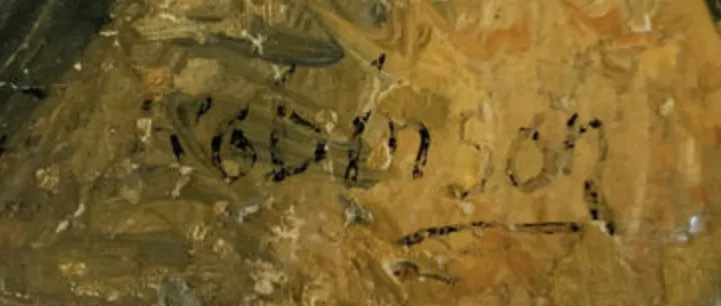
His signature
Theodore Robinson's works are not all signed, so expertise is important.
Expertise your property
If you own a work by Theodore Robinson, don't hesitate to request a free appraisal by filling in our online form.
A member of our team of experts and chartered auctioneers will contact you to provide an estimate of the market value of your work.
If you are considering selling your work, our specialists will also guide you through the various alternatives available to obtain the best possible price, taking into account market trends and the specific features of each work.
Estimate in less than 24h
Discover in the same theme

Value and quotation of Carlo Bugatti's artworks, furniture a...
Carlo Bugatti, a 19th-century cabinetmaker, produced furniture in the Art Deco style. They are highly valued and quoted.
Learn more >

Rating and value of works, paintings by Aimé Morot
Aimé Morot was a 19th-century painter and sculptor, who mainly produced portraits. His price is quite high at auction, and stable.
Learn more >

Rating and value of Fabergé objets d'art
Pierre-Karl Fabergé is a master goldsmith who has produced numerous works of high value at auction. 24h estimate.
Learn more >
D'autres tableaux impressionnistes vendus aux enchères

Estimated 6.000 - 8.000
Mikhail Markianovich GUERMACHEFF (1867 - 1930) House under the snow, oil on canvas

Estimated 2.000 - 4.000
Jean DUFY (1888-1964) Vase of anemones, Watercolor

Estimated 600 € - 800 €
Henri ZUBER (1844-1909), Bridge at Artemare. Oil on canvas.

Secure site, anonymity preserved

Auctioneer approved by the State

Free and certified estimates
Frequently asked questions
-
Who was Theodore Robinson, and what was his artistic background?Theodore Robinson (1852–1896) was an American Impressionist painter who studied at the École des Beaux-Arts in Paris under Carolus-Duran and Jean-Léon Gérôme. He spent time in Giverny, where he worked alongside Claude Monet, an experience that marked a decisive turning point in his style. Although an admirer of the French Impressionists, Robinson developed a personal approach by applying Impressionism to American landscapes, thereby becoming a pioneer of American landscape painting at the turn of the 19th and 20th centuries.
-
What are the prices and values of Theodore Robinson's paintings?Theodore Robinson’s works are rare but highly valued on the market. His drawings and watercolors range in price from 210 to 84,000 euros, while his paintings can fetch several thousand euros, ranging from 350 to over 1.6 million euros. His landscape scenes of southern France, particularly his paintings created in Giverny and Capri, are especially sought after by collectors.
-
How can you authenticate a work by Theodore Robinson?Authenticating a work by Theodore Robinson requires professional expertise, as not all of his works are signed. Auctie's offers a free, no-obligation appraisal online or upon request from its state-certified experts and auctioneers, who will provide you with a reliable estimate of your artwork’s market value within 48 hours.
-
Is this a good time to sell a painting by Theodore Robinson?Yes, now is a good time to sell a work by Theodore Robinson. His paintings are rare but enjoy steady demand in the market, particularly his landscapes of the south of France and the works he created in Giverny. The growing recognition of his role in American Impressionism is supporting prices in the current market.
-
How does the free appraisal of a work of art work at Auctie's?A free appraisal at Auctie's is simple and non-binding: just fill out an online form with the details of your artwork. An expert or certified auctioneer from our team will contact you to examine your painting and provide you with an accurate estimate of its market value within 48 hours. If you decide to sell, our specialists will guide you toward the best sales strategy.
