



Rating and value of paintings by Franz Defregger

Key takeaways
- Franz Defregger (1835–1921), an Austro-German painter, commands a high and stable market value, with works ranging in price from €30 to €294,000.
- His oil paintings are his most highly valued works (€30–294,000), while his drawings and prints fetch €80–9,700 and €30–8,800, respectively.
- Specializing in war scenes, Cossack cavalry, and everyday Alpine life, his style combines Austrian realism and military painting with meticulous attention to detail.
If you own a work by or based on the artist Franz Defregger and would like to know its value, our state-approved experts and auctioneers will guide you.
Our specialists will carry out a free appraisal of your work, and provide you with a precise estimate of its value on the current market.
Then, if you wish to sell your work, we will direct you to the best possible arrangement to obtain the optimum price.
Rating and value of the artist
A German and Austrian painter best known for his history paintings and war scenes, Franz Defregger has a high market value.
Prevailingly common in auction rooms, the price at which they sell ranges from €30 to €294,000, a substantial range but one that speaks volumes about the value that can be attributed to the artist's works.
His oil on canvas Wallfahrer (Pilgrims) sold for €294,000, whereas it was estimated at €131,000 to €184,000.
Order of value from the most basic to the most prestigious
Technique used | Result |
|---|---|
Estamp - multiple | From €30 to €8,800 |
Drawing - watercolor | From €80 to €9,700 |
Painting | From €30 to €294,000 |
Estimate in less than 24h
The artist's style and technique
Franz von Defregger has forged a style all his own, combining Austrian realism with military painting.
In his compositions, he seeks out transparency effects that add visual depth to his scenes, which are often marked by a striking austerity.
Influenced by Austrian art, Degreffer composes complex works that capture the rigorous spirit of military tableaux.
This distinctive style positions him among the notable figures of realism and military painting in Austria, where his unique approach finds a prominent place in the artistic tradition of his era.
The career of Franz Defregger
Franz von Defregger (or Franz Karl von Defregger) (1835-1921) was an Austrian military painter whose work is distinguished by a particular interest in cavalry scenes and Cossack figures.
Born in Graz, Austria, he turned early on to the depiction of military life, influenced by the realism that marked the genre painters of his day.
Studying at the Academy of Fine Arts in Vienna, Degreffer was also imbued with the influence of Russian art, having traveled to Russia on several occasions, where he became close to the local military tradition and Defregger the Cossack iconography.
Like Adolf Baumgartner Stoiloff, Defregger chooses to privilege horses in his scenes, focusing on rendering the energy and vitality of these animals in war or parade contexts.
Cossacks, emblematic figures of the Russian cavalry, feature prominently in his compositions.
Originals of the Pontic steppes and symbols of resistance and freedom, these warriors are distinguished by their independent way of life and their own military structure, with elected chiefs and specific combat techniques.
Fascinated by their history, Defregger captures its spirit in his works, highlighting their riding skills and daring maneuvers.
This iconography, which often includes hunting scenes and steppe landscapes, brings a singular dynamic to his paintings and reinforces the narrative dimension of his military compositions.
Through his depictions of Cossacks and war horses, Defregger forged a precise, energetic style, which earned him a place among the notable figures of Austrian military painting.
World and artists - Franz von Defregger
Focus on Italienische Bettelsänger by Franz von Defregger
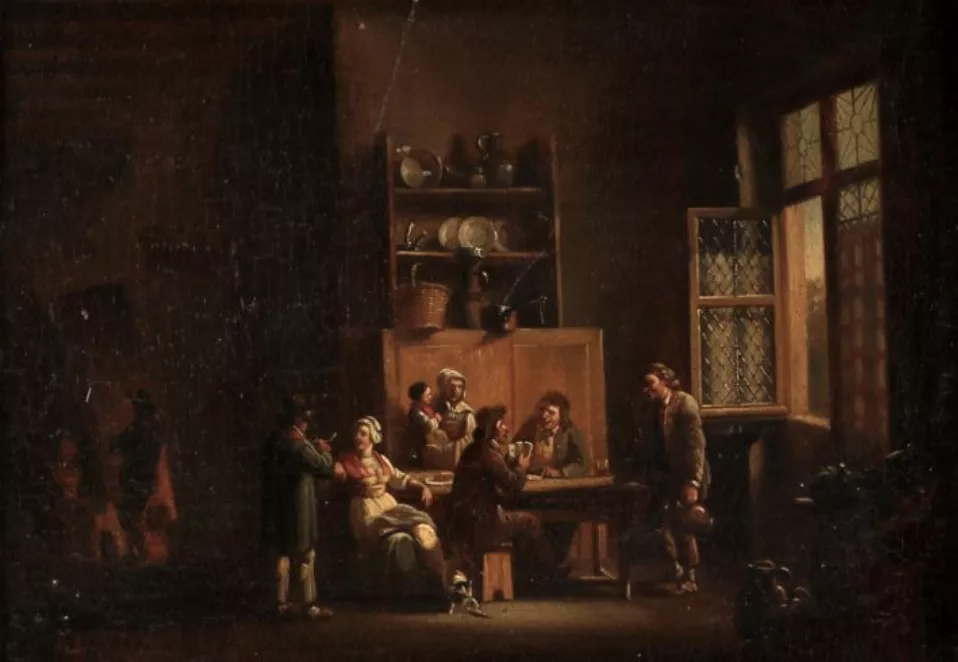
In Italienische Bettelsänger (1873), Franz von Defregger transports us to a scene from everyday life, where a group of Italian beggar singers stop off at an inn. The atmosphere, though modest, is charged with a warm conviviality.
Each character seems lost in their own role: the man in the background plays the flute, the children are fascinated by the music, and the woman on the right listens with a shy smile, while petting the dog sitting at her feet.
The subdued lighting recalls the paintings of the Flemish school, where light is subtly directed to highlight faces and expressions, lending the scene an almost palpable intimacy.
The colors, dominated by warm, earthy tones, reinforce this rustic, authentic ambience.
The meticulously crafted details of costumes and faces evoke the influence of the Northern School, with particular attention paid to the characters' expressions and the textures of materials.
The setting of the inn, simple but rich in elements such as the hanging hat and the trunk at the back, plunges us into a rural universe and brings us closer to the everyday life of these singers.
Defregger captures here not only a moment of music and sharing, but also succeeds in paying tribute to the dignity of the little people. With this painting, he belongs to a pictorial tradition that values realism and narrative, showing a rare balance between the sobriety of the scene and the richness of the details.
German and Austrian war painting
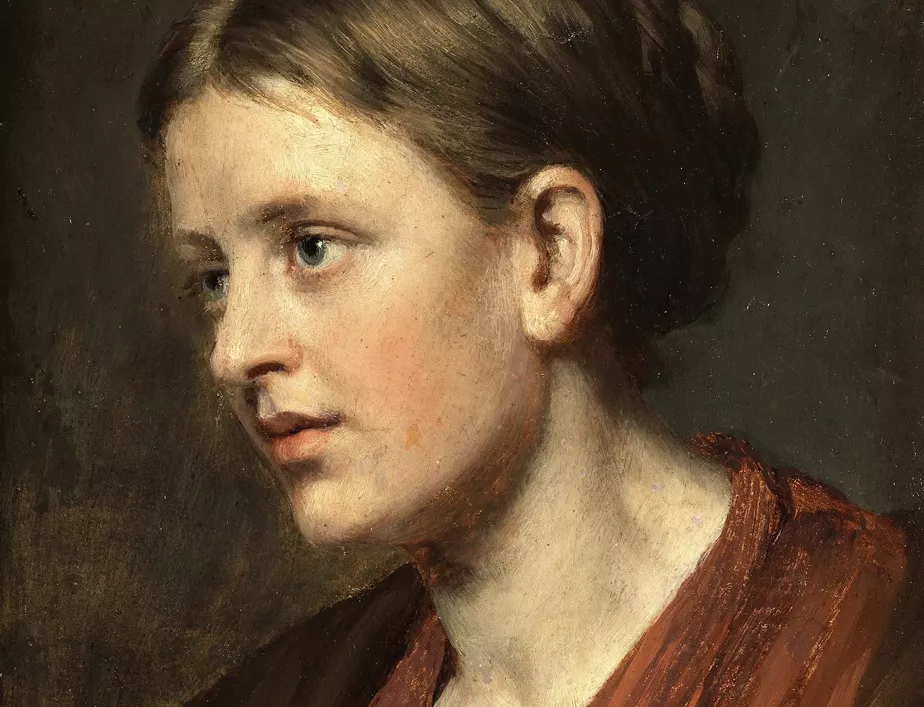
German and Austrian war painting in the 19th century, rooted in a tradition of history painting, embodies the grandeur of battles and immortalizes the critical moments of its era.
Marked by the conflicts of the Austro-Hungarian Empire, the wars of German unification and nationalist tensions, this painting bears witness to the magnitude of the upheavals of the time, offering a blend of patriotism and military heroism.
Among the painters who left their mark on this tradition, Franz Defregger stands out alongside his European contemporaries. His works, such as The Battle of Sadowa and The Siege of Prague, focus on the dynamics of confrontation and the dramatic tension of individual gestures.
His attention to detail, also found in French Nicolas-Toussaint Charlet and the baron François Gérard, gives his compositions a historical and patriotic rigor: every uniform, every weapon, and every expression helps to freeze in time the heroism of his German and Austrian soldiers.
In Germany, Carl Röchling and Wilhelm Camphausen adopt a similar realism, incorporating imposing landscapes that underline the harshness of the fighting and the nobility of the soldiers.
These artists, influenced by the work of Franz Roubaud in Russia, accentuated the monumentality of war by working on grandiose compositions, such as Roubaud's panoramas, like his famous Panorama de Borodino (1887).
Roubaud and his Russian compatriots such as Vasily Vereshchagin also convey the immensity of battles while evoking the human conditions of the battlefield, where courage and suffering rub shoulders.
The works of Defregger and his peers blend a palette of dark, saturated colors, capturing both the violence of the confrontations and the dignity of the soldiers.
As with the Polish Juliusz and Wojciech Kossak, details are treated with extreme meticulousness, to make each painting a vivid fresco of war and national history.
Their compositions, often panoramic and intensely charged with detail, exalt the values of endurance and bravery.
Through these works, German, Austrian and, more broadly, European military painting becomes a powerful means of collective memory, where each battle recounted on canvas reflects the grandeur and complexity of 19th-century conflicts.
The artist's imprint on his time
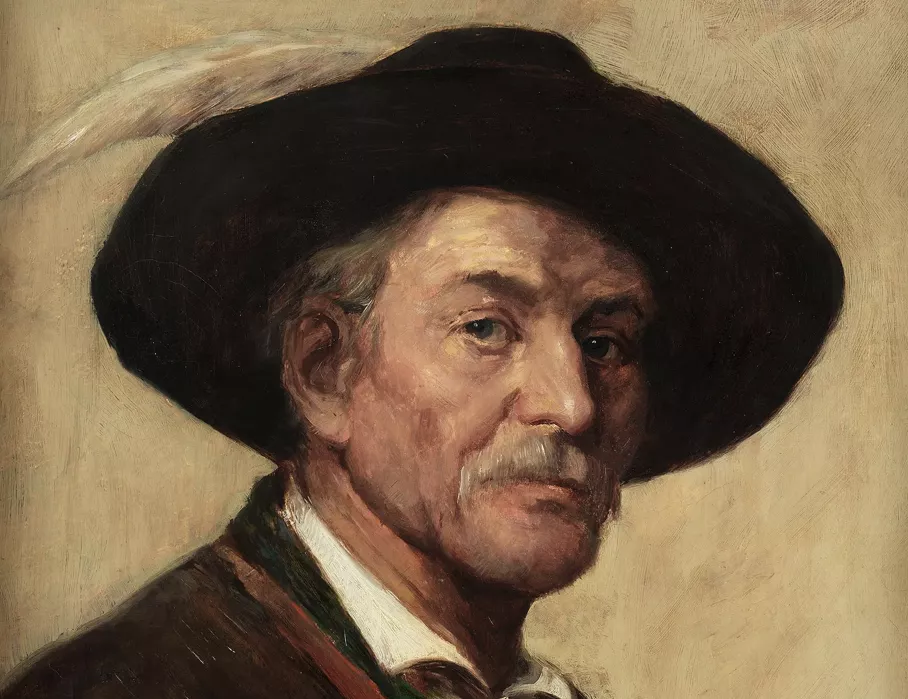
Franz Defregger's imprint on his time is undeniable, marked by his ability to capture and magnify scenes imbued with emotion and realism, which find a particular echo in Austria and Germany.
Despite his limited notoriety in France, Defregger is arousing growing interest among certain French collectors, attracted by the intensity of his compositions and his meticulous technique, which turns each painting into a plunge into Austrian military and peasant history.
His works, oscillating between battle scenes and portraits of everyday life in the Alps, continue to reflect an era, but also a collective imagination specific to German-speaking cultures.
His quotation, high and stable for several decades, reflects a sustained infatuation and lasting recognition of his work, despite the absence of the great international popularity of some of his contemporaries.
Although some of his pieces are preserved in major museums in Austria and Germany, it is largely thanks to passionate, often private collectors that his work has spanned generations.
These enthusiasts play an essential role in preserving his memory and in the ongoing valorization of his art.
The rarity of his paintings on the market accentuates their desirability, and each acquisition thus becomes a testament to Defregger's imprint, enabling his work to endure over time and influence new generations fascinated by Austrian history and culture.
His signature
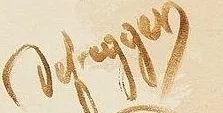
Not all of Hanz Defregger's works are signed, and more importantly, they can be signed in different ways, given that he used several pseudonyms during his career.
Although there are variations, here's a first example of his signature:
Expertise your property
If you happen to own a work by or after Hanz Defregger, don't hesitate to request a free valuation by filling in our form on our website.
A member of our team of experts and certified auctioneers will contact you promptly to provide you with an estimate of the value of your work, and will ensure that you receive ad hoc information about it.
If you're thinking of selling your work, our specialists will also help you find alternatives to sell it at the best possible price, taking into account the inclinations of the market and its specific features.
Estimate in less than 24h
Discover in the same theme

Rating and value of works, paintings and engravings by Odilo...
Odilon Redon is a 19th-century painter and engraver, a leading exponent of the Symbolist movement. His works are quoted and appreciated at auction.
Learn more >

Rating and value of drawings and paintings by Ary Scheffer
Ary Scheffer was a 19th-century Romantic painter whose works command high prices at auction. 24-hour estimate
Learn more >

Rating and value of drawings and paintings by Horace Vernet
Horace Vernet was a French Romantic and Orientalist painter who produced numerous paintings that are highly valued and command high prices.
Learn more >
Similar works sold at auction

Estimated 15.000 - 20.000 €
Alfred Auguste Janniot (1889-1968) attributed to : Very large bas-relief

Estimated 600 - 800 €
Alexandre Gabriel DECAMPS (1803-1860) Two children reading.

Estimated 1000 - 2000€
Alfred Stevens (1817 - 1875), marine painting, oil on canvas

Estimated 200 - 400
Eugène Napoléon FLANDRIN (1809-1889), charcoal drawing

Estimated 4.000 - 6.000
Atelier d'Antoine Jean, baron GROS (Paris 1771-1835 Meudon), oil on canvas

Secure site, anonymity preserved

Auctioneer approved by the State

Free and certified estimates
Frequently asked questions
-
Who is Franz Defregger, and what is his artistic style?Franz von Defregger (1835–1921) was an Austrian military painter born in Graz who trained at the Academy of Fine Arts in Vienna. He combined Austrian realism with military painting, specializing in cavalry scenes, Cossack figures, and battle scenes. His distinctive style, influenced by Russian art and the Flemish school, is characterized by meticulous attention to detail, an earthy color palette, and dynamic, narrative compositions.
-
What is the price range for works by Franz Defregger?Prices for Defregger’s works vary considerably depending on the medium and the piece’s prestige. Prints sell for between €30 and €8,800, drawings and watercolors for between €80 and €9,700, while paintings range from €30 to €294,000. His oil on canvas *Wallfahrer* (*Pilgrims*) fetched €294,000 at auction, exceeding its initial estimate.
-
How can you authenticate a work by Franz Defregger?To authenticate a work by Defregger, we recommend requesting a free, no-obligation appraisal from Auctie's. A certified expert or auctioneer will examine your work and provide you with an accurate appraisal within 48 hours. Please note that not all of Defregger’s works are signed, and they may bear different signatures depending on the pseudonyms used by the artist.
-
Is this a good time to sell a work by Franz Defregger?Yes, now is a good time to sell a work by Defregger. His market value has been high and stable for several decades, with growing interest among collectors, particularly in France. The scarcity of his paintings on the market enhances their desirability, which supports prices and makes them easier to sell.
-
How does the process of selling a work of art at Auctie's work?Auctie's supports sellers every step of the way: from a free, no-obligation appraisal by an expert to the auction sale. Our team of certified auctioneers evaluates your artwork, offers you the best sales options, and works to secure the best possible price while taking market conditions into account.
