



Rating and value of paintings by Conrad Wise Chapman

Key takeaways
- Conrad Wise Chapman, an American landscape and war painter (1842–1910), has seen his works fetch prices ranging from €110 to €264,000 at auction.
- His drawings and watercolors are valued at €160 to €27,400, while his oil paintings range from €110 to €264,000 depending on quality and subject matter.
- As a documentary artist for the Confederacy during the Civil War, he produced approximately 40 military scenes, which have become rare visual records of the conflict from the Confederate perspective.
If you own a work by or based on the work of artist Conrad Wise Chapman and would like to know its value, our state-approved experts and auctioneers will guide you.
Our specialists will carry out a free appraisal of your work, and provide you with an accurate estimate of its value on the current market.
Then, should you wish to sell your work, we will direct you to the best possible arrangement to obtain the optimum price.
Artist's rating and value
American landscape painter, Conrad Wise Chapman is making a name for himself on the art market. The prices his works are fetching are flying off the auctioneers' hammers, ranging from €110 to €264,000, a considerable range but one that speaks volumes about the value that can be attributed to Chapman's works.
His oil on panel City of Mexico from the hacienda de los morales was auctioned for €264,000, while it was estimated at between €190,000 and €235,000.
Order of value ranging from the simplest to the most prestigious work
Technique used | Result |
|---|---|
Drawing - watercolor | From €160 to €27,400 |
Painting | From €110 to €264,000 |
Estimate in less than 24h
The artist's style and technique
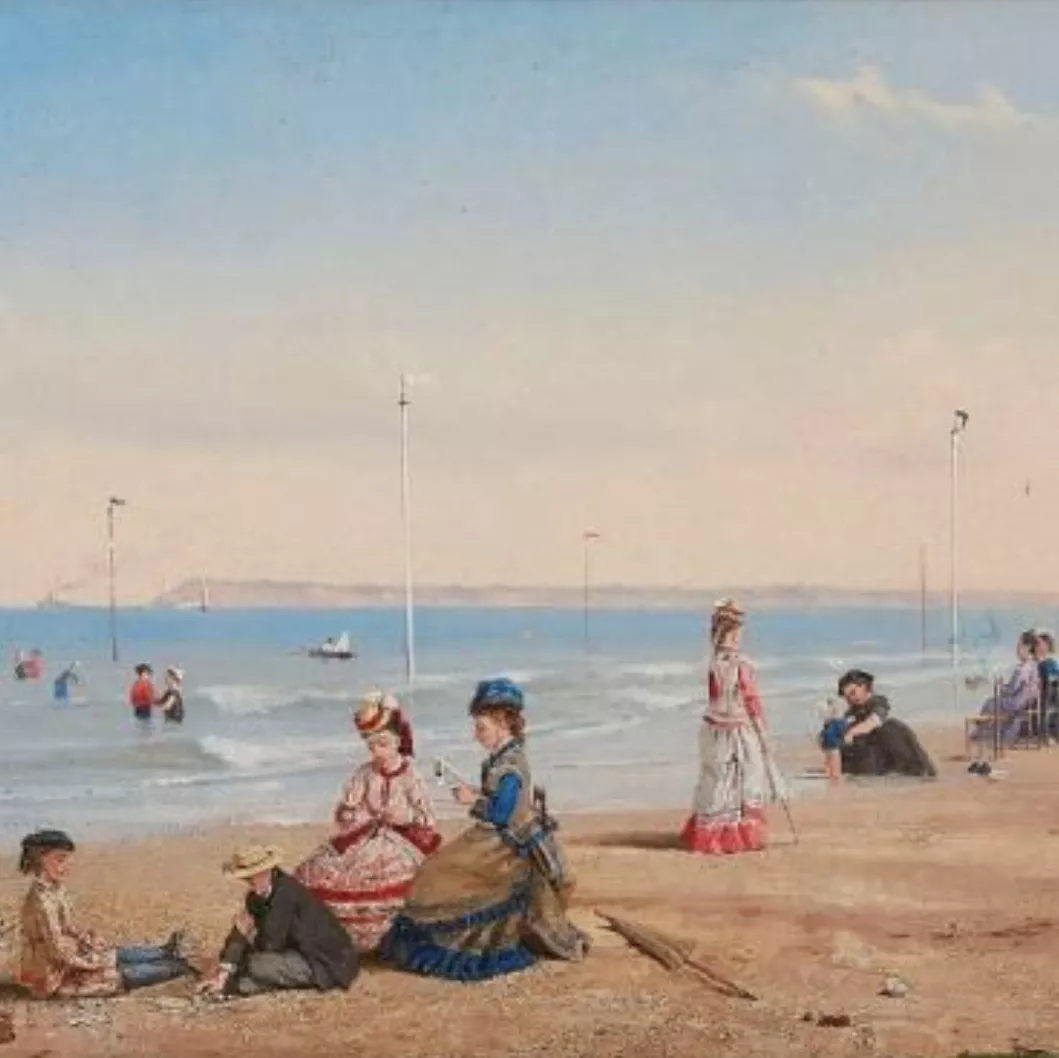
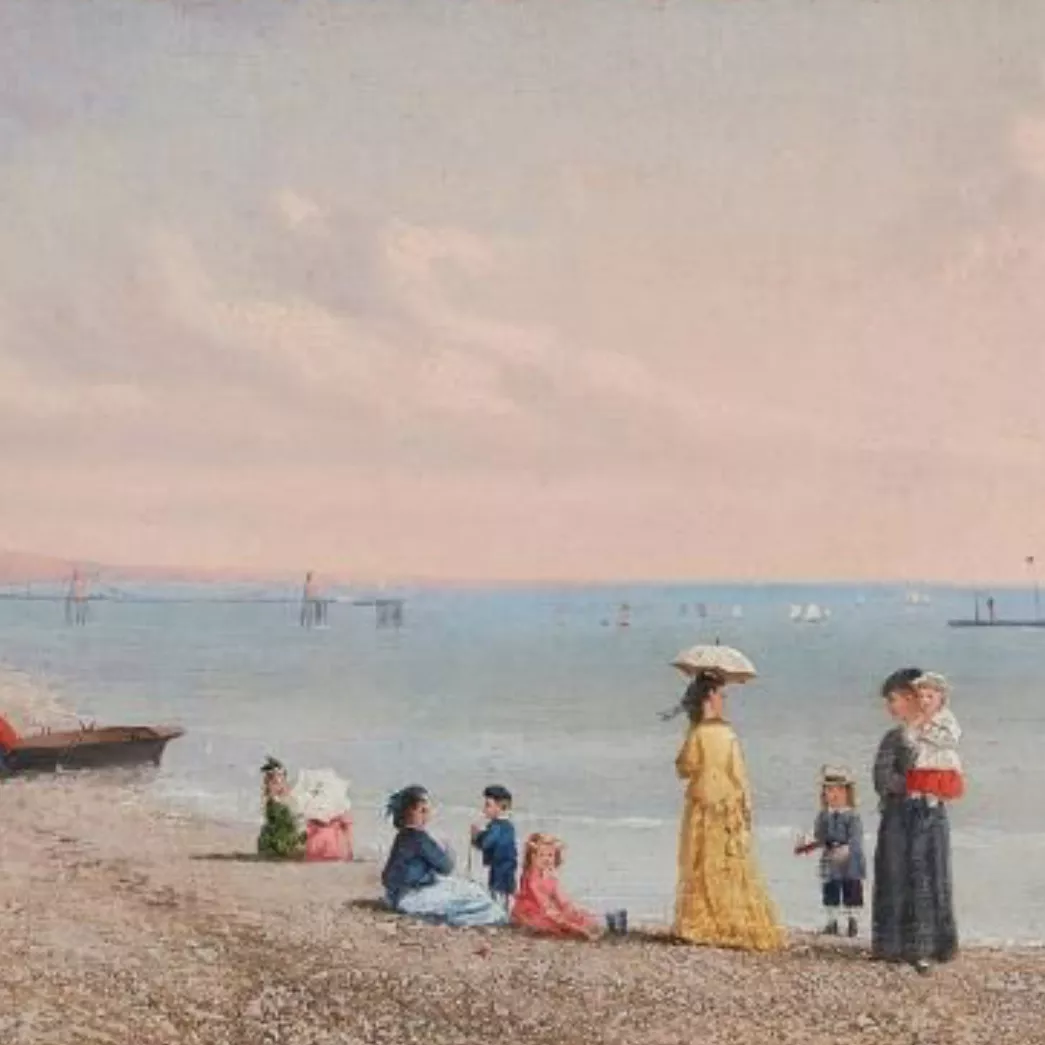
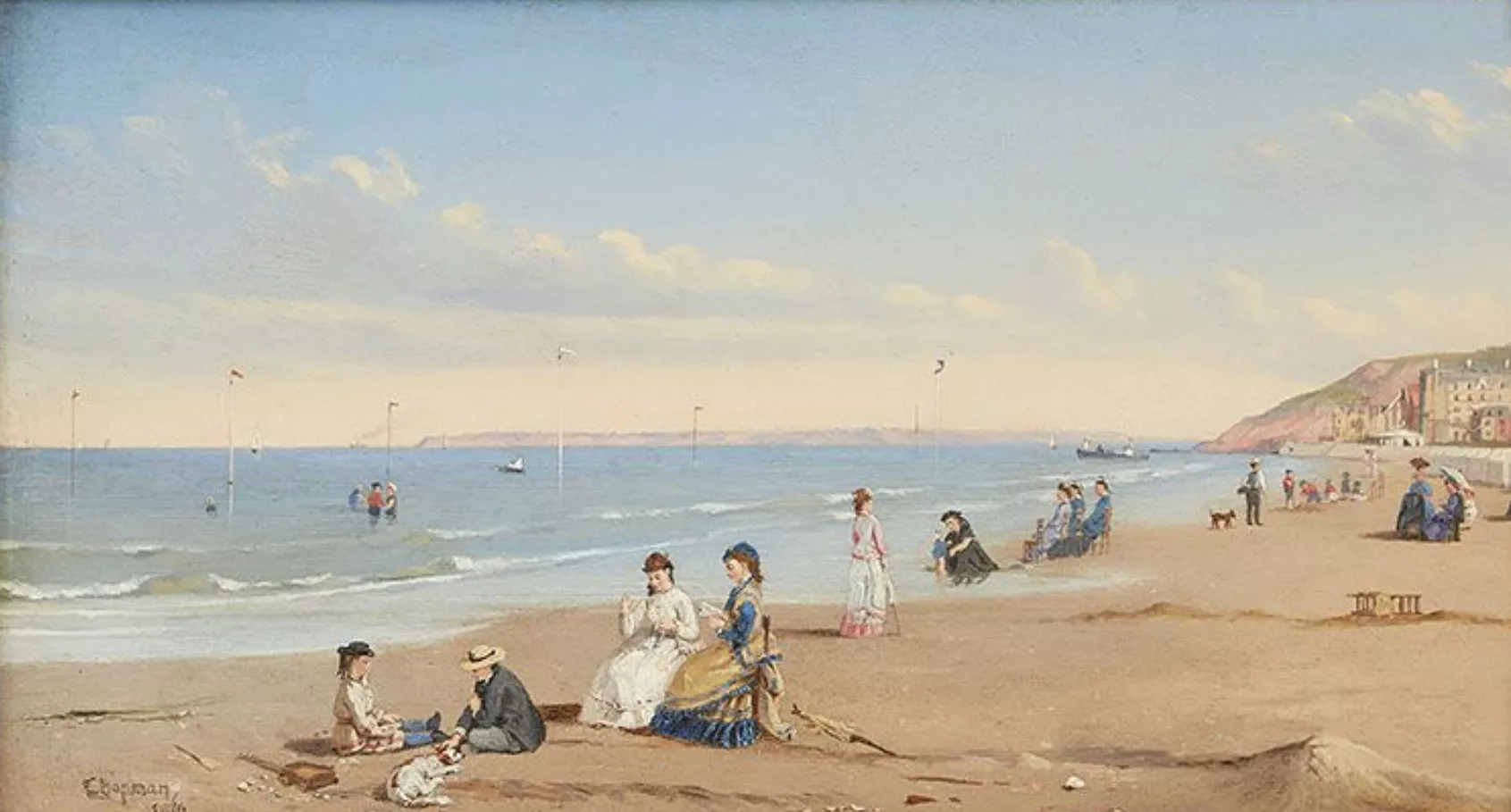
Conrad Wise Chapman is a painter of war and landscape. He is best known for his depictions of the Civil War, particularly on the Confederate side, but also for his European and South American landscapes.
His painting is realistic yet sensitive, his style combining documentary precision with a poetic, atmospheric touch, particularly in his treatment of light and nature.
He received classical training abroad (in France, England and Italy) and inherited a European academic tradition in the treatment of drawing and composition.
His drawing is structured and meticulous, the elements clearly defined, with a good command of perspective and volume, particularly in military architecture. His palette is natural and balanced, using earthy tones, soft greens and grays, often enlivened by golden or twilight.
He takes great care with skies and atmospheres, always remaining attentive to daylight, meteorological effects, mist, and sunset, in the tradition of American luminism.
The artist produces a lot of small-format oil : many of his military works have wood panels or small canvases as their support, sometimes on the ground, which helps to give them an impression of spontaneity and immediacy.
His compositions are generally fairly balanced, his canvases presenting a clear structure, with well-marked focal points (a fort, a column of smoke, a lone soldier) in a fairly calm, silent setting.
His war painting is unemphatic, and contrary to the heroic tradition, Chapman often shows calm, suspended, even melancholy scenes.
He brings the eye of a witness, painting what he has seen (fortifications, military landscapes), with great visual fidelity, without renouncing a contemplative dimension.
In this way, he establishes a strong link between art and memory, his works serving to document places threatened with destruction or moments of historical transition, giving his work a heritage value.
The life of Conrad Wise Chapman
Conrad Wise Chapman (1842 - 1910) was born in Washington D.C. He was the son of American painter John Gadsby Chapman, known for his historical and religious scenes.
He grew up in Europe and spent much of his youth in Italy, in Rome, where his father worked. This country and its painting were to have a strong influence on his artistic outlook. He studied painting in Rome and Paris under Léon Bonnat, but also in London, where he absorbed the influences of the classical tradition and European schools.
Returning to the United States in 1861, he enlisted in the Confederate Army, in the Kentucky Light Infantry Regiment. He was posted to Charleston, South Carolina. In 1863, he was commissioned by General Beauregard to produce a series of paintings depicting the Confederate fortifications around the harbor.
His military work is unique; he executed some forty war views, often on wood or small-format canvas, which constitute one of the rare painted visual testimonies of the interior of the Confederate lines.
After the war, he returned to Europe and pursued his painting career, mainly in Rome, Paris and London. He also traveled to South America, staying in Cuba and Mexico, where he painted tropical landscapes, rural scenes as well as views of daily life.
He was exhibited at the National Academy of Design in New York, and in various salons in Europe, but remained marginal compared to the great figures of his time.
The artist died in 1910 in Hampton, Virginia. His military work was long forgotten and is now held in various collections, including the Museum of Confederacy in Richmond, and studied as a rare testimony to the Southern point of view.
His life oscillates between two continents (Europe and America), giving his work a unique blend of documentary realism.
Today, his work is prized alongside the greatest military painters, such as Édouard Detaille, Franz Defregger or Adolphe Baumgartner Stoiloff.
Focus on Fort Sumter, 1863, Conrad Wise Chapman
Conrad Wise Chapman created one of his most famous works with Fort Sumter. This is an iconic fortification in Charleston harbor, in ruins after violent Union bombardments.
This work is painted in the field, created from sketches made in situ during his military assignment in 1863. It is a unique testimony, one of the few contemporary representations of this strategic site, seen from inside the Confederate lines.
The organization of the canvas is clear: the fort occupies the center of the composition, surrounded by debris, cannons and sandbags, in a slightly elevated perspective. The human presence is discreet, with a few Confederate soldiers appearing in the scene, but without being individualized. They are silhouettes that are absorbed into the environment.
The sky is dominant and takes up a large space in the image, with heavy clouds and diffused lighting, reinforcing the mood of suspended tension. The format is modest, an oil painting on wood panel, typical of his war work, allowing for quick, transportable work.
The work is highly documentary in its precision, as each element (cannons, gutted walls, sandbags) is accurately represented, with a concern for visual fidelity. The palette he uses is quite muted, containing tones of gray, brown, olive green, slate blue, which constitute a matte, realistic harmony that reflects the gravity of the scene.
An atmosphere of loneliness and desolation emerges from the scene : the fort, half-destroyed, seems to both hold together and collapse, symbolizing the fragility of the Confederacy. The silence is heavy : the absence of action, the empty horizon and the cold light create an atmosphere of calm, or resignation.
This is a war painting without heroism, without spectacular drama, without charge or blood, just a sober, human vision of a place in the process of dying out.
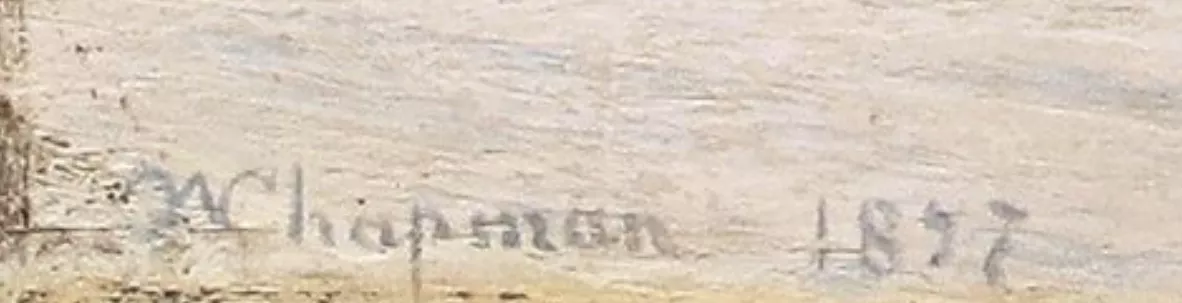
His signature
Although there are variations, here's a first example of his signature:
Expertise your property
If you happen to own a work by or after Conrad Wise Chapman, don't hesitate to request a free valuation by filling in our form on our website.
A member of our team of experts and chartered auctioneers will contact you promptly to provide you with an estimate of the value of your work, and will ensure that you receive ad hoc information about it.
If you are considering selling your work, you will also be accompanied by our specialists in order to benefit from alternatives for selling it at the best possible price, taking into account the inclinations of the market and its specificities.
.Estimate in less than 24h
Discover in the same theme

Rating and value of works, sculptures, bronzes by Charles Va...
Charles Valton was a 19th-century animal sculptor who worked with Barye, producing works that are quite highly rated at auction.
Learn more >

Rating and value of works, paintings by Jean-Joseph Benjamin...
Benjamin-Constant is a 19th-century Orientalist painter. The author of a rich output, his works are highly valued at auction.
Learn more >

Ratings and values of paintings by Ernfried Wahlqvist
Ernfried Wahlqvist was a 19th-century Swedish realist painter whose paintings and seascapes are highly prized at auction.
Learn more >
Similar works sold at auction

Estimated 3.000 - 5.000
Georges LAPCHINE (1885-1951) The port of St Tropez Oil on canvas

Estimated 1.000 - 2.000
Late 19th century American school, follower of Gilbert Stuart (Saunderstown 1755-1828 Boston) Bust portrait of George Washington after the 1803 copy

Estimated 800 - 1.500
Antoine BARBIER (1859-1948) Seaside with trees in the afternoon Oil on canvas Signed lower right

Estimated 2.000 - 3.000
Constantin WESTCHILOFF (Russia, St. Petersburg, 1878-New York, 1945). View of Falconet's equestrian statue of Peter the Great on Senate Square, St. Petersburg.

Estimated 500 - 800
Edma MORISOT-PONTILLON (1839-1921) Spectatrice du crépuscule au bord de l'étang Oil on canvas

Secure site, anonymity preserved

Auctioneer approved by the State

Free and certified estimates
Frequently asked questions
-
Who is Conrad Wise Chapman, and what is his artistic background?Conrad Wise Chapman (1842–1910) was an American landscape painter born in Washington, D.C., the son of painter John Gadsby Chapman. Trained in Europe under Léon Bonnat in Paris and Rome, he grew up in Italy and worked within the classical academic tradition. He is best known for his depictions of the American Civil War from the Confederate perspective and his European and South American landscapes, which combine documentary precision with poetic sensibility.
-
What are the price ranges for works by Conrad Wise Chapman?Prices for works by Conrad Wise Chapman vary considerably depending on the medium and provenance. Drawings and watercolors range from €160 to €27,400, while paintings fetch between €110,000 and €264,000. His oil on panel, “City of Mexico from the Hacienda de los Morales,” sold for €264,000, exceeding its initial estimate of €190,000 to €235,000.
-
How can you authenticate a work by Conrad Wise Chapman?To authenticate a work by Conrad Wise Chapman, we recommend that you request a free appraisal from Auctie's by filling out our online form. A certified expert or auctioneer will contact you promptly to examine the work, verify its provenance, condition, and signature, and provide you with an accurate estimate of its current market value.
-
Is this a good time to sell a work by Conrad Wise Chapman?Yes, now is a good time to sell a work by Conrad Wise Chapman. His military work, long forgotten, is now recognized as a rare and valuable record of the American Civil War. His paintings are highly regarded alongside those of the great military painters, and the market shows growing demand for his works, particularly his historically documented views of Confederate fortifications.
-
How does the appraisal and sale process work at Auctie's?Appraisals at Auctie's are free and non-binding. Simply fill out our online form, and a certified expert or auctioneer will contact you within 48 hours to examine your piece and provide you with an accurate appraisal. If you decide to sell, our specialists will then guide you through the process, offering the best options for selling your item at the optimal price, taking into account current market conditions.
