



Rating and value of Henryk Kossowski's sculptures, bronzes and marbles

Key takeaways
- Henryk Kossowski (1855–1921), a leading 19th-century Polish animal sculptor, has seen the value of his sculptures steadily rise on the art market.
- His cast bronze works sell for between €1,500 and €6,000, while his original marble sculptures fetch between €8,000 and €20,000, with a record price of €14,400 set in 2000.
- Renowned Parisian foundries (Susse, Siot-Decauville) significantly enhance the value of the pieces; preparatory terracotta and plaster models sell for between €800 and €3,000.
If you own a work by or after the artist Henri Kossowski, and would like to know its value, our state-approved experts and auctioneers will offer you their appraisal services.
Our specialists will carry out a free appraisal of your work, and provide you with an accurate estimate of its value on the current market.
Then, if you wish to sell your work, we will direct you to the best possible arrangement to obtain the optimum price.
Rating and value of the artist Henri Kossowski
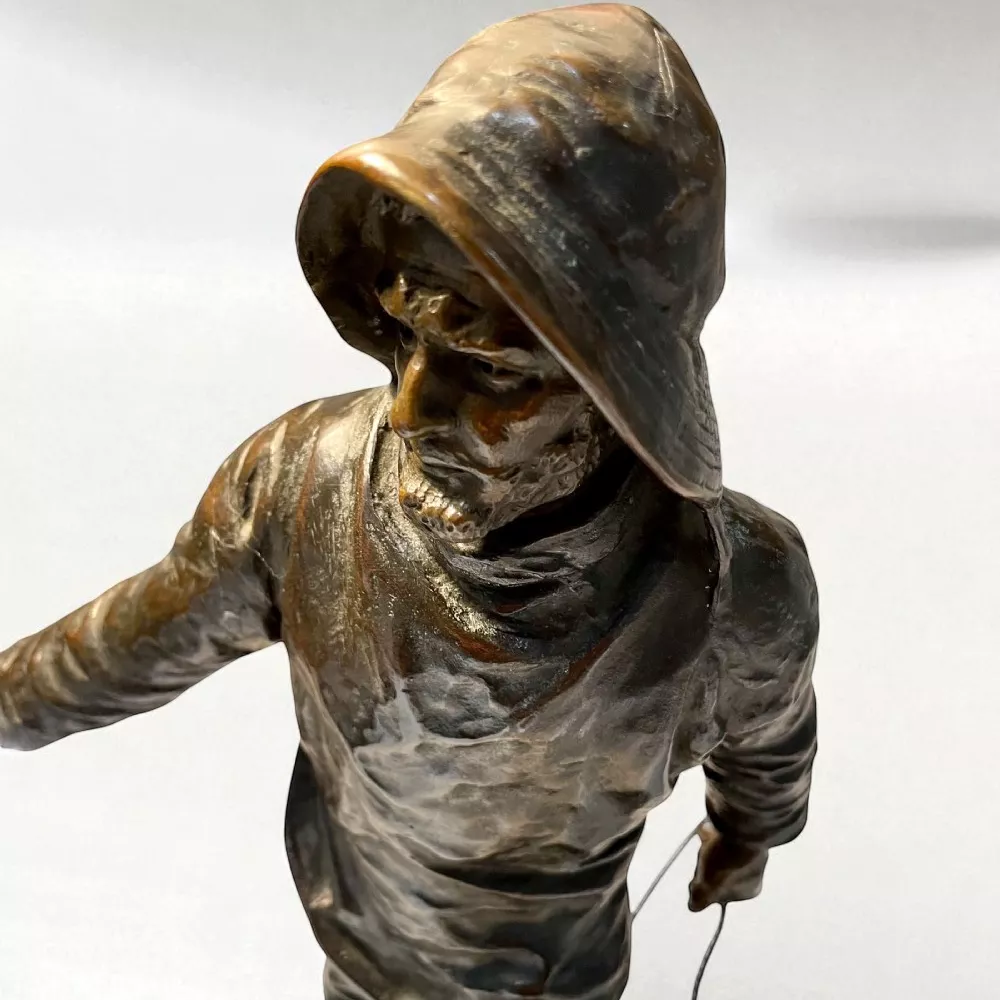
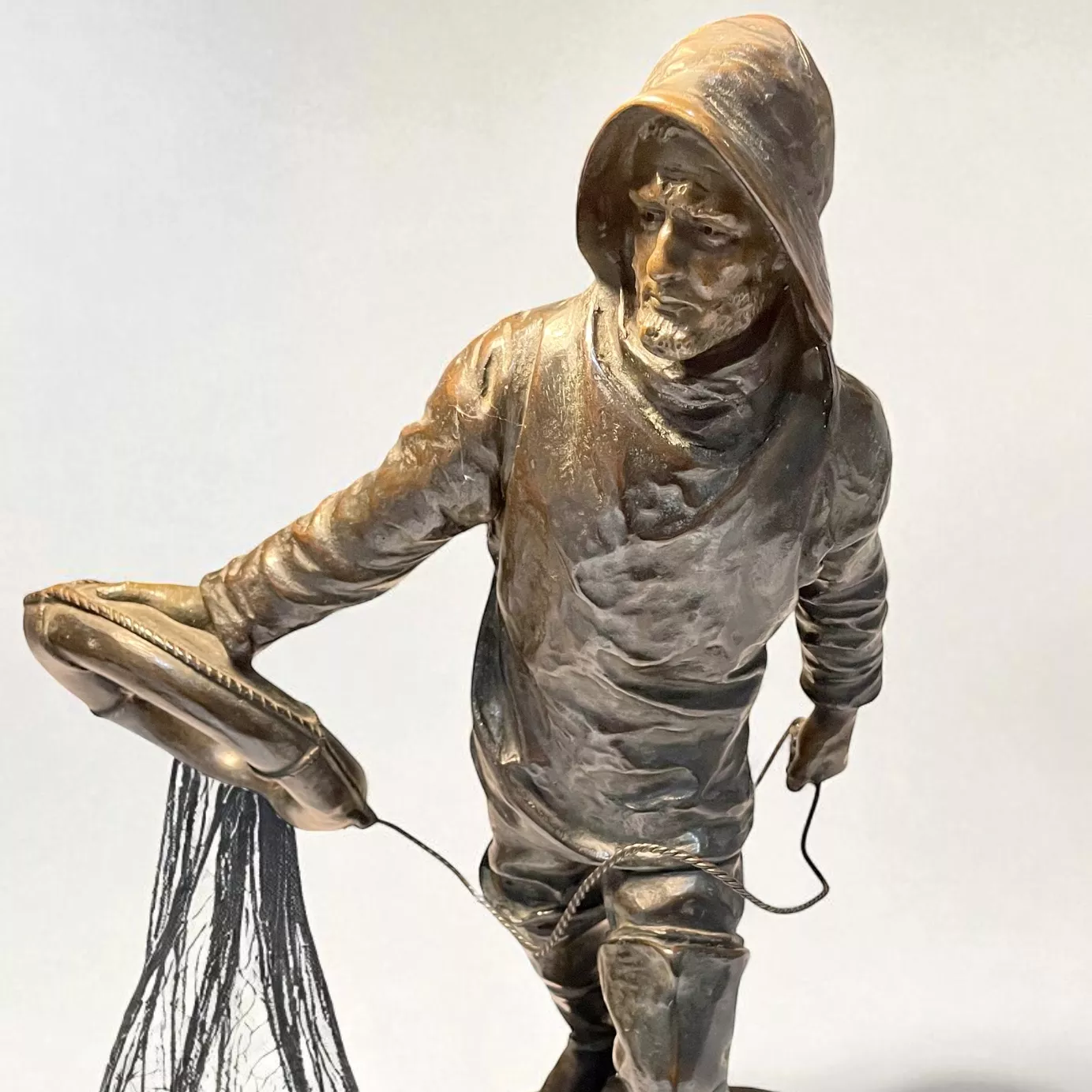
Considered one of the masters of Polish animal sculpture, Henryk II Kossowski was recognized during his lifetime. He followed in the artistic vein of 19th-century animal sculptors. His legacy therefore consists mainly of sculptures made from several types of material, especially bronze.
At present, the prices of his works are rising recurrently at auctioneers' gavels. His sculptures are prized above all by Polish and French buyers, and the price at which they sell on the art market ranges from €200 to €14,400, a considerable delta, which nevertheless speaks volumes about the value that can be attributed to Henri Kossowski's works.
One of his bronze sculptures, Figure of a Girl feeding Chickens, dating from 1900, sold for €14,400 while it was estimated at €12,800 to €16,000.
Order of value from a simple work to the most prestigious
Technique used | Result |
|---|---|
Estamp - multiple | From 200 to 420€ |
Golden bronze | From 400 to 600€ |
Bronze | From 15 to 14,400€ |
Estimate in less than 24h
Style and technique of the artist Henri Kossowski
Henri II Kossowski (1855 - 1921) was a sculptor of Polish origin, active in France at the end of the 19th century and specializing in decorative and religious sculpture. He worked with a variety of materials, including marble for busts and official portraits, as well as bronze for statuettes, often distributed in editions by Parisian foundrymen.
He also used terracotta and plaster for preparatory models and certain decorative pieces. He uses polychromy on plaster and terracotta, which reinforces the naturalistic effect.
The modeling is highly detailed, with great attention paid to textures (hair, drapery, flesh). He takes particular care in rendering psychological expressions and attitudes. The finish is polished and smooth in marble and bronze, contrasting with more vibrant parts (hair, accessories).
We see the imprint of late 19th-century naturalistic realism, close to Carpeaux and Dalou. His portraits are often busts of politicians, religious figures and patrons of the arts. His religious subjects are statues and reliefs for churches and chapels (saints, Virgins, Christian allegories).
His allegorical and figurative subjects are idealized female figures, often associated with literary or poetic themes. His compositions are often balanced and often frontal, adapted to academic and official taste. He often uses hieratic postures for religious figures.
For busts, his treatment is classical, with truncated shoulders, and an emphasis on the head and gaze. His work bears witness to a strong interest in sculptural narrative, expressed through gestures, drapery and the treatment of accessories.
He is heir to the French academic tradition of the 19th century, marked by the demand for modelling and likeness. He is also close to naturalism, with its anatomical precision and attention to realistic detail.
He is influenced by the eclecticism of the late 19th century, oscillating between expressive realism and allegorical idealization. He frequently makes models in plaster or terracotta before moving on to marble or bronze.
He works with a fine chisel and gradine for marble, leaving polished surfaces and others more textured. He collaborates with foundrymen for bronze prints, according to Parisian Belle Époque standards.
The life of Henri II Kossowski
Henri II Kossowski was born in Warsaw, Poland, then under Russian rule. He trained in the same city, before moving to Paris to perfect his skills. He entered the École des Beaux-Arts de Paris, where he was trained in the French academic tradition.
He was heir to a line of artists, since his father, Henri I Kossowski, was also a sculptor, which explains his precociousness and technical mastery. He settled in Paris in the 1870s and 1880s.
Kossowski made a name for himself at the Paris Salons, where he exhibited regularly. His first successes were naturalistic busts and statuettes, combining psychological realism with academic elegance.
He won several religious commissions for churches and institutions, confirming his reputation in this field. He also worked for a private clientele, producing bourgeois portraits and female allegories in marble and bronze.
His works were published by Parisian foundrymen, ensuring their distribution to collectors. He took an active part in the Universal Exhibitions of the late 19th century.
He favored the themes of virgins, saints and Christian allegories, which were destined for church decor. For portraits, he favored busts of notables, political figures and patrons.
For his decorative and allegorical sculptures, he featured idealized female figures, often imbued with Symbolist influences. He follows in the tradition of French naturalist academism, close to Carpeaux and Dalou.
He combines expressive realism (faces, anatomy) and decorative idealism with drapery and allegories. Kossowski belongs to the eclectic movement of the Belle Époque, between religious art, official portraiture and decorative sculpture.
He continued to exhibit and paint until the early 20th century. His work was marked by a fidelity to academic codes, while the avant-garde turned to Rodin and modernity. He died in Paris in 1921, leaving behind an important body of religious sculptures and portraits.
Market segmentation and artist rating
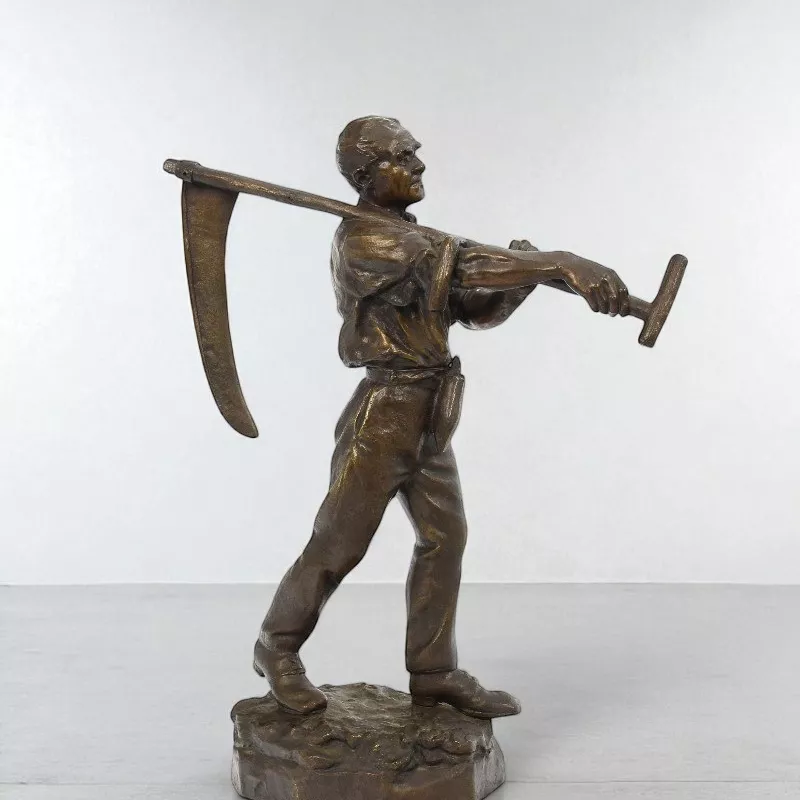
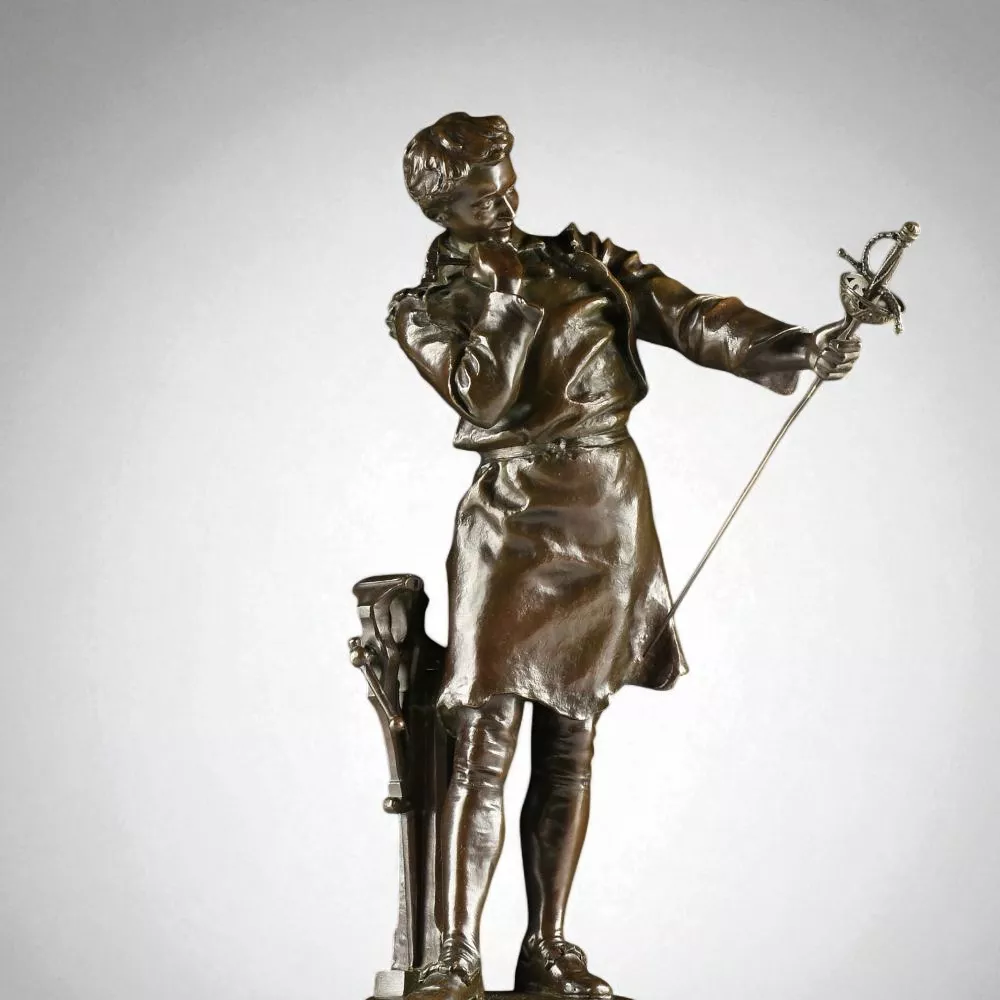
Edited bronzes are the most frequent segment at public sales. Subjects such as allegorical busts, idealized female figures and small religious scenes are common.
The range is between €1,500 and €6,000, depending on size, patina, founder and state of preservation. Editions by recognized founders (Susse, Siot-Decauville, etc.) add considerable value.
Original marbles are rarer and more sought-after, with commissioned busts or religious figures. Auctions are possible between €8,000 and €20,000, with higher peaks for monumental pieces or prestigious provenance.
As for terracottas and plasters, these are often preparatory models or decorative pieces. The lowest price range is between €800 and €3,000, depending on size and refinement of execution.
Collectors are increasingly interested in signed and dated terracottas. Monumental religious works, on the other hand, are rarely seen on the market, and often remain in churches or institutions. When they do appear, their value depends on format and the possibility of reinstallation.
The market segment is limited, but attractive to museums and specialized collectors. The artist's market value remains moderate, but consistent with that of all 19th-century academic sculptors.
The distribution of bronzes ensures a regular presence at sales, but limits their rarity, thus curbing price surges. Collectors are mainly interested in allegorical female busts and religious figures.
His market is comparable to that of other academic sculptors of the Belle Époque, such as Prosper d'Epinay, Jean Gautherin or Emmanuel Vallanis. The artist's works have a certain potential through the gradual rediscovery in sales specialized in 19th century sculpture and religious art.
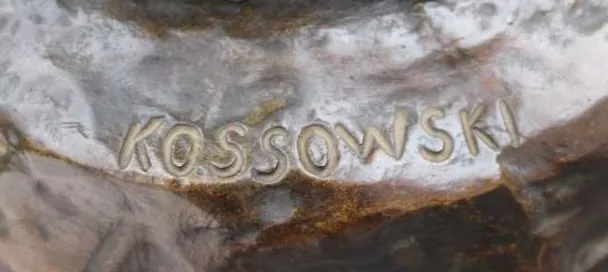
Recognizing Henryk Kossowski's signature
The artist signs " Kossowski " on his sculptures, most of the time. Copies do exist, however, which is why expertise is important.
Knowing the value of a work
If you happen to own a work by or after Henryk Kossowski, don't hesitate to request a free valuation using our form on our website.
A member of our team of experts and certified auctioneers will contact you promptly to provide you with an estimate of the market value of your work, as well as ad hoc information about it.
If you are considering selling your work, you will also be accompanied by our specialists in order to benefit from alternatives for selling it at the best possible price, taking into account market inclinations.
Estimate in less than 24h
Discover in the same theme

Rating and value of paintings by Ferdinand Holder
Ferdinand Holder was a 19th-century Swiss painter who became famous for his Symbolist works. His works are valued and quoted.
Learn more >

Rating and value of works, paintings and drawings by Albert...
Albert Maignan was a 19th-century neoclassical painter who produced mainly history paintings, which are sought-after at auction. Estimated in 24h.
Learn more >

Quote and value of sculptures, bronzes and lighting by Franz...
Franz Xavier Bergmann was a 19th-century Austrian foundryman who produced works of great value at auction.
Learn more >
D'autres bronzes anciens vendus aux enchères

Estimated Between €5,000 and €8,000
Agathon LEONARD (1841-1923), Dancer with scarf, bronze lamp, ed. Susse frères

Estimated 3.000 - 5.000
Raoul LARCHE (1860-1912) The fisherman, Bronze with green patina

Estimated 600 - 800
Hercules Farnese, bronze, reproduction after Glycon of Athens

Estimated 1.500 - 3.000
Jules FRANCESCHI (1825-1893) Hébé et l'aigle de Jupiter, gilded bronze

Estimated 800 - 1.500
Henry Étienne DUMAIGE (1830-1888), bronze print

Estimated 1.500 - 3.000
Antoine Louis BARYE (1796-1875) Eagle and heron, bronze print with shaded brown-green patina

Secure site, anonymity preserved

Auctioneer approved by the State

Free and certified estimates
Frequently asked questions
-
Who was Henryk Kossowski, and what is his significance in the history of sculpture?Henryk II Kossowski (1855–1921) was a Polish sculptor recognized as one of the masters of Polish animal and academic sculpture. Based in Paris from the 1870s to the 1880s, he trained at the École des Beaux-Arts and worked within the French naturalist academic tradition, closely aligned with Carpeaux and Dalou. He distinguished himself through his busts of prominent figures, his religious figures intended for churches, and his idealized female allegories in marble and bronze.
-
What are the price ranges for Henryk Kossowski's sculptures based on the material?Prices vary considerably depending on the type of work: prints and multiples range from €200 to €420, gilded bronzes from €400 to €600, and limited-edition bronzes from €1,500 to €6,000. Original marble sculptures, which are rarer, sell for between €8,000 and €20,000, while terracotta and plaster works range from €800 to €3,000. Exceptional pieces, such as his 1900 sculpture “Figure of a Girl Feeding Chickens,” have fetched as much as 14,400€.
-
How can you authenticate a sculpture by Henryk Kossowski?The artist usually signs his sculptures “Kossowski,” but copies do exist. To obtain a certified authentication of a work, we recommend that you request a free appraisal from Auctie’s by filling out our online form. A certified auctioneer or appraiser will contact you promptly to examine the work and provide you with a reliable estimate within 48 hours.
-
Is this a good time to sell a sculpture by Henryk Kossowski?Yes, this is a favorable time. Prices for Kossowski’s works are consistently rising at auction, and his sculptures are highly sought after by Polish and French collectors. The growing interest among museums and specialized collectors in 19th-century academic sculpture, along with the gradual rediscovery of his work, creates a positive environment for the sale.
-
How does the sales process work at Auctie's for a Kossowski sculpture?The process begins with a free, no-obligation appraisal: you send us photos or bring in the artwork, and our experts will contact you within 48 hours with an accurate estimate of its market value. If you decide to sell, our specialists will guide you every step of the way, offering you the best options for selling your sculpture at the best possible price, taking into account its condition, provenance, and market trends.
