



Rating and value of drawings and paintings by Jean Syndon

Key takeaways
- Works by Jean Syndon (1869–1937) sell for between €150 and €12,000 at auction, with stable market values.
- An Orientalist and Realist painter trained at the École des Beaux-Arts in Paris, he specialized in society portraits and nudes in oil on canvas.
- His works remain very rare, with only 7 recorded auction results, which may contribute to a higher valuation.
Jean Syndon’s paintings and drawings sell for up to €12,000 at auction. An appraisal allows us to accurately determine the current market value of your Jean Syndon artwork and, if applicable, optimize the sale of the piece.
If you own a work by Jean Syndon and would like to know its value, our state-certified auctioneers will provide a free appraisal based on authenticity, market rating, and recent market results.
Market Value and Appraisal of Artist Jean Syndon
Jean Syndon left behind a body of work that is both realistic and Orientalist. Today, prices for his works are rising at auction. His paintings are quite sought after, especially by Swiss and French buyers.
The prices at which they sell on the art market range from €150 to €12,000—a very significant spread, but one that speaks volumes about the value that can be attributed to Syndon’s works.
In 2020, his oil-on-canvas painting *Portrait of a Man Wearing a Turban* sold for €12,000, although it had been estimated at between €5,000 and €7,000. His market value remains stable.
Price range from a simple work to the most prestigious
Technique used | Result |
|---|---|
Painting | From €150 to €12,000 |
Estimate in less than 24h
Placing the Artist in Context
Period
Jean Syndon (1869–1937) was a painter active in the late 19th century and the first third of the 20th century, within the context of post-academic French painting, straddling the legacy of Realism and the lingering influence of Orientalism.
This was a transitional period marked by the coexistence of 19th-century traditions and the emergence of modern avant-garde movements (Impressionism, Post-Impressionism), to which he remained on the periphery.
He was active during a period when Salon painting and exotic subjects still enjoyed a certain prestige.
Artistic Movements
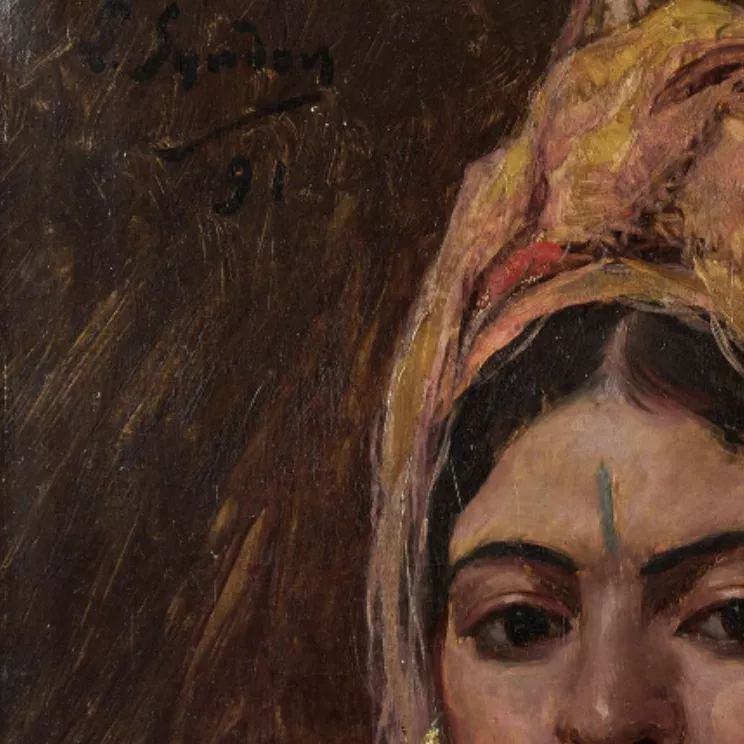
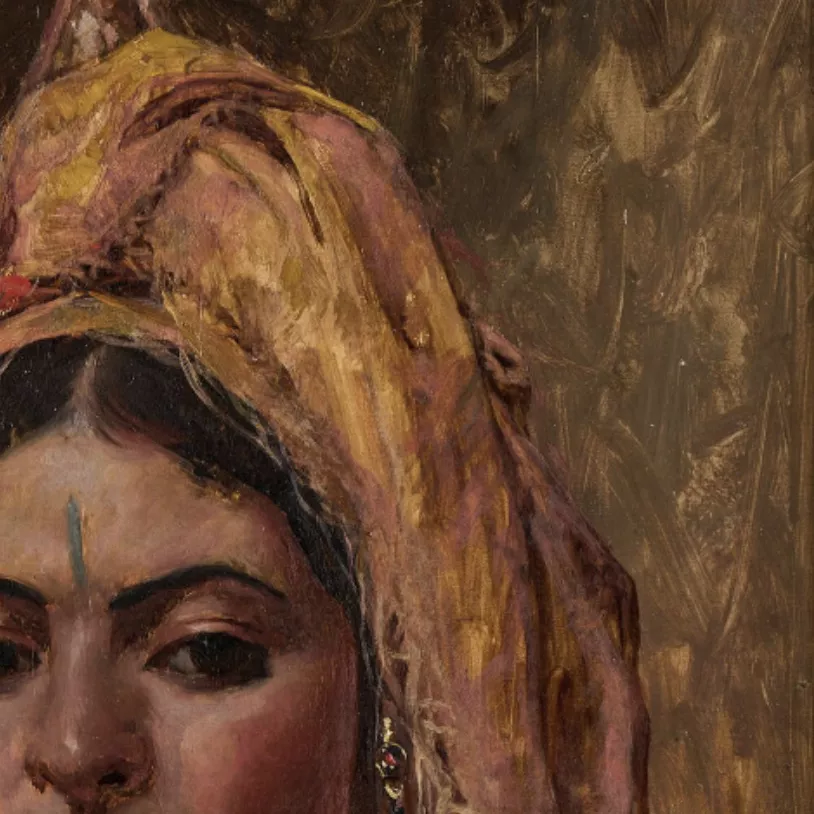
Jean Syndon is part of a late Orientalist movement, depicting figures from the East in the tradition of 19th-century painters, with a focus on costumes, poses, and exoticism.
He specialized in figurative portraiture and the depiction of human figures, focusing on the model’s presence, character, and identity.
His mastery of drawing and modeling stems from the academic tradition, applied to contemporary or exotic subjects. His realism is tempered by a concern for clarity and plausibility, without stylistic radicalization.
He follows in the footsteps of French Orientalist painters such as Jean-Léon Gérôme and Eugène Delacroix, while adopting a later and less innovative approach.
The Life of Jean Syndon
Cultural Context
Jean Syndon was part of the French painting scene of the early 20th century, characterized by the coexistence of figurative and abstract trends amid a renewal of visual languages.
His work developed from a figurative perspective, focused on the representation of reality, while incorporating a simplification of forms and a rigorous structuring of the composition.
He favors subjects such as landscapes, still lifes, and scenes of daily life, approached with a sensitivity to light and color organization.
His work contributes to the continuity of figurative painting in the 20th century, remaining on the periphery of the most radical experiments.
Artistic and Intellectual Circle
His career unfolded within the artistic networks shaped by art salons, galleries, and group exhibitions, which ensured the dissemination of figurative painting in France.
He developed his practice in an environment marked by the enduring influence of figures such as Claude Monet and Pierre Bonnard, whose explorations of color and light continue to shape 20th-century painting.
Art institutions and exhibition circuits played an essential role in the recognition and dissemination of his work within the French art scene.

The Artist's Techniques
Jean Syndon’s Style
Jean Sydon underwent rigorous training at the École des Beaux-Arts in Paris from 1889 to 1895 under the guidance of Léon Bonnat and Jules Lefebvre, two masters of academic realism, from whom he inherited a focus on draftsmanship and facial likeness.
He specialized in society portraits and nudes, and developed a painterly style focused on depicting the bourgeois elite.
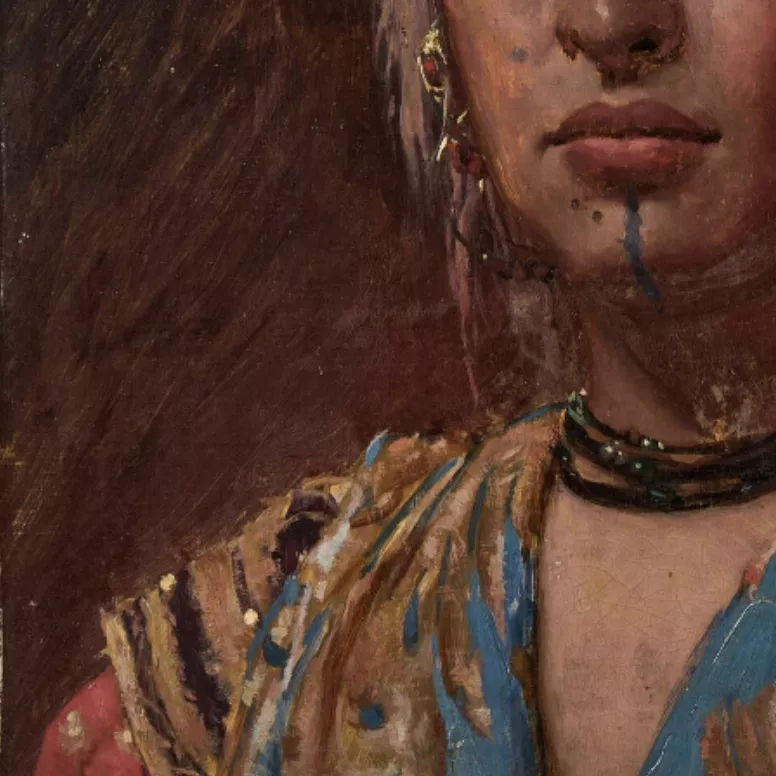
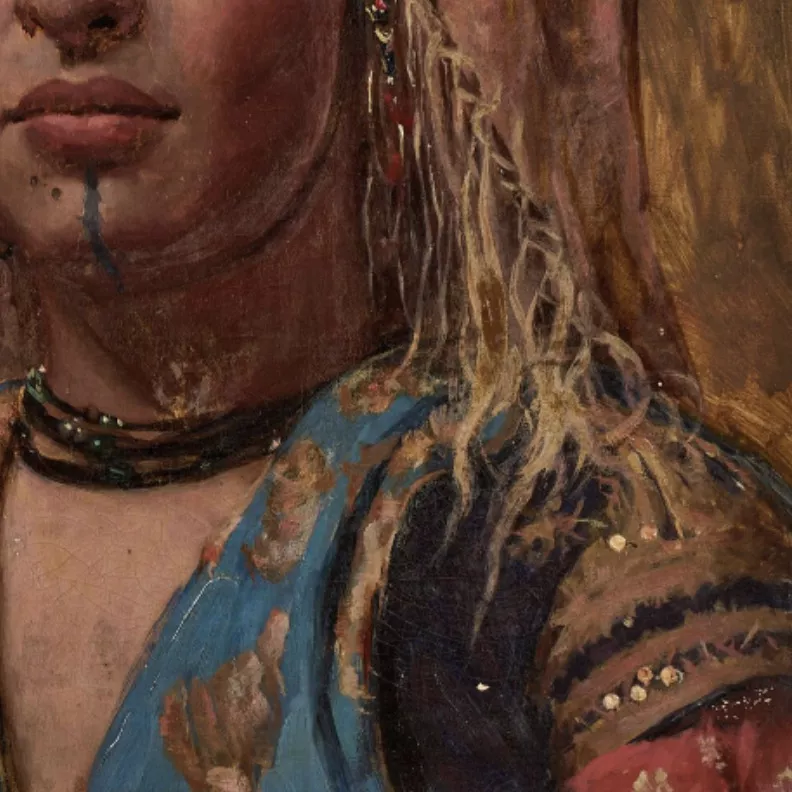
He worked in oil on canvas with meticulous attention to detail in rendering materials (textiles, skin tones, hairstyles), suggesting a Bonnatian influence in the chromatic density and the modulation of shadows.
Spotlight on a Key Work
Self-Portrait, 1913
This work has autobiographical and testimonial value; it was intended for a close friend who had supported the painter during his incarceration, giving this work a commemorative and confessional dimension that is rare in his body of work.
By depicting himself in the style of a bourgeois commissioned portrait, Syndon symbolically reaffirms his social and artistic status following a period of exclusion.
This 1913 work also marks a stylistic and onomastic break, as Syndon began using his grandmother’s name from that point on, signing his works “Faurie” or “Syndon-Faurie.”
FAQ – How do you appraise a work by Jean Syndon?
1) Who was Jean Syndon, and why might his name appear in different forms?
Jean Syndon, whose real name was Marie Jean Baptiste Léon Sindou, was born in Caniac-du-Causse on May 25, 1869, and died in Paris on January 7, 1937. He was a French painter trained by Léon Bonnat and Jules Lefebvre, specializing in portraits and nudes. Upon his release from prison following the Étretat affair (1902), he adopted his grandmother’s name and began signing his works “Faurie” or “Syndon-Faurie.”
2) How can you recognize a signature by Jean Syndon?
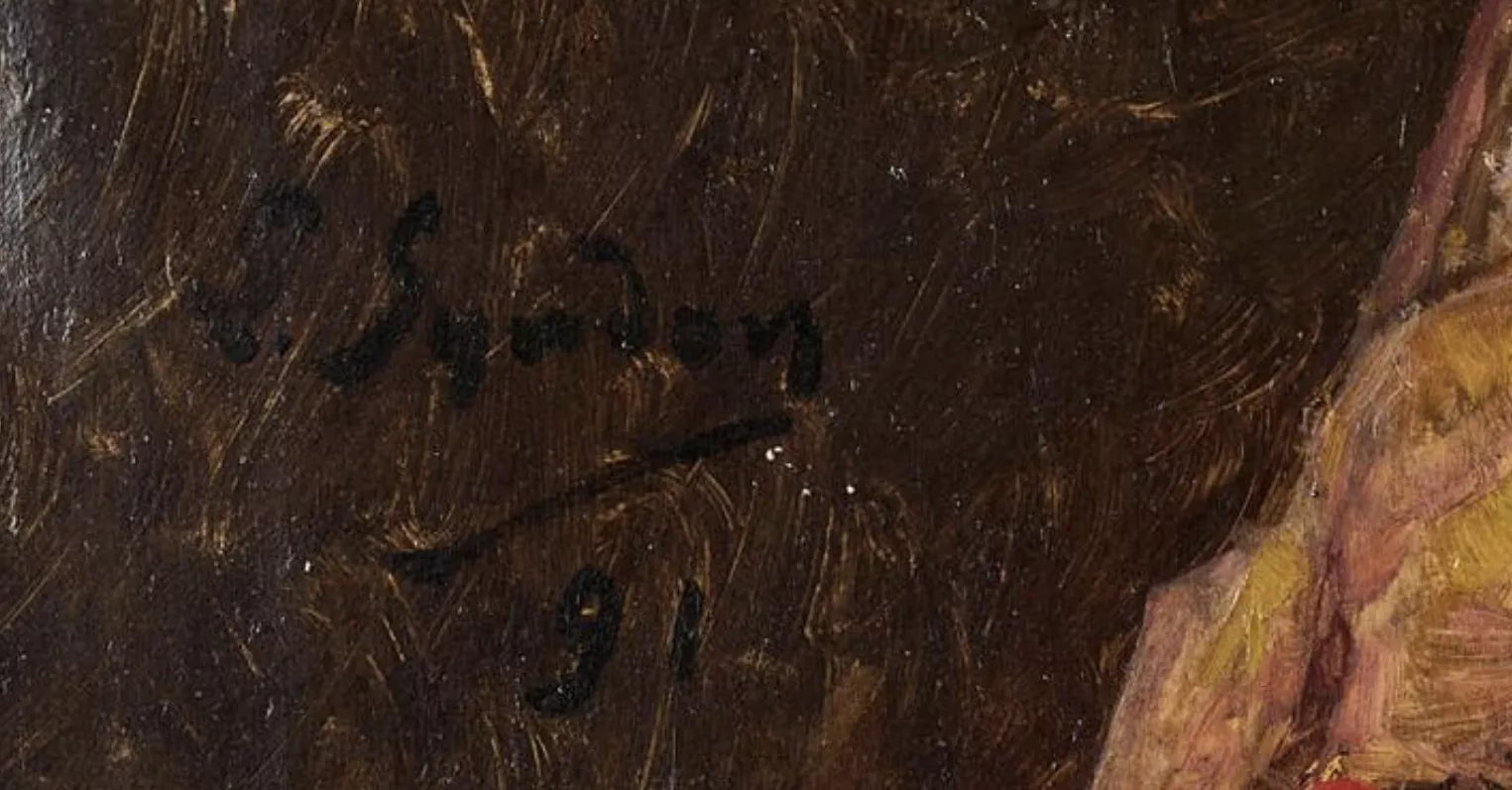
The artist signed his works under three different names depending on the period: “Syndon” (before 1902), “Faurie,” or “Syndon-Faurie” (after his release). A signature consistent with the work’s date is an initial indicator of authenticity. In case of doubt, a graphological analysis by a specialist in French academic art of the Belle Époque is recommended.
3) Are Syndon’s works rare on the market?
His works remain very rare on the market; only 7 auction results with prices are listed on Artprice. This rarity also supports a higher valuation but makes market comparisons difficult.
Identifying the Artist’s Signature
Not all of Jean Syndon’s works are signed. They may be signed at the bottom of the painting, but if you think you own one, it’s best to have it appraised to ensure that your piece is authentic.
Get Your Jean Syndon Artwork Appraised
If you own a work by Jean Syndon, an appraisal will help you determine its current market value.
Using our online form, our experts and certified auctioneers will conduct a free appraisal and provide you with a reliable estimate of your artwork’s market value.
If you’re considering selling it, we’ll guide you through the process to ensure you get the best possible price.
Estimate in less than 24h
Discover in the same theme

Rating and value of works, paintings by Friedrich Overbeck
Friedrich Overbeck was a German neoclassical painter who lived in Rome. His religious paintings are highly prized at auction.
Learn more >

Quote and value of sculptures, bronzes by Emmanuel Frémiet
Emmanuel Frémiet is a 19th-century animal sculptor whose works are highly prized at auction.
Learn more >

Rating and value of drawings and paintings by Henri Martin
Henri Martin was a 19th-century Post-Impressionist painter whose works command high prices at auction.
Learn more >
D'autres tableaux orientalistes vendus aux enchères

Estimated 15.000 - 20.000 €
Jacques MAJORELLE (1886-1962) - Fishermen embarking, Abidjan, Ivory Coast - Oil on canvas.

Estimated 40.000 - 80.000
Alexandre ROUBTZOFF (1884-1949), Portrait of Arbia, oil on canvas

Estimated 5.000 - 8.000
Alexandre ROUBTZOFF (1884-1949), The Sidi Makhlouf Mosque, oil on canvas

Estimated 2.000 - 4.000
Henri PONTOY (1888-1968), The Telouet kasbah in the Ounila valley, Oil on canvas

Estimated 1.500 - 2.500
Henri PONTOY (1888-1968) Animated view of a kasbah in the Atlas Mountains

Estimated 3.000 - 4.000
Henri PONTOY (1888-1968), Fantasia at the foot of the Atlas, Oil on canvas

Secure site, anonymity preserved

Auctioneer approved by the State

Free and certified estimates
Frequently asked questions
-
Who was Jean Syndon, and what artistic movement was he associated with?Jean Syndon (1869–1937) was a French painter who trained at the École des Beaux-Arts in Paris under Léon Bonnat and Jules Lefebvre. He was part of the late Orientalist and academic realist movements, specializing in portraits of high society and exotic figures. His work remained on the fringes of the modern avant-garde, continuing the traditions of the 19th century.
-
What is the price range for Jean Syndon's paintings on the auction market?Jean Syndon’s paintings and drawings sell for between €150 and €12,000, depending on their size and condition. In 2020, his oil on canvas “Portrait of a Man in a Turban” exceeded its estimate, fetching €12,000. This variation reflects the rarity of his works on the market and their growing popularity among French and Swiss collectors.
-
How can you authenticate a work by Jean Syndon?Reliable authentication requires a professional appraisal by an auctioneer or expert specializing in French academic painting. Auctie's offers a free, no-obligation appraisal conducted by its certified experts, who examine the work’s authenticity and signature (Syndon, Faurie, or Syndon-Faurie, depending on the period) and compare it to recent market results.
-
Why did Jean Syndon change his signature, and under what names might his works be signed?Jean Syndon adopted his grandmother’s surname after his release in 1902, signing his works “Faurie” or “Syndon-Faurie” from that point on. His works created before 1902 bear the signature “Syndon.” A signature that matches the date of the work is an indicator of authenticity; in case of doubt, a handwriting analysis is recommended.
-
How do you sell a work by Jean Syndon, and what support does Auctie's offer?Auctie's guides you from the appraisal to the auction to ensure the best possible sale of your artwork. First, we provide a free and reliable appraisal through our certified auctioneers, then we advise you on the best sales strategy, taking into account the artist’s rarity and current market trends.
