



Rating and value of Japanese armor (samurai, yoroi)

Key takeaways
- Japanese armor sells for between €250 and €75,000, depending on its type, condition, and historical provenance.
- A complete set of samurai armor is estimated to be worth between €900 and €10,000, while an o-youroi can fetch between €2,400 and €75,000.
- In 2023, a portable leather scale armor set sold for 53,760 € at auction in Paris.
If you own a piece of Japanese armor, and would like to know its value, our state-approved experts and auctioneers will offer you their appraisal services. Our specialists will carry out a free appraisal of your property, and provide you with a precise estimate of its current market value. Then, if you want to sell your bag, we'll point you in the right direction to get the best possible price for it. The price of armor can vary depending on the period, the person to whom it belonged, and its state of preservation.
Rating and value of a Japanese suit of armor
Japanese suits of armor are highly valuable historical objects, which are very successful at auction. They are collected by buyers of all nationalities, even if the Japanese are the first to seek out this type of historical souvenir. The price at which they sell on the art and auction markets ranges from €250 to €75,000, a considerable difference but one that speaks volumes about the value that can be attributed to Japanese armor. In 2023, a foldable and transportable leather scale armor sold for €53,760, a sale carried out in Paris
Order of value ranging from classic armor to the most sought-after
Type of piece or armor | Result |
|---|---|
Incomplete Japanese armor or armor element | From €250 to €5,000 |
Japanese armor mask | From €480 to €7,150 |
Complete samurai armor | From €900 to €10,000 |
Warrior armor o-youroi | From €2,400 to €75,000 |
Estimate in less than 24h
Japanese armor, introduction and definition
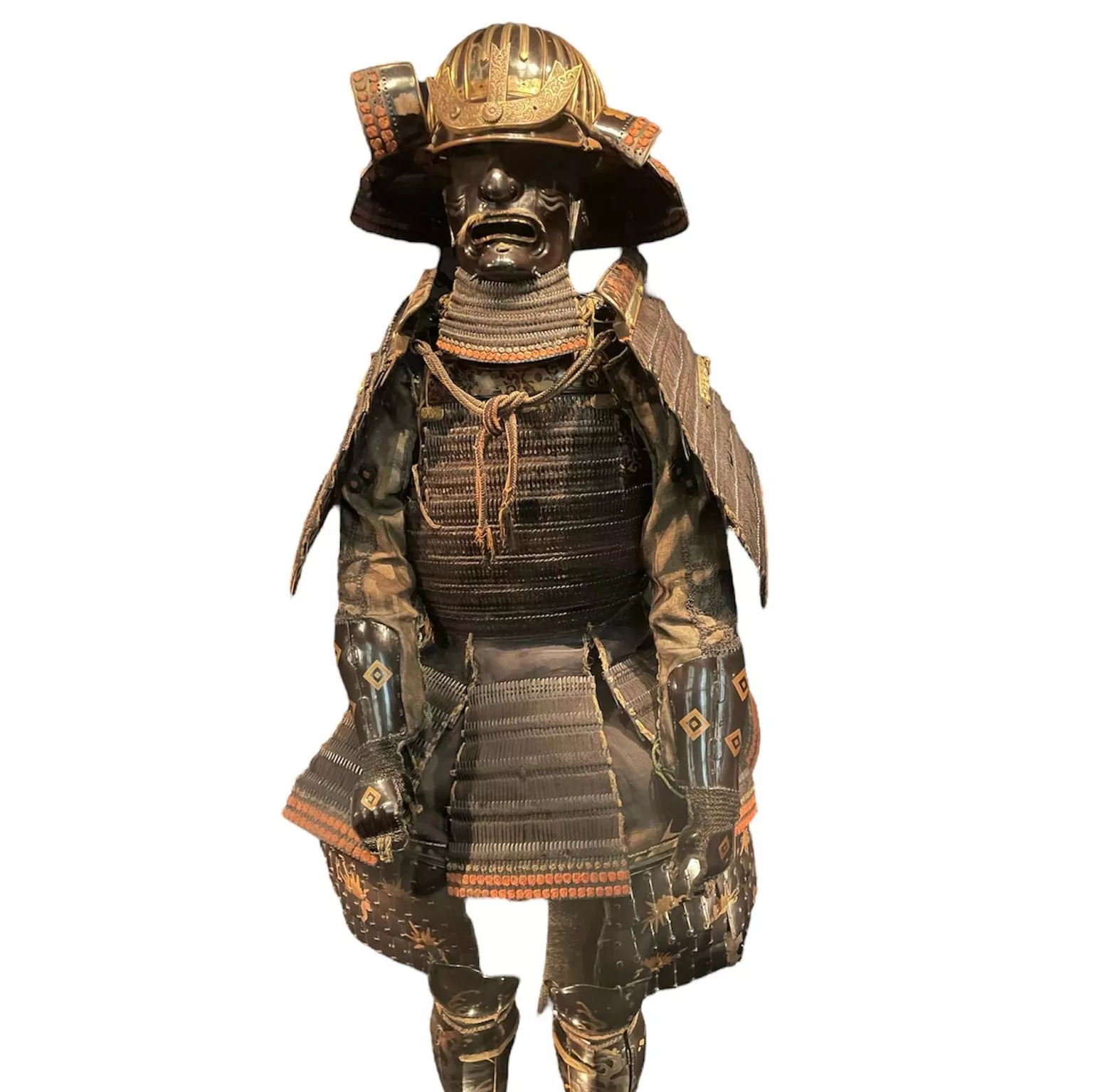
In every country in the world, wars have forced civilizations to equip themselves with weapons and armor. In the West, armor was excessively heavy, particularly in the 16th century. In Japan, armor is much lighter, and the manufacturing technique is very different. However, the purpose of armor is the same: to protect the combatant. These objects are sometimes referred to as samurai armor, a term which does not, however, encompass all Japanese armor. Here's a look back at these collector's items.
.
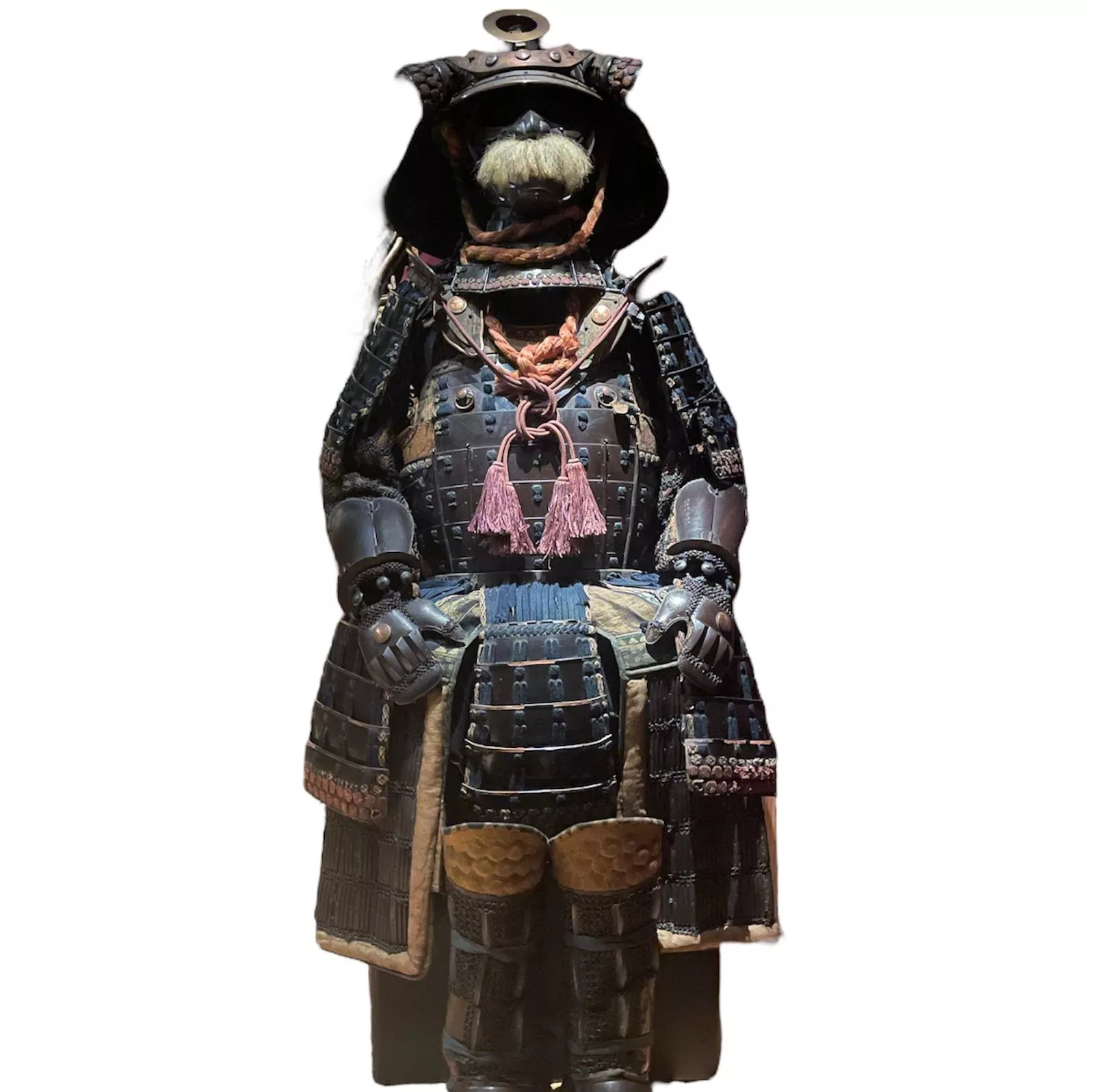
History and composition of Japanese armor
Early Japanese armor was influenced by Chinese and Korean armor, but soon developed its own distinct characteristics. During the Heian (794-1185) and Kamakura (1185-1333) periods, armor was often made of metal plates bound together with leather or silk cords. Such armor was relatively simple and lightweight, designed for maximum mobility on horseback.
During the Sengoku period (1467-1603), marked by intense conflict between lords, armor became more elaborate and sophisticated. The introduction of firearms also influenced armor design, with the addition of metal plates to resist projectiles.
Japanese armor consists of several distinct parts:
Kabuto: Helmets were often elaborately decorated and reinforced with metal pieces to protect the head from blows. They sometimes featured a maedate, a distinctive frontal ornamentation.
Dō (breastplate): The dō was the main piece of armor, protecting the torso and abdomen. It was made up of metal plates linked together by leather or silk laces.
Sode (shoulder pads):Sode protected the shoulders and were attached to the dō. They could be made of metal or leather and could also serve as decorative elements.
Kote (arm protection): Kote covered the arms and forearms. They were flexible to allow effective use of the weapon.
Haidate: The haidate was a protective skirt for the legs, often made of metal plates or leather blades.
Suneate: Suneate protected the shins and feet. They were attached to the legs with laces.
Mengu (mask) : Sometimes used to protect the face, it could be a distinct part of the helmet or a separate piece.
Leather or silk laces : The various parts of the armor were often linked together by leather or silk laces, allowing a certain flexibility and relative mobility.
Decorations and symbols : Armor was often decorated with symbols and motifs specific to the clan or samurai who wore it. These decorations also served to inspire fear in enemies.
The evolution of firearms and the peaceful Edo period (1603-1868) eventually led to a decline in the use of armor, but its influence persists in modern Japanese culture. Today, Japanese armor is often on display in museums, and is appreciated for its artistic beauty and historical significance.
Have your Japanese armor appraised
Japanese armor is a complex collectible, whose value and period are difficult to estimate. That's why it's vital to have your armor appraised by experts who can precisely date the period in which the armor was made and used.
Knowing the value of your property
If you happen to own Japanese armor, or think you might, don't hesitate to request a free appraisal using our form on our website. A member of our team of experts and certified auctioneers will contact you promptly to provide you with an estimate of the market value of your bag, as well as any relevant information about it. If you wish to sell your property, you will also be accompanied by our specialists in order to benefit from alternatives to sell it at the best possible price, taking into account the inclinations of the market.
Estimate in less than 24h
More military collectibles at auction

Estimated 3000 € - 5000 €
Flintlock general's or admiral's pistol, Vendémiaire an XII model

Estimated 300 - 500 €
Luxurious Russian bear hunting knife. Green nephrite handle.

Estimated 100 - 150 €
Corsican stylus. Dite de Vendetta. Faceted ebony handle enriched with chased mother-of-pearl blades and metal purfling.

Estimated 600 - 800 €
Russian Shashka saber. Mounted in nielloed silver with chased plant decoration and strings of pearls.

Estimated 3.000 - 5.000 €
Japanese armor. Japan, Meiji era.

Estimated 400 - 600 €
Katana, Unidentified signature.

Estimated 400 - 600 €
Katana. Unsigned (mumei).
Discover in the same theme

Rating and value of military orders and knighthoods
Military orders and orders of chivalry are collector's items that are very popular on the auction market. Estimate in less than 24h
Learn more >

Rating and value of hunting daggers and swords
Hunting daggers and swords are highly sought-after collectors' items at auction. Their value can be high. Estimate in 24h.
Learn more >

Rating and value of repeating infantry rifles
Repeating infantry rifles are sought-after weapons by some collectors. They can be very valuable, depending on the model.
Learn more >

Secure site, anonymity preserved

Auctioneer approved by the State

Free and certified estimates
Frequently asked questions
-
What is Japanese armor (yoroi), and what is it made of?Japanese armor is a type of historical protective gear consisting of several distinct components: the kabuto (helmet), the dō (chest plate), the sode (shoulder guards), the kote (arm guards), the haidate (protective skirt), the suneate (shin guards), and the mengu (face mask). These different pieces are connected by leather or silk laces, allowing the warrior great mobility, unlike Western armor, which is much heavier.
-
What is the price range for Japanese armor at auction?Japanese armor sells for between €250 and €75,000, depending on the type and condition. An incomplete set of armor or a single piece sells for between €250 and €5,000, a mask between €480 and €7,150, while a complete samurai armor set ranges from €900 to €10,000 and an o-yoroi warrior’s armor can exceed €75,000. These significant variations reflect the authenticity, era, provenance, and condition of each piece.
-
How can you authenticate and appraise the value of a piece of Japanese armor?Appraising Japanese armor requires the expertise of specialists who can accurately date its period of manufacture and assess its authenticity. At Auctie’s, our auctioneers and experts offer a free, no-obligation appraisal, which you can request via a form on our website. Our team will contact you promptly to provide you with the appraisal of your item and related detailed information.
-
What factors influence the value of Japanese armor?The value of Japanese armor depends primarily on the period in which it was made, its condition, how complete it is, and its historical provenance. Armor that belonged to important figures or dates from significant historical periods (Sengoku, Edo) is generally more valuable. The quality of the craftsmanship, the decorations, and the clan symbols are also important factors in determining value.
-
How do I sell Japanese armor on Auctie's?To sell your Japanese armor, start by requesting a free appraisal from our experts through our website. After the appraisal, our auctioneers and specialists will guide you through the entire sales process, offering you the best options to achieve the highest possible price, taking into account current trends in the market for historical and art objects.
