



Rating and value of paintings, drawings and engravings by Joseph Hecht

Key takeaways
- Joseph Hecht's works command high prices at auction, with paintings fetching up to €23,900 and prints ranging from €20 to €6,300.
- The artist mastered intaglio engraving with a minimalist technique that emphasized pure line, influenced by Dürer and Japanese prints.
- Born in Łódź in 1891, Hecht moved to Paris in 1920 and co-founded Atelier 17 with Stanley William Hayter, becoming a major figure in modern printmaking.
If you own a work by artist Joseph Hecht or based on his work and would like to know its value, our state-approved experts and auctioneers will guide you.
Our specialists will carry out a free appraisal of your work, and provide you with an accurate estimate of its value on the current market.
Then, should you wish to sell your work, we will direct you to the best possible arrangement to obtain the optimum price.
Artist's rating and value
Joseph Hecht's work is common and highly rated on the auction market. His works arouse interest among collectors and art lovers, particularly those who appreciate 20th-century painting.
The most sought-after pieces are his etchings and oils on canvas, which reach record bidding amounts at auctioneers' gavels.
A work by Hecht can fetch millions of euros at auction, such as his painting Leda and the Swan, dating from 1925 and sold for €23,900 in 2021, whereas it was estimated at between €6,500 and €8,500.
Order of value from the most basic to the most prestigious
Technique used | Result |
|---|---|
Drawing - watercolor | From €70 to €500 |
Estamp - multiple | From €20 to €6,300 |
Painting | From €130 to €23,900 |
Estimate in less than 24h
Style and technique of Joseph Hecht
In Joseph Hecht, intaglio engraving asserts itself in a rigor that is disconcerting in its extreme pared-downness, but captivating in the conceptual richness it exudes.
The artist deliberately chooses to restrict himself to a graphic syntax in which the line becomes the sole vehicle of expression, abolishing any recourse to modelling or luxuriant flat textures.
In this sense, his art joins a reinvented classicism, where the precision of the burin is not simply a technical tool, but an extension of the eye. Each incision, methodical and determined, seems weighed to dialogue with the void it frames, conferring on the whole an almost meditative spatiality.
Hecht, as an observer of natural forms, adopts an almost anatomical approach in his animal representations, but far from yielding to the temptation of illustrative realism.
Hecht's works are built on a tension between latent abstraction and stripped-down figuration, where the engraved line becomes the very essence of the motif.
The interplay between fine shadows and harsh light amplifies this sense of calculated purity, like a reminiscence of Albrecht Dürer's etchings or Japanese prints, but reinterpreted in a spirit of introspective modernity.
Thus, Hecht's technique is not limited to virtuoso feats: it manifests a philosophy of economy and concentration.
His lines, austere yet vibrant, are part of a quest for the essential, reaffirming that etching, even in its restraint, can rival in intensity the most flamboyant mediums of modern art.
Joseph Hecht is part of an artistic movement in which etching is regaining an autonomous plastic dignity, escaping its utilitarian or illustrative role.
Although he doesn't claim to belong to any formal school, his work is in close dialogue with modernist aspirations, while retaining a deep respect for classical tradition.
His engravings, marked by an economy of means, lie at the crossroads of analytical cubism, through their structural rigor, and a purified naturalism that evokes a fascination for the essence of forms.
This singularity places him among the essential figures of modern engraving, alongside Stanley William Hayter and Jean-Émile Laboureur.
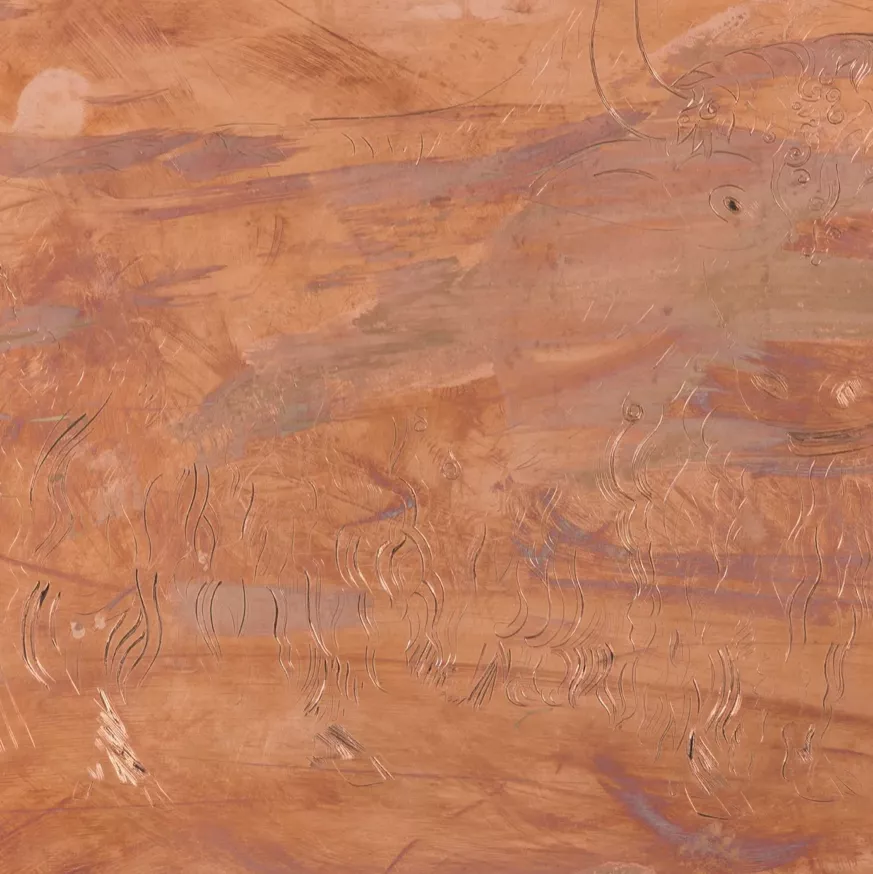
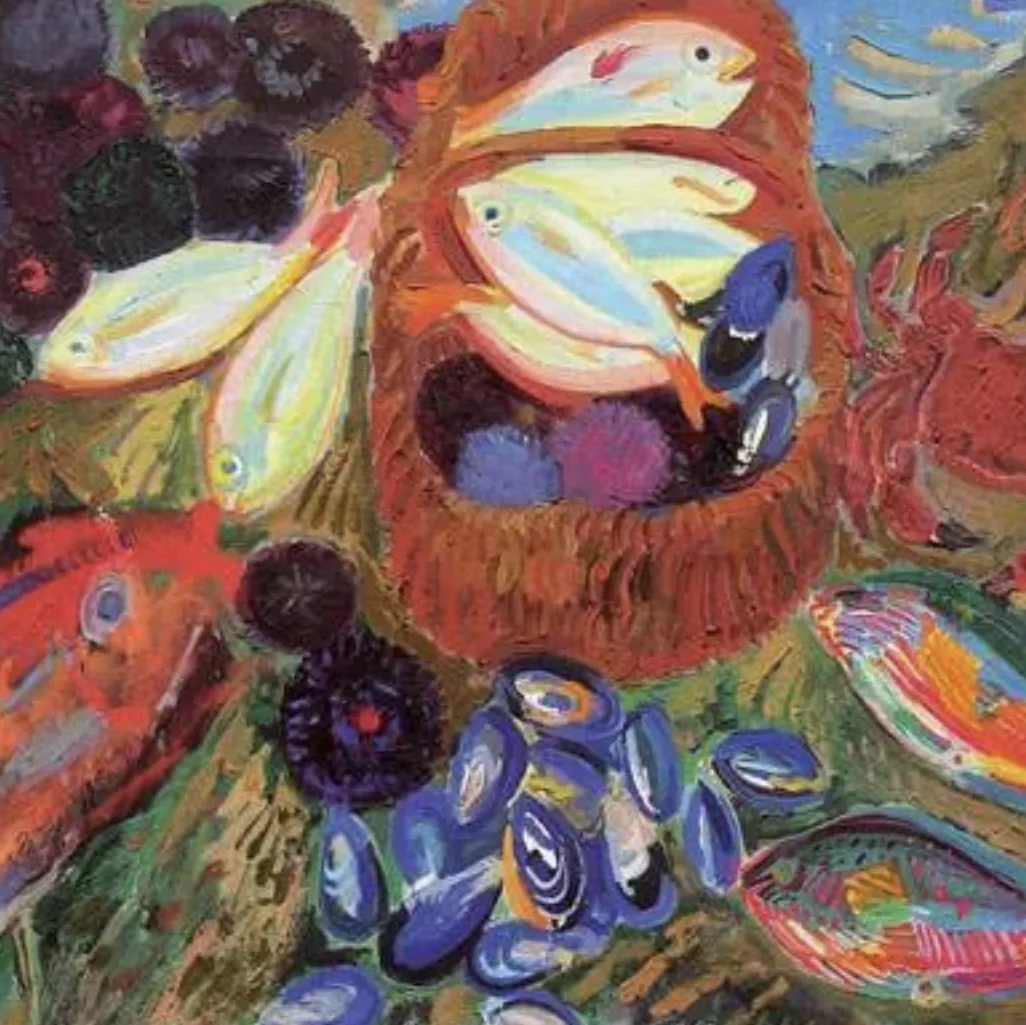
The life of Joseph Hecht
Joseph Hecht, born in 1891 in Łódź, then part of the Russian Empire, unfolds a career in which intensity of line meets an almost austere discipline.
Trained at the Krakow Academy of Fine Arts, he immersed himself in a European artistic heritage that he would sublimate through a technique of rare mastery.
In 1920, Paris became his home port. In this city buzzing with the audacities of the avant-garde, Hecht nevertheless gave in to neither the tumult of Cubism nor the surrealist chimeras.
On the contrary, he refined a singular language, in which intaglio engraving became the matrix of a demanding formal reflection.
His body of work is distinguished by a rigorous attention to animal structures: lions, owls and foxes are all subjects he captures in their essence, reducing forms to sharp, incisive lines.
Each burin he traces seems engraved not only in the plate, but in the thought itself, abolishing all excess to preserve only purity.
His collaboration with Atelier 17, which he co-founded with Stanley William Hayter, made him an essential passeur: his technical research influenced artists exploring the expressive potential of etching, from Masson to Miró.
Despite his relative discretion on the art scene, Hecht established himself as a figurehead of a modern classicism, combining the legacy of the Old Masters with a sensibility specific to the twentieth century. His death in 1951 marked the end of a career in which line alone contained a world.
Focus on the Fox, Joseph Hecht
In this work by Joseph Hecht, the silhouette of the fox seems to emerge from the background with an intensity that lies in simplicity. The line, with a sure stroke, captures the essence of the animal, without excess, without superfluous ornament.
It's not the detail that takes precedence here, but the impression that each engraved element participates in the exploration of pure form.
The animal, far from being a simple realistic reproduction, becomes a presence, almost mythological, as if frozen in a suspended moment. The play of light, through the mastery of intaglio, adds a depth that plays out in the opposition between light and shadow.
The strokes are sharp, cutting, but at the same time organic, blending into a rough texture that makes the fox's soul palpable.
The choice of subject, a wild animal, places Hecht in a tradition where wildlife is scrutinized not for its physical reality, but for its ability to embody symbols. In this fox, there's a mixture of wildness and calm, a tension between the presence of raw nature and the distillation of formal purity. The absence of decoration reinforces this choice: it's not a question of situating the animal in a space, but of elevating it to a level of abstraction where its existence alone seems to suffice.
This work recalls Japanese prints, with their mastery of line and space, but also the rigor of European etching, where every incision is an assertion of technique.
The influences of classical printmaking, particularly that of Dürer, can be seen in the precision and structure of the work, but Hecht frees himself from convention through his radical simplicity.
His work is both a reappropriation of tradition and a renewal, where the art of detail is transformed into a quest for pure essence.
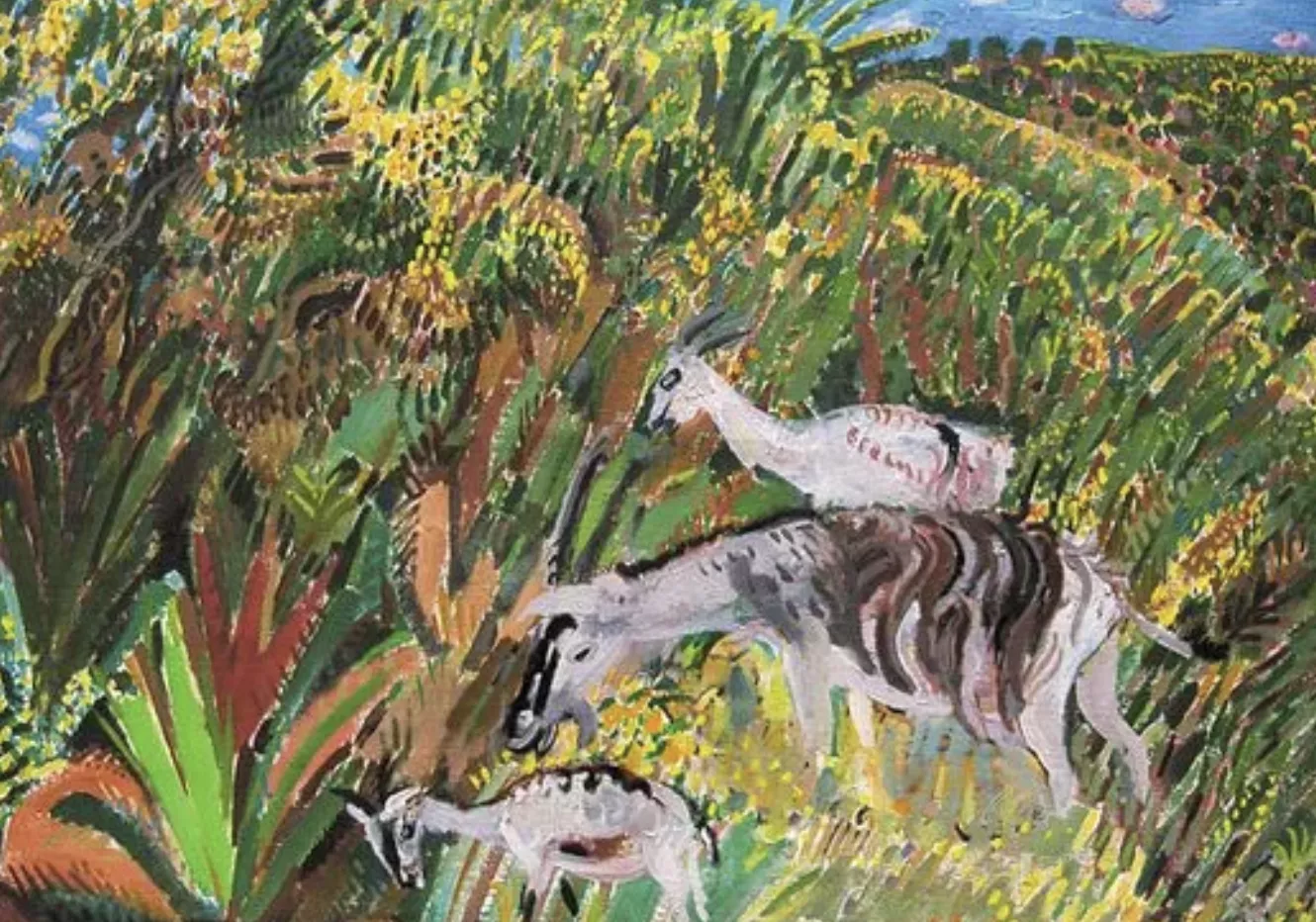
Joseph Hecht's imprint on his period
Joseph Hecht's legacy to the history of modern printmaking is distinguished by a subtle dialogue between tradition and modernity. At a time when art tends towards audacity and deconstruction, Hecht, through a remarkable economy of means, chooses to highlight the power of pure line.
In contrast to artists such as Pablo Picasso or Joan Miró, who explore the fantastic and the imaginary, Hecht focuses his attention on an almost ascetic representation, particularly in his animal prints.
Far from stylistic exuberance, he favors a graphic rigor that evokes both classical heritage and modernist aspirations.
His engravings, executed with exemplary precision, follow in the tradition exemplified by Dürer or Rembrandt, but adopt a formal sobriety that makes them resolutely contemporary.
Compared to Giorgio Morandi, whose purity sublimates inanimate objects, Hecht achieves a similar level of reduction in his depiction of animals, which he charges with a powerful inner life.
Through his search for a timeless aesthetic, he also places himself in counterpoint to artists such as Stanley William Hayter, with whom he collaborates at Atelier 17, where he contributes to reinventing printmaking as an autonomous art, freed from its decorative or narrative functions.
Hecht's impact on his contemporaries is felt in Hayter's work, but also in more graphic etchings such as those by Miró or Max Ernst, who explore the expressive power of line.
However, Hecht is distinguished by a more stripped-down, almost meditative approach, which invites an introspective reading of his works.
Through this tension between classicism and modernity, his imprint manifests itself in a rehabilitation of printmaking as an essential visual language, offering a quiet but imposing alternative to the often tumultuous experimentations of his time.
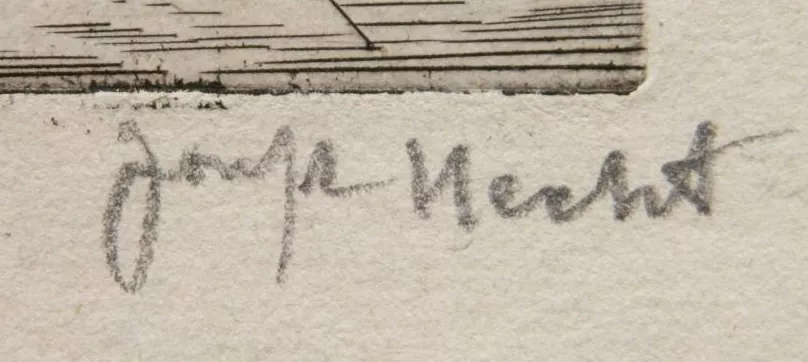
His signature
Not all of Joseph Hecht's works are signed. It is also possible that the work is a copy or that the inscription has faded over time, which is why expert appraisal is essential.
Expertise your property
If you own a work by Joseph Hecht, don't hesitate to request a free appraisal by filling in our online form.
A member of our team of experts and certified auctioneers will contact you to provide an estimate of the market value of your work.
If you are considering selling your work, our specialists will also guide you through the various alternatives available to obtain the best possible price, taking into account market trends and the specific features of each work.
Estimate in less than 24h
Discover in the same theme

Rating and value of paintings by Lucio Fontana
Lucio Fontana is a twentieth-century spatialist artist whose works are highly prized at auction.
Learn more >

Rating and value of paintings by Oskar Kokoschka
Oskar Kokoschka is a 20th-century Austrian Expressionist painter whose works are highly valued at auction.
Learn more >

Rating and value of Pierre Joubert's drawings
Pierre Joubert is a French draftsman who has produced many works that are highly valued at auction. 24h estimate.
Learn more >
D'autres tableaux impressionnistes vendus aux enchères

Estimated 6.000 - 8.000
Mikhail Markianovich GUERMACHEFF (1867 - 1930) House under the snow, oil on canvas

Estimated 2.000 - 4.000
Jean DUFY (1888-1964) Vase of anemones, Watercolor

Estimated 600 € - 800 €
Henri ZUBER (1844-1909), Bridge at Artemare. Oil on canvas.

Secure site, anonymity preserved

Auctioneer approved by the State

Free and certified estimates
Frequently asked questions
-
Who is Joseph Hecht, and what is his artistic background?Joseph Hecht (1891–1951) was a Polish printmaker trained at the Academy of Fine Arts in Kraków who settled in Paris in 1920. A leading figure in 20th-century modern printmaking, he co-founded Atelier 17 with Stanley William Hayter and distinguished himself through a minimalist approach that blended classicism and modernity, in which the pure line became the sole vehicle of expression. His work engages closely with modernist aspirations while maintaining a deep respect for classical tradition.
-
What are the prices and values of Joseph Hecht's works?Joseph Hecht’s works command high prices on the auction market. His watercolor drawings sell for between €70 and €500, his prints and multiples for between €20 and €6,300, and his paintings for between €130 and €23,900. His engravings and oil paintings on canvas are the most sought-after pieces and regularly fetch record prices, such as his painting “Leda and the Swan” (1925), which sold for €23,900 in 2021.
-
How can you authenticate a work by Joseph Hecht?To authenticate a work by Joseph Hecht, we recommend that you request a free appraisal from Auctie's by filling out our online form. A certified expert or auctioneer will examine your artwork and provide you with an accurate estimate within 48 hours. This step is particularly important because not all of Hecht’s works are signed, and copies do exist.
-
Is this the right time to sell a work by Joseph Hecht?Yes, this is an excellent time to sell a work by Joseph Hecht. His works—particularly his engravings and oil paintings on canvas—are attracting growing interest among collectors and enthusiasts of 20th-century art. The market fully recognizes this artist’s historical significance and the quality of his works, which is reflected in record prices at auction.
-
How does the appraisal and sale process work at Auctie's?At Auctie's, appraisals are free and non-binding. Simply fill out our online form, and a certified expert or auctioneer will contact you and provide an appraisal within 48 hours. If you’re interested in selling, our specialists will guide you through the available options to help you get the best possible price, taking into account market trends and the specific characteristics of your artwork.
