



Rating and value of paintings by Maurice Louvrier

Key takeaways
- Works by Maurice Louvrier (1878–1954) sell for between €90 and €18,300 depending on the medium, with oil-on-canvas paintings being the most sought-after by collectors.
- The Rouen-based artist mastered a painting style that combines Impressionism, Post-Impressionism, and Naturalism, characterized by light impasto and a luminous, nuanced palette.
- An influential member of the Rouen School in the 20th century, Louvrier was actively involved in the local art scene as president of the artists’ society, and his paintings are housed in museums in Rouen, Caen, and Louviers.
If you own a work by or after Maurice Louvrier, and would like to know its value, our state-approved experts and auctioneers will offer you their appraisal services.
Our specialists will carry out a free appraisal of your work, and provide you with an accurate estimate of its value on the current market.
Then, should you wish to sell your work, we will direct you to the best possible arrangement to obtain the optimum price.
Rating and value of the artist Maurice Louvrier
The artist Maurice Louvrier leaves behind a body of work characteristic of academic painting, he is famous for his canvases and drawings. Now, prices for his works are rising under the auctioneers' gavel.
His paintings are particularly prized, especially by French buyers. The price at which they sell on the art market ranges from €90 to €18,300, a substantial gap but one that says a lot about the value that can be attributed to Louvrier's works.
La Seine au Pré aux Loups, an oil on canvas depicting a landscape was sold for €18,300, whereas it was estimated at between €13,000 and €16,000.
Order of value from a simple work to the most prestigious
Technique used | Result |
|---|---|
Drawing - watercolor | From €90 to €3,050 |
Oil on canvas | From €100 to €18,300 |
Estimate in less than 24h
Style and technique of artist Maurice Louvrier
Maurice Louvrier doesn't fit into any particular pictorial trend or group technically speaking.
His work is distinguished by crossover influences from Impressionism and Post-Impressionism. The artist favors a fluid, dynamic approach, enabling him to capture atmosphere and light through light impasto.
Louvrier layers meticulously chosen colors in a luminous, nuanced palette. His works are characterized, among other things, by a delicate chromatic harmony - caacterized by often soft tones.
These nuances are enhanced by subtle contrasts that bring both a certain depth, without forsaking intensity.
His work also bears witness to a marked interest in nature and scenes of everyday life, whether landscapes, seashores or gardens - playing with this pictorial vocabulary to build up his artistic identity.
He plays with moods and especially light to create different atmospheres - sometimes even pulling some of his works, such as Brume dorée, which went on sale in 1989, towards incipient abstraction.
The majority of his compositions stand out as balanced and fluid, the artist's canvases are structured with great sensitivity, while retaining a certain spontaneity in the arrangement of forms.
However, an underlying rigor guides the viewer's eye and provides clear information even in his most sober compositions, balancing the treatment of forms throughout his production.
Louvrier's pictorial technique proves completely mastered, blending precision and suggestion. Although certain details are treated and drawn and then overlaid with lightness, other areas of the canvas benefit from a more sustained treatment.
In this sense, we can discern in Louvrier a certain influence of naturalism, which is also found in many artists of the Rouen school.
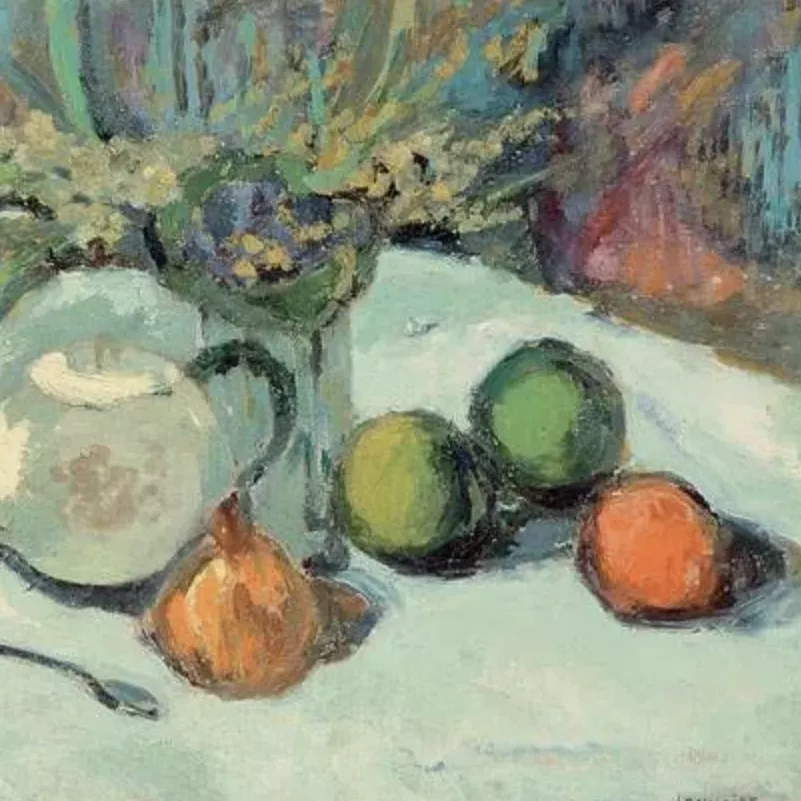
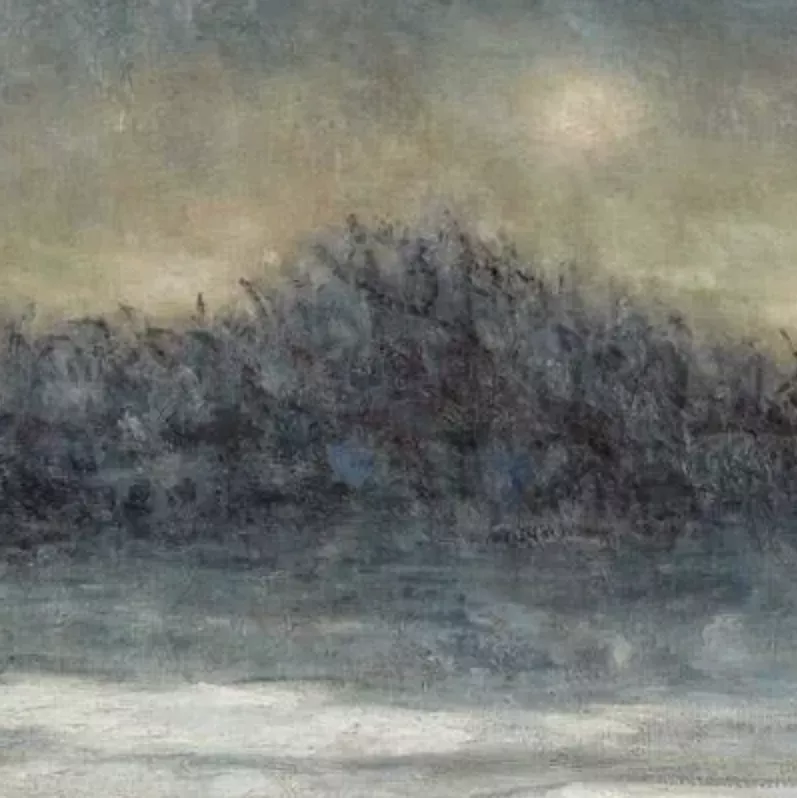
Maurice Louvrier, his life, his work
Maurice Louvrier (1878 - 1954) was a painter influenced by Impressionism and Post-Impressionism, but also by Naturalism.
The artist benefited from a solid artistic training and culture. He learned painting in a context where the Impressionist legacy combined with post-impressionist developments simultaneously influenced young artists taking the path of landscape painting.
Few information is available today about his life, but records suggest that he studied at several art schools, both recognized and less so, notably at the Beaux-Arts de Rouen, where he had the opportunity to develop his sense of composition and pictorial technique.
Born in Rouen, the painter retains a strong lifelong attachment to the city, whether through its cultural events, where he has the opportunity to exhibit his work, or through the inspiration the city gives him.
He alternately paints alleyways, quays and the bustling port, capturing the changing light and subtle nuances of the Norman landscape. Like artists such as Robert Pinchon, he makes Rouen his main source of inspiration.
Member of the Société des Artistes Rouennais, then president, he is committed to promoting landscape painting locally and making the paintings of his fellow artists better known. As a result, several of his paintings have been preserved in the museums of Rouen, Caen and Louviers.
His career was interrupted, however, by his military service, from 1900 to 1902, and then during the First World War, when he was mobilized to the front from 1914 to 1919.
Beyond the Rouen artists' society, he frequented several local art circles and took part in numerous regional exhibitions, becoming a major player on the Rouen art scene.
He was strongly influenced by his environment, but was not limited to the city of Rouen. He also worked in the surrounding countryside, freezing on canvas the more natural landscapes characteristic of Normandy.
He recreates this atmosphere with precision and sensitivity, articulating within his varied output landscapes, genre scenes, urban and rural representations, which testify to a quite particular attention to different lighting effects and changing atmospheres.
Many exhibitions punctuated his career, in Rouen but also in Paris, enabling him to attract more critics and collectors in order to publicize his work and earn a living.
His career was marked by gradual recognition - he was not immediately famous, but still managed to acquire a certain notoriety, especially in Rouen. His work is appreciated by loyal customers who praise his sensitivity and finesse of execution.
His artistic commitment is constant : he continues to paint until the end of his life, seeking to constantly improve his approach to form and light.
.
The Rouen School in the 20th century
The major characteristic of the Rouen School is its continuity with Impressionism, its members working primarily on light effects and atmospheric variations.
Inspired by Monet, among others, the artists of the Rouen school set out to capture the landscapes of the Seine valley, the quays and the port of Rouen.
This school also demonstrated stylistic diversity. Impressionist influence remains strong indeed, but some artists will prefer a more structured approach, more in tune with postimpressionism and fauvism.
Others will explore a bolder palette, incorporating bright colors and more synthetic compositions.
The group of artists from the Rouen school is nevertheless striking, bringing together Robert Antoine Pinchon, Pierre Dumont, Marcel Delaunay and Maurice Louvrier. They each developed a singular approach, but kept their Norman inspiration in common.
The modern influences of Cubism - notably Cézanne, but also Fauvism - enabled them to incorporate a simplification of forms and an intensification of color contrasts.
Their recognition was gradual, a far cry from that of the Parisian Impressionists, who had the Salons and art criticism anchored in their daily lives. However, thanks to their perseverance and mutual support, they gained local and then national recognition.
The Rouen school is best known for its regional artistic influence, helping to make the city an important artistic center in the 20th century.
Thanks to the commitment of its artists, the Rouen school helped to make the city an important center in the 20th century - being aided by the loyalty of local collectors. In this way, the Rouen School affirmed the importance of Normandy in the history of modern painting.
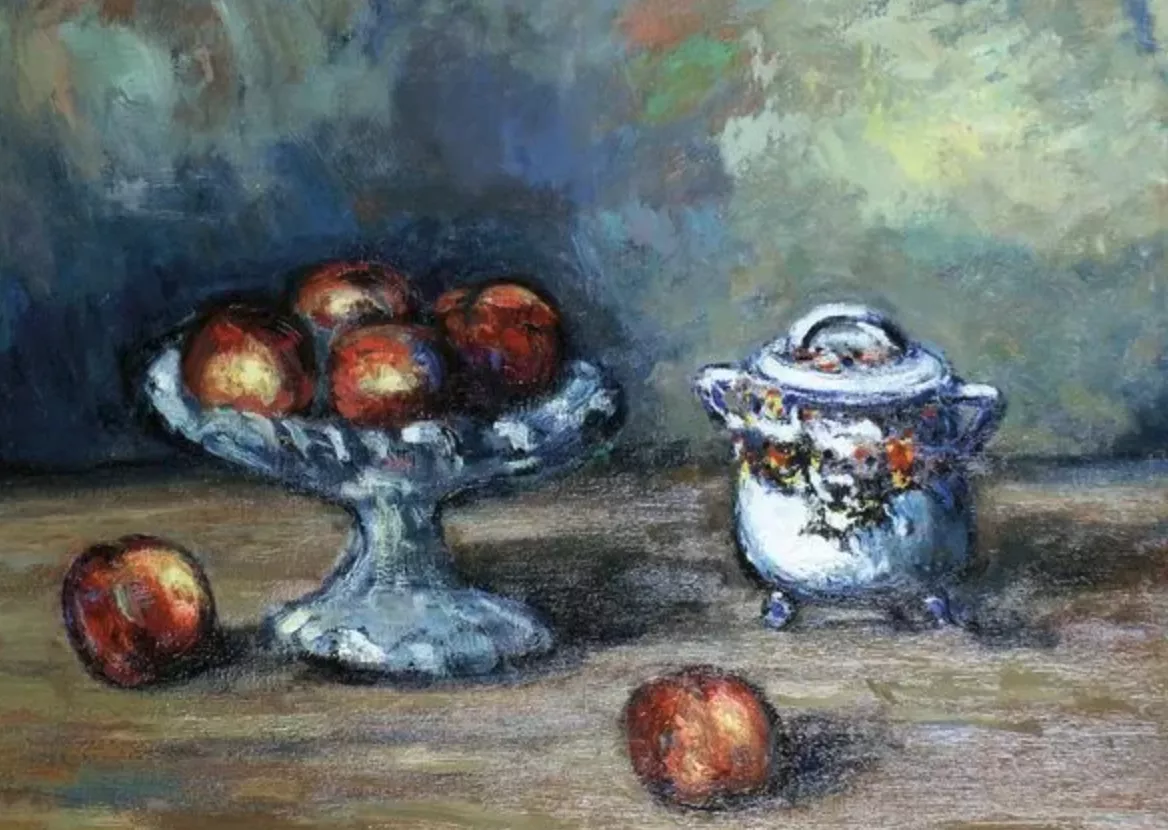
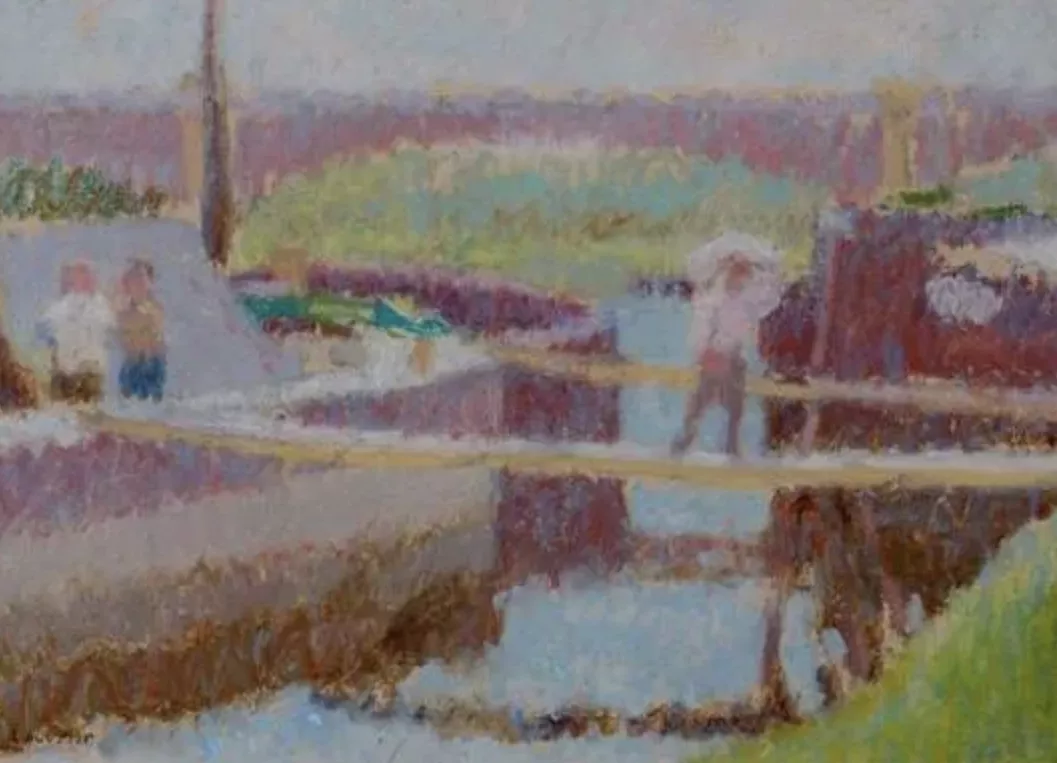
Focus on Le Pont Boieldieu, Rouen, Maurice Louvrier
Maurice Louvrier depicts a famous Rouen bridge in this scene, animated by river and urban activity. He chooses a composition and perspective that guides the viewer along the bridge towards the city.
The lines of the bridge and river help to structure the composition, allowing a balance between the different elements.
Louvrier chooses shades of blue, gray and ochre, allowing the typical atmosphere of Rouen to be reflected. The treatment of light is adapted to depict a diffuse, cloudy atmosphere.
As for architectural and human details, the historic buildings are rendered with precision, and the addition of figures in the composition as well as boats adds a lively, everyday dimension, techniques common among Impressionists such as Eva Gonzales or Theodore Robinson.
Recognizing the artist's signature
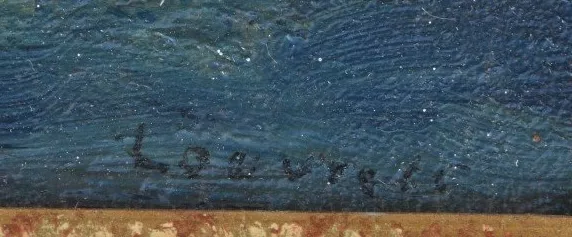
Not all the painter's works are signed. However, with or without a mention, it's important for you to have the work appraised to ensure its originality and to be able to date it. And of course, copies do exist.
Knowing the value of a work
If you happen to own a work by or after Maurice Louvrier, don't hesitate to request a free valuation using our form on our website.
A member of our team of experts and certified auctioneers will contact you promptly to provide you with an estimate of the market value of your work, as well as ad hoc information about it.
If you wish to sell your work, you will also be accompanied by our specialists in order to benefit from alternatives for selling it at the best possible price, taking into account the inclinations of the market.
.Estimate in less than 24h
Discover in the same theme

Rating and value of works, drawings, paintings by Michel Adl...
Michel Adlen is a Ukrainian painter of the École de Paris who has produced drawings and oils on canvas that are highly regarded at auction.
Learn more >

Market Value and Price of Etel Adnan's Paintings, Drawings,...
Etel Adnan is a twentieth-century Lebanese abstract artist who has produced many works that are highly regarded and valued.
Learn more >

Rating and value of paintings by Jean Fautrier
Jean Fautrier is an abstract painter of the 20th century, quoted at auction, who produced works whose value is quite high. 24h estimate.
Learn more >
D'autres tableaux impressionnistes vendus aux enchères

Estimated 6.000 - 8.000
Mikhail Markianovich GUERMACHEFF (1867 - 1930) House under the snow, oil on canvas

Estimated 2.000 - 4.000
Jean DUFY (1888-1964) Vase of anemones, Watercolor

Estimated 600 € - 800 €
Henri ZUBER (1844-1909), Bridge at Artemare. Oil on canvas.

Secure site, anonymity preserved

Auctioneer approved by the State

Free and certified estimates
Frequently asked questions
-
Who is Maurice Louvrier, and what is his artistic background?Maurice Louvrier (1878–1954) was a painter from Normandy influenced by Impressionism, Post-Impressionism, and Naturalism. Born in Rouen, he studied at the Rouen School of Fine Arts and rose to prominence as a member and later president of the Society of Rouen Artists. He was part of the Rouen School, a 20th-century artistic movement comprising landscape painters dedicated to capturing the effects of light and the atmospheres of Normandy, alongside artists such as Robert Pinchon.
-
What is the price range for works by Maurice Louvrier?Prices for works by Maurice Louvrier vary depending on the medium and quality. Drawings and watercolors range from €90 to €3,050, while oil paintings on canvas range from €100 to €18,300. For example, “La Seine au Pré aux Loups” sold for 18,300 €, exceeding its initial estimate of 13,000 to 16,000 €. Prices depend on the work’s significance, provenance, and condition.
-
How can you authenticate a work by Maurice Louvrier?To authenticate a work attributed to Maurice Louvrier, we recommend requesting a free appraisal from our state-certified experts and auctioneers using the form on our website. Our specialists will examine the work, verify its authenticity and signature (not all works are signed), and provide a precise date. You will receive a response within 48 hours, with no obligation on your part.
-
Is this the right time to sell a work by Maurice Louvrier?Yes, now is a good time to sell a work by Maurice Louvrier. Demand for this artist from the Rouen School is steadily increasing, particularly among French collectors. His prices are rising at auction, and interest in 20th-century Normandy landscape painting remains strong. A free appraisal will help determine the best time and sales channel for your artwork.
-
How does the sales process work at Auctie's?Auctie's supports sellers from the appraisal stage through to the auction. You start by requesting a free, no-obligation appraisal through our website. An expert will contact you within 48 hours to provide you with an accurate valuation of your artwork. If you wish to proceed, our specialists will advise you on the best options for selling your painting at the best price, taking current market conditions into account.
