



Rating and value of paintings by Carla Accardi

Key takeaways
- Carla Accardi, an Italian artist born in 1924, has seen her market value skyrocket since 2010, with steady growth, particularly for her works from the 1950s.
- Prices for her works range from €50 for prints to €280,000 for paintings, with a record price of €280,000 set in 2023 for a 1957 oil painting.
- A pioneer of abstraction who introduced sicofoil as early as the 1960s, she revolutionized painting by emphasizing space, light, and transparency.
If you own a work by artist Carla Accardi or based on her work and would like to know its value, our state-approved experts and auctioneers will guide you.
Our specialists will carry out a free appraisal of your work, and provide you with an accurate estimate of its value on the current market.
Then, should you wish to sell your work, we'll direct you to the best possible arrangement to obtain the optimum price.
Artist's rating and value
An Italian artist, Carla Accardi won over the art critics, dealers and collectors of her day. Since then, the artist's works have established themselves as sure values on the art market.
From the 2010s onwards, her quotation has exploded and shown steady growth, particularly for her works produced from the 50s onwards.
As a result, the price at which Carla Accardi's works sell ranges from €50 to €280,000. In 2023, an oil on canvas dating from 1957 entitled Casein was sold for €280,000, while it was estimated at between €200,000 and €300,000.
Order of value from the most basic to the most prestigious
Technique used | Result |
|---|---|
Estamp - multiple | From €50 to €4,400 |
Sculpture | From €700 to €25,000 € |
Drawing - watercolor | From €200 to €41,000 |
Painting | From €150 to €280,000 |
Estimate in less than 24h
The artist's works and style
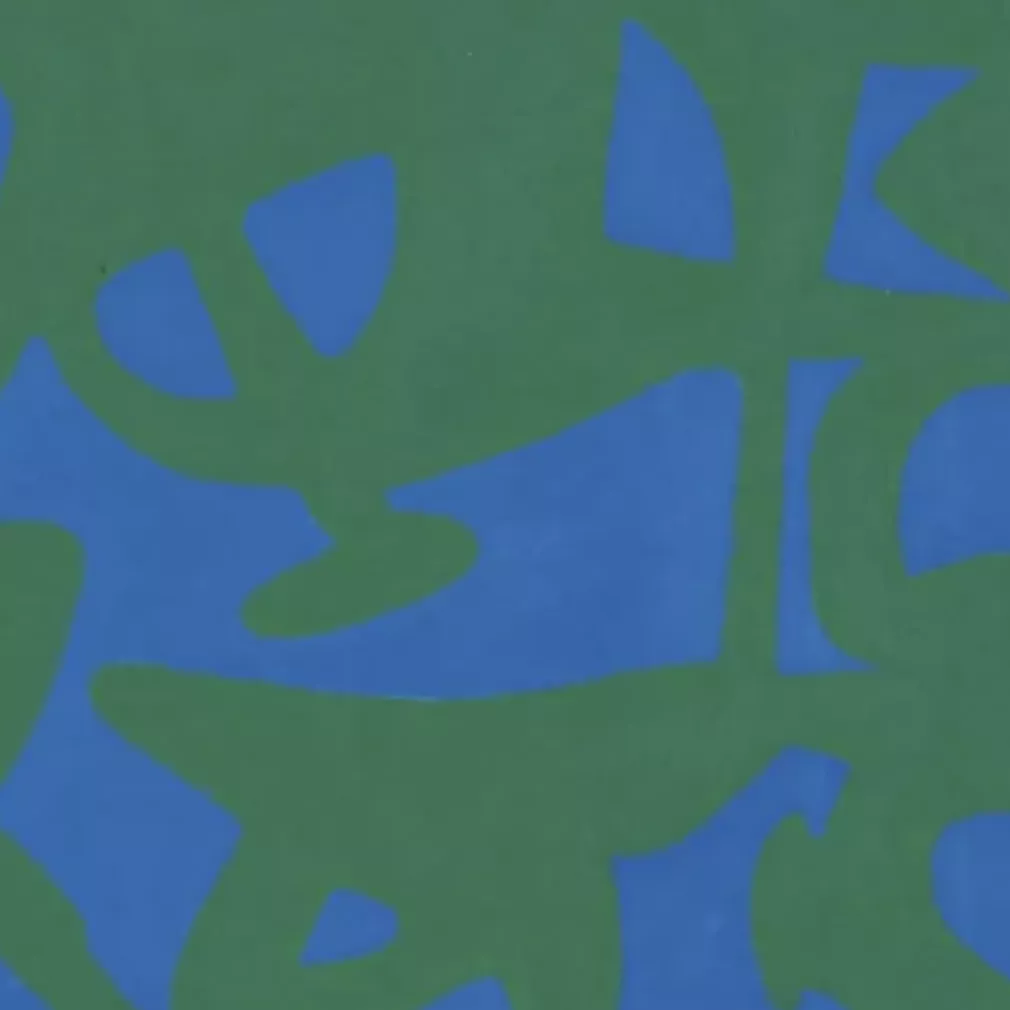
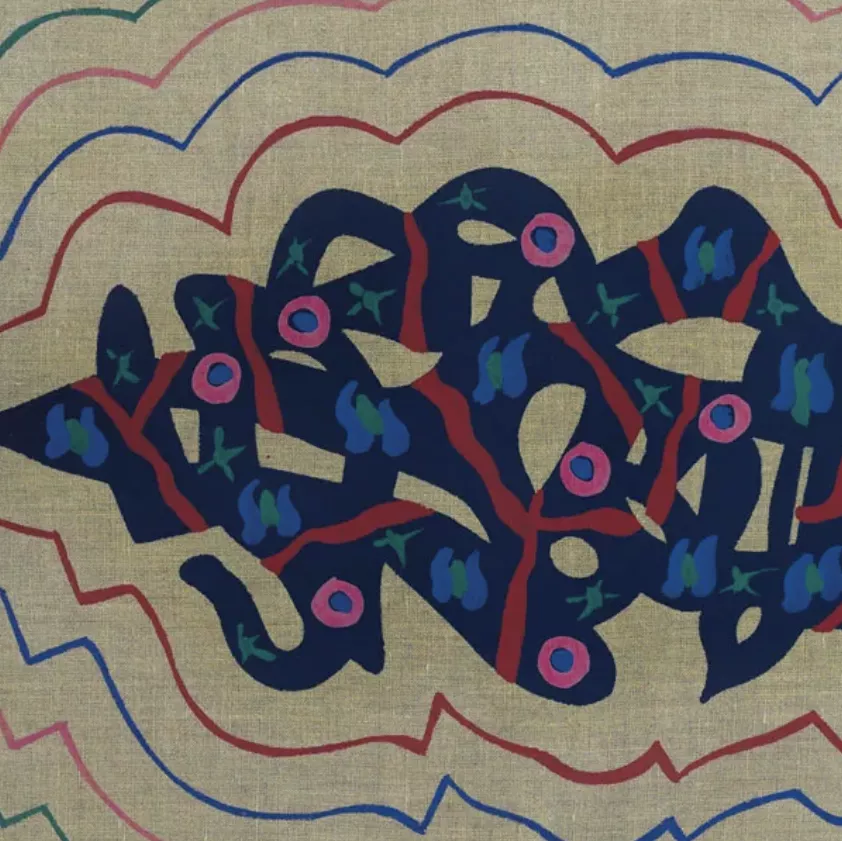
In Carla Accardi's works, the questioning of traditional painting codes is accentuated by the introduction of sicofoil, a translucent material that disrupts the surface itself.
Hand-drawn signs, often stripped of rigid outlines, stretch out like weightless patterns, vibrating between opacity and transparency.
These lines, alternately sinuous and broken, thick and evanescent, seem intent on exploring all possible combinations, playing on superimpositions and irregular rhythms.
The support is no longer merely a receptacle, but becomes an active space where textures and reliefs emerge as light passes through or reflects the material.
In this exploration, the sign loses all descriptive function. It no longer coincides with the narrative forms for which it was primitively intended, but devotes itself to redefining a purely visual space, varying densities and intervals in a shifting continuity.
Colors, applied in bright flat tints or subtle touches, no longer serve to depict objects. Stripped of their symbolic or decorative role, they become the actresses in a game of appearances and disappearances, constantly modulating the viewer's perception.
This chromatic vocabulary, freed from convention, interacts with the sicofoil to produce unexpected optical effects, sometimes verging on luminous vibration.
In this reconfiguration of pictorial language, Accardi reaches a climax where pictorial space seems to dissolve into immaterial materiality.
The surface, traversed by light, no longer knows either contour or clear boundary, but unfolds as an infinite field where each element is in permanent dialogue with the others.
This technical and aesthetic evolution, far from being a mere detail, reflects a profound reversal: painting, for Accardi, ceases to be representation to become exploration, the invention of an unprecedented space where the visible and invisible merge.
The life of Carla Accardi
Carla Accardi, born in 1924 in Trapani, Sicily, began her artistic career at the Palermo Academy of Fine Arts, before continuing her studies in Florence.
In Rome, where she settled in 1946, her career took place in a context of intellectual and artistic effervescence, marked by the emergence of new avant-gardes.
As early as 1947, she co-founded the Forma 1 group with other artists keen to combine geometric abstraction with Marxist ideals.
This inaugural moment, which might seem a simple adherence to a collective aesthetic, already marks the beginning of a singular path.
From then on, his painting gradually freed itself from the rigid frameworks of strict geometry to explore a language of signs in which color, often bright, became an autonomous plastic force.
This evolution testifies to a growing desire to escape conventions, both pictorial and social, in an Italy still profoundly marked by patriarchal values.
From the 1960s onwards, the introduction of sicofoil, a translucent, flexible material, reflects a decisive turning point in his approach: traditional supports give way to a search in which space, light and transparency become constitutive elements of the work.
Far from limiting himself to formal experimentation, this radical choice inscribes his work in a direct relationship with the social and cultural transformations of his time, affirming a gesture of independence and innovation.
Focus on Rotoli, Carla Accardi, 1965
In Rotoli (1965), Carla Accardi's work breaks free from the traditional conventions of the painting, making matter and light the true subjects of the work.
On these rolls of sicofoil, a supple, translucent material, she deploys abstract forms, which are neither entirely lines nor entirely signs, but a dynamic between the two, a kind of tension without resolution.
The texture of sicofoil, itself almost invisible, becomes a support for traces that have no definition other than that which we attribute to them, and at the same time a claim to presence, where every movement inscribed in the material seems both suspended and floating.
The transparency of sicofoil not only eclipses the traditional figures of painting: it also dilutes the boundaries between the world of art and that of the viewer.
Each fold, each line drawn seems to invite the latter to movement, to an experience of constant engagement. The work is no longer a figure of passive contemplation but an interactive space, where the viewer himself becomes the principal actor in the reading of the form.
The structure of the strips, often suspended in space, refuses to be limited to a frame, a fixed image: they are the projection of a pictorial language where movement, light and shadow take their place alongside gesture.
These scrolls, similar to traces of linear movement deployed in space, seem to seek their own direction, drifting between extremes of tension and fluidity.
The absence of a traditional background or rigid composition, typical of classical painting formats, strips the work of any narrative or geometric representation, leaving it to transform, metamorphose through the light that passes through them and the space they occupy.
At every moment, the work redefines itself according to the angle from which it is viewed, as a variation of light and shadow that has no other purpose than its existence in the moment.
The range of colors, playing between bright hues and dazzling whites, revives this notion of dynamics that traditional painting tended to eradicate.
Accardi's work doesn't seek to reproduce a form of reality or capture a frozen emotion, but to free painting from its initial role, turning it into a purely sensory exploration.
This radical gesture is all the more significant in that it comes at a historical moment when the codes of abstract art and minimalism seemed to freeze a form of aesthetic heritage.
But Accardi, by breaking with these norms, imposes a new reading of abstraction, one that can no longer be defined by shapes or geometry alone, but by an intimate relationship with space and matter itself.
This work, both radical and poetic, inscribes the work in perpetual movement, an endless search for identity, both for the artist and the viewer.
Carla Accardi's imprint on her time
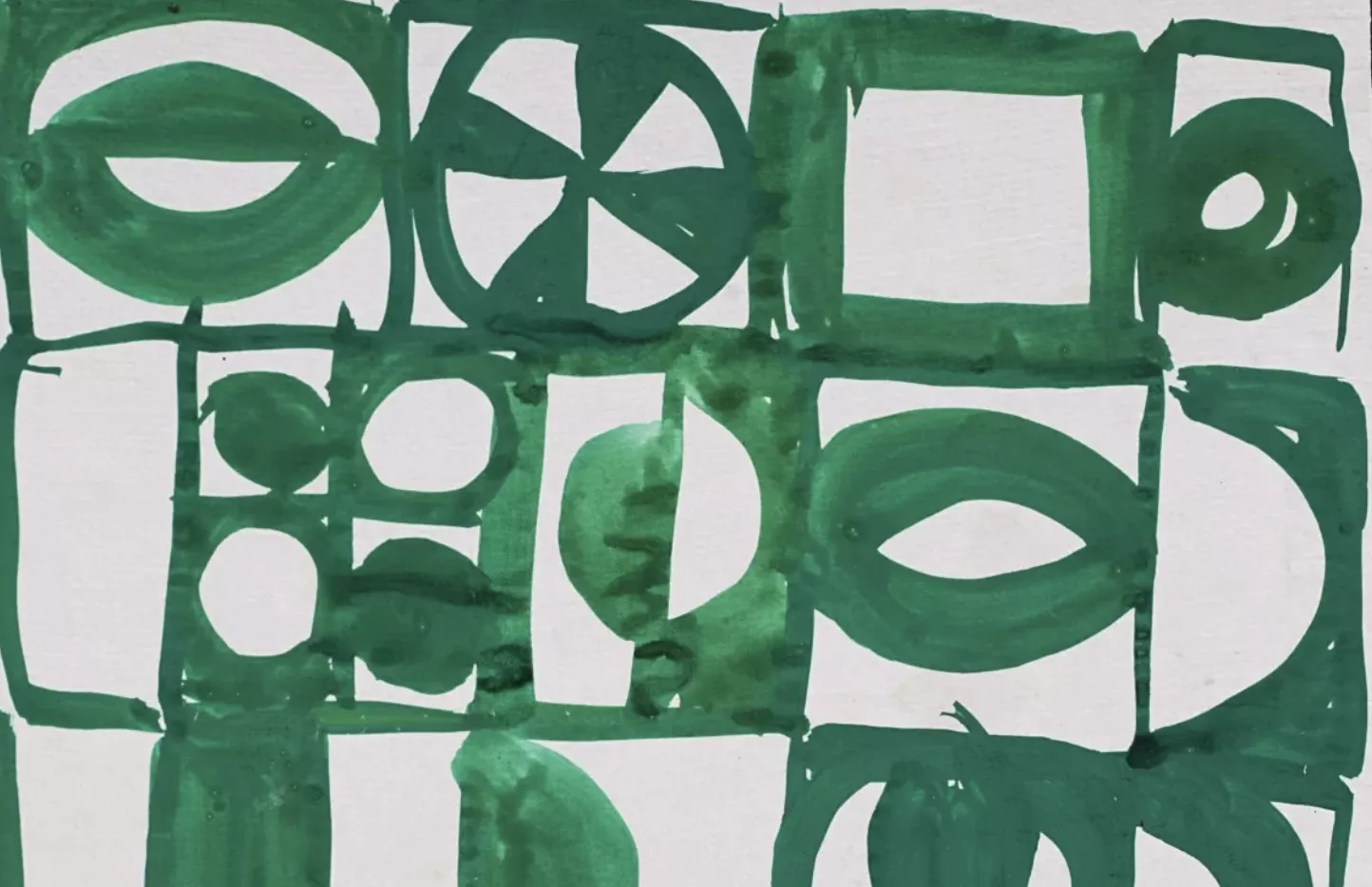
Carla Accardi's imprint on her time is revealed with obvious clarity in her choices of materials and forms, which become the terrain for a visual exploration as radical as it is poetic.
From her earliest works, the artist stands out for her rejection of the figurative conventions that dominated the Italian art scene of the 1950s. By replacing traditional canvas with materials such as sicofoil, she inaugurates an innovative gesture that traverses and deconstructs pictorial space.
This gesture is not limited to a simple search for formal novelty, but appears as an act of subversion.
In this respect, Accardi's work goes far beyond individual expression to respond to a broader need to renew the visual language of her time, a language that, in her view, cannot be limited by fixed formats or conventions.
In this context, the artist not only questions painting as a discipline, but also art's relationship with its time. With Italy in the throes of reconstruction after the Second World War, artists are called upon to reinvent the meaning of art in a changing society.
Accardi's approach takes a central place in this reflection, proposing an alternative to the staid, overly conventional approaches of his contemporaries - in the same vein as Bernar Venet, Gérard Schneider or Jacques Doucet.
Accardi's works, often characterized by abstract lines and deliberately non-figurative compositions, manifest this desire to free painting from its traditional constraints.
By moving away from classical forms and favoring materials that subvert the very perception of the work, she gives rise to a dialogue between art and its public, one in which matter and form become the true protagonists of a broader discourse on the artist's place in a changing society.
Through this approach, Accardi's imprint on her era becomes indisputable. His work is not simply part of an aesthetic framework, but stands out as an act of rupture, a way of redefining the role of the artist in an era where everything seems to be reinvented.
Far from being satisfied with the canons inherited from the past, the artist creates art that doesn't allow itself to be locked into any fixed form. As such, Accardi does not seek to imitate his contemporaries, but to offer them a new path, one that opens up infinite possibilities for transformation, freedom and expression.
This indelible and deeply personal imprint makes the artist a leading figure of his time, the embodiment of a constant reinvention of artistic language.
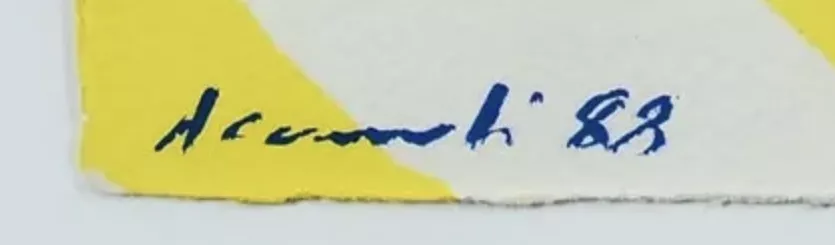
Her signature
Not all of Carla Accardi's works are signed.
An example of her signature can be seen in the drawing below.
Expertise your property
If you own a work by Carla Accardi, don't hesitate to request a free valuation by filling in our online form.
A member of our team of experts and certified auctioneers will contact you to provide an estimate of the market value of your work.
If you are considering selling your work, our specialists will also guide you through the various alternatives available to obtain the best possible price, taking into account market trends and the specific features of each object.
Estimate in less than 24h
Discover in the same theme

Rating and value of works, drawings, paintings by Louis Anqu...
Louis Anquetin is a twentieth-century Impressionist artist who produced drawings and oil paintings that are quoted on the auction market.
Learn more >

Rating and value of paintings by Ram Kumar
Ram Kumar is a 20th-century Indian abstract artist whose works in a variety of media are highly regarded and sought-after at auction.
Learn more >

Rating and value of paintings by Leonora Carrington
Leonora Carrington is a surrealist artist who produced works that are highly valued at auction. 24h estimate.
Learn more >
D'autres tableaux abstraits vendus aux enchères

Estimated 2.000 - 4.000
Serge POLIAKOFF (1900-1969), Composition en rouge et bleu. 1965, Lithograph

Estimated Between €5,000 and €8,000
Jean MIOTTE (1926-2016), acrylic on canvas

Estimated 3.000 - 5.000
Roberto MATTA (1911-2002), Composition, Gouache on canvas

Secure site, anonymity preserved

Auctioneer approved by the State

Free and certified estimates
Frequently asked questions
-
Who is Carla Accardi, and what is her contribution to abstract art?Carla Accardi (1924–2014) was an Italian artist born in Sicily and a co-founder, in 1947, of the Forma 1 group, which combined geometric abstraction with Marxist ideals. She is best known for revolutionizing the language of painting by introducing sicofoil, a translucent and flexible material, transforming traditional painting into an exploration of space, light, and transparency. Her work is characterized by refined abstract forms and unconventional color schemes, placing art within a context of radical modernity following World War II.
-
What is the price range for Carla Accardi's works?Prices for Carla Accardi’s works vary considerably depending on the medium and the size of the piece: prints and multiples sell for between €50 and €4,400, drawings and watercolors for between €200 and €41,000, sculptures between €700 and €25,000, and paintings between €150 and €280,000. Since 2010, her market value has shown steady growth, particularly for her works from the 1950s and 1960s. In 2023, a 1957 oil on canvas titled “Caséine” sold for €280,000.
-
How can you authenticate a work by Carla Accardi?To authenticate a work by Carla Accardi, we recommend that you submit your item for a free appraisal via our online form at Auctie's. A state-certified expert or auctioneer will examine the work and provide you with an accurate estimate of its market value. This process, which is non-binding on your part, will allow you to verify the authenticity and condition of your acquisition.
-
Is this the right time to sell a work by Carla Accardi?Yes, this is an excellent time to sell a work by Carla Accardi. Since 2010, her market value has shown steady and sustained growth, particularly for her paintings and works created from the 1950s onward. Collectors’ growing interest in abstraction and conceptual art is driving demand, while the market now recognizes the historical and artistic significance of her innovative work with sicofoil.
-
How does the free appraisal work at Auctie's?Appraisals at Auctie's are free and non-binding. Simply fill out our online form with the details and photos of your artwork. A certified expert or auctioneer will contact you to gather any additional information needed. You’ll receive an accurate estimate of your item’s market value within 48 hours. If you’d like to sell, our specialists will guide you toward the best option to get the best possible price.
