



Rating and value of drawings, prints and lithographs by Igor Mitoraj

Key takeaways
- Mitoraj's drawings and prints sell for between €120 and €7,000, with prices varying depending on the technique used (charcoal, lithography, etching).
- Charcoal and mixed-media works on paper command the highest prices, up to €7,000, while lithographs range from €120 to €3,350.
- French, Polish, and Italian collectors are the primary buyers of these preparatory works on paper related to his sculptural practice.
If you own a drawing or print by or after Igor Mitoraj, and would like to know its value, our state-approved experts and auctioneers will offer you their appraisal services.
Our specialists will carry out a free appraisal of your work, and provide you with a precise estimate of its value on the current market.
Then, should you wish to sell your work, we will direct you to the best possible arrangement to obtain the optimum price.
Rating and value of artist Igor Mitoraj
Mitoraj leaves in his wake a highly singular body of work, in the surrealist or abstract vein, depending on the work. A talented sculptor, he was one of the most famous artists of his time. Today, prices for his works are flying off the auctioneers' hammers.
His drawings are prized above all by French, Polish and Italian buyers. The price at which they sell on the art market ranges from €120 to €7,000, a considerable delta but one that speaks volumes about the value that can be attributed to Mitoraj's drawings and prints.
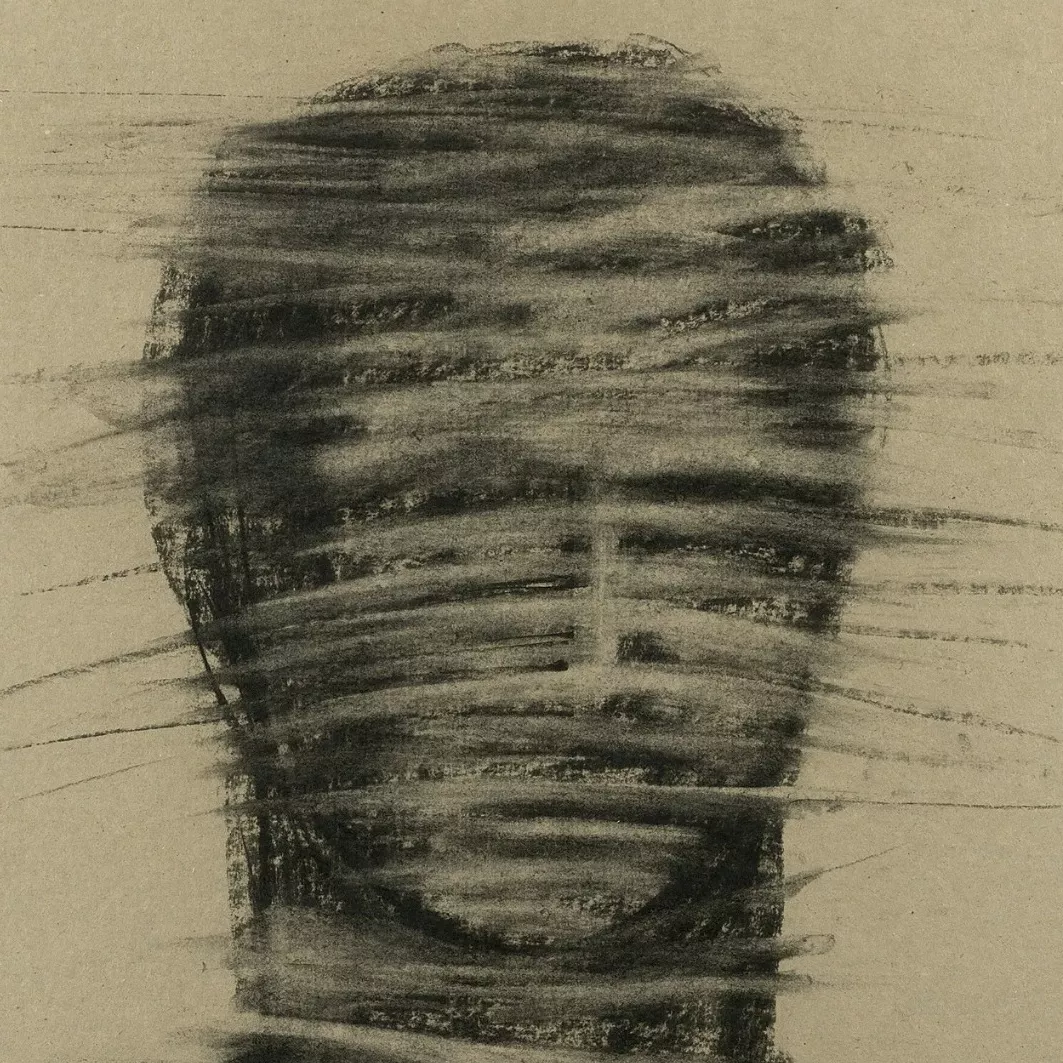
In 2023, an untitled charcoal drawing from 1979 depicting a portrait of a man sold for €7,000 while it was estimated at €1,000 to €1,500.
Order of value from a simple work to the most prestigious
Technique used | Result |
|---|---|
Engraving | From €400 to €610 |
Hard water | From €230 to €2,000 |
Lithography | From €120 to €3,350 |
Mixed media on paper | From €350 to €7,000 |
Fusain | From €600 to €7,000 |
Estimate in less than 24h
Style and technique of artist Igor Mitoraj
Igor Mitoraj is primarily known for his sculptures, although drawings and prints, albeit rare, are also available on the market. His work focuses on the human body, revisiting the conventions of ancient sculpture to offer a post-modern interpretation.
He favors the fragmentation of bodies, sometimes favoring the representation of isolated heads, busts or legs. He plays with the proportions of the different parts of the human body.
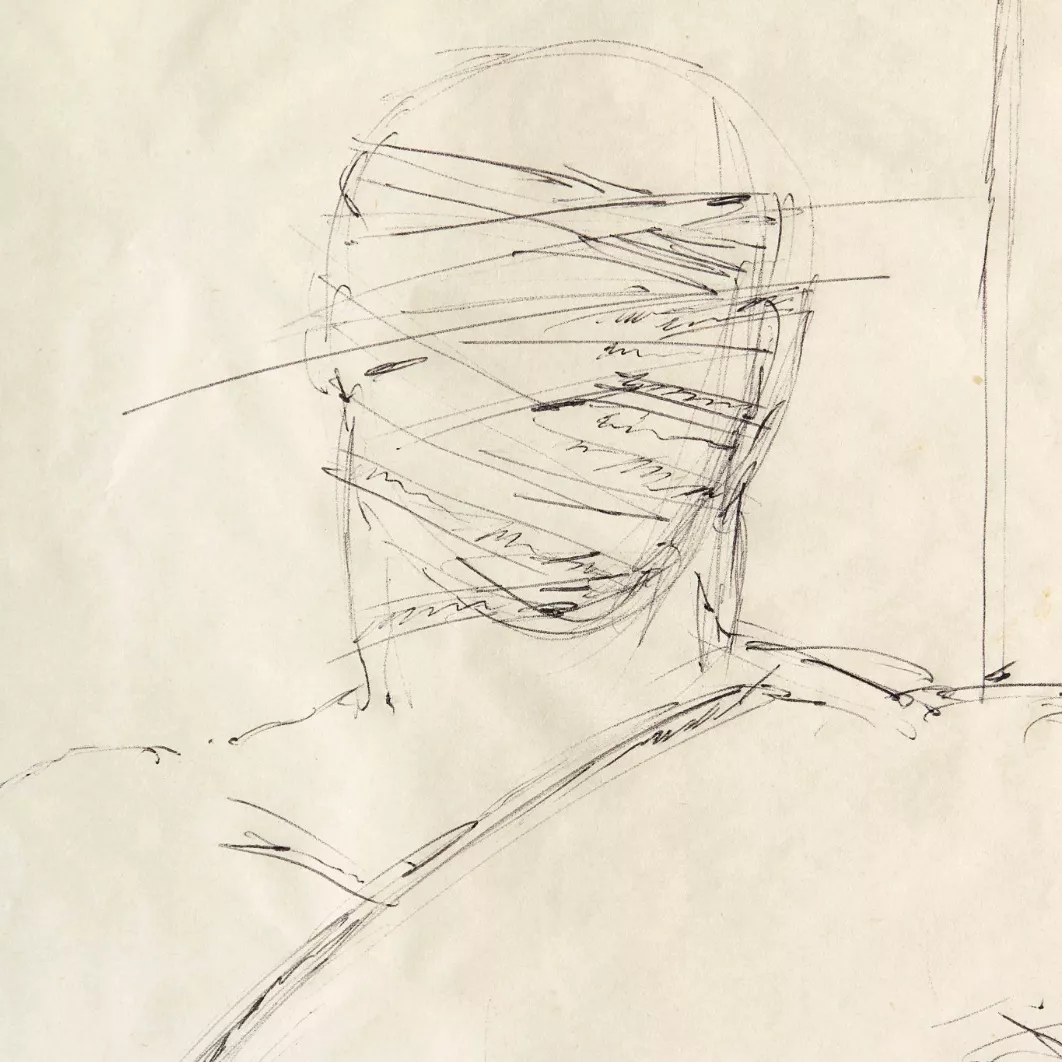
Drawing is never incidental, as it is an autonomous, preparatory practice for him, closely linked to his sculptural approach. He develops the same obsessions as in his volumes (fragmented bodies, serene faces, mutilated torsos and revisited classical figures).
His drawings are made in charcoal, graphite, ink or red chalk, often on lightly textured beige or ivory paper. After training in Krakow and Paris, he mastered drawing from live models.
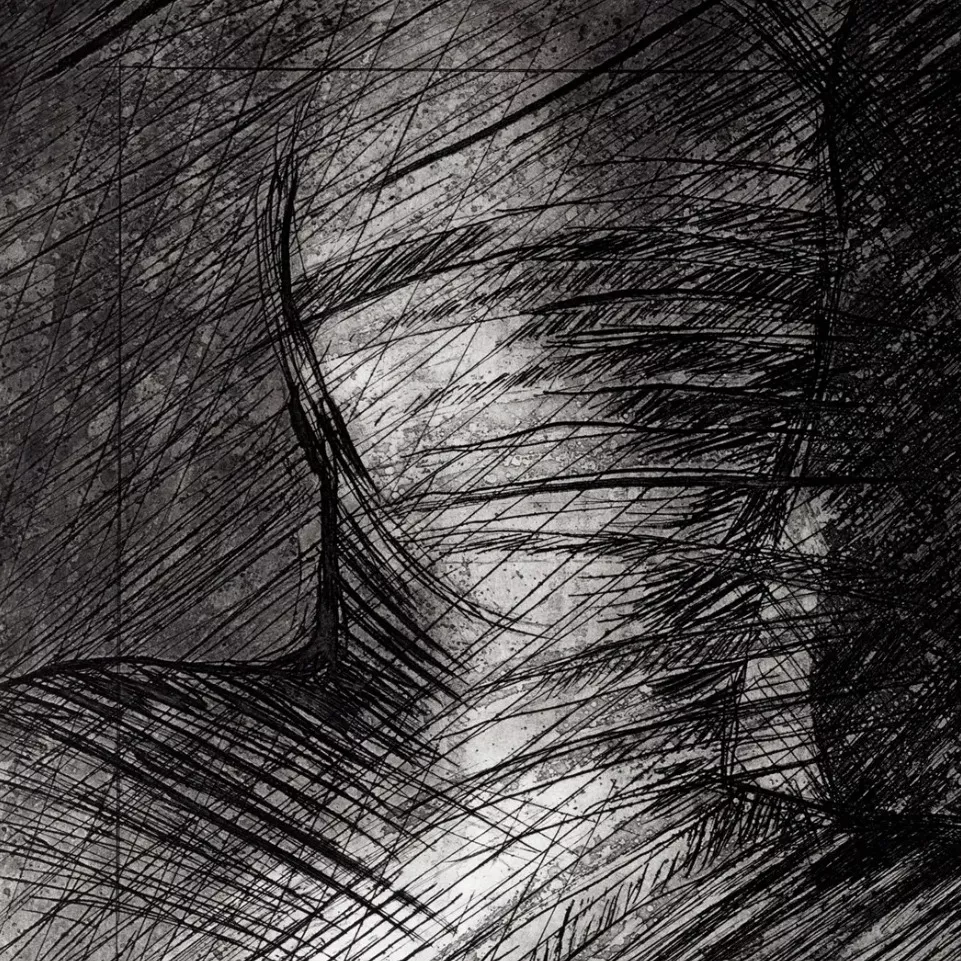
His line is fluid, supple yet sure, and capable of modulating between very sharp contour lines and areas shaded by fine hatching. He uses drawing to study volumes, anatomical tensions and ruptures, as if he were building a mental model.
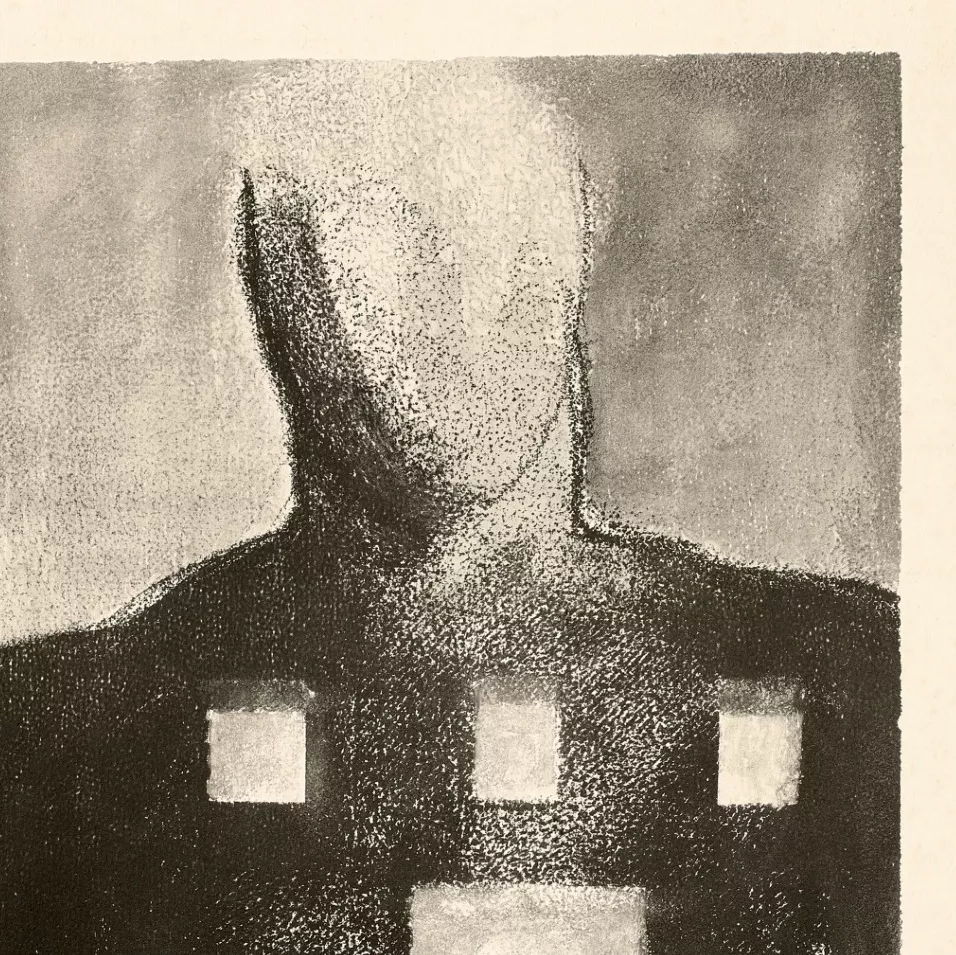
His studies of busts and masks demonstrate a taste for balance and monumentality, even on the scale of paper. He plays with the effects of cast shadows, effaced or lacunar matter, translating the fragility or partial disappearance of the body.
He is inspired by ancient statuary (Rome, Greece, Egypt), always treated with a contemporary distancing. The faces are calm, with closed or masked eyes, evoking silence, dreams and wounds.
He sometimes works in large format, giving his drawings a surprising sculptural presence. Many of his drawings deliberately incorporate absences or partial erasures (severed limbs, white surfaces left blank and suspended contours).
This produces a poetics of fragmentation, where the body becomes an archaeology of memory rather than a complete anatomy. His drawings are widely collected and exhibited independently of his sculptures.
Some have also been assembled into notebooks or series in their own right, notably around his favorite mythological themes (Icarus, Ganymede, Venus). Mitoraj's drawings are therefore tools, mediations and traces, like two-dimensional sculptures.
Igor Mitoraj and the representation of bodies
Igor Mitoraj (1944-2014), an artist of Franco-Polish origin, occupies a prominent place in the history of art. Born in Oederan, Saxony, he began his artistic training at the Krakow School of Fine Arts, under the tutelage of Kantor.
His early fascination with pre-Hispanic art led him to Central America, where he immersed himself in the monumental heads of the Mayan, Aztec and Olmec civilizations, among others. He began by drawing studies of men. In 1976, Mitoraj exhibited his work in Paris, before moving to Tuscany to work in marble. Throughout his career, he produced drawings and prints designed to lay the groundwork for his final sculptures on a flat surface.
Mitoraj's sculptures, exhibited at the Valley of the Temples in Sicily, have been declared a World Heritage Site. His conception of the representation of the body and face evokes the different states of preservation of ancient statues, which have sometimes lost limbs from their bodies or had elements of their faces fall off.
He died in Paris in 2014.
Focus on Tête d'Icare, Igor Mitoraj, 1990
Igor Mitoraj's Tête d'Icare drawing, which is a wingless variant of the work, is done in charcoal on cream paper, and its dimensions vary from version to version (usually 65 x 50 cm).
The subject is a male bust, the face is partially turned to the left, the eyes are closed, the chin strong and the nose straight, but the forehead and cheeks are lacunar, as if gnawed or erased.
The work is striking for its highly constructed volumetry, translating a sculptor's thought, since the shadows are laid as if on stone. The charcoal, which is blurred in some places and accentuated in others, gives an almost tactile relief to the surface of the face.
The sharp contours of the chin and lips contrast with the deliberately blurred areas of the skull, evoking wear or disappearance. The absence of wings identifies the fall more by its consequences than by its narrative, since here, Icarus has already fallen, mutilated, suspended in a state of after.
The serene, almost appeased face contradicts the tragic expectation: Mitoraj prefers to show the beauty of loss rather than the drama of movement. This head becomes a metaphor for fragmentary memory, for the shattered but still noble ideal.
A large part of the skull is left incomplete, suggesting either ruin or deliberate erasure. The unworked paper becomes an active surface, as if the material itself were repressing a part of the subject.
This aesthetic joins the tradition of classical fragmentation (ancient busts) while speaking the language of contemporary awareness of lack. The closed gaze, the calmness of the lines and the neutral background without decoration or spatial indication aim to reinforce the silent density of the image.
This drawing has been exhibited in several retrospectives as an autonomous entry into Mitoraj's poetic universe, and not as a simple study. It is often compared to his bronze sculptures of the same theme, but retains a graphic lightness and visual intimacy absent from marble or metal.
Igor Mitoraj thus condenses Mitoraj's tragic and idealized vision of the body, where beauty and injury are inseparable.
Mitoraj's imprint on his era
Mitoraj marks his era with the originality of his works. Behind his wounded and incomplete statues lies a genuine intellectual approach. Today, his stock is very high and his works are in demand on the auction market.
He is one of the most present modern sculptors on the art market, alongside César, Arman or François-Xavier and Claude Lalanne.
Recognizing the artist's signature
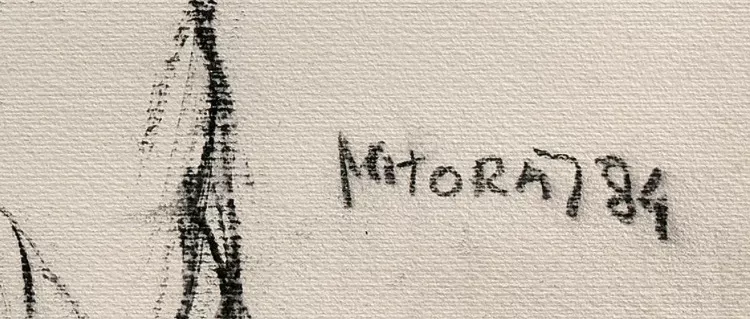
Mitoraj's works are generally signed. He engraves " Mitoraj " in bronze, marble or terracotta. However, many copies exist, which is why it's important to have your work appraised.
Knowing the value of a work
If you happen to own a work by Mitoraj or after the artist, don't hesitate to request a free appraisal using our form on our website.
A member of our team of experts and chartered auctioneers will contact you promptly to provide you with an estimate of the market value of your work, not forgetting to send you ad hoc information about it.
If you wish to sell your work, you will also be accompanied by our specialists in order to benefit from alternatives for selling it at the best possible price, taking into account market inclinations.
.Estimate in less than 24h
Discover in the same theme

Rating and value of works, sculptures by René Coutelle
René Coutelle is a twentieth-century contemporary artist who has produced refined sculptures that can be valuable at auction.
Learn more >

Rating and value of paintings by Georges Valmier
Georges Valmier was a cubist painter who lived through several currents of modern art. His works are of great value today.
Learn more >

Rating and value of paintings, drawings and sculptures by Lo...
Louise Bourgeois is a twentieth-century artist who worked mainly in sculpture, and whose value is exploding at auction today.
Learn more >
Works from the same period sold at auction

Estimated 5.000 - 8.000
Igor MITORAJ (1944-2014), Bust of Asclepius, Green patina bronze sculpture

Estimated 4.000 - 6.000
Igor MITORAJ (1944-2014), Character, Charcoal on paper

Estimated 3.500 - 5.000
Igor MITORAJ (1944-2014), Hélios, Bronze with beige patina

Estimated 6000€ - 8000€
Igor MITORAJ (1944-2014) Argos Bronze bust with...

Estimated 3500€ - 5000€
Igor MITORAJ (1944-2014) Centurion Bronze with blue patina...

Estimated 3000€ - 5000€
Igor MITORAJ (1944-2014) Persée Bronze with brown patina...

Secure site, anonymity preserved

Auctioneer approved by the State

Free and certified estimates
Frequently asked questions
-
Who is Igor Mitoraj, and what is his artistic background?Igor Mitoraj (1944–2014) was a leading Franco-Polish artist in the field of modern sculpture, trained at the Academy of Fine Arts in Kraków under Kantor. His work is characterized by a fascination with the fragmented human body, reinterpreted through a postmodern perspective inspired by ancient statuary. Although primarily known as a sculptor, he also created independent drawings and prints in charcoal, graphite, and ink, exploring the same themes as in his monumental sculptures.
-
What is the price range for Mitoraj's drawings and prints?Prices for Mitoraj’s drawings and prints range from €120 to €7,000, depending on the technique and quality of the work. Engravings range from €400 to €610, lithographs from €120 to €3,350, while charcoal drawings and mixed-media works on paper fall into the highest price ranges, from €600 to €7,000. These considerable variations reflect the importance of factors such as the technique, dimensions, and provenance of the work.
-
How can you authenticate a drawing or print by Mitoraj?To authenticate a work by Mitoraj, we recommend that you request a free, no-obligation appraisal from Auctie's. Our state-certified auctioneers and experts will analyze your drawing or print, verify the artist’s signature (which is usually engraved or stamped), and provide you with a detailed appraisal within 48 hours. This is all the more important given that there are many copies on the market.
-
Is this a good time to sell a drawing by Mitoraj?Yes, now is an excellent time to sell a work by Mitoraj. The artist’s market value is very high, and his works are in high demand on the auction market among collectors in France, Poland, and Italy. His drawings and prints, though rare, are gaining increasing recognition as standalone entries into his poetic universe, beyond their mere function as preparatory studies.
-
How does the sale of a work of art work at Auctie's?At Auctie's, we support sellers every step of the way, from appraisal to auction. After you request a free, no-obligation appraisal via our online form, our experts will contact you within 48 hours with an accurate estimate of the market value. If you decide to sell, our specialists will guide you toward the best options and strategies for selling your artwork at the best possible price, taking current market trends into account.
