



Renaissance Art Appraisal: Valuation and Auction

Key takeaways
- Attribution to a master determines value almost exclusively: there is a difference of several orders of magnitude between an anonymous work (€2,000–20,000) and a work by a major master (several hundred million euros).
- Paintings on panel, particularly large altarpieces and court portraits, occupy the top of the value hierarchy, while preparatory drawings and objets d’art (€10,000–500,000) attract specialized collectors.
- The condition of the support (wood panel or canvas) and the absence of major cracks or retouching are decisive factors for these fragile historic paintings.
Italian Masters, Flemish Primitives, and antique gold objects: the value of Renaissance works varies greatly depending on attribution, provenance, and condition.
Below you’ll find all our valuation guides dedicated to the Renaissance—master paintings, sculptures, drawings, and objets d’art. Each guide details the price ranges observed at auction and the factors that determine a work’s value before it is entrusted to our state-certified auctioneers.
Guides on this art movement
See all guides >
Rating and value of paintings by Hans Memling
Hans Memling was a painter in the tradition of the Flemish Primitives who produced rare works that command extremely high prices and are of great valu...
Learn more >

Rating and value of painting by Bernardino Luini
Bernardino Luini was an early 16th-century Lombard painter of religious subjects.
Learn more >

Rating and value of sculptures, bronzes and marbles by Stefa...
Stefano Maderno is a 17th-century Italian Baroque sculptor whose works are highly prized at auction.
Learn more >

Rating and value of works, drawings, paintings by Frans II F...
Frans II Francken was a Dutch painter of the Northern School, who produced drawings and oils on canvas that were appreciated and sought-after at aucti...
Learn more >

Rating and value of works, paintings, drawings by Lucas Gass...
Lucas Gassel was a 16th-century Dutch painter of the Antwerp school. He mainly produced valuable oil paintings.
Learn more >
Understanding the Value of a Renaissance Artwork
What Is Market Value in the Renaissance Art Market?
The market value of a Renaissance artwork refers to the benchmark value assigned to it by the art market at a given moment, based on its attribution to a specific master or school, the period and geographic region of creation, its condition, and the strength of the supporting documentation.
The Renaissance, which flourished in Italy beginning in the 15th century before spreading throughout Europe, represents one of the absolute pinnacles of Western art history—a period during which artists developed technical and conceptual tools, such as linear perspective, sfumato, a return to classical models—that permanently transformed the practice of painting and sculpture.
This market, which encompasses works whose rarity and historical significance are unparalleled in the history of art, attracts the world’s most prestigious institutional and private collections, and auctions of paintings attributed to the greatest masters of this period, when they occur, rank among the most closely watched events in the international art market; the precedent set by the *Salvator Mundi*, attributed to Leonardo da Vinci, has left a lasting impression due to the high hammer price it achieved.
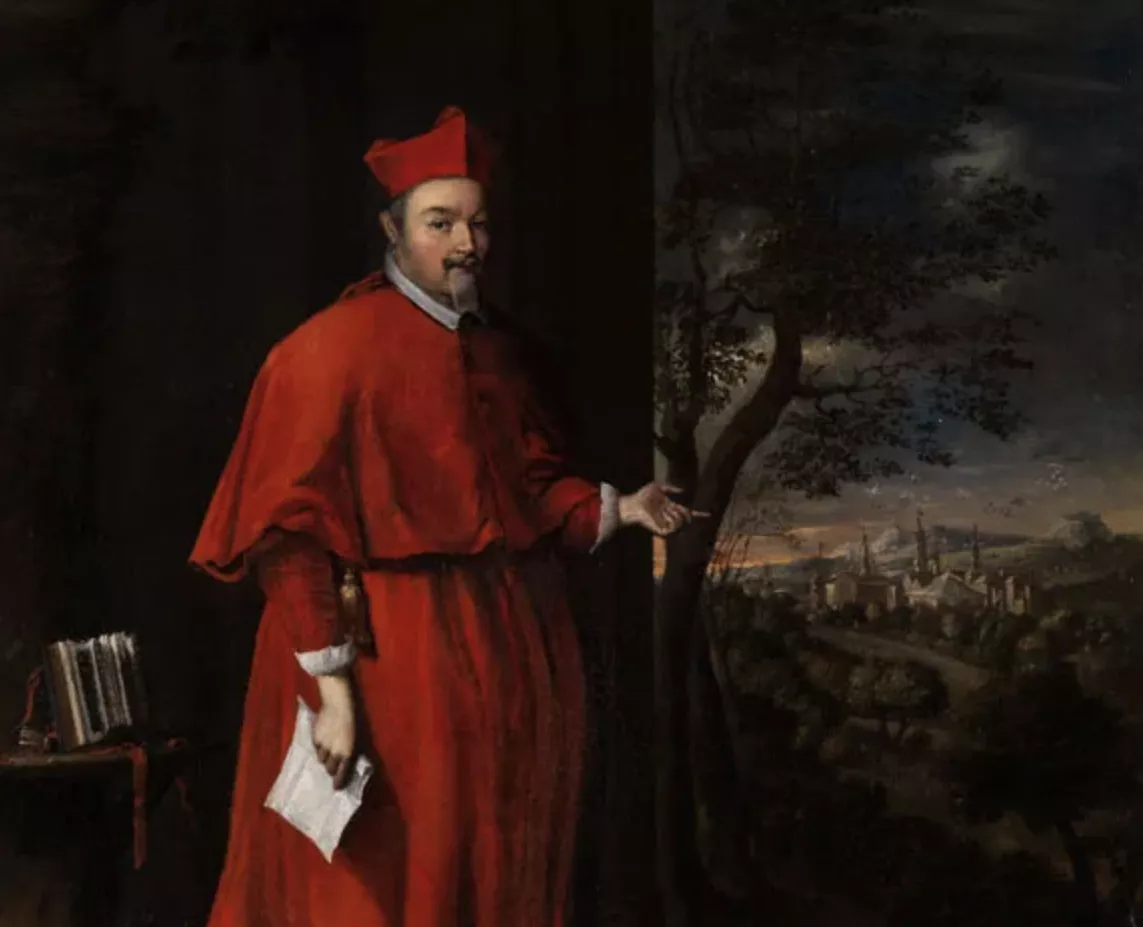
Quattrocento, Cinquecento, Northern Renaissance: What Are the Differences in the Art Market?
The Quattrocento, which refers to the early Florentine Renaissance of the 15th century, saw the development of the fundamental tools of the new style of painting, particularly linear perspective, whose theorization by Florentine artists and architects revolutionized the representation of pictorial space.
The Cinquecento, corresponding to the 16th century and the height of the High Renaissance, is defined by the most iconic figures in the entire history of art: Leonardo da Vinci, Raphael, Michelangelo, and Titian, whose works and their schools constitute the most prestigious and rarest segment of this market.
The Northern Renaissance, which developed in parallel in the Germanic and Flemish regions under the influence of figures such as Dürer and Cranach the Elder, as well as in the tradition of the Flemish Primitives, developed its own aesthetic, marked by a keen sense of detail and meticulous observation of material reality, which differed significantly from the classical ideal pursued by Italian artists of the same period.
Period | Dates | Centers and Characteristics | Market Demand Level |
Quattrocento | 15th century | Florence, development of linear perspective | Exceptional, institutional |
Cinquecento (High Renaissance) | 16th century | Rome, Florence, Venice; stylistic heyday | Exceptional, record auction prices |
Northern Renaissance | 15th–16th centuries | German-speaking regions, Dürer, Cranach the Elder | Very strong, international |
Flemish Primitives (tradition) | 15th century | Flanders, meticulous naturalism | Very popular, highly sought after |
Mannerism and the Fontainebleau School | 16th century | France, Italy; refinement and virtuosity | Active, specialized market |
Estimate in less than 24h
The Criteria That Determine the Market Value of a Renaissance Work
The market value of a Renaissance work depends almost exclusively on the degree to which it is attributed to a specific master; the price difference between an anonymous work, a work of the school, an attributed work, and a work by the hand of a documented master is considerable, sometimes differing by several orders of magnitude.
The medium—wood panel for the majority of works produced during this period before the gradual widespread adoption of canvas—and the state of preservation, particularly the absence of excessive craquelure and major overpainting, are also decisive factors for these particularly fragile historic paintings.
The price ranges observed on the secondary market illustrate this extreme variation. An anonymous work of average quality, from the Italian or Flemish school without a specific attribution, can range from 2,000 to 20,000 euros.
A documented work from a school or workshop ranges from 20,000 to 200,000 euros, depending on the quality and rarity of the subject. A work attributed to a recognized second-tier master sells for between 200,000 euros and several million euros, while a work by one of the greatest Renaissance masters—Leonardo da Vinci, Raphael, or Titian, can fetch several hundred million euros, as demonstrated by the recent example of the *Salvator Mundi*.
Paintings, drawings, works of art: all Renaissance artworks appraised
The Hierarchy of Renaissance Artworks and Its Impact on Market Value
In Renaissance art, panel paintings occupy the top position in the hierarchy of value, particularly large altarpieces and court portraits, which engaged the most renowned artists of their generation.
Preparatory drawings, red chalk studies, and pen-and-ink sketches by the great masters—when thoroughly documented and attributed—are a category particularly sought after by institutions and specialized collectors; their rarity and the insights they offer into the artist’s creative process make them prized pieces.
Renaissance works of art, miniatures, medals, small bronzes, and works from workshops specializing in fine decorative arts, round out this overview of a particularly rich body of work; their value depends largely on their attribution to an identified workshop or goldsmith, just as it does for painting itself.
Category | Characteristics | Price Range | Market Demand |
Work attributed to a major master (Leonardo, Raphael, Titian) | Extensive documentation, extremely rare | Tens to hundreds of millions of euros | Institutional, exceptional |
Work by a recognized second-tier master | Solid attribution, first-rate quality | €200,000 — several million euros | Very strong, international |
Documented studio or school work | Collectively executed under the master’s supervision | €20,000 — €200,000 | Active, sought-after segment |
Attributed preparatory drawing (red chalk, pen study) | Historical significance, creative process | €10,000 — €500,000 | Very active, specialized collectors |
Art object (miniature, medal, small bronze) | Fine craftsmanship, attributed to a workshop | €3,000 — €100,000 | Steady demand, specialized market |
Anonymous work of average quality | Italian or Flemish school, attribution uncertain | €2,000 — €20,000 | Active, accessible |
Religious subjects, portraits, and mythology: the most sought-after subjects
Religious subjects, which constitute the bulk of Renaissance painting—altarpieces, scenes from the lives of the Virgin and Christ, and portraits of saints—remain the most common works on the market. Their value depends less on the subject matter itself—which was highly codified during this period—than on the quality of execution and precise attribution to a recognized master or workshop.
Portraits—whether of court figures, wealthy merchants, or humanists of the time—rank among the subjects most sought after by collectors, as their ability to capture the individual psychology of the subject constitutes one of the major innovations of this period.
Mythological scenes, whose development accompanied the return to antiquity characteristic of Renaissance aesthetics, allowed artists to explore the depiction of the nude and complex multi-figure compositions with a freedom that traditional religious subjects did not always permit, making these works particularly prized for their technical virtuosity and cultural erudition.
Estimate in less than 24h
Get a Free Appraisal of a Renaissance Artwork
A certified appraisal by a licensed auctioneer in less than 24 hours
Appraising a Renaissance artwork is one of the most challenging tasks in the antique art market, due to the considerable variation in value across different levels ofattribution and the sophistication of the market for forgeries and misattributions that has plagued this segment since the 19th century; many works have been overvalued or undervalued over the decades as knowledge and attribution methods have evolved.
The licensed auctioneer has the necessary training and discretion to conduct this appraisal with the rigor it requires.
Auctie’s offers this appraisal free of charge, with a certified response within 24 hours. Whether you have inherited an antique painting attributed to the Renaissance, wish to have a drawing or work of art from this period appraised, or are considering compiling an estate inventory, the process is the same: submit your piece to a trained expert capable of accurately assessing its value.
What you need to provide for an online appraisal
For a painting, clear photographs of the front and back of the work are essential, along with a close-up of any signature, inscription, or mark on the back of the panel or canvas, the precise dimensions of the composition, and any known provenance information: an old collection label, a purchase invoice, a previous certificate, or a reference in an auction catalog or specialized publication.
The exact nature of the support—wood panel (and its species, if identifiable) or canvas—must be specified, as this is an important factor in dating the work.
For drawings, the condition of the paper must be documented: pinholes, foxing, creases, discoloration.
In cases of doubt regarding attribution—which is particularly common in this segment, where many old copies have been in circulation for centuries—a thorough physical examination will be offered before any steps are taken to put the work up for sale.
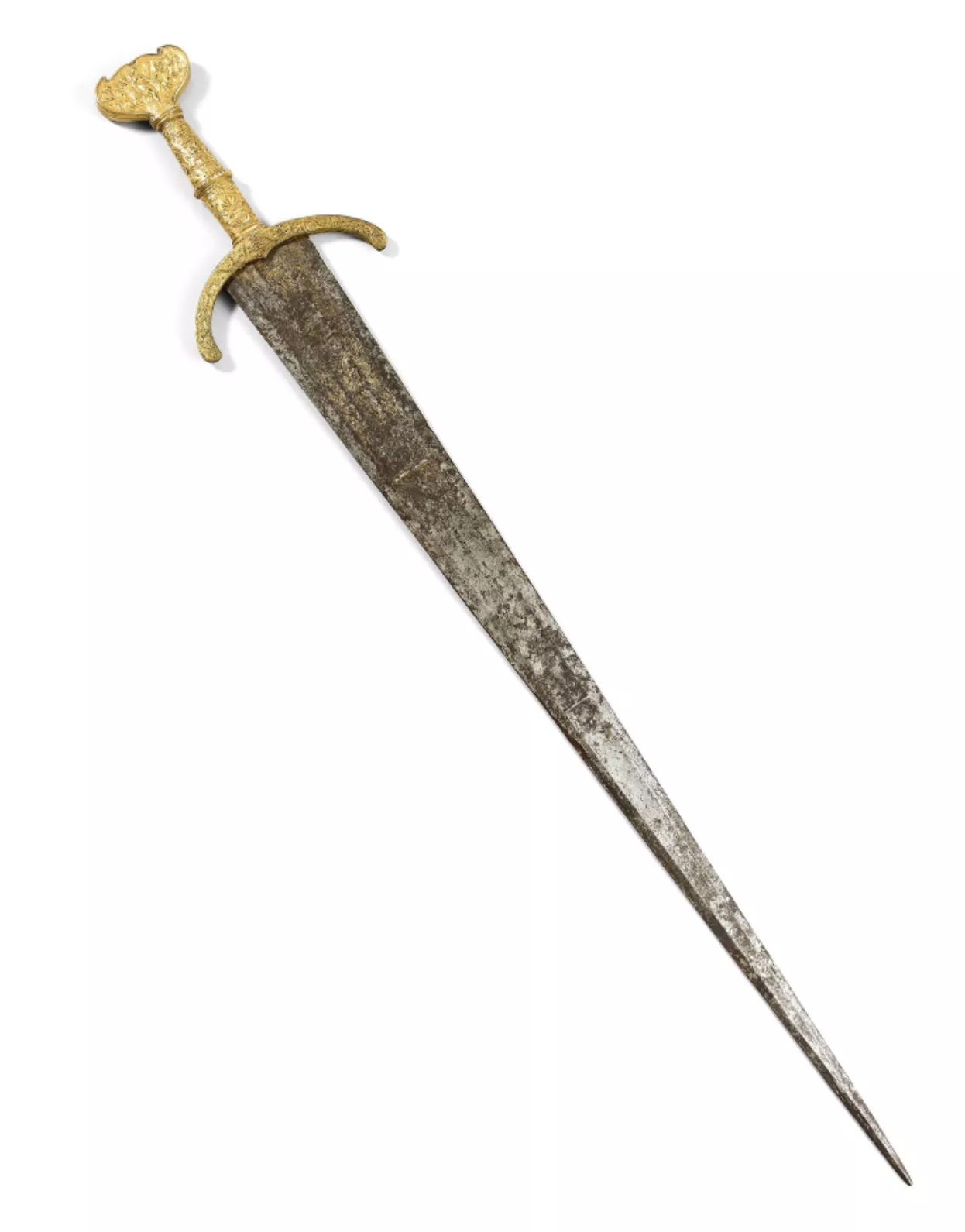
Signature, Attribution, and Authenticity: The Pillars of Appraisal
Attributions, “workshop of” and “follower of” designations: their impact on value
The authentication of a Renaissance work relies on a system of attribution notes, the accuracy of which directly determines its value.
The attribution “by” indicates a high but not certain probability that the work is by the master’s hand, while “workshop of” signifies a collaborative effort under his direct supervision, generally of high quality.
The designation “follower of” or “circle of” refers to a work executed by an artist influenced by the master but with no direct training connection to him, which considerably reduces the value compared to the previous designations. Finally, the designation “after” refers to a copy recognized as such, whose value is primarily decorative.
For major Renaissance artists, catalogs raisonné compiled by recognized specialists for each master are the authoritative sources in the market; these reference works are regularly revised as scientific and stylistic knowledge advances.
A work newly reattributed to a higher-ranked artist by a recognized committee of experts may see its value increase dramatically, while a downgrade has the exact opposite effect.
Level of Attribution | Impact on Value |
Work by the master’s own hand (certain and documented attribution) | Maximum assurance; exceptional value, potentially record-breaking |
Attributed to (high probability but not absolute certainty) | Significant appreciation; considerable premium compared to the school |
Workshop of (collective execution under direct supervision) | Good valuation; generally recognized high quality |
Follower of / associated with (influence without a direct link) | Moderate recognition; significant gap compared to direct attribution |
School (anonymous works associated with a movement or region) | Conservative assessment; based solely on the quality of execution |
After (recognized copy, early or later) | Primarily decorative value; significant depreciation |
Provenance and condition: their impact on value
The provenance of a Renaissance work is an absolutely decisive factor in establishing trust in this market.
A work whose history can be traced through a major princely, historical royal or aristocratic collection—documented by old inventories or prestigious auction catalogs—enjoys considerable legitimacy that buyers directly value, as this traceability reduces the risk of misattribution and strengthens the confidence of the world’s leading international collectors.
The condition of this old panel painting requires extreme care, as it is particularly sensitive to fluctuations in humidity, which can cause cracks and lifting of the paint layer.
Relining—a restoration process that involves applying a new support canvas behind a fragile historic painting—must be carefully documented, as an overly invasive or poorly executed procedure can significantly affect the work’s value.
Sell a Renaissance artwork at auction with Auctie's
From the reserve price to the hammer price: how the price is determined
Auction is the most advantageous method of sale for high-quality Renaissance artworks, in a market where the absolute rarity of major pieces can generate exceptional competition among the world’s leading institutions and collectors, as demonstrated by the sensational precedent of the *Salvator Mundi*.
The reserve price, set in consultation with the seller, must be determined with extreme caution based on the work’s precise attribution, upon which its value in this uniquely dynamic market depends almost entirely.
For major, well-documented works, the dynamics of the auction can lead to substantial final bids, as several institutions and collectors are likely to engage in intense competition to acquire a rare piece from this formative period of Western art.
The auctioneer plays a decisive role here by engaging networks specializing in ancient art that are active in this exceptional segment.
Hôtel Drouot and online auctions: reaching the right bidders
Auctie’s holds its auctions at Hôtel Drouot, the leading auction venue in continental Europe, founded in 1852 and frequented by a network of specialists in ancient art and Renaissance painting.
For a Renaissance work, Drouot offers visibility among European connoisseurs in this market, complemented by online promotion that significantly broadens the international reach of each auction.
An American collector passionate about the Flemish Primitives, a European museum seeking a work to complement its collection of Italian Renaissance art, or an Asian art lover drawn to the technical perfection of this period can bid in real time from their home countries.
For the Renaissance, whose historical renown is universal, this international dimension is almost always decisive in securing the highest hammer price.
Estate Planning, Inheritance: Valuing an Inherited Renaissance Artwork
Inventory and Distribution of an Estate
Renaissance artworks rarely—though occasionally—appear in the estates of families whose collections have been built up over several generations; some pieces may have been acquired as early as the 19th century, at a time when the attribution of many older works was still unclear or erroneous.
A work that has long been held under a modest attribution may, upon re-examination by a qualified expert, reveal a value considerably higher than the heirs imagine, making a preliminary appraisal absolutely essential before any division of the estate.
Auctie’s regularly works alongside notaries to compile comprehensive estate inventories that include Renaissance and ancient artworks. Each piece is appraised individually, with particular attention paid to the question of attribution, a factor that is absolutely decisive in determining value in this segment.
The resulting report is an official document that is legally enforceable and may be included in the estate file without reservation.
Confidentiality of the process and preservation of anonymity
The circumstances leading to the appraisal of an inherited Renaissance artwork are often personal and sensitive: discovery as part of an inheritance, reorganization of a family collection, or a decision to sell after a long period of ownership.
Auctie’s handles each case with absolute discretion. The owner’s identity is never disclosed to third parties without their explicit consent, and the works may be offered for sale under complete anonymity if the owner so desires.
This confidentiality is a fundamental commitment of Auctie’s, applicable at every stage of the relationship, from the initial contact through to the receipt of the proceeds from the sale.
Estimate in less than 24h
Glossary of Renaissance Art Valuation and the Art Market
Term | Definition |
Valuation | The estimated market value of a work, determined based on auction results and demand. |
Quattrocento | The early Florentine Renaissance of the 15th century, marked by the development of linear perspective. |
Cinquecento | The High Renaissance of the 16th century, a stylistic peak led by the greatest masters. |
Sfumato | A technique for softening contours, developed notably by Leonardo da Vinci. |
Tempera | Egg tempera, used before oil painting became widespread. |
Flemish Primitive | A 15th-century painter from Burgundian Flanders, known for meticulous naturalism. |
Attribution | The degree of certainty regarding the author of a work, which is a determining factor in its value. |
Provenance | The history of ownership of a work, which is a key factor in determining its authenticity and market value. |
Auction | Awarding of the lot to the highest bidder, who sets the final sale price. |
Reserve Price | The starting price set for the opening of bidding on a lot. |
Relining | A restoration process involving the application of a new support canvas behind a fragile, antique painting. |
Have your Renaissance artwork appraised by Auctie’s
A Renaissance artwork deserves an appraisal commensurate with the exceptional historical significance of this foundational period in Western art.
The considerable variation in attribution levels, the complexity of authentication challenges for this historical period, and the continued strength of intense international demand for these rare works: all factors that only a licensed auctioneer, well-versed in the specifics of ancient art, can assess with the rigor they require.
Auctie’s guides you from the initial appraisal through to the final auction, offering the expertise of a state-certified appraiser and the discretion your financial decisions deserve. The appraisal is free, confidential, and non-binding, and you’ll receive a response within 24 hours.
Discover in the same theme
Rating and value of sculptures, bronzes and marbles by Stefa...
Stefano Maderno is a 17th-century Italian Baroque sculptor whose works are highly prized at auction.
Learn more >
Rating and value of works, drawings, paintings by Frans II F...
Frans II Francken was a Dutch painter of the Northern School, who produced drawings and oils on canvas that were appreciated and sought-after at aucti...
Learn more >
Rating and value of works, paintings, drawings by Lucas Gass...
Lucas Gassel was a 16th-century Dutch painter of the Antwerp school. He mainly produced valuable oil paintings.
Learn more >
Estimate in less than 24h
Frequently asked questions
-
What criteria determine the value of a Renaissance work of art?The value of a Renaissance artwork depends primarily on its precise attribution to a master artist, which can result in differences of several orders of magnitude. The condition of the support (panel or canvas), the absence of excessive cracking and major retouching, as well as documented provenance are also decisive factors. The subject matter (religious, portrait, or mythological) and the category (painting, drawing, or object of art) also significantly influence the value.
-
What is the price range for Renaissance artworks based on their attribution?An anonymous work of average quality fetches between 2,000 and 20,000 euros. A documented workshop or school piece sells for between 20,000 and 200,000 euros. A work attributed to a recognized master ranges from 200,000 euros to several million euros, while works by great masters such as Leonardo da Vinci, Raphael, or Titian can reach several hundred million euros.
-
How can you authenticate a Renaissance artwork and obtain a reliable estimate?Auctie's offers a free, certified appraisal by a licensed auctioneer, with a response within 24 hours. To get started, please provide clear photographs of the front and back, the exact dimensions, the type of support (panel or canvas), any signatures or inscriptions, and any available provenance information. A thorough physical examination will be offered if there is any doubt regarding the attribution.
-
What is the difference between “attributed to,” “from the workshop of,” and “follower of” in the Renaissance art market?“Attributed to” indicates a high but not certain probability that the work is by the master and significantly enhances the work’s value. “Workshop of” indicates a collaborative effort under the master’s direct supervision, generally of high quality. “Follower of” or “circle of” refers to a work created by an artist influenced by the master but with no direct training under him, which drastically reduces the value.
-
Why is now the right time to sell a Renaissance artwork?The Renaissance art market remains exceptionally strong internationally, driven by the most prestigious institutional and private collections. Even second-tier works and specialized segments such as preparatory drawings and objets d’art are seeing very strong demand. Auctie's supports sellers from the appraisal stage through to the auction, capitalizing on the strength of this leading market.
