



Fine Wine Valuation: Appraisal and Auction

Key takeaways
- The prices of fine wines vary depending on the estate, the vintage, and the condition of the bottle, with prices ranging up to 30,000 euros for a Pétrus or 100,000 euros for a Romanée-Conti.
- Bordeaux, Burgundy, the Rhône, and Champagne are the leading regions, with exceptional global demand driven in particular by Asian markets over the past 20 years.
- The level of wine in the bottle, the condition of the label, and the storage environment (a professional wine cellar at 12–14°C) are decisive factors that can multiply or halve the value—or even more.
Grand Crus, rare vintages, and prestigious cellars: the value of fine wines varies greatly depending on the estate, the vintage, and the condition of the bottles.
Below, you’ll find all our valuation guides dedicated to fine wines—classified growths, rare vintages, and collectible cellars. Each guide details the price ranges observed at auction and the factors that determine a bottle’s value before it is entrusted to our state-certified auctioneers.
Guides on this type of item
See all guides >
Marseille Auctioneer: Art Valuation – Aucties
Have your artwork, jewelry, and collectibles appraised in Marseille by the experts at Aucties. 100% free online appraisal within 24 hours. ✅
Learn more >

Rating and value of Romanée Conti wines
Romanée Conti wines are the most expensive in the world. They fetch hundreds of thousands of euros at auction and are highly sought-after.
Learn more >

Ratings and wine values Château Cheval Blanc
Château Cheval Blanc wines are among the highest-ranked Saint Emilion grands crus in the region, and also the highest-ranked in the world.
Learn more >

Rating and Value of Château Margaux Wines
Château Margaux wines are among the world's most famous, and are prized at auction by collectors the world over.
Learn more >

Rating and value of Petrus wine bottles
Petrus is one of the world's most famous wines. It is highly prized at auction and has a high value depending on the vintage. 24h estimate.
Learn more >

Get a free appraisal of your fine wines and spirits
Fine wines and spirits are highly prized objects for collectors and luxury enthusiasts.
Learn more >
Understanding the Market Value of a Fine Wine
What is a bottle’s market value?
The market value of a fine wine refers to the benchmark value assigned to it by the secondary market at a given moment, based on the appellation, the producing estate, the vintage, the bottle size, the condition, and the presentation of the bottle, as well as the overall condition of the lot.
This market—one of the most liquid and internationalized in the world of collectible luxury items—is fueled by constant global demand driven by wine enthusiasts whose aspirations are both hedonistic and focused on building wealth.
Grand Crus from Burgundy, Bordeaux, the Rhône, Champagne, and other prestigious regions are assets whose value has consistently appreciated over the long term, making them both collectibles and investments in their own right.
The unique nature of the wine market lies in its inherent time constraint: unlike a painting or a sculpture, which can be preserved indefinitely under appropriate conditions, a bottle of wine has an optimal tasting window beyond which its flavor declines.
This time-sensitive nature, which introduces a sense of urgency into buying and selling decisions, contributes to the relative volatility of collector’s wine prices and the often remarkable liquidity of this market.
Bordeaux, Burgundy, Rhône, Champagne: Which wines are on the market?
The collectible wine market revolves around a few major regions, whose most prestigious wines account for the bulk of the value traded at major auctions.
Bordeaux, with its five 1855 First Growths—Château Lafite Rothschild, Mouton Rothschild, Latour, Margaux, and Haut-Brion, and its great Pomerol estates, led by Pétrus, stands as the absolute historical benchmark of this market, with its iconic vintages regularly fetching spectacular prices at major auctions in London, New York, Hong Kong, and Geneva.
Burgundy, whose grands crus of the Côte de Nuits and the Côte de Beaune are produced by estates whose fame is inversely proportional to the size of their vineyards, has experienced exceptional price growth over the past twenty years, driven by particularly strong demand from Asia.
La Romanée-Conti, produced by the Domaine de la Romanée-Conti on its eponymous plot of just 1.8 hectares, represents the absolute pinnacle of this market, with its bottles fetching prices that make it one of the most expensive wines in the world.
Region | Iconic Producers | Flagship vintages | Market Demand Level |
Bordeaux (First Growths) | Château Pétrus, Lafite Rothschild, Mouton, Latour, Margaux | 1945, 1961, 1982, 2000, 2009, 2010 | Exceptional, very active global market |
Burgundy (DRC grands crus and others) | Domaine de la Romanée-Conti, Leroy, Rousseau, Méo-Camuzet | 1945, 1971, 1996, 1999, 2002, 2005 | Exceptional, very strong demand from Asia |
Rhône (northern grands crus) | Chapoutier, Guigal (La La), Jamet | 1990, 1999, 2003, 2009, 2010 | Very strong, international |
Champagne (prestige cuvées) | Dom Pérignon, Krug, Salon, Bollinger RD | Rare vintages from the 1990s and 2000s | Active, established niche market |
Italy, Spain, New World | Sassicaia, Masseto, Vega Sicilia, Opus One | Top-rated vintages by estate | Active, growing rapidly |
The criteria that determine a bottle’s value
The market value of a fine wine depends on a balance of several factors, with the vintage and the producing estate serving as the two cornerstones. For Bordeaux, the 1855 classification system continues to exert a defining influence on prices, with the five First Growths consistently trading at a higher price range than lower-ranked wines for the same vintage.
In Burgundy, it is the hierarchy of appellations—from village wines to Premier Crus and Grand Crus—that determines value; the same Gevrey-Chambertin can be worth ten times as much depending on whether it comes from a village appellation or the Grand Cru Chambertin.
The condition of the bottle is also a key factor: the level—which refers to the height of the wine in the bottle—indicates the extent of evaporation that has occurred during aging. A level reaching the neck of the bottle—that is, with no noticeable evaporation—is the optimal standard, while a low level indicates possible deterioration of the wine, which significantly reduces its value.
The condition of the label and the capsule rounds out this picture; a flawless presentation enhances the value of the bottles compared to those with stained labels or damaged capsules.
Estimate in less than 24h
Bordeaux, Burgundy, Rhône: The Most Highly Rated Wines
Pétrus, Lafite, Mouton: The Kings of Bordeaux
Château Pétrus, located in the small Pomerol appellation, is one of the most remarkable phenomena in the global wine market: produced on a plot of just ten hectares and made almost exclusively from Merlot on exceptional clay soil, it had already reached auction prices in 1961 and 1982 that made it the world’s most expensive wine.
Its most recent vintages confirm this status, with a case of 2019 or 2021 Pétrus fetching tens of thousands of euros at top auctions.
Château Lafite Rothschild, the top-ranked First Growth of the 1855 classification, enjoys particularly strong demand in Asian markets, particularly in China and Hong Kong, which propelled its value to spectacular heights during the 2000s and 2010s.
Its 1982 vintage, considered one of the greatest Bordeaux wines ever produced, has achieved record auction prices, making every bottle that appears on the market a highly coveted item.
La Romanée-Conti, Leroy, and the Burgundy Grands Crus
Romanée-Conti stands as one of the absolute pinnacles of the global wine market; its limited production—fewer than 6,000 bottles per year—and its extraordinary international reputation have driven auction prices to levels that make it the world’s most expensive collectible wine per bottle.
A bottle of 1945 Romanée-Conti, sold by Sotheby’s in 2018, fetched $558,000, setting a world record for a single bottle of wine.
Beyond this exceptional bottle, the entire range of wines from Domaine de la Romanée-Conti—which includes, notably, La Tâche, Richebourg, and Romanée-Saint-Vivant—enjoys a level of demand that consistently outstrips available supply.
Wine | Producer | Flagship Vintages | Price Range (per bottle) |
Pétrus | Château Pétrus (Pomerol) | 1961, 1982, 2000, 2019 | €3,000 — €30,000 |
Lafite Rothschild | Château Lafite Rothschild (Pauillac) | 1945, 1982, 2010 | €500 — €15,000 |
Romanée-Conti | Domaine de la Romanée-Conti | 1945, 1971, 1999, 2002 | €5,000 — €100,000 and up |
La Tâche | Domaine de la Romanée-Conti | Great vintages | €800 — €10,000 |
Sassicaia | Tenuta San Guido (Italy) | Vintages since 1985 | €200 — €1,500 |
Dom Pérignon Œnothèque | Moët & Chandon | Rare vintages from the 1990s | €300–3,000 |
Get a free appraisal of your bottles
A certified appraisal by a licensed auctioneer in less than 24 hours
Appraising a collection of fine wines requires precise knowledge of current market prices for major appellations, constant monitoring of the most recent auction results in London, New York, Hong Kong, and Geneva, and the ability to assess the exact condition of each bottle based on detailed photographs.
Auctie’s auctioneer has these tools and this expertise, which we offer free of charge to provide you with a certified response in less than 24 hours.
Whether you wish to sell an entire wine cellar, have a few inherited bottles appraised, or create an inventory of your collection for estate planning purposes, Auctie’s offers the precise expertise you need.
What You Need to Provide for an Online Appraisal
To request an appraisal, photographs of the bottle from the front and back—clearly showing the label, the capsule, and the wine level in the bottle—are essential. The name of the château or estate, the vintage, the bottle size (standard 75 cl bottle, magnum, jeroboam, etc.), and the number of bottles must be specified.
Any information regarding storage conditions—such as a temperature-controlled cellar or professional warehouse—will enhance the appraisal and positively influence the estimate.
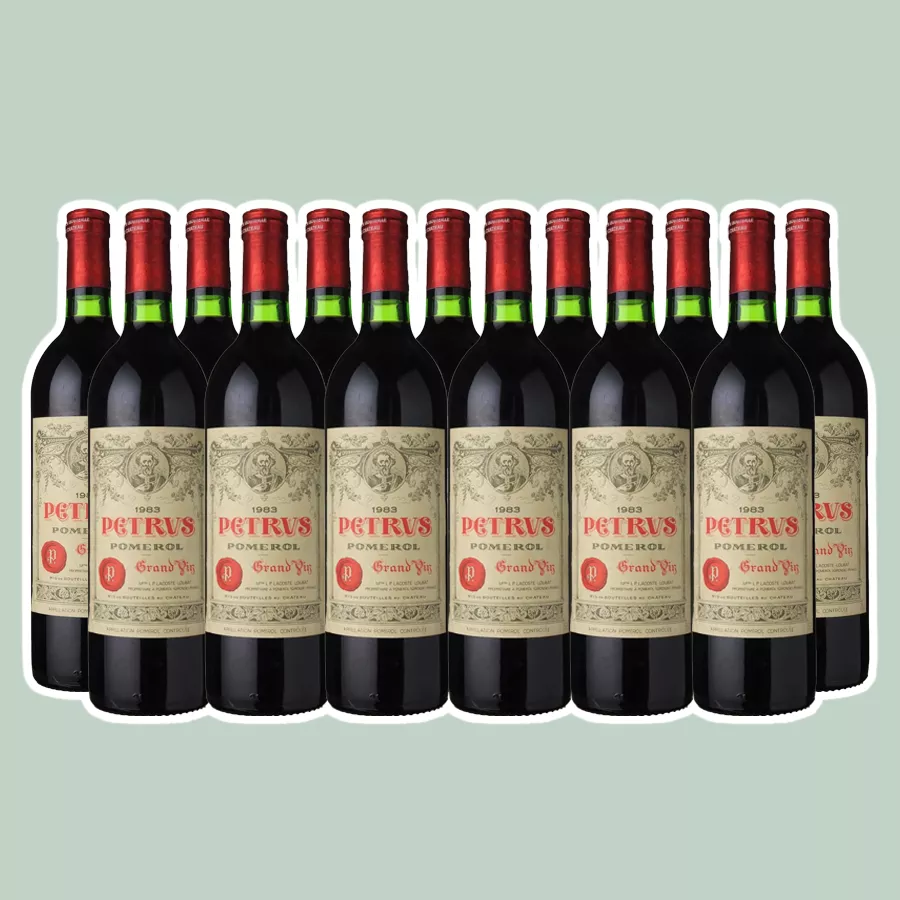
Vintage, estate, and storage conditions: the pillars of valuation
Vintage, appellation, and condition: their impact on value
Criterion | Impact on Value |
Vintage (great vintage vs. ordinary vintage) | Can increase the value by a factor of 5 to 10 for the same estate |
Appellation (Grand Cru vs. village appellation) | Fundamental difference; a Romanée-Conti is worth 50 times as much as a Vosne-Romanée village |
Producer (leading estate vs. mainstream producer) | The primary factor for Burgundy; impact comparable to Bordeaux |
Level (full vs. low) | A low level can cut the value in half or more |
Presentation (perfect label vs. damaged label) | A perfect label significantly increases value, especially for older vintages |
Size (magnum vs. standard bottle) | Magnums increase in value as they age; very large formats are even rarer |
Preservation and storage conditions: their impact on valuation
The conditions under which a wine has been stored are a key factor in its appreciation or depreciation on the secondary market. A wine stored in a professional wine cellar at constant temperature and humidity—ideally between 12 and 14 degrees with a humidity level of 70 to 80%—enters the market in the best possible condition and can command the highest possible price.
Conversely, a wine stored under unpredictable conditions—such as fluctuating temperatures, exposure to light, or vibrations—will be at risk of deterioration, a factor that buyers systematically take into account when making offers.
Sell Your Fine Wines at Auction with Auctie's
From the reserve price to the final bid: how the price is determined
Auctions are the most effective way to sell fine wines, as they pit buyers against one another; their precise knowledge of the market and appetite for certain rare vintages can lead to final prices far exceeding initial estimates.
The reserve price must be set based on the results of the most recent sales of comparable vintages and estates, taking into account the specific condition of the bottles being offered.
Hôtel Drouot and Online Auctions: Reaching the Right Bidders
Auctie’s holds its auctions at Hôtel Drouot, which regularly hosts specialized wine and spirits auctions attracting an audience of enthusiasts and wine trade professionals.
Real-time online streaming allows us to reach buyers from around the world—a crucial aspect for a market as globalized as that of fine collectible wines.
Estate Planning, Inherited Wine Cellar: Appraising Your Fine Wines
Wine Cellar Inventory and Estate Distribution
Large inherited wine cellars can contain treasures whose value heirs may not always realize; an old Pétrus or a bottle of Romanée-Conti from a great vintage can be worth several thousand euros.
Auctie’s provides services to compile detailed wine cellar inventories, with each lot appraised individually according to market standards.
Confidentiality and Discretion
Auctie’s handles every case with absolute discretion. The owner’s identity is never disclosed to third parties without their explicit consent.
Glossary of the Fine Wine Market
Term | Definition |
Rating | Estimated market value of a lot of wines, determined based on auction results and demand. |
Vintage | The year the grapes were harvested; the quality of the climate during that year largely determines the quality of the wine produced. |
Grand Cru | A designation for vineyards and wines considered the finest in a region. |
Level | The level of wine in the bottle; a low level indicates evaporation, which can affect the wine’s quality and value. |
Capsule | A cap that protects a bottle’s cork; its integrity is a sign of proper storage. |
Label | Paper affixed to the bottle bearing legal and commercial information; its condition influences the value. |
Cellar | A place for storing and aging wines; optimal conditions enhance the value of the lots offered for sale. |
Auction | The awarding of a lot to the highest bidder at the conclusion of an auction. |
Reserve price | The starting price set for the commencement of bidding on a lot. |
Estimate in less than 24h
Let Auctie's appraise your fine wines
A fine wine is a living entity whose value is both gustatory and heritage-based, temporal and speculative.
Understanding this dual nature to accurately assess its market value is the mission of Auctie’s wine expert, who puts their in-depth knowledge of the international market at your service—free of charge and in complete confidence.
The appraisal is free, with no obligation, and you’ll receive a response within 24 hours.
Discover in the same theme

Auctioneer Le Mans: Artwork Valuation | Aucties
Have your artwork, jewelry, and collectibles appraised in Le Mans by the experts at Aucties. 100% free online appraisal within 24 hours. ✅
Learn more >
Ratings and wine values Château Cheval Blanc
Château Cheval Blanc wines are among the highest-ranked Saint Emilion grands crus in the region, and also the highest-ranked in the world.
Learn more >
Rating and value of Petrus wine bottles
Petrus is one of the world's most famous wines. It is highly prized at auction and has a high value depending on the vintage. 24h estimate.
Learn more >

Secure site, anonymity preserved

Auctioneer approved by the State

Free and certified estimates
Frequently asked questions
-
What are the main factors that determine the rating of a fine wine?The value of a bottle depends primarily on the winery and the vintage, along with the appellation, bottle size, and condition. The level of wine in the bottle (the height of the liquid), as well as the condition of the label and capsule, are also key factors: a low level or a damaged label can cut the value in half or more. Storage conditions also play a crucial role: storage in a professional wine cellar at a constant temperature significantly increases the value of the bottle.
-
How can I get a free appraisal of my bottles of fine wines at Auctie's?Auctie's offers a free, no-obligation appraisal certified by a licensed auctioneer. To request an appraisal, please submit clear photographs of each bottle (front, back, label, capsule, and wine level), along with the name of the château or estate, the vintage, the bottle size, and the number of bottles. You will receive a detailed appraisal within 24 hours.
-
When is the right time to sell my collection of fine wines?Yes, the timing is right: the market for fine collectible wines remains one of the most liquid and globalized in the world, with sustained global demand driven by connoisseurs and investors. Auctions bring together savvy buyers whose interest can drive final prices above initial estimates. The time-sensitive nature of wine (its drinking window) creates a natural sense of urgency that promotes liquidity.
-
What do I need to know about storage and its impact on the value of my bottles?A wine stored in a professional wine cellar at a constant temperature (12–14°C) and regulated humidity (70–80%) reaches the market in optimal condition and can command the highest possible price. Conversely, storage under unpredictable conditions (fluctuating temperatures, light, vibrations) poses risks of deterioration that significantly reduce the wine’s value. Be sure to inform the appraiser of your storage conditions: this is a key factor in the appraisal.
-
How does Auctie's help me sell my wine collection at auction?Auctie's manages the entire process: a free appraisal by an auctioneer, setting the starting price based on recent comparable results, organizing the sale at the Hôtel Drouot, and promoting the sale in real time to buyers around the world. This approach ensures you reach the right audience for fine wines, whether you’re selling an entire wine collection or a few inherited bottles.
