



Dihl et Guérhard, value of porcelain from the rue du Temple factory

Key takeaways
- Dihl and Guérhard porcelain pieces fetch estimates ranging from €30 for a basic plate to €110,000 for a painting on porcelain.
- The Parisian porcelain manufactory, founded in 1781, reached its peak between 1795 and 1806, winning a gold medal and surpassing Sèvres in export sales volume.
- Its decline began as early as 1807 due to the Napoleonic Wars and the Continental Blockade, reducing the workforce from 50 workers to 16 in three years, until the factory closed in 1822.
The Manufacture's decorations are highly varied, reflecting the fashions of the period, such as "barbeau" decorations, antique-style decorations, "Salambier" decorations and decorations featuring large bouquets of flowers in full bloom.
If you are in possession of a signed porcelain from the Manufacture Dihl et Guérard or any other piece of Paris porcelain, please do not hesitate to request a free valuation by filling in our online form.
A member of our team of experts and chartered auctioneers will contact you to provide an estimate of the market value of your Paris porcelain. If you are considering selling your piece of art, our specialists will also guide you through the various alternatives available to obtain the best possible price for your work, taking into account market trends and the specific features of each object.
Order of value for porcelain ranging from the most basic to the prestigious
Object type | Estimation |
|---|---|
Mug and saucercup | From €40 to €10,066 |
Plate | From €30 to €500 |
Coffee service party | From 200 to 2,000€ |
Table service party | From 300 to 6,000€ |
Bisque centerpiece | From 400 to 5,000€ |
Painted table on porcelain | From €10,000 to €110,000 |
Porcelain vase | From €500 to €800 |
Estimate in less than 24h
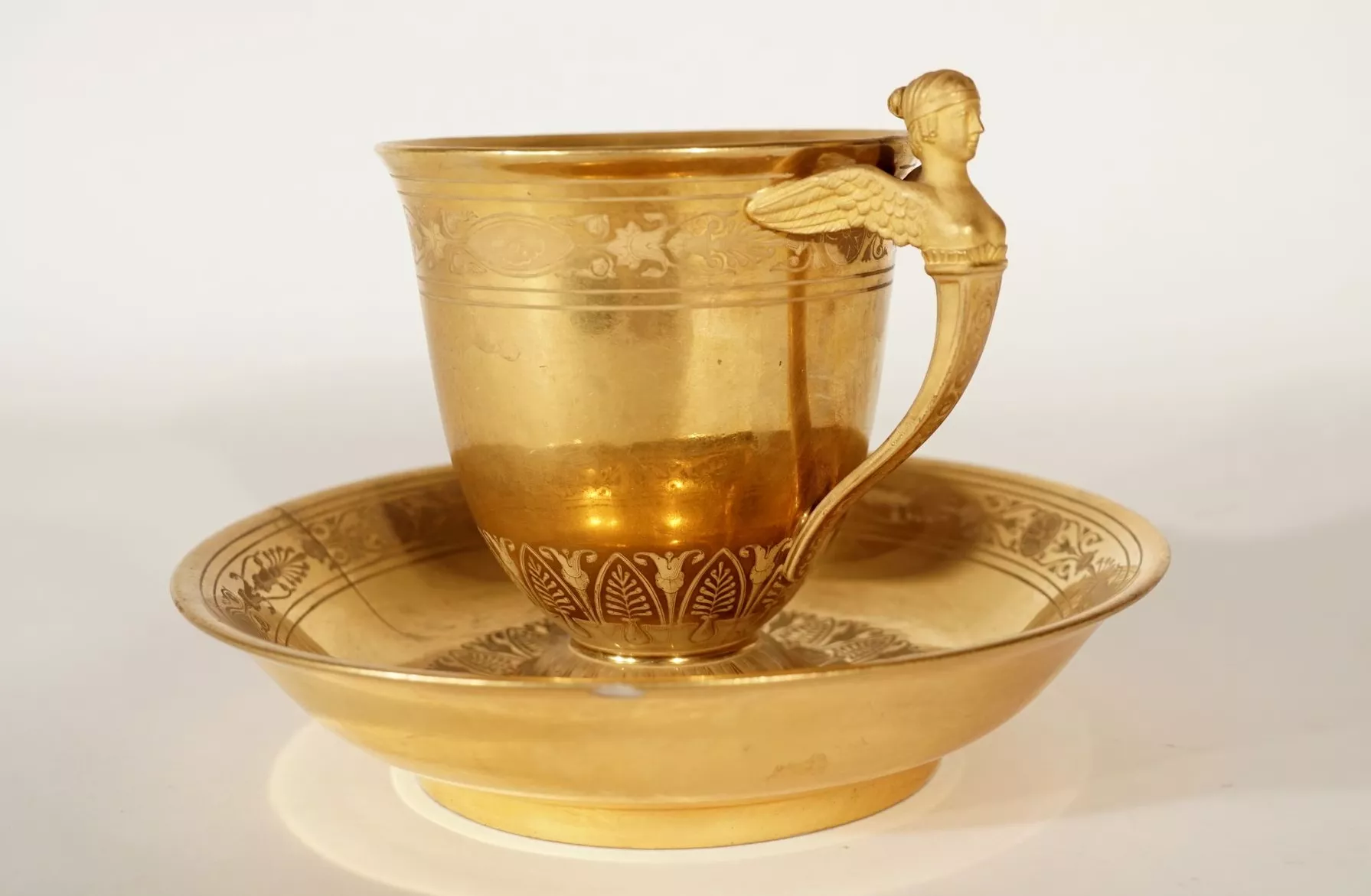
Dihl et Guérard, the meteoric rise of a shooting star
The porcelain factory of Dihl et Guérhard, located in Paris, is famous for its history and production, having traversed the Ancien Régime, the Revolution, the Consulate, the Empire and closed under the Restoration.
As one of the privileged manufactures, it enjoyed the protection of the young Duc d'Angoulême, nephew of King Louis XVI. This was a purely political act essential to the factory's survival in the face of regulations favoring the royal Sèvres factory.
The company, founded in 1781, was the fruit of collaboration between Christophe Dihl, a talented modeler and technician, and the Guérhard couple, who provided the necessary funds and managed the financial and commercial aspects. Dihl, in addition to his expertise in porcelain manufacture, was a researcher and inventor, while Antoine Guérhard was probably expert in cobalt extraction and his wife, Madame Guérhard, managed sales and bookkeeping with probity and intelligence.
The manufactory was a great success from the start, employing twelve sculptors and thirty painters in 1785, and soon said to be overwhelmed with commissions.
Faced with success, the premises on the rue de Bondy became too small, and a sum of 432,000 livres was allocated to the acquisition of a larger space, the hôtel Bergeret, located near the rue de Bondy. This new establishment welcomed prestigious visitors, such as Gouverneur Morris, representative of the United States of America in Paris, who purchased porcelain for Washington. Despite the Revolution, the factory continued to operate, and in 1793, Dihl hired some fifty additional workers.
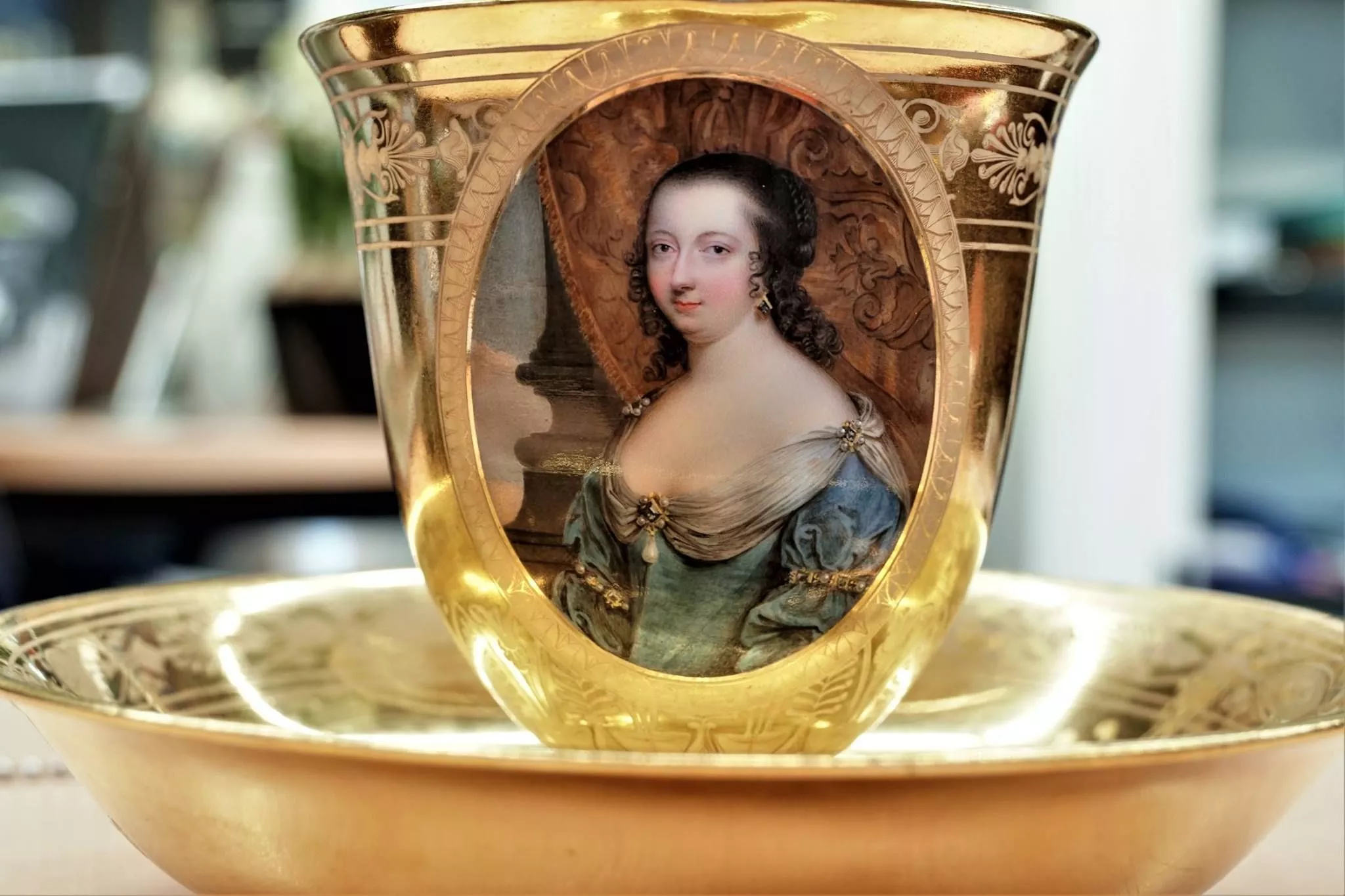
The rue du Temple factory and its success
In year V, the rue du Temple factory is estimated to be superior to that of Sèvres, particularly in terms of sales, as it exported a great deal. The following year, in Year VI, the upward curve continued with a prestigious award at the Exposition des Produits de l'Industrie. Dihl had presented paintings on porcelain, demonstrating great technical skill, and caused a sensation when he presented his report on firing-proof colors to the Académie des Sciences. On December 25, 1797, Madame Guérhard married her only daughter with a considerable dowry, and on December 27, Madame Guérhard married Mr. Dihl in the presence of the best painters from their manufactory.
Thanks to the judicious choice of the best specialists for the various positions, the manufactory continued its ascent until the grande exposition de l'Empire in 1806 and the Salon of the same year. Dihl wins a gold medal, and his establishment is considered one of the most flourishing in Europe. Many talented painters work for him, including Le Guay and Sauvage. However, the decline began behind this shiny façade, mainly due to the economic crisis following the Napoleonic Wars and the continental blockade set up by his adversaries. Dihl sold extensively abroad, notably in England, Russia and Spain. As early as 1807, he asked the government for a loan and reduced his workforce to 40. Three years later, in 1810, he was down to 16.
Despite the difficulties, the factory was the only porcelain factory cited in a report by the Prefect of Paris among the forty-seven most important factories in Paris, ranking sixth. However, the first property sales took place in 1818, and the hotel itself was sold in 1823. Production had ceased in the hotel by 1822, but Dihl still retained buildings with furnaces and some workshops. Faced with this disaster due in part to the new economic conditions to which they had failed to adapt, the old couple blamed each other bitterly for their ruin. A dissolution of the company was ordered by the Court in 1828, appointing Dihl liquidator, but he did little. This responsibility was judicially withdrawn from him in December 1829, and he died two months later in February 1830, aged 77. Mrs. Dihl, in her eighties and ill, died in her turn in 1831.
Estimate in less than 24h
Discover in the same theme

Free appraisal of old and modern paintings and drawings
From ancient paintings to modern creations, the pictures and drawings offer a unique and emotional vision of life in every era.
Learn more >

Free appraisal of natural history objects
Natural history objects are fascinating pieces that bear witness to the history of our planet, but require the eye of an expert.
Learn more >

Rating paintings 19th century - Auctie's
Have your 19th-century artworks appraised by Auctie's, a licensed auctioneer. Free, no-obligation appraisal; sale at Drouot. 🎨
Learn more >
Other similar items sold at auction

Estimated 300 - 400 €
Glazed ceramic statue of Zeus

Estimated 600 € - 800 €
MEISSEN, 18th century, porcelain wall stoup.

Estimated 800 € - 1 200 €
MANUFACTURE NATIONALE DE SEVRES Rare porcelain cookie obelisk.

Estimated 2.000 - 3.000 €
Sèvres porcelain plate from the "agronomique" service

Estimated 800 - 1.200 €
SÈVRES, Teapot in the service of King Louis-Philippe at Château D'Eu.

Secure site, anonymity preserved

Auctioneer approved by the State

Free and certified estimates
Frequently asked questions
-
Who were Dihl and Guérhard, and what is the history of their factory?The Dihl and Guérhard porcelain manufactory, founded in 1781 in Paris, was the result of a collaboration between Christophe Dihl (a talented modeler and technician) and the Guérhard couple (financiers and managers). Highly prosperous under the Ancien Régime and the Empire, it was one of the largest in Europe in the early 19th century, but gradually declined due to the Napoleonic Wars and the Continental Blockade. The factory closed permanently during the Restoration, in 1830.
-
What types of porcelain did Dihl and Guérhard produce, and what were their characteristic designs?The factory produced a wide range of items: cups, plates, coffee and dinner sets, biscuit porcelain centerpieces, vases, and paintings on porcelain. The designs were highly varied and reflected the fashions of the time: “au barbeau” designs, antique-style motifs, “à la Salambier” designs, and large bouquets of blooming flowers. The factory was particularly renowned for its porcelain paintings, which demonstrated great technical mastery.
-
What are the price ranges for Dihl and Guérhard porcelain?Estimates vary considerably depending on the type of item: a cup and saucer costs between €40 and €10,066, a plate between €30 and €500, a coffee set between €200 and €2,000, a dinner service between €300 and €6,000, a biscuit porcelain centerpiece between €400 and €5,000, and a vase between €500 and €800. Porcelain paintings are the most prestigious pieces, with estimates ranging from 10,000 to 110,000 €.
-
How can I have a Dihl and Guérhard porcelain piece authenticated and appraised?You can request a free, no-obligation appraisal by filling out Auctie's online form. An expert or certified auctioneer from our team will contact you within 48 hours to provide a professional estimate of the market value of your porcelain, taking into account its condition, provenance, and market trends.
-
Is this the right time to sell a Dihl & Guérhard porcelain piece, and how should I go about it?Yes, Dihl and Guérhard porcelain remains highly sought after by collectors and commands a high price on the art market. As an auction house, Auctie's supports you every step of the way: free appraisal, advice on the best timing for the sale, preparation of the item, and auction to a qualified buyer audience to secure the best possible price.
