



Rating and value of sculptures, bronzes and marbles by Albert-Ernest Carrier-Belleuse

Key takeaways
- Carrier-Belleuse (1824–1887), a Neoclassical sculptor of the Second Empire, was the most sought-after artist of his time, creating works in marble and bronze.
- Prices for his sculptures vary considerably: terracotta €70–78,700, bronze €80,000–180,000, marble €100,000–720,000.
- His bronzes and marbles command high prices on the current market; as many copies exist, an expert appraisal is recommended.
If you own a work by or after the artist Alfred Roll, and would like to know its value, our state-approved experts and auctioneers will offer you their appraisal services. Our specialists will carry out a free appraisal of your work, and provide you with a precise estimate of its current market value. Then, if you wish to sell your work, we will guide you towards the best possible arrangement to obtain the optimum price.
Rating and value of the artist Alfred Roll
Considered a realist in his own right in his own time, Alfred Roll leaves behind an artistic identity of his own. This legacy consists mainly of drawings and paintings. Today, prices for his works are rising under the auctioneer's hammer, and his stock is stable. His canvases and other works are particularly prized, especially by French buyers, and the price at which they sell on the art market ranges from €10 to €13,720, a considerable delta but one that speaks volumes about the value that can be attributed to Roll's works. In 2001, an oil on canvas entitled Baigneuses sold for €13,720.
Order of value from a simple work to the most prestigious
Technique used | Result |
|---|---|
Terre cuite | From €70 to €78,700 |
Bronze | From €80 to 180,000 |
Marble | From €100 to 720,000 |
Estimate in less than 24h
Style and technique by artist Carrier Belleuse
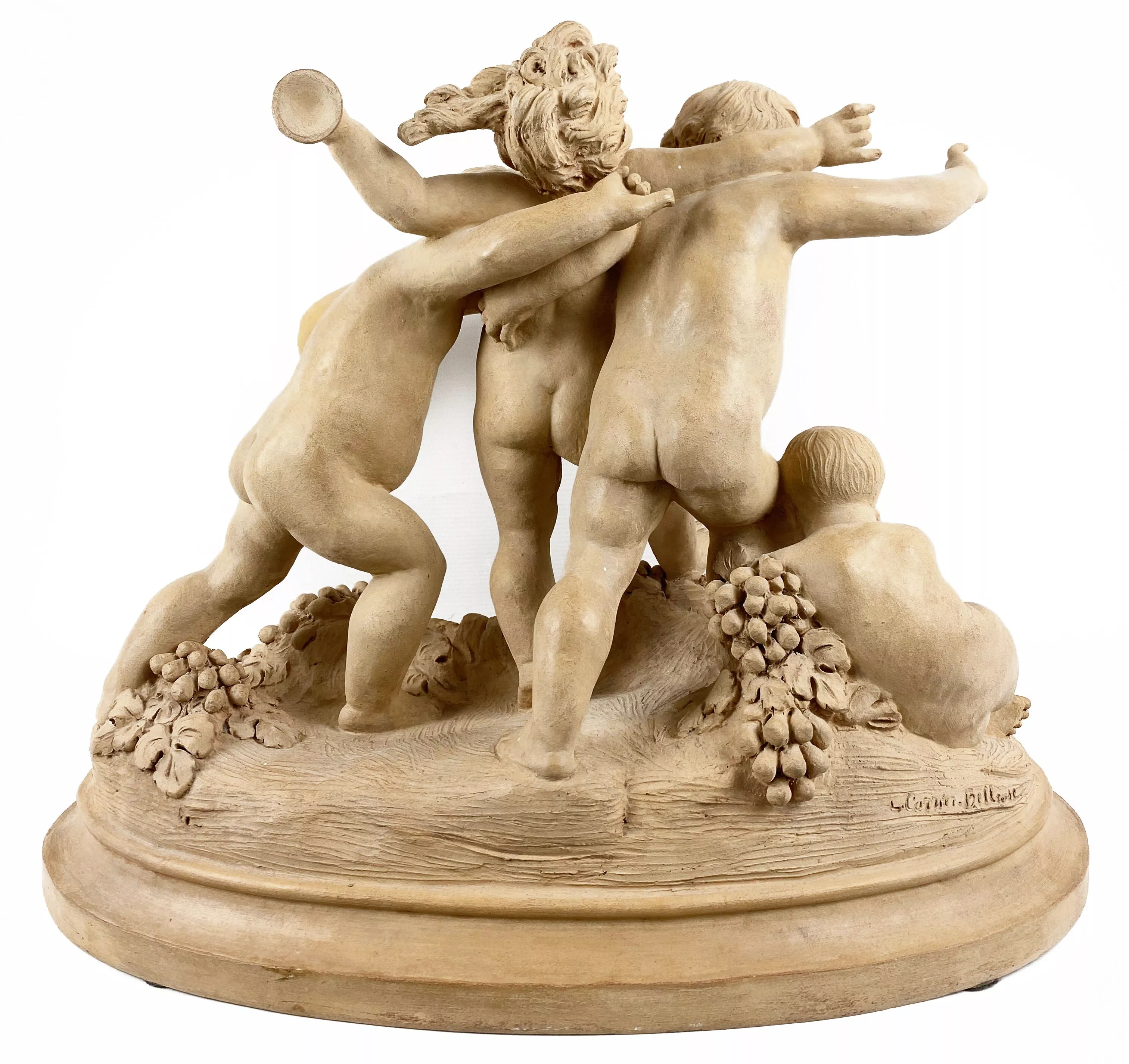
The artist is part of sculptural neoclassicism, becoming one of the most famous and sought-after sculptors of his time. He worked extensively in marble, but also in bronze, and it is the latter material that is most frequently found in his works on the auction market.
The life of Carrier-Belleuse
Albert-Ernest Carrier-Belleuse (1824-1887), a French artist, became an important figure in the 19th-century art world, and was the most sought-after sculptor of the Second Empire. His father was a notary, and he was born in the Aisne region. His father died when he was ten, and his family was unable to support him. Étienne and François Arago took charge of his education.
He began his training with an apprenticeship with Bauchery, a chiseler. He also trained in silversmithing with Jacques Henri Fauconnier. François Arago introduces him to David d'Angers, and thanks to him he enters the Beaux-Arts de Paris. Many bronze houses take notice of his work, and he is soon in demand for numerous commissions for candelabras, penders and cartels.
He has an affair with Anne-Louise Adnot, a watercolorist, whom he marries some time later, and exhibits in the same year at the Salon des Artistes Français for the first time. During a stay in England, he becomes director of the Mintons house. He returns to France and sets up his own workshop in what is now Paris's 9th arrondissement. He became famous for his marbles, some of which were exhibited at the Salon and purchased by Napoleon III. The French government also bought furniture with religious themes to decorate churches. He is also a building decorator, like Louis Ernest Barrias. He created decorative sculptures for the Louvre palace and the Brussels stock exchange, among others.
He joined the national committee of the Société des Beaux-Arts, and in 1973 took part in the construction of the Opéra, thanks to Charles Garnier and the support of Napoleon III.
Carrier-Belleuse's imprint on his period
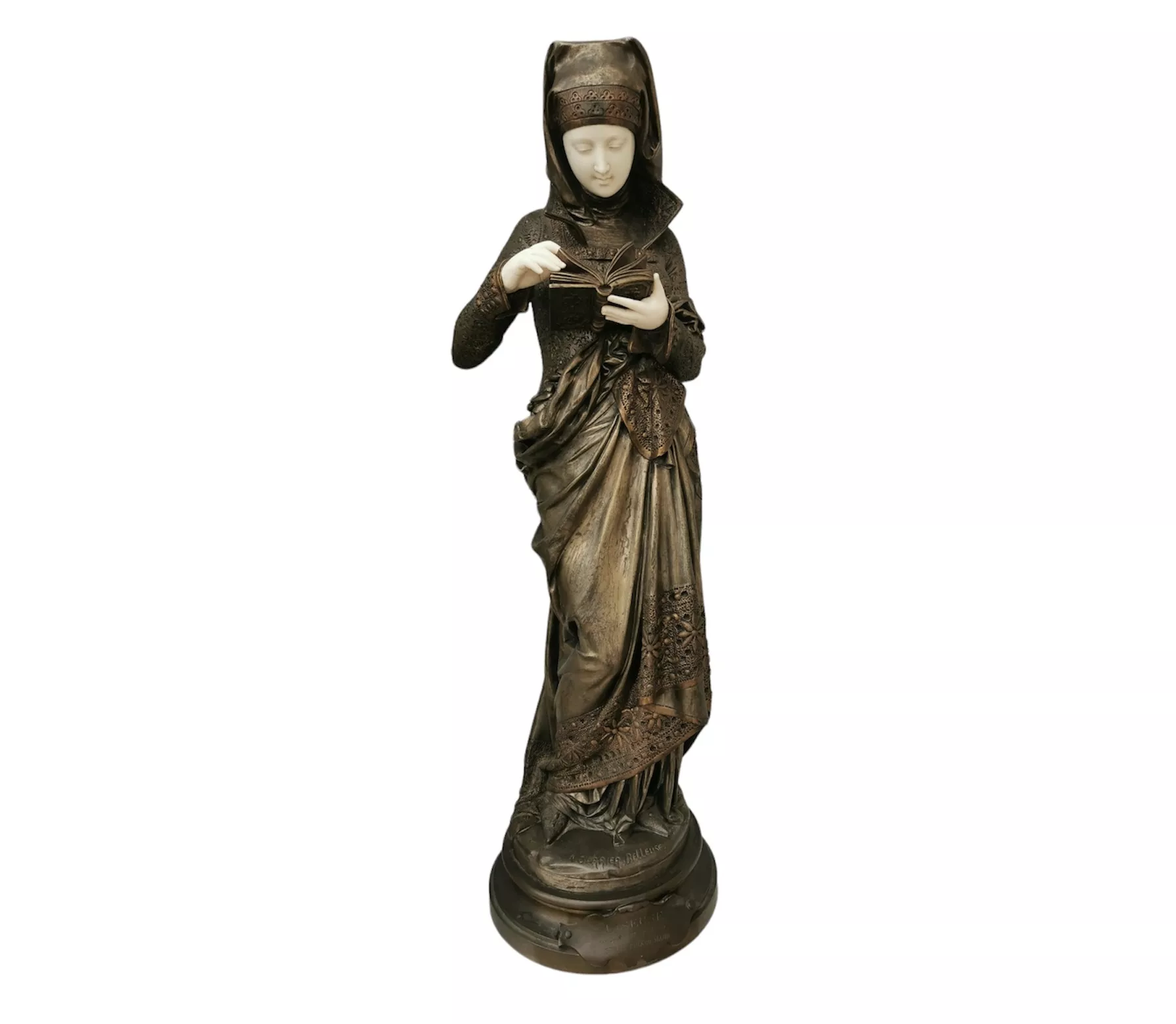
Carrier Belleuse proved in France that classical sculpture was still alive. Like the Italians of the Renaissance, he drew inspiration from antique subjects and used their techniques. On the art market today, his bronzes are priced, and his marbles even more so.
He left a unique legacy, thanks to the artists he trained without his studio, among them Auguste Rodin, and passed on his artistic vein to the manufacture de Sèvres, of which he was director at the end of his career.
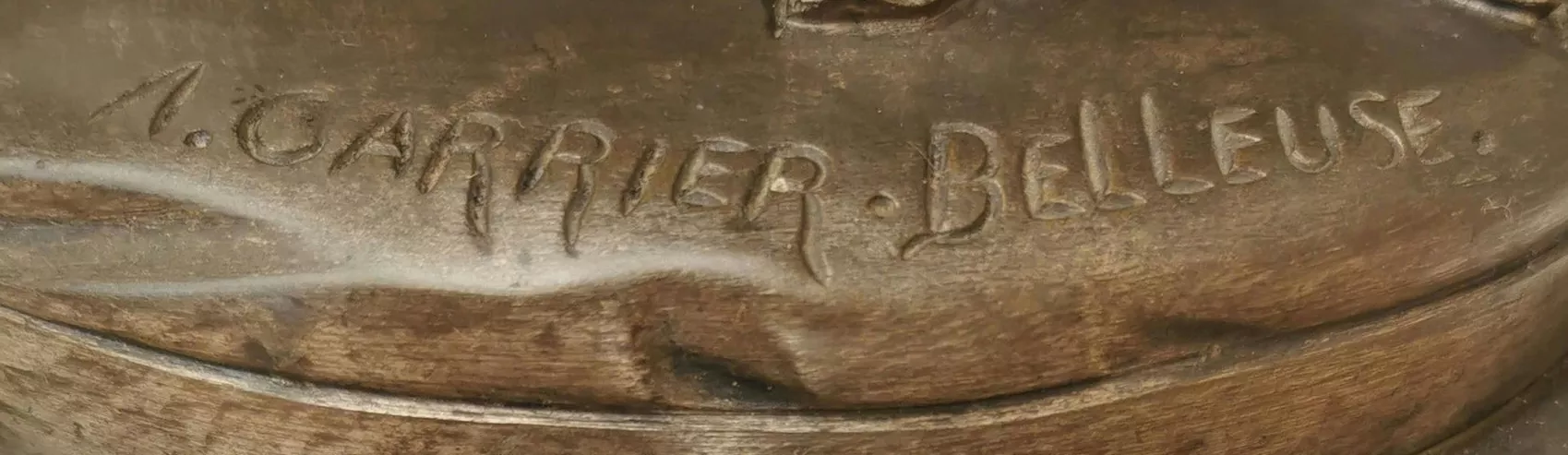
Recognizing Carrier-Belleuse's signature
Carrier-Belleuse signs " Carrier-Belleuse " on his sculptures, most of the time. There are, however, many copies, which is why expertise is important.
Knowing the value of a work
If you happen to own a work by Carrier-Belleuse or after the artist, don't hesitate to request a free appraisal using our form on our website. A member of our team of experts and certified auctioneers will contact you promptly to provide you with an estimate of the market value of your work, as well as ad hoc information about it. If you are considering selling your work, you will also be accompanied by our specialists in order to benefit from alternatives for selling it at the best possible price, taking into account the inclinations of the market.
Estimate in less than 24h
Discover in the same theme

The value of Krachkowsky paintings
Iosif Krachkowsky is a Russian painter who has produced paintings whose value is rising on the art market. He is part of the Russian Realism movement.
Learn more >

Rating and value of works, drawings, paintings by Martin Joh...
Martin Johnson Heade is an American painter of the Hudson River School, who produced landscape paintings that are highly valued at auction.
Learn more >

Rating and value of sculptures, busts and marbles by Prosper...
Prosper d'Épinay is a 19th-century French sculptor who produced works of increasing value at auction.
Learn more >
Works from the same period sold at auction

Estimated 15.000 - 20.000 €
Alfred Auguste Janniot (1889-1968) attributed to : Very large bas-relief

Estimated 9 000 - 12 000 €
Guillaume FOUACE (1837-1895) Pheasant and hare.

Estimated 600 € - 800 €
Henri ZUBER (1844-1909), Bridge at Artemare. Oil on canvas.

Estimated 500 - 800€
Pierre Adrien Dalpayrat (1844-1910), ceramic mask

Secure site, anonymity preserved

Auctioneer approved by the State

Free and certified estimates
Frequently asked questions
-
Who was Albert-Ernest Carrier-Belleuse, and what is his role in the history of sculpture?Albert-Ernest Carrier-Belleuse (1824–1887) was one of the leading figures in 19th-century French sculpture and the most sought-after sculptor of the Second Empire. He was part of the neoclassical movement in sculpture, drawing inspiration from classical subjects in the tradition of the Italian Renaissance masters. He trained renowned artists, including Auguste Rodin, and left his mark on his era by proving that classical sculpture remained alive and relevant.
-
What are the different materials used by Carrier-Belleuse, and what are their price ranges?Carrier-Belleuse worked primarily in bronze and marble, with bronze being the material most commonly found on the auction market. The artist’s terracotta works sell for between €70 and €78,700, his bronzes for between €80,000 and €180,000, and his marble works—his most prestigious pieces—for between €100,000 and €720,000. These price ranges reflect the variability associated with the rarity, significance, and quality of each piece.
-
How can you authenticate a sculpture or bronze by Carrier-Belleuse?Carrier-Belleuse generally signed his sculptures “Carrier-Belleuse.” However, since there are many copies, reliable authentication requires the assistance of an expert. We recommend that you request a free appraisal from Auctie’s: our auctioneers and certified experts will examine your piece and confirm its authenticity with no obligation.
-
How does the appraisal process work at Auctie's?The appraisal is completely free and non-binding. Simply fill out the form on our website with photos and information about your artwork. An expert or certified auctioneer from our team will contact you promptly to provide you, within 48 hours, with an accurate estimate of your item’s current market value.
-
Is this a good time to sell a work by Carrier-Belleuse?Yes, now is a good time to sell a work by Carrier-Belleuse. The market for his sculptures—particularly his bronzes and marbles—remains strong among collectors. His market value is stable, and his works are highly sought after, especially in France. At Auctie’s, our specialists will work with you to determine the best approach and secure the highest possible price given current market conditions.
