



Selling at auction with Auctie's: procedures, steps, and conditions

Key takeaways
- Free, no-obligation estimate provided within 24 hours via online photos, with in-home visits available for complex items.
- The signed consignment agreement specifies the starting bid, seller’s fees, and conditions for unsold items, with the option for future resubmission.
- The buyer pays a commission of 28.8% to 32.4% (including tax) depending on the auction format (live auction, Drouot.com, or Interenchères).
- Free storage for 15 days after the sale; thereafter, a fee of 3 euros (excluding tax) per day is automatically applied.
Are you considering entrusting an item to Auctie's to have it sold at auction? This page provides all the practical information you need about the process, from the initial appraisal through payment—including signing the contract, listing the lot in the catalog, applicable fees, and the various bidding options available to buyers.
All of this information is derived from Rossini SVV’s general terms and conditions of sale and the guides provided by Auctie’s on its website.
Estimate in less than 24h
1. Before the sale: a free estimate
How do I request an appraisal?
The process begins with a free, no-obligation estimate based on photographs submitted online via the form available on the Auctie's website. Experts review each request individually and respond within 24 hours. This estimate takes the form of a low-to-high price range within which the auctioneer estimates the item will find a buyer at auction.
It is important to understand the nature of this estimate: it is provided for informational purposes only and does not constitute a guarantee of the final sale price.
As specified in Rossini’s general terms and conditions of sale, a bid made within the estimate range has a reasonable chance of success, though this does not preclude higher or lower results depending on the dynamics of the bidding on the day of the sale. The range is deliberately set at an accessible level to allow as many buyers as possible to bid and thereby drive up the final price.
If the remote appraisal is insufficient—particularly for complex items, significant collections, or estate inventories—Auctie’s experts will travel to your home anywhere in France to examine the items directly on site. This visit is also free of charge and non-binding.
Terms and Conditions | Timeframe | Cost |
Online photo appraisal | Response within 24 hours | Free, no obligation |
In-home service | By appointment | Free, no obligation |
In-depth assessment (expert certification, lab testing) | Varies by item | Based on a quote; paid by the seller if necessary |
When are pre-sale appraisal fees required?
For certain categories of items, putting them up for sale may require additional certifications, the cost of which is borne by the seller but which represent a worthwhile investment: they assure buyers of the item’s authenticity and help achieve a better sale price.
This applies to works by certain artists whose sale requires an expert’s certificate issued by the relevant authority—such as Camoin, Picasso, or other artists whose market is prone to forgeries—as well as to certain diamonds whose value warrants a laboratory gemological certificate. Auctie’s systematically advises the seller on the appropriateness of these steps before any decision is made.
2. The Consignment Agreement and Lot Preparation
Signing the contract
If the seller accepts the proposed estimate and decides to entrust their item to Auctie’s, they sign a consignment agreement that formally authorizes the auctioneer to sell the item on their behalf at an upcoming auction. This contract specifies the item’s description, the reserve price, the terms of sale, and the applicable seller’s fees. Rossini acts as the seller’s agent: it sells in the seller’s name and on the seller’s behalf, not in its own name.
The contract also stipulates the terms for unsold lots: if the item does not reach its reserve price at the auction, it may be returned to the seller at no cost or offered again at a future auction, following consultation on whether to adjust the reserve price.
Preparing the Lot for the Catalog
Once the contract is signed, Auctie’s handles all preparations for the lot’s sale: drafting of the catalog entry by a specialist, detailing the nature, characteristics, provenance, and condition of the item; professional photographs for the catalog and promotional materials; and, where appropriate, in-depth bibliographic research in libraries, catalogs raisonnés, or archives to document and showcase the item to its fullest potential.
The auction house may also contact specialized experts or analytical laboratories to supplement the documentation for a complex lot.
This preparatory work is directly decisive for the final result: a well-documented, clearly described, and properly photographed lot attracts more qualified bidders and justifies higher price levels.
3. The Pre-Sale Exhibition
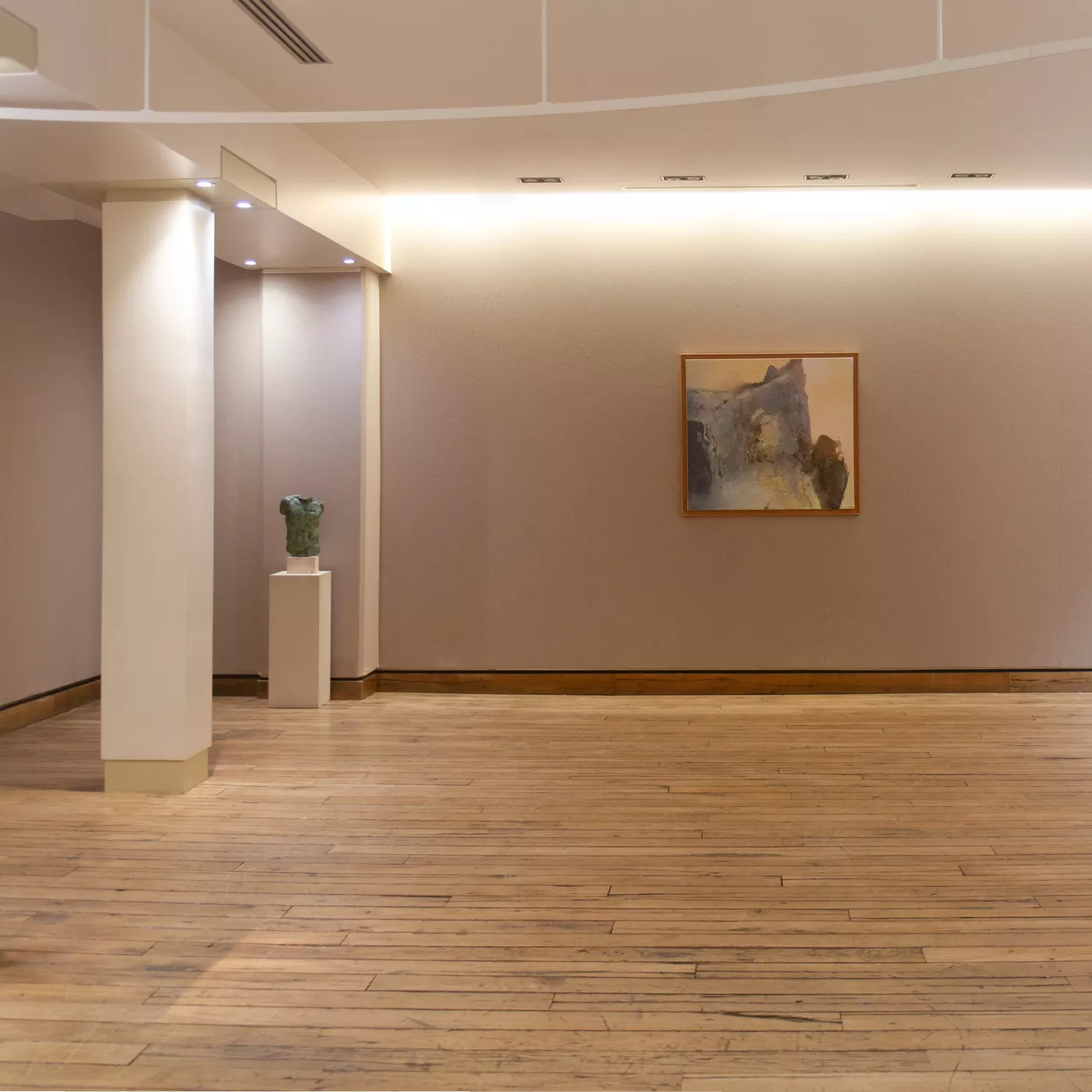
Before each sale, the lots are publicly exhibited at the Hôtel Drouot in Paris. This exhibition is open to everyone, free of charge, and allows potential buyers to examine the items under optimal conditions before deciding to bid. Upon request, buyers can obtain a detailed report on the condition of a lot and ask any questions they may have of the Auctie’s staff present at the preview.
Please note that lots are displayed with all standard security precautions in place. Handling the items without prior authorization from Rossini staff is prohibited and would be at the sole risk of the person concerned.
No claims regarding the condition of a lot will be accepted after the auction, as the preview provided each buyer with the opportunity to examine the item before bidding.
4. The Auction Process
Live Auctions at the Hôtel Drouot
Auctie’s auctions are held at the Hôtel Drouot, located at 9 Rue Drouot in Paris’s 9th arrondissement, France’s premier venue for public auctions. Admission to the auction room is open to the public and free of charge; no prior registration is required.
To bid in person, prospective buyers must first provide the auction staff with a form of payment (check or credit card information) as well as their personal information and address; in exchange, they will be given a bidder number. This number identifies the buyer if they win a lot.
The auctioneer conducts the auction in the order listed in the catalog, opens bidding for each lot at an accessible starting price, and raises the bids in a natural progression. A buyer wishing to bid signals the auctioneer with a gesture. The lot is declared sold upon the fall of the gavel, which immediately transfers ownership of the item and all associated risks to the winning bidder.
Bidding by Phone
A bidder unable to be physically present may bid by phone, provided they have contacted Auctie’s at least twenty-four hours before the sale by sending an email to contact@rossini.fr with their contact information, the lot(s) they are interested in, a copy of their ID, and their bank account information.
A member of the team will call them back a few minutes before their lot comes up so they can bid live. It is recommended that they also submit a backup purchase order in case the phone connection fails.
Purchase Orders
Buyers who cannot be present in the auction room or reachable by phone may leave a buy order—that is, a written instruction specifying the maximum amount above which they do not wish to bid.
The auctioneer executes this order on their behalf, purchasing the lot at the best possible price within the specified limit. This service is free and confidential. In the event of identical purchase orders for the same lot, the earliest order takes precedence. Unlimited bids are not accepted.
Purchase orders may be sent by email to contact@rossini.fr or handed directly to Rossini staff, and must be received at least twenty-four hours before the auction to ensure they are considered.
Online Bidding via Drouot
Auctie’s auctions are also accessible online, live, via the Drouot.com platform and the Interenchères platform. Simply register on these platforms, log in at the time of the sale, and bid from anywhere in the world while following the sale via live video. This expanded digital accessibility directly contributes to competition among bidders and, consequently, to the quality of results achieved for sellers.
Bidding Procedure | Prerequisite | Buyer’s Commission |
In-person (Drouot, Paris) | Submission of a payment method and personal information | 28.8% including tax |
Online via Drouot.com | Registration on Drouot.com | 30.6% including tax |
Online via Interenchères | Registration on Interenchères | 32.4% including tax |
By phone | Written request 24 hours before the sale | 28.8% including tax |
Written purchase order | Submitted 24 hours before the sale | 28.8% including tax |
5. Fees: What the Seller and Buyer Pay
Fees payable by the buyer
In addition to the hammer price, the buyer pays a buyer’s commission, the rate of which varies depending on the auction channel used: 28.8% including tax for in-person auctions, 30.6% including tax via Drouot.com, and 32.4% including tax via Interenchères. This commission covers the auction house’s operating costs as well as any online platform fees, if applicable. It is paid in full by the buyer and does not affect the proceeds received by the seller.
Fees Billed to the Seller
Seller fees take the form of a commission deducted from the hammer price, the rate of which is set by contract and communicated to the seller before the consignment agreement is signed. This commission is deducted from the sales statement sent to the seller after the sale. The net amount payable to the seller is therefore the hammer price minus the agreed-upon seller’s commission.
No fees are charged to the seller if the item does not sell or if the seller decides not to proceed with the auction. The only potential additional costs relate to the expert or laboratory certifications mentioned above, which remain optional but may prove worthwhile for certain categories of items.
6. After the sale: payment, pickup, and settlement with the seller
Payment by the buyer
The buyer pays for the lot immediately after the sale, in cash. Accepted payment methods include credit cards (Visa, Mastercard, or American Express), bank transfer in euros, and cash up to 1,000 euros for tax residents in France, and up to 15,000 euros for tax residents outside France upon presentation of proof of identity. No delivery or return of the lot may take place until full payment has been made.
In the event of non-payment after formal notice, the item will be put back up for sale at a repeat auction, at the seller’s request, and additional costs may be charged to the defaulting successful bidder. The sale is considered final upon the award of the lot, with no right of withdrawal applicable in accordance with Article L221-28 of the French Consumer Code.
Pickup of Lots
Lots may be picked up during or after the auction upon presentation of the release authorization issued by Rossini’s accounting department, or a receipt marked “settled” or “paid.” Rossini provides free storage of lots for fifteen days following the sale. Beginning on the sixteenth day, a storage fee of 3 euros (excluding tax) per day will be charged without further notice.
For buyers who are unable to travel to Paris to collect their lot, the Auctie’s team can provide information on delivery and shipping options following the auction. Title and risk of loss are transferred upon the award of the bid: from that moment on, the item is the buyer’s sole responsibility.
Payment to the Seller
Once the sale is complete and payment from the buyer has been received, Auctie’s issues a sales statement detailing the hammer price and the seller’s fees deducted. The legal deadline for payment to the seller is two months from the date of the sale.
Special Provisions
The State’s Right of Preemption
The French government has a right of first refusal on all public auctions of works of art: it may, by declaration of the Minister of Culture immediately upon the announcement of the winning bid, step in for the buyer and acquire the item at the winning bid price.
The State has fifteen days from the date of the sale to confirm the exercise of this right. This mechanism, intended to protect the national cultural heritage, is relatively rare in practice but constitutes a legal peculiarity of the French art market that both sellers and buyers should be aware of.
VAT and Buyers Outside the European Union
All lots are sold under the margin scheme. Buyers residing outside the European Union may obtain a refund of the VAT charged, provided they submit a written request to the accounting department within three months of the sale and present the corresponding customs export document. The export must take place within the legally prescribed time limits.
Anti-Money Laundering
As an intermediary in the art market, Rossini is subject to regulatory obligations regarding the fight against money laundering and the financing of terrorism, in accordance with Article L561-2 of the Monetary and Financial Code. Identification information may be requested from sellers and buyers in this context.
The Difference Between a Voluntary Sale and a Judicial Sale
Auctie’s conducts only voluntary auctions: the seller freely entrusts their item to the auctioneer, who authenticates, appraises, and sells it on the seller’s behalf. At no time is the sale compulsory or forced; the seller may decide at any time not to proceed with it.
Judicial auctions, which are distinct in nature, are compulsory sales mandated by law or a court order: seizures, judicial liquidations, and abandoned property. They may only be conducted by a judicial officer appointed by the court (notary or judicial officer) and do not fall within Auctie’s scope of business.
If your situation involves legal proceedings, you will need to contact a judicial officer or a notary.
| Voluntary Sale (Auctie's) | Judicial Sale |
Initiative | Voluntary, at the owner’s request | Mandated by law or a court order |
Intermediary | Auctioneer for voluntary sales | Judicial officer or notary |
Preliminary appraisal | Free, with no obligation | Depending on legal proceedings |
Right of withdrawal | Yes, before signing the contract | No |
In summary: the key steps to selling with Auctie's
● 1. Free online estimate within 24 hours, or in-home visit if necessary
● 2. Decision to list the item and signing of the consignment agreement; seller’s fees agreed upon in advance
● 3. Lot preparation: catalog description, photographs, and research
● 4. Pre-auction public viewing at the Hôtel Drouot in Paris
● 5. Auction held in the auction room, by phone, by written bid, or online via Drouot.com and Interenchères
● 6. Award to the highest bidder: fall of the hammer, immediate transfer of ownership
● 7. Payment to the seller within the legal two-month period, net of seller’s fees
● 8. Option to donate all or part of the proceeds from the sale to a charitable cause of the seller’s choice
Estimate in less than 24h
Nos records d'enchères à l'hôtel Drouot

Estimated 10.000 - 15.000 €
Ebridge Ayer BURBANK(1858-1949), Young African-American boy, Oil on panel.

Estimated 20.000 - 30.000
EXCEPTIONAL LARGE OVAL DISH IN VINCENNES SOFT PASTE PORCELAIN FROM THE "BLEU CÉLESTE" SERVICE OF KING LOUIS XV AT THE CHÂTEAU DE VERSAILLES

Estimated 20.000 - 30.000
MANUFACTURE ROYALE DE SÈVRES, 18th century "L'Empereur de la Chine" - Portrait of the Emperor Qianlong, Hard porcelain bisque, 1775

Estimated 1.500 - 3.000
HERMÈS, "Kelly" 32 saddle bag in black box calf

Estimated Between €5,000 and €8,000
KRACHKOWSKY (1854-1914), Before the storm, oil on canvas

Estimated 40.000 - 80.000
Alexandre ROUBTZOFF (1884-1949), Portrait of Arbia, oil on canvas
Discover in the same theme

How to appraise an object
You can authenticate and estimate the value of an object yourself. Appraising an object: how to do it efficiently
Learn more >

Auctioneer Argenteuil: Valuation – Aucties
Have your artwork, jewelry, and collectibles appraised in Argenteuil by the experts at Aucties. 100% free online appraisal within 24 hours. ✅
Learn more >

Roubaix Auctioneer: Valuation – Aucties
Have your artwork, jewelry, and collectibles appraised in Roubaix by the experts at Aucties. 100% free online appraisal within 24 hours. ✅
Learn more >

Secure site, anonymity preserved

Auctioneer approved by the State

Free and certified estimates
Frequently asked questions
-
Comment demander une estimation gratuite chez Auctie's ?L'estimation est gratuite et sans engagement. Vous pouvez la demander en ligne via le formulaire du site d'Auctie's en transmettant des photographies de l'objet. Les experts examinent chaque demande individuellement et vous adressent leur réponse sous 24 heures. Pour les objets complexes, les collections importantes ou les inventaires successoraux, les experts d'Auctie's se déplacent également gratuitement à votre domicile, partout en France.
-
Quels sont les frais à la charge du vendeur chez Auctie's ?Les frais vendeur prennent la forme d'une commission prélevée sur le prix d'adjudication. Le taux exact est fixé contractuellement et communiqué avant la signature du contrat de dépôt. Aucun frais n'est demandé si l'objet n'est pas vendu ou si vous décidez de ne pas donner suite à l'estimation. Les seuls frais supplémentaires éventuels concernent les certifications d'expert ou de laboratoire, qui restent facultatives.
-
Quand des frais d'expertise complémentaires sont-ils nécessaires ?Certaines catégories d'objets nécessitent des certifications complémentaires pour sécuriser leur authenticité : les œuvres de certains artistes (Picasso, Camoin, etc.) dont le marché est exposé aux faux, ou certains diamants dont la valeur justifie un certificat gemmologique. Ces certifications, à votre charge, constituent un investissement rentable qui permet d'obtenir de meilleurs résultats. Auctie's vous conseille systématiquement sur leur pertinence avant toute décision.
-
Comment se déroule la vente après la signature du contrat de dépôt ?Une fois le contrat signé, Auctie's prépare complètement le lot : rédaction de la notice, photographies professionnelles, et recherches documentaires approfondies si nécessaire. Avant la vente, l'objet est exposé gratuitement à l'hôtel Drouot à Paris, permettant aux acheteurs potentiels de l'examiner. La vente aux enchères se tient à Drouot et peut se suivre en salle, par téléphone, via ordre d'achat écrit, ou en ligne sur Drouot.com ou Interenchères.
-
Quels sont les délais et modalités d'enlèvement après la vente ?L'acheteur règle son lot immédiatement après l'adjudication. Rossini assure un stockage gratuit des lots pendant 15 jours à partir de la fin de la vente. À compter du 16e jour, des frais de stockage de 3 euros HT par jour sont facturés automatiquement. Pour les acheteurs ne pouvant pas se déplacer à Paris, Auctie's peut vous renseigner sur les modalités de livraison et d'expédition.
