



The value of Corsican weapons, styli, knives and pistols

Key takeaways
- The Corsican stiletto, a 40-centimeter dagger that first appeared in the 16th century, became a symbol of the island’s cultural identity during the conflicts of the 18th and 19th centuries.
- Prices range from 50 to 500 euros for simple wooden stilettos, and from 100 to 5,000 euros for those made of precious woods such as century-old olive wood.
- The blades are generally engraved with vengeful mottos such as “Vendetta” or “Morte al nemico,” reflecting Corsica’s distinctive culture of vengeance.
The Corsican stylet or the emergence of a purely identity-based weapon
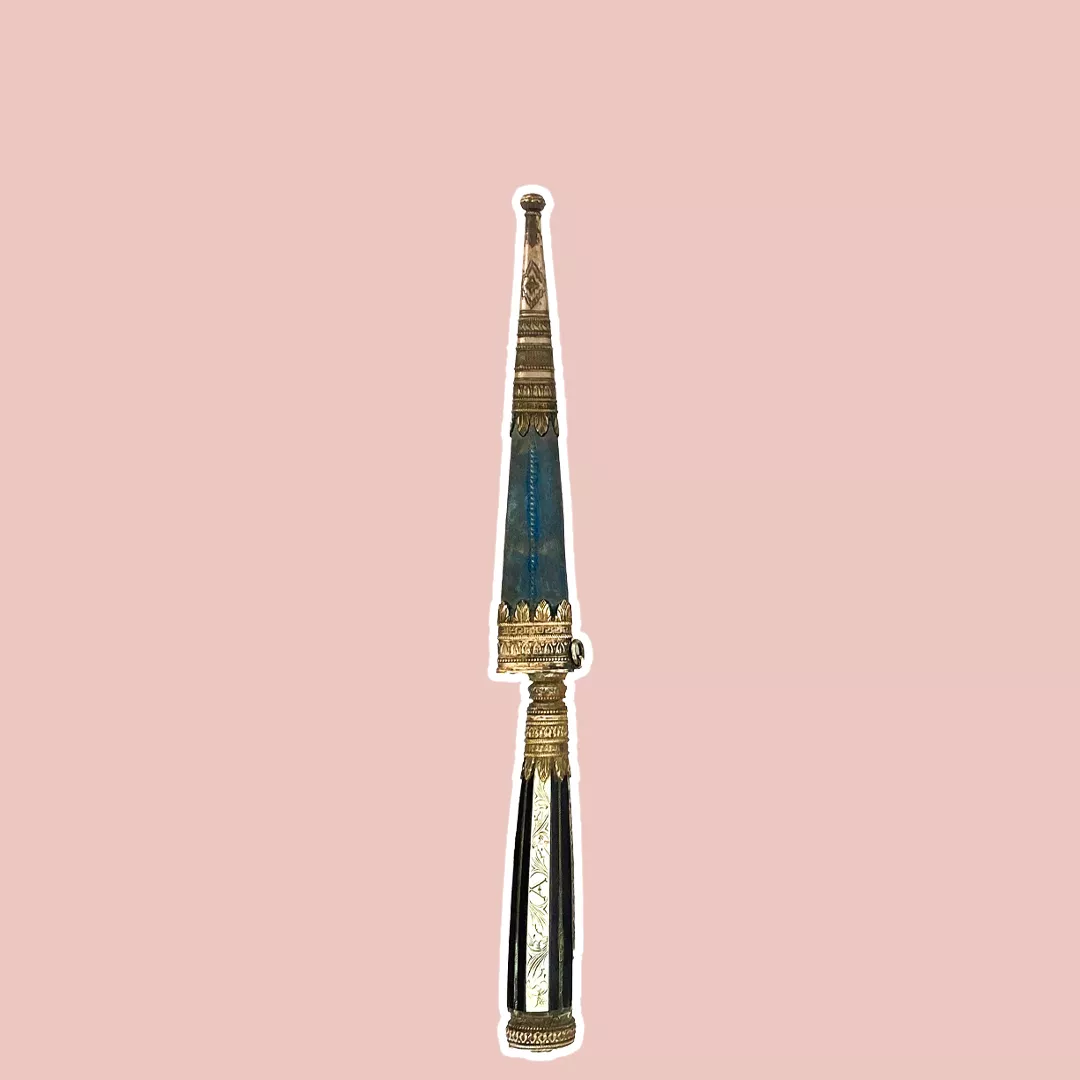
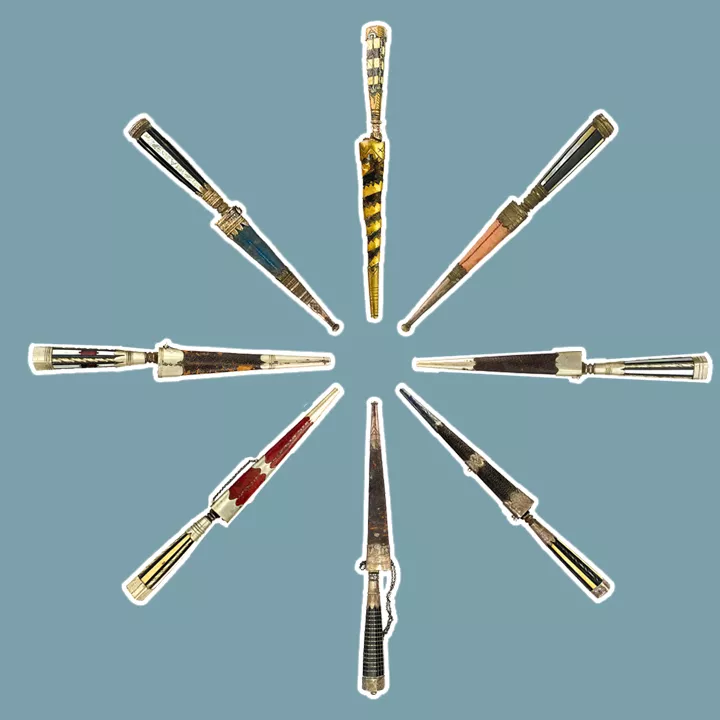
The stylet is a dagger-like Corsican knife that can reach 40 cm in length. Comprising a double-edged blade and a wooden, brass, horn or coral handle, it is usually accompanied by an inscription.
The stylet was originally an awl used for writing or engraving, or piercing leather. The stylus is a derivative of the Genoese knife and appeared in Corsica in the 16th century. It became a weapon, as well as a tool, when the carrying and transport of weapons was prohibited. The weapon became official during wars against Italy, Genoa, and France in the 18th century. The stylus is unisex, worn by men and women on their belts, but also by the clergy, and becomes a ceremonial object as it becomes increasingly refined. In the 19th century, particular attention was paid to style and beauty. This attention is reflected in the richness of the materials used in the pommel, composed of a faceted ebony handle enriched with chased mother-of-pearl blades, rudented metal fillets, brass frieze, bone and horn inlay. Composition found at auctions.
Estimate in less than 24h
The Corsican stylus: the birth of a weapons culture
Corsica was a Genoese colony in the 18th century and the scene of numerous internal conflicts. The maquis was populated by convicts, and natives and shepherds were driven off their land.This climate prompted Corsicans to demand the possibility of carrying a weapon for self-defense. Genoa saw this opportunity as a chance to raise a tax. The corrupt legal system of the Genoese republic leads to the birth of the vendetta, justice by oneself for oneself. Civil war breaks out in 1729 and lasts around four years. The Corsicans are in revolt and eager to regain a measure of freedom, security and justice. The stylet embodied this desire. It's a new type of weapon found at auctions.
Rating and value of a Corsican stylus at auction
The price of Corsican styli can vary considerably depending on several factors, such as the complexity of the design, the materials used and the reputation of the craftsman. In general, quality Corsican styli can be purchased for as little as fifty euros, and can reach several hundred euros or more for the most refined and sought-after models. Styli made from precious woods, such as hundred-year-old olive wood, can command a higher price due to their rarity and intrinsic value. It should be noted that these prices are approximate and may vary from the designer.
Type of item | Value |
|---|---|
Simple wooden Corsican stylelet | 50 - 500€ |
Corsican style precious wood | 100 - 5 000€ |
Estimate in less than 24h
Discover in the same theme

Rating and value of North European roller harquebuses
Northern European spinning-wheel harquebuses are antique weapons prized by collectors at auction. They have a high value.
Learn more >

Rating and value of American Colt revolvers (ACP M1911)
Colt ACP revolvers were the US Army's standard issue for 75 years. Today, they are a sought-after collector's item.
Learn more >

Rating and value of city swords, rapiers and crabs
City swords are ancient weapons that have stood the test of time. Today, they are highly prized at auction.
Learn more >
Thevendetta Corsica engraved on styli
Typical of Corsica, a "warrior" state, the vendetta is the culture of revenge. When a murder is committed, the family of the deceased makes up for the affront with a similar or even identical act. The stylus embodies this tradition, and the blade is adorned with a motto calling for revenge, "vendetta", "Che La Mia Ferita - Sia Mortale" ("May my wound be mortal"), "Morte al nemico" ("Death to the enemy"). These mottos can be found on many styli sold at auction. For an islander, owning a knife marks the passage from childhood to adulthood. The stylet symbolizes the freedom of the armed man, and the beauty of the object the temperament and status of its owner. It is part of the heritage and can be passed down within the family.
The support of an auctioneer in the appraisal and sale of works is necessary to guarantee both seller and buyer a quality service during auctions. The interest is material, it is important to appraise the object and establish the rarity or otherwise of the materials, distinctive elements, provenance and date. Beyond this aspect, it's the promotion of a cultural heritage.

Secure site, anonymity preserved

Auctioneer approved by the State

Free and certified estimates
Frequently asked questions
-
What is a Corsican stylus, and what is its history?The Corsican stylet is a traditional dagger-like knife that can be up to 40 cm long, consisting of a double-edged blade and a handle made of wood, brass, horn, or coral. Originally from Genoa, it appeared in Corsica in the 16th century before becoming a true weapon in the 18th century during conflicts against Italy, Genoa, and France. Worn by men, women, and even the clergy, it symbolizes Corsican freedom and cultural identity, marking in particular the transition from childhood to adulthood.
-
What is the price range for Corsican styluses at auction?High-quality Corsican styluses can be purchased starting at around 50 euros and can cost several hundred euros—or even more—for the most refined models. A simple wooden Corsican stylus generally costs between 50 and 500 euros, while one made of precious wood (such as wood from a century-old olive tree) can cost anywhere from 100 to 5,000 euros. These prices vary depending on the complexity of the design, the materials used, and the artisan’s reputation.
-
How do I have a Corsican stylus authenticated and appraised?Request a free estimate from Auctie's, which will connect you with specialized auctioneers and experts. An appraisal helps determine the item’s authenticity, rarity, the origin of its materials, distinctive features, and provenance. This no-obligation service guarantees a reliable and professional evaluation of your stylus.
-
Why are Corsican styluses engraved with specific mottos?Corsican stilettos often bear inscriptions related to the vendetta, the Corsican culture of revenge and vigilante justice. The most common mottos are “Vendetta,” “Che La Mia Ferita - Sia Mortale” (“May my wound be fatal”) or “Morte al nemico” (“Death to the enemy”). These engravings reflect the stiletto’s essence as a symbol of identity and warfare, transforming the object into a symbol of Corsican cultural heritage.
-
How do I sell a Corsican stylus at an auction on Auctie's?Auctie's, an auction house, supports you every step of the way: a free, no-obligation appraisal by an expert (response within 48 hours), advice on preparing your item, and then putting it up for auction. The auctioneer ensures effective promotion of your stylus and provides high-quality service to maximize your chances of a successful sale.
