



Rating and value of French sabres from the revolutionary period

Key takeaways
- French Revolutionary sabers sell for between €100 and €4,710, depending on the type, condition, and history, with significant variations depending on the model.
- The Montmorency saber fetches between €200 and €15,200, while the Garde Royale can exceed €31,000 at auction.
- Condition, manufacturer, and provenance are key factors: a Sartine saber estimated at €600–800 sold for €4,710 in 2022.
If you own a French sword from the revolutionary period, and would like to know its value, and if you don't know, the period and model of your sword, our state-approved experts and auctioneers will offer you their expertise services. Our specialists will carry out a free appraisal of your work, and provide you with a precise estimate of its value on today's market. Thereafter, if you wish to sell your work, we will guide you towards the best possible arrangement to obtain the optimum price.
Rating and value of French revolutionary swords
Sabers from the revolutionary period are sought-after items by collectors. However, price differences can be considerable, depending on order, state of preservation, who owned it, and other criteria. Nowadays, prices for these objects can rise considerably under the auctioneer's hammer. Buyers from all over the world are interested in the sale of certain rare pieces. The price at which they sell on the art market ranges from €100 to €4,710, at the moment, a considerable difference but one that says a lot about the value that can be attributed to these weapons. In 2022, a brass edge saber, Sartine model sold for €4,710 while it was estimated at between €600 and €800.
Order of value ranging from a simple order to the most prestigious
Type of saber | Result | Saber of the elite companies | From €100 to €3,300 |
|---|---|
Lighter sabre of the grenadiers | From €80 to €3,800 |
Navy lighter saber | From €80 to €2,000 |
Royal Guard saber | From €150 to €31,000 |
Dragon sword | From 350 to 11 000€ |
Sabre à la Montmorency | From 200 to 15 200€ |
Estimate in less than 24h
A look back at the history of the French saber
Sabers began to appear in the 17th century. At the end of the century, a hundred years before the Revolution, the King of France, Louis XIV at the time, decided to regulate their manufacture. The horse grenadier saber of the King's household was one of the first to be included in the regulations. Events unfolded in the 1780s, and in 1791, following the Jeu de Paume oath and the Declaration of the Rights of Man and of the Citizen, the first constitution came into force. It stipulated that the King was the supreme commander of the Armed Forces, and by hierarchical norm the regulation of French swords was consequently extended to all army corps.
At the beginning of the 17th century, bladed weapons were imported from Germany and assembled in France. It was Louis XV in 1730 who issued letters patent to authorize their manufacture, first in Alsace, then at the Châtellerault factory.
In sabers from this period present on the auction market, we therefore find pieces from the Ancien Régime, which were not yet fully regulated, right up to weapons from the Directoire period. Weapons built from this period onwards incorporate Napoleonic sabres and are no longer part of the Revolutionary period.
The sabre à la Montmorency
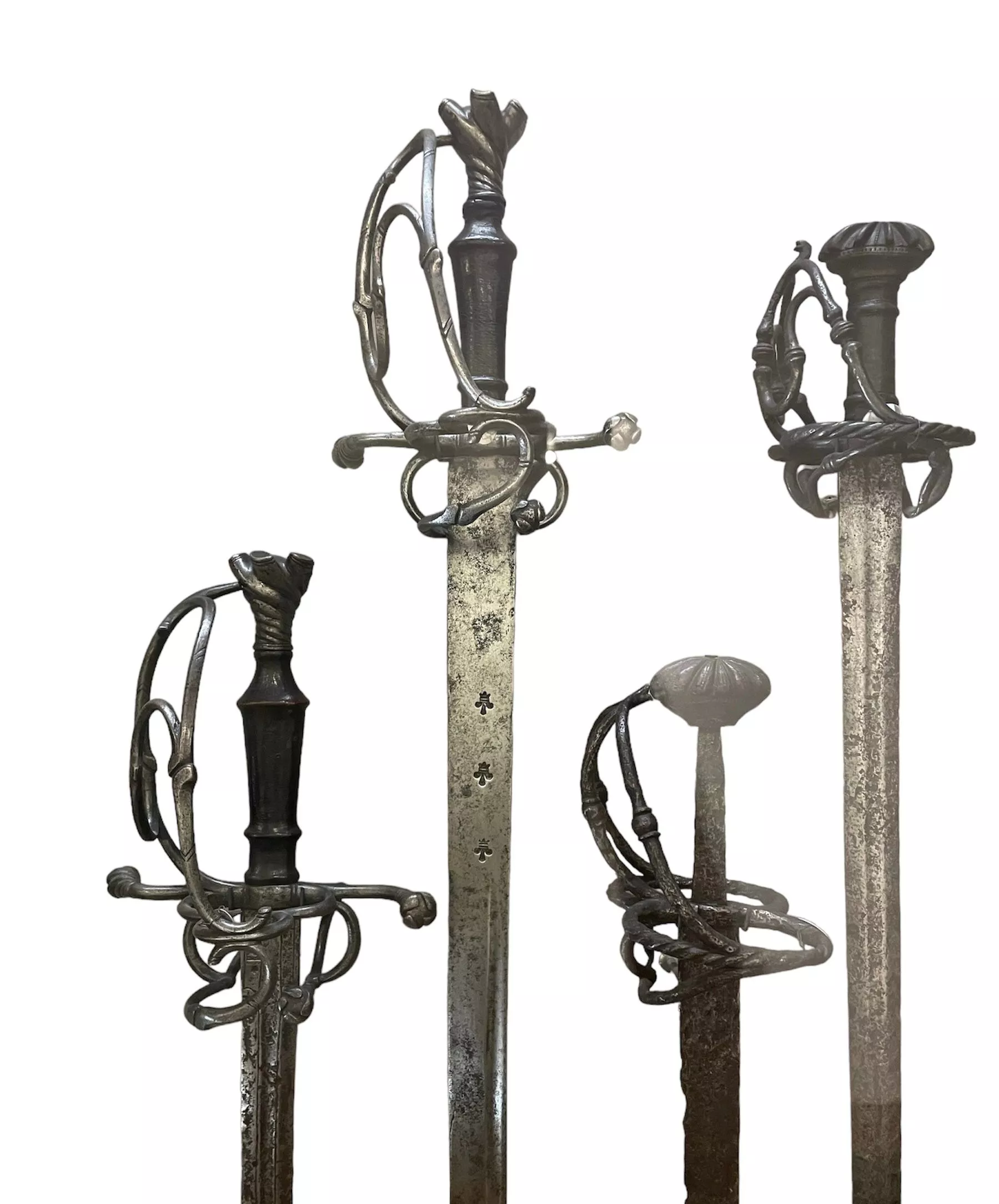
The sabre à la Montmorency is an emblematic weapon of this period. At the time, they were made by private suppliers, while saber manufacture was not yet regulated by Louis XVI. They often feature a simple, chiselled hilt cut by a circular branch. They all look relatively similar and can be engraved, as officers sometimes ordered this type of saber. The blade is very slightly inclined, much less so than a lighter saber.
The scabbard, as with almost all sabers of the period, is made of leather, with metal trim.
The name of this weapon is due to the constable and marshal Anne de Montmorency, who fought on the Catholic side during the Wars of Religion.
Sabers à la Montmorency are items that come back fairly regularly on the French auction market. They are always a great success.
The revolutionary period, the first evolution of bladed weapons
The weapons were mainly revised by Napoleon I for the Grande Armée. However, sabers had only existed for a short time during the revolutionary period, and the fact that they were not yet regulated would encourage arms manufacturers to innovate on the advice of the military and the royal guard.
The revolutionary camp, meanwhile, would use smaller, lighter weapons, such as wheel pistols or daggers.
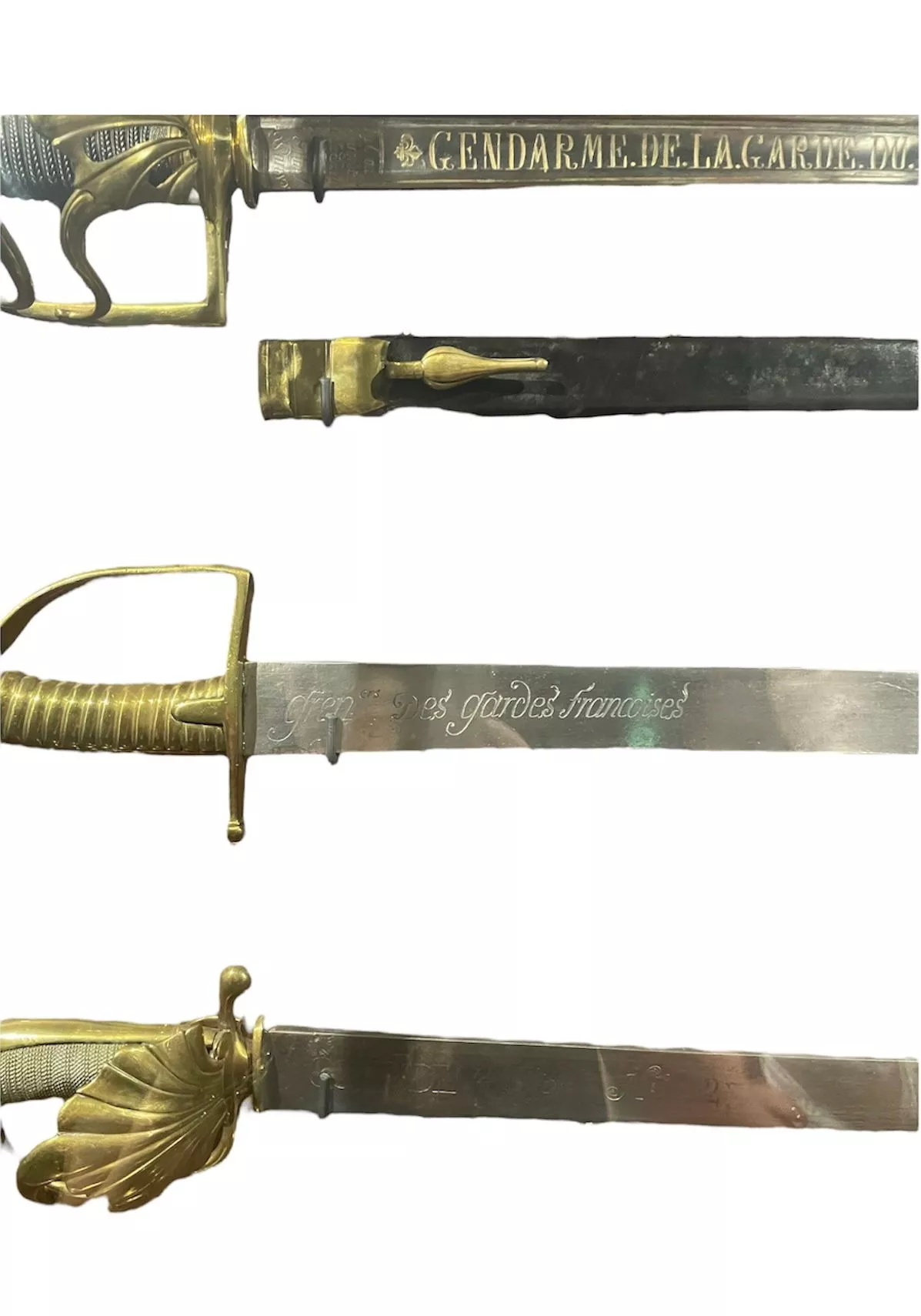
This period of history will therefore see the manufacture of sabers evolve, taking into account the experience of soldiers to improve the inclination of the blade, the manufacture of the guard or even aesthetic elements such as engravings.
Reasons to sell a Revolution sword at auction
If you own a sword from this historic period, and you don't know how to sell it, auctions are one solution. Indeed, collectors use this medium to find models that correspond to a particular battle or that belonged to their ancestors. Prices can thus reach unprecedented amounts.
These objects are not just edged weapons but a historical witness to the revolutionary period that is part of the scientific evolution of French weapons design.
To know the value of a saber from the revolutionary period
If you happen to own a saber from any period and would like to know its value, don't hesitate to request a free appraisal using our form on our website. A member of our team of experts and certified auctioneers will contact you promptly to provide you with an estimate of the market value of your piece, as well as any relevant information about it. If you wish to sell your property, you will also be accompanied by our specialists in order to benefit from alternatives for selling it at the best possible price, taking into account market inclinations.
Estimate in less than 24h
More historic edged weapons at auction

Estimated 300 - 500 €
Luxurious Russian bear hunting knife. Green nephrite handle.

Estimated 100 - 150 €
Corsican stylus. Dite de Vendetta. Faceted ebony handle enriched with chased mother-of-pearl blades and metal purfling.

Estimated 600 - 800 €
Russian Shashka saber. Mounted in nielloed silver with chased plant decoration and strings of pearls.

Estimated 400 - 600 €
Katana, Unidentified signature.

Estimated 400 - 600 €
Katana. Unsigned (mumei).
Discover in the same theme

Rating and value of Napoleonic sabres (From the Consulate to...
French swords from the Consulate to the Second Empire are collectors' items that can be worth a lot of money. Their value is stable and they are in de...
Learn more >

Rating and value of seventeenth-century external roller pist...
Spinning-wheel pistols are antique weapons, many of which were produced in the 17th century for decorative purposes. They are highly prized at auction...
Learn more >

Rating and value of pistols, rifles and weapons by Nicolas B...
Nicolas Boutet was the artistic director of the Versailles arms factory. The pistols and rifles he produced are highly prized at auction.
Learn more >

Secure site, anonymity preserved

Auctioneer approved by the State

Free and certified estimates
Frequently asked questions
-
What is a saber from the French Revolutionary period, and why is it sought after?A saber from the Revolutionary period (1780s–1800s) is a bladed weapon that marks the transition between the non-regulation models of the Ancien Régime and the Napoleonic sabers. These pieces are highly sought after by collectors because they reflect the technological and aesthetic evolution of French weapons and are often associated with major historical events or prestigious military lineages.
-
What is the price range for swords from the Revolutionary period?Prices vary considerably depending on the type and condition, ranging from €80 to €31,000. For example, sabers from elite regiments range from €100 to €3,300, while those from the Royal Guard can fetch between €150 and €31,000. In 2022, a Sartine-model ship’s saber estimated at between €600 and €800 sold for €4,710, illustrating the potential for bidding wars.
-
How can you authenticate and appraise a French saber from the Revolutionary period?To authenticate your saber and determine its exact value, contact Auctie's for a free, no-obligation appraisal. Our auctioneers and certified experts will examine your item, determine its model, era, and condition, and then provide you with an assessment of its current market value within 48 hours.
-
Is this a good time to sell a sword from the Revolutionary period?Yes, now is a good time to sell. Collectors around the world are actively interested in these pieces, prices are rising steadily at auction, and swords from this period continue to be in high demand on the market. An Auctie’s expert can advise you on the best sales strategy to maximize the price.
-
What is a Montmorency-style saber, and why is it so popular?The Montmorency saber is an iconic weapon of the Revolutionary period, manufactured by private suppliers before regulations were enacted. It is distinguished by its simple chiseled guard with a circular crossguard and its slightly angled blade, which is often engraved with the officers’ initials. These sabers regularly appear on the French auction market and are highly sought after by collectors, with prices ranging from €200 to €15,200.
