



Rating and value of works, paintings and drawings by Jacques Majorelle

Key takeaways
- A leading Orientalist painter (1886–1962), Jacques Majorelle based his career in Morocco starting in 1917, inspired by the local landscapes and culture.
- His works sell for between €100 and €1,100,000; his painting "La Kasbah rouge" fetched €1,100,000 at Artcurial in 2011.
- His distinctive style combines a vibrant palette (cobalt blues, sunny yellows) with floral motifs, sensitively capturing the essence of North African culture.
A major Orientalist painter of the 20th century, Jacques Majorelle (1886-1962) is best known for his work in Morocco. Also a landscape painter, Majorelle's style is unique, reflecting his passion for the Orient.
If you own a work by or based on the artist Jacques Majorelle and would like to know its value, our state-approved experts and auctioneers will guide you.
Our specialists will carry out a free appraisal of your work, and provide you with a precise estimate of its value on the current market.
Then, if you wish to sell your work, we will direct you to the best possible arrangement to obtain the optimum price.
Artist's rating and value
A major Orientalist painter, Jacques Majorelle has established himself as a major figure on the art market. His works are highly prized by collectors at auction.
The prices at which his works sell range from €100 to €1,100,000, a considerable range but one that says a great deal about the value that can be attributed to the Orientalist painter's works.
A work by Majorelle can fetch more than €1 million at auction, as evidenced by his painting La Kasbah rouge, which fetched €1,100,000 at Artcurial in 2011.
Order of value from the most basic to the most prestigious
Technique used | Result |
|---|---|
Stamps | From €200 to €23,000 |
Drawing - watercolor | From €100 to €859,996 |
Painting | From €250 to €1,100,000 |
Estimate in less than 24h
Style and technique of Jacques Majorelle
The style of Jacques Majorelle, a leading artist of Orientalism, is characterized by a bold approach and chromatic vivacity that evoke the bright light of Morocco. His vibrant, rich palette blends shades of cobalt blue and sunny yellows, creating a warm, bewitching atmosphere.
These colors, applied with remarkable intensity, invite the viewer to plunge into a world where every nuance is imbued with emotion and vitality.
Majorelle's technique reveals an exceptional mastery of the brush, enabling him to render scenes with a precision that is both realistic and poetic. His compositions are carefully arranged, brilliantly marrying the architecture of Moroccan houses with the lushness of the surrounding nature.
Fluid lines, stylized forms and the play of light are all elements that lend his works an almost magical dimension, where the real and the imaginary harmoniously come together.
Rooted in his Moroccan experience, Majorelle draws inspiration from lush gardens, picturesque landscapes and scenes of everyday life.
Each painting thus becomes a tribute to the beauty of North African culture, while expressing a deep sense of belonging and connection to this land.
Floral motifs, omnipresent in his work, testify to his respect and admiration for nature, while human figures, often stylized, add a touch of humanity and tenderness.
In the final analysis, Jacques Majorelle's style and technique intertwine to give rise to a rich and evocative pictorial universe.
His works, at the crossroads between East and West, reveal a rare sensitivity and a relentless quest for beauty. Through this prism, Majorelle invites us to explore a world where every color, every shape and every light tells a story of wonder and escape.
The life of Jacques Majorelle
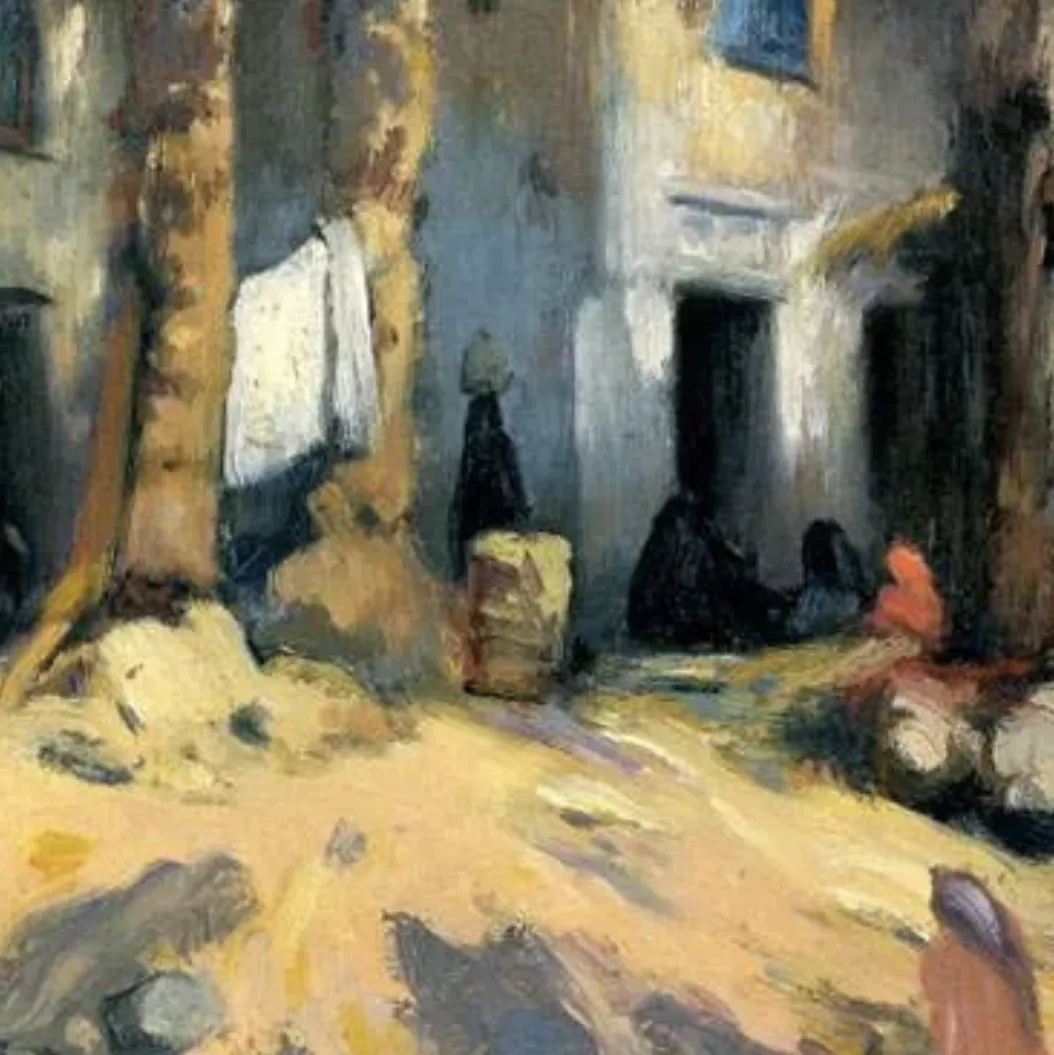
Jacques Majorelle, son of the famous cabinetmaker Louis Majorelle, was born in 1886 in Nancy, a city in the heart of French Lorraine, renowned for its rich artistic heritage and creative atmosphere.
Immersed in the world of Art Nouveau since childhood, Jacques grew up in an environment conducive to the development of his artistic talents. Fascinated by aesthetics and form, he entered the Architecture and Decoration section of the Nancy School of Fine Arts.
However, driven by a burning desire to express himself through painting, the young Majorelle left his hometown for Paris, the capital of arts and letters.
In Paris, he enrolled at the Académie Julian, a renowned establishment for the training of artists, where he benefited from the teachings of eminent teachers such as Schommer and Royer.
This is where he refined his technique, immersing himself in the artistic currents of his time while cultivating a personal vision.
After several enriching trips to Spain and Italy, where he soaked up the lights and colors of the South, Majorelle presented his first exhibition in 1908, marking the start of his artistic career.
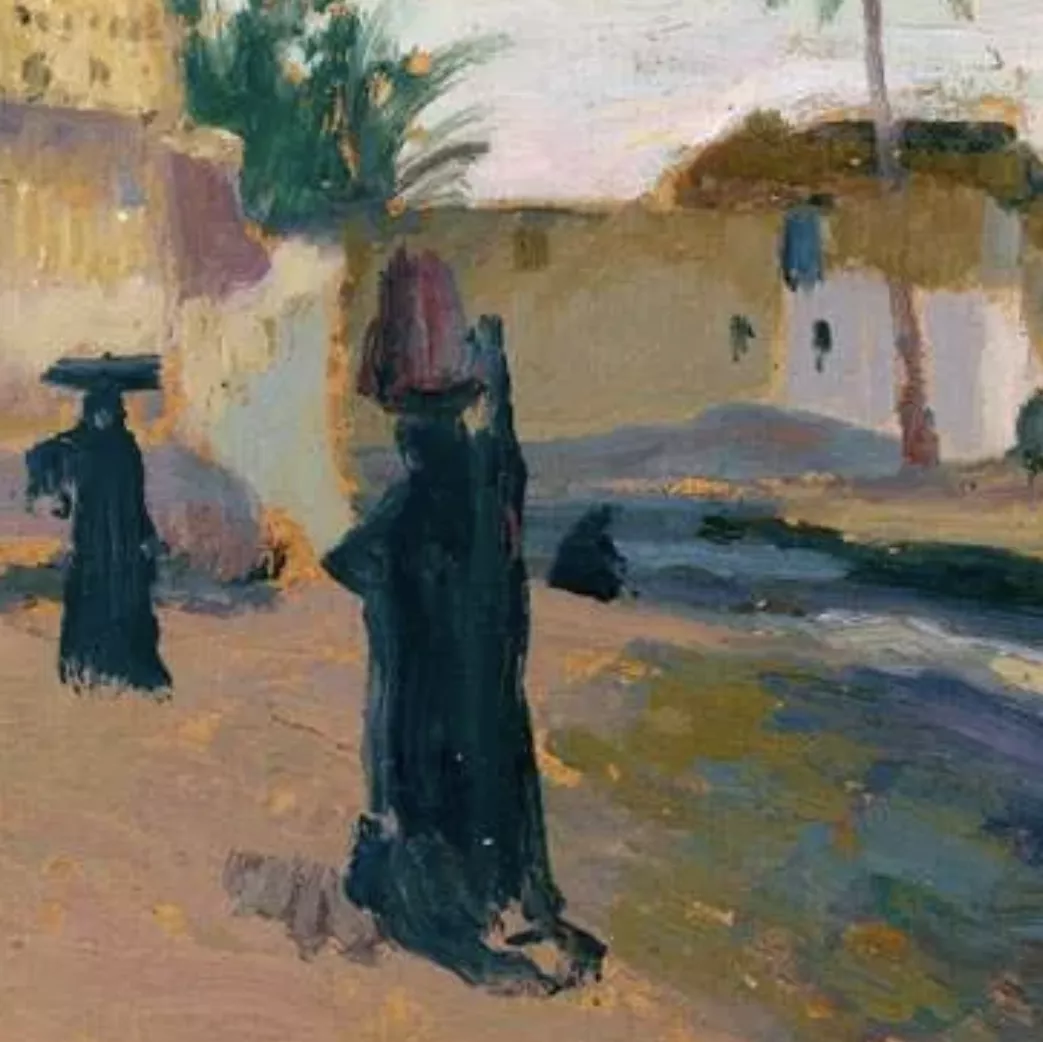
However, the artist's fragile health, affected by a lung disease, forced him to seek out regions with a warm climate. After spending a few years in Egypt, he settled in Morocco in 1917. This new life in the East proved to be an inexhaustible source of inspiration.
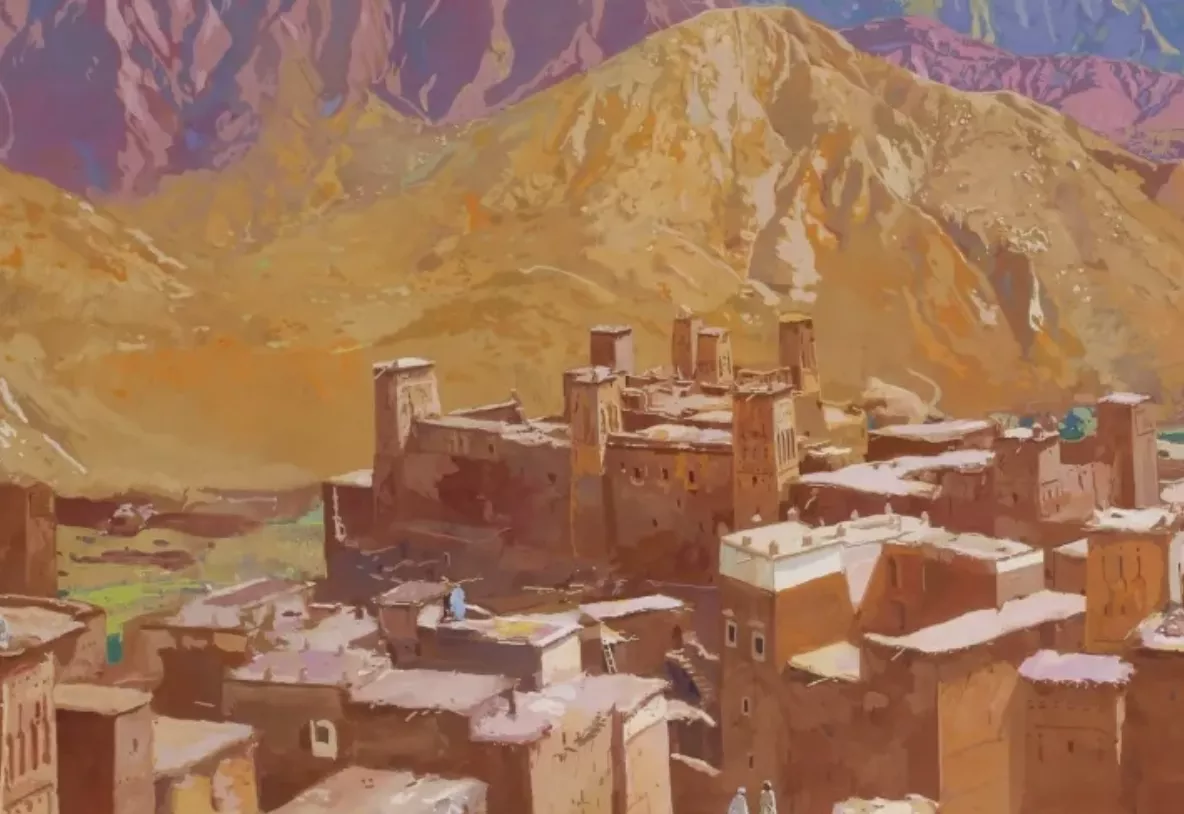
His large canvases, rich in color and emotion, present typical villages with their kasbahs and buildings with stylized, uncluttered Berber architecture.
He also transcribes with great sensitivity the lively village scenes and vibrant souks he observes, capturing the essence of Moroccan culture.
Soon after settling in Morocco, the artist acquired a plot of land where he had a house built, which he carefully embellished. Enriched with local crafts, leatherwork and cabinetry, his home is distinguished by a vivid blue hue, now renamed "Majorelle blue".
This intense color, lightly tinged with violet, evokes sensations of softness, relaxation and soothing, symbolizing the perfect fusion of art and nature that characterizes his work.
A botanical enthusiast, Jacques Majorelle didn't just create a haven of peace; he surrounded his home with a lush garden, which he continually enriched by introducing exotic plants from the four corners of the world.
This garden, which he described as a "cathedral of shapes and colors", became a veritable sanctuary for local flora and fauna. In 1947, the garden was opened to the public, becoming one of the city's main green spaces, attracting many visitors in search of wonder.
In 1980, Yves Saint Laurent and Pierre Bergé acquired them, ensuring Majorelle's legacy was preserved.
Today, Jacques Majorelle's artistic legacy continues to fascinate art lovers the world over. His works, rich in color and emotion, are exhibited in numerous museums and galleries, while the Jardin Majorelle remains a living testament to his talent and unique vision of art.
Through his work, Majorelle forged an unbreakable bond between nature and art, uniting East and West in perfect harmony.
The Majorelle garden
Focus on Danse Ahwach Femmes Berbères, Jacques Majorelle, 1940
Danse Ahwach Femmes Berbères by Jacques Majorelle, a painting created around 1940, embodies the artist's deep attraction to Morocco and its traditions.
As a keen observer of local scenes, Majorelle transposes onto canvas the Ahwach dance, an emblematic expression of Berber culture.
The scene comes alive under his brushwork with women in traditional dress, captured in harmonious, collective movements.
Their silhouettes, draped in colorful, flowing fabrics, seem to soar, punctuated by graceful, coordinated gestures, bearing witness to a dance imbued with spirituality and communion.
Jacques Majorelle, a great lover of Moroccan light and contrasts, deploys here a palette of pure colors that makes the painting vibrate with a particular energy.
He sublimates the warm tones of the desert and the terracotta hues of the surrounding mountains, offering the eye a striking vision of ancestral Berber customs.
This work, by sensitively capturing the essence of this collective dance, does more than simply document: it captures a unique moment, a moment of shared joy and harmony, in which resonates all the cultural heritage of Morocco that Majorelle so cherished.
Jacques Majorelle's impact on the Orientalist movement
Jacques Majorelle, an emblematic figure of the Orientalist movement, left his unique mark on art thanks to his passion for Moroccan culture.
After leaving his native Lorraine to settle in Morocco in 1917, he found an inexhaustible source of inspiration in the vibrant landscapes and rich local life.
His works, characterized by vibrant colors and inspired motifs, capture the essence of Moroccan villages, from kasbahs to bustling souks, while incorporating a modern sensibility.
Collaborating with contemporary artists such as his father, Louis Majorelle, and other members of the École de Nancy, he enriched the Orientalist movement with a refined, decorative aesthetic.
Majorelle's influence also extended to artists such as André Derain and Henri Pontoy, who draw inspiration from his bold palette and lyrical depiction of landscapes.
Through his approach, he paved the way for a deeper exploration of the Orient, leaving a lasting imprint on art and inspiring his peers to rediscover the wonders of this fascinating region.
His signature
Not all of Jacques Majorelle's works are signed.
Although there are variations, here is a first example of his signature:
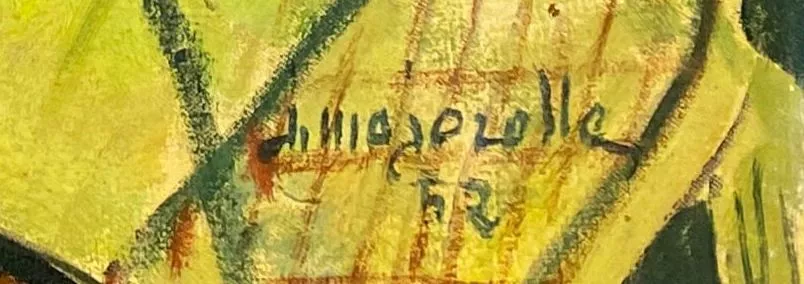
Our team remains at your disposal to identify your works.
Expertise your property
If you own a work by Jacques Majorelle, don't hesitate to request a free appraisal by filling in our online form.
A member of our team of experts and chartered auctioneers will contact you to provide an estimate of the market value of your Majorelle-signed work.
If you are considering selling your work, our specialists will also guide you through the various alternatives available to obtain the best possible price, taking into account market trends and the specificities of each work.
Estimate in less than 24h
Similar works sold at auction

Estimated 2500 - 5000 €
Henri EPSTEIN (1892-1944), View of the village through the trees, Oil on canvas

Estimated 4.000 - 6.000 €
EUGÈNE LEROY (1910-2000), Maison dans un sous bois, oil on canvas mounted on panel.

Estimated 15.000 - 20.000 €
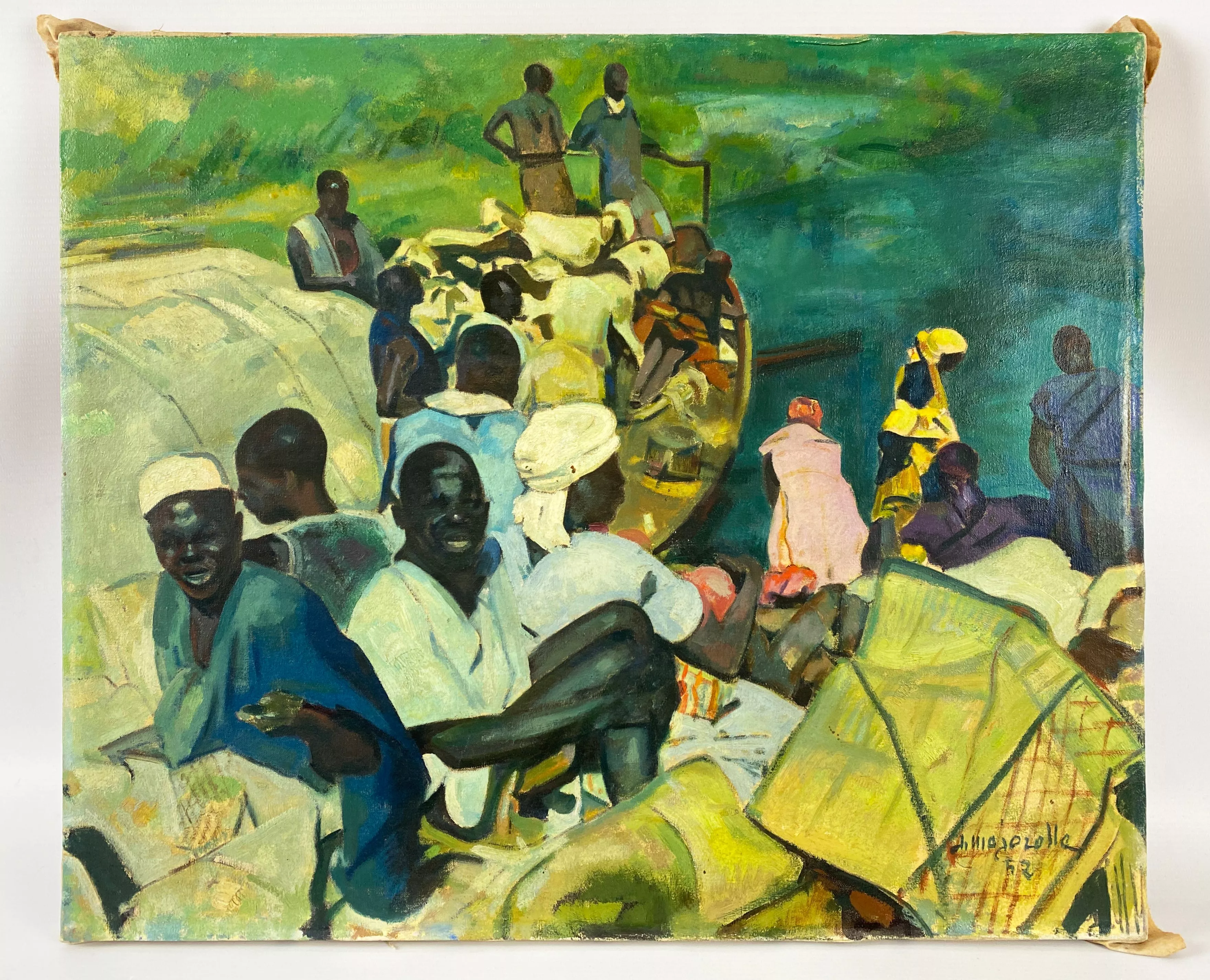
Jacques MAJORELLE (1886-1962) - Fishermen embarking, Abidjan, Ivory Coast - Oil on canvas.

Estimated 3.000 - 5.000 €
Henri EPSTEIN (1892-1944), Place du sud de la France, Oil on canvas.
Discover in the same theme

Rating and value of works, ceramics, paintings by Jacques Po...
Jacques Pouchain is an artist who has produced modernist ceramics that are highly valued at auction. Estimate in 24h.
Learn more >

Rating and value of paintings by Barbara Hepworth
Barbara Hepworth is an abstract artist who has produced sculptures and paintings that are highly rated and valued at auction.
Learn more >

Rating and value of paintings by Vilhelms Purvitis
Vilhelms Purvitis is a major Latvian painter who has produced many works that are highly valued at auction.
Learn more >

Secure site, anonymity preserved

Auctioneer approved by the State

Free and certified estimates
Frequently asked questions
-
Who is Jacques Majorelle, and what is his artistic background?Jacques Majorelle (1886–1962) was a leading Orientalist painter of the 20th century and the son of cabinetmaker Louis Majorelle. Trained at the École des Beaux-Arts in Nancy and the Académie Julian in Paris, he moved to Morocco in 1917 for health reasons. He became an iconic figure of Orientalism by capturing Moroccan landscapes, kasbahs, and daily life with a vibrant palette characterized by cobalt blues and sunny yellows.
-
What is the price range for Jacques Majorelle's works at auction?Works by Jacques Majorelle sell for between €100 and €1,100,000, with significant variations depending on the medium and the work’s prestige. Prints range from €200 to €23,000, drawings and watercolors from €100 to €859,996, and paintings from €250 to €1,100,000, as demonstrated by the sale of “La Kasbah rouge,” which sold for 1,100,000 € at Artcurial in 2011.
-
How do you authenticate and appraise a work by Jacques Majorelle?To authenticate and appraise a work by Majorelle, we recommend that you request a free, no-obligation appraisal from Auctie's by filling out our online form. Our team of state-certified auctioneers and experts will contact you within 48 hours to provide you with an accurate estimate of your artwork’s market value.
-
Is now a good time to sell a work by Jacques Majorelle?Yes, this is an excellent time to sell a work by Majorelle. His Moroccan Orientalist paintings are in high demand among collectors worldwide, and the Orientalist art market remains vibrant. Our experts can advise you on the best sales strategy to maximize the price of your artwork based on current market trends.
-
How does the sale of a work of art work at Auctie's?Auctie's supports you from appraisal to auction: after a free appraisal conducted by our auctioneers and experts, we guide you through the various sales options available to help you achieve the best possible price. Throughout the process, we take into account market trends, provenance, condition, and the unique characteristics of each work.
