



Rating and value of paintings by Maximilien Luce

Key takeaways
- Maximilien Luce’s works sell for between €20 and €3.5 million, depending on the medium, with oil-on-canvas paintings commanding the highest prices.
- The artist mastered scientific Divisionism, a Post-Impressionist technique used as early as the 1890s and inspired by Pissarro and Signac.
- His most sought-after paintings depict working-class scenes, cityscapes, and industrial subjects, such as the piece that sold for €3 million in 2022.
If you own a work by or based on the artist Maximilien Luce and would like to know its value, our state-approved experts and auctioneers will guide you.
Our specialists will carry out a free appraisal of your work, and send you a precise estimate of its value on the current market.
Then, if you wish to sell your work, we will direct you to the best possible arrangement to obtain the optimum price.
Artist's rating and value
Maximilien Luce's work is quite present and quoted on the auction market. His works arouse interest among collectors and art lovers, particularly those who appreciate the postimpressionist movement and the artist's social commitment.
The most sought-after pieces are depictions of working-class scenes, urban landscapes and industry-related subjects, with the price at which his paintings sell ranging from €20 to €3,500,000.
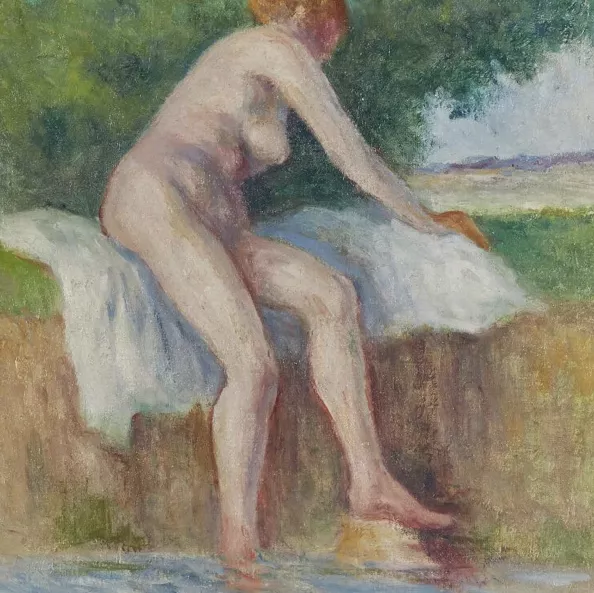
Thus, a work by Maximilien Luce can fetch millions of euros at auction, like his painting Baigneuse à Saint Tropez, bid for over €3 million in 2022.
Order of value from the most basic to the most prestigious
Technique used | Result |
|---|---|
Estamp - multiple | From €20 to €6,424 |
Drawing - watercolor | From €20 to 114,337 |
Oil on canvas | From €120 to 3,508,858 |
Estimate in less than 24h
Luce's scientific divisionism
Divisionism, as practiced by Maximilien Luce, is based on a scientific approach to color and light.
Inspired by the work of Camille Pissarro, Gustave Cariot and Paul Signac, and the chromatic theories of Neo-Impressionism, he adopted this technique in the 1890s, where colors are not mixed on the palette, but directly on the canvas.
Each meticulously applied stroke of pure paint creates vibrant luminous effects.
This process differs from simple pointillism in the precision and rigor with which complementary colors are juxtaposed, forming chromatic harmonies of great intensity.
For Luce, divisionism becomes a means of capturing light with a new sensitivity. The juxtaposition of colors, without prior mixing, plays an essential role in the perception of the scenes he depicts.
The carefully placed strokes reveal a thorough understanding of light effects and contrasts. This scientific method, based on principles of light decomposition, enables him to render reality while sublimating it, giving his landscapes and urban scenes a dimension that is both realistic and poetic.
In his depictions of factories and industrial landscapes, Luce implements this technical language with a keen sense of detail. The factory scenes, bathed in cold or warm light depending on the time of day, come to life thanks to this subtle play of colors.
Each scene is constructed with the precision of a scientist, but the end result goes beyond mere illustration: it's a true exploration of light and matter, where the viewer's eye becomes the site of the fusion of hues.
Using divisionism, Luce seeks not only to capture reality, but to reveal the beauty of the simplest elements of everyday life.
The precision of his touch, inherited from scientific theories, is at the service of a poetic vision of the modern world, where light becomes a character in its own right, structuring and animating space.
The life of Maximilien Luce
Rising from a family of craftsmen, Maximilien Luce was born in Paris in 1858. He was soon drawn to drawing and apprenticed as a wood engraver. After several years of practice in an engraver's workshop, Luce devoted himself entirely to painting in 1880.
Very involved in the anarchist milieu, Maximilien Luce produced numerous drawings for political newspapers on his side and took part in the ideological conflicts of his time.
Inspired by Camille Pissarro and a circle of artists he frequented in the 1890s, Luce adopted the path of postimpressionism.
Although the artist appreciated the painting of Nicolas Poussin, Luce was attracted to the technique of divisionism, characterized by strokes and juxtapositions of complementary colors creating luminous vibrations - here we're very close to pointillism.
He depicts scenes of workers at work in the factory or in the fields, or taking breaks from their laborious lives, as in the painting Gare de l'Est.
Although practicing the technique of pointillism and following in the Impressionist footsteps, he was nevertheless inspired by the social realism established by Gustave Courbet in the 19th century, which aimed to give pictorial representation to those who had none.
Maximilien Luce died in 1941 leaving behind a prolific artistic output.
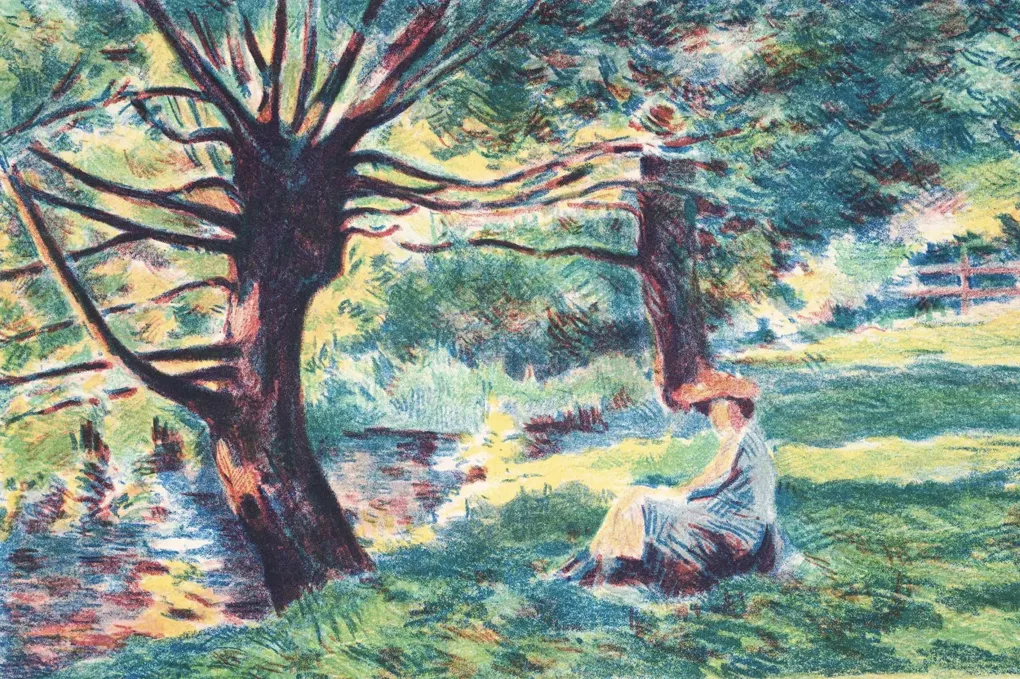
Focus on La Seine à Herblay, Maximilien Luce
In La Seine à Herblay, Maximilien Luce transports us to a calm, luminous landscape, where the Divisionist technique comes into its own. This canvas, created at the end of the 19th century, perfectly illustrates the artist's scientific approach to color and light.
The painting captures a peaceful moment on the banks of the Seine, with its reflections in the water and the natural light playing on the river's surface. By choosing to depict an ordinary scene, Luce seeks to sublimate the simple beauty of nature while emphasizing the interplay of natural elements.
The painting is a masterful demonstration of the Divisionist technique. Strokes of pure color are meticulously applied to the canvas, with each point of light recreated by small, carefully deposited dabs of paint.
This approach allows Luce to capture the sun's glow on the water and surrounding vegetation, giving an impression of depth and movement. Cool and warm colors work side by side, creating an optical vibration that brings the scene to life.
The light is not uniform, but bright, making every variation of color and nuance visible, as if the canvas itself were emitting a soft glow.
On closer inspection, we notice the diversity of shades employed by the artist to represent the sky, water and vegetation. The sky is punctuated by light blues and white touches, while the Seine below reflects the colors of the surrounding landscape.
Each reflection on the water is a mosaic of delicate dots, green, blue and brown tones blending together without ever merging, revealing Luce's technical skill. The effect is striking: the viewer has the impression of seeing the light dancing on the water, as if the light wind from the countryside were animating the scene.
Luce doesn't just transcribe the beauty of the landscape; he plunges us into the heart of an atmosphere. The touches of color, which appear almost chaotic up close, blend into a harmonious whole when we stand back.
The divisionist method here becomes a means of capturing the moment, of capturing the ephemeral sensations of the outdoors. The artist seems to capture the softness of a late afternoon by the water, where silence mingles with the light sounds of nature.
This search for natural, almost palpable light bears witness to Pissarro's influence on Luce, but also to his own desire to explore the possibilities of color.
The work La Seine à Herblay is not just a landscape; it is a meditation on nature and time. Technique, far from being a mere exercise in style, becomes a form of visual poetry.
Through his aesthetic choices, Luce manages to capture the beauty of the everyday, while offering us a glimpse of the scientific thinking that guides him.
The light is both diffused and precise, each colored touch helping to build a universe where brightness and softness coexist.
Through this painting, Maximilien Luce hints at his view of the modern world and nature. He blends the rigor of divisionism with a poetic approach, underlining the coexistence of the scientific and the aesthetic in his work.
This landscape thus becomes an invitation to rediscover the beauty of simple things, while paying homage to the technical advances of his time.
In La Seine à Herblay, light is omnipresent, captured in its fluidity, transparency and ability to transform reality. The work embodies this singular vision that makes Luce a master of divisionism, able to capture the essence of a fleeting moment with rare sensitivity.
His signature
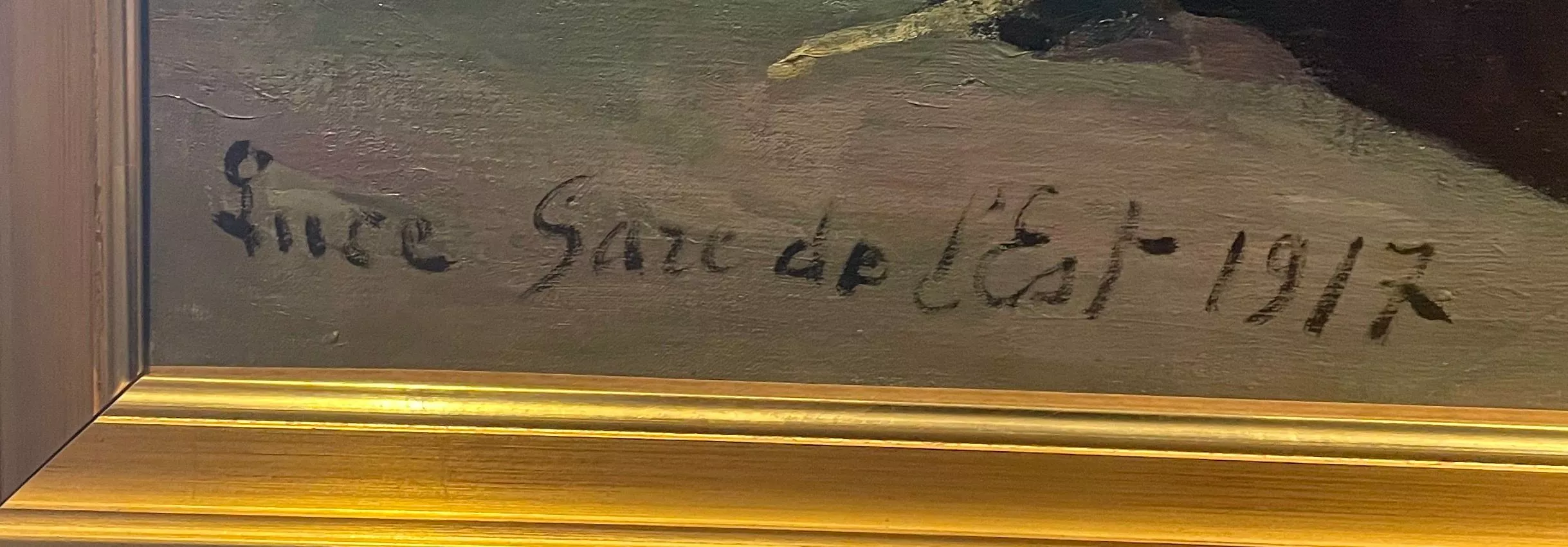
Not all Maximilien Luce's works are signed.
Although there are variations, here's a first example of his signature:
Expertise your property
If you own a work by Maximilien Luce, don't hesitate to request a free appraisal by filling in our online form. A member of our team of experts and chartered auctioneers will contact you to provide an estimate of the market value of your Maximilien Luce work.
If you are considering selling your work, our specialists will also guide you through the various alternatives available to obtain the best possible price, taking into account market trends and the specific features of each work.
Estimate in less than 24h
Discover in the same theme

Rating and value of paintings by Victor Tardieu
Victor Tardieu is a 20th-century French painter who worked in Indochina. His value is constantly rising on the auction market.
Learn more >

Rating and value of paintings by Louis Icart
Louis Icart is an Art Deco painter who produced works that are listed and valued on the auction market. Estimated in 24h.
Learn more >

Rating and value of works, drawings, paintings by Niki de Sa...
Niki de Saint Phalle is an unclassifiable French artist who has produced a substantial body of work that is highly prized at auction.
Learn more >
Works from the same period sold at auction

Estimated 15.000 - 20.000 €
Jacques MAJORELLE (1886-1962) - Fishermen embarking, Abidjan, Ivory Coast - Oil on canvas.

Estimated 3.000 - 5.000 €
Henri EPSTEIN (1892-1944), Place du sud de la France, Oil on canvas.

Estimated 600 - 1.000
Georges Hanna SABBAGH (1887-1951) "Le moulin Coutot à Chozant" Oil on canvas

Secure site, anonymity preserved

Auctioneer approved by the State

Free and certified estimates
Frequently asked questions
-
Who is Maximilien Luce, and what is his artistic background?Maximilien Luce (1858–1941) was a French Post-Impressionist painter who came from a family of artisans. Deeply involved in anarchist politics, he was inspired by Camille Pissarro and adopted the technique of Divisionism beginning in the 1890s. He is known for his depictions of working-class scenes, urban landscapes, and industrial subjects, blending scientific rigor with a poetic vision of the modern world.
-
What is the price range for Maximilien Luce's paintings at auction?The prices of Maximilien Luce’s works vary considerably depending on the medium and quality. Prints and multiples range from €20 to €6,424, drawings and watercolors from €20 to €114,337, while oil paintings on canvas range from €120 to over €3.5 million. His most prestigious paintings, such as *Bather in Saint-Tropez*, can fetch several million euros.
-
How do I have a work by Maximilien Luce appraised?Auctie's offers a free, no-obligation appraisal of your artwork. Simply fill out the online form to be contacted by a certified expert or auctioneer from our team, who will provide you with an accurate assessment of the market value of your Luce.
-
Why is now the right time to sell a work by Maximilien Luce?Maximilien Luce’s work is attracting growing interest among collectors and art lovers, particularly those who appreciate Post-Impressionism and the artist’s social commitment. His works continue to fetch strong prices at auction, with sustained demand particularly for his depictions of working-class life, cityscapes, and industrial scenes.
-
How does the sale of a work by Maximilien Luce at Auctie's work?Auctie's supports you from the appraisal stage through to the auction. Following a free appraisal conducted by our experts and certified auctioneers, our specialists will guide you through the available options to help you achieve the best price, taking into account market trends and the unique characteristics of your artwork.
