



Rating and value of paintings by Maurice de Vlaminck

Key takeaways
- Maurice de Vlaminck, a pioneer of Fauvism, has works valued between €5 and €13,488,000, depending on the medium used.
- Oil-on-canvas paintings fetch the highest prices, notably “Paysage de banlieue,” which sold for €13,488,000 in 2011.
- His Fauvist works from the early decades of the 20th century, characterized by vibrant, pure colors, remain the most sought-after by collectors.
If you own a work by or after the artist Maurice de Vlaminck, and would like to know its value, our state-approved experts and auctioneers will offer you their appraisal services.
Our specialists will carry out a free appraisal of your work, and provide you with a precise estimate of its value on the current market.
Then, if you wish to sell your work, we will direct you to the best possible arrangement to obtain the optimum price.
Rating and value of the artist Maurice de Vlaminck
Considered one of the pioneers of fauvism and cubism, Maurice de Vlaminck quickly established himself in twentieth-century art. This legacy is made up of various creations : engravings, drawings, but above all oils on canvas.
At present, prices for his works are rising enormously at auctioneers' gavels.
His creations are particularly prized, and the price at which they sell on the art market ranges from €5 to €13,488,000, a considerable gap but one that speaks volumes about the value that can be attributed to Vlaminck's works.
In 2011, a Fauvist painting entitled Paysage de banlieue, dating from 1905, was sold for €13,488,000 while it was estimated at between €12,139,200 and €16,860,000.
Order of value from a single work to the most prestigious
Technique used | Result |
|---|---|
Estamp - multiple | From €5 to €7,670 |
Drawing - watercolor | From €50 to €209,770 |
Oil on canvas | From 370 to 13 488 000€ |
Estimate in less than 24h
Style and technique of the artist Maurice de Vlaminck
Vlaminck is a major representative of the Fauvist movement, born at the very beginning of the 20th century thanks to Louis de Vauxcelles and the scandal of Salle VII.
His style, marked by a bold palette and pure colors applied in broad strokes, overturned the pictorial conventions of the time. Like his contemporaries, he freed himself from the rigor of drawing and favored the emotion conveyed by color.
In addition to his Fauvist works, he also produced still lifes, nudes and landscape paintings, sometimes moving away from Fauvism to experiment with Cubism or Expressionism.
In his landscapes, particularly those of the French countryside, Vlaminck reflected his attachment to nature with darker compositions and marked contrasts, evoking a certain disenchantment with growing industrialization.
Although he explored several artistic currents, he always remained faithful to a vigorous technique, with a thick paste and an instinctive, almost wild, approach to the pictorial gesture.
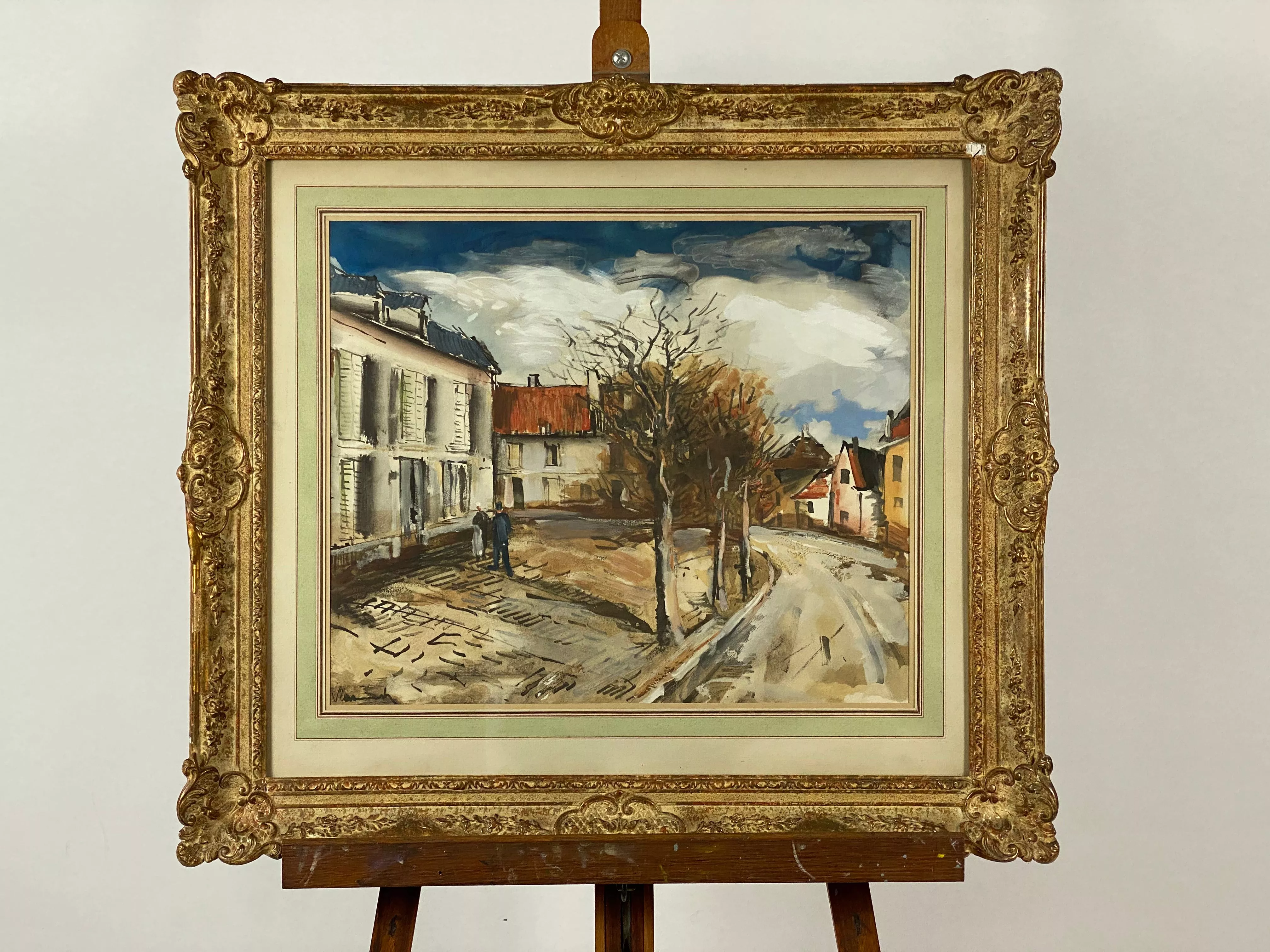
Maurice de Vlaminck: l'orgie des tons pur
Maurice de Vlaminck, pseudonym of Maurice Edmond Devlaeminck (1876-1958), French artist, became an important figure in the art world of the 20th century.
Born in Paris, where he lived for the rest of his life, he distinguished himself with vibrant, bold painting that broke with academic traditions - with André Derain, Henri Manguin and Louis Valtat.
Although best known for his landscapes, Vlaminck also excelled in nudes, capturing the sensuality of the human form with equal chromatic intensity. He was briefly interested in ceramics, but this facet of his work remains unknown to the general public.
In addition to his artistic activity, he made a name for himself as a writer, publishing theoretical essays on art in which he set out his radical and often critical vision of society and the artistic milieu.
Vlaminck owes part of his initial notoriety to his sister's husband, an influential journalist in the Parisian circle, who helped him make a name for himself. However, it was his early training with a neighboring painter that shaped his love of painting from an early age.
Parallel to his artistic career, he pursued other passions such as music and cycling, disciplines in which he excelled before devoting himself fully to painting.
His marriage to Suzanne de Verly marked the start of his professional career, although his first financial successes were slow in coming.
It was his friendship with André Derain that truly catalyzed his artistic evolution. Their mutual influence is evident in their works, marked by the strength of color and freedom of line.
In 1914, Vlaminck took part in the first Salon des Indépendants in Paris, where he exhibited alongside other Fauves, such as Matisse and Derain.
Together, they took part in what Louis Vauxcelles would describe as "cage aux fauves", a veritable "orgy of pure tones" that shook up the art scene of the time.
His work then attracted the attention of major art dealers such as Ambroise Vollard and Daniel-Henry Kahnweiler, opening the doors to international galleries for him.
However, his career came to a halt with the First World War, when, although he was not sent to the front, he was assigned to a factory, being the father of three daughters.
After the war, he continued to paint until the Second World War, despite the interruptions caused by the conflict.
During the Occupation, he became actively involved in Resistance circles, taking a stand against controversial figures such as Louis-Ferdinand Céline, with whom he broke off for good.
.
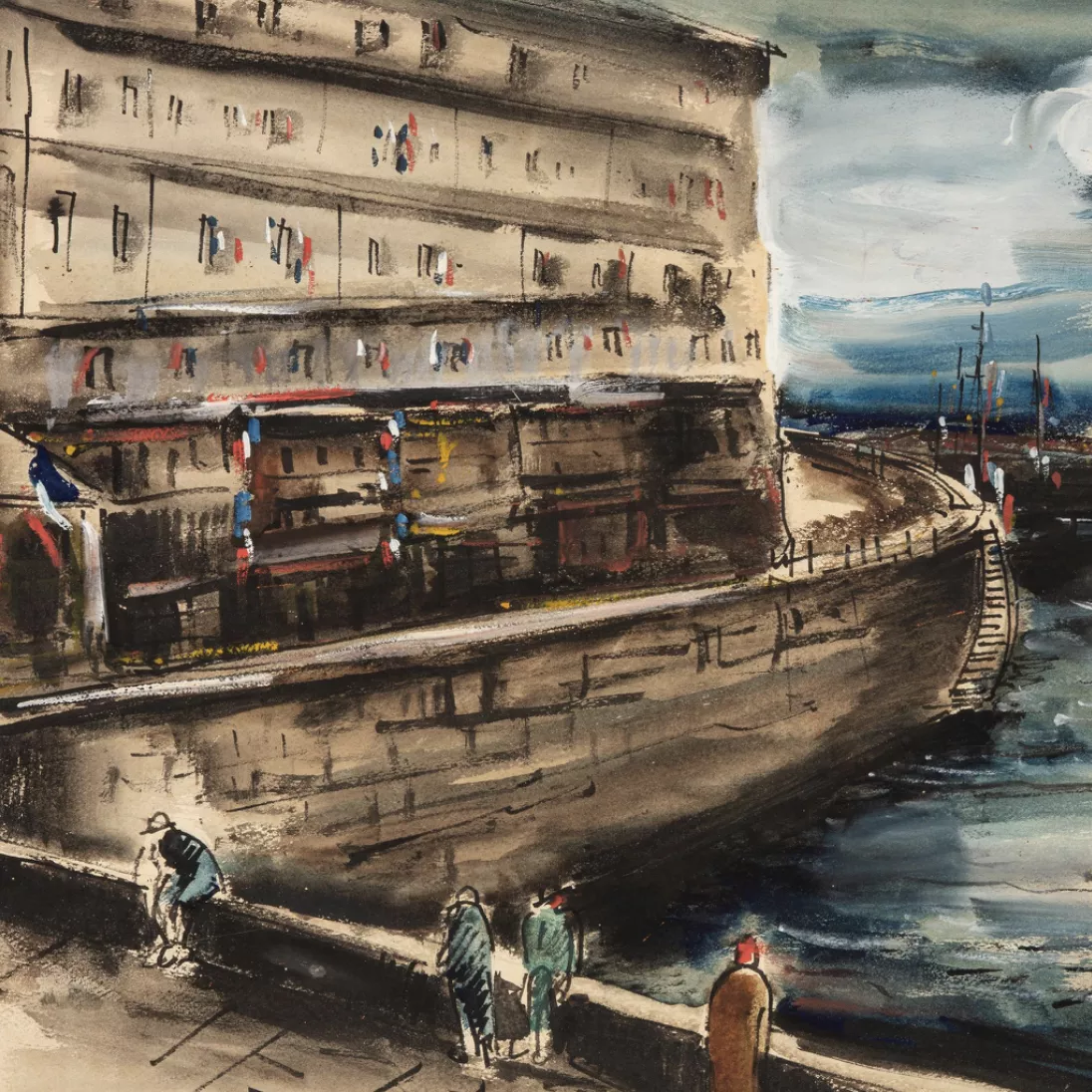
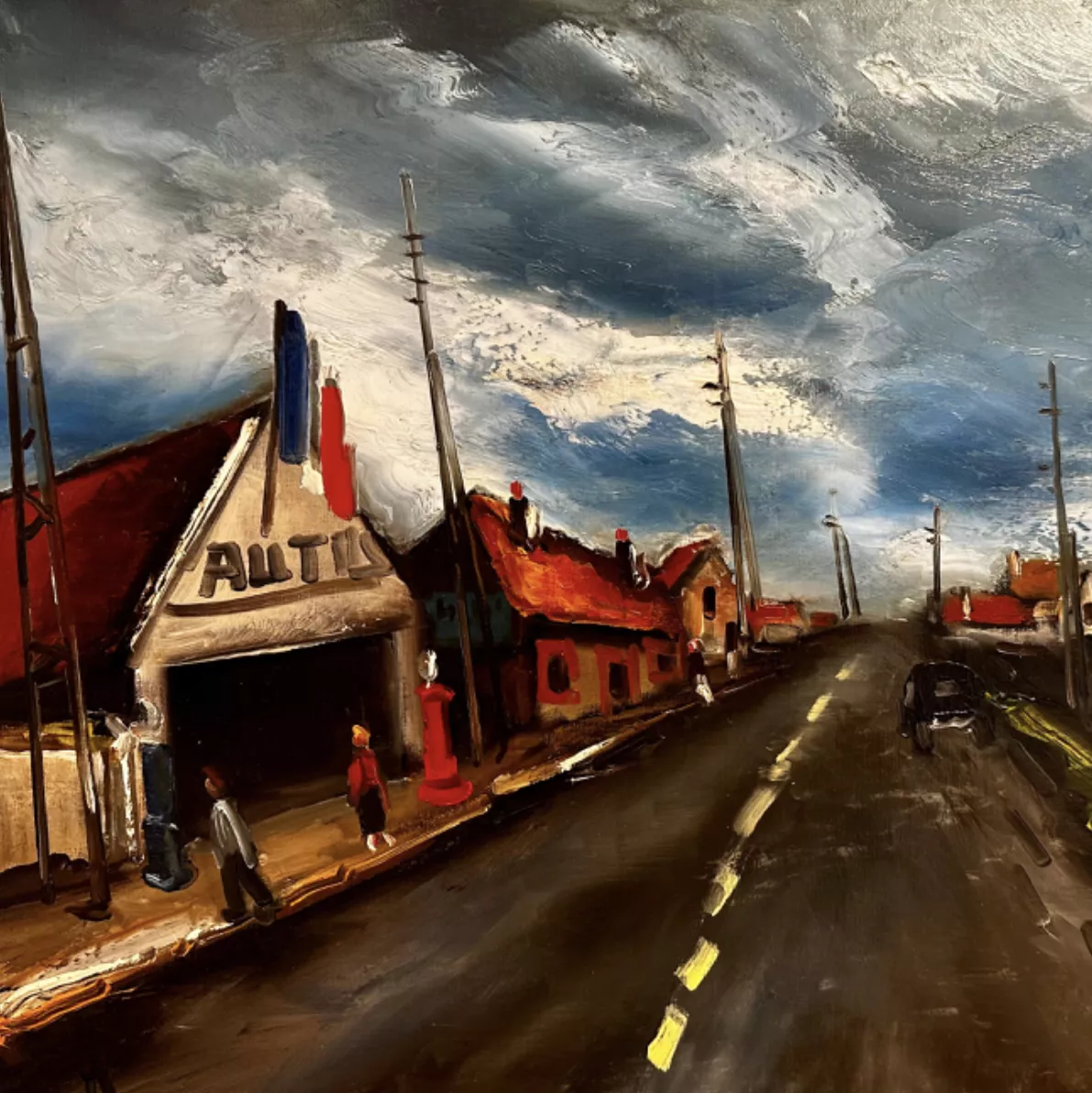
Analysis of Maurice de Vlaminck's Portrait of Derain
Maurice de Vlaminck's "Portrait of Derain" is an emblematic work of the Fauvist movement, marked by an exuberance of color and a simplification of form that pushes back the boundaries of realistic representation.
This portrait of his friend and fellow artist André Derain perfectly illustrates the revolutionary spirit that animated the Fauvist group in the early 20th century, seeking to liberate color from its naturalistic constraints and use it as a powerful emotional vector.
At first glance, the viewer is struck by the bold use of bright, contrasting tones.
Derain's face is treated with a range of intense reds, contrasting violently with the touches of green and blue that surround his eyes, creating an almost aggressive visual energy.
Vlaminck, true to the fauve spirit, does not seek to faithfully reproduce his model's skin tone, but to express Derain's inner strength through these saturated colors.
The bright yellow background, dotted with small dark spots, further reinforces this effect of contrast, while bringing a luminosity that floods the painting.
The treatment of the pictorial material is equally characteristic of Vlaminck's style at this time. The brushstrokes are broad, thick and visible, giving the painting a raw texture and immediacy that echo the vigor of the painterly gesture.
There's a certain violence in the way Vlaminck applies paint, a spontaneity that shines through in the speed and energy of the gesture.
This instinctive approach is reminiscent of one of the Fauves' mottos, namely to paint "straight from the tube", i.e. with undiluted pictorial matter and straightforward application.
Derain's face, though distorted by these intense flat tints of color, nevertheless retains a striking expressiveness. The eyes, emphasized by bluish and green shadows, seem to pierce the viewer with a fixed, penetrating gaze.
The use of black color for the pupils and eyebrows, rare among the Fauves who usually favor colored shadows, lends a certain gravity to the model's expression.
The treatment of the background also contributes to the overall effect of the work. Unlike more traditional portraits, where the background is often neutral and unobtrusive, Vlaminck fills the space with bright, almost blinding color, which seems to emanate from the image itself.
This approach emphasizes the absence of a clear distinction between subject and environment, another Fauve principle that reinforces the idea that color is the main element of the composition.
Vlaminck's Portrait de Derain thus perfectly embodies the essence of Fauvism, not only in its chromatic boldness, but also in the way it expresses its model's personality through exaggerated colors and simplified forms.
This painting also illustrates the close collaboration between the two artists, who, although they shared a common vision of art, each brought their own sensibility to this revolutionary movement.
With this work, Vlaminck testifies not only to his deep friendship with Derain, but also to his total commitment to this "orgy of pure tones" that would leave a lasting mark on the history of modern art.
The fauve period of Maurice de Vlaminck
The legacy of Maurice de Vlaminck
Maurice de Vlaminck was an artist whose work evolved in symbiosis with the upheavals of his time.
He contributed, alongside the early Fauvists, to radically transforming contemporary art, notably through the bold use of color and the break with academic realism.
His career spanned several decades, and his late-life canvases reflect an increasingly marked inclination towards expressionism, testifying to a sensibility exacerbated by the wars and social transformations of the 20th century.
Like Kandinsky, he attached central importance to color, considered a more powerful emotional vector than form.
His theoretical writings, particularly on the power of color and the need to transcend convention, influenced a whole generation of artists who followed in his wake.
Vlaminck's most prized works today remain those of his Fauvist period, characterized by bright, pure, vivid colors and a deliberately coarsened, almost primitive, yet deeply expressive treatment of line.
These canvases, often from the first decades of the 20th century, embody the essence of the artistic revolution to which he contributed, and continue to fascinate collectors and art lovers alike.
Knowing the value of a work
If you happen to own a work by or after Maurice de Vlaminck, don't hesitate to request a free valuation using our form on our website.
A member of our team of experts and licensed auctioneers will contact you promptly to provide you with an estimate of the market value of your work, not forgetting to send you ad hoc information about it.
If you are considering selling your work, you will also be accompanied by our specialists in order to benefit from alternatives for selling it at the best possible price, taking into account market inclinations.
Estimate in less than 24h
Discover in the same theme

Value and quotation of works, ceramics by Roger Capron
Post-war designer Roger Capron leaves behind a singular body of work that is still very valuable. Estimate in less than 24h.
Learn more >

Rating and value of works, paintings, drawings by Victor Tar...
Victor Tardieu is a French painter and draughtsman who co-founded the Beaux-Arts d'Indochine. His works are appreciated and his stock is on the rise.
Learn more >

Rating and value of works, paintings, drawings by Moïse Kisl...
Moïse Kisling is an artist of the Paris School who produced drawings and oils on canvas that are highly regarded at auction. Estimated in 24h.
Learn more >
Works from the same period sold at auction

Estimated 3.000 - 5.000 €
Henri EPSTEIN (1892-1944), Place du sud de la France, Oil on canvas.

Estimated 4.000 - 6.000 €
GASTON CHAISSAC (1910-1964) Composition 1947, Gouache and Indian ink on paper.

Estimated 100-200€
Vassiliew Slavik, Oil on canvas

Estimated 8.000 - 15.000
Maurice de VLAMINCK (1876-1958), Still life with jugs and leeks, oil on canvas

Secure site, anonymity preserved

Auctioneer approved by the State

Free and certified estimates
Frequently asked questions
-
Who was Maurice de Vlaminck, and what is his role in art history?Maurice de Vlaminck (1876–1958) was a key figure of the 20th century, recognized as one of the pioneers of Fauvism and Cubism. A French artist born in Paris, he distinguished himself through his vibrant and daring paintings that broke with academic traditions, particularly alongside André Derain and other Fauvists. His influence stems from his revolutionary use of color as a vehicle for emotion and from his theoretical writings, which have inspired several generations of artists.
-
What is the price range for Maurice de Vlaminck's paintings and drawings?Prices for Vlaminck’s works vary considerably depending on the medium and quality. Prints sell for between €5 and €7,670, drawings and watercolors between €50 and €209,770, while oil paintings on canvas—his most sought-after works—range from €370 to €13,488,000. The Fauvist paintings from the early decades of the 20th century—the artist’s peak period—remain the most sought-after on the market.
-
How do I have a work by Maurice de Vlaminck authenticated and appraised?To authenticate and appraise your artwork, we recommend requesting a free appraisal from Auctie's via our online form. A state-certified expert or auctioneer will contact you shortly to examine your painting, drawing, or artwork and provide you with an accurate estimate of its market value, with no obligation on your part.
-
When is the best time to sell a work by Maurice de Vlaminck?Now is an excellent time to sell a work by Vlaminck: prices for his works are rising steadily at auction, and demand remains strong for high-quality Fauvist pieces. The market fully recognizes this artist’s historical significance, and collectors are actively seeking out his paintings, drawings, and prints.
-
How does the sale of a work of art work at Auctie's?The process begins with a free, no-obligation appraisal conducted by our experts and licensed auctioneers, who will contact you within 48 hours. If you decide to sell, our specialists will guide you every step of the way—from advising you on the best sales strategy to preparing the lot and conducting the auction—to ensure you get the best possible price based on current market trends.
