



Rating and value of paintings by Charles Atamian

Key takeaways
- Charles Atamian (1872–1947), a painter of the School of Paris, commands high prices, with works ranging from €60 to €57,270.
- His oil-on-canvas paintings fetch prices ranging from €150 to €57,270, while his watercolor drawings range from €60 to €3,400.
- A major artist of the 1950s, he left his mark on postwar painting through geometric abstraction and a methodical approach that rejected ornamentation.
If you own a work by or based on the artist Charles Atamian and would like to know its value, our state-approved experts and auctioneers will guide you.
Our specialists will carry out a free appraisal of your work, and provide you with a precise estimate of its value on the current market.
Then, if you wish to sell your work, we will direct you to the best possible arrangement to obtain the optimum price.
Rating and value of the artist
Painter of the Paris School, Charles Atamian enjoys a fairly high rating on the art market today.
Appreciated by collectors, some of his canvases can fetch tens of thousands of euros at auction : the price at which they sell on the art market ranges from €60 to €57,270, a considerable delta but one that speaks volumes about the value that can be attributed to the artist's works, as evidenced by his oil on canvas Looking out to the sea, fetched €57,270 in 2010.
Order of value from the most basic to the most prestigious
Technique used | Result |
|---|---|
Drawing - watercolor | From €60 to €3,400 |
Oil on canvas | From €150 to €57,270 |
Estimate in less than 24h
The artist's style and technique
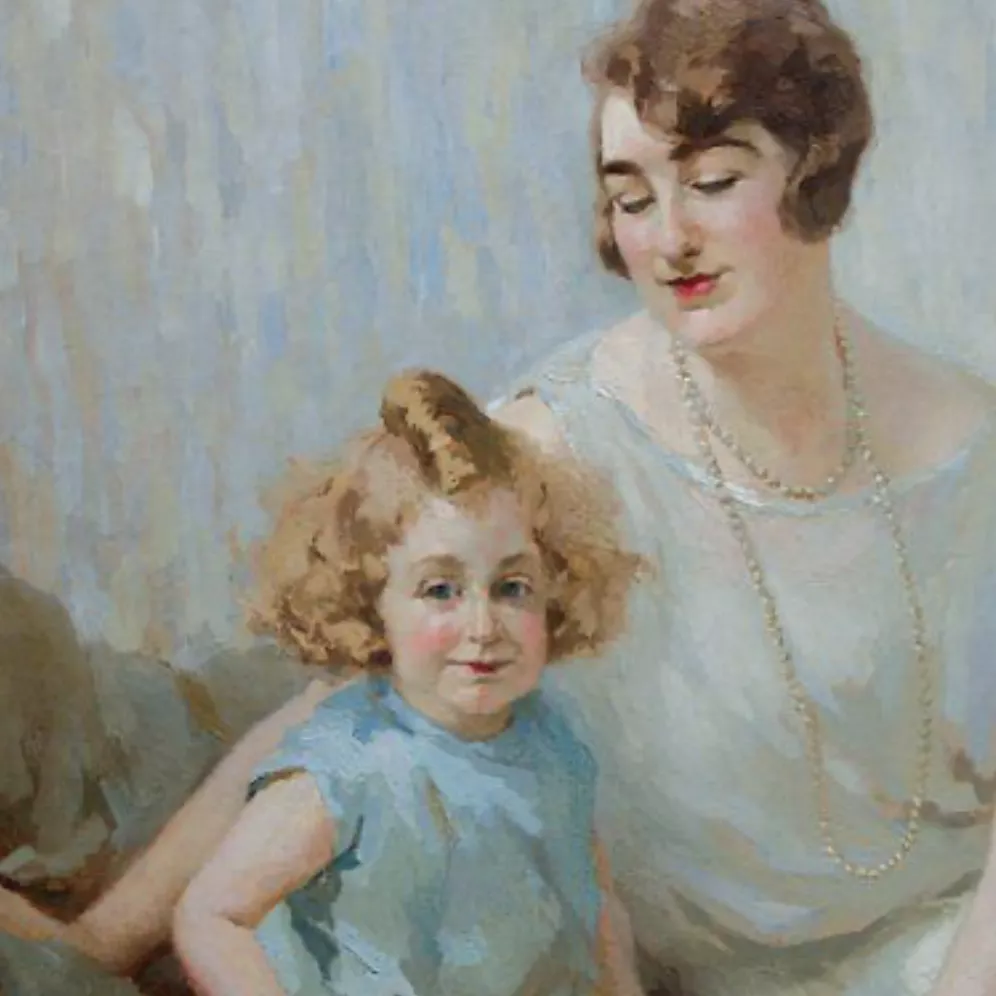
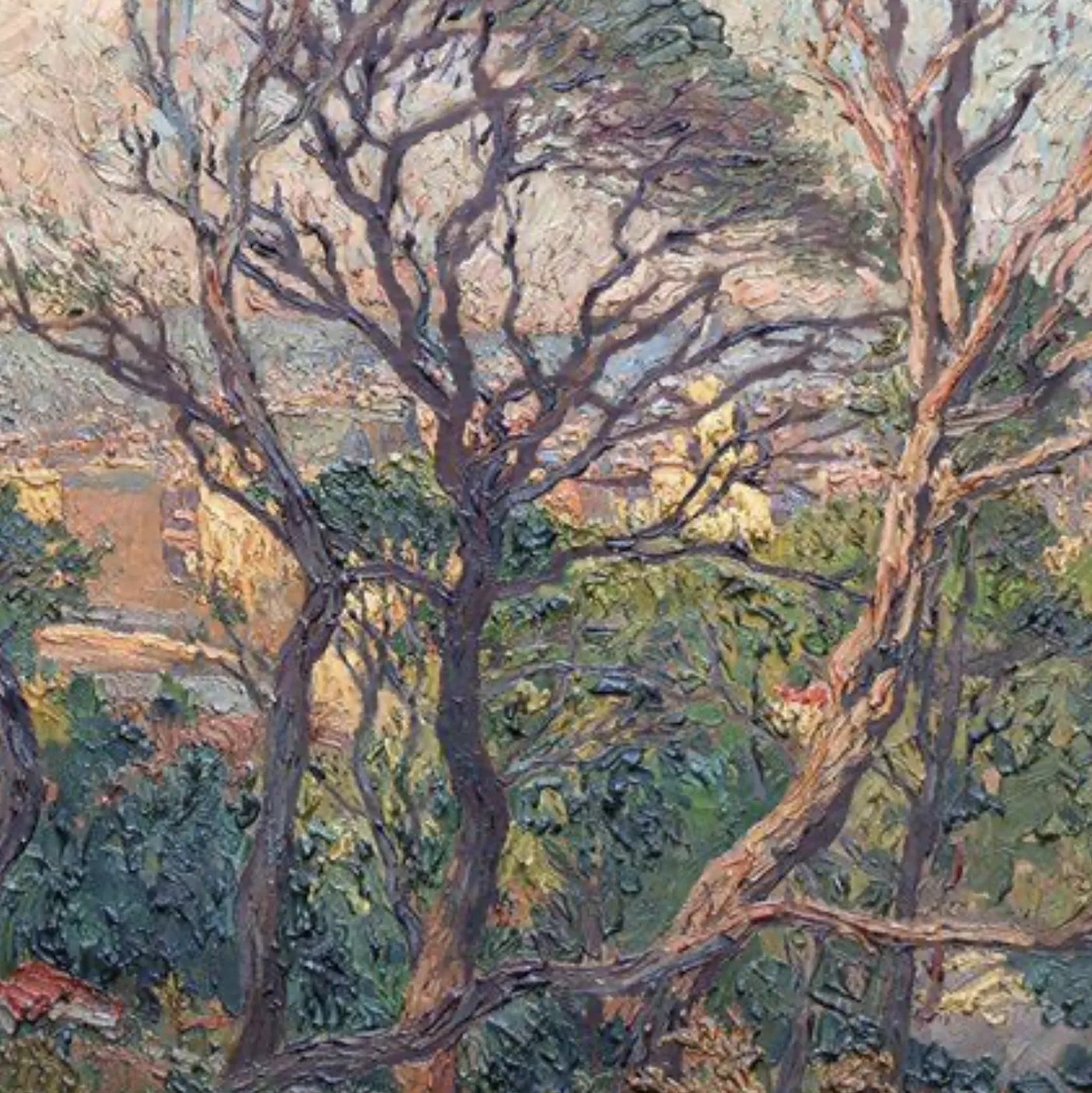
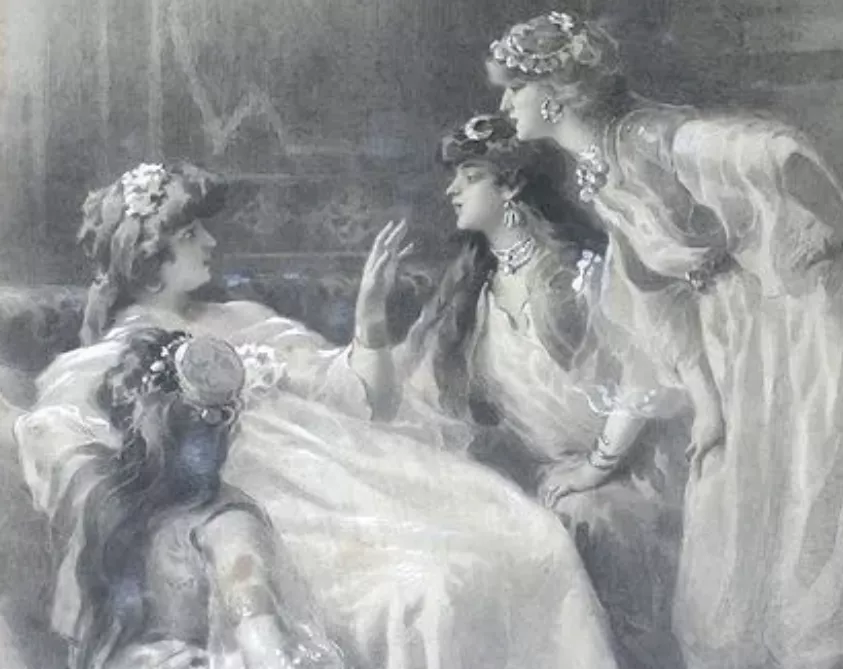
Charles Atamian anchors his painting in a tradition where light and color balance in subtle harmony. In his beach scenes, fragmented brushstrokes punctuate the surface, modulating space with bursts of white and blue that reproduce the vibration of the sand and the shimmer of the water.
The human figure, melted into the luminous atmosphere, barely stands out, absorbed by the diffuse clarity that envelops the composition. The eye follows the decomposition of tones, perceives the softness of modeling, captures the fluid matter of the sky and the moving transparency of the foam.
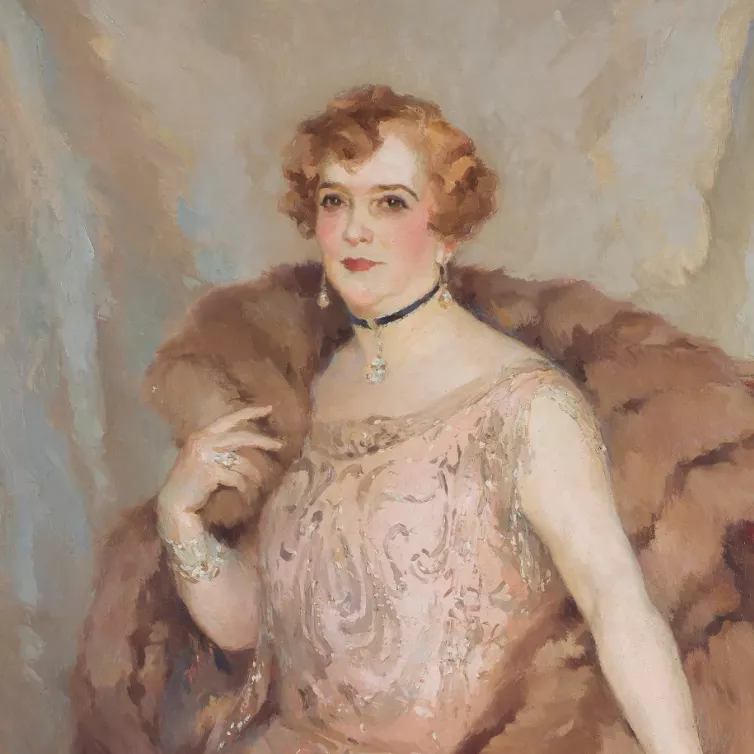
In his interior compositions, light no longer disperses, it glides over surfaces, catches a fabric, emphasizes the roundness of a face.
Atamian yields nothing to the anecdotal, organizing the picture in broad, colorful planes, erasing the superfluous to retain only the essential: a glimmer on a wall, a reflection on a parquet floor, a shadow cast on a curtain.
Each stroke contributes to the unity of the whole, smoothly and seamlessly, in a fluid continuity where the pictorial material, worked in vibrant flat tints, moves away from detail to render an immediate sensation.
Far from descriptive realism, his painting captures a suspended moment, an atmosphere where shapes and colors merge into a sensitive vision, imbued with light and silence.
Charles Atamian, his life, his work
Charles Atamian was born in Constantinople in 1872, into a family where art held a central place. His taste for drawing and color was evident from an early age, and his education was divided between the Ottoman Empire and Italy.
He entered the Academy of Fine Arts in Venice, where he perfected his technique and discovered the pictorial richness of the Italian tradition.
On his return to Turkey, he obtained a position as chief ceramist, applying his talents to decorative art while pursuing a freer practice of painting.
In 1897, he moved to Paris, where he married his wife and joined a studio shared with Picabia, Cézanne and Carrière. His work then took a more assertive turn, and he exhibited at the Salon d'Automne from 1903.
Parallel to this, he devoted himself to illustration, collaborating with various periodicals and publishing houses.
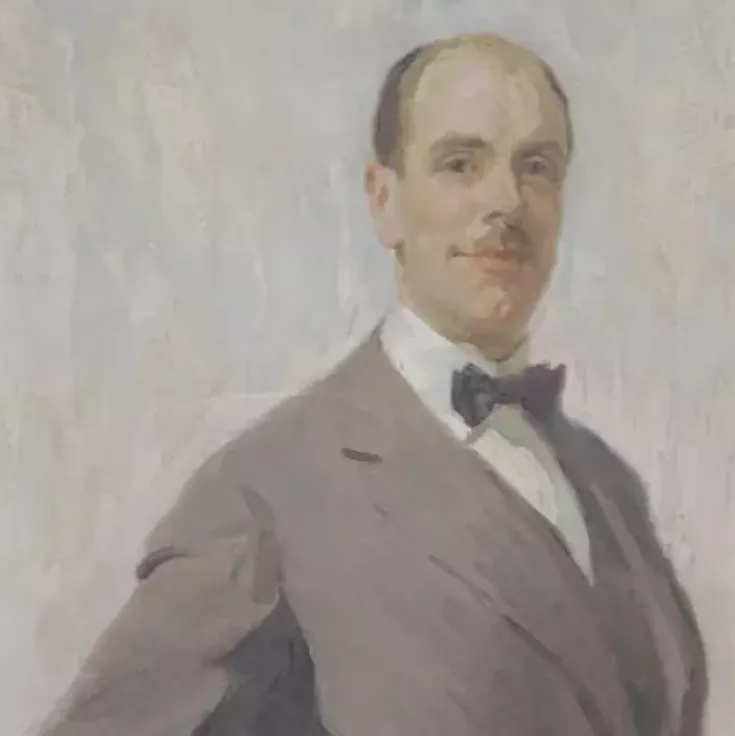
His interest in portraiture only really developed in the early 1910s, when his eye turned to the expression of faces and the capture of fleeting emotions.
Enthralled by the light of the South, he discovered the landscapes of Provence before becoming attached to the shores of Saint-Gilles-Croix-de-Vie, which he frequented assiduously in the 1920s.
His beach scenes became emblematic of his art, where the human figure blends into the vibrant atmosphere of the sea and sand.
In the 1930s, he became involved with the Salon de France, an initiative of the Poincaré government to auction works to support the national economy.
At this time, he obtained French nationality and made his mark on the artistic landscape.
But the Occupation turned his life upside down. Forced into exile in the Indre region, he painted the last works of his career, marked by a more pared-down style. He died in Paris in 1947, leaving behind a body of work bathed in light and poetry.
Focus on major works by Charles Atamian
In 1949, in works such as The Painter and the Model (Private Collection), Charles Atamian explored the subtle interactions between the human figure and the space around it, in a rigorous composition devoid of pathos.
Through a sober use of geometric forms and shifting perspectives, he highlights a certain conceptual coldness, inherited from Cubist art lessons, but also a desire to distill emotion through controlled abstraction.
The line, which structures the human body in fragmented, almost mechanical forms, bears witness to his penchant for visual order, the transparency of contours and volumes.
This approach recalls the influence of analytic Cubism, yet is not limited to the play of facets typical of the 1910s.
At this time, Atamian seems intent on distilling a sense of volume in minimalist color, where hues are predominantly neutral, grays and ochres, as a response to the lively, expressive art of Fauvism and the exuberance of color.
The forms, almost stripped of all ornamentation, derive from a classical heritage of Renaissance art while subjecting them to a geometric rigor akin to that of great modern architectural constructions.
Far from Romantic individualism or lyricism, Atamian places rationality at the center of his concerns, purifying the representation of the human figure.
He chooses a methodical treatment, where each brushstroke is part of a rational, even almost scientific balance, in which subjectivity and emotion are relegated to the background.
In 1955, in Composition abstraite (Musée d'Art Moderne, Paris), the painter returned to a form of plastic silence, in keeping with this quest for anonymity.
Atamian, like his cubist peers, rejects an ostentatious signature of the artist.
The work thus becomes an exploration of tools and processes, a visual quest that results in a dematerialization of the figure.
The structure, in its almost mechanical precision, is no longer a projection of the self or of feeling, but a means of expressing a universe where the appearance of things takes precedence over their traditional representation.
This refusal of introspection is comparable to the attitude of classical engravers, where every line is thought of as an instrument of objective analysis, freed from all subjectivity, rather like the methodical approaches of classical art in engraving, where every detail, every shadow, is carefully broken down to reveal its intrinsic nature.
Charles Atamian's imprint on his time
In the 1950s, Charles Atamian profoundly marked the art of his time with a methodical approach to representation, rejecting ornamentation and pathos in favor of a quest for objectivity.
Freeing himself from the Expressionist and Fauvist influences that still dominated part of the art scene, he steered his work towards a geometric abstraction that echoed the reflections of his Cubist predecessors.
His influence is revealed in the rise of a painting in which structure and composition take precedence over raw emotion, a principle he shares with other artists of his time, who seek anonymity in the work.
Through a geometrization of human forms and a restricted palette, Atamian proposes an almost scientific visual space, where each element finds its place in a rational and distanced organization.
This approach is perceived by his contemporaries as a break with the decorative exuberance of the past and a step towards a modernity marked by rationalism and aesthetic coolness.
Atamian's imprint is thus manifest not only in the formal reduction of the figure, but also in his ability to draw a clear, methodical vision of the world, making him a forerunner in the redefinition of post-war painting.
Charles Atamian's stylistic influences
In the 1950s, Atamian, like his cubist predecessors, sought to distill form into geometric rigor.
At this time, he drew on the influences of Picasso and Braque, but detached himself from their primary concerns in favor of a cooler, more methodical abstraction.
Cubism, as practiced by these two painters, served as his foundation, but it was in the purification and systematization of forms that he found his own language.
Similarly, geometry, which takes a central place in his work, is not a simple return to structure, but an approach in which each element finds its visual justification, as in Mondrian's painting or the research of the Constructivists.
In this, Atamian doesn't simply apply yesterday's lessons; he reorganizes them according to his own vision, where shadow, light and line become instruments of a discourse that is no longer about representation but formal analysis.
Similar to postimpressionism and fauvism, his pictorial touch is close to artists such as Vlaminck or Derain, but also from Modigliani as regards research into the human form.
His signature
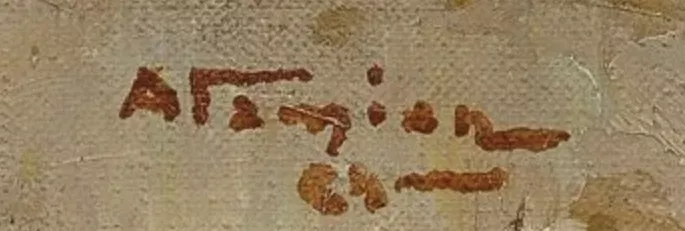
Not all of Charles Atamian's works are signed.
Although there are variations, here is a first example of his signature.
Expertise your property
If you happen to own a work by Charles Atamian, request a free appraisal without further delay via our form on our website.
A member of our team of experts and licensed auctioneers will contact you promptly to provide you with an estimate of the value of your work, not forgetting to send you ad hoc information about it.
If you're considering selling your work, our specialists will also be on hand to help you find alternative ways of selling it at the best possible price.
.Estimate in less than 24h
Discover in the same theme

Rating and value of sculptures and bronzes by Émile Bracquem...
Émile Bracquemond is a French animal sculptor who produced works that are highly valued at auction. Estimate in 24h
Learn more >

Rating and value of paintings by Jacques Monory
Jacques Monory is a painter and sculptor of narrative figuration who has produced many works of great value.
Learn more >

Rating and value of paintings by Séraphine de Senlis
Séraphine de Senlis is a French artist close to the art brut and naïve art movements, who produced many works of high value.
Learn more >
Similar works sold at auction

Estimated 40.000 - 80.000
Alexandre ROUBTZOFF (1884-1949), Portrait of Arbia, oil on canvas

Estimated 3.000 - 5.000
Raphaël DELORME (1885-1962), Le Bain au Harem, oil on isorel

Estimated 5.000 - 10.000
Jean Roger SOURGEN (1883-1978), Lake and pine forest, oil on canvas

Estimated 2.000 - 3.000
Raymond THIBÉSART (1874-1968) Apple trees in blossom, oil on canvas

Estimated 1.000 - 2.000
Lucien GOUBERT (1887-1964), Rochers à Fermanville, oil on canvas

Estimated 3.000 - 5.000
Georges LAPCHINE (1885-1951) The port of St Tropez Oil on canvas

Secure site, anonymity preserved

Auctioneer approved by the State

Free and certified estimates
Frequently asked questions
-
Who is Charles Atamian, and what is his artistic background?Charles Atamian (1872–1947) was a painter of the School of Paris who was born in Constantinople. Trained at the Academy of Fine Arts in Venice, he moved to Paris in 1897 and became a major artist of the 20th century, exhibiting at the Salon d’Automne as early as 1903. His work evolved from luminous landscapes toward a geometric abstraction influenced by Cubism, characterized by formal rigor and simplicity.
-
What is the price range for Charles Atamian's paintings?Charles Atamian's works sell for between €60 and €57,270 at auction. His drawings and watercolors range from €60 to €3,400, while his oil paintings on canvas—his most sought-after works—fetch prices ranging from €150 to €57,270. This variation reflects his growing popularity among collectors.
-
How can I have a work by Charles Atamian authenticated and appraised?Request a free, no-obligation estimate from Auctie's using our online form. A state-certified expert or auctioneer will examine your artwork and provide you with an accurate assessment of its current market value, along with all relevant details regarding its authentication.
-
Is this the right time to sell a work by Charles Atamian?Yes, this is a good time. Charles Atamian is currently quite highly regarded in the art market, and his paintings are particularly prized by collectors. Prices for his oil-on-canvas works are strong, which bodes well for sales.
-
How does the sale of a work of art work at Auctie's?Auctie's supports you every step of the way: a free, no-obligation appraisal, followed by guidance on the best options for selling your artwork at the highest possible price. As a licensed auction house, our specialists guide you through the entire process, from the initial appraisal to the final auction sale.
