



Rating and value of lithographs and paintings by Hervé di Rosa

Key takeaways
- Hervé di Rosa’s works sell for between €10 and €52,000 at auction, with paintings fetching as much as €52,000, such as *Les amoureux gitans* (1986).
- A leading artist of the “free figuration” movement of the 1980s, he blends folk art, classical references, and urban culture with a vibrant palette and expressive forms.
- His creations explore a variety of techniques: paintings (€120 to €52,000), sculptures (€70 to €25,000), ceramics, and tapestries, reflecting his collaboration with artisans from around the world.
If you own a work by artist Hervé di Rosa or based on his work and would like to know its value, our state-approved experts and auctioneers will guide you.
Our specialists will carry out a free appraisal of your work, and provide you with an accurate estimate of its value on the current market.
Then, if you wish to sell your work, we will direct you to the best possible arrangement to obtain the optimum price.
Artist's rating and value
An important artist of the late 20th century, Hervé di Rosa's works are prized by collectors. On the auction block, his childlike paintings are particularly popular.
On the auction block, the prices at which his works sell range from €10 to €52,000, a substantial range but one that speaks volumes about the value that can be attributed to the artist's works.
A work signed by di Rosa can fetch tens of thousands of euros in the auction room. Witness his oil and collage on canvas Les amoureux gitans, dating from 1986, sold for €52,000 in 2023, whereas it was estimated at between €10,000 and €15,000
Order of value from the most basic to the most prestigious
Technique used | Result |
|---|---|
Estamp - multiple | From €10 to €4,850 |
Paperwork | From €250 to €4 000€ |
Ceramics | From 4 600 to 6 200€ |
Drawing - watercolor | From €50 to €11,000 |
Sculpture - volume | From €70 to €25,000 |
Painting | From €120 to €52,000 |
Estimate in less than 24h
Hervé di Rosa's style and technique
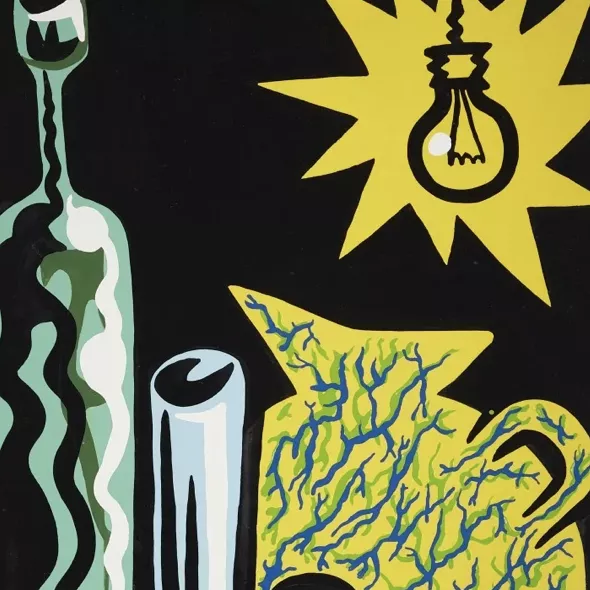
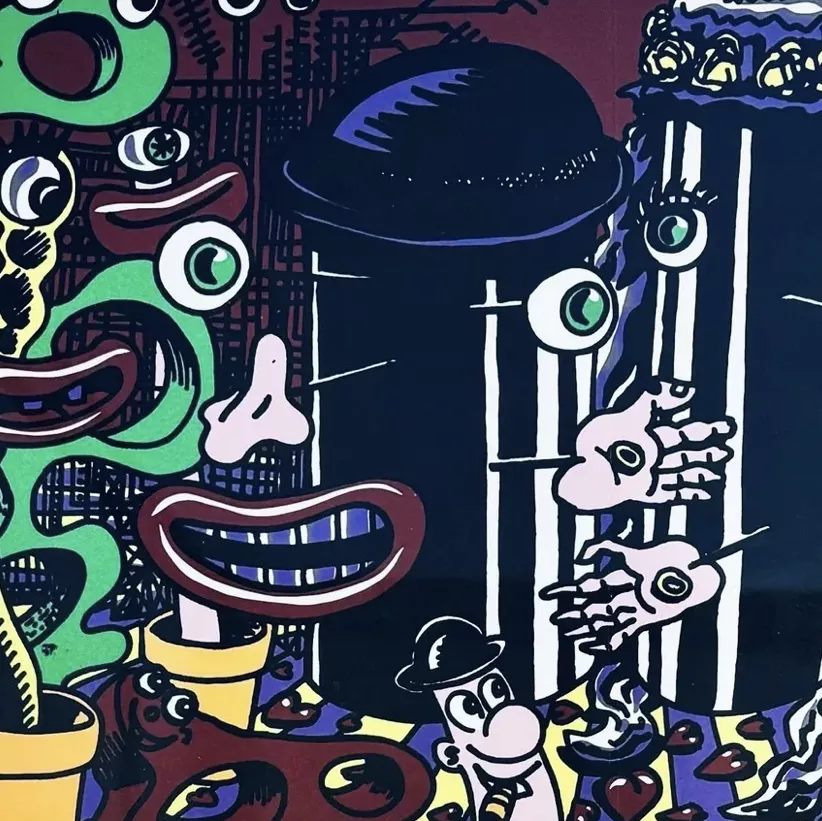
Hervé di Rosa's style is distinguished by a visual exuberance that blends popular culture, classic artistic references and unabashed modernity. A major player in free figuration, he adopts an approach in which spontaneity of gesture is combined with rigorous technical mastery.
Di Rosa draws on a plastic vocabulary borrowed as much from comics as from traditional art, integrating narrative motifs and stylized forms that captivate with their immediacy.
His vibrant, saturated palette acts as a vector of energy, while his dynamic compositions reflect a freedom in spatial organization, often devoid of visual hierarchy.
His work is also characterized by the exploration of a variety of techniques, from painting to assemblage, ceramics and tapestry, testifying to his desire to inscribe his art in a craft-based and universal dimension.
This use of multiple mediums is accompanied by frequent collaboration with local craftsmen, particularly during his projects carried out in workshops around the world. In this approach, Di Rosa transcends the boundaries between art and craft, renewing technical traditions through a contemporary reinterpretation.
His dense, abundant works create a fertile tension between raw expressiveness and almost ornamental precision. Hervé di Rosa is thus part of a tradition in which art once again becomes accessible, joyful and narrative, while remaining deeply rooted in a critical dialogue with the issues of his time.
The life of Hervé di Rosa
Hervé Di Rosa, born in 1959 in Sète, embodies a central figure of the figuration libre movement, which shook up the norms of contemporary art in the 1980s.
His training at the École nationale supérieure des arts décoratifs in Paris barely scratched the surface of traditional techniques, as the artist quickly turned to a visual language in which the popular imagination and urban culture took precedence over academicism.
Early on, he meets Robert Combas, whose impact on his artistic vision is undeniable. Together, they share an urgency to reconnect with an unbridled, figurative and unconstrained art.
Di Rosa's work, joyously colorful and deeply rooted in the visual codes of popular art, flourishes in a teeming imagination where influences from comics, popular iconography and art brut intersect.
His career quickly takes on an international dimension, driven by an enthusiasm for artisanal techniques. The artist draws inspiration from his travels, notably to Tunisia, Vietnam, and various other countries, where he assimilates local practices such as ceramics or lacquer.
Di Rosa uses these experiences to enrich his creations, where object and painting intertwine. In 2000, he inaugurated the Musée international des arts modestes (MIAM) in Sète, a space dedicated to popular and modest arts.
This space reflects the very essence of his work: accessible art, uniting popular culture and creativity without frontiers, as a celebration of the visual and cultural diversity of his time.
Focus on La danse des oiseaux, Di Rosa.
It is in this work, La danse des oiseaux, that we find the essence of Hervé Di Rosa's work, marked by a confrontation between popular art and the codes of academic painting.
This choice of dance as the main theme is not insignificant: the point here is to celebrate freedom, but also to oppose movement to the rigidity of traditional formalism.
Through a bold use of primary colors, the artist calls on the expressive power of red, blue and yellow, which invade the canvas with controlled spontaneity.
The birds, the main figures in the composition, are both symbols and archetypes: animated silhouettes that, in their exuberance, seem to free themselves from any geometric or perspectivist constraints.
The irregular contours and fluid forms inscribe the work in a quest for abstraction, while retaining an obvious form of visual narrative.
While at first glance the touch may seem childlike or naive, it actually conceals a profound reflection on the dynamics of movement and the encounter between figuration and abstraction.
In this tension between apparent chaos and structure, Di Rosa finds a form of balance that revives the heritage of popular artists while imposing his personal vision of color and gesture. It is through this freedom that the work takes on its essence, in both its lightness and its depth.
Hervé di Rosa's imprint on his period
Hervé Di Rosa's imprint on his period is undeniably marked by a bold commitment to popular art and a clear desire to upend the conventions of contemporary art.
His work is characterized by a willingness to integrate elements from everyday visual cultures, borrowing symbols and forms from popular art, comic strips, graffiti and primitive art.
This return to popular sources deliberately opposes the academic codes of the time, when the quest for pure abstraction dominated the debates.
Di Rosa, with a strong sensibility for color and line, frees himself from codes by drawing on more popular and folk registers, reintroducing artistic gestures considered marginal in his time.
This approach is all the more significant in the context of the 1980s, when contemporary art was in the midst of redefinition and a renewal of the relationship between art and society was taking place.
Through his works, the artist makes humor and play the driving forces behind his creation, while claiming a share of levity in the face of the increasing intellectualization of art.
He thus inscribes a break in the history of contemporary art, introducing a dialogue between traditional art and more popular forms of expression, which would lastingly permeate artistic currents to come.
Hervé di Rosa's stylistic influences
It is precisely on this point that Hervé Di Rosa's orientations can astonish: how can an artist whose work is based on the association of folk art and contemporary art find himself reinterpreting, almost subverting, such diverse styles, both naïve and daring, without ever losing his singularity?
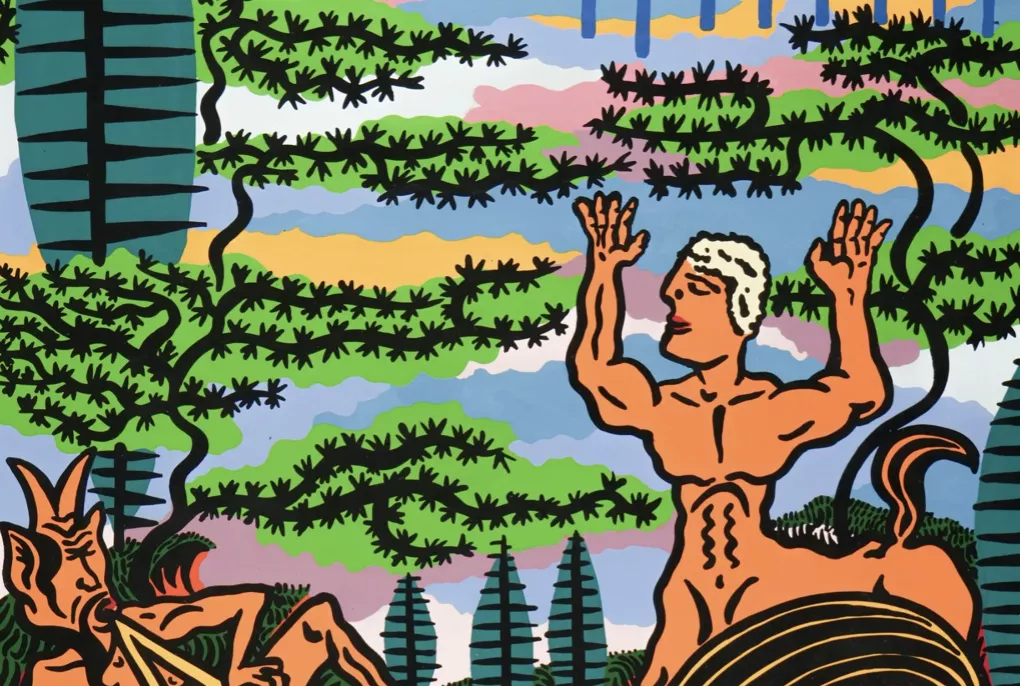
In the 1980s, when contemporary art was tending towards abstraction and minimalism, Di Rosa seized on the codes of pop art and fused them with influences from naive art and popular culture, in a burst of shapes and colors.
His practice of visual appropriation is part of a reappraisal of art brut, but with a more thoughtful, urbanized gesture that resonates with questions about consumer society and mass culture.
The artist plays on visual stereotypes, hijacks popular icons and inserts them into a universe where comics rub shoulders with graffiti, all driven by an explosive palette of primary colors.
In this pursuit, Di Rosa is close to contemporaries such as Robert Combas and Rémi Blanchard, whose use of body and line recalls the energy of the street, while remaining more accessible, more playful, and sometimes even naive.
His frozen, distorted and often caricature-like figures speak volumes about his desire to subvert the aesthetic order, somewhat in the manner of figuration libre, but with a wry sense of humor and a critical eye on the times.
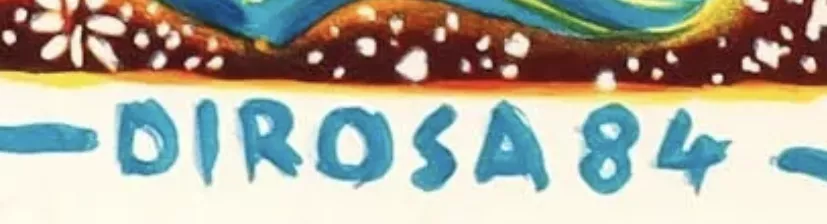
His signature
Not all of Hervé di Rosa 's works are signed.
Although there are variations, here's a first example of his signature:
Expertise your property
If you own a work by Hervé di Rosa, don't hesitate to request a free appraisal by filling in our online form.
A member of our team of experts and certified auctioneers will contact you to provide an estimate of the market value of your work.
If you are considering selling your work, our specialists will also guide you through the various alternatives available to obtain the best possible price, taking into account market trends and the specific features of each work.
Estimate in less than 24h
Discover in the same theme

Rating and value of works, drawings, paintings by Raoul Dufy
Raoul Dufy is a twentieth-century Fauvist painter and draughtsman who produced drawings and oils on canvas that are quoted on the auction market.
Learn more >

Rating and value of paintings by James Ensor
James Ensor is a Belgian Symbolist and Expressionist artist whose works are highly valued on the art market.
Learn more >

Quote and value of paintings, drawings and sculptures by Wif...
Wifredo Lam is a Cuban surrealist artist whose works are highly valued on the auction market. Estimated in 24h.
Learn more >
Works from the same period sold at auction

Estimated 2.000 - 4.000
JONONE (1963) "Thunder-Rain"(2013), Assemblage on canvas

Estimated 5.000 - 8.000
Claude VENARD (1913-1994), Landscape with the Eiffel Tower, Oil on canvas.

Estimated 6.000 - 8.000
Vera MOLNAR (1924-2023), Extravagant Line A, Acrylic on canvas

Estimated 10.000 - 15.000
Keith HARING (1958-1990) Paolo BUGGIANI (b. 1933), Collage on canvas

Secure site, anonymity preserved

Auctioneer approved by the State

Free and certified estimates
Frequently asked questions
-
Who is Hervé di Rosa, and what is his artistic style?Hervé di Rosa, born in 1959 in Sète, is a leading figure in the “free figuration” movement of the 1980s. His style is characterized by visual exuberance, blending popular culture, classical artistic references, and modernity. He draws inspiration from comic books, art brut, and popular iconography, using a vibrant palette and dynamic compositions that combine spontaneous brushwork with rigorous technical mastery.
-
What is the price range for Hervé di Rosa's works based on the medium used?The prices of Hervé di Rosa’s works vary considerably depending on the medium: prints sell for between €10 and €4,850, tapestries between €250 and €4,000, ceramics between €4,600 and €6,200, watercolor drawings between €50 and €11,000, sculptures between €70 and €25,000, and paintings between €120 and €52,000. His oil and collage *Les amoureux gitans* (1986) was sold for €52,000 in 2023.
-
How can you authenticate and appraise a work by Hervé di Rosa?To authenticate and appraise a work by Hervé di Rosa, we recommend that you request a free appraisal from Auctie's. A state-certified expert or auctioneer will contact you and provide you with an accurate estimate of your work’s market value, with no obligation on your part. You will receive a response within 48 hours.
-
Is this the right time to sell a work by Hervé di Rosa?Yes, now is a good time to sell a work by Hervé di Rosa. A major artist of the late 20th century, his works are highly sought after by collectors and enjoy great success at auction. The market remains dynamic for this artist of the “free figuration” movement, particularly for his paintings and sculptures.
-
How does the sale of a work of art work at Auctie's?At Auctie's, we support sellers from the appraisal stage through to the auction. After a free, no-obligation appraisal, our specialists will guide you through the various options available to help you achieve the best possible price, taking into account market trends and the unique characteristics of your artwork. We’ll help you choose the sales approach best suited to your situation.
